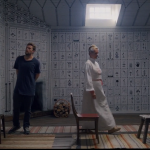
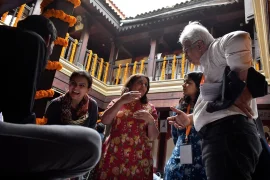
Midsommar is a 2019 psychological horror film written and directed by Ari Aster, who is also known for his other work, Hereditary. The movie follows Dani, her lover Christian, and his friends as they travel to Sweden to experience another friend’s, Pelle’s, ancient commune for a summer retreat. The movie observes underlined tragedy, cult themes and subtle horrors that are gradually revealed as the storyline progresses. The movie is set in two places, urban areas in the United States and in the rural Hälsingland region in Sweden.
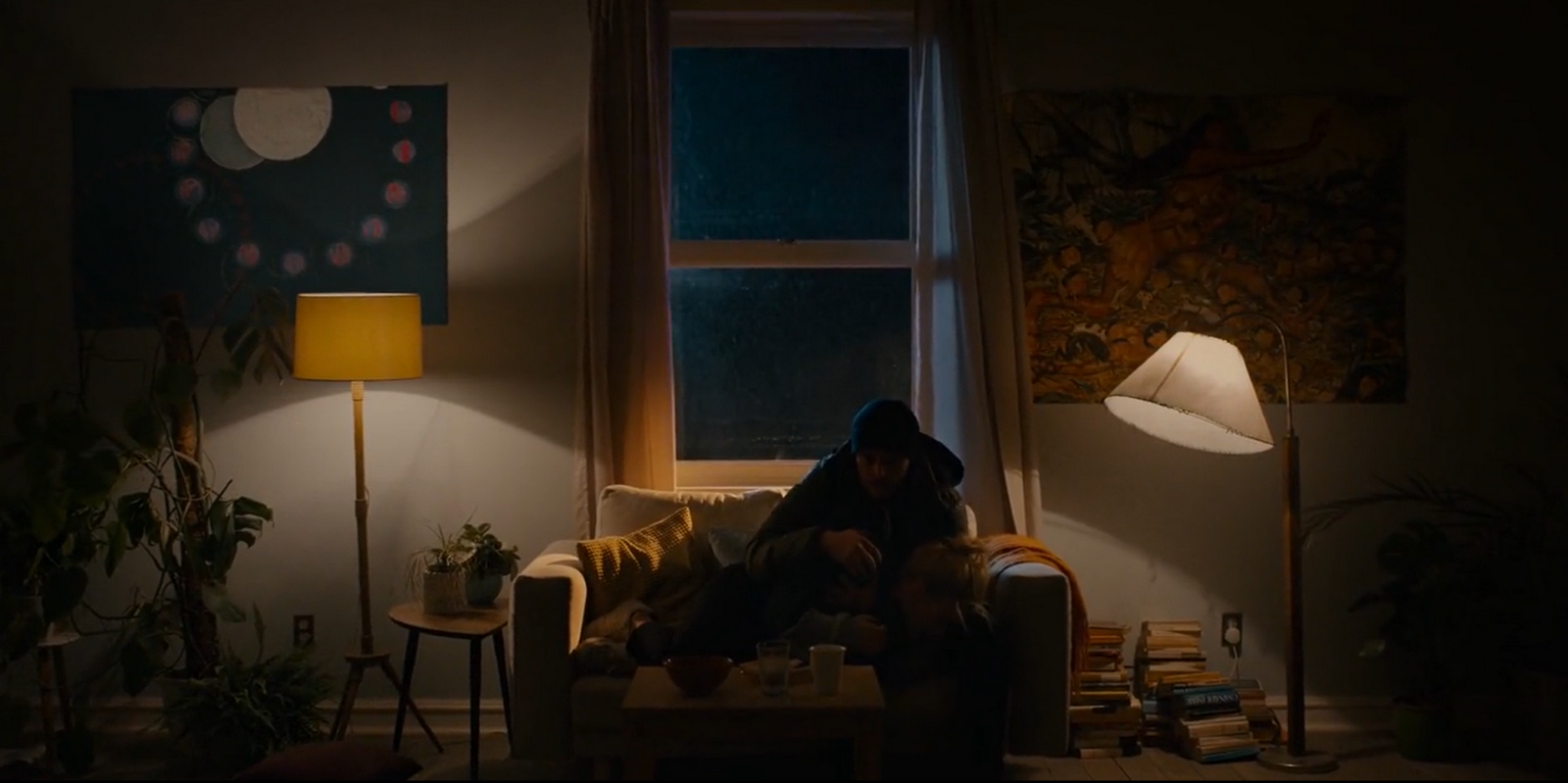
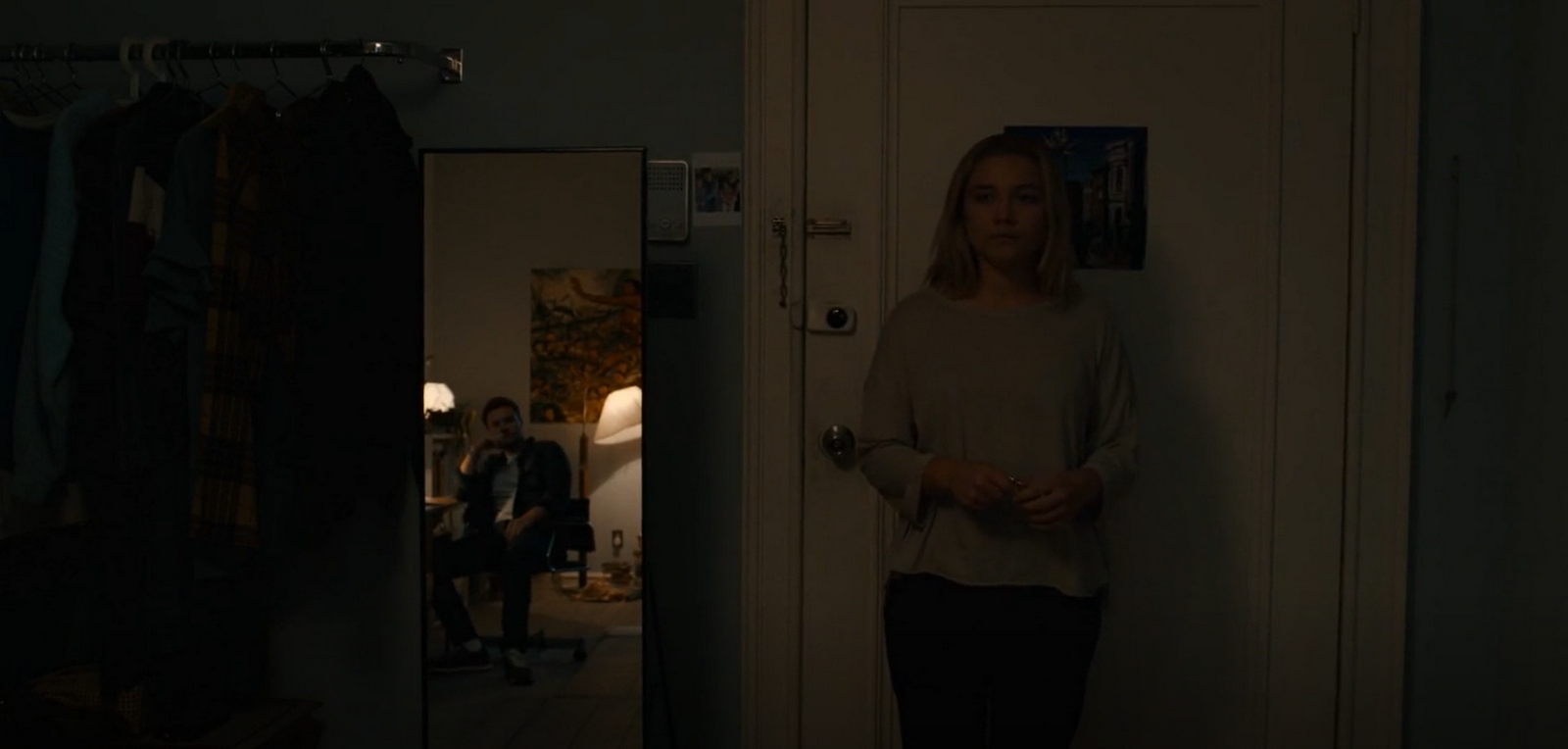
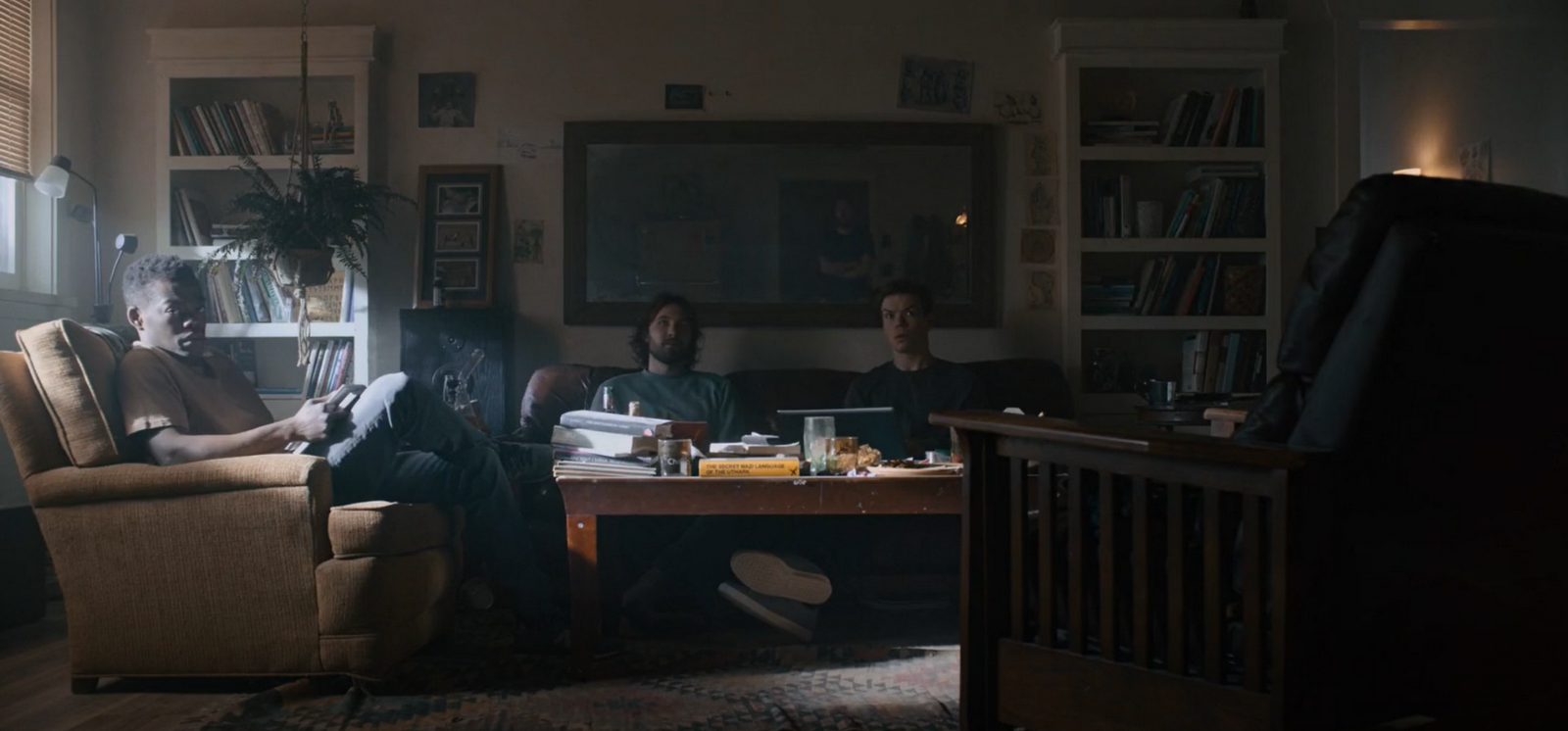
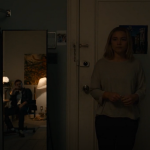
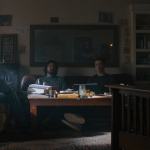
Before the crew heads out to Sweden, a lot of key conversations are carried out through mirror scenes. Conventionally, mirrors in living rooms are not just used as an element for the residents to see themselves before they leave the house, but also to elongate the space and give the illusion of a space being bigger than it is. In Midsommar, however, the cinematographers have used mirrors in their latter capacity as well as to show an exchange of conversation between the two subjects, apparently presenting two different sides of an argument. Artistically, mirrors represent deceit or deception, as what one observes in the mirror is not always the whole truth or a factual reflection.
In this particular frame, Dani and Christian are observed having a toned-down argument as Dani confronts her lover about his stance on going to Sweden, while Christians’ responses are observed in the mirror, creating a hierarchy between the primary and secondary subjects.
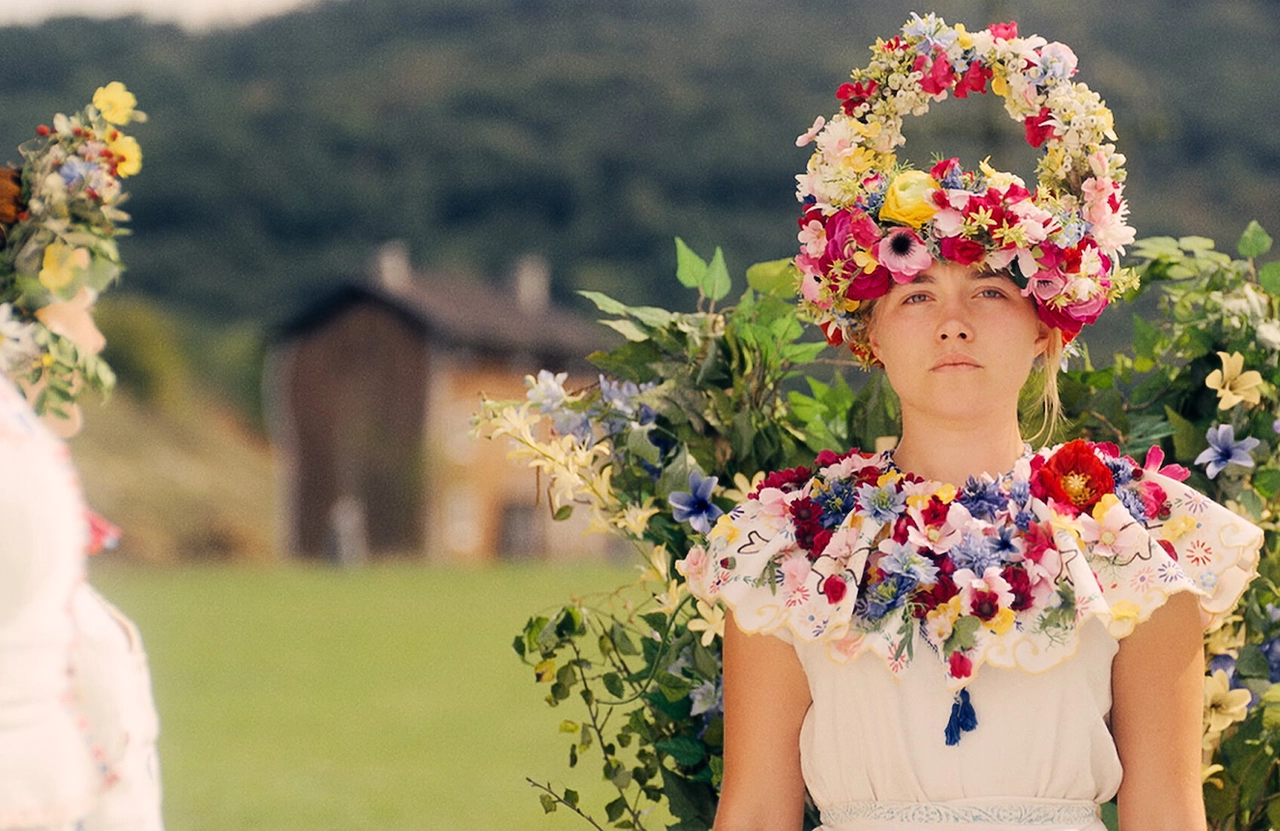
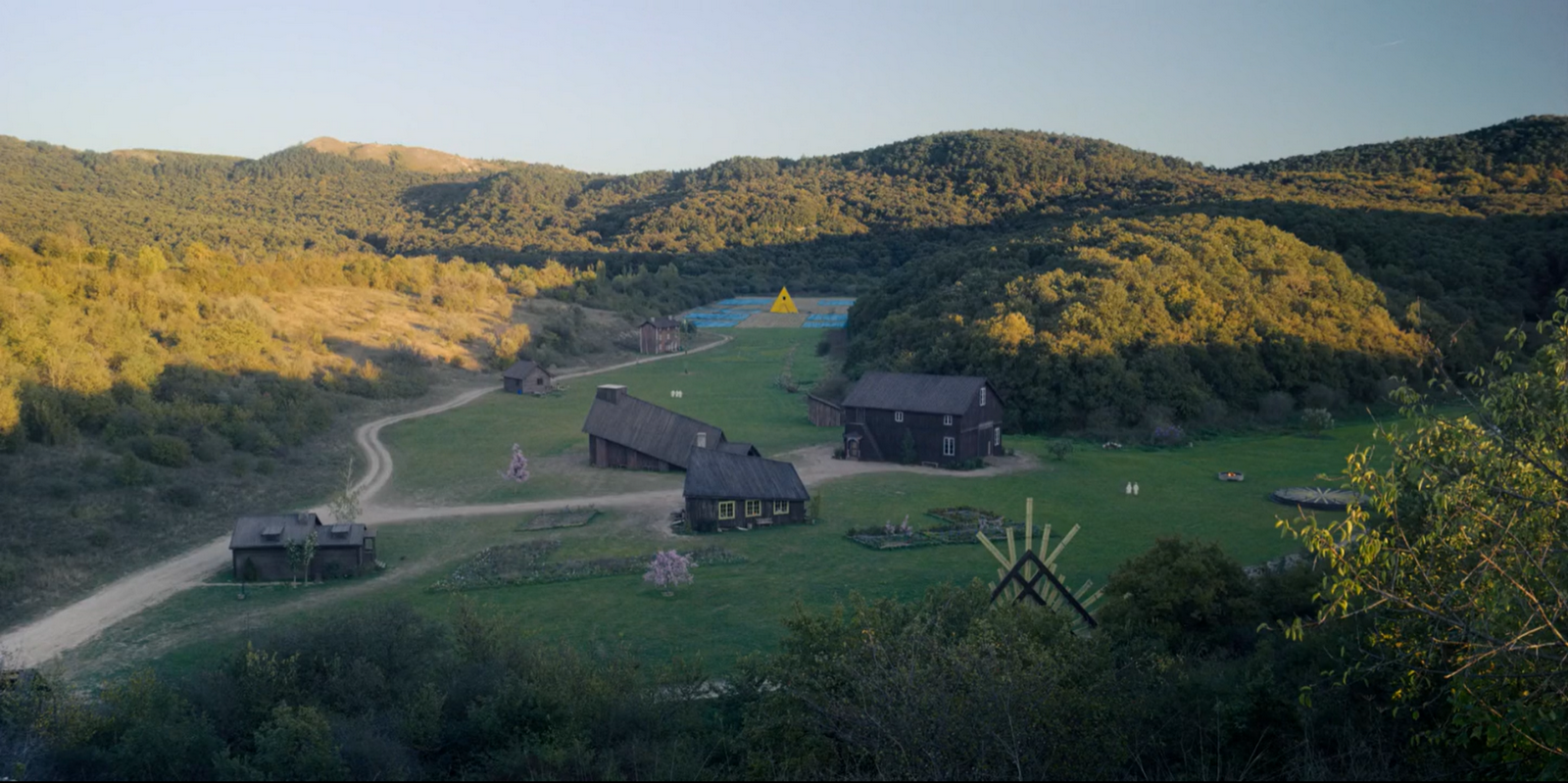
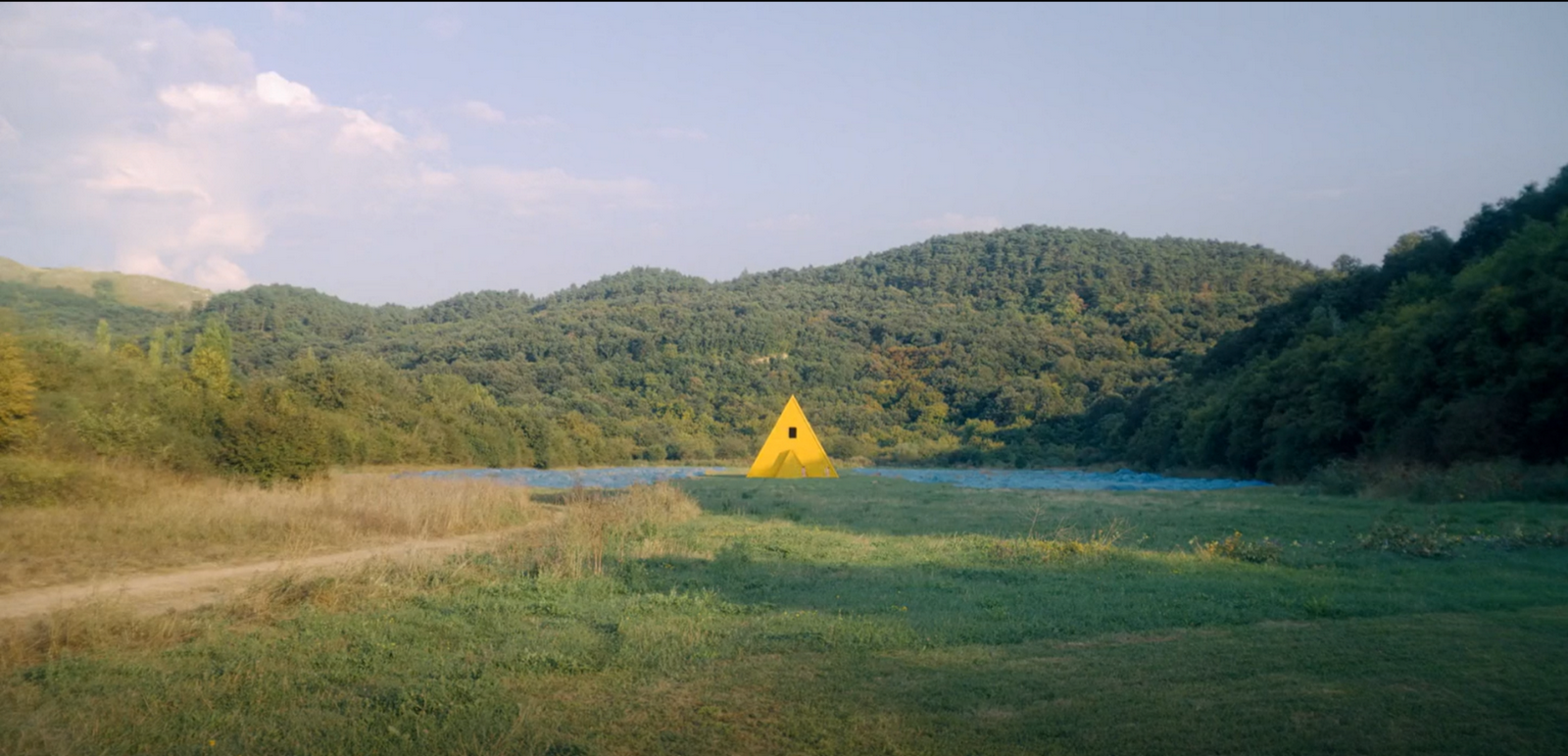
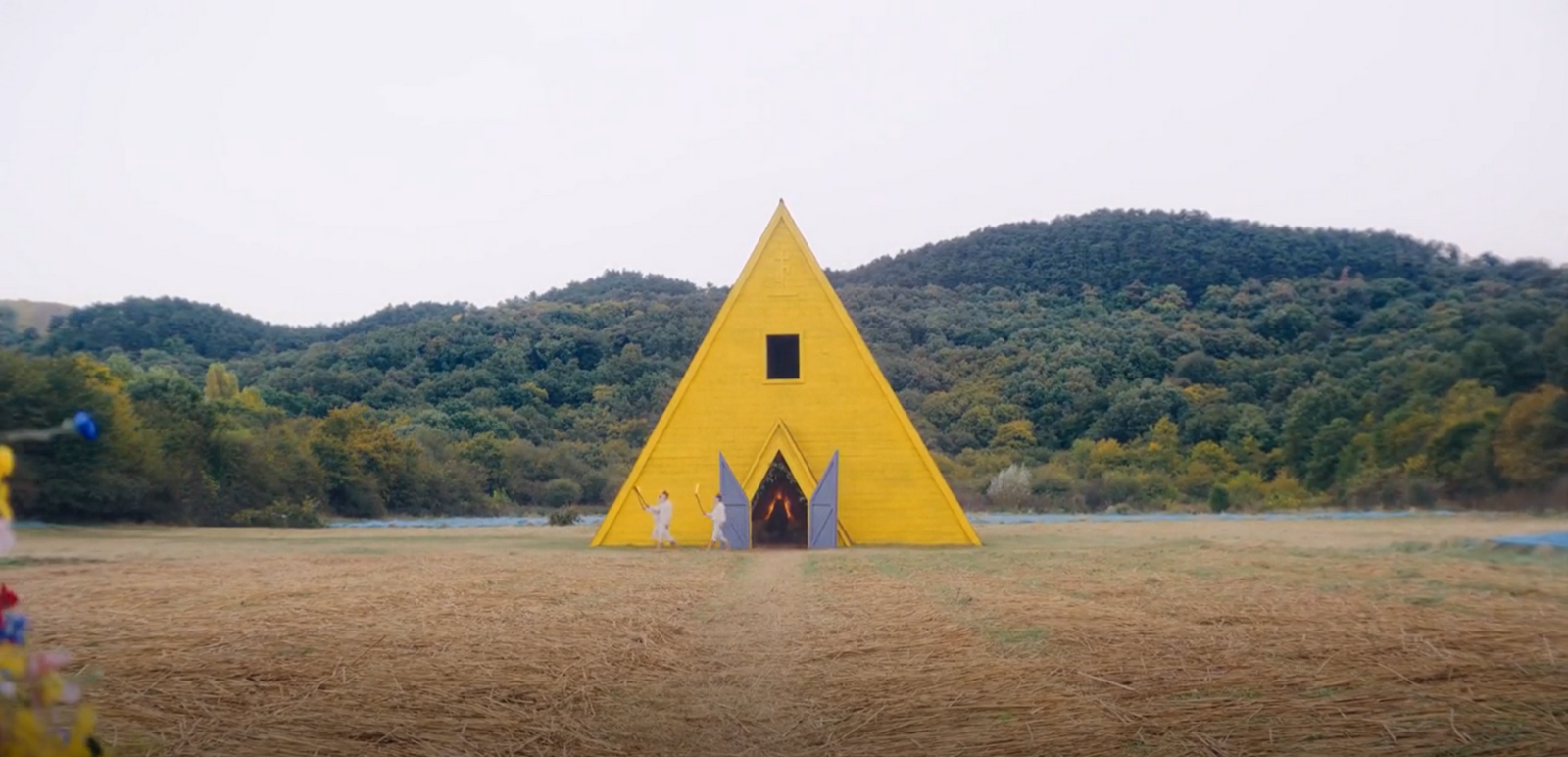
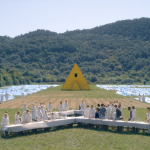
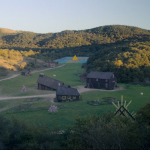
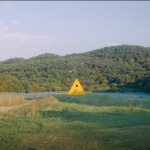
Moving to the main setting of the movie, the commune of the Hårga people in Hälsingland, Sweden, otherwise the home of Pelle, Christian’s friend. While the initial part of Midsommar is coloured with notes of tragedy, loss and grief, this phase juxtaposes the previous emotions by contrasting open fields, bright colours, daylight filling every crevice of the frame and glowing, happy faces of the people living in this place.
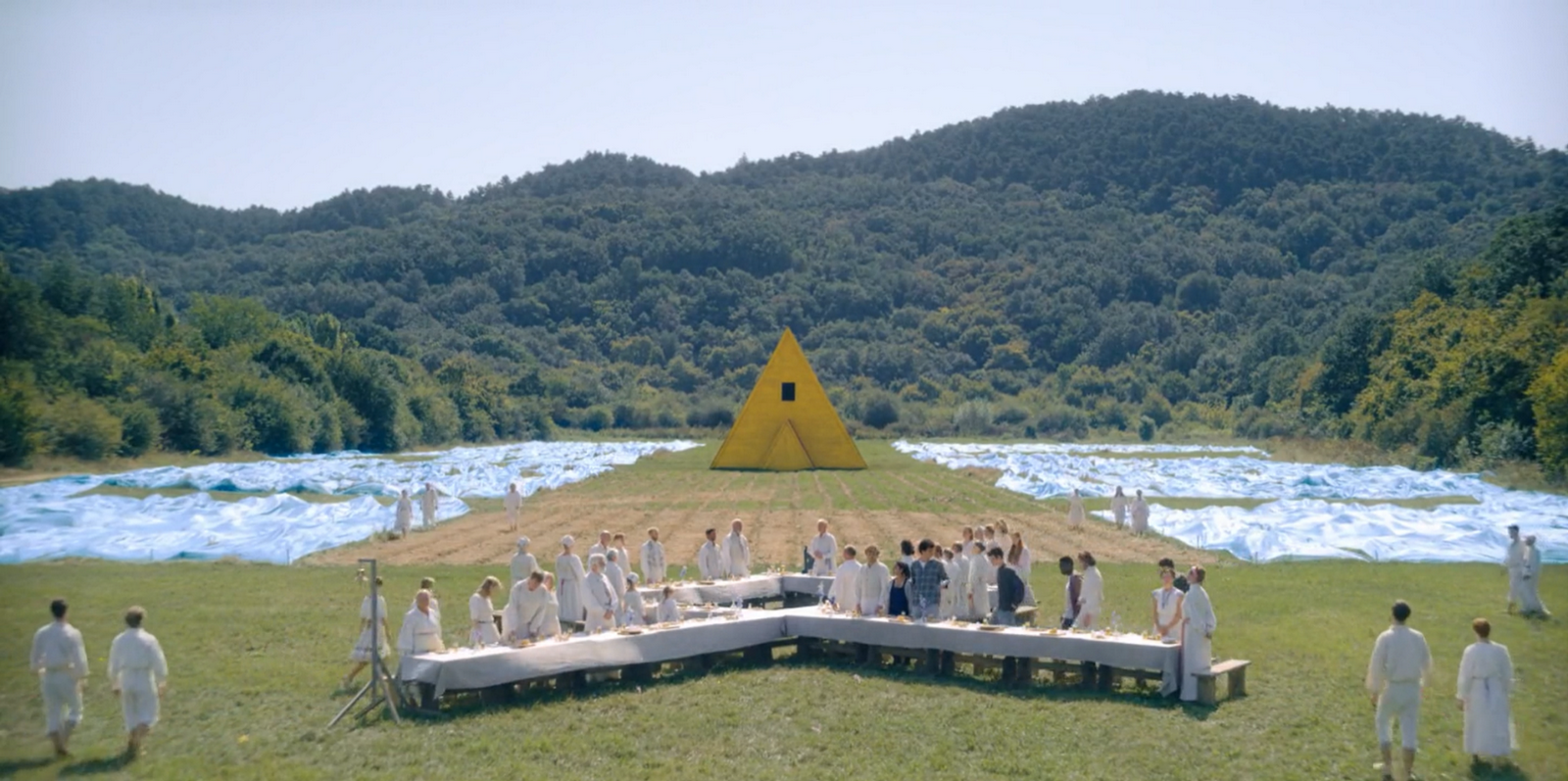
The general setting and openness of the clearing, with the rolling green hills in the background, bring one into a false sense of safety.
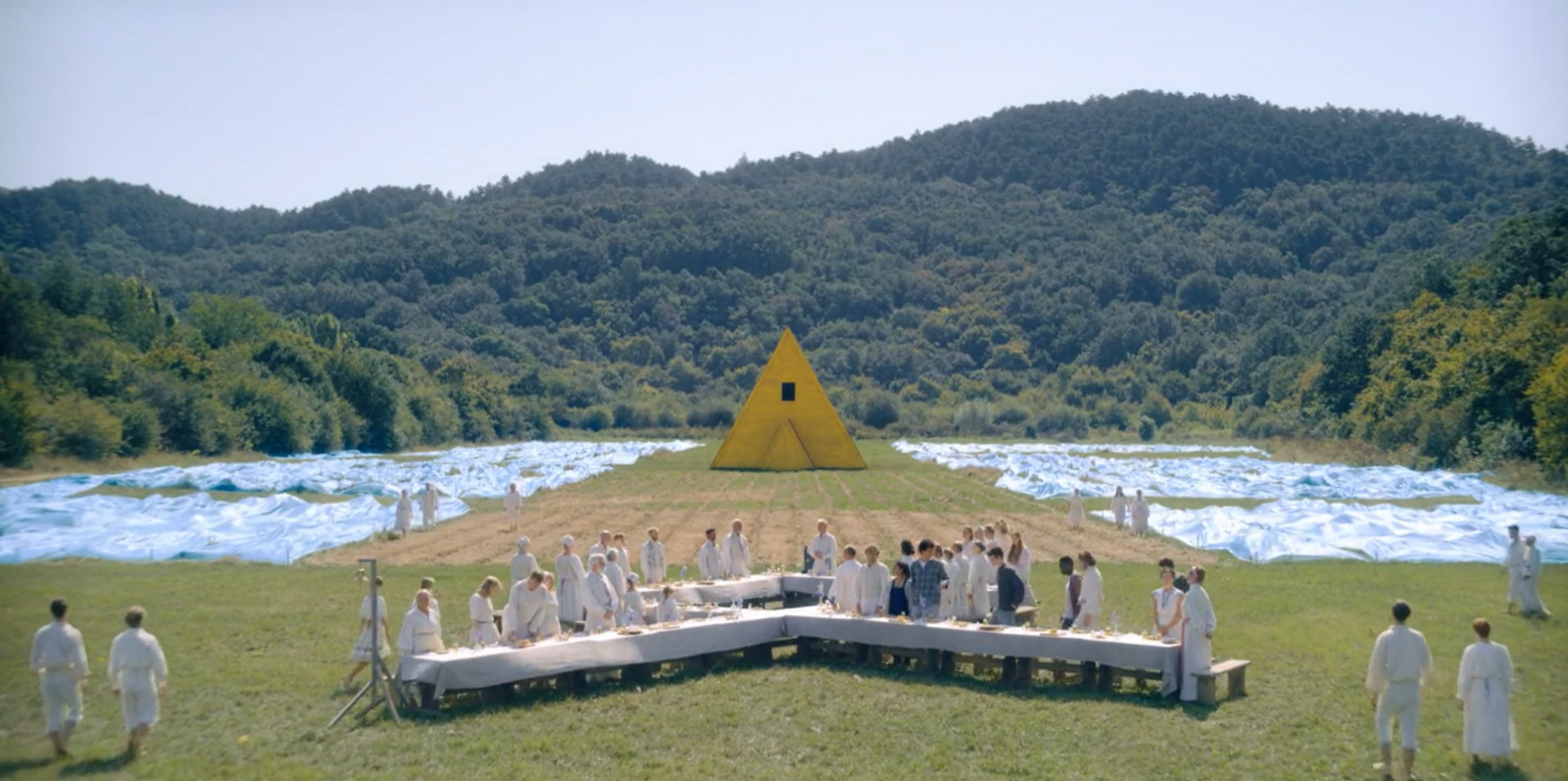
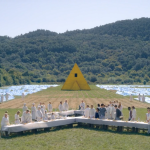
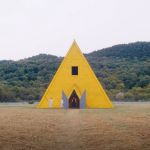
The entire village is like a spatial choreography of trust and openness corresponding to communal rituals that are lined by the strict order of symmetry axis and collective experiences. Architectural forms here define cultural beliefs and space becomes a ritual instrument that guides behaviour.
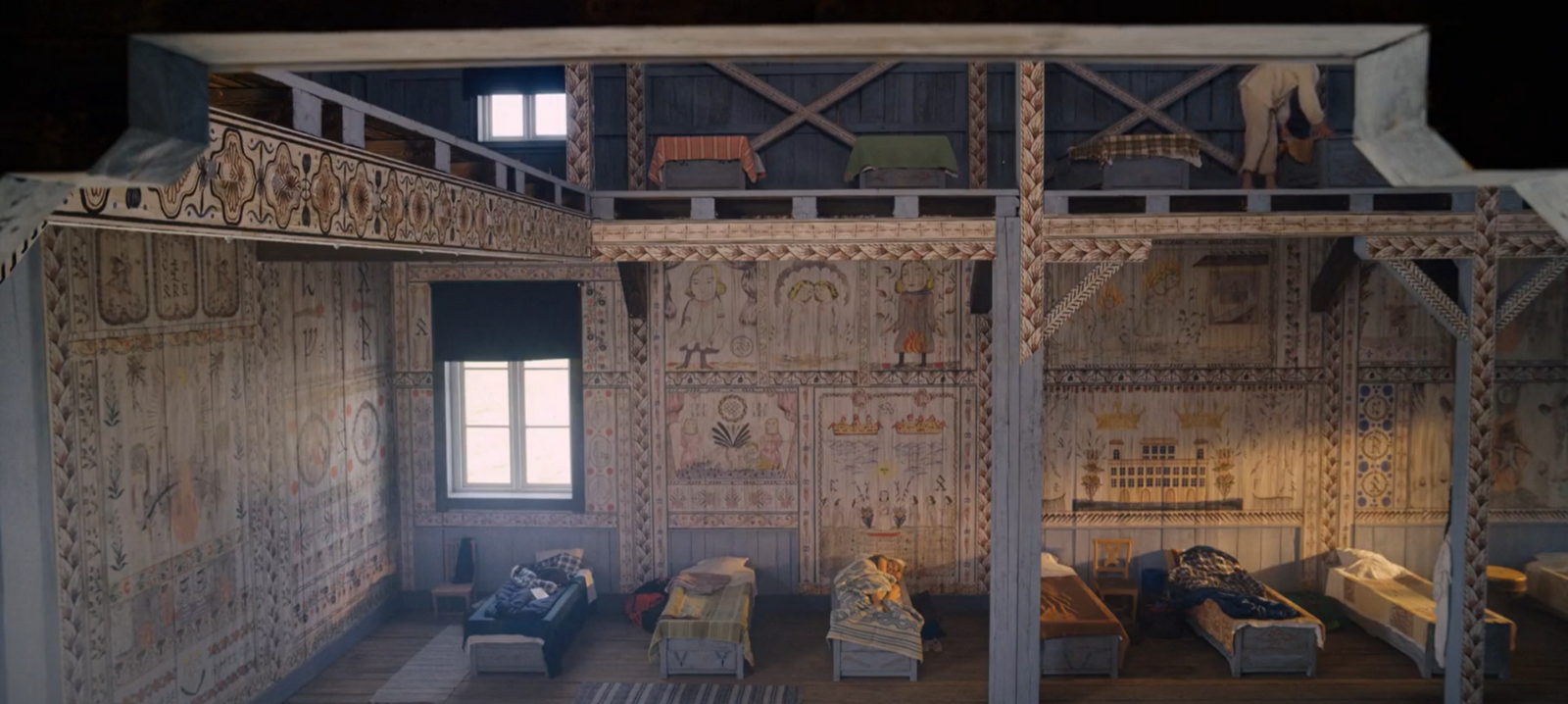
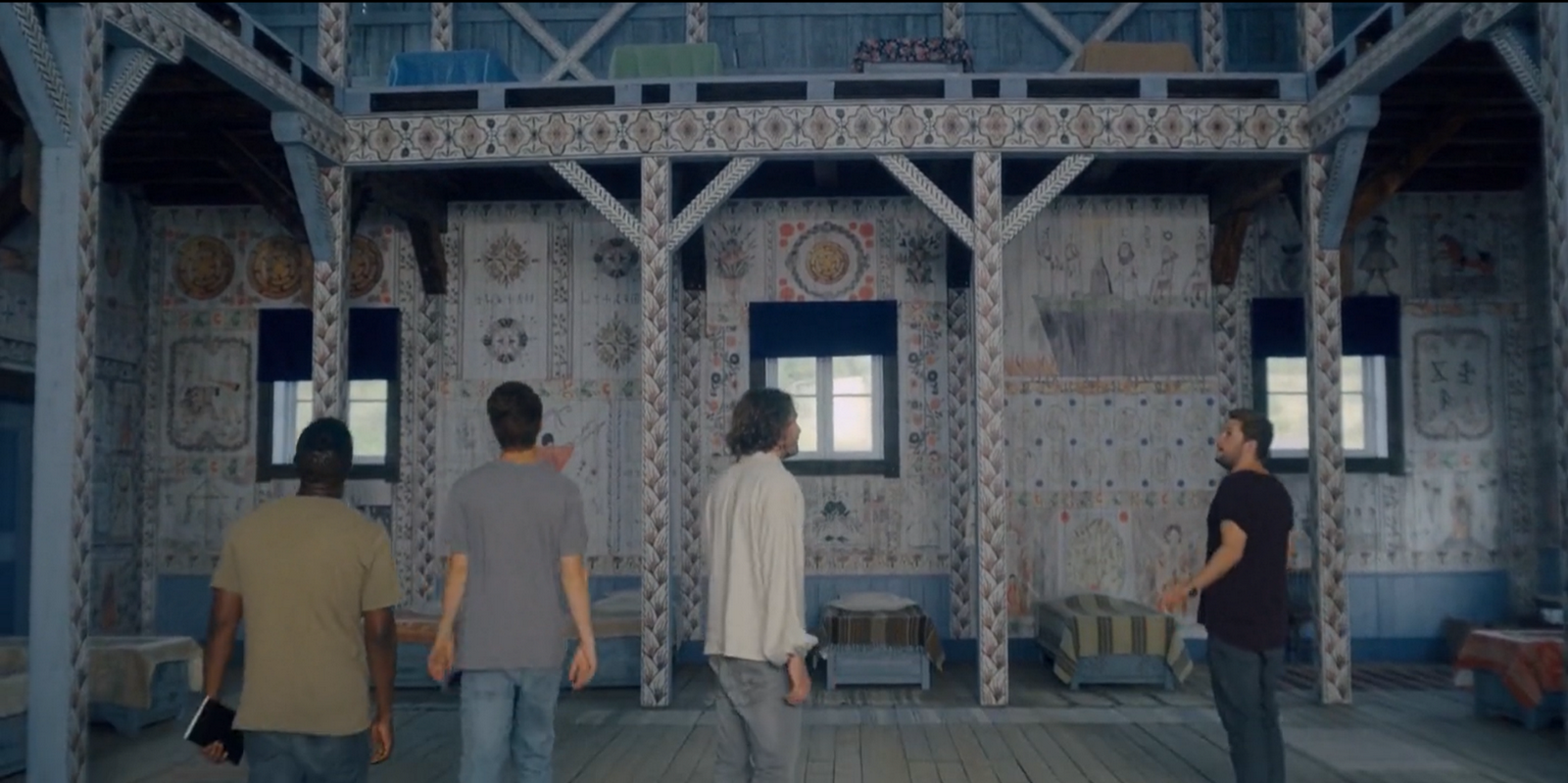
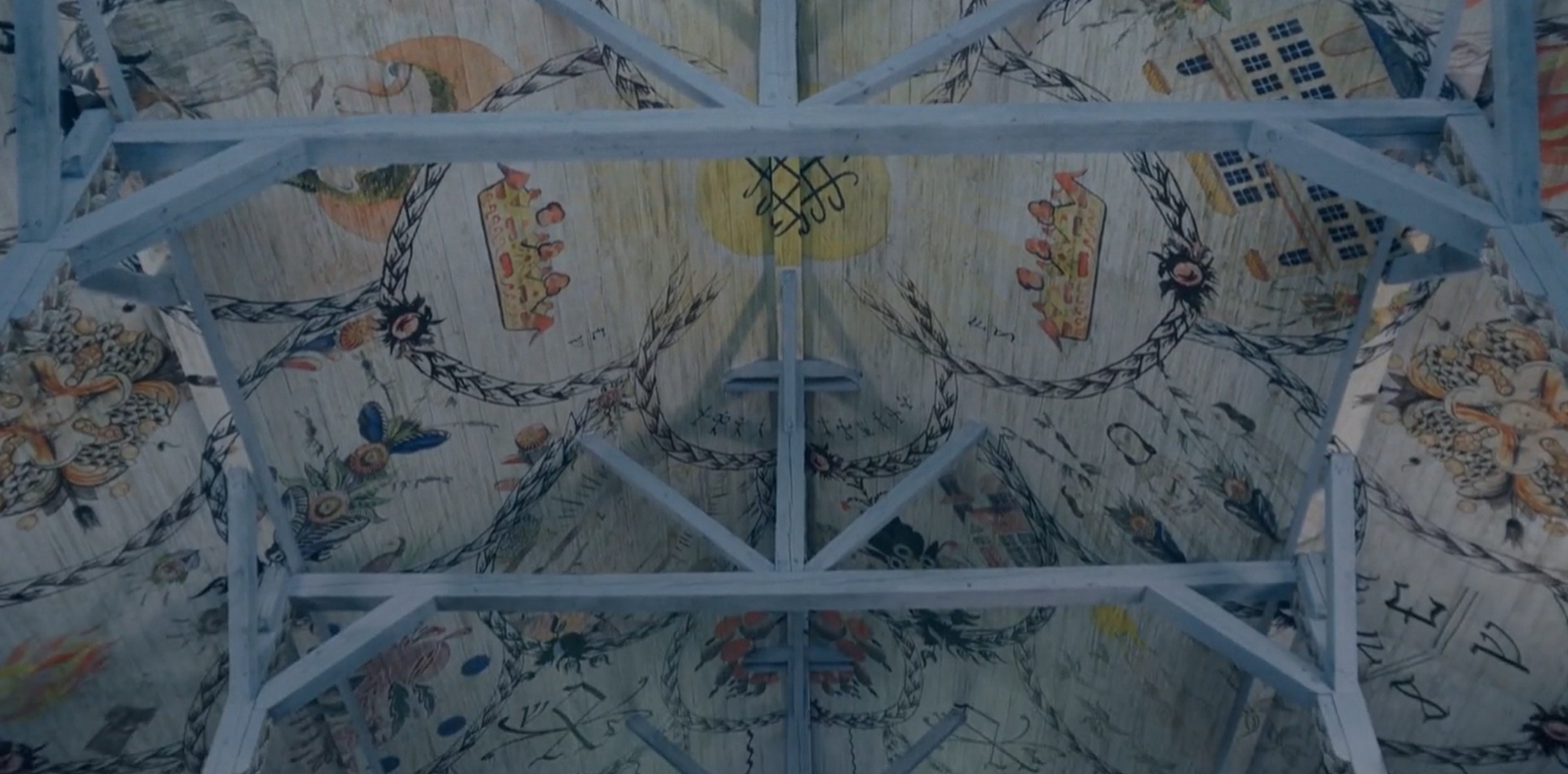
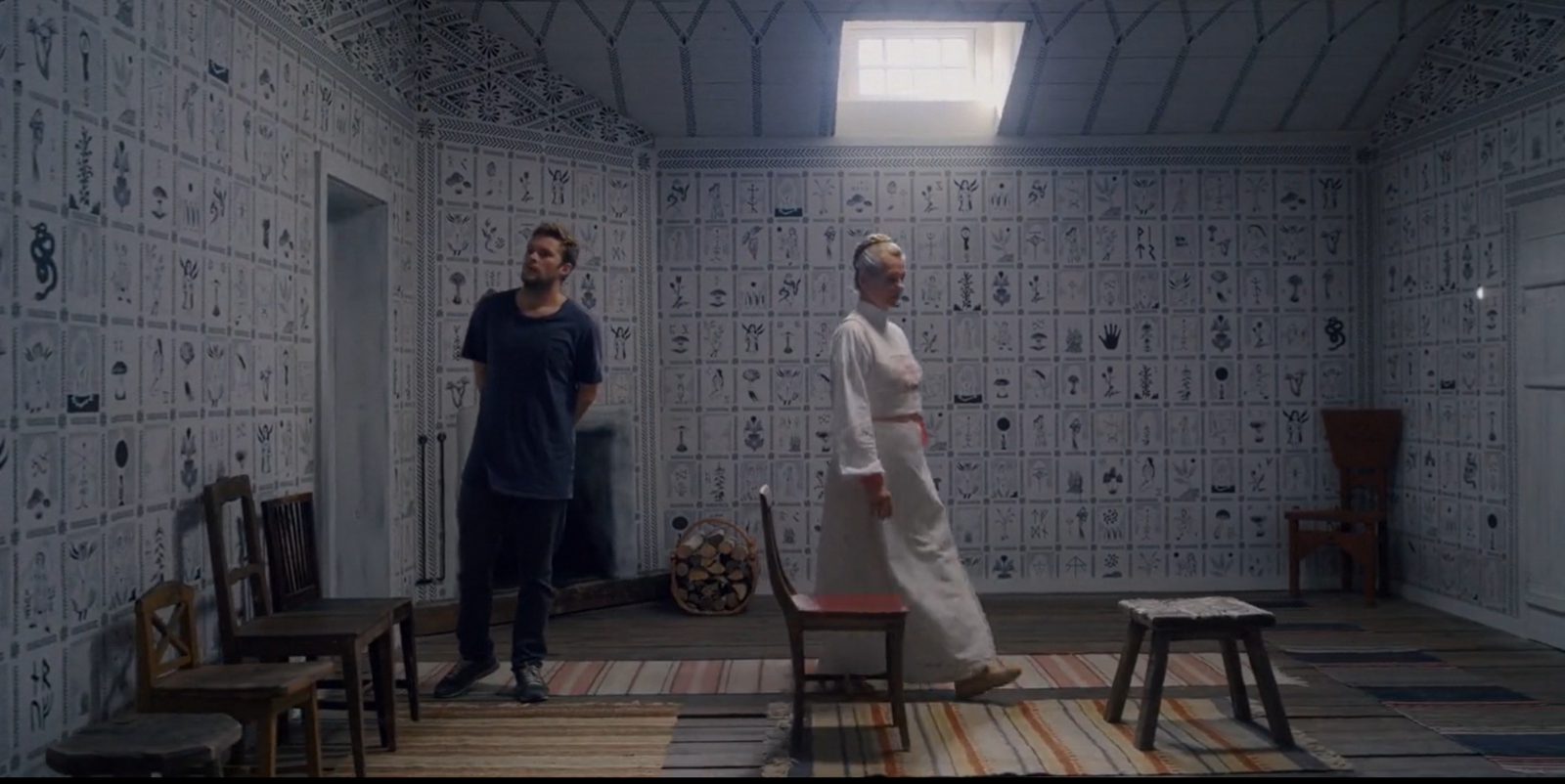
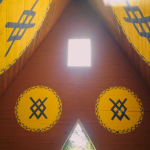
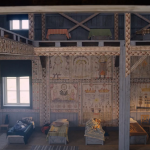
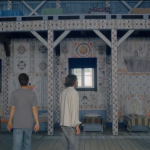
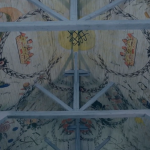
The Hårga people correspond more to the presence of community and their combined living rather than focusing on one individual. They are about sharing life’s experiences, whether they be of a happy or sad nature, in terms of extreme empathy. They live together in one barn until the age of 36, the place where ‘the foreigners’ are also made to stay. The barn has been extensively decorated through paint and colourful drawings and runes narrating different experiences; however, the entire space is one and serves only one function, sleeping. The Hårga share all their activities, from the most primal to the most private, as individuality is a notion that does not pertain to their way of life.
The entire commune is made of materials such as wood, fabric and paints mainly, with some glass. Most of these materials directly relate to nature and the Hårga way of living, in close contact with the earth and supporting life cycles that exist in their fundamental ideology as well. The wood can burn and rot, and a new shall be built in its space but the new nonetheless will hold the spirit of the old.
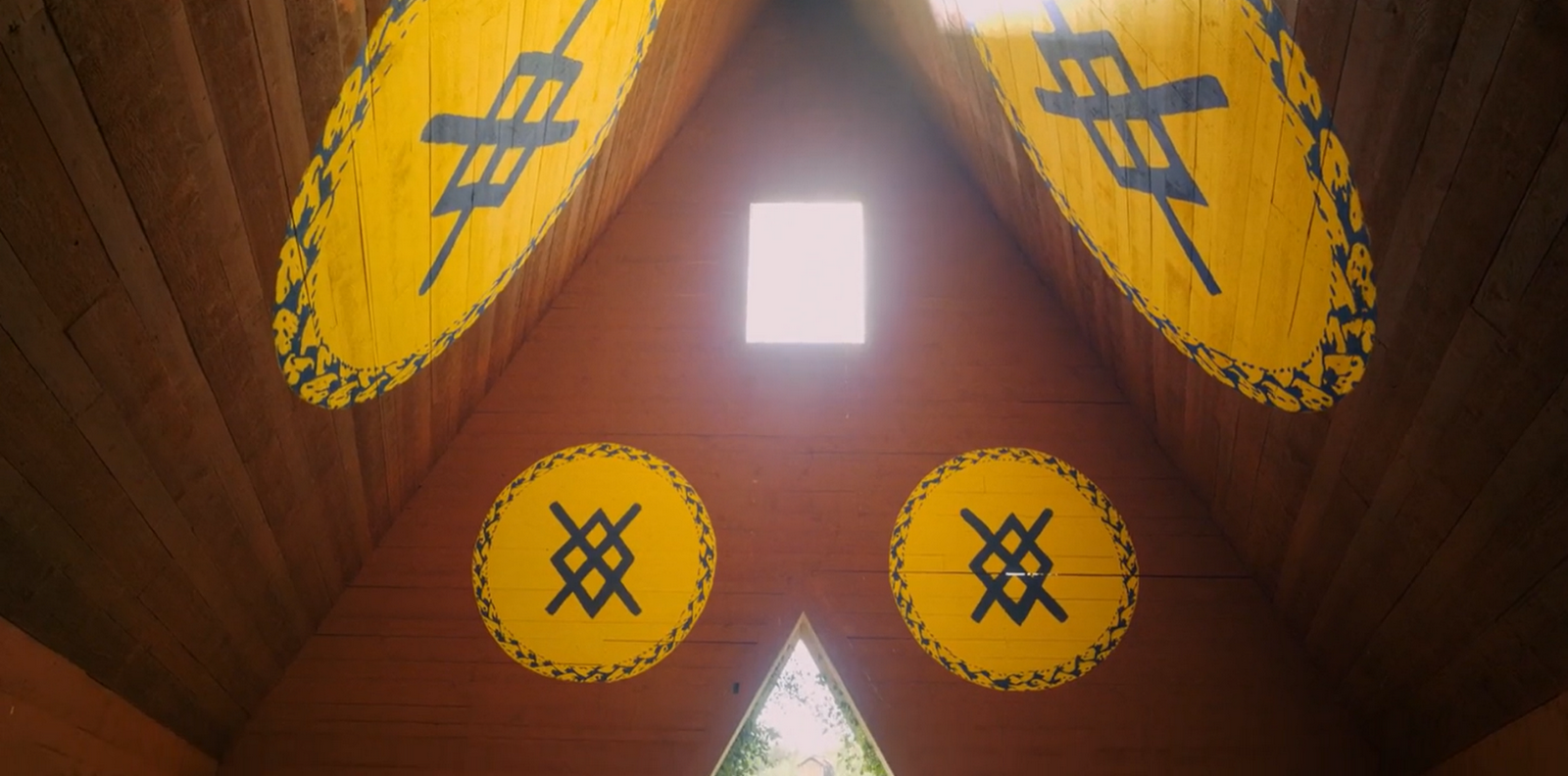
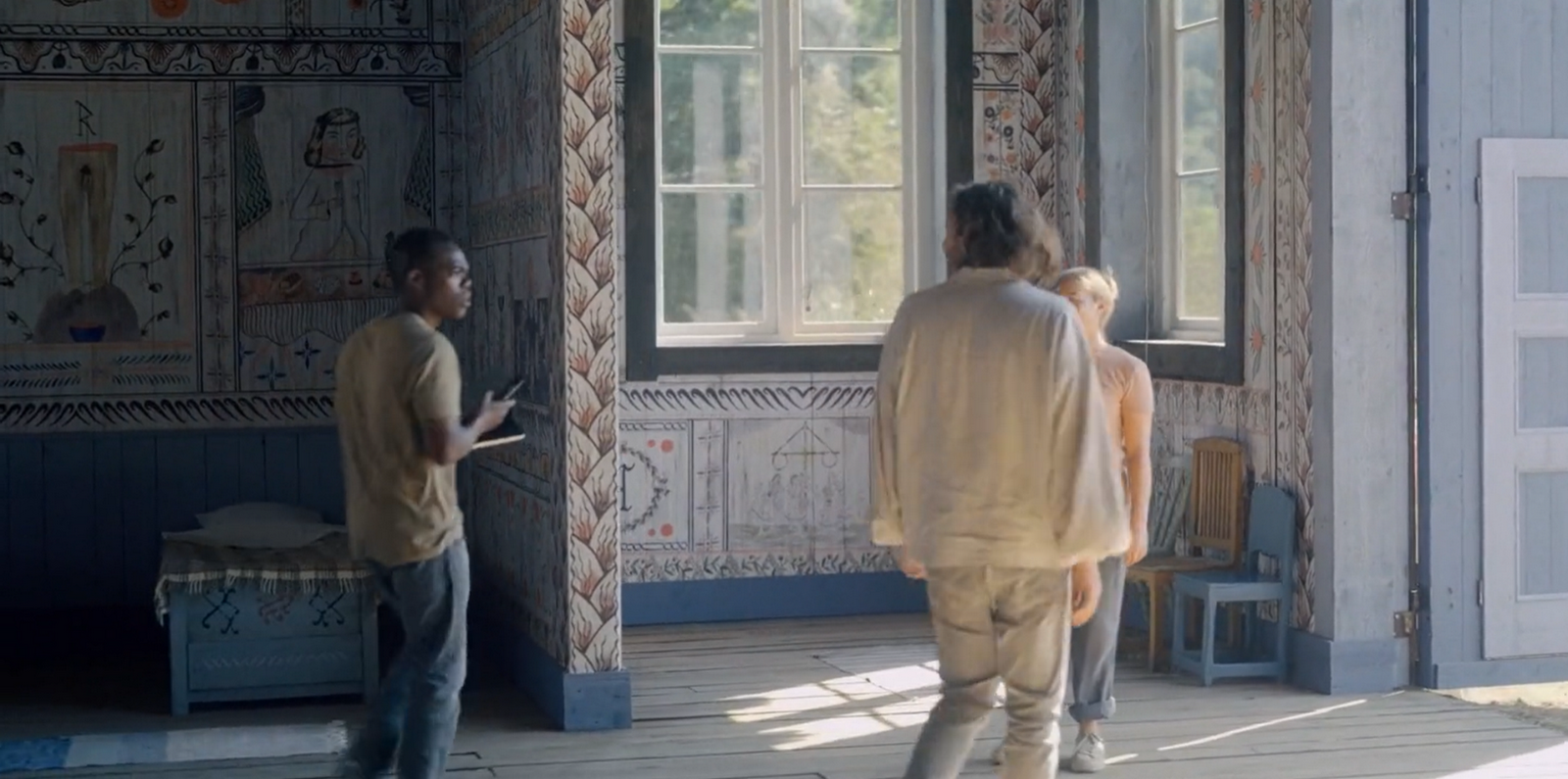
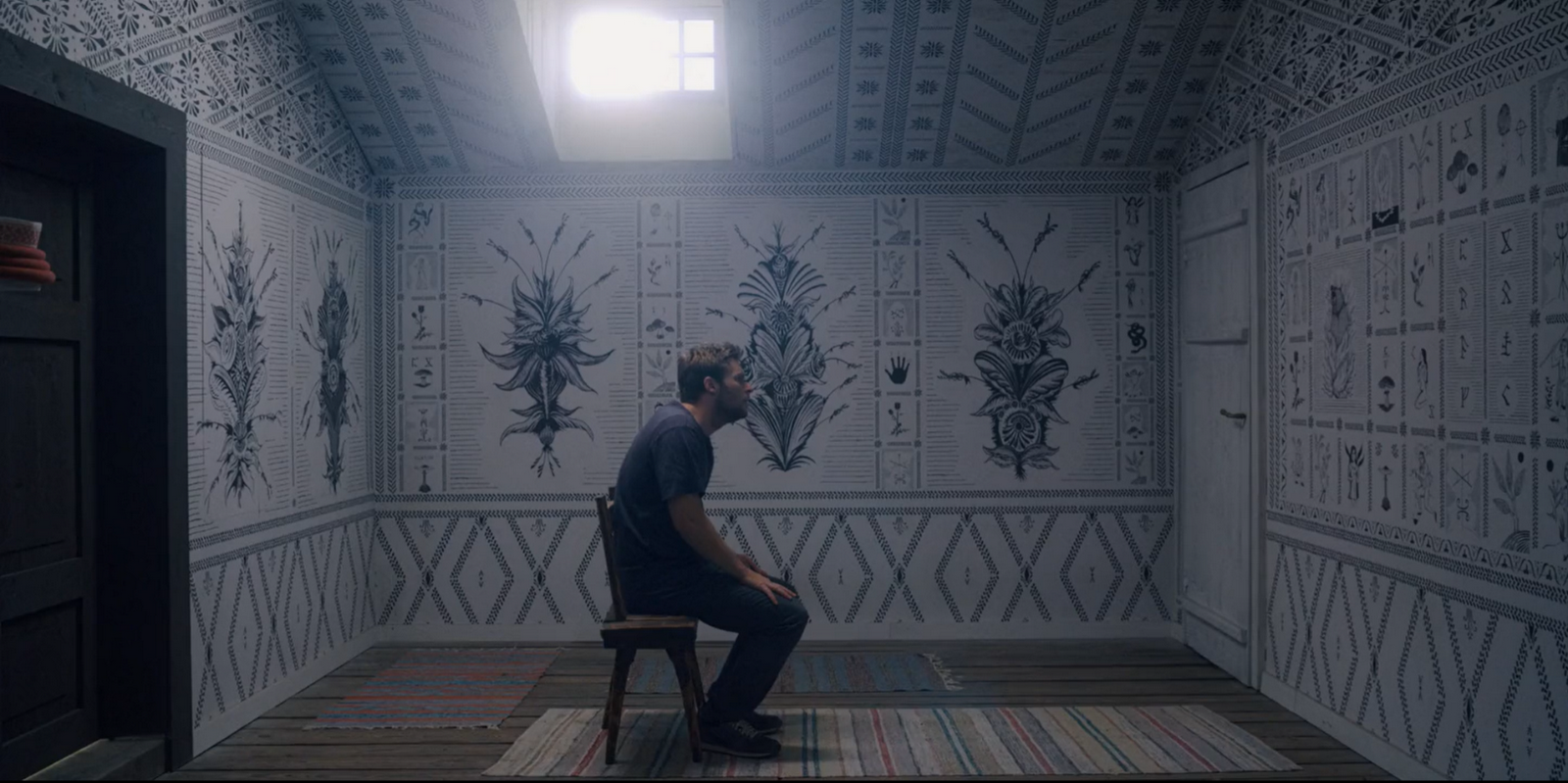
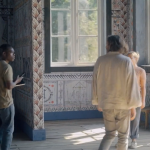
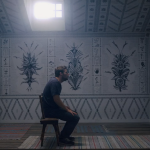
One key way that Midsommar disturbs the viewer is through the idea of Midnight Sun itself and the perception of time. As the main characters and the Hårga are celebrating the summer festival for Summer Solstice, the viewers always see this bright landscape that says absoultely nothing is wrong. The only lighting is through the Sun that is brought inside spaces through very careful planned openings.
The following two scenes are a sequence of frames where the true role of light can be observed in qualifying the spaces. The fenestration shifts a bit to the up and right and makes the space appear bigger and brighter, again lulling one into a sense of safety.
Midsommar itself explores how architecture narrates and mediates collective beliefs, rituals and violence through beauty. Spatial honesty does not guarantee moral honesty as seen through the experience of the foreigners in the Hårga village. What otherwise poses as open, trustworthy and transparent has underlying beliefs that are hidden, preserved and self-benefiting.
Reference List:
Figure 1_ Midsommar. (2019). [Film]. Directed by Ari Aster. U.S: A24.
Figure 2_ Midsommar. (2019). [Film]. Directed by Ari Aster. U.S: A24.
Figure 3_ Midsommar. (2019). [Film]. Directed by Ari Aster. U.S: A24.
Figure 4_ Midsommar. (2019). [Film]. Directed by Ari Aster. U.S: A24.
Figure 5_ Midsommar. (2019). [Film]. Directed by Ari Aster. U.S: A24.
Figure 6_ Midsommar. (2019). [Film]. Directed by Ari Aster. U.S: A24.
Figure 7_ Midsommar. (2019). [Film]. Directed by Ari Aster. U.S: A24.
Figure 8_ Midsommar. (2019). [Film]. Directed by Ari Aster. U.S: A24.
Figure 9_ Midsommar. (2019). [Film]. Directed by Ari Aster. U.S: A24.
Figure 10_ Midsommar. (2019). [Film]. Directed by Ari Aster. U.S: A24.
Figure 11_ Midsommar. (2019). [Film]. Directed by Ari Aster. U.S: A24.
Figure 12_ Midsommar. (2019). [Film]. Directed by Ari Aster. U.S: A24.
Figure 13_ Midsommar. (2019). [Film]. Directed by Ari Aster. U.S: A24.
Figure 14_ Midsommar. (2019). [Film]. Directed by Ari Aster. U.S: A24.
Figure 15_ Midsommar. (2019). [Film]. Directed by Ari Aster. U.S: A24.
Figure 16_ Midsommar. (2019). [Film]. Directed by Ari Aster. U.S: A24.
Minahil is a final-year architecture student with too many passions and hobbies stuffed into one life. She likes random discourses exploring the depth of our understanding of the lived world and the unreachable third and fourth dimension for humans; space and time and architecture is her one way of comprehending it.
We use cookies to ensure that we give you the best experience on our website. If you continue to use this site we will assume that you are happy with it.