Cinema as Spatial Inquiry
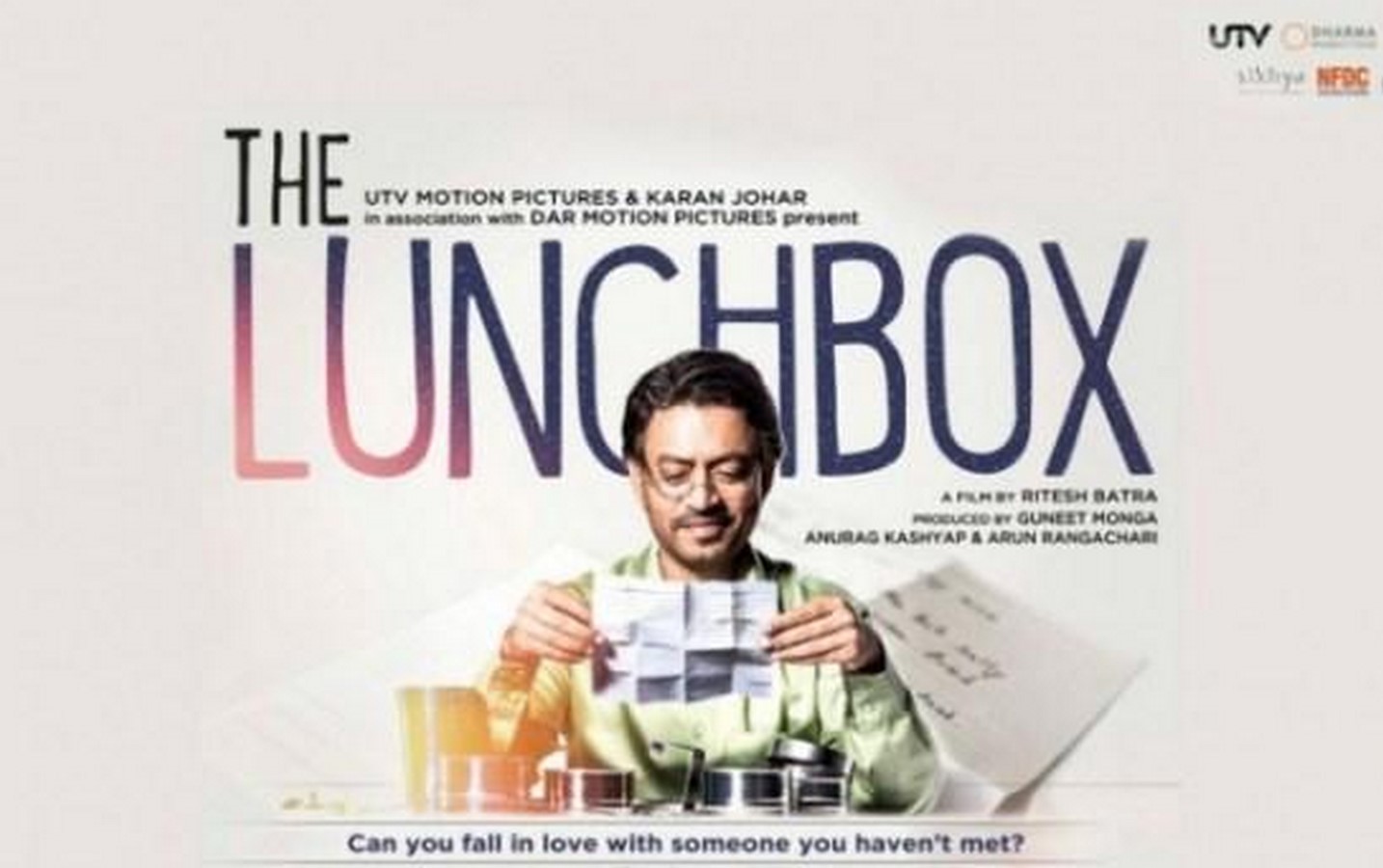
The relationship between cinema and architecture is rooted in their shared concern with the construction of space for human experience. While architecture embodies the construction of physical space, cinema is concerned with the construction of spatial perception through framing, lighting, rhythm, and movement (Bruno, 2002). In *The Lunchbox* (*Batra*, 2013), the city of Mumbai appears not merely as a setting, but as a spatial body that houses intimacy, isolation, density, and routine.
The film, directed by Ritesh Batra, is often referred to as a quite romantic film. However, from an architectural point of view, it is a subtle urban analysis of everyday Indian domesticity, infrastructure, and the emotional geography of a dense urban setting. Without having to depend on spectacle, the film captures the grain of Mumbai’s lived space, the apartments, suburban railways, office interiors, and thresholds.
This review will consider *The Lunchbox* not as a narrative film, but as a spatial text. It will explore how architecture, both formal and informal, influences behavioural patterns, emotional experiences, and spatial perceptions. The aim is to help designers and architects view the film through the lenses of density, domesticity, liminality, and everyday urbanism.
Mumbai as Urban Infrastructure: Density as Condition
Mumbai is among the most densely populated cities in the world, with a history of colonial planning, post-independence industrialisation, and steady migration (Patel & Thorner, 1995). In *The Lunchbox*density is neither emphasised nor aestheticised. It is normalised.
The suburban rail network, one of the busiest in the world, is a constantly moving architectural interior. Instead of representing skyline views, the film emphasises compartments, platforms, staircases, and corridors. These are infrastructure spaces where anonymity and intimacy coexist.
From an urban design point of view, such infrastructure is what Manuel Castells (1996) calls the “space of flows”—a system that organises contemporary urban life. The dabbawala network, Mumbai’s famous lunchbox delivery system, is a staggering example of a decentralised logistical system that is integrated into urban morphology (Bapat, 2014). Its precision and organisation illustrate how an informal system adjusts to spatial complexity.
For architects, the takeaway is critical: infrastructure is not neutral. It defines daily rhythms. The regularity of train compartments and office desks emphasises how architecture organises routine. The density of Mumbai is vertical in apartment buildings and horizontal in train routes, exposing complex movement patterns.

Domestic Interiors: Micro-Architectures of Emotion
One of the most potent architectural elements of the film is its portrayal of small-scale domestic interiors. The apartments are small, spatially condensed, and functionally reduced. However, they are emotionally expansive.
The domestic architecture of dense cities tends to emphasise efficiency over experiential complexity. However, *The Lunchbox* shows that scale does not necessarily preclude emotional complexity. The kitchen, small and central, becomes a place of communication, memory, and anticipation.
House form, as argued by Rapoport (1969), reflects socio-cultural patterns rather than climatic or economic ones. The small kitchens of Mumbai’s middle-class housing are spatially gendered but culturally important. The film eschews direct commentary in favour of a spatial articulation of the relationships between domestic labour and spatial enclosure.
Windows are important thresholds. They provide limited views of adjacent buildings, emphasising proximity without contact. Architecturally, this indexes the condition of “visual adjacency” that is typical of high-density housing. Windows are not simply ventilation openings; they are also emotional thresholds.
Light, too, is carefully managed. Natural light enters through filtered openings, creating soft interiors rather than dramatic chiaroscuro effects. This corresponds with Pallasmaa’s (2005) claim that architecture is experienced multisensorially, through atmosphere rather than visual spectacle.
Spatial Loneliness: The Paradox of Crowded Isolation
Urban density does not necessarily lead to social cohesion. Instead, dense living can further contribute to anonymity and isolation (Sennett, 1977). The Lunchbox offers this contradiction in terms of space, not words.
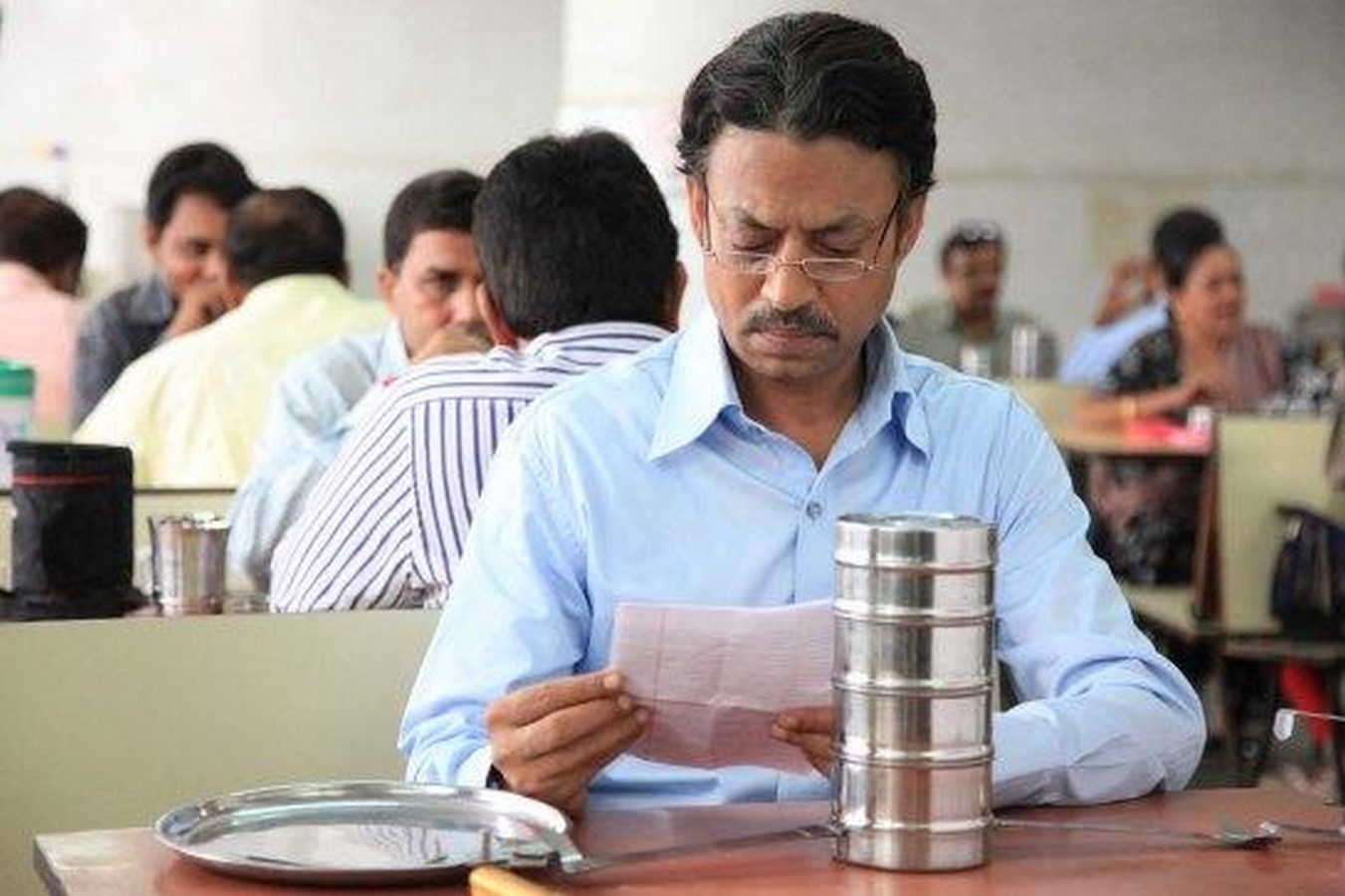
The office interiors are repetitive and bureaucratic. The lines of desks, the colour palette, and the linear layout all convey a sense of monotony. These are textbook examples of modern institutional design—efficient but soulless.
The contrast between the packed train and the quiet apartment again highlights the tension between public density and private emptiness. Architecturally, this prompts questions: How can loneliness be alleviated through design? Can spatial design facilitate social interaction without trespassing on privacy?
Christopher Alexander (1977) had proposed designs that facilitate human-scale interaction—semi-public spaces, shared thresholds, transition zones. In the movie, such spaces are rare. Corridors and stairs are merely means to an end, not social hubs.
The lack of communal spaces in the architecture is apparent through repetition. Hence, the movie indirectly criticises certain types of housing that disregard shared spatial interfaces.
Thresholds and Liminality
Liminal spaces, or the in-between states of being like corridors, platforms, and doorways, are very important in creating human experience (Turner, 1969). In *The Lunchbox* transitional spaces are structured around anticipation.
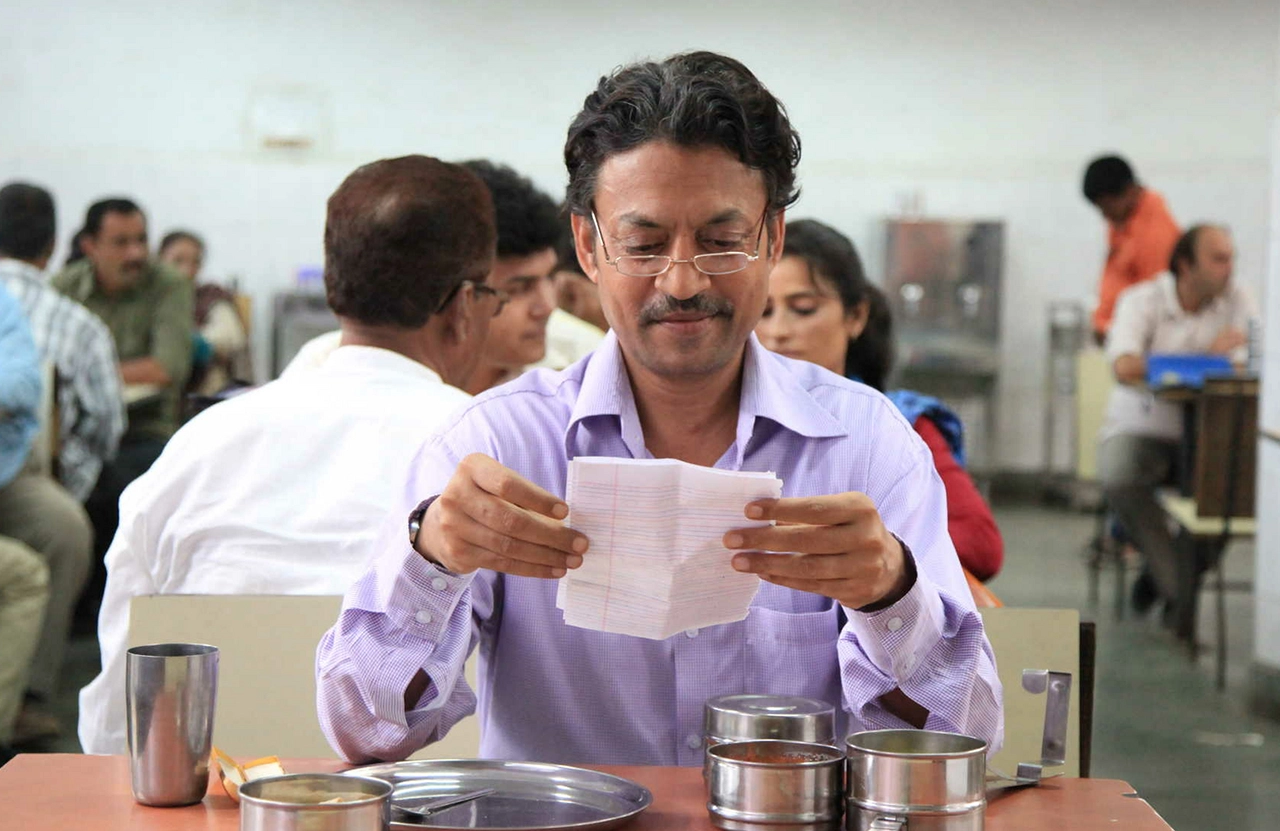
Train stations, stairways, office entrances, and apartment doors are temporary pauses. The camera lingers in these areas, focusing on waiting rather than doing.
Psychologically, thresholds are very powerful in design. They are the transition points between public and private, noise and silence, motion and stillness. Even in very dense cities, thresholds are often reduced in size, but they still carry meaning.
The spatial flow from kitchen to staircase to train to office in *The Lunchbox* illustrates how architecture directs daily life. The repetition of these sequences in the film emphasises how spatial routines construct identity.
Every day as an Architectural Narrative
Whereas movies about architecture showcase iconic buildings, The Lunchbox showcases the ordinary. This is consistent with Habraken’s (1998) “structure of the ordinary,” which argues that the ordinary is the true carrier of urban life.
The architecture shown is neither monumental nor experimental. It is banal, lived-in, and slightly worn. Paint is peeling. Surfaces are aging. Things are accumulating.
This is consistent with Jacobs’ (1961) argument about the vitality of the ordinary in urban life, which is messy, layered, and unpredictable. The authenticity of the movie comes from its refusal to stylise poverty and density.
The message for architects is profound: design is often evaluated not just by form but by its ability to accommodate ageing and adaptation.
Materiality, Light, and Atmosphere
The textures of materials in the film, such as metal tiffin carriers, tiled kitchens, and concrete staircases, add to the realism. The colour scheme is not exaggerated.
Pallasmaa (2005) states that the atmosphere is a product of material continuity and coherence. The interiors in the film are neither highly polished nor worn beyond recognition. They are in a credible zone of middle-class urban living.
The use of natural light is critical. Instead of lighting through artificial sources, natural light is introduced indirectly. This is a subtle effect that adds to the realism of the spaces.
In sustainable design, the use of natural ventilation and natural light is implicitly present. The compact apartments make the most of window openings, whenever possible. This is a critical lesson for high-density developments.
Infrastructure as Social Connector
The dabbawala network is worthy of architectural study. It is a distributed logistical system that is integrated into urban morphology (Bapat, 2014). The spatial intelligence of the system is based on railway routes, clustering, and time.
Designers tend to concentrate on formal systems, but informal systems can be highly efficient. The documentary illustrates how infrastructure influences human relationships in an indirect manner.
It raises questions for architects: How can design help in the development of decentralised community networks? How can urban planning incorporate informal intelligence instead of displacing it?
Lessons for Architects and Urban Designers
Without giving away the storylines, here are some design takeaways:
- Scale Has Emotional Value
Small kitchens can contain entire emotional worlds. Scale is not about size.
- Designing Thresholds Is Essential
Windows, corridors, and train car interiors are all about emotional transitions.
- Infrastructure Is a Site of Experience
Railway systems are lived in interior spaces, not just transportation routes.
- Designing Light and Ventilation
Using natural environmental design can improve sustainability and mood.
- Unremarkable Architecture Warrants Design Interest
Typical residential architecture provides the framework for most urban experiences.
Critical Reflection
Although *The Lunchbox* provides valuable spatial information, it is more observational than critical. It does not question systemic housing deficits or infrastructural disparities directly. Its value is in its subtlety.
From an architectural perspective, *The Lunchbox* could be criticised for failing to extend its scope into more general urban studies. Nevertheless, its emphasis on the smaller scale may be deliberate. By zooming in, it heightens the significance of domestic micro-architecture as a site of emotional experience.
In sum, *The Lunchbox* is not an architectural film about monumental spatial expression. It is about living space. It prompts architects to remember that, beyond master plans and monumental facades, like kitchens, train cars, and windows—spaces where life occurs in relative obscurity.
As architects, we are tempted by the spectacular. This movie urges us to design for the ordinary, for the routine, and for human dignity under constraint. In this regard, it is very architectural.
References:
Alexander, C. (1977). A pattern language. Oxford University Press.
Bapat, M. (2014). The Mumbai dabbawala system: A case study in urban logistics. Economic and Political Weekly, 49(16), 52–59.
Batra, R. (Director). (2013). The Lunchbox [Film]. Sikhya Entertainment.
Bruno, G. (2002). Atlas of emotion: Journeys in art, architecture, and film. Verso.
Castells, M. (1996). The rise of the network society. Blackwell.
Habraken, N. J. (1998). The structure of the ordinary. MIT Press.
Jacobs, J. (1961). The death and life of great American cities. Random House.
Pallasmaa, J. (2005). The eyes of the skin: Architecture and the senses. Wiley.
Patel, S., & Thorner, A. (1995). Bombay: Metaphor for modern India. Oxford University Press.
Rapoport, A. (1969). House form and culture. Prentice-Hall.
Sennett, R. (1977). The fall of public man. Knopf.
Turner, V. (1969). The ritual process
Garlington, K. (2020, April 29). REVIEW: “The Lunchbox.” Keith & the Movies. https://keithandthemovies.com/2015/01/01/review-the-lunchbox/