Cinema That Built More Than Stories
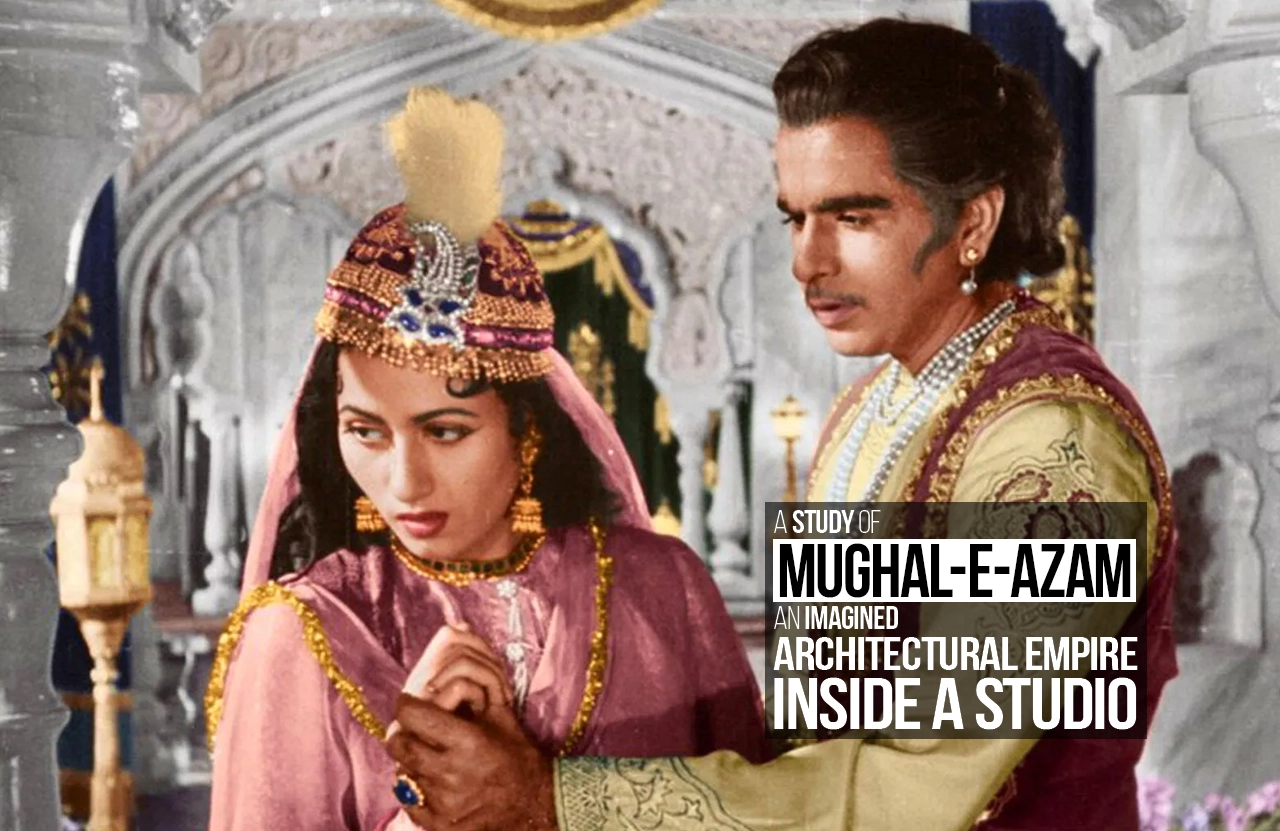
Cinema doesn’t just show creates worlds, sometimes it builds them so convincingly that you forget they were ever sets. Legendary director K Asif’s magnum opus, Mughal-e-Azam, is an exploration of architecture through visual storytelling. Its grand palaces, courtyards, halls, and their details are not just passive backdrops but active shapers of the narrative.
The film goes beyond storytelling, using architecture and set design as active tools to express power, emotion, and hierarchy. It was a nearly 16-year dream carved into cinema. First announced in 1944-45, the project faced Partition, financial collapses, the death of an actor and a complete recasting of its leads.
What’s interesting is that these spaces were never “real” architecture in a permanent sense, yet they feel real enough to be read as a complete built environment. In that way, the film becomes an imagined architectural empire constructed entirely inside a studio.
Architecture as Power: The Mughal Court
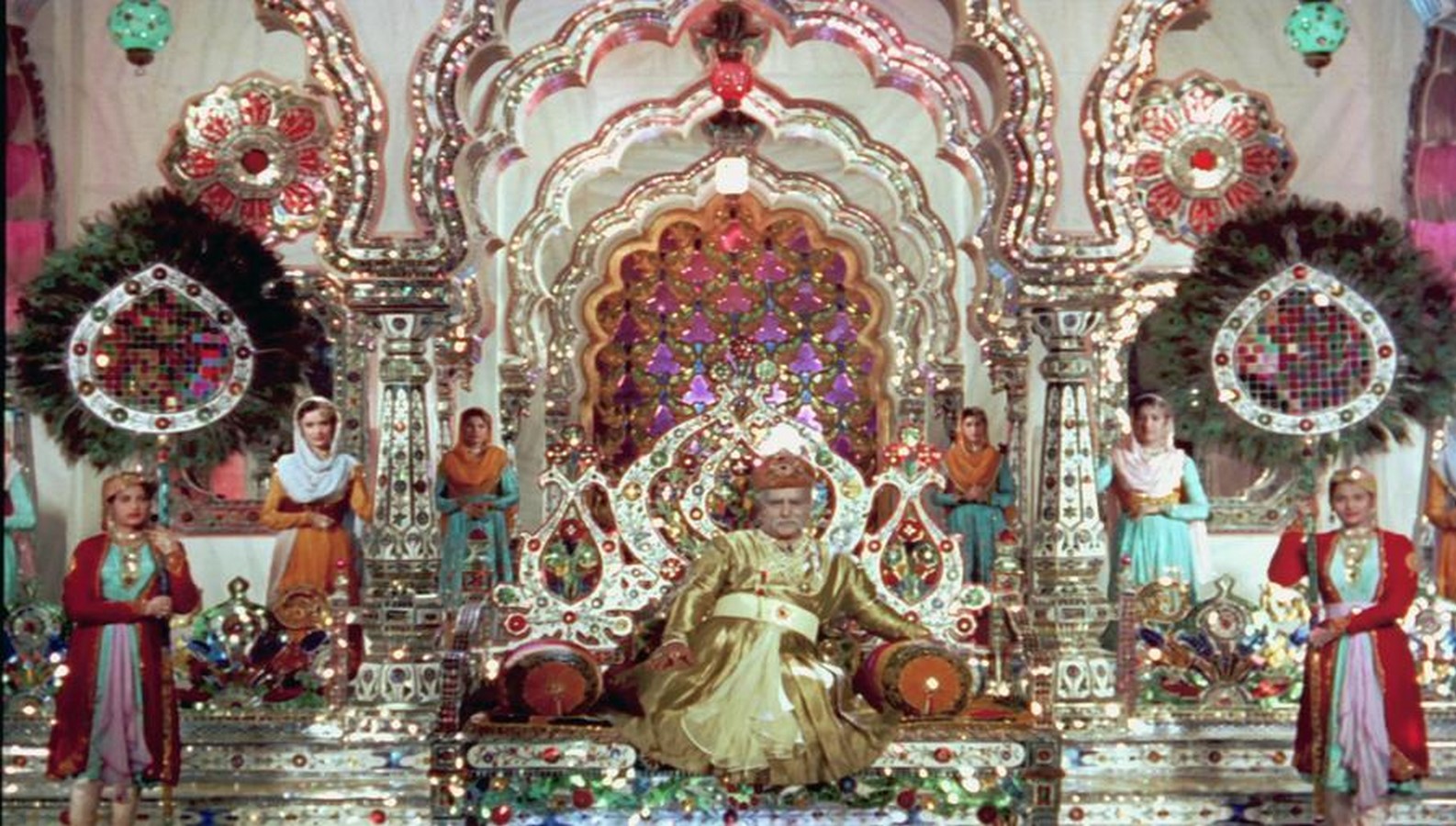
The royal court in Mughal-e-Azam is one of the clearest examples of architecture being used as an extension of authority. Everything in the space, scale, symmetry, repetition, and alignment works toward creating control. The high ceilings and long axial compositions naturally pull attention toward the center, where the emperor sits. You don’t just see power; you physically feel how the space organizes people around it.
The columns and arches are not decorative in a casual sense. They form a structured rhythm that reinforces hierarchy. Movement is guided, almost restricted, within these frames. Even the visual weight of the space, the heavy textures, and the muted tones add to the seriousness of the court.
It’s a space where architecture doesn’t simply host authority. It actively performs it.
Spaces of Love and Restriction
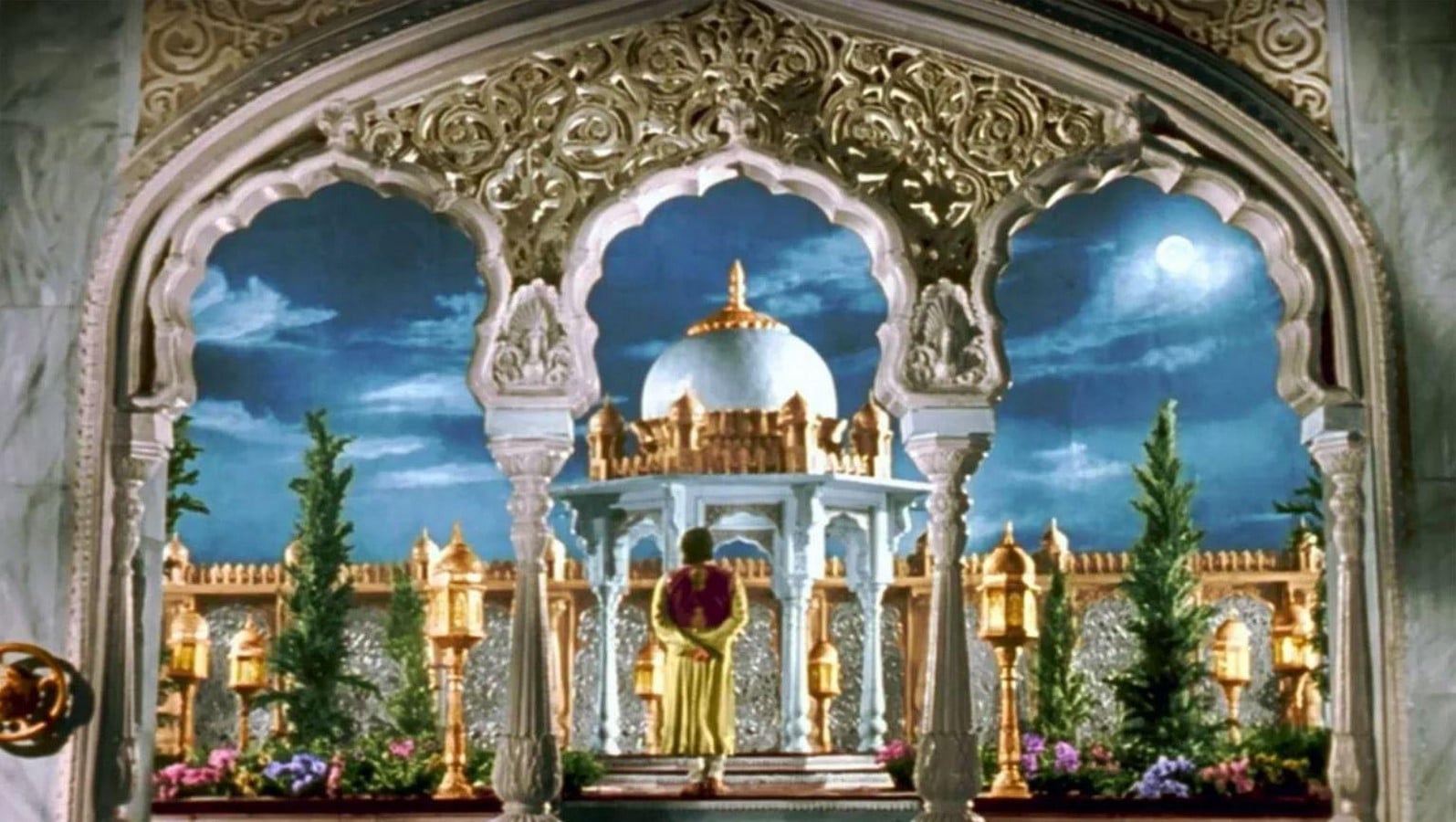
When the story shifts, in contrast to the grandeur of the court, to the main characters, Salim and Anarkali, the architecture also shifts, but in a very different emotional direction. The spaces associated with them are more intimate. Instead of open courtyards and grand halls, we see tighter, enclosed, and more layered spaces. Corridors, chambers, and framed openings dominate their world.
The film uses architecture to express emotion. They are constantly seen through arches, jharokhas, and partial frames. It almost feels like the space is always reminding them of boundaries, social, emotional, and political.
What makes this effective is the contrast. The court is expansive and controlled, while their personal spaces are smaller but emotionally dense. Architecture here becomes a quiet way of showing that their love exists within limitation rather than freedom.
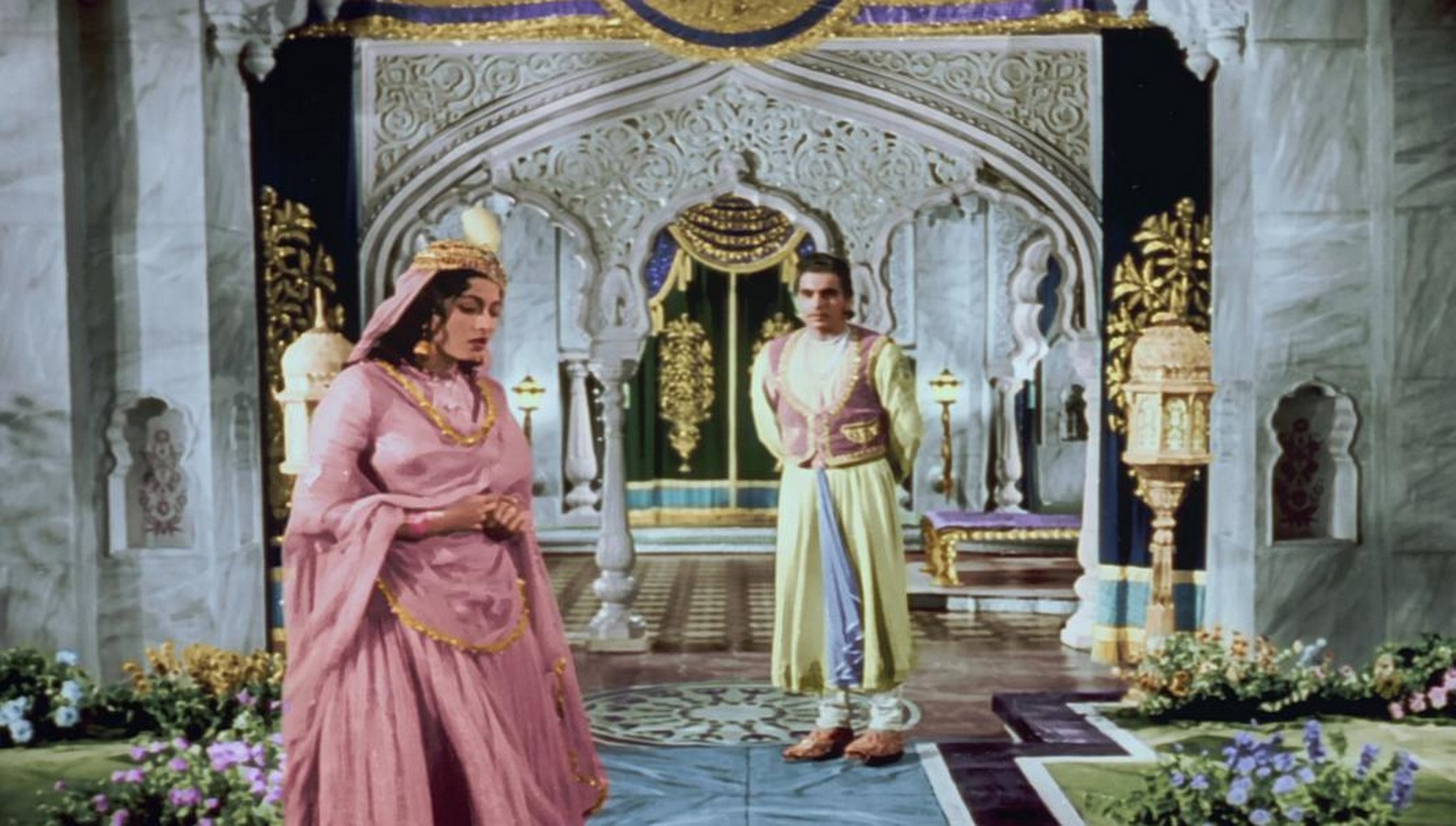
The Sheesh Mahal: Reflection, Rebellion, and Crafting of Illusion
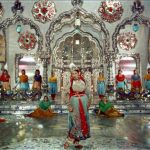
The Sheesh Mahal sequence is easily the most visually remembered part of the film, but it’s also one of the most complex architectural ideas in the entire production. It was inspired by the Lahore Fort and took nearly two years to construct. Designed under the direction of M. K. Syed, the set draws inspiration from Mughal mirror palaces, combining Persian, Islamic, and Indian architectural influences.
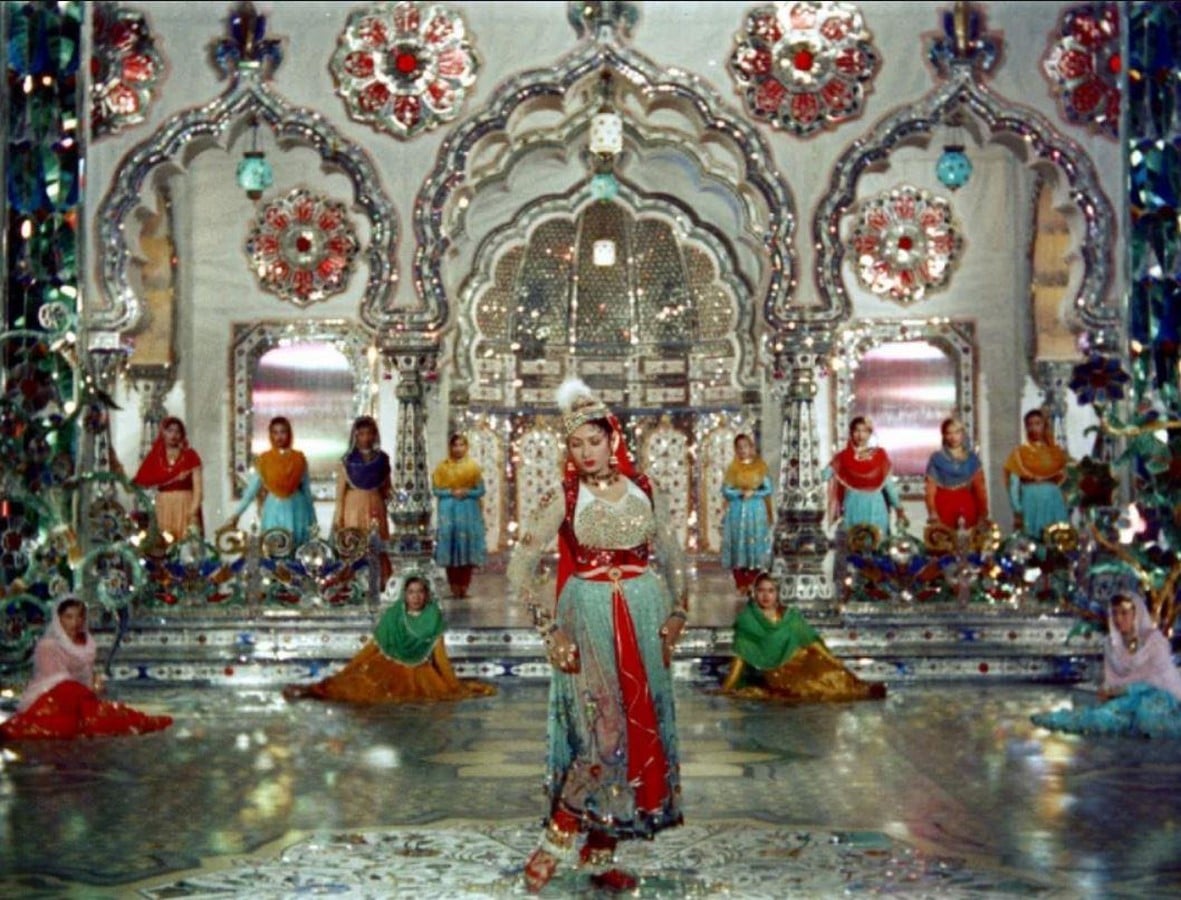
The set was not only visually magnificent but also technically problematic. Thousands of small mirror pieces were manually fixed into surfaces, many of them imported Belgian glass. The process was slow, precise, and extremely demanding. Director K. Asif spent years trying to bring this vision to life, refusing to settle for anything that felt artificial.
Filming inside such a space created its own set of problems. Light bounced unpredictably, cameras reflected in unwanted ways, and controlling visibility became difficult. which called for various trial-and-error, delays in the timeline, but the strict vision of the team made it all through. It is said that even renowned filmmaker David Lean was consulted during this phase
The production then had to constantly experiment and adjust. To manage this, several practical solutions were made:
- Selected mirrors were coated with thin layers of wax to reduce harsh reflections.
- Equipment was hidden using careful placement and dark coverings
- Lighting was diffused rather than directly focused
- Camera positions were planned with extreme precision.
What makes Sheesh Mahal important isn’t just its visual richness; it is the fact that it shows how architecture, craft, and cinema can merge into one engineered experience. The process is even said to be studied in various film schools and architecture-adjacent theory courses abroad.
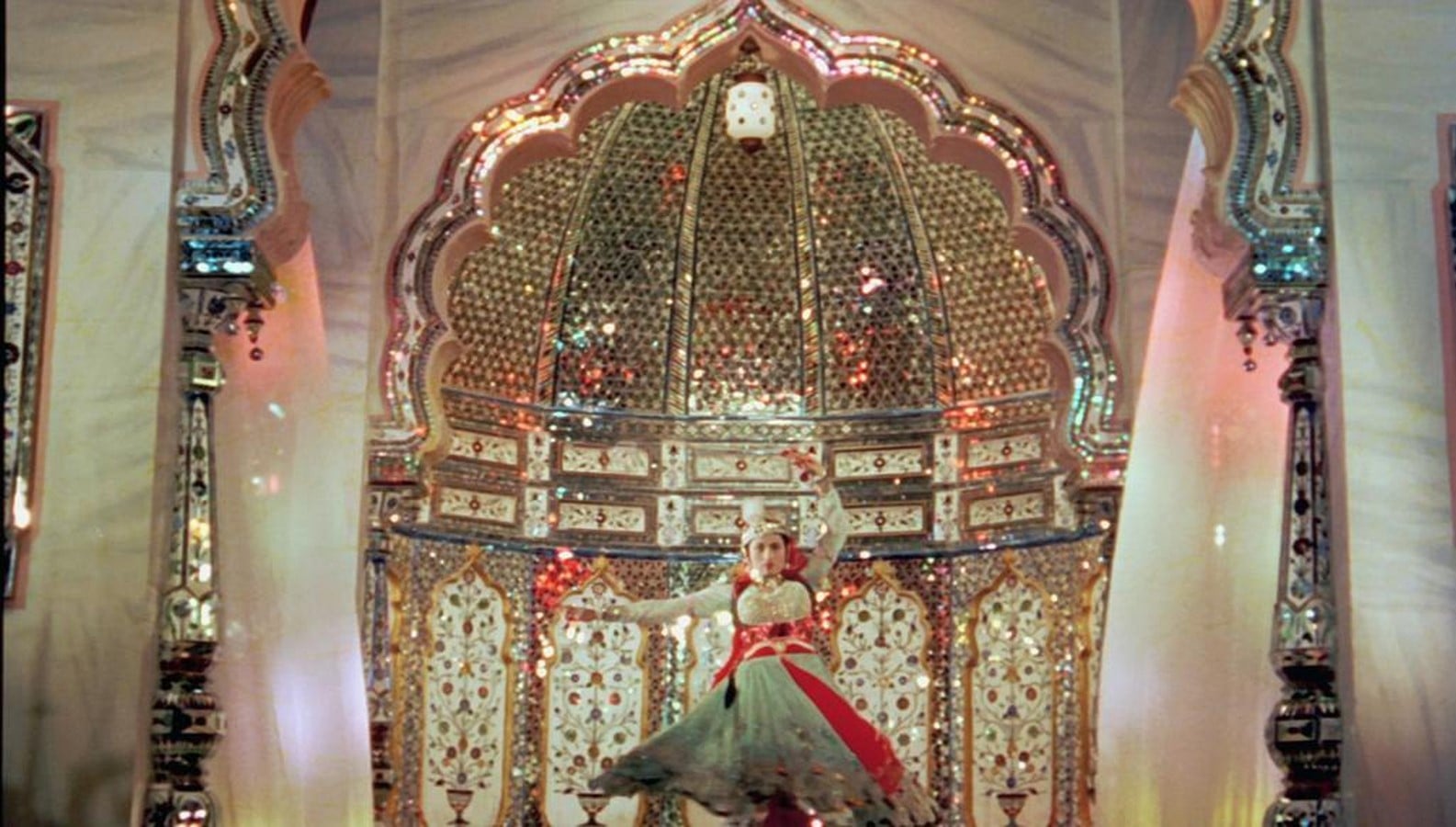
Set Design as Temporary Architecture
When you step back and look at the film as a whole, it becomes clear that Mughal-e-Azam is essentially a world built through temporary architecture. Every palace, corridor, and courtyard were constructed specifically for cinematic use, yet each one carries the seriousness of real architectural design.
Even though they were dismantled after filming, their presence continues through the film’s imagery and cultural memory.
This reinforces the idea that architecture does not need to be permanent to be impactful. Temporary environments, when thoughtfully designed, can influence how people understand space, history, and emotion.
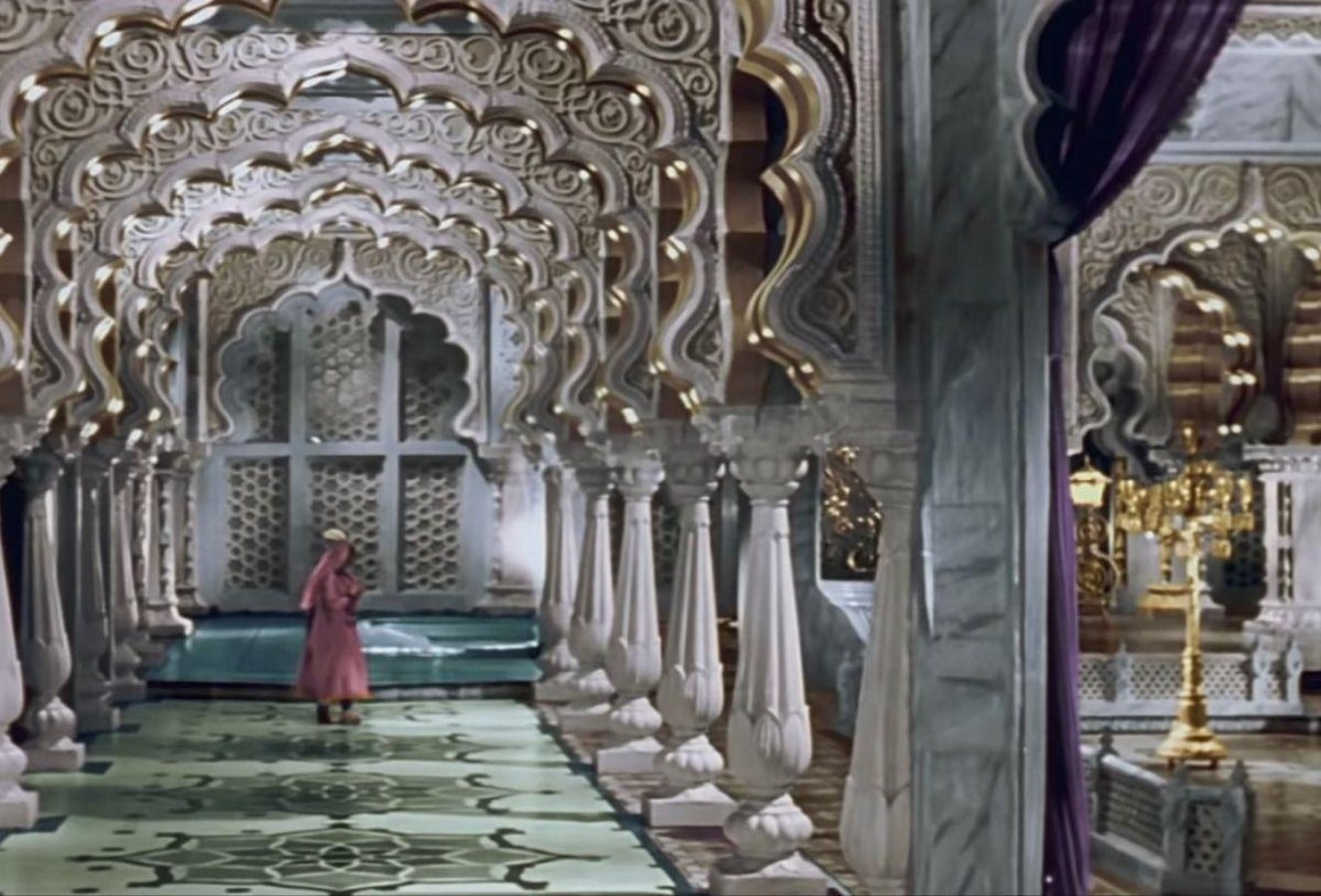
Mughal-e-Azam shows us that architecture is not only limited to physical buildings; it can exist through representation, visualizations, and narrative. The film’s sets, though temporary, achieve a sense of permanence through their emotional and grandeur impact.
The sets may have been temporary, but their emotional and visual weight make them feel permanent. The film blurs the line between built space and imagined space, showing how deeply architecture can influence storytelling.
In the end, these spaces may no longer physically exist, but they continue to live on, reflected endlessly, much like the endless mirrors of the Sheesh Mahal itself.
References:
Encyclopaedia Britannica (n.d.) Mughal-e-Azam. https://www.britannica.com/topic/Mughal-e-Azam
ShodhKosh (n.d.) Cinematic representation and visual culture in Mughal-e-Azam. https://www.granthaalayahpublication.org/Arts-Journal/ShodhKosh/article/view/608
The Times of India (n.d.) Mughal-e-Azam: lesser-known facts. https://timesofindia.indiatimes.com/entertainment/hindi/bollywood/photo-features/mughal-e-azam-lesser-known-facts/photostory/47653870.cms
Dawn (2020). The making of Mughal-e-Azam. https://www.dawn.com/news/1586919
Asher, C.B. (1992). Architecture of Mughal India. Cambridge: Cambridge University Press.
Architectural Digest (2024) Inside the world of Heeramandi sets production. https://www.architecturaldigest.in/story/exclusive-ad-visits-the-world-of-heeramandi-sanjay-leela-bhansalis-biggest-set-production/
Bruno, G. (2002). Atlas of Emotion: Journeys in Art, Architecture, and Film. New York: Verso.
Verma, S. (2020). 25 Grand Frames of Mughal-E-Azam, Rediff.com, 5 August. https://m.rediff.com/amp/movies/special/25-grand-frames-of-mughal-e-azam/20200805.htm
YouTube (n.d.) Mughal-e-Azam Sheesh Mahal scene analysis. https://www.youtube.com/watch?v=0aBghJs3n88