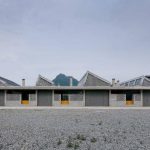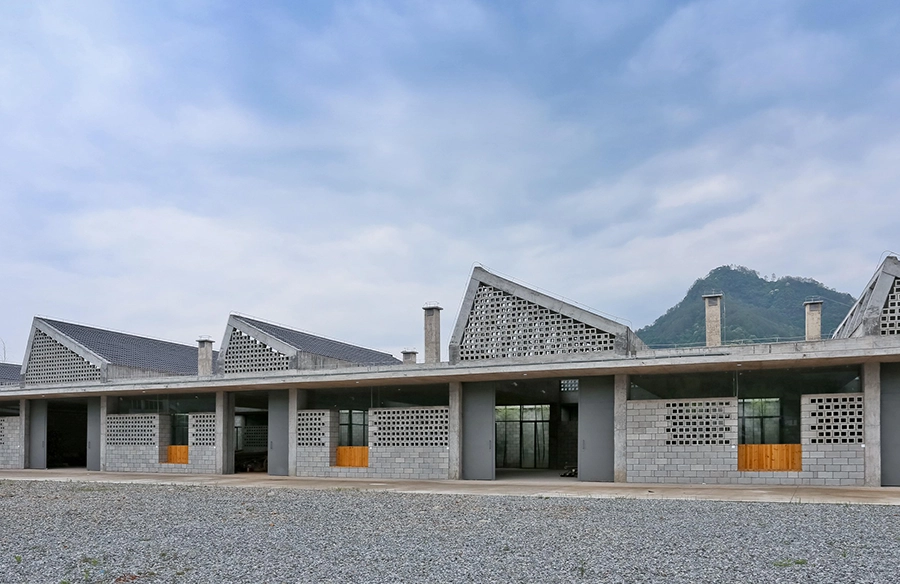
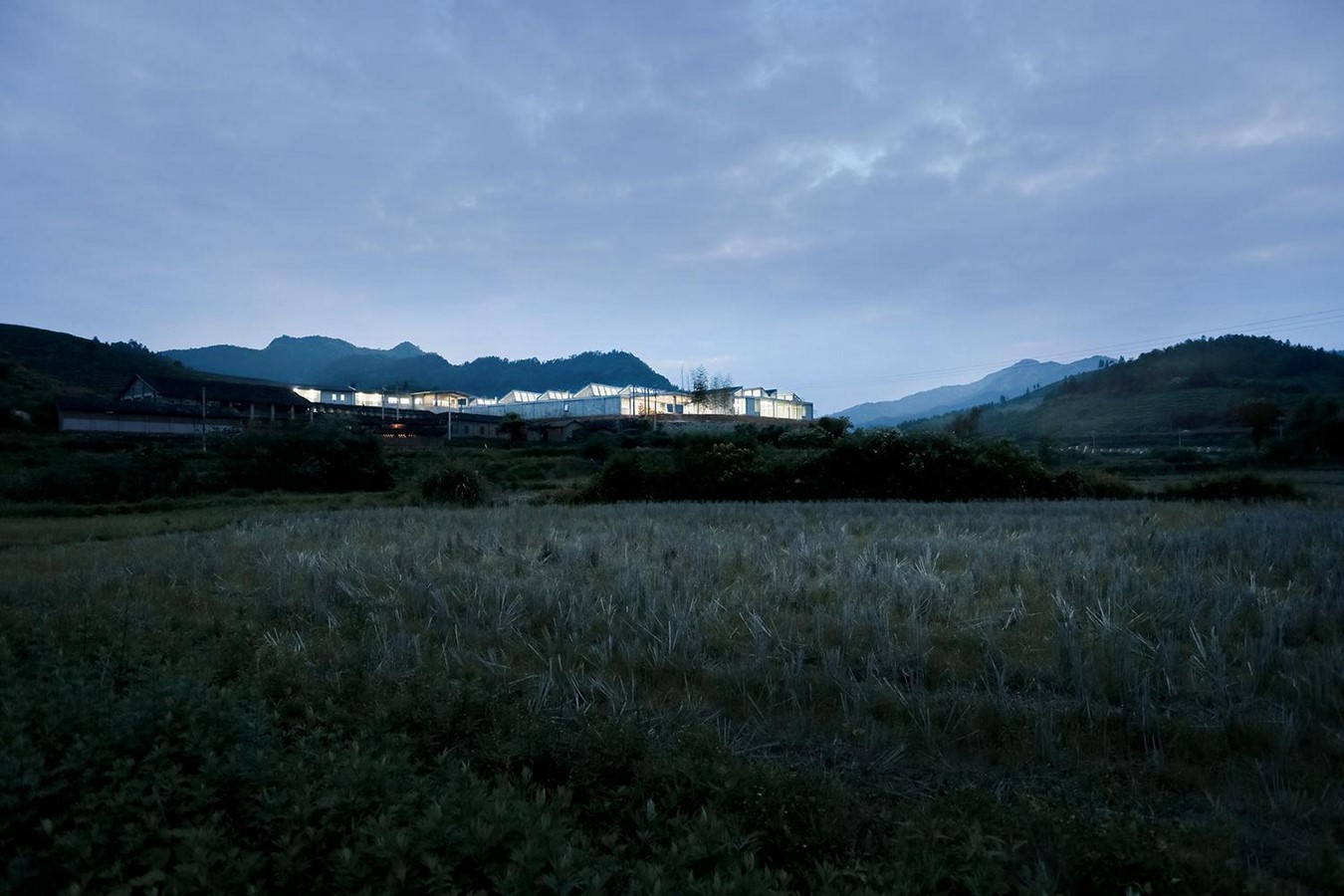
The Wuyishan Bamboo Raft Factory is an industrial complex situated in Wuyishan, Fujian province, where bamboo rafting holds significant economic and cultural importance. Designed by Trace Architecture Office (TAO), the complex serves as a model for contextually sensitive rural industrial development, integrating storage, drying, and fabrication facilities within a cohesive architectural framework. Spanning a total area of 16,000 square metres across three primary structures, the project extends beyond its utilitarian function, responding directly to the environmental conditions and craft traditions of its locale.
Design Philosophy of Trace Architecture Office (TAO)
Trace Architecture Office (TAO) is a Beijing-based design firm, founded by architect Hua Li in 2009. The office focuses on how buildings relate to their surroundings. TAO creates architecture that reflects the character of a place and fits the local area. They believe architecture is not just an object but a living part of its environment. Their portfolio includes projects across China, using local materials and traditional methods. Notable works include the Museum of Handcrafted Paper and the Xinzhai Coffee Manor. TAO has received several international and domestic awards. These include the Young Architect Award of the 2012 China Architecture Media Awards, Design Vanguard 2012, and a shortlist for the Aga Khan Award for Architecture (2013).
Workshop Design Strategies
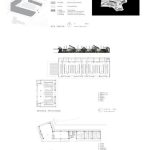
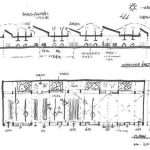
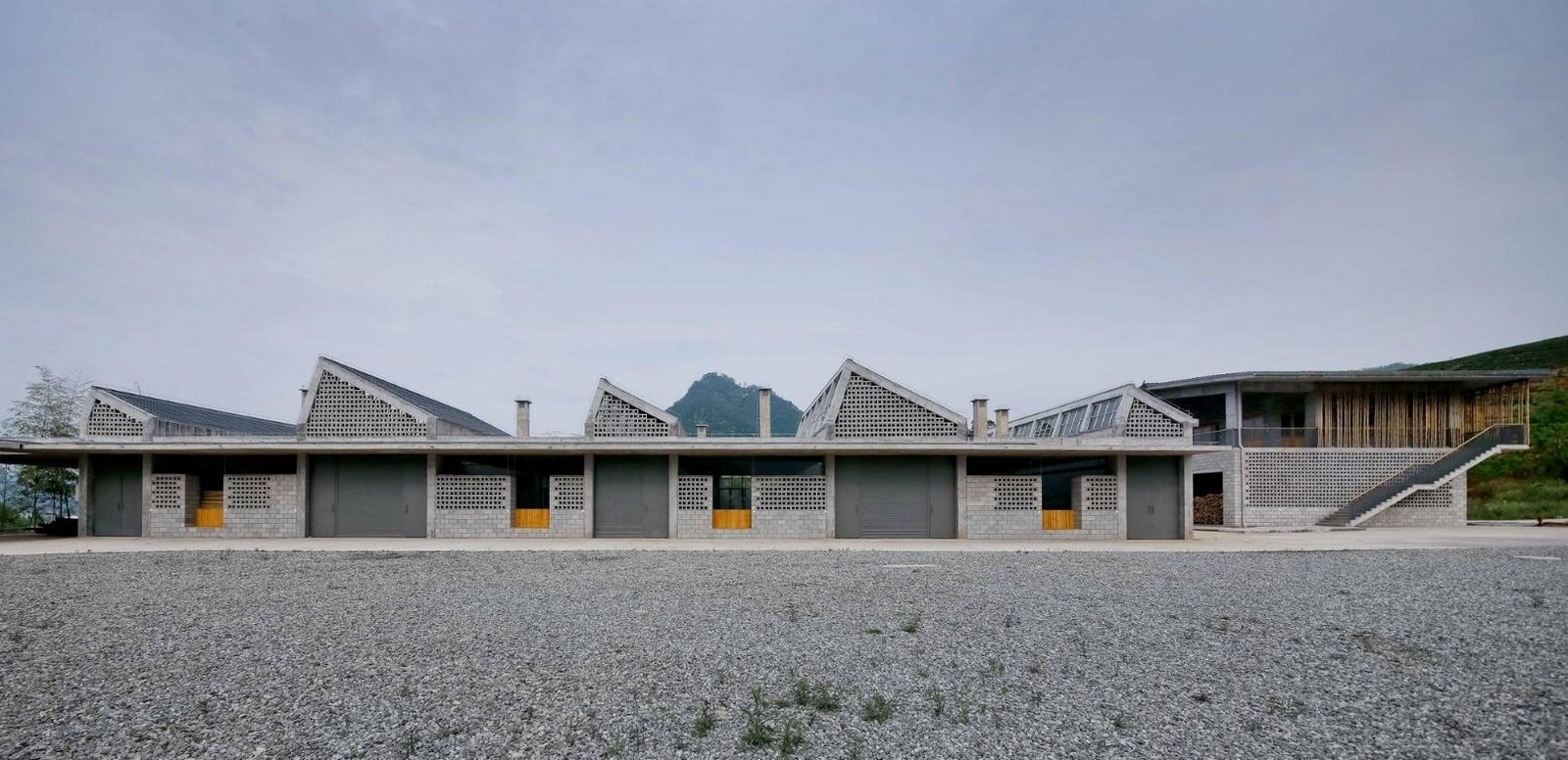
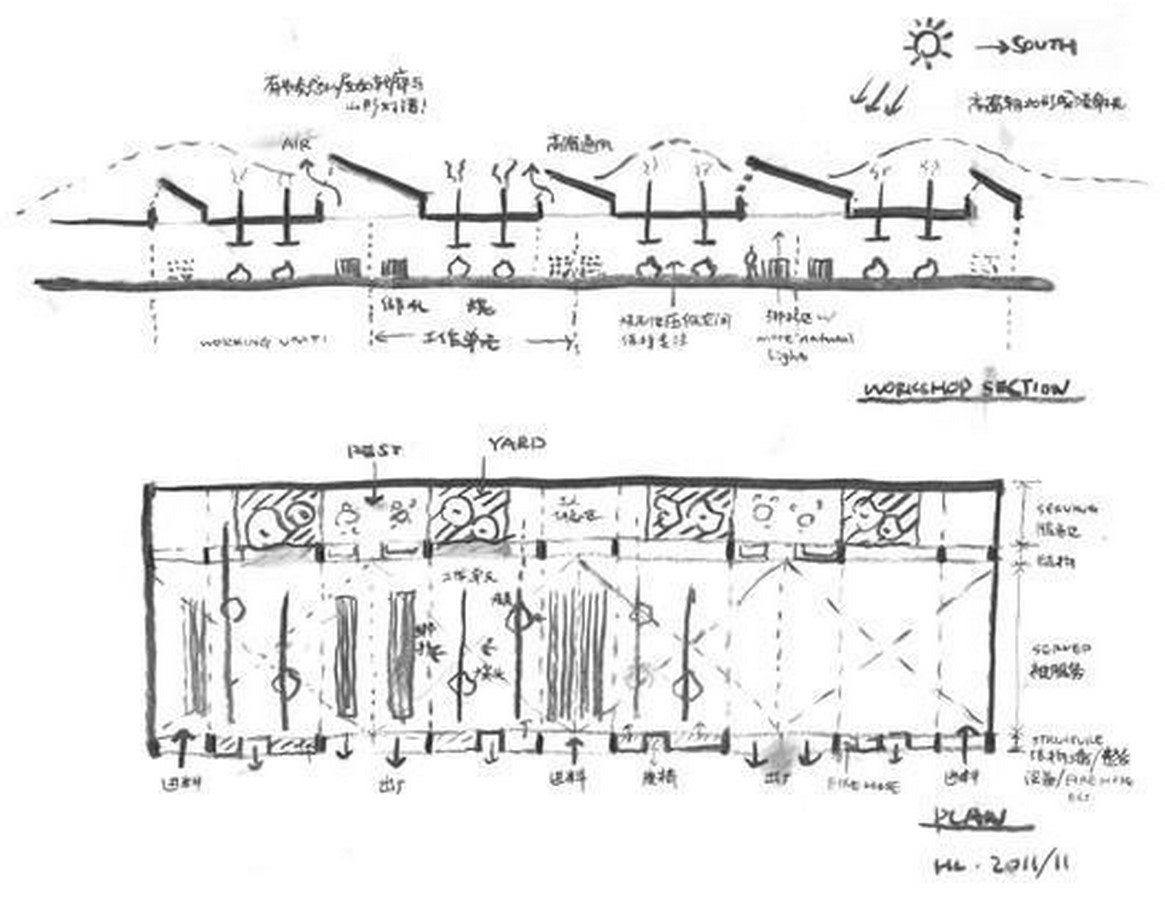
The Wuyishan Bamboo Raft Factory is characterised by several architectural features that respond to its industrial function and the rural environment of Fujian, China. The complex has three primary buildings: a bamboo raft storage warehouse, a manufacturing workshop, and an office and dormitory building. These functional buildings are arranged around a central open courtyard, which acts as both a spatial and functional core. The courtyard used for bamboo storage is arranged according to the wind direction for ventilation. The Layout of the complex directly responds to the raft production process, constraints of the plateau site, ventilation and the layout of the workspace.
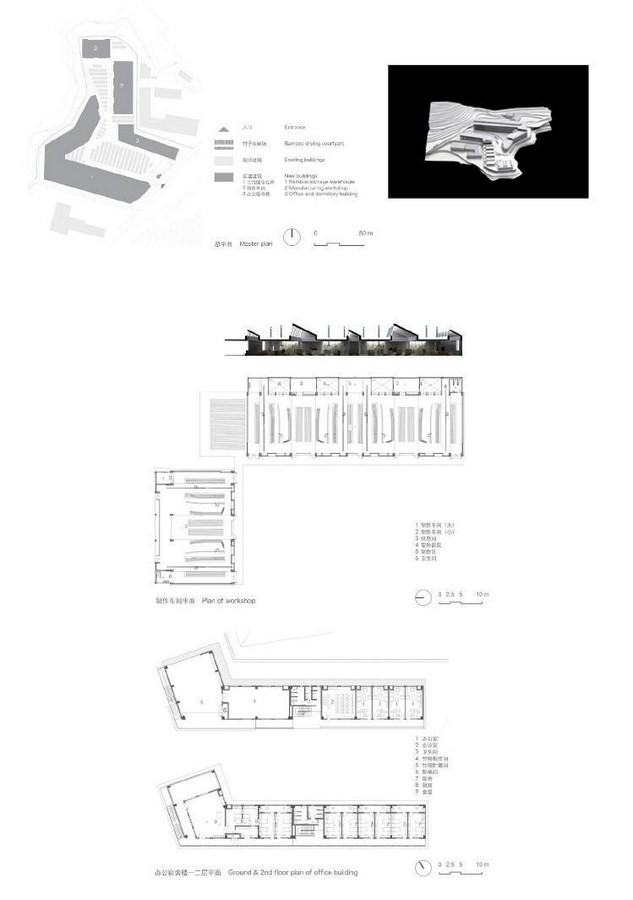
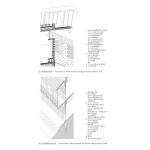
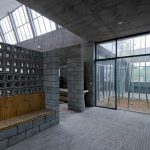
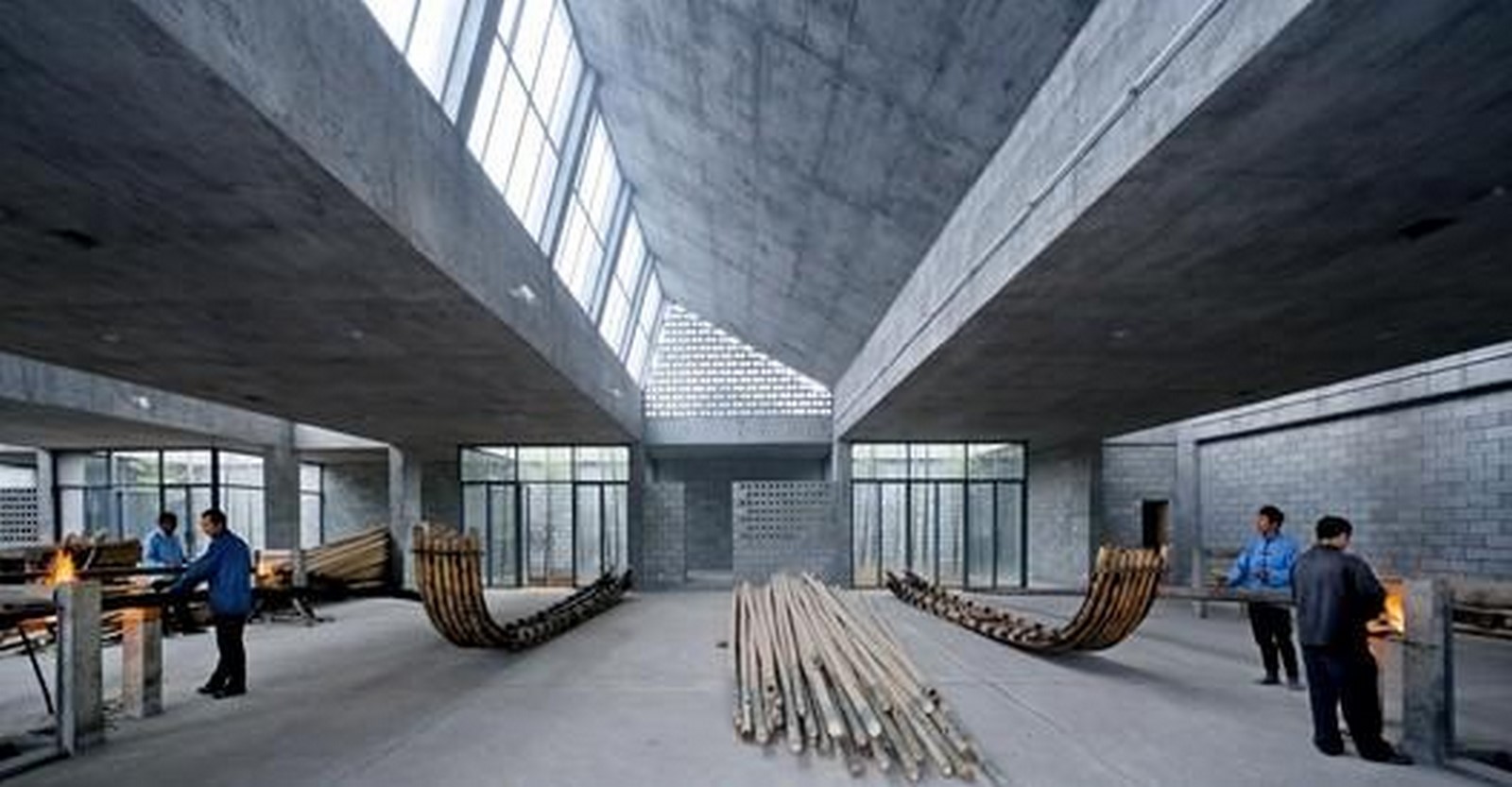
The Wuyishan Bamboo Raft Factory’s L-shaped manufacturing workshop covers an area of 1,519 square meters. The building’s shape reflects the step-by-step process of raft making. Lengthwise, the space supports three to four manufacturing units, which specialise in burning and bending the bamboo tail and head, and the final binding parts of the production process. There are six traditional firing and bending stations that require at least nine meters of working width. The 14-meter open span inside provides an unobstructed circulation through the workshop. The workshop is divided into multiple functional zones: fire area, assembly, storage and service spaces. The skylight, which is oriented northward, prevents glare inside the work area. The narrow bays and the courtyard enhance cross ventilation through the building. Beyond the primary production spaces, the workshop integrates supporting functions such as rest areas and small courtyards.
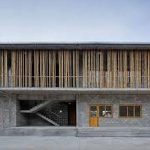
Wuyishan Bamboo Raft Factory has an office-dormitory block where administrative offices occupy the ground floor, while the dormitory and cafeteria are located on the upper level. This integration of workspaces with living and communal areas shows the value of both productivity and the well-being of its workers. The office-dormitory block follows a veranda-based circulation system in the Fujian climate, which allows the building to breathe while remaining shaded. The total floor area of the entire office and dormitory building is 1,059 square meters. The central courtyard ensures that the administrative and residential areas remain connected to the central manufacturing life of the factory. A striking feature in this building is the application of bamboo stalks along the upper-story veranda. These form shading louvres that provide ventilation and insulation for the living areas.
Materiality and Construction
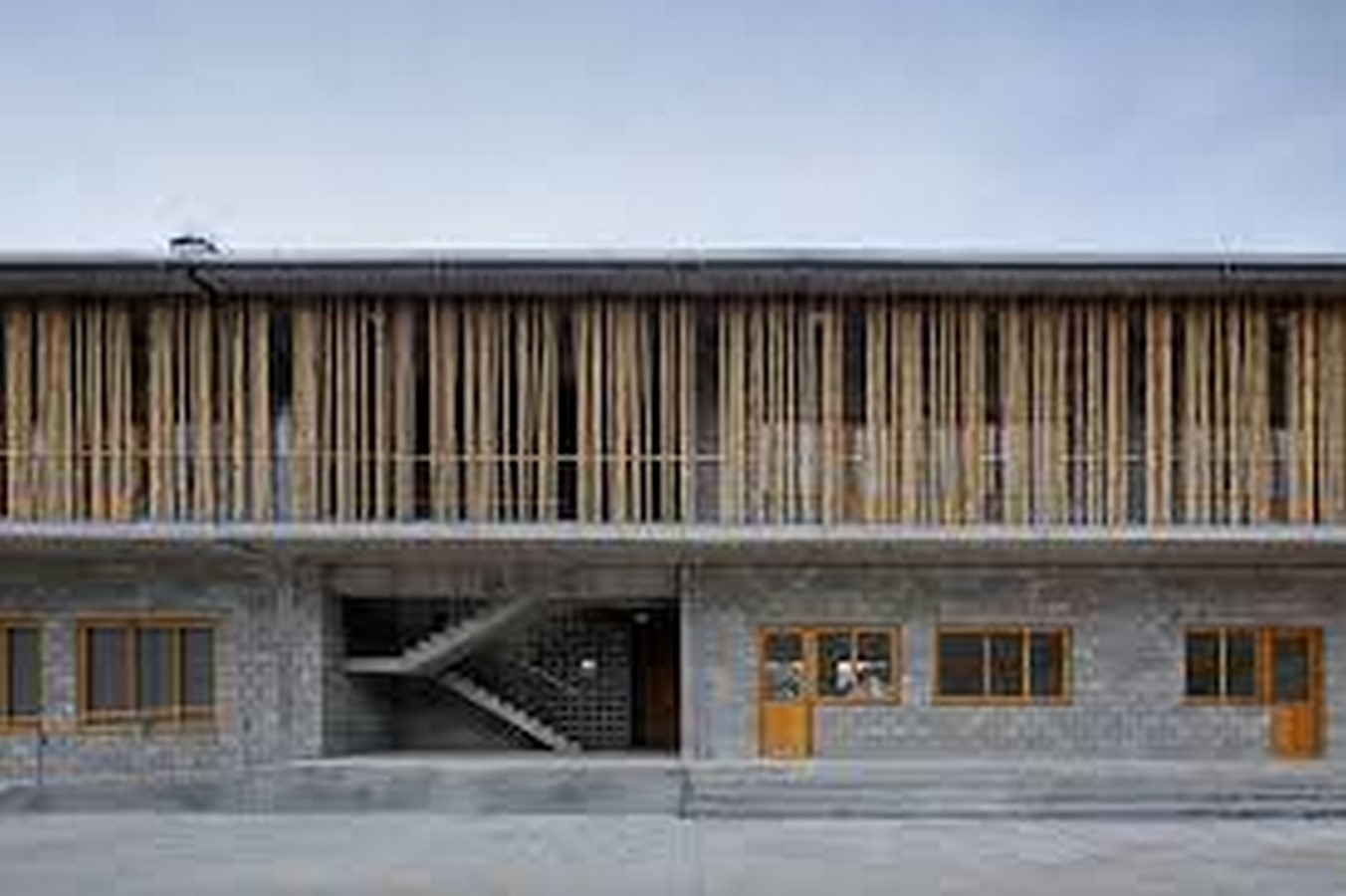
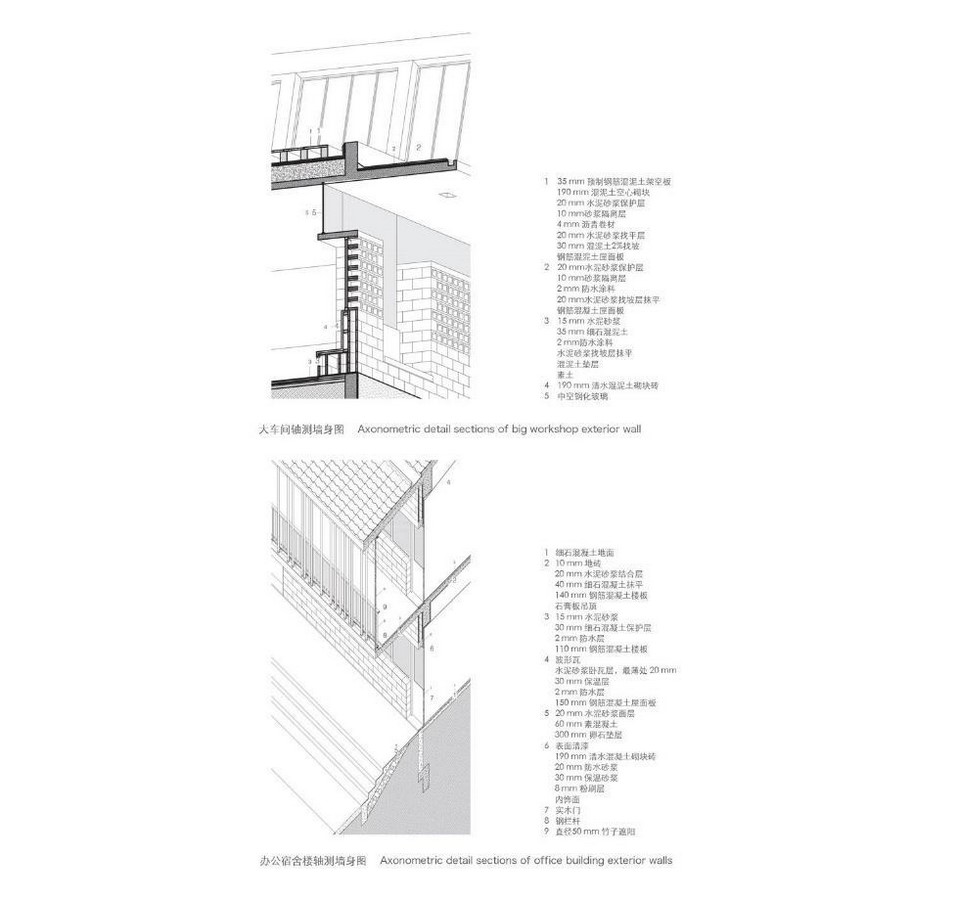
The Wuyishan Bamboo Raft Factory uses materials like In-situ concrete, hollow concrete blocks, and cement roof tiles to emphasise local and economical materials. These materials are left raw and exposed to express their natural textures. TAO prioritised local resources and responded directly to topographical and climatic demands. The factory’s outer walls are made with horizontally laid hollow bricks since the factory does not require heat preservation. Sloping roofs are used throughout the complex to improve the drainage and thermal performance of the building. Bamboo and wood are used for sun shading, handrails, doors and windows. The use of Bamboo louvres along the veranda provides solar shading and thermal buffering. The design maintains low-cost construction, which is compatible with local building practices.
Rethinking Industrial Architecture
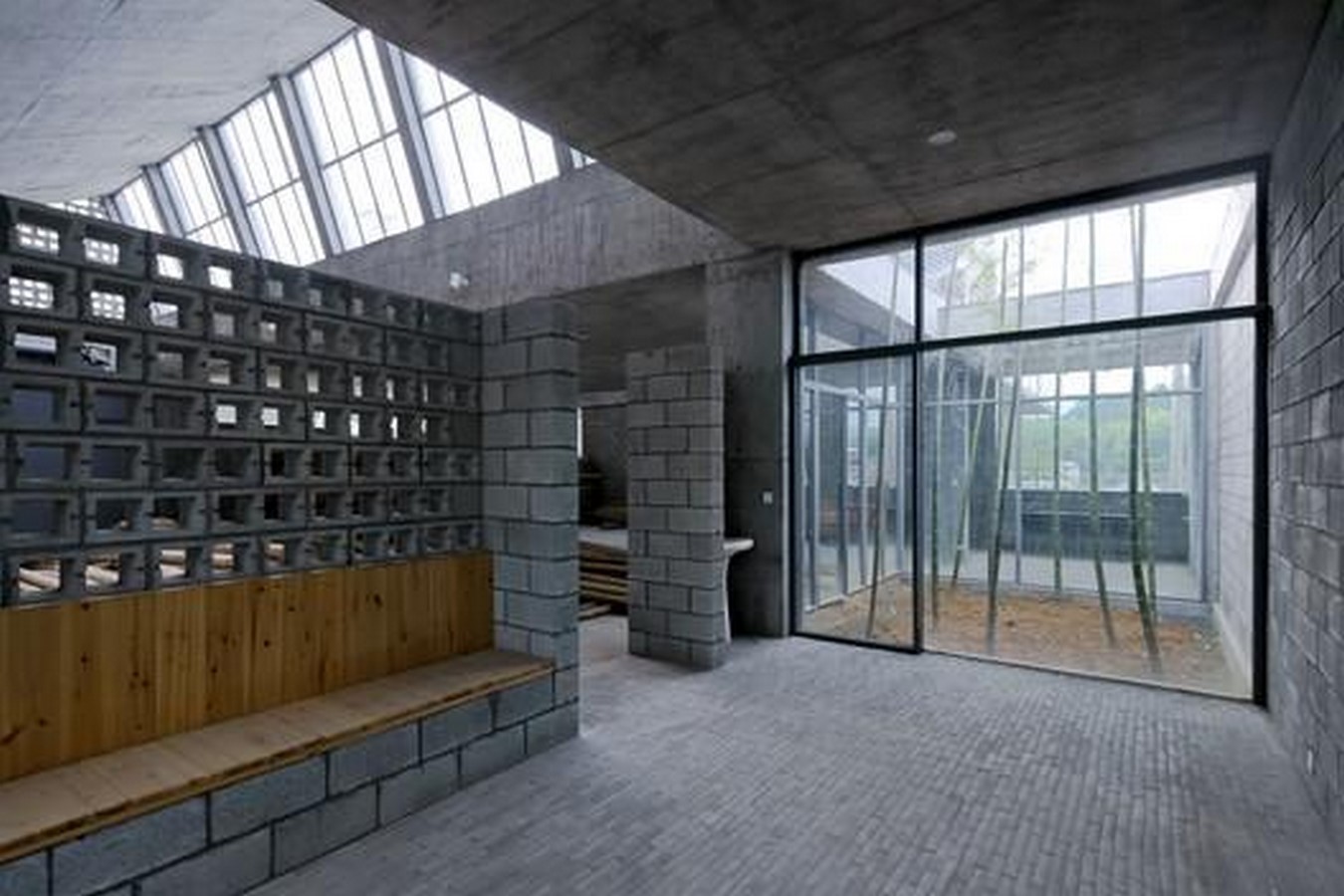
Rather than treating the building as purely mechanical infrastructure, it considers the experience of the people working within it. The spatial organisation here follows the logic of bamboo raft production, ensuring efficiency while maintaining a strong connection to the surrounding landscape. Beyond performance, the project demonstrates how architecture can grow directly from its purpose and place. Through an “economy of means,” the design utilizes basic elements such as in-situ concrete, hollow bricks, and bamboo stalks to reconcile industrial utility with aesthetic simplicityThe integration of passive design strategies like natural ventilation, filtered daylight, and climate-sensitive materials makes it both sustainable and comfortable. TAO’s philosophy of evolving organisms is reflected in the architectural language of Wuyishan Bamboo Raft Factory.
Reference:
Chinese-Architects. (2016). Atelier Deshaus – Shanghai, China – Architects -. [online] Available at: https://www.chinese-architects.com/atelier-deshaus-shanghai [Accessed 21 Feb. 2026].
Chinese-Architects. (2026). Wuyishan Bamboo Raft Factory TAO. [online] Available at: https://chinese-architects.com/en/tao-beijing/project/wuyishan-bamboo-raft-factory [Accessed 13 Apr. 2026].
Transfer. (2020). Wuyishan Bamboo Raft Factory by TAO – TRANSFER. [online] Available at: https://www.transfer-arch.com/works/wuyishan-bamboo-raft-factory/ [Accessed 13 Apr. 2026].
philip (2016). trace architecture office constructs a concrete factory for bamboo rafts in china. [online] designboom | architecture & design magazine. Available at: https://www.designboom.com/architecture/trace-architecture-office-wuyishan-bamboo-raft-factory-fujian-china-hua-li-tao-08-09-2016/ [Accessed 13 Apr. 2026].
TAO (2014). TAO | Trace Architecture Office. [online] TAO | Trace Architecture Office. Available at: https://www.t-a-o.cn/office.
Images:
Archdaily. (n.d.). Wuyishan Bamboo Raft Factory [Photograph-1] Available at : https://www.archdaily.com/878703/wuyishan-bamboo-raft-factory-tao-trace-architecture-office
divisare (n.d.). Wuyishan Bamboo Raft Factory [Photograph-2] Available at : https://divisare.com/projects/302962-trace-architecture-office-tao-su-shengliang-wuyishan-bamboo-raft-factory
divisare (n.d.). Wuyishan Bamboo Raft Factory [Photograph-3] Available at : https://divisare.com/projects/302962-trace-architecture-office-tao-su-shengliang-wuyishan-bamboo-raft-factory
Archdaily. (n.d.). Wuyishan Bamboo Raft Factory [Photograph-4] Available at : https://www.archdaily.com/878703/wuyishan-bamboo-raft-factory-tao-trace-architecture-office
divisare (n.d.). Wuyishan Bamboo Raft Factory [Photograph-5] Available at : https://divisare.com/projects/302962-trace-architecture-office-tao-su-shengliang-wuyishan-bamboo-raft-factory
Archdaily. (n.d.). Wuyishan Bamboo Raft Factory [Photograph-6] Available at : https://www.archdaily.com/878703/wuyishan-bamboo-raft-factory-tao-trace-architecture-office
divisare (n.d.). Wuyishan Bamboo Raft Factory [Photograph-7] Available at : https://divisare.com/projects/302962-trace-architecture-office-tao-su-shengliang-wuyishan-bamboo-raft-factory
Archdaily. (n.d.). Wuyishan Bamboo Raft Factory [Photograph-8] Available at : https://www.archdaily.com/878703/wuyishan-bamboo-raft-factory-tao-trace-architecture-office