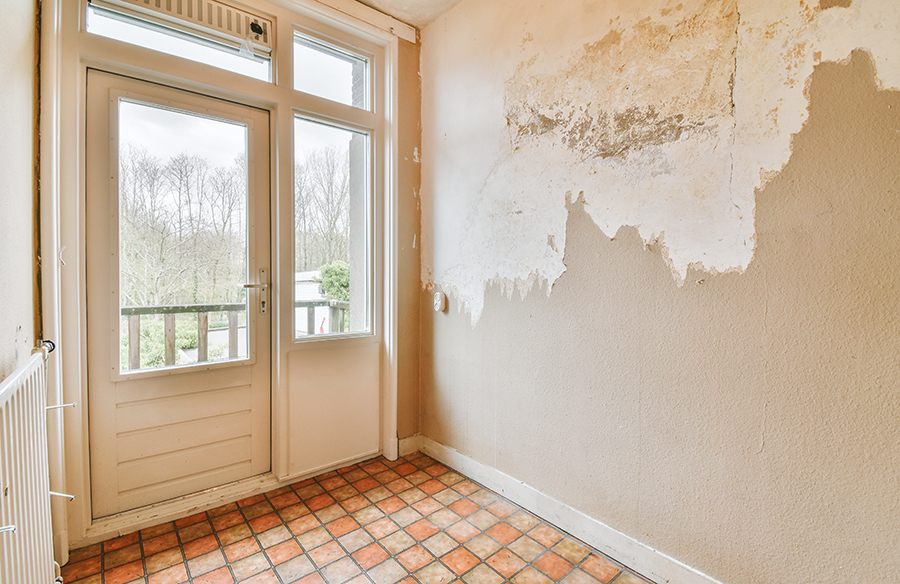
Discovering a stain on your drywall is unsettling. Water damage in walls and ceilings rarely stays contained to the spot where it becomes visible. By the time a stain appears on the surface, water has usually been present behind the drywall for some time, working on the framing, insulation, and paper facing of the gypsum board itself.
One of the most important questions a homeowner can ask in that moment is not just where the water came from, but whether it is still active. The answer determines your next move. Attempting to repair a wall while an active moisture source is still present behind it is essentially decorating over a problem that will return.
Knowing how to fix water damaged drywall starts with understanding what you are actually dealing with and whether the source has been properly resolved before any surface work begins.
Reading the Stain: What the Appearance Tells You
Drywall stains go through predictable visual stages as they age. A fresh or active stain will typically appear darker at the center and may feel damp to the touch. The edges tend to be soft and irregular. If the wall feels cool or slightly tacky in that area, moisture is still present.
An older, dried stain takes on a different character. The centre becomes lighter as the moisture evaporates, while the edge dries into a distinct ring, often a yellowish-brown or rusty orange color, where minerals carried by the water were deposited as it evaporated. This ring, sometimes called a tide line, is the tell-tale sign of a stain that has dried at least once.
The complication is that many stains go through multiple wet and dry cycles. A slow roof leak that only activates during certain wind-driven rain conditions might produce a stain that looks dried and old, but is in fact reactivating every few weeks.
The Touch Test and What It Does Not Tell You
Pressing gently on the drywall surface in the stained area gives useful information. Drywall that has been saturated loses structural integrity. Soft, spongy, or crumbling material indicates that the gypsum core has been compromised. That section cannot be dried and reused; it needs to be cut out and replaced.
However, drywall that feels firm and dry at the surface can still have active moisture behind it. The paper facing and paint layer can dry relatively quickly, while the framing, insulation batt, and back side of the drywall behind it remain damp for much longer. Surface feel alone is not a reliable indicator of conditions behind the wall.
The Smell Test: More Reliable Than It Sounds
Mold growth begins within 24 to 48 hours of sustained moisture exposure at room temperature. It is not always visible through a painted surface, but it tends to be detectable by smell before it becomes visible. A musty, earthy, or slightly sour odor coming from a wall or ceiling cavity is a significant warning sign, regardless of how the surface looks.
That smell indicates that organic material, either the paper facing of the drywall, wood framing, or insulation, has been wet long enough for biological growth to begin. At that point, the scope of the repair expands beyond patching. The affected materials need to be removed, the framing assessed, and the cavity properly dried and treated before new drywall is installed.
Confirming the Source Before Starting Any Repair
This is the step that separates repairs that last from repairs that need to be redone. Common sources of wall and ceiling water damage in Toronto homes include roof leaks, failed window or door flashings, plumbing supply or drain leaks inside the wall cavity, condensation from inadequate insulation, and ice dam activity in winter.
Each has a different profile. Plumbing leaks often produce damage that appears consistently, regardless of weather. Roof leaks tend to appear or worsen during or shortly after rain events. Ice dam damage typically surfaces in late winter or early spring and may be associated with staining along exterior walls near the roofline. Running the source through a few simple checks before engaging a repair professional saves time and prevents the situation where a repaired wall develops a new stain three months later.
When to Repair vs When to Replace
Drywall that has dried completely and shows no structural softness, no mold odor, and a confirmed-resolved moisture source can in some cases be repaired at the surface: skim-coated, primed with a stain-blocking product, and repainted. This works best for smaller areas where the damage is genuinely limited to the surface.
When the material has lost structural integrity, when mold is suspected, or when the stain covers a significant area, the right approach is removal and replacement. Cutting out the affected section, inspecting the framing and insulation behind it, allowing everything to dry thoroughly, and installing new board produces a durable result. Trying to save compromised drywall to avoid the labor of cutting it out almost always results in a repair that needs to be revisited. Addressing water damage in drywall correctly is a two-stage process: resolve the source, then address the surface.