The cities were once shaped primarily by geography, culture, economics and human needs. Today, they are increasingly shaped by something else: “attention”. The public spaces, which were once designed to increase engagement and human interaction, now serve as “selfie stages” for influencers. This digital engagement initially helped to create buzz for a hidden gem and drew public attention, economically benefitting the locals and increasing the popularity. The power of social media was underestimated. It isn’t just capable of making a person, place or city famous but able to fundamentally change and rewrite the rules of how they should be perceived.
City as a celebrity
The “Instagrammable city” phenomenon, also referred to as “Wanghong urbanism”, refers to the event of a public space, building or even a whole city being treated as an online celebrity. The extensive sharing of images and videos of such places through social media like Instagram, TikTok, Facebook, etc. helps gain popularity and hence attracts the attention of the public.
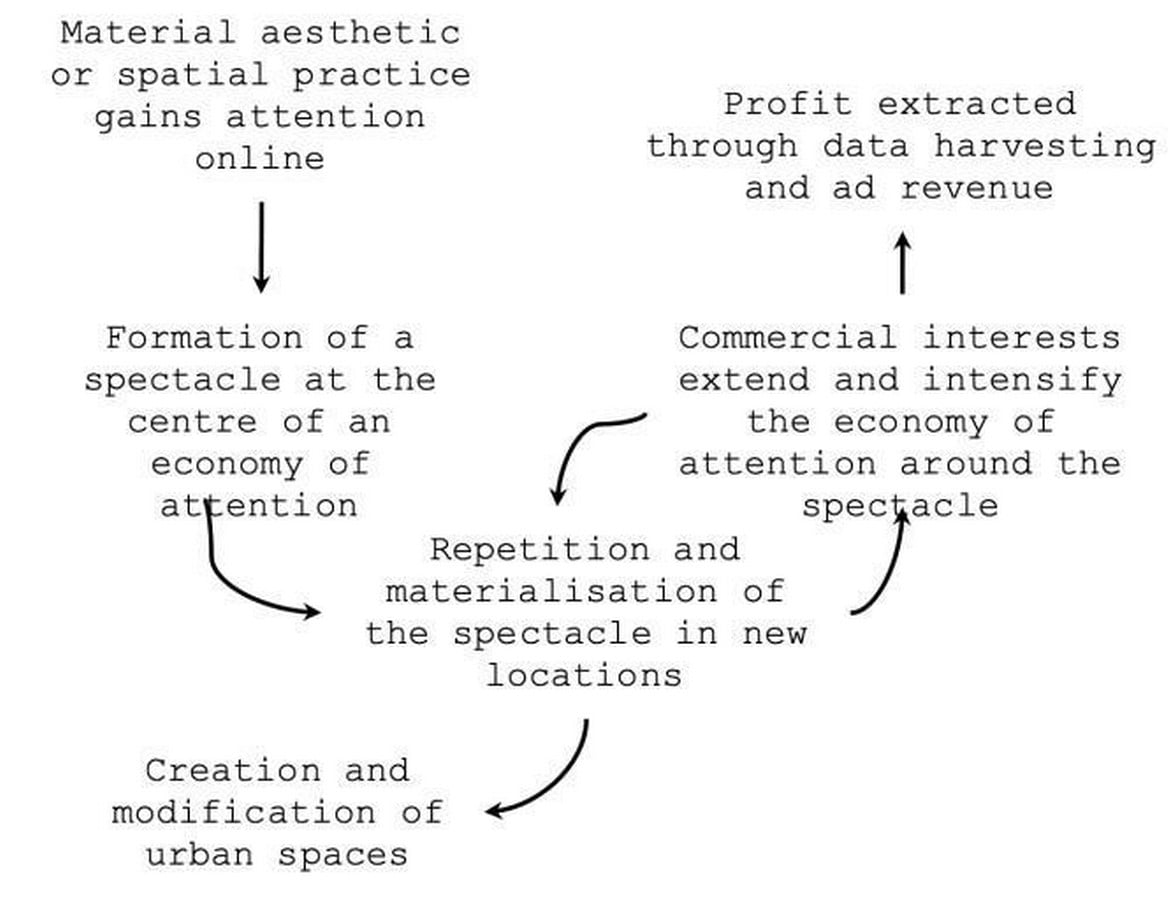
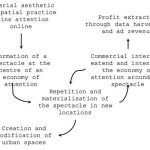
In the “wanghong” model, a place gains its popularity through user-generated content. The social media visibility increases digital as well as physical foot traffic, encouraging more locals and tourists to visit “the Instagrammable spots”. The physical space is now perceived more in terms of how it is digitally showcased and hence is modified to maintain its digital presence. The plastic surgery of this new place is done with the sole intention of attracting more attention.
The more attention it receives, the bigger celebrity it becomes, and the cycle repeats. This feedback loop, also referred to as the urban-digital spectacle cycle, means cities are co-constructed through digital representation and physical development. Urban space is no longer built from concrete and steel. It is built from images, hashtags and algorithms.
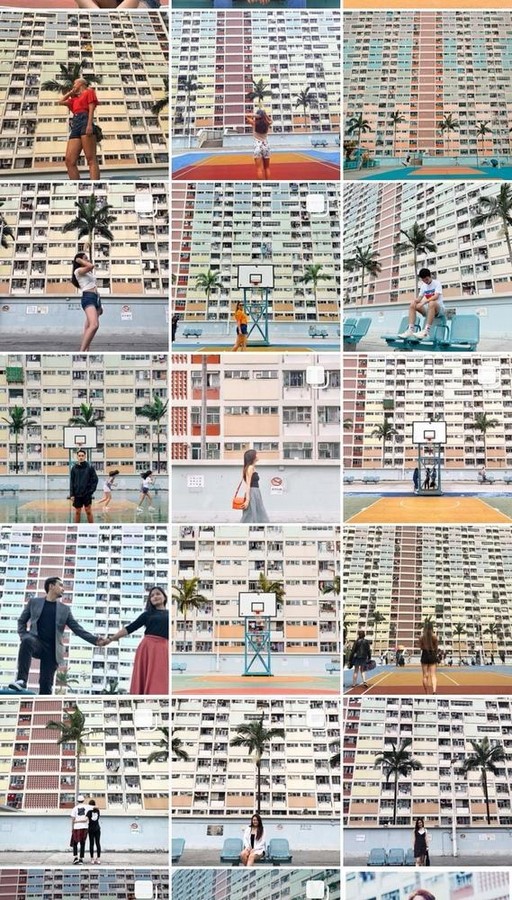
The “Selfie stage” transformation of public spaces
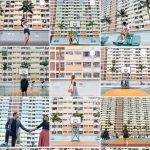
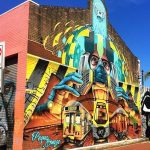
The public spaces are increasingly designed as backdrops. Colourful murals, sculptural staircases, and neon signs are not accidental design elements but are engineered for the picture-perfect frames. Architecture becomes visual first. Lighting is optimised for the cameras. Textures are chosen for their appearance on screen, and each element is crafted to maintain the grid aesthetics of Instagram. In the social media city, whoever controls attention controls the flow of people and therefore the flow of capital. This transformation around the economy of attention changes the commerce and construction industry; investors now see themselves not just in the business of urban development but in the business of attracting attention. Traditional advertising is becoming more and more redundant. Visibility on social platforms determines economic survival. Invisibility online increasingly means invisibility in real life.
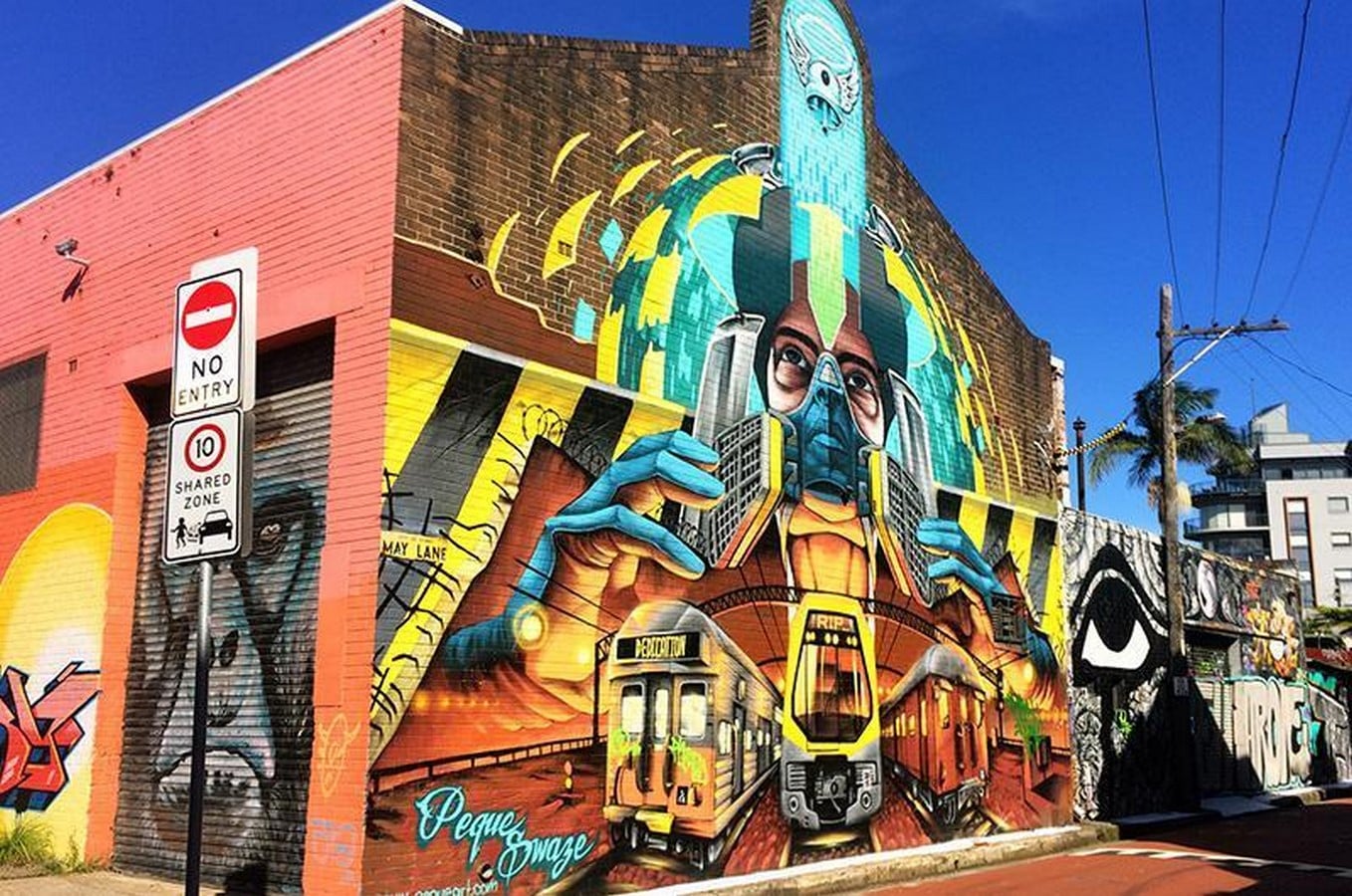
Digital Bias: What gets seen, what gets hidden
Every social media platform has aesthetic biases. On Instagram, for example, content with muted or bright colours, clean composition or intricate patterns tends to perform well. This filtering effect refracts urban reality. The designers design to suit the trends on Instagram instead of catering to the public with original and authentic products or places. The goal of urban development is to promote real-life interactions instead of “reel life” promotions.
Social media captures the peak moments from the happy, healthy and hip, but what about the ageing infrastructure, working-class neighbourhood or marginalised communities? These spaces rarely trend. Social media doesn’t represent the city; it edits it.
The shift in urban design
The influence of social media now shapes real estate developments, urban branding and even tourism strategy. Investors design environments with colourful interiors, surprising architectural features and camera-friendly lighting. Entire developments are created with virality in mind.
Buildings are designed not only for function but also for how they are photographed. The visual-first architecture is taking away the true essence of designing a space for people. Additionally, the hype for Wanghong places makes them more and more commercialised, and only the pretty places get the advantage of being famous and recognised. This backfires on less photogenic realities; even if they have historical or cultural importance, they go unnoticed or unrecognised.
Another major shift is observed in development decisions. Urban planners use geotagged Instagram data to identify popular areas and inform development decisions.
Is it all bad?
The Instagrammable cities are not all bad. Social media exposes people to new destinations. The increase in tourism also leads to more job opportunities for the locals and hence an increase in the economy. Social media can also help in identifying neglected spaces with potential and may help in receiving funding, attention and redesign. Digital platforms can connect global audiences to local cultures when done responsibly. Although in the reality in which we live, people take things to extremes instead of maintaining a balance.
The Instagrammable cities mean reduced authentic interaction. People visiting spaces to document, instead of experiencing them. Maintaining a perfect grid can quietly replace spontaneous conversations, physical intimacy, or simply being present. This kind of engagement often encourages self-obsession over self-awareness, completely overriding the purpose of travel and exploration.
The oversharing of certain styles of aesthetics can also encourage designers or developers to adopt similar principles, which may risk loss of authenticity. Cities may begin to resemble one another, and as a result, the local personality may fade. Viral locations can also attract unsustainable crowds, disturbing residents and overwhelming infrastructure.
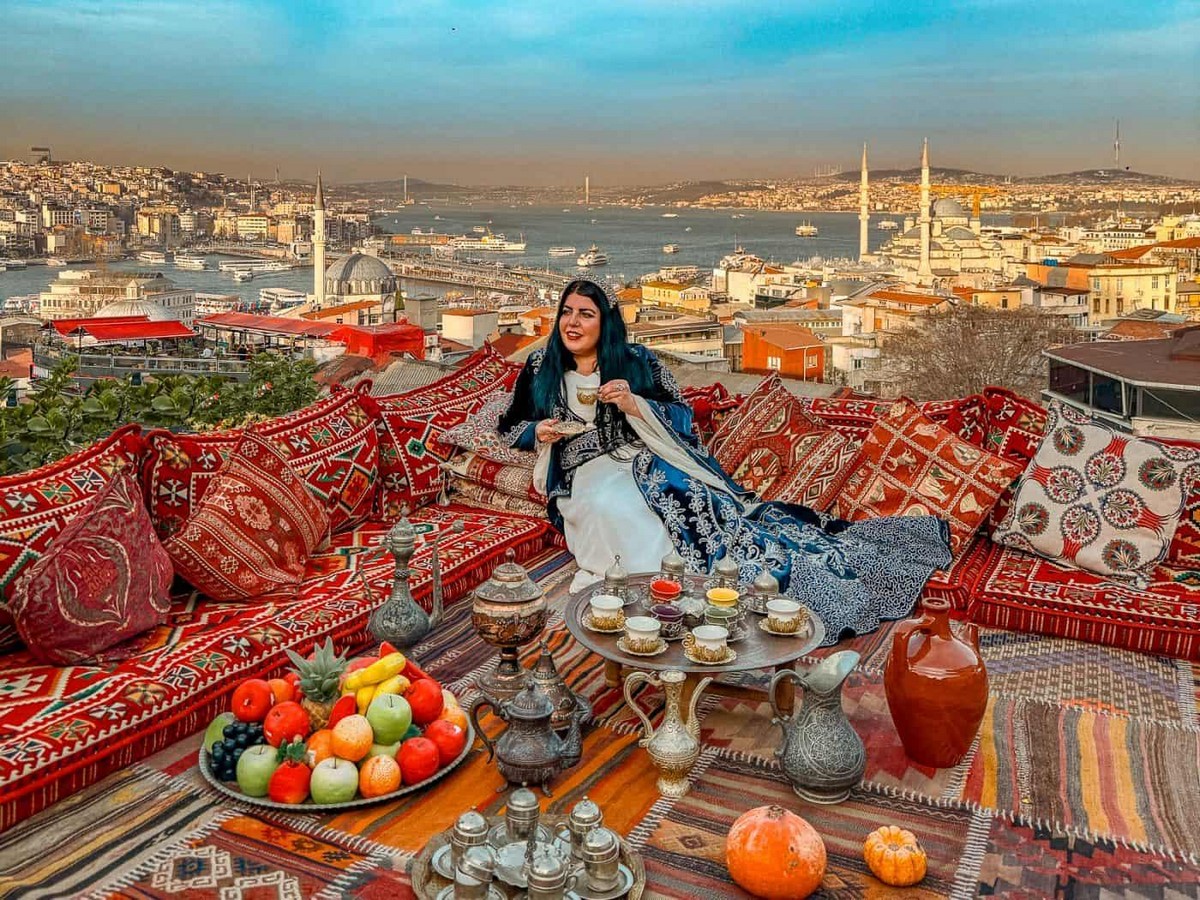
Surface vs Substances
Critics argue that prioritising “good content” over “good architecture” risks creating shallow spaces lacking longevity and community function. But is Instagrammability inherently shallow? Not necessarily. A beautiful, well-designed space that improves quality of life and also photographs well is not a failure of architecture. It is a success. The problem arises when aesthetics replaces function, and attention replaces meaning. The Instagrammable city is neither purely dystopian nor purely beneficial. It reflects a broader cultural shift toward visibility and performance. Urban design must remain grounded in liveability, inclusivity, human connection and authentic identity. If urban identity becomes dependent solely on digital validation, we risk flattening culture into aesthetics. But if designers, planners, and investors use visibility responsibly, prioritising quality of life first, then digital recognition can amplify genuinely meaningful places.
The real question is this: are we designing cities to be lived in or to be looked at?
References:
Törnberg, Petter. “The Urban Attention Economy: How Our Cities Are Rebuilt for Social Media.” Mediapolis: A Journal of Cities and Culture, vol. 8, no. 1, 27 Mar. 2023, www.mediapolisjournal.com/2023/03/urban-attention-economy/.
Zhang, Amy Y., et al. “Wanghong Urbanism: Towards a New Urban-Digital Spectacle.” Mediapolis: A Journal of Cities and Culture, vol. 7, no. 4, 28 Nov. 2022, www.mediapolisjournal.com/2022/11/wanghong-urbanism/.
“Good Content vs Good Architecture: Where Does “Instagrammability” Take Us?” ArchDaily, 17 June 2020, www.archdaily.com/941351/good-content-vs-good-architecture-where-does-instagrammability-take-us.
Persigehl, Sophie. Using Instagram as an Analytical Tool for Urban Planning. 1 Mar. 2023, www.researchgate.net/publication/376800331_Using_Instagram_as_an_analytical_tool_for_urban_planning.
“Social Media’s Role in Shaping Public Spaces and Urban Social Interaction.” Urban Design Lab, 31 Oct. 2024, urbandesignlab.in/social-medias-role-in-shaping-public-spaces-and-urban-social-interaction/?srsltid=AfmBOopB3yEwqjFfnfjD-WiFntenjxqWEP-HhDb5L1VKinXbnhQKD7bt. Accessed 1 Mar. 2026.
Bride, Southern. “10 Top Cities Worldwide with Instagrammable Street Art.” Southern Bride, 14 Sept. 2021, www.southernbride.com/blog/inspirations/10-top-cities-with-the-most-instagrammable-street-art/
https://facebook.com/thirdeyetraveller. “20+ Instagrammable Places in Istanbul – 2026 Photography Guide!” Third Eye Traveller, 11 Apr. 2024, thirdeyetraveller.com/instagram-spots-istanbul/.