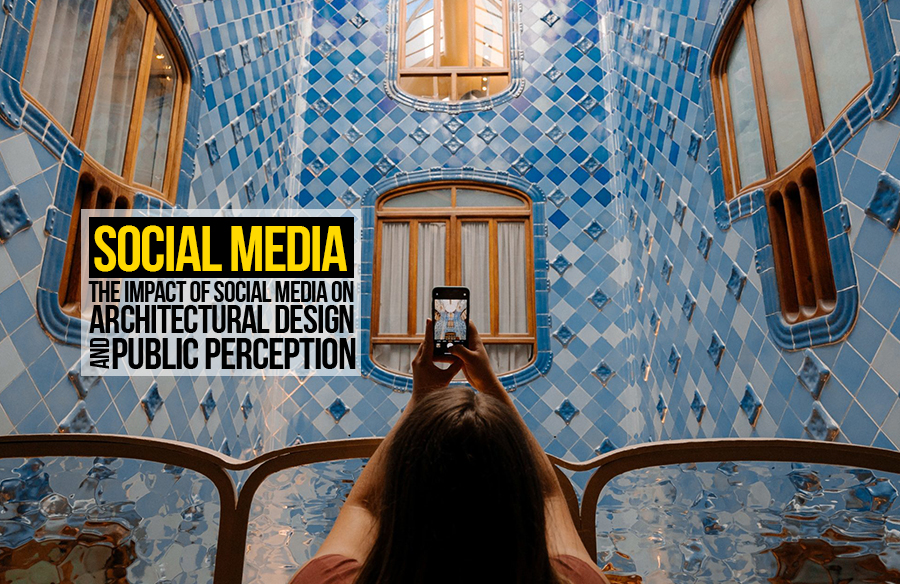
Social media platforms such as Facebook, YouTube, X, Pinterest, and Instagram have significantly changed how consumers interact with a variety of industries, including architecture, in recent years. The capacity of social media to immediately disseminate images to a worldwide audience has had a special impact on architectural design and how the general public views architectural works. Instagram and other platforms that prioritize visual content have given architects previously unheard-of possibilities to show off their work to a wider audience, revolutionizing both the design process and how the general public interacts with architecture.

Democratization of Architectural Design
The democratization of access to architectural content is one of the most important ways social media has influenced architectural design. Architects no longer need to rely on conventional media channels or trade journals to showcase their work internationally thanks to platforms like Instagram and Youtube. A larger, non-specialist audience may now more easily access architectural knowledge thanks to this democratization. This has made it possible for expats and amateurs to interact with architectural concepts, styles, and fashions, which has increased public awareness of the field.

Influence on Design Trends
Social media now plays a major role in setting architectural trends, impacting the way architects plan and create their works. Platforms like Instagram, which are oriented on visual aesthetics, urge architects to think about how their ideas will be interpreted not just in person but also in digital media formats. Form, texture, and color are being emphasized in architectural design in ways that may not have been given as much weight before the emergence of social media to produce “Instagrammable” buildings. That is buildings that capture light well and can be extensively shared on social media.
Broader Audience and Clientele
Social media platforms are being used by architects to reach a wider audience and maybe even prospective clients. Architects may curate a portfolio of their work on Instagram, for example, exhibiting creative ideas, in-progress designs, and finished projects. This virtual portfolio creates opportunities for engagement with clients throughout the world and transcends the boundaries of print or physical media. Furthermore, social media is becoming a more important tool for architects to network within the field. Connecting with other architects, designers, and possible clients through social media platforms like Instagram and LinkedIn may lead to collaborations and new projects. Through social media, architects, clients, and the general public may communicate constantly, creating a network that was previously constrained by distance and expertise.
The Role of Influencers and Architectural Criticism
The emergence of influencers in the field of architecture and design is another fascinating phenomenon. These people, who are frequently architects or design lovers, use their sizable social media followings to advocate for certain projects, trends, or designs. Their views have the power to change how the general public views architectural concepts and even how well-liked certain architects are. Social media has allowed for a wider spectrum of voices in architectural critique, whereas previous architectural criticism was frequently restricted to academic circles and architectural journals. Professional and amateur critics alike increasingly publish their thoughts on websites like YouTube and Instagram, providing a worldwide audience with easily available evaluations and criticisms of architectural projects. The distinction between professional and public interaction with architecture is further muddied by this democratization of architectural critiques.

Public Engagement
Social media has changed how the public interacts with architects while they are designing. Architects are using social media sites like Facebook and YouTube to solicit ideas from the public, solicit comments, and even include the public in the design process. Although social media has expanded the scope and reach of public participation in design, this trend is not new. These platforms are being used by architects to show design concepts to the general public before the start of construction, enabling a level of openness and cooperation that was previously unattainable. The design may then be improved based on user feedback to better suit the requirements and preferences of the community. In fields like urban planning and public architecture, where the general public has a stake in the results of the projects, this tendency has been especially noticeable.
Impact on Architectural Education
Social media has had a significant impact on architecture education. Platforms like YouTube and Instagram are being used by educators and students alike as sources of inspiration and knowledge. Access to architectural expertise that was formerly exclusive to academic institutions is now possible because of the widespread availability of tutorials, critiques, and lectures. A more connected environment for architectural education has been fostered by social media’s ability to facilitate more communication between professionals and students of architecture throughout the world.
Challenges and Limitations
Utilizing social media in architecture has many advantages, but there are drawbacks as well. There are instances when an architectural design’s sustainability and usefulness are eclipsed by its aesthetic value. Architects can experience pressure to put social media-friendly aesthetics ahead of more functional or ecologically responsible designs. Furthermore, a homogenization of design may result from the quick dissemination of architectural trends on social media, wherein architects are urged to adopt rather than create new designs. The need to provide material continuously may also cause short-term, eye-catching designs to take precedence over significant, long-lasting architecture.
Without question, social media has changed the architectural landscape by impacting design trends, public opinion, and how architects interact with their clients. Social media sites like Facebook, YouTube, and Instagram have democratized the distribution and criticism of architectural works by facilitating easier access to architectural material. These platforms give architects a larger audience and innovative, dynamic methods to promote their work, but they also pose problems for long-term sustainability and design integrity. As social media continues to evolve and architects and the general public adjust to this digital age of design, social media’s influence will probably continue to alter architecture in the future.
References:
Friedman, Douglas. Architecture and Social Media: How Instagram Influences Design. New York, Architectural Press, 2019.
Garcia, John. “Public Participation in Urban Design via Social Media.” Urban Planning Quarterly, 2020.
Rasmussen, Bodil. “The Serpentine Pavilion and the Rise of Social Media Architecture.” London Architectural Review, 2020.
Robinson, Tim. Digital Learning: Architectural Education in the Age of Social Media. Cambridge, University of Cambridge Press, 2021.