India is at the crossroads of rapid urbanisation, ecological risk, and technological advancements. The narrative of Sustainability and technology is increasingly being adopted in the context of growing cities and the proliferation of digital technologies. However, the dominant global narrative is often focused on high technologies, which are often not sensitive to socio-cultural contexts. This article argues that the future of cities in India needs to look beyond technocratic approaches of sustainability and move towards justice-based innovation approaches, which are rooted in the socio-cultural contexts of indigenous ecological wisdom, vernacular intelligence, and jugaad practices. This is possible by locating the practices of informal innovation within the broader context of indigenous approaches to environmental ethics, community-based natural resource management, and climate-resilient architecture. This paper argues that the narrative of Sustainability and technology needs to be redefined within the socio-cultural contexts of India. The paper draws upon the experiences of vernacular settlements, decentralised energy systems, community-based water systems, and digital mapping technologies. The main argument of the paper is that the future of Sustainability in India cannot be technologically determined; it must be socially negotiated.

Introduction: India’s Urban Threshold
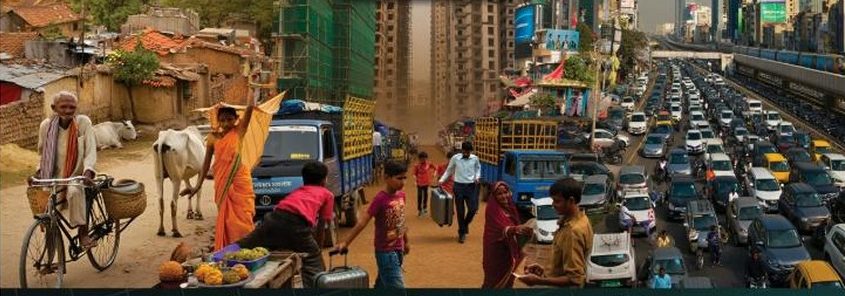
India is projected to add nearly 400 million urban residents by 2050 (United Nations, 2018). This demographic transformation intensifies pressures on housing, water, energy, infrastructure and ecological systems. Simultaneously, India positions itself as a technological powerhouse, advancing digital governance, renewable energy transitions and smart urban infrastructures.
The convergence of rapid urbanisation and digital transformation foregrounds the discourse of Sustainability and technology. However, the dominant framework of “smart urbanism” frequently prioritises surveillance infrastructures, algorithmic management and capital-intensive systems over community agency and ecological justice (Datta, 2015). This creates a tension between globalised technological imaginaries and India’s deeply rooted socio-cultural environmental ethos.
India’s urban future cannot merely import techno-centric sustainability models developed in Euro-American contexts. Instead, it must draw from its indigenous traditions of climate-responsive architecture, community resource management and ethical environmental philosophy. The challenge is not whether technology should be adopted, but how it can be reframed within justice-oriented, culturally grounded frameworks.
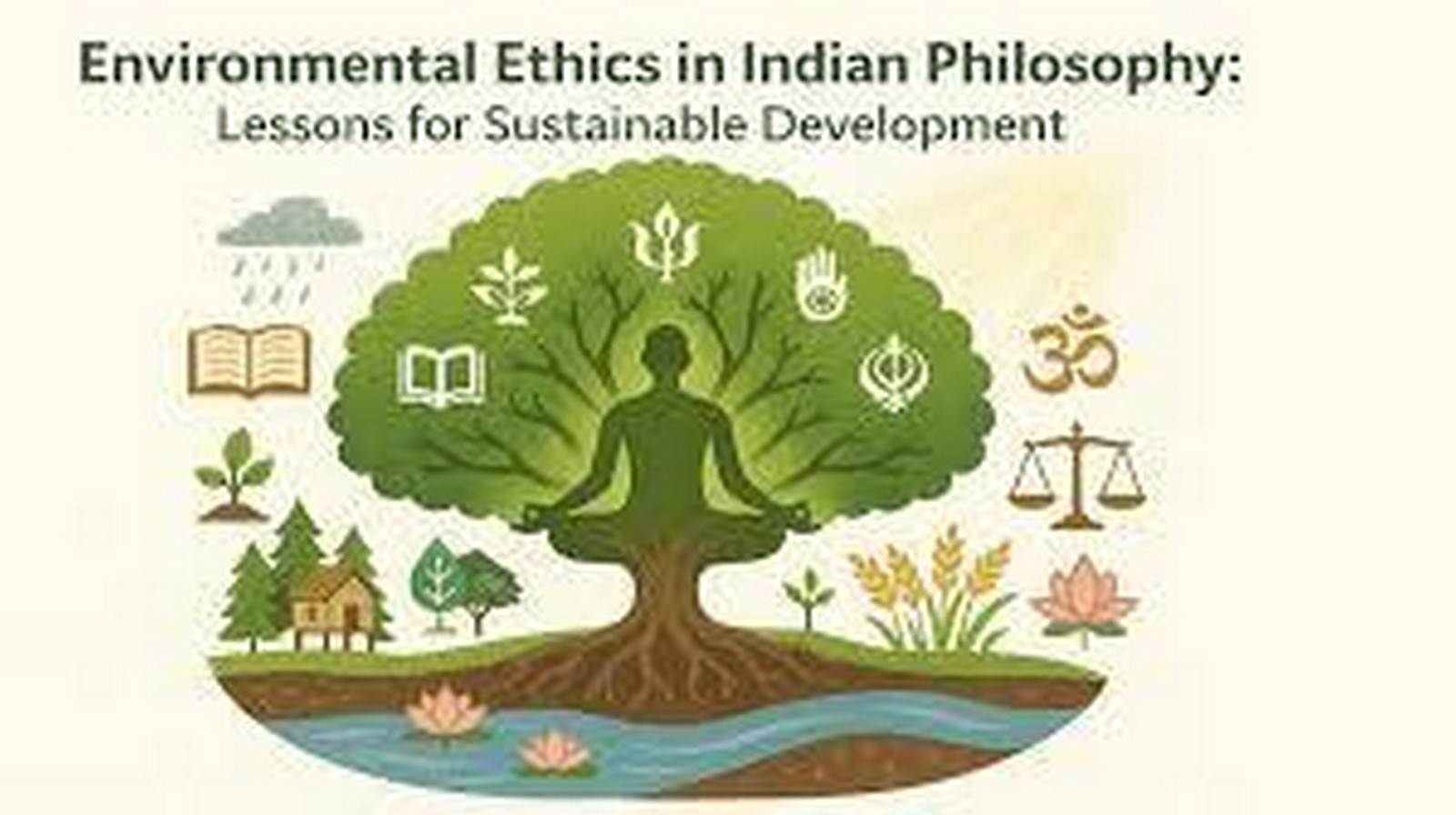
Indigenous Environmental Ethics: The Philosophical Foundations of Sustainability
Well before the idea of sustainability emerged as a global policy imperative, Indian thought had expressed the idea of ecological interconnectedness. Ideas such as Prakriti (nature), Dharma (ethical responsibility), and Vasudhaiva Kutumbakam (the world as one family) express the idea of interconnectedness between human beings and the environment (Shiva, 2005). Such philosophical ideas had encouraged the development of architectures that were sensitive to climate, geography, and human settlement.
The vernacular architecture of the Indian states of Rajasthan, Kerala, Ladakh, and the Deccan Plateau shows the development of strategies that had been learned over time. Thick mud walls, shaded courtyards, Jaali screens, and step wells were not just artistic expressions; they were also technologies that had been designed for the Indian climate.
As Amos Rapoport (1969) has pointed out, the built environment is a cultural expression that has been shaped by various determinants, both socio-economic and environmental. Indian indigenous architecture has been a manifestation of this idea, which shows that sustainability is not just a product of technological advancement, but also cultural embeddedness.
In our reframing of the ideas of Sustainability and technology, we must understand that technology, far from just being the digital kind, also encompasses ecological intelligence.
Jugaad as Informal Innovation

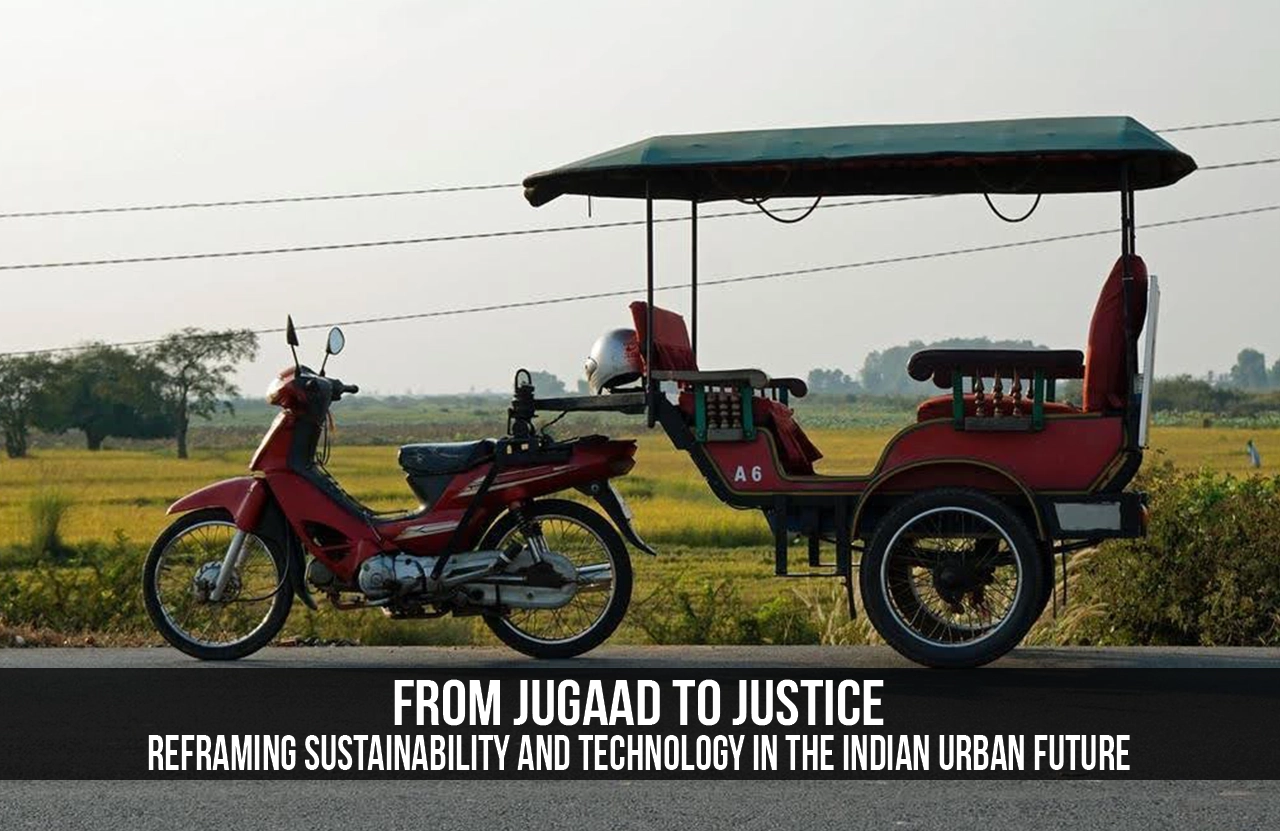
The word “Jugaad” is a term used to define improvisational problem-solving. Jugaad is often viewed as an informal solution to a problem. It represents the concept of adaptive intelligence within a context of scarcity. For example, innovations such as re-engineered agricultural tools, informal transportation systems, and recycled building materials all represent the concept of sustainability at the grassroots level. Rather than idealising the concept of poverty, it is essential to understand the concept of jugaad as a response to the inequality of access to the formal technological system. For example, the concept of housing within the context of the informal settlement represents an indigenous concept of sustainability. It is essential to understand the concept of sustainability as a decentralised concept. However, the concept of informal innovation exists within a context of precarity. It is essential to bridge the gap between the concept of grassroots innovation and the concept of technological systems.
Vernacular Architecture as Climate Technology
Indian vernacular architecture is an example of environmental design even before the term ‘carbon footprint’ was used. The courtyard house designs in Ahmedabad utilise stack ventilation to control microclimates. Bamboo structures in the North-East are an example of seismic resilience. Laterite stone house designs in Kerala minimise humidity and heat by utilising walls.
These designs are not merely nostalgic exercises; they are an example of context-specific climate technology. B.V. Doshi’s contemporary architectural designs proved that contemporary architecture can incorporate vernacular principles within contemporary frameworks.
Reframing Sustainability and Technology
Reframing ‘Sustainability and Technology’ requires an understanding of architectural traditions as technological systems. Digital technology can assist vernacular intelligence rather than replace it.
Water Wisdom: From Stepwells to Smart Monitoring
India’s traditional water systems are a classic example of the indigenous level of technology achieved by people in the past. Step wells in Gujarat and Rajasthan served as hydrological systems, social systems, and climatic regulators.
These decentralised systems are in stark contrast to modern centralised systems, which are found to be failing in the context of a changing climate. Integrating sensor-based monitoring, GIS, and community data systems with traditional water harvesting systems is a promising approach to the future of water management, a blend of the past and the present.
In this context, Sustainability and Technology can be viewed as a continuum, a seamless flow, instead of a dichotomy, acknowledging the fact that technological innovation must conform to nature.



Renewable Energy and Decentralised Futures
“India has emerged as a leader in the development and expansion of renewable energy resources, and the development of large solar farms has raised questions regarding land acquisition and ecological disruption.”
“Initiatives under the International Solar Alliance, based out of Gurugram, demonstrate India’s commitment to climate action on the global stage.”
“Empowerment through solar-powered irrigation systems for marginalised groups, and the development of housing cooperatives that incorporate rooftop solar, demonstrate the potential for technological innovation.”
“Justice-oriented sustainability requires that technological transitions do not replicate existing patterns of inequality.”
Digital Urbanism and the Smart City Debate
The Smart Cities Mission was initiated in 2015 to modernise 100 cities across India using ICT-based governance. Some of the cities that were modernised using this concept include Bhopal and Pune, which incorporated integrated command centres, surveillance systems, etc.
The problem with these initiatives, according to some, is the possibility of techno-managerial governance that ignores citizen participation (Datta, 2015).
The concept of sustainability and the role of technology within Indian urbanism requires a paradigm shift from “smart” to “sensitive.”
Climate Justice and Urban Inequality
Climate changes are felt most acutely in informal settlements that are located on floodplains, heat islands, or corridors of pollution. The poor are the ones who are contributing the least to carbon emissions yet suffering the most.
Justice-Oriented Sustainability
Sustainability that is justice-oriented must take into consideration the housing, transportation, and natural resource needs of poor communities. Informal settlements must be upgraded to make them more responsive to climate change.
Ecological democracy is a concept that is supported by the work of activists such as Vandana Shiva. This must be included in sustainability technologies.
Circular Economies and Informal Waste Networks
“Informal waste collectors are the backbone of one of the world’s most efficient recycling systems.” India has the most efficient recycling systems, and the informal waste collectors’ contribution to the circular economy is significant, though the people involved are also marginalised.
The digital platforms for waste collection, cooperative ownership, and regulatory frameworks can be integrated, which would be beneficial for the people involved, and the concept of Sustainability and Technology can be aligned with the people’s dignity.
The indigenous frugality that the people exhibit while recycling the resources can be compared with the corporate agenda for the circular economy.
Towards a Framework: From Jugaad to Justice
Based on the above discussions, a justice-oriented framework for Sustainability and technology in India should comprise the following elements:
1.Cultural Grounding – Recognising indigenous ecological wisdom as technological heritage
2.Decentralisation – Supporting community-based systems over centralised infrastructure
3.Equity – Prioritizing marginalized communities in technological change
4.Participatory Governance – Embedding citizen participation within digital systems
5.Ecological Regeneration – Going beyond carbon neutrality to ecological regeneration
This provides a pathway to transform Jugaad from a mere survival mechanism to a recognised innovation within the system.
Reimagining the Indian Urban Future
Indian urban futures must overcome the binary opposition of tradition and modernity. It is a false choice to assume that indigenous knowledge and technology are opposed.
Climate-sensitive vernacular studies, digital technologies using indigenous materials, and community mapping must all find their way into architectural education, urban policies, and technological research.
Universities must play a significant role in re-reading indigenous heritage through the lens of contemporary technologies.
Sustainability and technology, as re-read through Indianness, become a means of moral progress rather than a platform for capitalist display.
Conclusion: Justice as the Measure of Innovation
India’s transition from jugaad to justice represents an overall shift in the understanding of Sustainability and technology. “Innovation should be judged not just by efficiency measures, but by its potential to enrich dignity, balance, and equity in the world.”
The indigenous wealth of India’s heritage, philosophical, architectural, and communal, holds great potential for living with the uncertainty of climate change. By connecting grassroots innovation with moral technological approaches, India can create urban futures that are resilient, inclusive, and contextual.
Sustainability is not something to be imported; it is something to be grown. It is grown out of memory, participation, and justice. When technology is aligned with these values, it is no longer an instrument of control but a medium of collective flourishing.
References:
Datta, A. (2015). New urban utopias of postcolonial India: Entrepreneurial urbanisation in Dholera smart city, Gujarat. Dialogues in Human Geography, 5(1), 3–22.
Rapoport, A. (1969). House form and culture. Prentice-Hall.
Shiva, V. (2005). Earth democracy: Justice, sustainability, and peace. South End Press.
United Nations. (2018). World Urbanisation Prospects: The 2018 Revision. United Nations Department of Economic and Social Affairs.
Doshi, B. V. (2011). Paths uncharted. Mapin Publishing.
Government of India. (2015). Smart Cities Mission statement and guidelines. Ministry of Housing and Urban Affairs.
International Energy Agency. (2021). India Energy Outlook 2021. IEA.
Raworth, K. (2017). Doughnut economics: Seven ways to think like a 21st-century economist. Chelsea Green Publishing.
Ostrom, E. (1990). Governing the commons: The evolution of institutions for collective action. Cambridge University Press.
Akka IAS. (2025, November 8). Environmental Ethics in Indian Philosophy: Lessons for Sustainable Development | Akka IAS. Akka IAS Academy. https://akkaias.com/environmental-ethics-in-indian-philosophy-lessons-for-sustainable-development/
IAS Hub. (n.d.). Urbanisation in India: Trends, challenges & solutions. https://theiashub.com/free-resources/mains-marks-booster/urbanization
Balooni, A. (2021, April 8). Going beyond startups to try an all-inclusive jugaad revolution for grassroots innovation. Your Story. https://yourstory.com/2016/04/jugaad-revolution-grassroot-innovation
Kalyanaraman, M. (2024, October 4). Jugaad vs sustainable innovation: Time to unlearn and embrace India’s future. The Hindu. https://www.thehindu.com/education/time-to-unlearn-jugaad-and-embrace-sustainable-innovation/article68716821.ece
Kumar, V., & Mukerji, A. (2025). Exploring Jugaad in architecture: Theory and strategies for implementation in resource-constrained environments. Social Sciences & Humanities Open, 11, 101469. https://doi.org/10.1016/j.ssaho.2025.101469