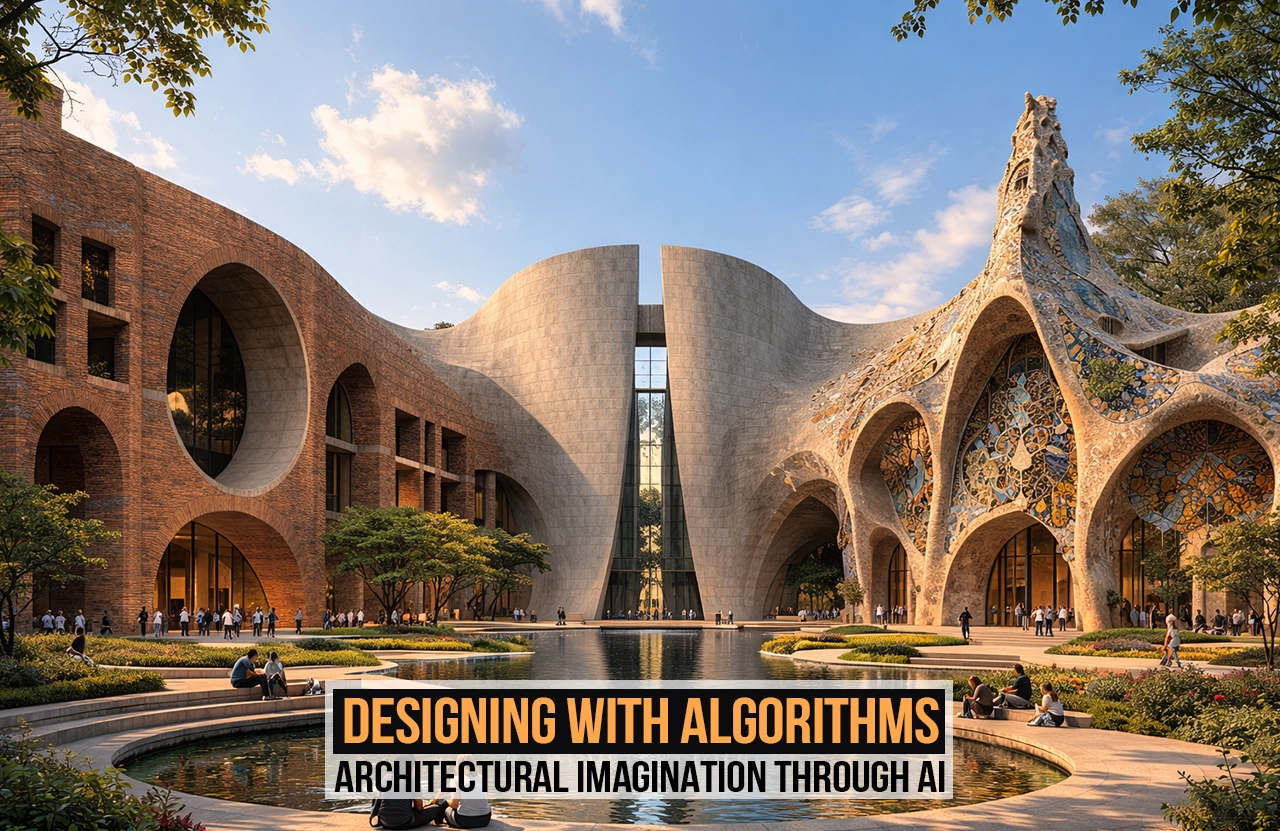
Architectural imagination has always been closely tied to the tools through which architects think and represent space. Throughout history, architects have relied on drawings, models, and visualizations to translate abstract spatial ideas into visible form. Sketches allowed designers to capture fleeting thoughts, while drawings and physical models helped refine proportions, structure, and spatial relationships. With the advent of digital tools, this process expanded further: computer modeling and advanced rendering software made it possible to simulate materials, lighting, and atmosphere with increasing precision.
Recent developments in artificial intelligence introduce a new phase in this relationship between imagination and representation. AI-based tools can now generate images from textual descriptions, transform simple models into atmospheric renderings, and modify visualizations through automated editing. These capabilities allow architects to explore visual possibilities at a speed and scale that were previously difficult to achieve. At the same time, they shift part of the representational process from manual construction to algorithmic interpretation. Rather than replacing existing methods, AI repositions them, turning images from outputs into active instruments of thinking. The result is a design environment where architectural imagination operates in dialogue with computational systems, raising new opportunities for exploration.
AI Image Generation: From Prompt to Possibility
One of the most immediate ways artificial intelligence enters architectural practice is through image generation. Tools such as ChatGPT, Gemini, Midjourney, DALL·E, Nano Banana, MNML AI, LookX, PromeAI, and Stable Diffusion allow architects to produce architectural imagery directly from written prompts. By describing spatial qualities, formal relationships, and contextual conditions, designers can generate visual interpretations of architectural ideas within seconds. What once required a sequence of drawings and models can now begin with an image produced algorithmically from language. Traditionally, the design process moved gradually from sketch to drafting, then to 3D modelling, and eventually to rendered visualization. Each stage required a certain level of commitment to form and spatial organization. AI image generation disrupts this sequence by introducing visualization much earlier in the process. Instead of developing one idea step by step, architects can explore multiple visual possibilities almost instantly, before committing to a fixed spatial or geometric resolution.
This rapid generation of visual alternatives becomes particularly powerful during early form exploration. Architects can quickly test how a building mass or spatial idea might relate to its surroundings. Rather than focusing on detail or realism, the emphasis here is on discovering relationships between form, scale, and context. In this sense, AI-generated imagery functions as a speculative field of possibilities through which architectural ideas can be explored.
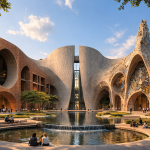
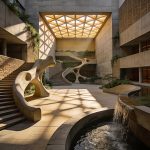
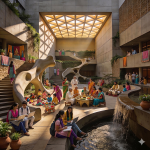
To understand how this process works in practice, try a simple experiment: ask an AI system to generate an image of a university campus that reflects the philosophies of Louis Kahn, Tadao Ando, and Antoni Gaudí. The prompt is simple, yet it asks for the synthesis of three distinct architectural approaches. When I tested this, the result was not a direct representation of any one architect, but a composition where their ideas began to overlap. Elements of Kahn’s monumental geometry, Ando’s restraint and light, and Gaudí’s expressive forms appeared together within a single visual suggestion. What was striking was how abstract architectural philosophies were translated into form and space within seconds. The image did not present a resolved architectural proposal, but a speculative composition that could be observed, critiqued, and reinterpreted. In this sense, the image becomes less about representation and more about interpretation, allowing architects to quickly explore how different ideas of form and space might coexist within a single direction.
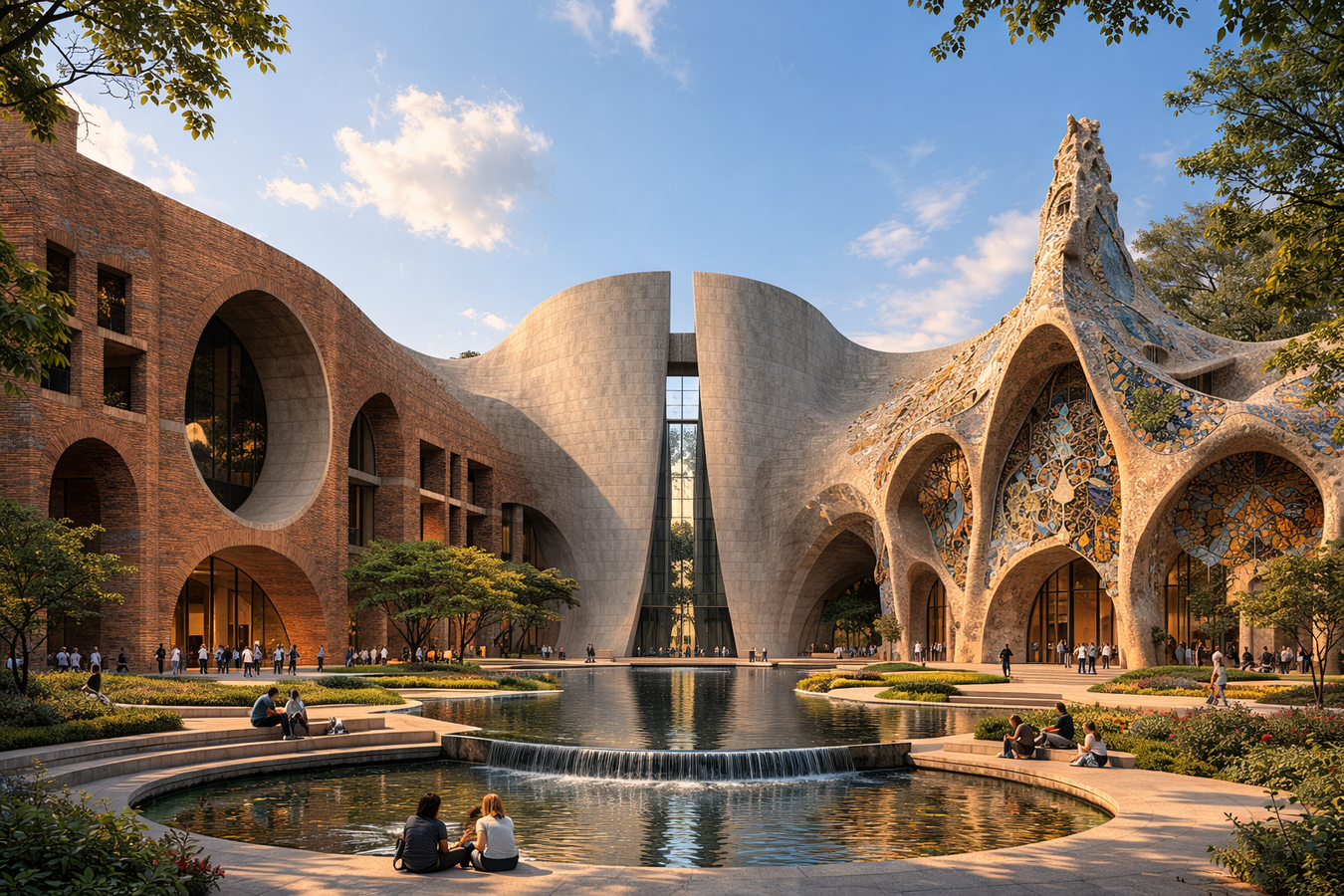
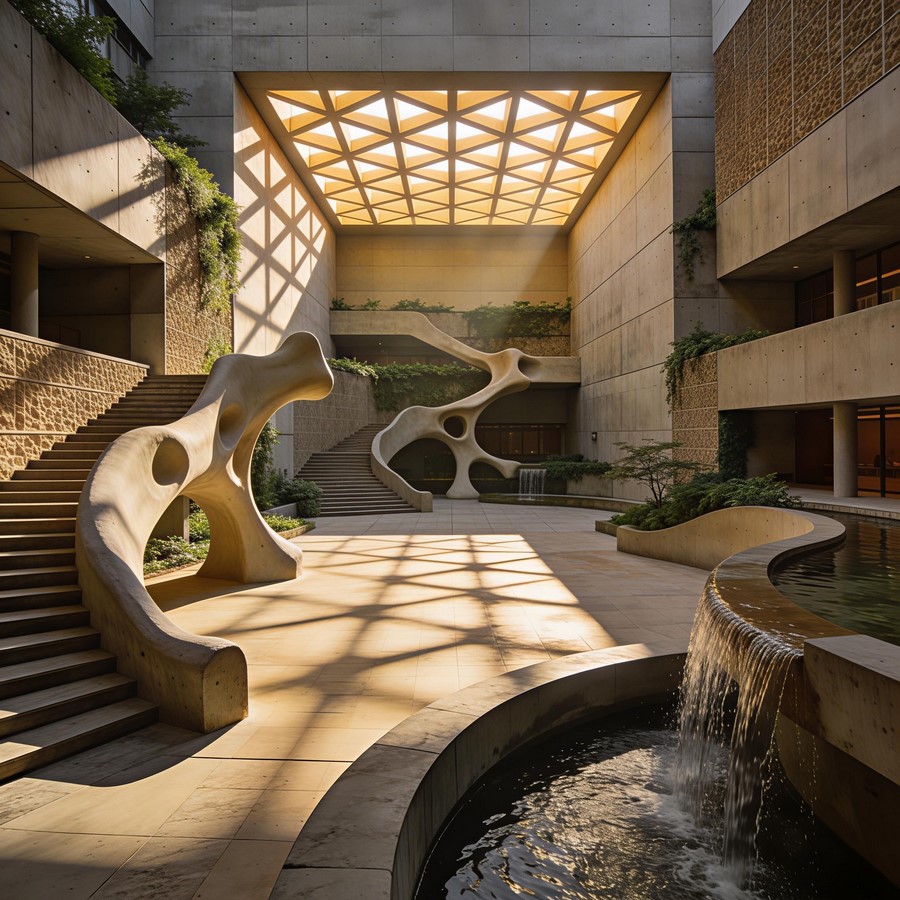
At the same time, this process subtly transforms the role of the architect. Rather than producing every visual iteration manually, architects guide a generative process in which multiple interpretations of a concept emerge simultaneously. Prompts, references, and adjustments to descriptive parameters become part of the design language. Through this interaction, architects can test relationships between form, intent, and context much earlier than before. AI image generation, therefore, becomes less a tool for producing finished images and more a medium for thinking, an interface through which architectural imagination is extended, questioned, and refined.
AI Rendering: Transforming Models into Atmospheres
While AI image generation operates in the realm of abstraction and early imagination, AI rendering engages more directly with the architectural model. Instead of relying only on prompts, the process begins with a base image—whether a rough sketch, massing study, or 3D model—which the AI interprets and transforms into a more atmospheric visual. Traditionally, rendering required careful setup of materials, lighting, detailing, and post-processing, often demanding both technical expertise and time. AI compresses much of this workflow. Even simple geometry can quickly evolve into a spatially rich rendering, allowing architects to move from conceptual massing to material and atmospheric interpretation without rebuilding the scene through conventional rendering pipelines.
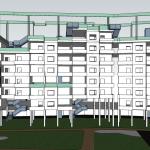
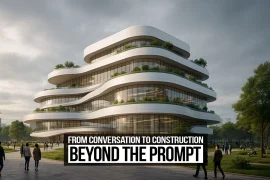
To understand this in practice, consider the following example. The first image shows a basic SketchUp massing model, where the emphasis is on geometry and spatial organisation rather than material or atmosphere. When the same model is used as a base for AI rendering, the transformation becomes evident. Without altering the geometry, the second image introduces material, light, and landscape elements, turning an abstract massing study into a scene that begins to suggest inhabitation and context. The architecture itself remains unchanged, yet the perception of the building shifts from pure form to spatial experience.
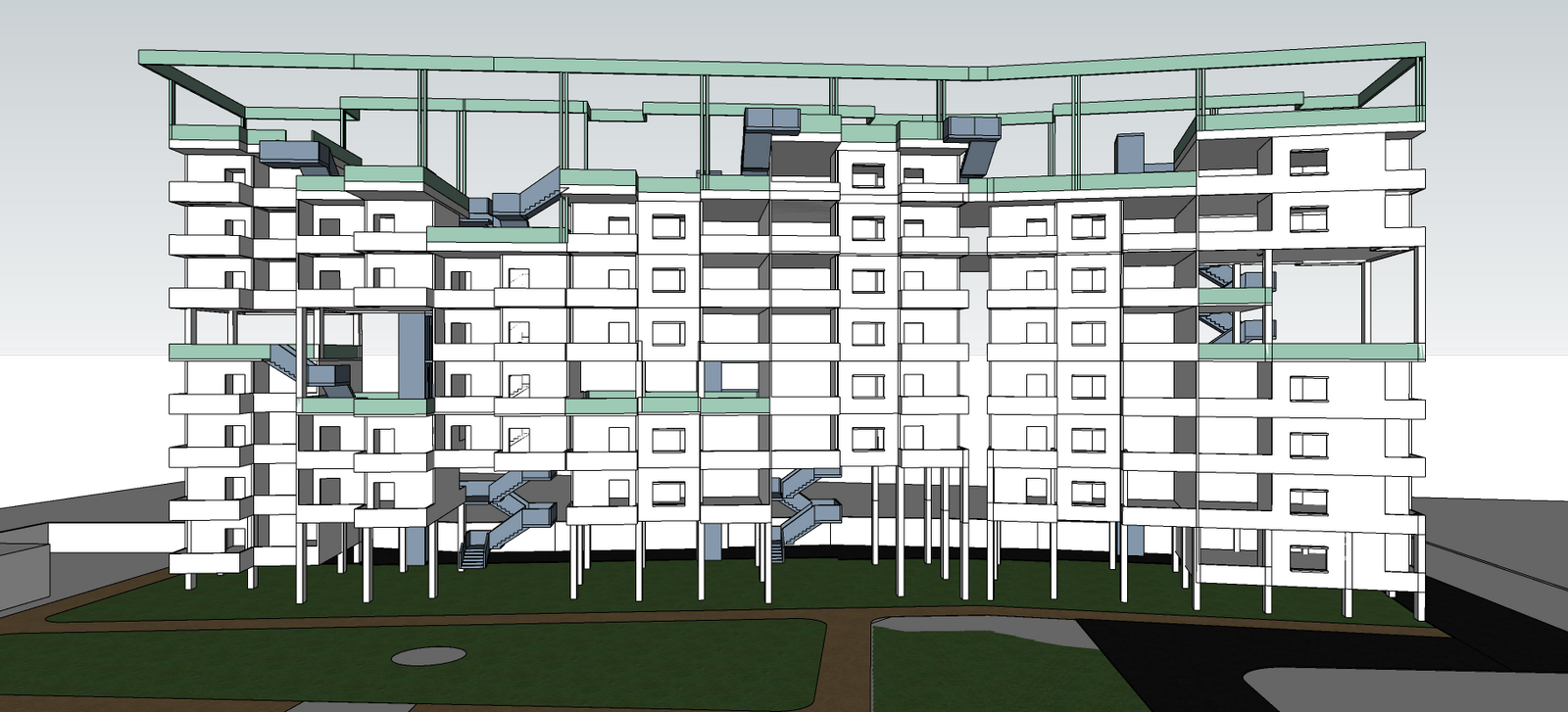
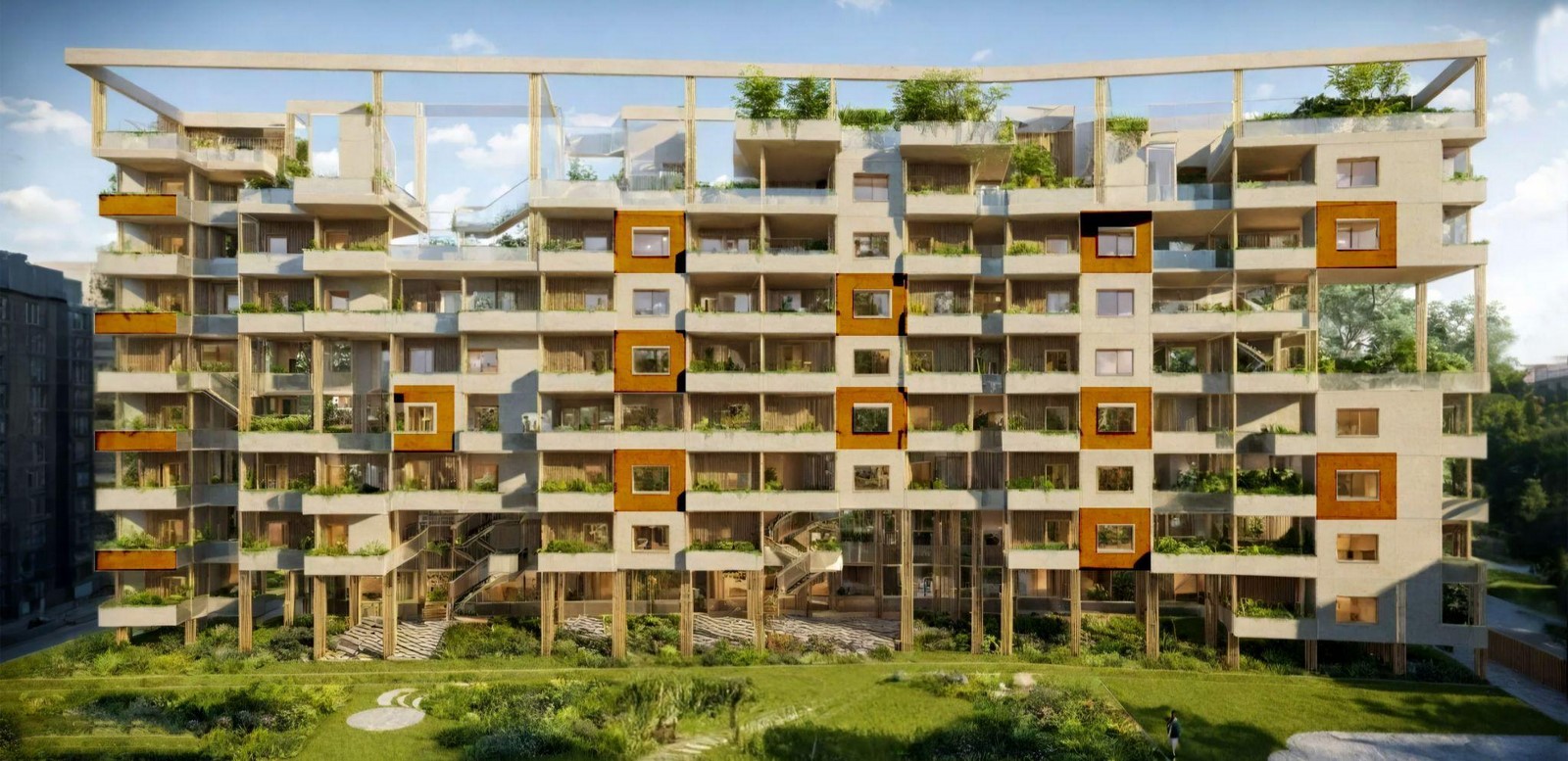
This changes how representation participates in design thinking. A model is no longer a static object rendered only at the end of the process, but something that can be repeatedly reinterpreted through different visual conditions. The same geometry can be explored across multiple atmospheres—variations of light, material, or context—without rebuilding the model. Rendering, therefore, becomes less about producing a final image and more about testing how a space might feel.
At the same time, AI rendering introduces a new relationship between precision and interpretation. While the model provides geometric clarity, the generated image often carries an additional layer of interpretation shaped by the system. Materials may appear richer, lighter, and more dramatic, and environments more expressive than what is strictly defined. This creates both an opportunity and a responsibility: while architects can communicate spatial intent more effectively, they must ensure the representation remains grounded in the architectural idea. Most tools, therefore, allow control over how closely the output follows the base model and how much the AI is allowed to reinterpret it, depending on the level of detail in the starting input.
Another important aspect of this workflow is the use of reference images. Architects can guide the rendering process by inputting images that reflect a desired material palette, spatial quality, or architectural language—often drawn from personal archives, precedent studies, client references, or curated sources like Pinterest. This allows the AI to align the output with a specific design intent, whether it is a certain façade treatment, interior atmosphere, or landscape condition. In this sense, rendering becomes not just a technical process but a curated one, where the architect actively directs visual outcomes through a combination of models, prompts, and references.
AI rendering does not replace traditional visualization techniques but repositions them—making atmosphere, mood, and experiential qualities central to how architecture is imagined, tested, and communicated. It allows architects to move fluidly between precision and imagination, using the model as a base while exploring multiple visual interpretations that can inform both design decisions and communication.
AI Image Editing: The New Post-Production
If image generation expands the field of imagination and AI rendering translates models into atmosphere, AI image editing operates at the level of refinement. It engages with images that already exist—whether renders, photographs, or generated visuals—and allows architects to modify them through selective intervention. What traditionally required careful and time-intensive work through layered software can now be approached through direct instruction, where specific parts of an image are altered, replaced, or enhanced without reconstructing the whole. The image, in this sense, becomes a flexible surface—open to revision, adjustment, and reinterpretation.
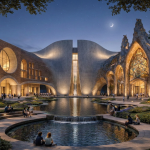
To understand this more clearly, I tested a simple exercise using the same images generated earlier. I used AI editing tools to modify them—converting the exterior scene into a night setting and introducing people and everyday activity into the interior view. The night scene introduced controlled lighting, reflections, and shadows that reshaped the atmosphere of the space, while the interior began to suggest occupation through clothing, gestures, and social interaction that felt recognisably Indian. Because the prompt did not explicitly mention campus life, the system interpreted the scene more loosely, generating a mix of everyday public activity. What becomes striking is the level of detail introduced with minimal effort: shadows of people, casual objects placed along parapets, textures of fabric, and subtle environmental cues appear without being explicitly designed. These elements were not present in the original image but emerged through the system’s interpretation, making it possible to produce a visually convincing scene before those details had been fully resolved in the architecture itself.
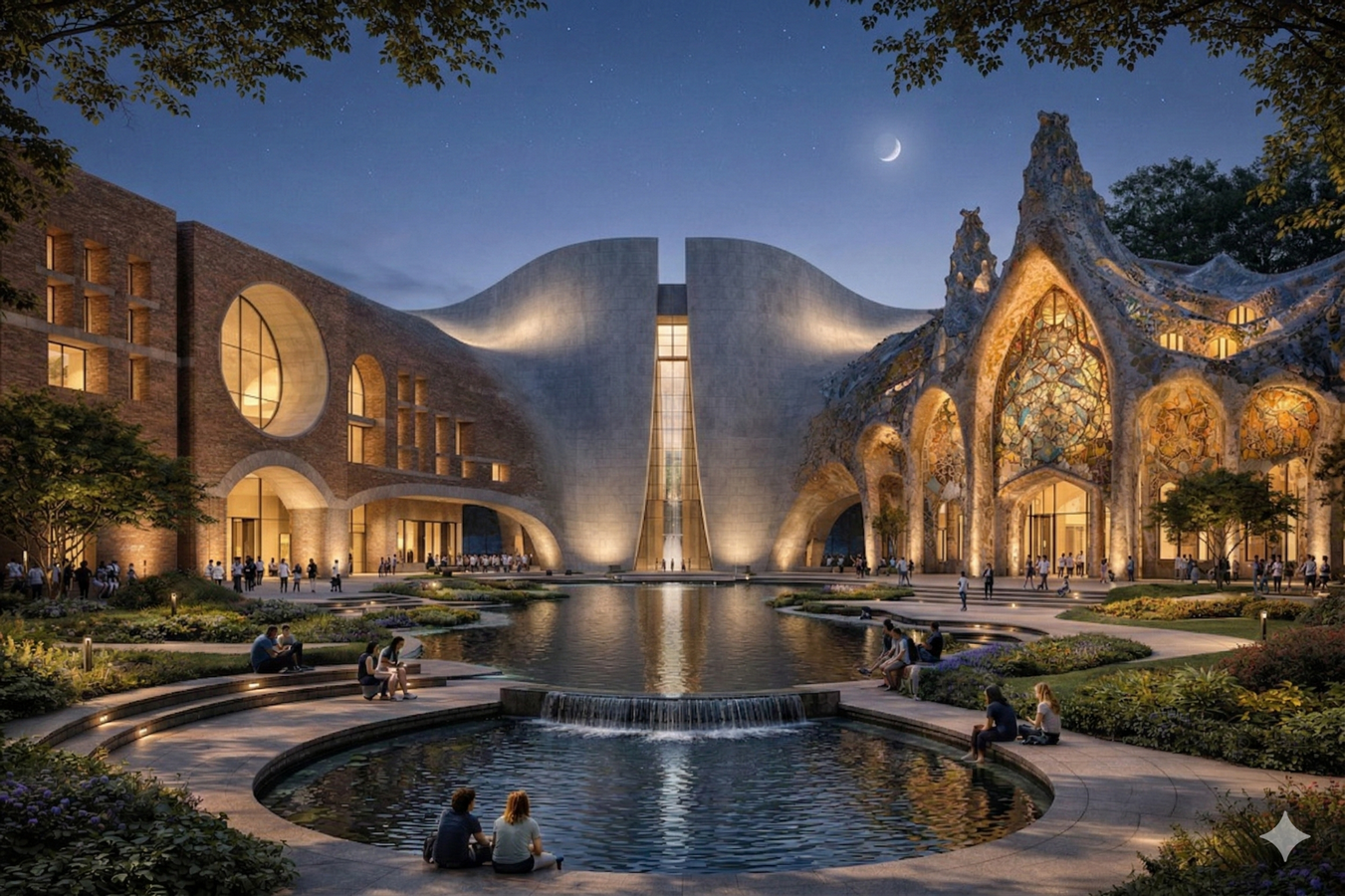
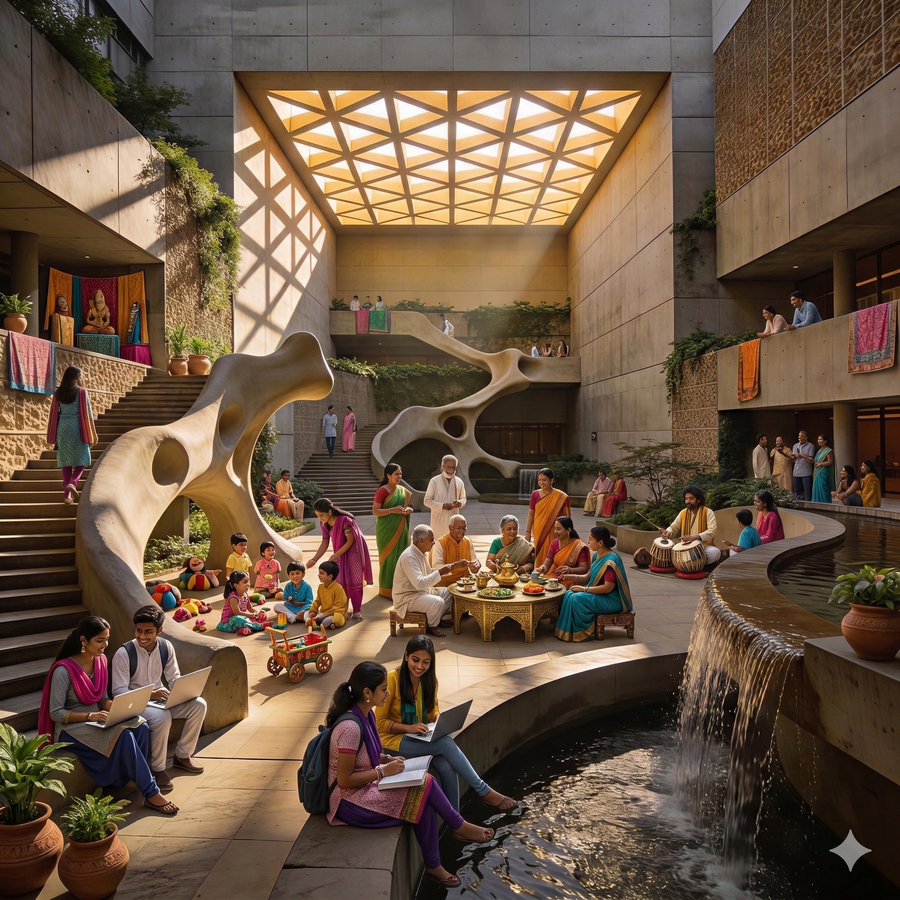
For architects, this introduces a different relationship with representation. An image is no longer a fixed output but something that can be continuously adjusted, testing variations in material, light, activity, or context without rebuilding the underlying model or manually post-processing the render. Through prompts and targeted edits, a space can appear more inhabited, a façade more articulated, or a landscape more integrated. Representation, therefore, becomes iterative, evolving alongside the design rather than following it. Instead of carefully constructing every visual element, architects increasingly evaluate and guide what the system generates, deciding which interpretations strengthen the architectural idea and which ones distract from it.
AI Walkthroughs: From Image to Spatial Experience
If AI image generation expands imagination, rendering shapes atmosphere, and image editing refines representation, AI walkthroughs extend these processes into the domain of experience. Architecture is not encountered as a single image but as a sequence—revealed through movement, shaped by time, and understood through transition. AI walkthroughs begin to address this condition by allowing architects to construct spatial narratives rather than isolated views. What once required fully developed models and complex rendering setups can now emerge from simpler inputs, where an idea of space can be translated into a continuous visual experience.
In this process, architects are no longer defining only how a space looks, but how it is approached, entered, and perceived over time. A path can be imagined, a threshold crossed, a view revealed gradually rather than all at once. Sequences can be explored—how one space leads to another, how compression opens into expansion, or how light shifts as one moves through a building. These are fundamental architectural concerns traditionally tested through drawings, models, or built experience. AI walkthroughs allow these spatial relationships to be visualized much earlier in the design process, making it possible to observe how movement and perspective shape the perception of architecture. The emphasis, therefore, begins to shift from the single image to the unfolding experience of space.
To understand this in practice, I tested a simple exercise using two rendered images and generated walkthrough videos from them using a basic prompt. Without building a full model or defining a detailed path, the system translated static views into short moving sequences, suggesting how the space might be experienced through motion.
Video 1: AI-generated walkthrough. Source: Author
Video 2: AI-generated walkthrough. Source: Author
Designing with Algorithms
Artificial intelligence expands architectural imagination, but it also introduces an unprecedented condition of abundance. At every stage, from image generation to rendering, editing, and walkthroughs, architects are presented with multiple possibilities, variations, and interpretations. The same prompt can produce entirely different results, each appearing equally convincing. While this opens new directions for exploration, it also creates a fundamental challenge: how to navigate an excess of options without losing clarity of intent. The process no longer struggles with a lack of ideas, but with an overproduction of them.
This abundance shifts the difficulty of design from creation to selection. Architects are no longer only responsible for generating form, but for deciding which possibilities are meaningful and which are distractions. Without a clear position, the process can easily become directionless, moving from one variation to another without resolution. In this sense, AI does not reduce the need for design thinking; it intensifies it. The architect must develop a stronger sense of judgement, an ability to recognize when an idea aligns with the intent of the project and when it does not. Equally important is the ability to stop, to identify the moment when further variation no longer adds value but begins to dilute the clarity of the design.
Across all these tools, a consistent shift becomes visible. The architect is no longer only producing drawings or models, but navigating a field of generated possibilities. This requires a different kind of discipline—one that is less about control over tools and more about control over direction. The question is no longer just what can be generated, but what should be pursued. AI can expand the range of imagination, but it cannot define purpose. That remains the role of the architect.
Designing with algorithms, therefore, is not about surrendering creativity to machines, but about working within a new condition where imagination is amplified, and decision-making becomes central. The value of these tools lies not in the images they produce, but in how they are used to think, test, and refine architectural ideas. In a landscape of endless possibilities, the strength of architecture will depend not on how much can be generated, but on how clearly one can choose and when one decides to stop.
AI Tools for Architectural Imagination
https://www.midjourney.com
https://openai.com/dall-e
https://stability.ai (Stable Diffusion)
https://lookx.ai
https://www.promeai.pro
https://mnml.ai
https://nanobanana.ai
https://runwayml.com
https://pika.art
https://lumalabs.ai
https://www.kaiber.ai
References:
Amazing Architecture (n.d.) Generative AI in Architecture. Available at: https://amazingarchitecture.com (Accessed: 4 March 2026).
Architect Magazine (n.d.) AI is Shaping Architecture’s New Reality Faster Than We Expected. Available at: https://www.architectmagazine.com (Accessed: 9 March 2026).
MDPI (n.d.) Generative AI Applications in Architectural Design. Available at: https://www.mdpi.com (Accessed: 6 March 2026).
YouTube (n.d.) Using AI as a Design Tool in Architecture Practice. Available at: https://www.youtube.com (Accessed: 3 March 2026).
YouTube (n.d.) Generative AI in Architecture and Design (Podcast Discussion). Available at: https://www.youtube.com (Accessed: 8 March 2026).
YouTube (n.d.) How MVRDV is Using AI to Design Buildings. Available at: https://www.youtube.com (Accessed: 5 March 2026).
YouTube (n.d.) How Generative AI is Transforming Design (Autodesk Discussion). Available at: https://www.youtube.com (Accessed: 10 March 2026).
YouTube (n.d.) AI in Architecture Podcast Playlist. Available at: https://www.youtube.com (Accessed: 7 March 2026).