For policymakers and engineers working in developing-world contexts, 3D-printed bridges offer an innovative solution to a fundamental infrastructure problem. A river can become a formidable obstacle to communication and economic growth, but 3D-printed bridges combine a sophisticated understanding of structural performance with efficient construction protocols suitable to contexts where conventional approaches are prohibitively expensive, logistically complex, or environmentally damaging. The designs and realized structures within this publication present a radical approach to what is perceived as possible within infrastructure. Inspired by a range of interdisciplinary sources, the works employ parametric design techniques, robotic production methods, and an innovative use of conventional building materials.
The Rise of 3D-Printed Bridges in Developing Nations
3D-printed bridges have recently gained traction as an expedient solution to address pressing infrastructure needs in developing countries, where geographical constraints, such as seasonal rivers or mountainous terrain, isolate communities. The fastest, lowest-cost method to build access roads to critical health care and education facilities, as well as transportation hubs and market centers, is to 3D print a bridge.
Unlike conventional bridge construction, traditional construction methods are bypassed, and bridges are printed directly from a 3D printer. This approach simplifies the process, removing several steps and manual construction, which would normally require skilled labor. The printer is straightforward to deploy at a site, often in remote locations, where it builds the bridge components that can then be assembled locally. Importantly, the printers allow configurations that address site-specific physical, environmental, economic, and social challenges.
Technological Foundations of 3D-Printed Bridges
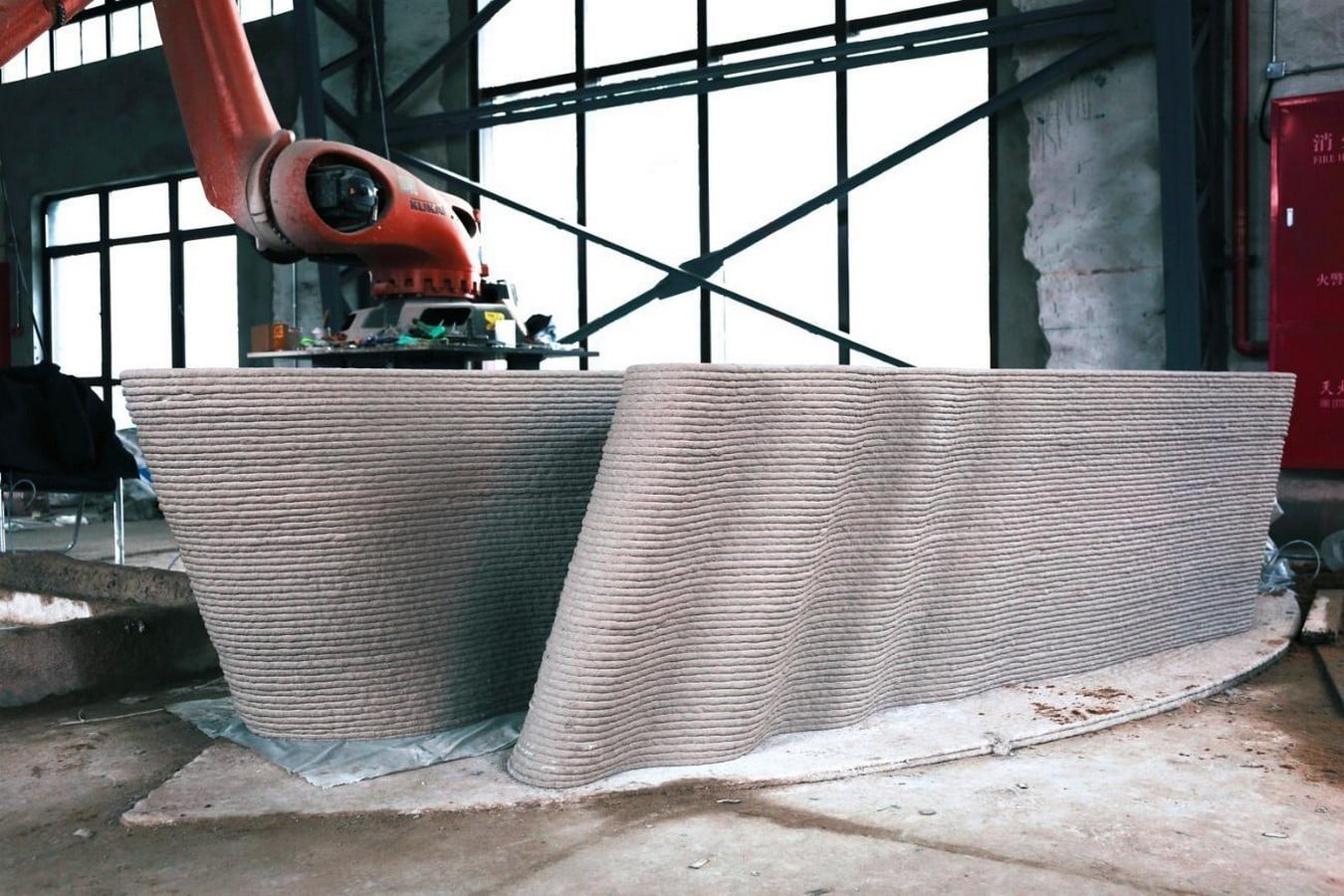
3D-printed bridges are developed using additive manufacturing methods that print structures from digital files, creating the most optimal geometry for maximum strength while minimizing material use. Our Fiber- and additive-reinforced concrete (FRAC) provides the necessary strength and durability for load-bearing structures.
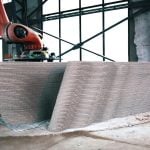
In addition to digital printing and laser cutting, we also use robotic fabrication with large-format gantry printers and robotic arms. Civil engineers use parametric modeling tools to pre-design, test, and calculate the load-bearing capacity and stress points of structures before they are physically built. This method is particularly useful in developing countries where locally sourced materials can reduce costs whilst providing significant environmental benefits. We recently used this approach to pre-fabricate and print a series of sub-structure modules for a new Grass Valley installation.
The highly modular design of the 3D printed bridges facilitates the production of large modules that can be prefabricated and assembled by unskilled laborers at the site of deployment. This method allows construction to proceed in multiple locations simultaneously.
Case Studies Strengthening the Role of 3D-Printed Bridges
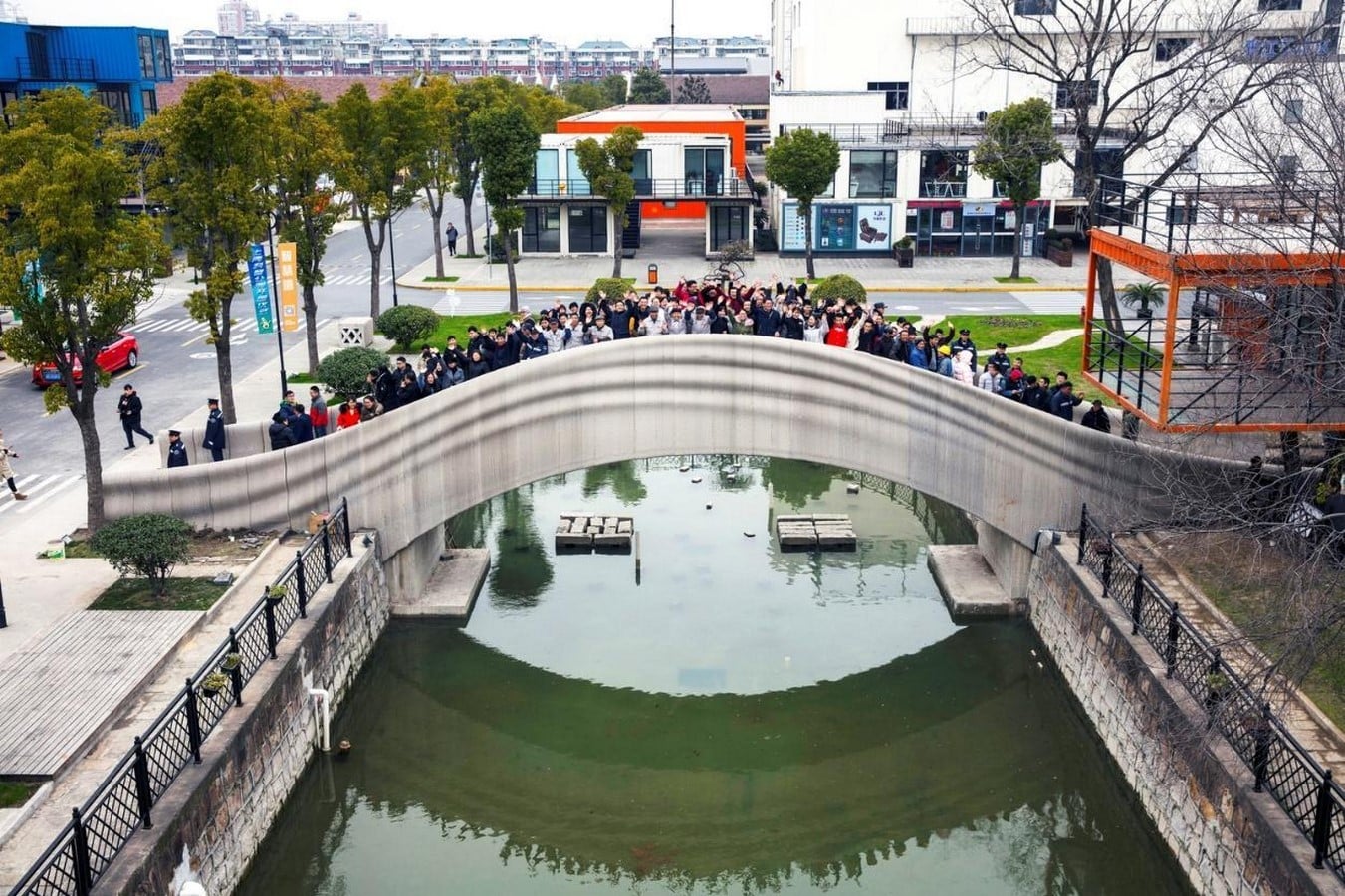
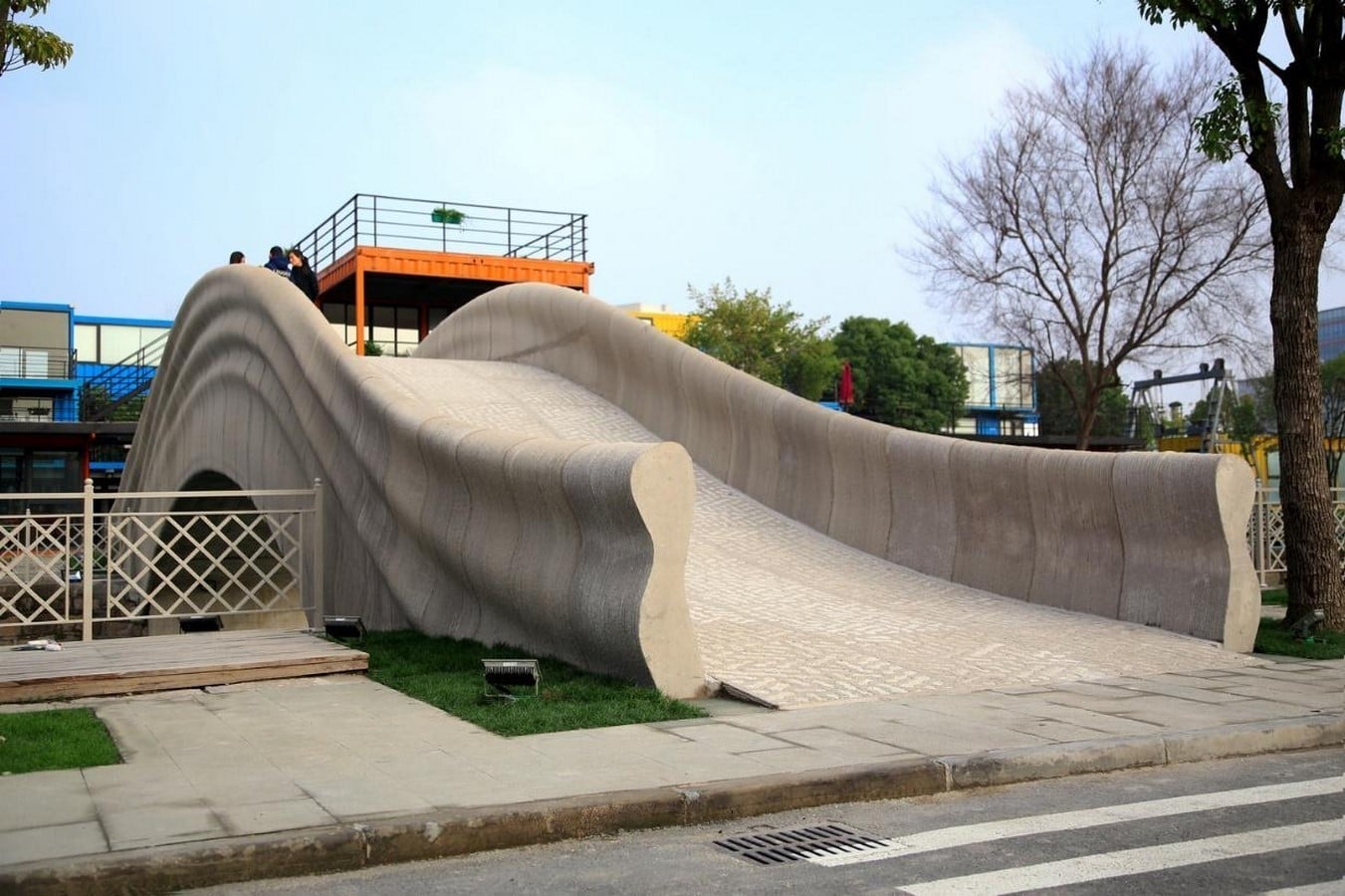
The world is experimenting with 3D printing, and 3D-printed bridges are no exception, evolving from experimental objects to fully-fledged architectural structures. The recent 26-meter-long pedestrian bridge in Shanghai, printed with a newly developed printable concrete, is not only an example of efficient engineering but also an example of how 3D printing can be used to rethink historical architecture in terms of contemporary digital fabrication. Inspired by the single arch of the 1,400-year-old Anji Bridge in China, literally translated as Zhai prefecture Bridge or the Great Stone Bridge or Zhaozhou Bridge, the 3D-printed Shanghai pedestrian bridge was re-designed as a parametric, digitally fabricated structure.
The flowing ribbon-like handrails of the bridge follow the linear form of the bridge. The single arch of the bridge symbolizes the flowing water of the surrounding landscape. The bridge looks more like a fluid structure than a rigid and mechanical object. The pavement pattern of the bridge imitates the natural and organic form of brain coral. It creates different textures and a tactile experience for pedestrians walking along the bridge. The 26-meter-long pedestrian bridge is not only an architectural marvel, but also a great example of how 3D printed structures can be used to create innovative and interesting public spaces. The focus is on the environment, and instead of standing out from it, the structure should blend in as much as possible. This is very important for developing countries, where lots of new infrastructure can cause serious damage to the local environment. The rough surface of the 3D printed concrete shows the printing process, and it is not finished in a high-quality manner to highlight the construction techniques. The Shanghai bridge is a great example of a 3D printed structure that is a work of architecture and not just a pile of innovative solutions to problems (ArchDaily, 2019).
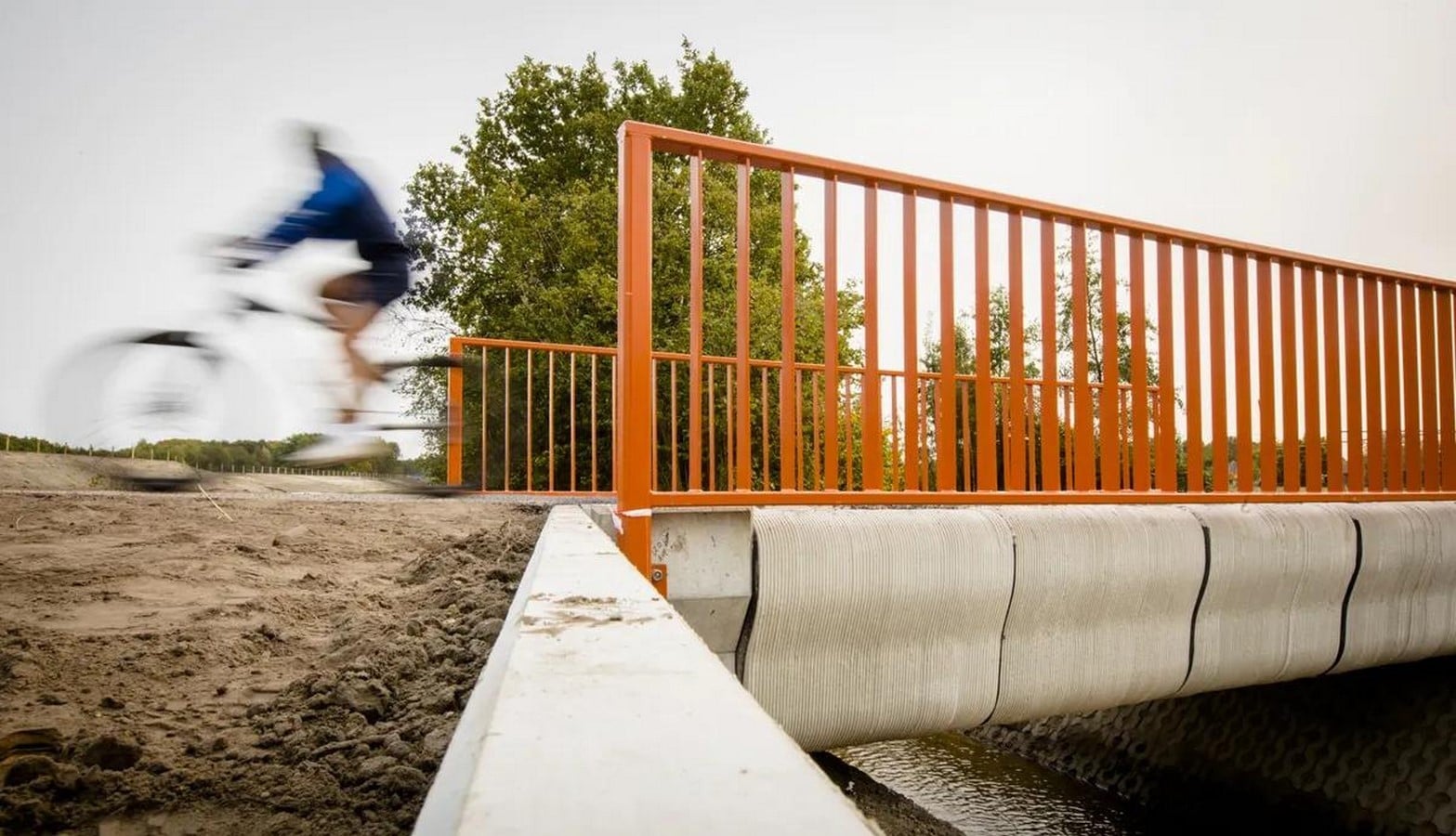
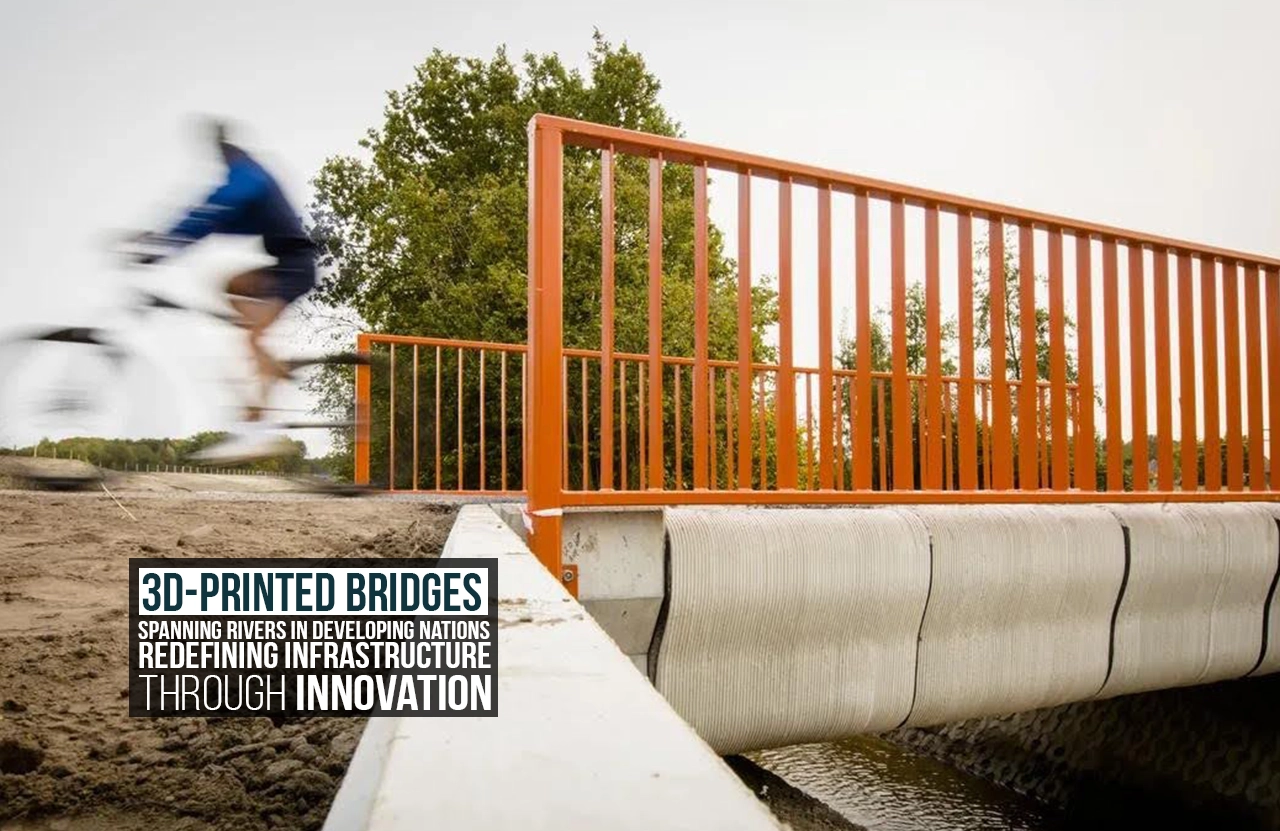
On another note, recently, a 3D printed bicycle bridge was opened to the public in Gemert, the Netherlands. The 3D printed bicycle bridge is a great example of 3D printing on a human scale, using innovative techniques to increase the quality of life of users. This is the first 3D printed concrete bridge for public use. This project is a great example of how architectural innovation can be realized in building structures for human use (Witteveen+Bos, 2017).
The bridge has been designed specifically for cyclists. The structure has been designed in such a way as to provide a safe and comfortable passage for cyclists and pedestrians alike across the water corridor. The structure of the bridge is extremely light, which creates an open feel across the water and provides users with a safe and psychologically comfortable environment to cycle through. The bridge is not ‘tech’ and does not feel out of place in the area in which it has been built. It has been designed to be used in a human-centered way and to form part of the cycling routes and pavements that already exist in the area (Witteveen+Bos, 2017).
The handover of the bicycle bridge was immediately followed by a few days of good weather, and the odd cyclist and pedestrian could be seen crossing the structure. However, in the following weeks, the weather was extreme with rain, snow, and frost all occurring, and the bridge was put under a variety of loading conditions. In all cases, the printed concrete structure performed well and remained intact. Although the surface of the bridge developed cracks in places, these did not affect the safety of users. The structure was strong and flexible in equal measure.
Furthermore, the Gemert Bicycle Bridge marks a shift in the way architects perceive infrastructure today. In contrast to today’s conventional bridges, which are mostly perceived from an engineering-focused structural point of view as simple objects, the printed concrete bridge functions as a piece of infrastructure and as public space at the same time. This new form of digitally fabricated infrastructure is perceived in an entirely new way than normal, and most of all, conventional bridges.
The approach of the Gemert Bicycle Bridge is relevant for developing countries where not only new infrastructure is required to connect up isolated areas, but also the social bodies of connection that lead to schools, health care, markets, and social communities. The approach that has been taken by the Gemert Bicycle Bridge allows for the creation of structures that function as part of a cycling network and allow for unhindered movement, whilst at the same time keeping a light and spatially comfortable impression for the user.
The creation of 3D printed bridges highlights more than just innovative engineering. These bridges are being designed to enhance performance and also increase the architectural value of the structure. They are creating public spaces of human scale and dialogue between structure and user experience, and between building and environment. The focus on architecture is particularly relevant for countries in development, where bridges are not just simple civil engineering creations to be used for crossing from one place to another, but also represent a symbol of connectivity and provide access to schools, health, markets, and other community centers. Creating innovative and effective connectivity solutions is very important, but these solutions must also be part of creative public architecture that goes beyond mere utilitarianism and can respond to the many human experiences of the user.
Socio-Economic Impact of 3D-Printed Bridges
3D-printed bridges have the potential to make a significant socio-economic impact across a variety of environments and situations. In remote rural locations where communities lack even basic infrastructure, a 3D-printed bridge across a river can provide a safe and convenient crossing for both people and vehicles. It connects communities and brings people together in a spirit of community, whilst also providing access to vital services and facilities such as healthcare and education. Many rural communities are isolated from markets due to poor connectivity, restricting economic activity and potentially stunting growth and opportunities for better livelihoods. A 3D printed bridge could provide a much-needed link to a wider regional economy, boosting trade and transportation.
For Governments and NGOs, low-cost, light construction bridges made using 3D printing could be very appealing. Because of the nature of 3D printing, JJIJoe bridges are cost-effective to use immediately and to rapidly construct with. Given that several of these bridges can be built for the cost of a single traditional bridge, the ROI is high.
The skills of the local laborers who constructed the bridges will also benefit future 3D printing projects by training the community to use the technology, operate the printers, and perform basic maintenance using the software. The bridges will have a lasting, transformational impact on the socio-economic development of future generations and will be a sustainable, long-term solution.
Environmental Advantages of 3D-Printed Bridges
3D-printed bridges are considered environmentally friendly because they use locally sourced materials, reducing resource use and minimizing waste, thereby advancing the overall environmental objectives of sustainable development. As 3D printing is an additive process, material is printed layer by layer, meaning only the amount required for each component is printed. This results in a substantial reduction in material usage and waste when compared to conventional construction methods.
Additionally, the use of recycled content can be maximized to further enhance the building’s environmental performance. Furthermore, the use of locally sourced construction materials, including aggregates and binders, can reduce the embedded energy’s carbon content by minimizing the transportation requirements for imported materials. In many developing countries, using local materials can support sustainability and work within financial constraints by leveraging locally available construction resources and low-cost methods.
Lighter equipment is deployed for construction, and smaller on-site footprints facilitate easier environmental rehabilitation. The printed bridges are permanent but cause minimal impact, including to native species, habitats, and the river environment.
Challenges in Implementing 3D-Printed Bridges
The world of bridge building has seen many benefits from 3D printing. Yet despite its advantages, the technology still has some kinks that limit its adoption. One key reason is that developing countries lack the capital to purchase 3D printing equipment and access the latest technologies.
Regulatory challenges: Many countries lack specific building codes for 3D-printed construction. This makes it difficult to establish and enforce standards, conduct safety tests, and carry out inspections for these projects. There are also challenges with the properties of 3D-printed construction materials and their performance under various environmental conditions.
One of the biggest challenges to scaling OpenDAB in emerging markets is the lack of local technical expertise. To address this, the company is setting up various training programs to equip staff for installation and maintenance. It also recognizes that collaboration among governments, industry leaders, and research institutions is essential to drive the innovation needed to further scale OpenDAB.
Future Prospects of 3D-Printed Bridges
Future projects in developing countries will require innovation in terms of materials and technologies related to 3D printing, robotics, and design. As key technologies become more accessible and less costly, they can be used in more places around the world. Researchers are also exploring increasingly sustainable materials and systems made with traditional materials and recycled plastic to further enhance environmental benefits.
Smart technologies, like embedded sensors, should be integrated into future buildings to support maintenance and safety. In disaster-prone areas, a robust structure alone is not enough; buildings must also withstand harsh weather. Decentralized manufacturing can leverage local production and reduce reliance on external resources.
3D-printed bridges have the potential to change how we think about infrastructure by providing an affordable way to build structures in regions that lack sufficient development.
3D-printed bridges are being created to access remote areas whilst reducing costs and environmental impact. The innovative structures are increasingly seen as a valid alternative to conventional building, and, as technology advances and our understanding of the opportunities and limitations of 3D printing improves, so too is the potential for their use. Here, we explore a selection of the latest 3D printed bridges around the world.
References:
ArchDaily (2019). World’s Largest 3D Printed Concrete Pedestrian Bridge Completed in China. Available at: https://www.archdaily.com/909534/worlds-largest-3d-printed-concrete-pedestrian-bridge-completed-in-china [Accessed 21 April 2026].
Buswell, R. et al. (2018). 3D printing using concrete extrusion: A roadmap for research. Cement and Concrete Research, 112, pp. 37–49.
Lim, S. et al. (2012). Developments in construction-scale additive manufacturing processes. Automation in Construction, 21, pp. 262–268.
Witteveen+Bos (2017). World’s First 3D Printed Bridge Gemert. Available at: https://www.witteveenbos.com/projects/worlds-first-3d-printed-bridge-gemert [Accessed 21 April 2026].
World Economic Forum (2020). How 3D printing is transforming construction. Available at: https://www.weforum.org [Accessed 21 April 2026].