There is nothing technically wrong with the room. There’s enough space to walk, the lighting works, and the walls are clean. Still, something feels wrong, and once seen, impossible to ignore.
The tile grid is off-centre.
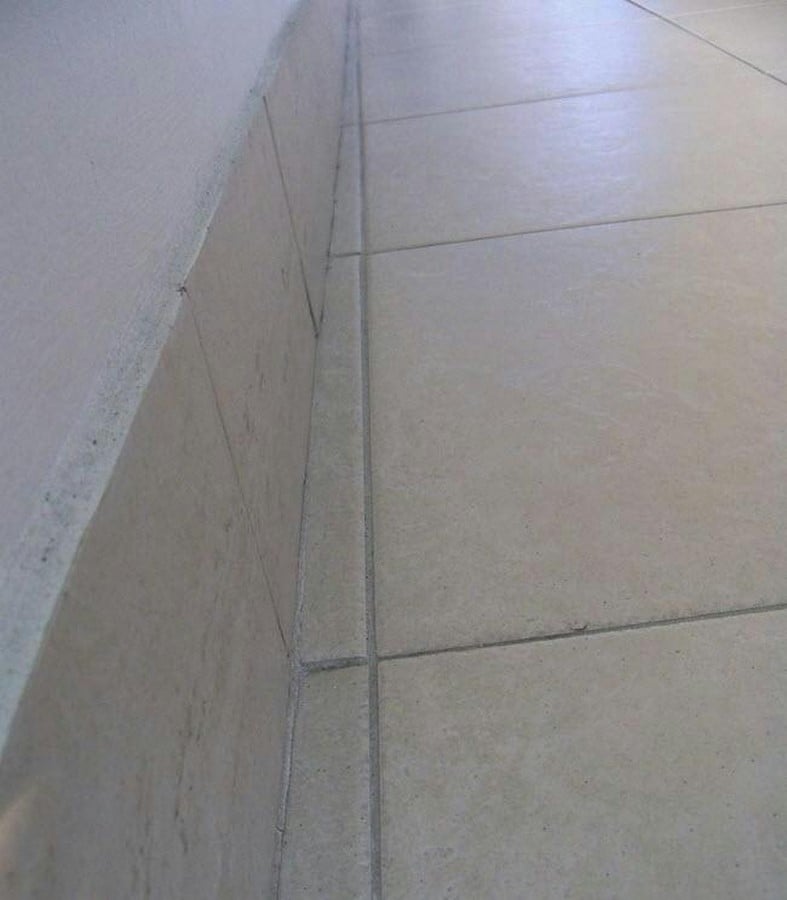
The cuts fall unevenly along the edges of the room. The entire room feels off-balance. Proof that whoever laid it out didn’t take the time to look at their work. What no one warns you about architecture school is the inability to stop noticing and the uncomfortable degree to which you start noticing. Sometimes it is useful, sometimes exhausting.
Learning to Notice
Architecture school slowly changes the way you look at spaces. Nothing that is noticed is inherently good or bad. It is now a composition of design decisions, and soon enough you start analysing and rearranging everything in your mind. And once that awareness builds up, it doesn’t switch off either. After a point, even small details start feeling intentional or strangely unresolved. And soon enough, you start thinking about how a beam is cutting in a storage space, how there is an awkward corner with a lot of potential that is completely unexplored. These details are subtle enough not to be acknowledged by people, but architecture school builds up this awareness one millimetre at a time.

The Gap Between Idea and Execution
It doesn’t stop at noticing awkward placement. You see something built with a good idea but poor execution. A curved park bench made with ferrocement that could have been beautiful. If only it had an even finish. A bench built with great design is now unused because the lack of an even finish is too uncomfortable for someone to sit.
The strange thing is that ambition is still visible in it. You can see that someone cared about the curve at some point. The way the bench bends into itself, the decision to use ferrocement instead of something harsher and more rigid, the attempt to make a public bench feel softer, almost sculptural, all of it is still there even after the finish has worn unevenly across the surface.
The idea survived. The commitment did not. And somehow that becomes the frustrating part — not that the bench failed, but that it came close enough to becoming something genuinely thoughtful before care quietly disappeared from the process. Observations like these come up in your mind naturally when in a critique, every design decision you made is counter-questioned.
You realise that a badly placed beam isn’t just awkward but it weakens usability, and a poorly finished bench isn’t just not aesthetic but also is uncomfortable.
The Crit
At some point during a critique, someone asks why a wall was shifted slightly off-axis, or why a seating space narrows at the entrance. You answer instinctively at first, then stop halfway through because there is no real justification behind the decision. The silence that follows is uncomfortable, but useful.
You realise that every unresolved detail eventually affects the way a space is experienced, whether consciously or subconsciously.
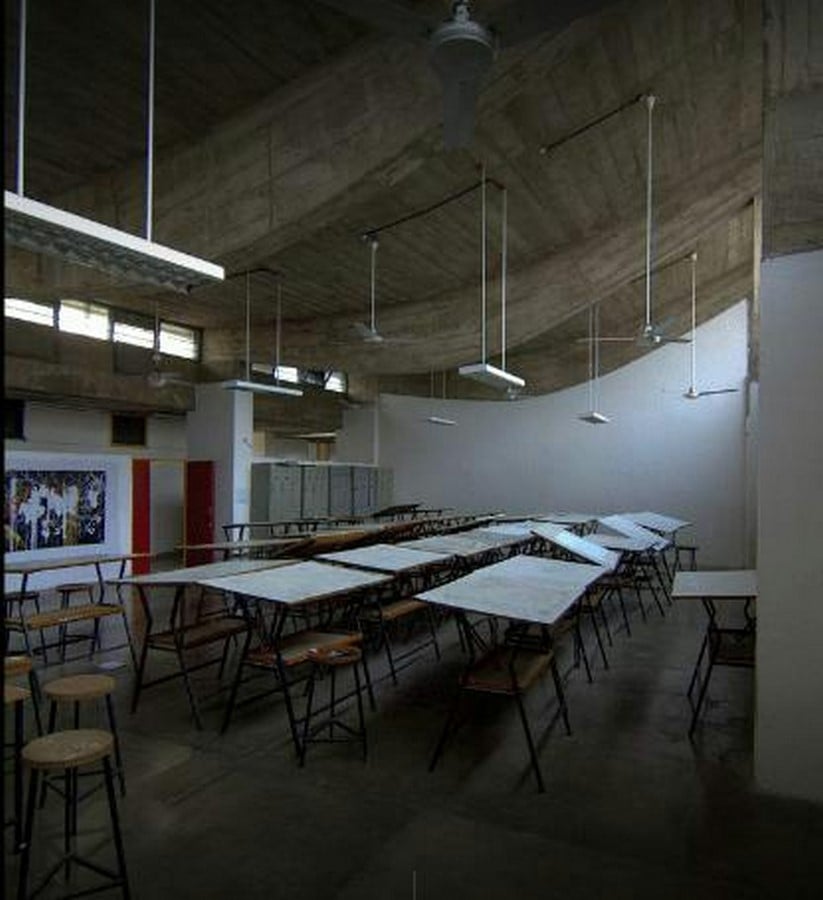
Architect and theorist Juhani Pallasmaa (Pallasmaa, 2005) often wrote about how architecture is experienced through every sense in the body. Even before a user understands what feels wrong, they usually feel it.
All spaces are systems of complex elements in themselves that have different effects on people, and understanding these systems sharpens your mind and changes how you look at everything, not just the built environment.
The Awareness That Stays
This awareness doesn’t stay in the studio. In a waiting room, a café, or a relative’s house. A completely ordinary space. The tiles are still slightly off-centre. A corner still feels unresolved. The material still feels unfinished against the hand.
A corridor feels narrower than it should. Not enough for someone to consciously notice it, but enough for the body to register it anyway while walking through. The circulation around a table becomes awkward for reasons that are difficult to explain out loud, where people keep adjusting their movement slightly just to pass each other comfortably, even though the room technically functions the way it is supposed to.
A switchboard sits a little too high on the wall and suddenly becomes impossible not to look at while waiting. None of these things is dramatic enough to ruin a space. Most people move through them without thinking twice. But after years of being trained to question proportions, alignments, materials, and decisions, the observations stop feeling intentional and start happening automatically.
Nobody else in the room seems to notice any of it. A part of you wishes you did not either. But this is what architecture school quietly builds into you over five years: the inability to move through spaces without seeing the decisions behind them. This is what architecture school teaches you.
REFERENCES:
Pallasmaa, J. (2005). The eyes of the skin : architecture and the senses. London: Academy.
Anon, (n.d.). Available at: https://www.ceramictilefoundation.org/blog[Accessed 9 May 2026].
Gstatic.com. (2026). Available at: https://encrypted-tbn2.gstatic.com/images?q=tbn:ANd9GcRTTXKmqrVe9XLNE1ECryJTLjsBs1GQv8mpXXQ3fkPsrrpa9H3K [Accessed 9 May 2026].
Allegiance-educare.com. (2026). Available at: https://assets.allegiance-educare.com/colleges/1563773194classss.PNG [Accessed 9 May 2026].