Key Focus: Life without Architecture
The relationship between architecture and humanity has always been regarded as an essential and inevitable element in both physical and cultural terms, influencing the way humans live through time and space. This essay considers a hypothetical yet crucial exploration: what would happen if there were no architecture at all? This essay will use concepts from anthropology, environmental science, sociology, and psychology to create a story about another version of human history—characterised by impermanence, behavioural adaptations, and intangible spaces. The implications for this hypothetical world of human existence without architecture are examined in terms of habitation, identity construction, memory, social structure, and environmental interaction. This reflection attempts to make the architectural profession reconsider current trends.
The art of architecture, referred to as the “mother” of all arts, is an integral part of human civilization. Not only does it provide shelter for humans, but it also defines social structures, cultural identities, and interactions with the environment. As Rapoport (1969) notes, architecture is the direct expression of the culture and social order. However, imagining a world devoid of architecture – the world without buildings, walls, cities or constructions- becomes a unique chance to reflect on the meaning of the phenomenon itself.
Living without architecture involves a completely new way of existing, seeing the world and interacting with the environment. As Heidegger (1971) pointed out, dwelling is inherent to human existence, although the very process can exist independently of architecture. In the context of imagination of this hypothetical scenario, this paper focuses on the lifestyles, culture, and perceptions of humans who never lived in any architectural constructions.
By dismissing the idea of the presence of architecture, the paper aims to stress its omnipresence in people’s lives and the need for architects and other professionals to reflect on this aspect.
Rethinking Shelter: Life Without Built Enclosures
A lack of architecture means the loss of buildings and permanent shelter. People used natural formations such as caves, tree tops, and rock shelters until buildings were invented. Thus, if architecture had never developed, natural shelters would still be relevant.
According to Ingold (2000), the key to the survival of people is close interaction with the environment, not its domination. The absence of architectural forms of shelter will result in greater attentiveness to seasons, winds, sun position, and all the rest.
Humans will be forced to adapt themselves to the conditions instead of trying to regulate the surrounding space by building walls and shelters. Instead of using buildings, humans will use clothing and mobility to create necessary shelters, as well as collective behaviour.
All in all, the absence of built shelters will lead to the disappearance of any differences between “inside” and “outside,” as these concepts are created precisely because of architecture (Norberg-Schulz, 1980).
Nomadism as the Default Condition
Without architecture, sedentariness will be severely limited. Permanent dwellings require built environments in which resources can be accumulated, safety provided, and continuity maintained. Without it, nomadism might become the prevalent lifestyle.
As Rudofsky (1964) points out, even the most primitive forms of vernacular architecture embody a desire for permanence. By eliminating architecture, we deprive humans of the chance to achieve it, thus making nomadism inevitable. Humans will migrate according to the availability of food, fluctuations in climate, and changes in ecosystems.
These migrations will make them resilient and adaptive, but unable to accumulate anything and claim territories. According to Tuan (1977), “space” implies openness, while “place” connotes stability. Human experience will then be predominantly spatial rather than placid.
The lack of urbanisation will change human history. City development, governance, and economic structures will not develop in the same way. Social groupings will probably be more fluid and less hierarchical.
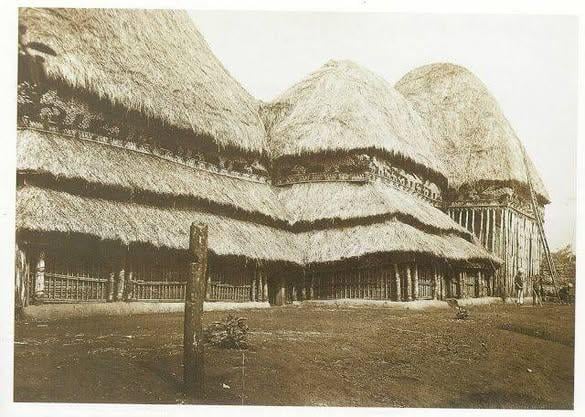
The Transformation of Social Structures
Architectural design is integral to organising society through the establishment of hierarchies between public and private domains, sacred versus secular spaces, and formal versus informal zones. If spatial hierarchy were non-existent, then the organisation of society would depend largely on cultural conventions and social interactions.
Organisations like court buildings, educational institutions, and houses of worship would not materialise into architectural structures. Their purposes would manifest themselves in collective activities. Alexander (1979) points out that human interactions influence the environment around them; without the built environment, human interactions would carry even more importance.
Privacy would fundamentally change. Since there would be no walls or barriers, individuals’ personal spaces would greatly intersect with their communal spaces. Individual actions would be governed by social conventions rather than architectural demarcations.
Finally, monuments are often used to convey authority. In the absence of monumental architecture, alternative means of exercising authority would be necessary, which would be based on experience, knowledge, or social status rather than force.
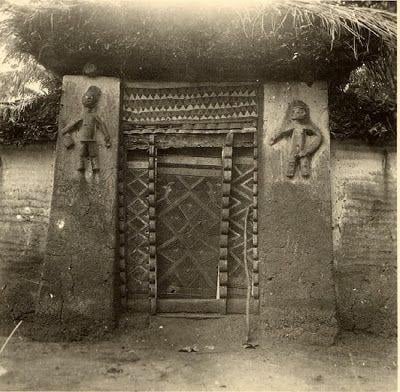
Memory, Identity, and the Absence of Monuments
Architecture can be described as a way of storing memories because it stores the cultural story physically. The monument, building and the built environment will become symbols of collective identity. In their absence, culture and identity will be carried out in forms that cannot be touched or felt.
Oral storytelling, rituals and ceremonies will replace architecture as the main means of cultural communication. According to Pallasmaa (2005), architecture triggers all our sense organs to leave impressions, which they will lose in their absence. Landscapes will become places of memories, with rivers, forests and mountains holding the stories.
Identity will be associated with moving around and experiencing things instead of having a concrete structure to define people. History will become more flexible in such circumstances.
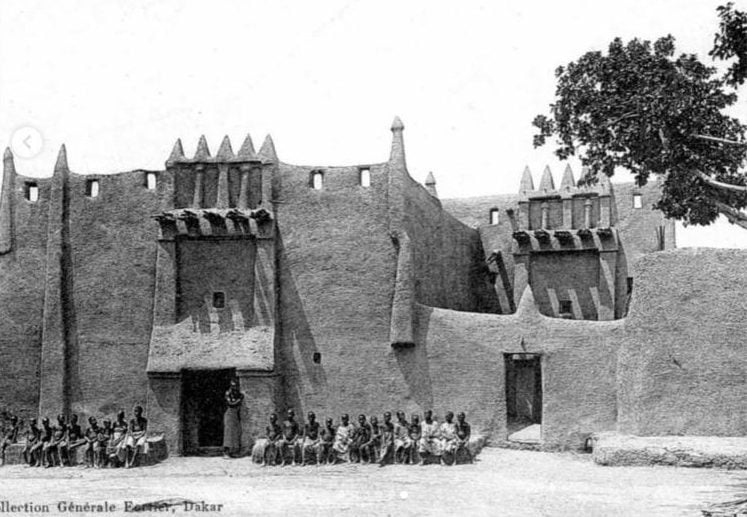
Environmental Relationships: From Domination to Integration
Architecture can be seen as one way in which humans attempt to exert control over their surroundings. Without it, the interaction between man and his environment would have been radically different.
According to Ingold (2000), dwelling is not about controlling one’s surroundings but about engaging with them. Under such conditions, human beings would be seen as an important part of the ecosystem. Survival would have required knowledge of nature.
It is possible that resource use would have been sustainable due to high levels of mobility, avoiding exploitation. It would mean there would be no pollution caused by building, industrialisation, or urbanisation.
On the other hand, the absence of architecture would have restricted progress made through technology, which requires proper infrastructure.
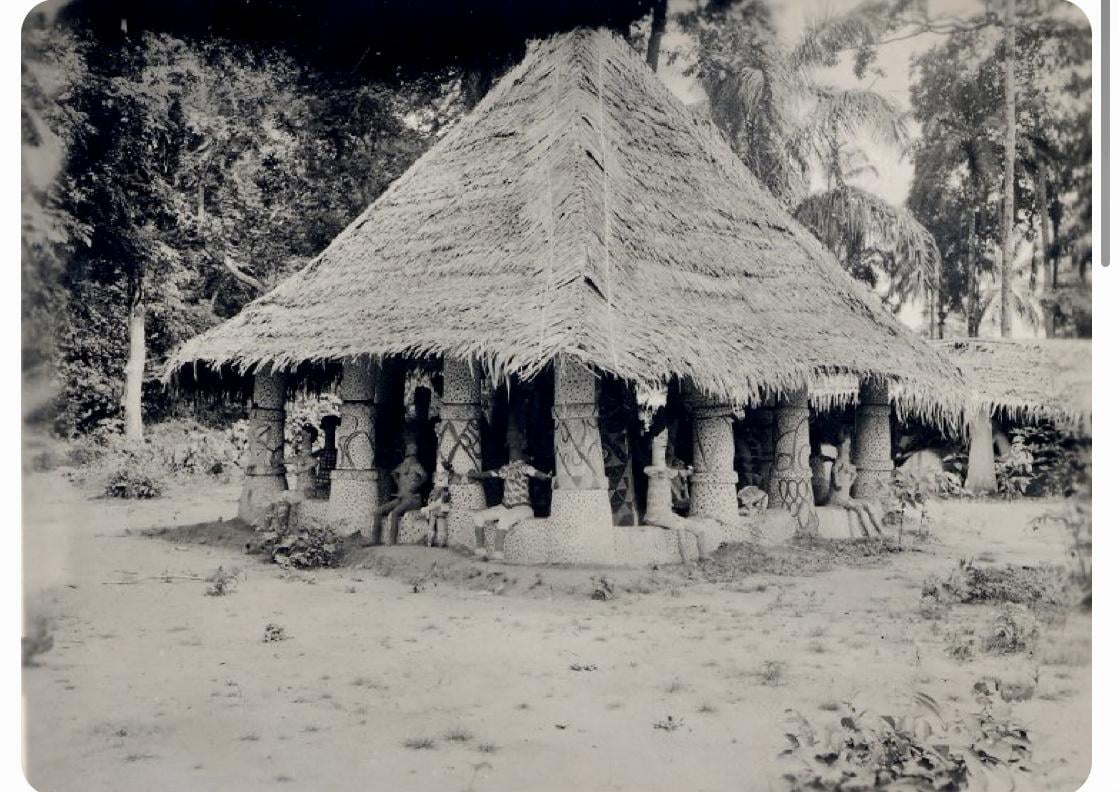
Technology Without Architecture
Technology and spatial stability are intimately connected. Laboratories, workshops, and industries must have controlled spaces. Without buildings, technology would develop differently. Tools would retain mobility and serve their purpose of survival. The construction of more complex systems would be improbable without the support of stable spatial structures. As Rapoport (1969) states, building structures make possible greater complexity in culture and technology; the lack of these structures would hinder their development.
Learning would occur orally and by direct teaching instead of through formal educational institutions. While this may restrict the scope, it may promote deeper learning through experience.
Psychological Implications of a Boundless World
Architecture offers psychological reassurance via enclosure, safety, and identity. According to Pallasmaa (2005), architecture influences human perception and psychology. The lack of built environments would alter psychological mechanisms.
Without boundaries, people may feel free but exposed. Spatial understanding and environmental awareness would be more developed. Wayfinding and environmental adaptation would be crucial survival skills.
“Home” would be redefined as a state of being rather than a building. It could be based on social connections, repeated landscapes, or habitual practices. This reconsideration disrupts modern notions of attachment and stability.
Art, Expression, and Spatial Creativity
Architecture is one of the prominent media of artistic expression that involves aesthetics, functionality, and meaning. In the absence of architecture, creativity would take new forms. The art of land, stories, music, and performance would become prevalent forms of cultural expression.
As mentioned by Zumthor (2006), atmosphere and experience play an important role in perceiving space. This would not require any actual architectural construction, but the emergence of qualities associated with it.
The landscape itself would work as a medium in which fleeting acts of creation would occur in place of any constructions. Creativity would become transient in nature.
Questioning Contemporary Architecture
Considering human life without architecture does not mean dismissing the field; rather, it is a means for scrutinising the discipline. Modern architecture tends to be obsessed with appearance, economy, and fame at the expense of human and ecological needs.
Questions that arise include:
- Is architecture beneficial for humans?
- Are architectures attuned to natural ecosystems?
- Does architecture bring together people or create divisions among them?
Norberg-Schulz (1980) highlighted the concept of “genius loci,” or the spirit of the place. In modern architectural designs, this principle has been largely ignored, leading to environments that are uniform and detached from their context.
Through this thought experiment, we discover that there are numerous elements of human life that can survive without architecture. Thus, architecture must prove its significance through its contributions to these aspects.
Towards a More Conscious Practice
The findings from the above exercise indicate that architects should be more introspective and accountable when designing structures. Architecture should not take itself for granted; rather, it should strive to prove its importance.
In this regard, it should be designed with consideration for the environment, adaptability, and minimal materials. According to Alexander (1979), patterns should address human needs, an aspect that is becoming even more important today.
Architecture should have modesty, acknowledging that it does not define human life but is only one factor among many other influences. By learning from non-existence, architects can redefine their priorities, placing humanity and nature first.
A world without architecture would entail an entirely different way of living; one that embodies movement, a connection to nature, and immaterial cultural practices. Although this world would lack many conveniences that architectural constructions provide, it would yield invaluable lessons in resilience, sustainability, and human existence.
This thought experiment represents a form of critique rather than a blueprint for the future. By grasping the potentialities of human existence devoid of architecture, the field can more comprehensively assess its relevance and significance.
In conclusion, architecture must not only build but also enhance human existence so that its role is not only pertinent but also conducive to its surroundings.
References:
Alexander, C. (1979). The timeless way of building. Oxford University Press.
Heidegger, M. (1971). Building, Dwelling, Thinking. Harper & Row.
Ingold, T. (2000). The Perception of the Environment: Essays on Livelihood, Dwelling and Skill. Routledge.
Norberg-Schulz, C. (1980). Genius Loci: Towards a Phenomenology of Architecture. Rizzoli.
Pallasmaa, J. (2005). The Eyes of the Skin: Architecture and the Senses. Wiley.
Rapoport, A. (1969). House Form and Culture. Prentice-Hall.
Rudofsky, B. (1964). Architecture Without Architects: A Short Introduction to Non-Pedigreed Architecture. Museum of Modern Art.
Tuan, Y.-F. (1977). Space and place: The perspective of experience. University of Minnesota Press.
Zumthor, P. (2006). Thinking architecture. Birkhäuser.
Smisek, P. (2020, July 21). If walls could talk: old structures reborn. Architonic. https://www.architonic.com/en/s/if-walls-could-talk:-old-structures-reborn/20135266
Matsubara, K. (2016). The work of the Japanese specialists for the new Khmer architecture in Cambodia. In the 17th IPHS Conference, Delft 2016 | History – Urbanism – Resilience | Volume 01: Ideas on the Move and Modernisation – Entangled histories of cross-cultural exchange | Global connections. International Planning History Society.
(14) New Culture Studio, Ibadan (1967): Demas. . . – Historical Nigeria | Facebook. (n.d.). https://www.facebook.com/HistoricalNigeria/posts/new-culture-studio-ibadan-1967-demas-nwokos-architectural-revolutiona-pioneering/122274268736189242/
(14) African History Group | Pre-Colonial Igbo architecture | Facebook. (n.d.). https://www.facebook.com/groups/275114380263865/posts/680473006394665/
M.A. Usman 2021 on X: “Typical early Igbo Architecture. @IgboHistoFacts https://t.co/OTmv6feVmM” / X. (n.d.). X (Formerly Twitter). https://x.com/MAUIngagiH/status/1349708568891715586
Archive Africa (@archiveafrica) • Instagram photos and videos. (n.d.). Instagram. https://www.instagram.com/p/DN_QzEyDbQ3/?img_index=6
Odike, C. (2024, December 2). Mbari Houses: a living tradition of Igbo architecture, spiritual and artistic expression. Ozi Ikòrò. https://ozikoro.com/mbari-houses-a-living-tradition-of-igbo-architecture-spiritual-and-artistic-expression/