In search of a theory for Urbanisation
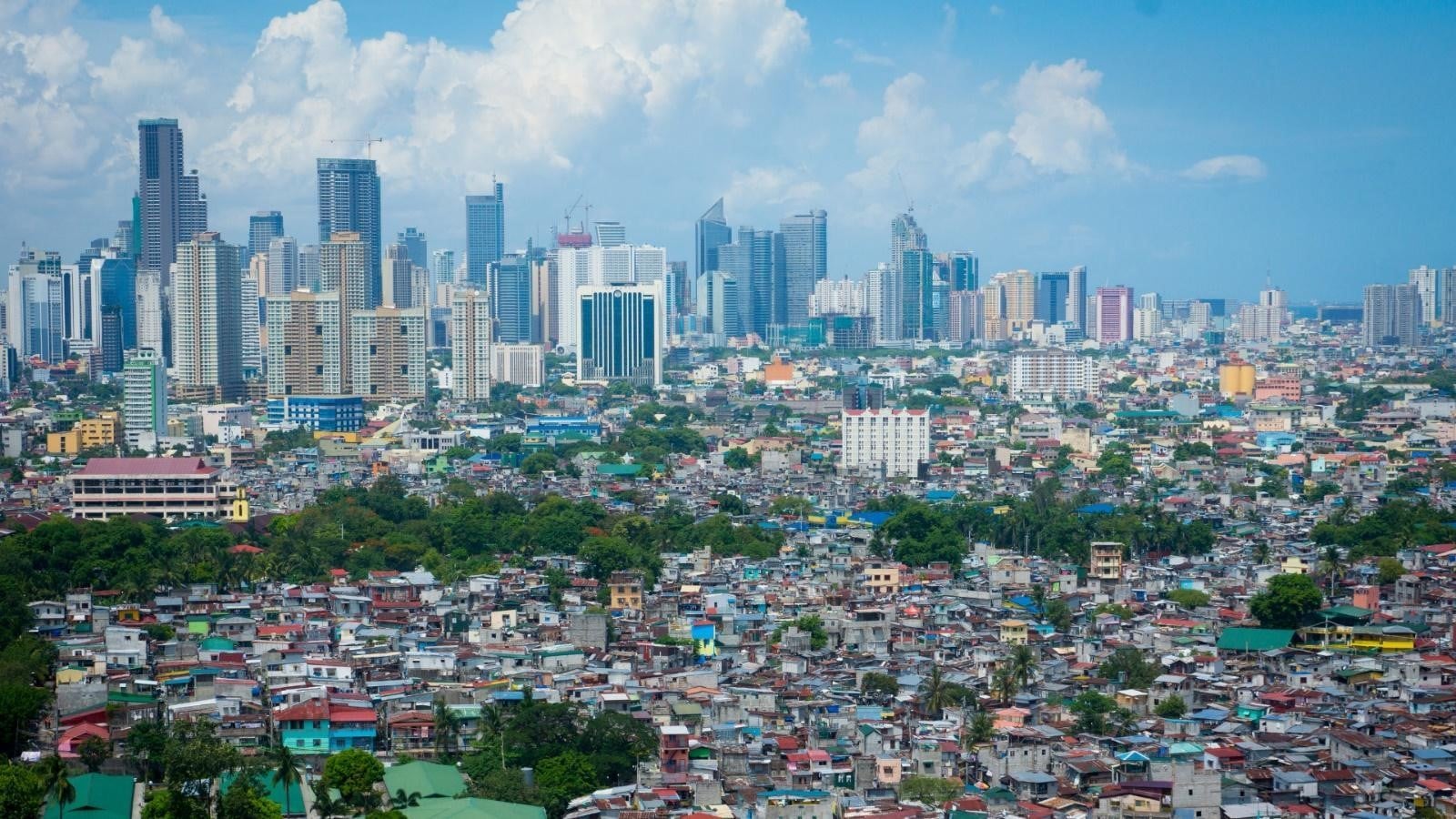
Urbanisation has been a defining trend of modernisation. More and more people are moving to live in cities than ever before, and this has been linked to economic growth and development as a whole while at the same time presenting challenges and problems. At this juncture, we need to be critical of urbanisation and understand what it does and how it works before we take a stance towards or against it. With over 70% of the world’s population (Overview, 2023) predicted to live in urban areas by 2050, an overused but relevant statistic, we need to break down and analyse what urbanisation actually entails.
Planetary Urbanisation
Urbanisation and urbanism are used very frequently and often as a dichotomy between rural and ruralisation. There are also other dichotomies in the epistemology surrounding urban, such as north and south, east and west and classifications such as first, second, third world, etc., which do not make up for good indicators of the diverse conditions prevalent in the places they classify. (Brenner and Schmid, 2015) Scholars Brenner and Schmid note that cities are not singular entities and constantly function as a result of other areas that undergo substantial change to service the cities.
What this means is that in order for cities to ‘develop’ into megacities and polycentric cities such as Delhi and many other metropolitan cities, there are many “rural” and “wildlife” places which are forced and enveloped into the development scheme. According to Brenner and Schmid, this growth not only entails networks, logistics growth, and the remaking of entire landscapes as support systems but also involves the creation of an extraction-driven economy where ecosystems are continuously reformed for growth. Territorial extraction is then the basis for Planetary urbanisation, where, unlike our presumption of cities growing in isolation, there is a continuum of growth that echoes beyond the cities and not just radially but rather manifests through complex connections that are focused on extractive practices.
Injected Urbanism
Robbin Jan van Duijne (2024) postulates that the migration of Indian labourers to cities in search of economic opportunities is characteristic of the loss of jobs in agrarian economies. He further demonstrates how this migration powers ‘urbanisation’ in the rural areas through an infused capital. Through this viewing, we can see how there is a shift in “rural” areas through the process of urbanisation. This viewing also reinforces Lefebvre’s view that urbanism is itself not just an object in the capitalist economy but rather drives capitalist restructuring that has planetary implications. (Buckley and Strauss, 2016)
More importantly, Duijne’s view helps us understand that urbanisation is not an isolated process concentrated in cities but rather a constant process that many places undergo simultaneously, and it impacts societies. Families with people working in cities to send them remittances and broken families are often consequences of injected urbanisation.
New Utopias and Smart Cities
While we understand now that urbanisation is not something contained in fixed boundaries, we must continue to challenge the idea that urbanisation is the solution to our problems. Ayona Datta (Datta, 2015) provides a powerful argument that shows how urban utopias can be disconnected from ground realities. Even though smart cities seem like an ideal combination of technological innovations, fast policies, and quick mobilisation, there is an apparent disconnect between the neo-liberal moves by the state to mobilise funding and the grassroots operations that are absent from the debate.
This approach of building cities from scratch and as a green-field development poses the risk of repeating the same mistakes of the post-colonial modernist model, which prioritised growth over resilience. It is now paramount to challenge the utopian tabula-rasa method of building cities and rather confront the current problems in order to answer the questions that urbanisation puts forward. Social issues such as the right to the city and feminist perspectives on urban areas must not be overlooked when planning for a city, and even with the implementation of fast policies, one must find room for self-reflexive dialogues that strengthen and help root urban problems in reality.

Urbanisation is not limited to conventional terms, and it does not have a definite meaning in today’s world, given the diverse conditions that each landscape and location presents. It must be understood instead as a web of relations that forms the preconditions of planetary extraction and, at the same time, drives economic interests that lead to the fragmentation of societies. The ongoing remake of landscapes to support urbanisation and a growth-based model has created an extractive economy, which also disrupts and creates tensions as it forces itself upon agricultural towns.
Moving forward, we must look at urbanisation from a critical and contextual perspective that highlights and brings to light its tensions, complexities and processes. As architects and planners, thus, the burden falls on us to address issues beyond building cities and put on our advocate hats to enable ‘just’ and equitable transformations. Applying feminist perspectives and reading the city through more than one accepted method is one way to look beyond the business-as-usual picture and think beyond binary urban and rural terms. Even if everyone were to stay in ‘urban’ areas in the future, the ‘urban’ needs to be well adapted and resilient to accommodate activities such as farming, agriculture, wildlife and many other activities that get lost when we draw boundaries to our cities.
References:
Brenner, N. and Schmid, C. (2015) ‘Towards a new epistemology of the urban?’, City, 19(2–3), pp. 151–182. Available at: https://doi.org/10.1080/13604813.2015.1014712.
Buckley, M. and Strauss, K. (2016) ‘With, against and beyond Lefebvre: Planetary urbanization and epistemic plurality’, Environment and Planning D: Society and Space, 34(4), pp. 617–636. Available at: https://doi.org/10.1177/0263775816628872.
Datta, A. (2015) ‘New urban utopias of postcolonial India: “Entrepreneurial urbanization” in Dholera smart city, Gujarat’, Dialogues in Human Geography, 5(1), pp. 3–22. Available at: https://doi.org/10.1177/2043820614565748.
Duijne, R.J. (2024) ‘Injected urbanism: urban theory from India?’, Urban Geography, 45(1), pp. 33–44. Available at: https://doi.org/10.1080/02723638.2023.2253112.
Overview (2023) World Bank. Available at: https://www.worldbank.org/en/topic/urbandevelopment/overview (Accessed: 20 February 2025).