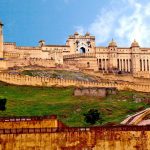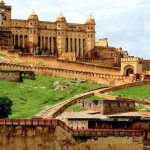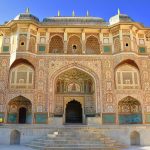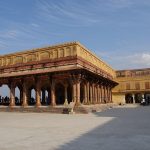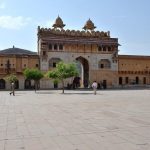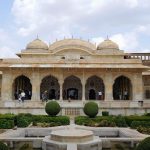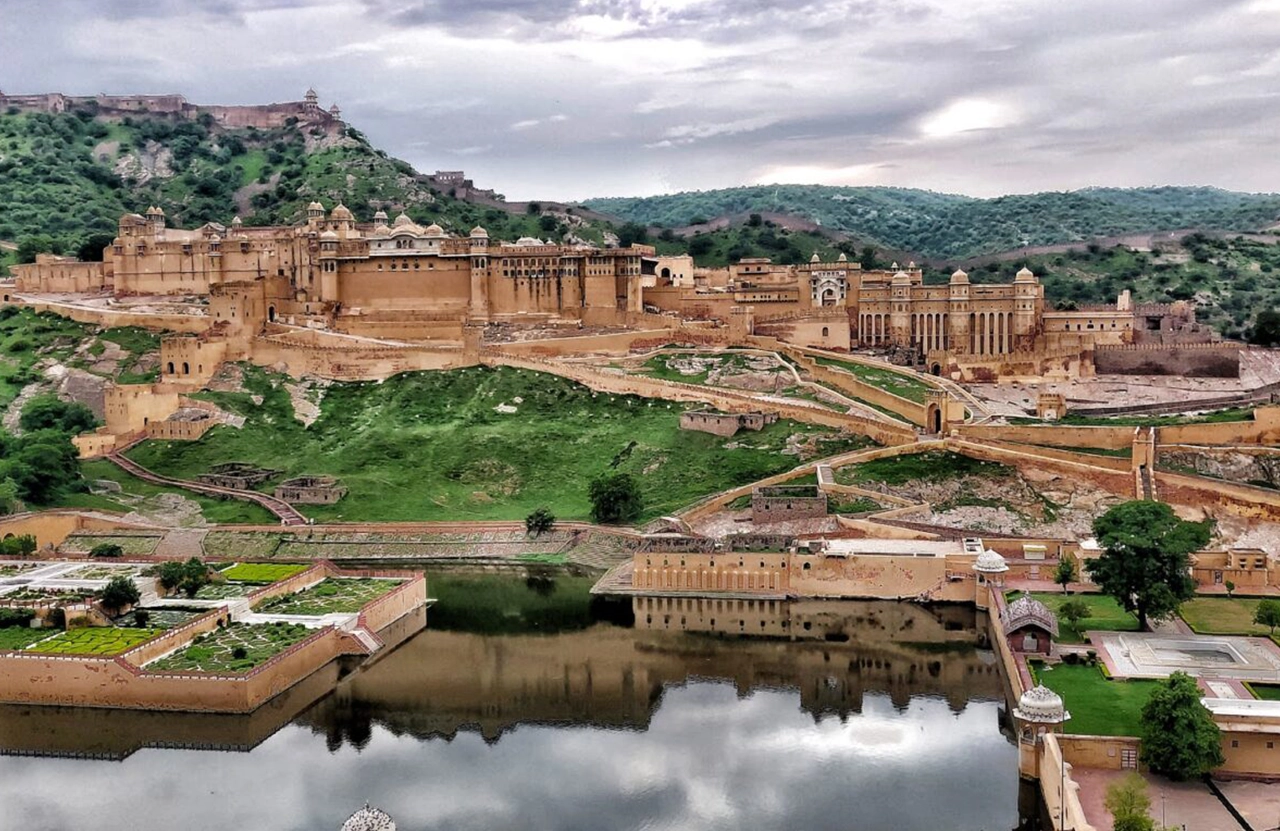
India is endowed with several monuments that are a source of pride and honor while also serving as essential visual representations of its century-old history and architecture. In India, Rajasthan is known for its spectacular architecture, even though the Rajputs were consumed with warfare. Amber Fort, located on a hill in the Aravalli range, is an important defense fort. The forested hilltop (Cheel ka teel – hill of the eagles) is also known as Amer ka Qila. This majestic fort stands on a hillside overlooking Rajasthan‘s capital city, Jaipur.
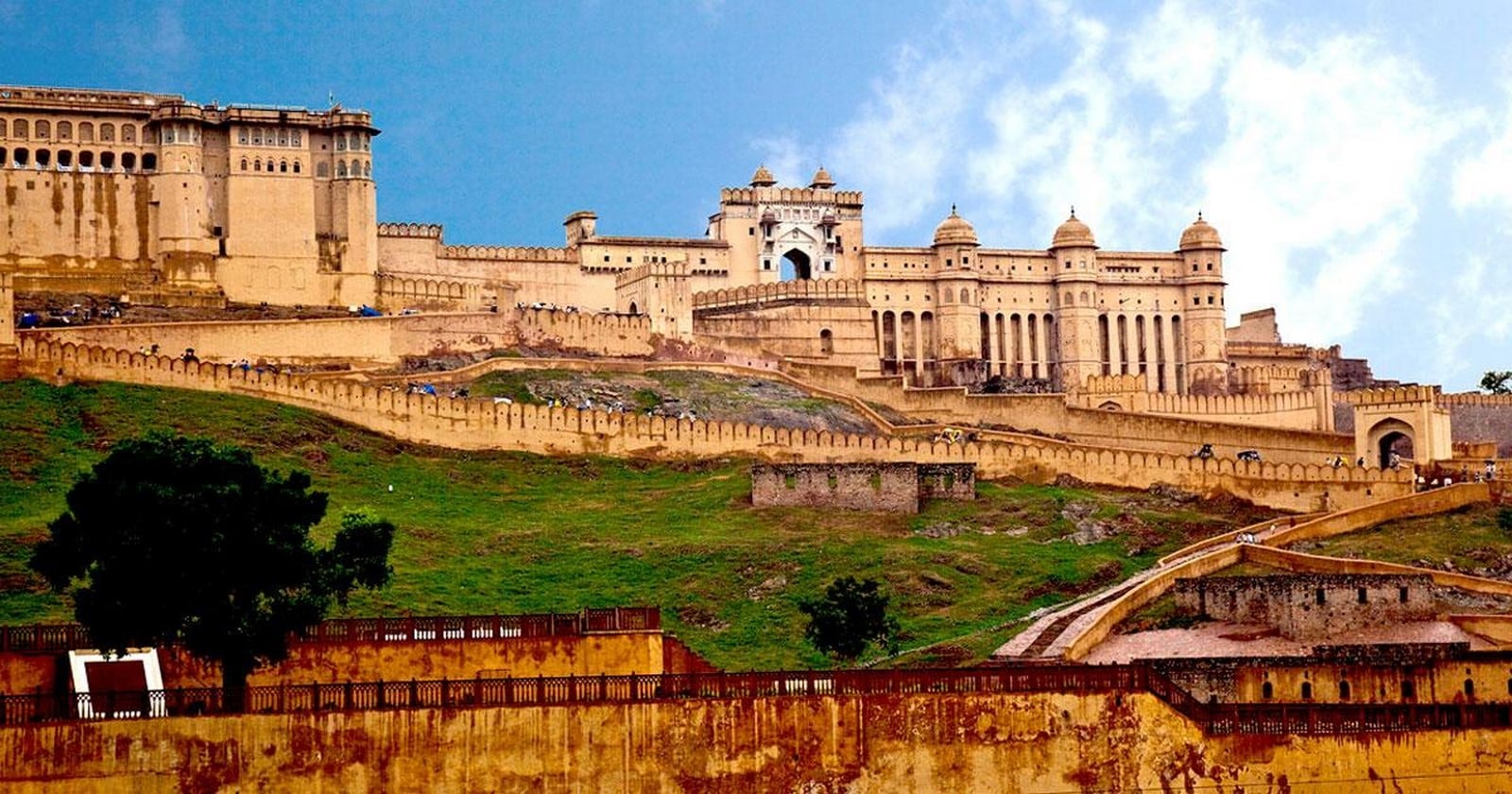
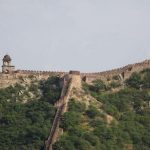
Amber Fort, a UNESCO World Heritage Site dating back to the 16th century, is one of the largest fortress walls following the Great Wall of China, and Kumbhalgarh symbolizes the stories of power, togetherness, and creativity. Named after Amba, the Goddess of Earth and Fertility. This fort offers a magnificent perspective of Jaipur. As you approach the medieval palace, the calm waters of Lake Mahohta reflect a picturesque scene. It is enclosed by a large stone wall that protects several courtyards, palaces, and gardens.
History
Amber was part of the Meena state during the Susawat Clan’s rule in 967 AD, after being vanquished by Kakil Deo, who was the son of Dulherai. In 1036AD, Amber was designated as Dhundar’s capital after Khoh. In its early years of glory, the state of Jaipur was known as Ambikeshwara, which was eventually abbreviated to Amber or Amer, ruled by Meena Chiefs of five different tribes who were under the control of Bargurjar Rajputs from Deoli. Its believed that Meena dedicated this town to Goddess Amba also known as ‘Gatha Rani’. Later, Kachhwaha Prince Dulha Rai overcame the Meenas and Bargurjars of Deoli to capture Amber in 1037 AD, and ruled until 1727 AD.
This splendid fortress was built in 1592 by Raja Man Singh I, one of Emperor Akbar’s most trusted generals. It was further expanded by his successors and served as a royal house for the Kachwaha Rajputs till Jaipur became the capital under Sawai Jai Singh II’s tenure in 1727. The Amer Fort has seen many wars over its existence. During sieges, the fort was fortified by cannons that are now housed inside. Among these, the ‘Annexation of Amer’ is regarded as pivotal. This fight began on November 10, 1708, when Mughal Emperor Bahadur Shah launched his march to America. He dethroned Maharaja Jai Singh and appointed his brother, Bijai Singh, as acting governor of Amer. This brought an end to the Rajputs’ sovereignty over Amber.
For the Kachwahas, the fall of the Mughal Empire in the 18th century presented fresh difficulties. There were times of instability and conflict as a result of the Marathas’ and other regional powers’ rising. Amber Fort was not exempt from these power battles, even with its strong defenses. But it made it through these difficult times, and when the Rajputana Agency was established in the 19th century, it finally came under British rule.
The fort also witnessed various notable events, such as battles, royal celebrations, and the reception of distinguished guests. Today, Amer Fort stands as an outstanding example of a rich legacy, providing visitors a glimpse into Rajasthan’s royal past.
Architecture
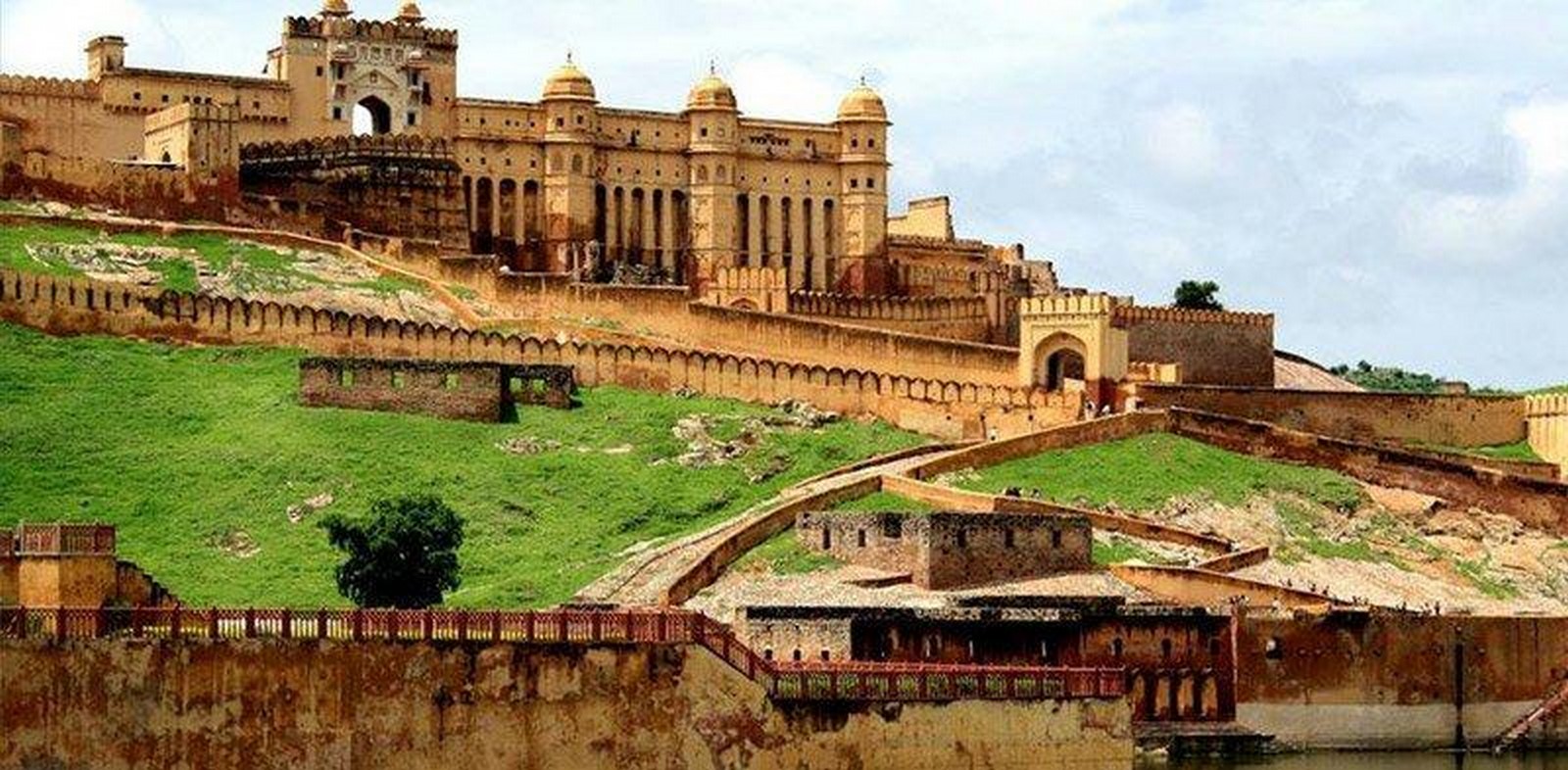
It can be seen that Rajput’s Fort and Palaces have unique compositions. The Architecture of Amber Fort is a unique blend of Indo-Islamic, Rajput and Mughal styles. The Palace of Maharaja Man Singh within the fort complex was built in the indigenous style, although the following extensions by Mirza Raja Jai Singh I and Sawai Jai Singh II had a greater Saracenic influence. The Amer Fort was mostly built in red sandstone and marble. This is due to the Rajput’s’ interaction and cultural exchange with the Mughals. The palaces and other public structures have Mughal architecture, although the temples are mostly influenced by the indigenous North Indian architectural style.
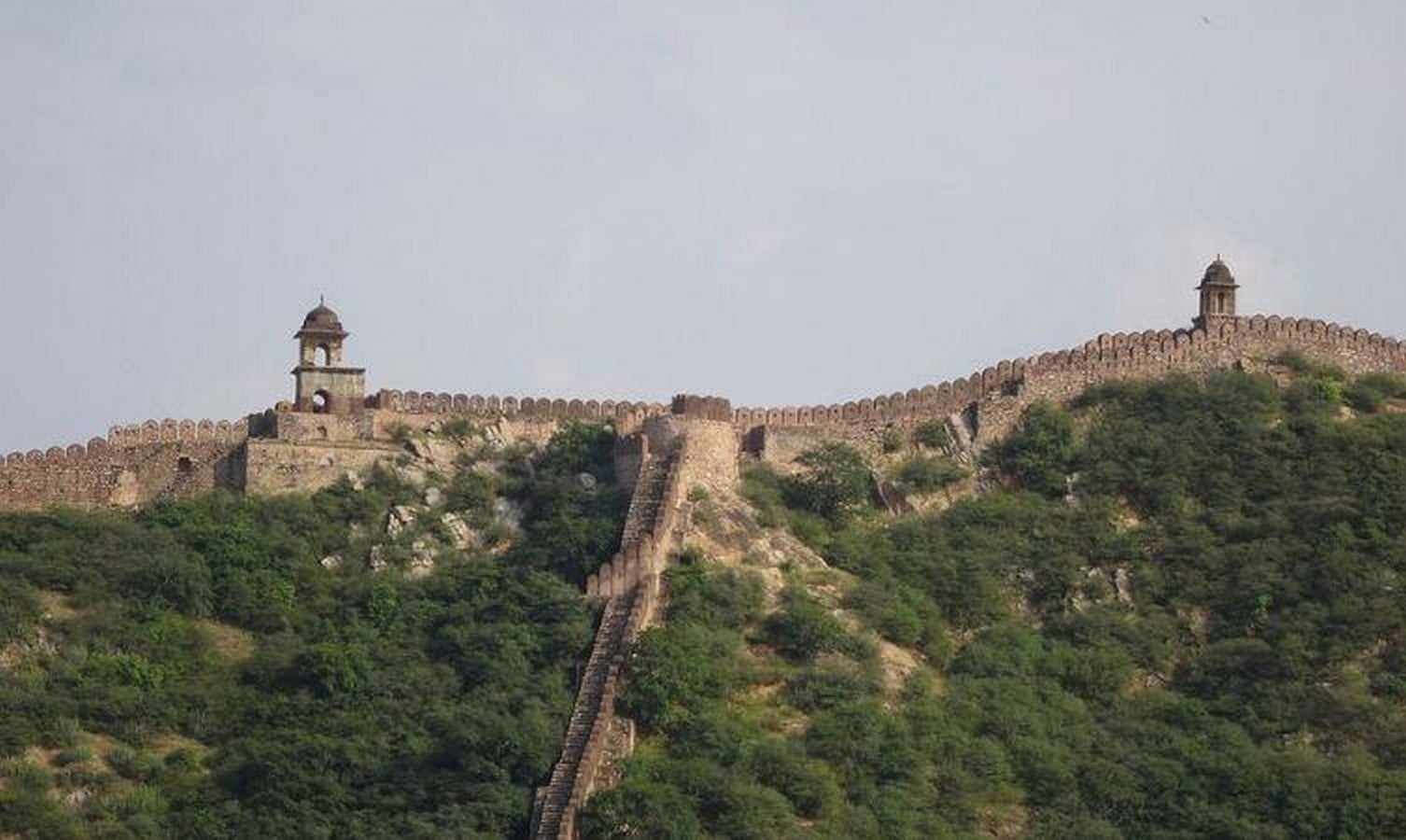
The outer fortification of Amber Fort represents the Giri Parshva Durga style. In this style fortifications and civilian structures stretch down the slope to the bottom, rather than only to the summit. Furthermore, these forts have a rough appearance and a welcoming interior.
The fort, as it is seen today, wasn’t just built by a single ruler but took nearly 150 years of on-going construction. Raja Bharmal (Father of Maharani Jodha Bai, wife of the Great Mughal Emperor Akbar) and his successor, Raja Man Singh, built the palaces at Amber in the beginning, around 1558. Later, their descendants added structures.
In order to under the sequence of addition made to the Amber Fort lets go through each phase:
- The Foundation: Raja Man Singh I (1589–1614)
In 1592, Raja Man Singh I, a loyal general of Emperor Akbar, began building the present fort. His art exhibits a strong, protective Rajput aesthetic with no Mughal influence. Maan Singh was the Kacchwaha (Rajput) ruler of Amber, which is now known as Jaipur. He additionally commanded a minor temple to be built in honor of his patron deity, Sheela Mata, while the temple was being built. When Raja Man Singh vanquished the Raja of Jessore, Bengal, in 1604, he received a goddess of the Chaitanya religion. Currently, Jessore is in Bangladesh.
Major Contribution: The Palace of Man Singh, the oldest section of the fort, is located in the fourth courtyard (Zenana).
Architectural Style: Designed mainly for residential and defensive purposes, it had a classic open pavilion (baradari) exclusively designed for his twelve queens.
Construction Time: The palace took 25 years to build and was completed in 1599.
2. The Expansion: Mirza Raja Jai Singh I (1621–1667)
Jai Singh significantly expanded and beautified the fort, marking a shift towards more ornate, leisurely spaces with a growing Mughal influence. His additions are some of the most iconic in the fort.
Major Contribution: Diwan-i-Aam (Hall of Public Audience), the magnificent Ganesh Pol, the formal Aram Bagh garden, and the opulent Jai Mandir, which contains the Sheesh Mahal.
Architectural Style: Introduced lavish Mughal elements like formal gardens and intricate frescoed gateways.
3. The Culmination: Sawai Jai Singh II (1699–1743)
The most renowned ruler, Sawai Jai Singh II, made a noteworthy contribution to the final phase of construction, which included the addition of the most luxurious features to Amber Fort before shifting the capital to the newly founded city of Jaipur.
Major Contributions: The vast Jaleb Chowk (first courtyard), the imposing Singh Pol, and the completion of the breathtaking Sheesh Mahal in 1727.
Historical Note: The completion of the Sheesh Mahal in the same year he founded Jaipur marks the zenith of Amber’s splendor.
Architecture and Layout
The architectural layout of Amber fort is quite a unique composition of four courtyard which divides the complex into four major sections which altogether is a harmonious blend of various architectural styles.
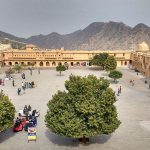
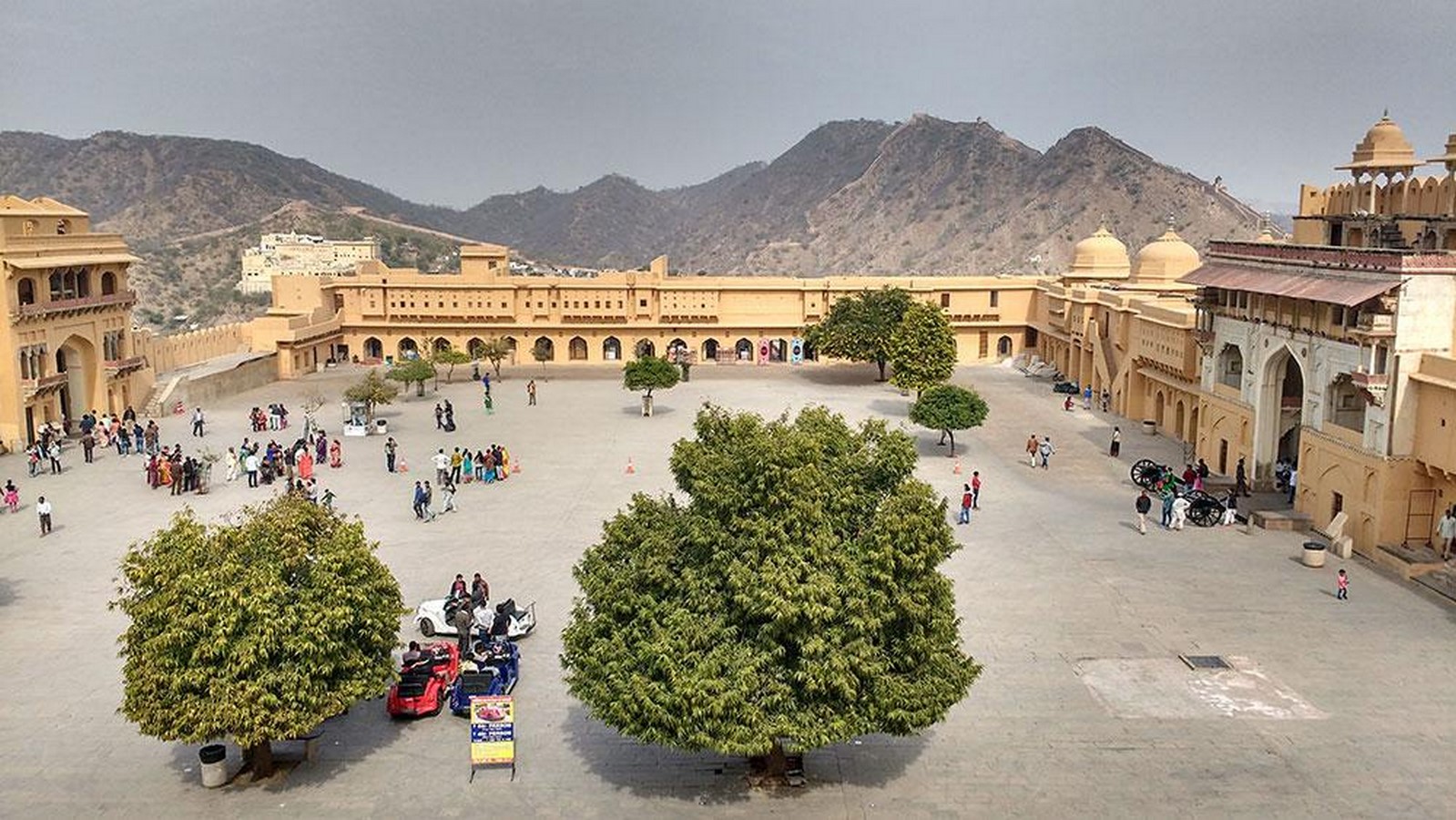
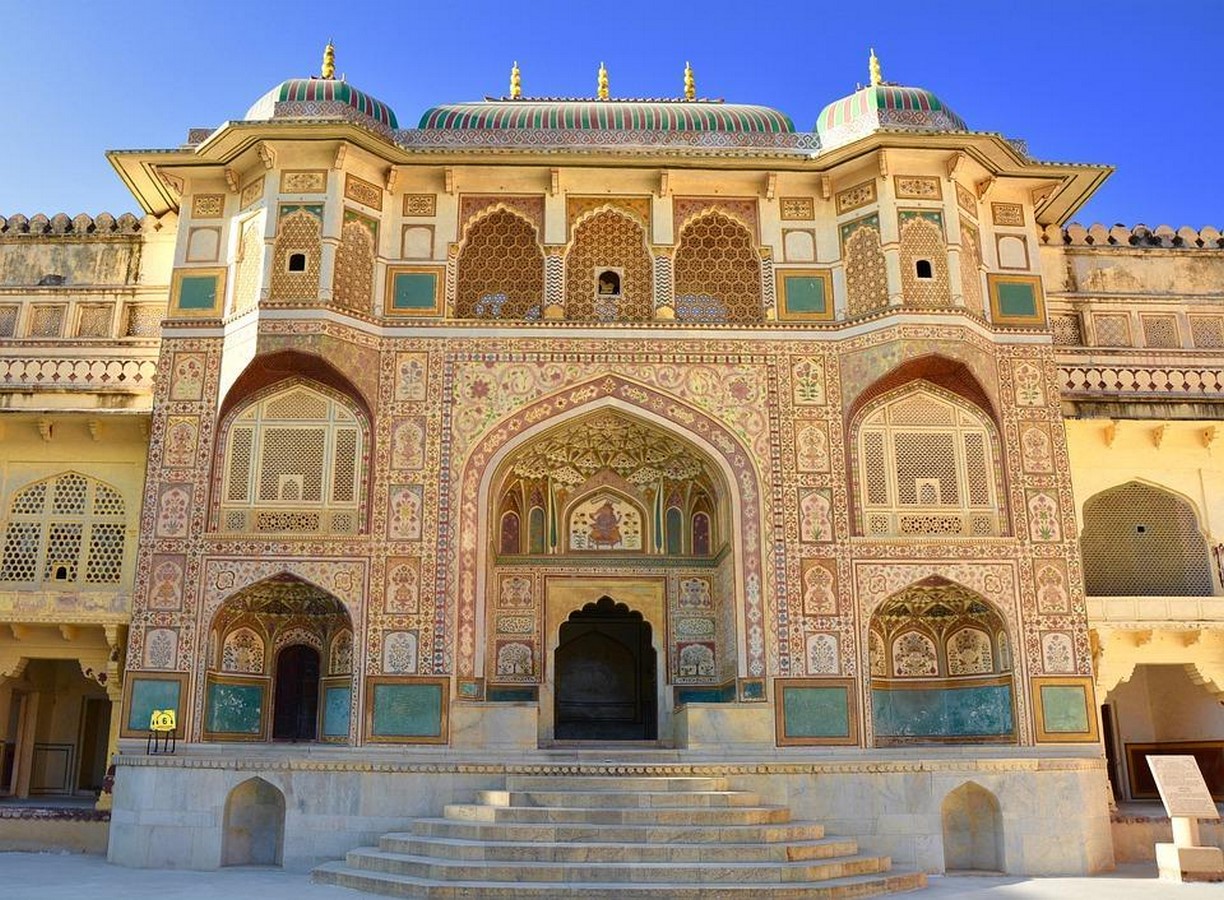
First Courtyard: Jaleb Chowk
This is the largest and most prominent courtyard, used as a grand entrance by the soldiers. Armies would stage victory parades here, exhibiting their war wealth to the public. The adjacent buildings contain latticed windows through which royal women may observe the spectacles undetected.
Main Function: Public assembly and military parades.
Important Features: Suraj Pol (Sun Gate), Chand Pol (Moon Gate), horse stables.
Access: This courtyard connects to the main palace through a large, impressive staircase.
Second Courtyard: Hall of Public Audience
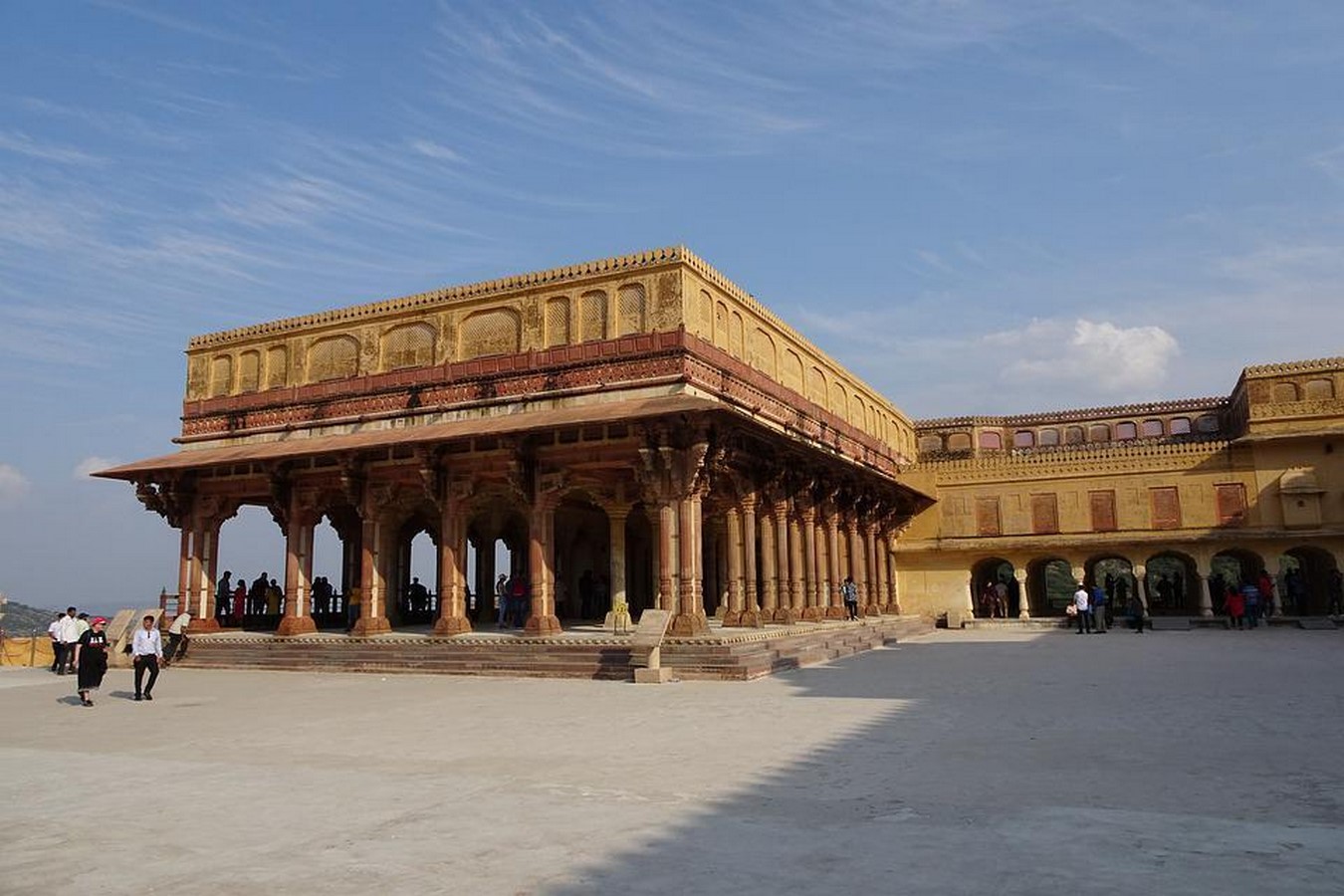
This semi-public space was for formal state business or gatherings. This space was mostly used by the Maharaja to hold his public gathering (durbar) to meet officials and listen to subjects’ petitions. It is a space designed to project royal authority.
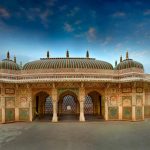
Main Structure: Diwan-i-Aam (Hall of Public Audience), a magnificent pavilion with 40 red sandstone pillars topped with elephant-shaped capitals. This hall is supported by a series of double-columned pillars, adorned with intricate latticework. The columns are exquisitely carved and decorated with floral patterns, showcasing the artistic skills of the craftsmen.
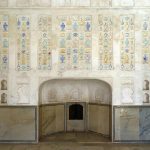
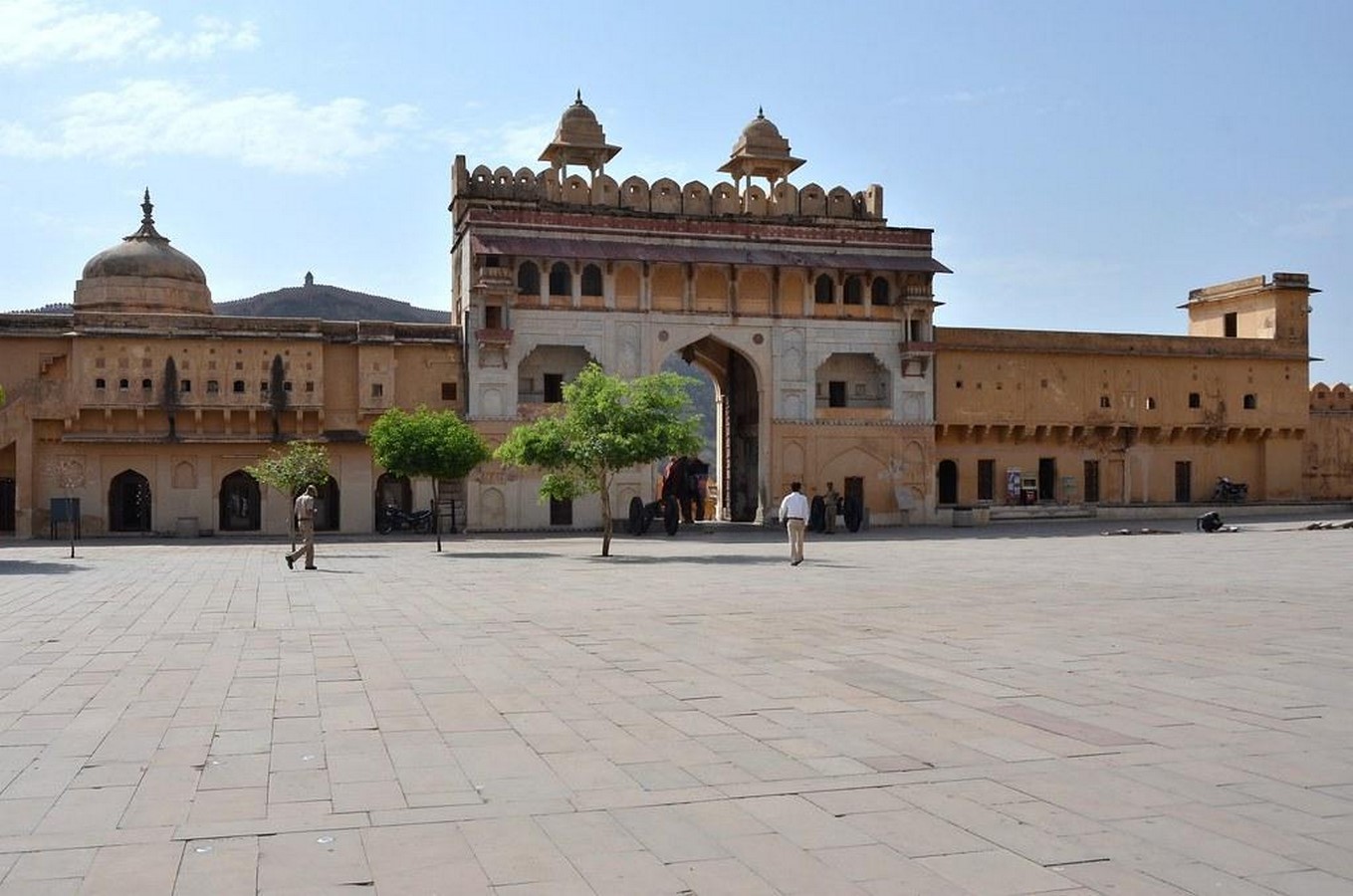
Architectural Gem: The Ganesh Pol, a stunningly frescoed gateway that serves as the ceremonial entrance to the private royal palaces. This section includes a beautifully decorated chamber with intricate marble and sandstone carvings.
Third Courtyard: Private Royal Residence
Passing through the Ganesh Pol, you enter the heart of the palace: the Maharaja’s sumptuous and personal private quarters. This section comprises the fort’s most opulent and famous structures.
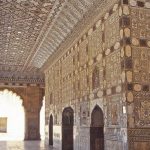
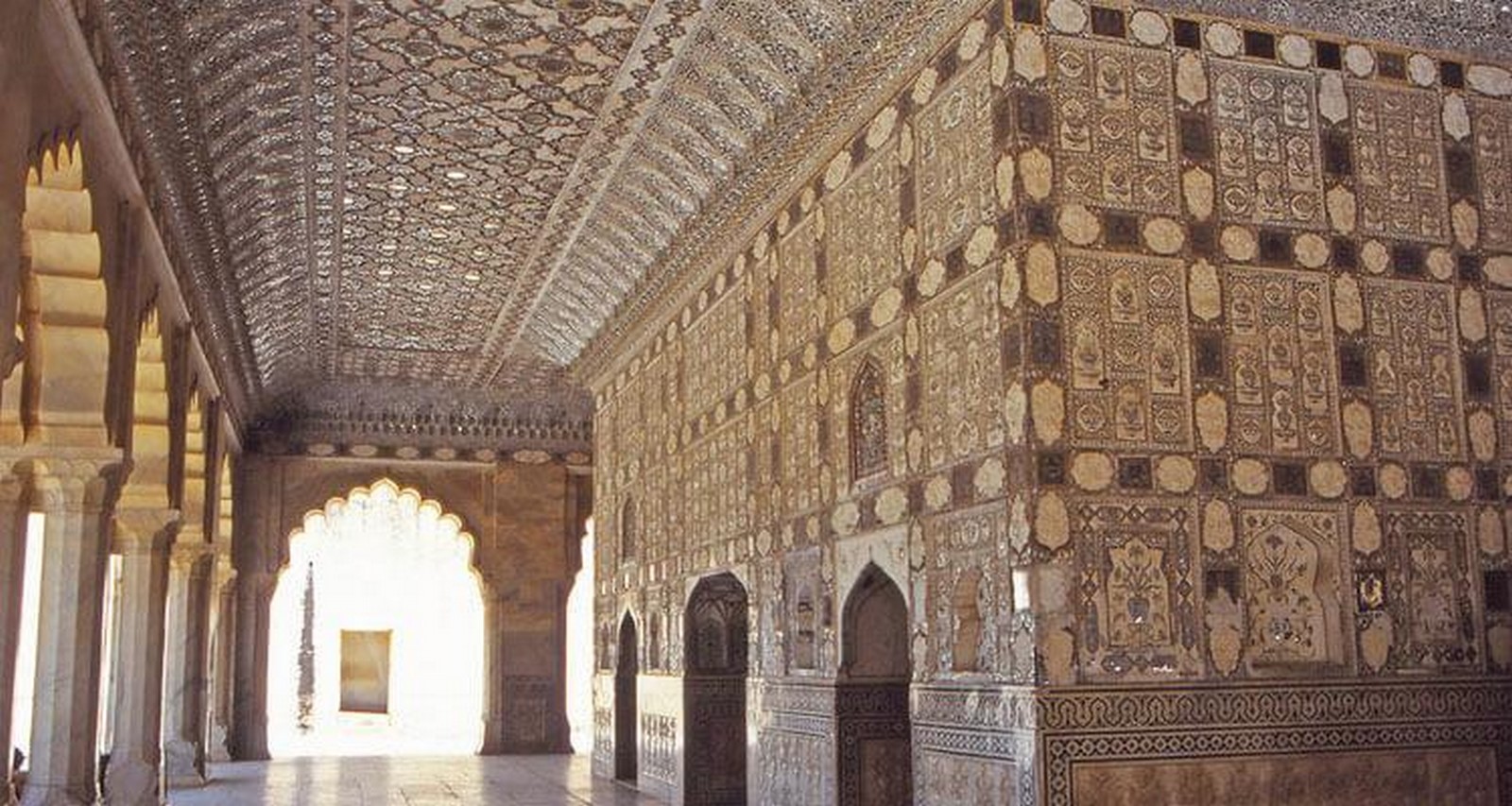
The second section, known as the Diwan-e-Khas, or “Hall of Private Audience,” was a more private location where the Maharaja met with his advisors and conducted important business. This hall is more elaborately adorned than the Diwan-i-Aam. It has spectacular mirror work, with the walls and ceilings covered in small mirrors that provide a brilliant image when illuminated by light. The hall’s design demonstrates the combination of Mughal and Rajput architectural styles.
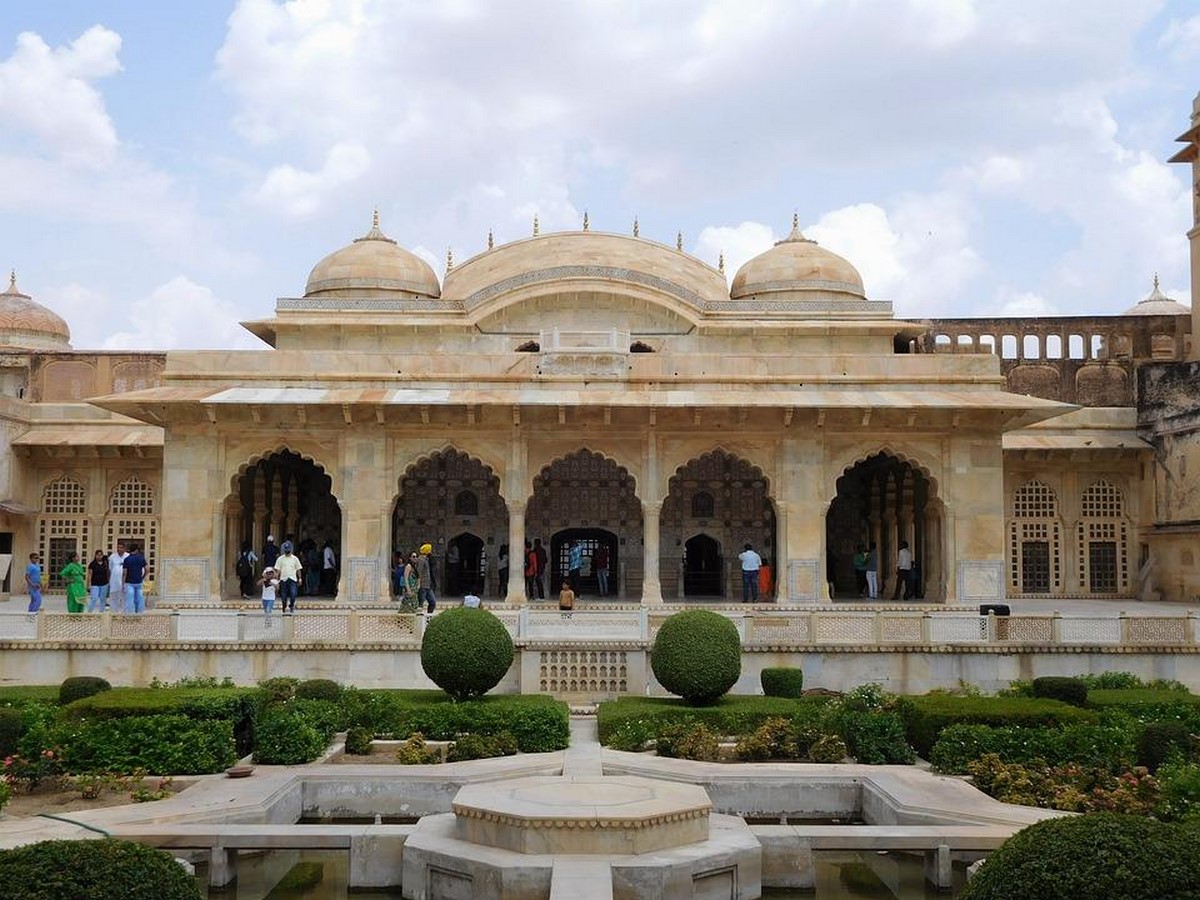
This area includes the famous Sheesh Mahal, known as the “Mirror Palace,” a magnificent room covered with thousands of tiny mirrors that reflect light in spectacular patterns.
This beautiful hall is covered with thousands of mirror mosaics that sparkle in candlelight.
The Glass Palace was constructed from red sandstone and white marble, and then artistically embellished with mosaics, precious stones, and glass imported from Belgium. When you light a candle in the castle in the evening or at night, it appears that stars are everywhere thanks to these decorations.
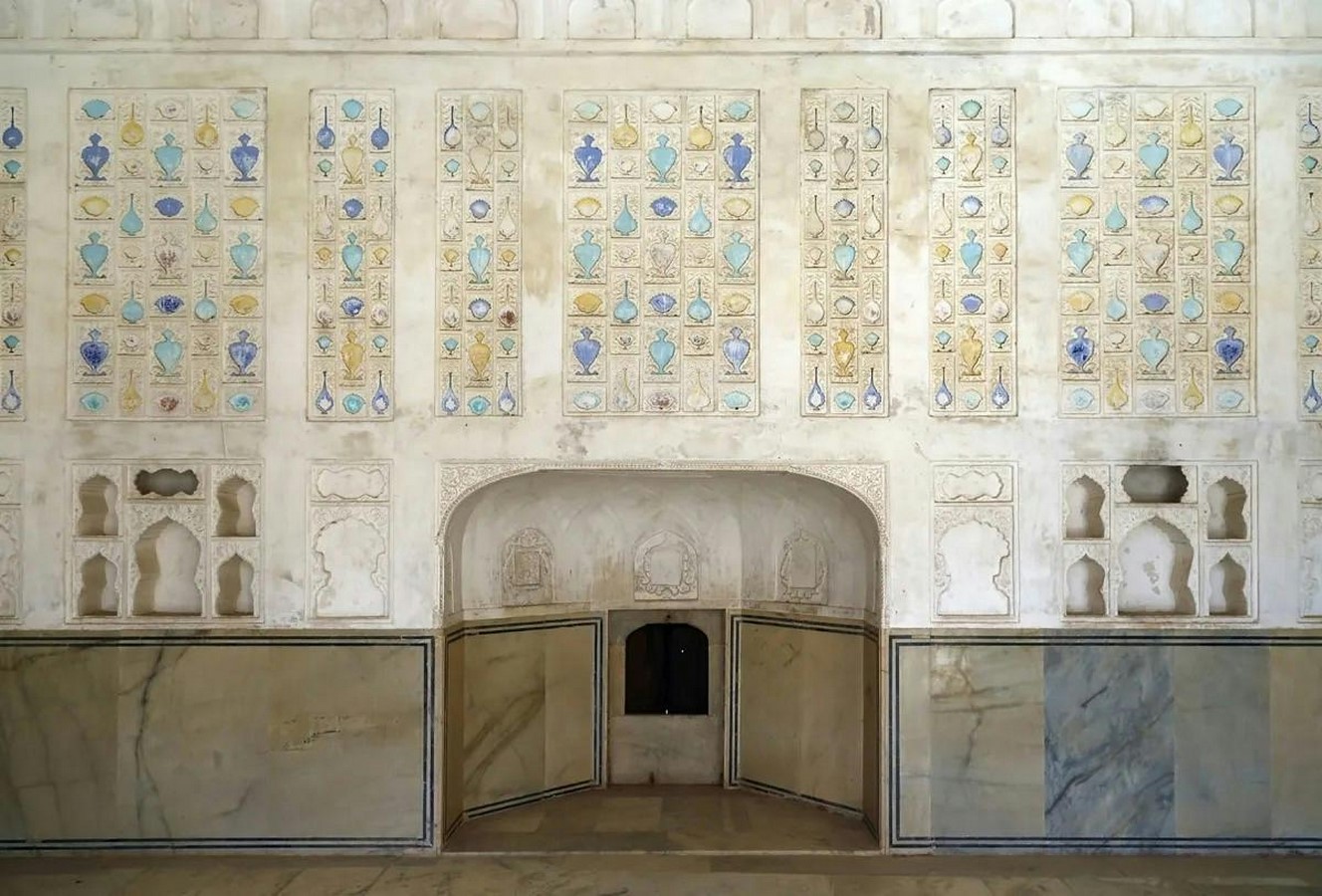
The Sukh Niwas, the king’s private apartment, features a passive cooling system using a channel of cascading water to cool the air. The two main halls are separated by a formal Mughal-style garden, the Aram Bagh.
Fourth Courtyard: The Zenana
This is the most private and secluded courtyard, created especially for royal women, including queens, consorts, and their attendants. Its architecture provides a look into the social dynamics of a royal household. The Palace of Man Singh I, the fort’s initial palace, is located here.
A private hallway was created to allow the ruler to visit any of his wives’ chambers without informing the others, preserving privacy but also handling courtly politics.
Suhag Mandir: This wonderful piece of architecture stands over Ganesh Pol, the entrance gate. This is where the women of the royal family witnessed festivities at the Diwan-E-Aam.
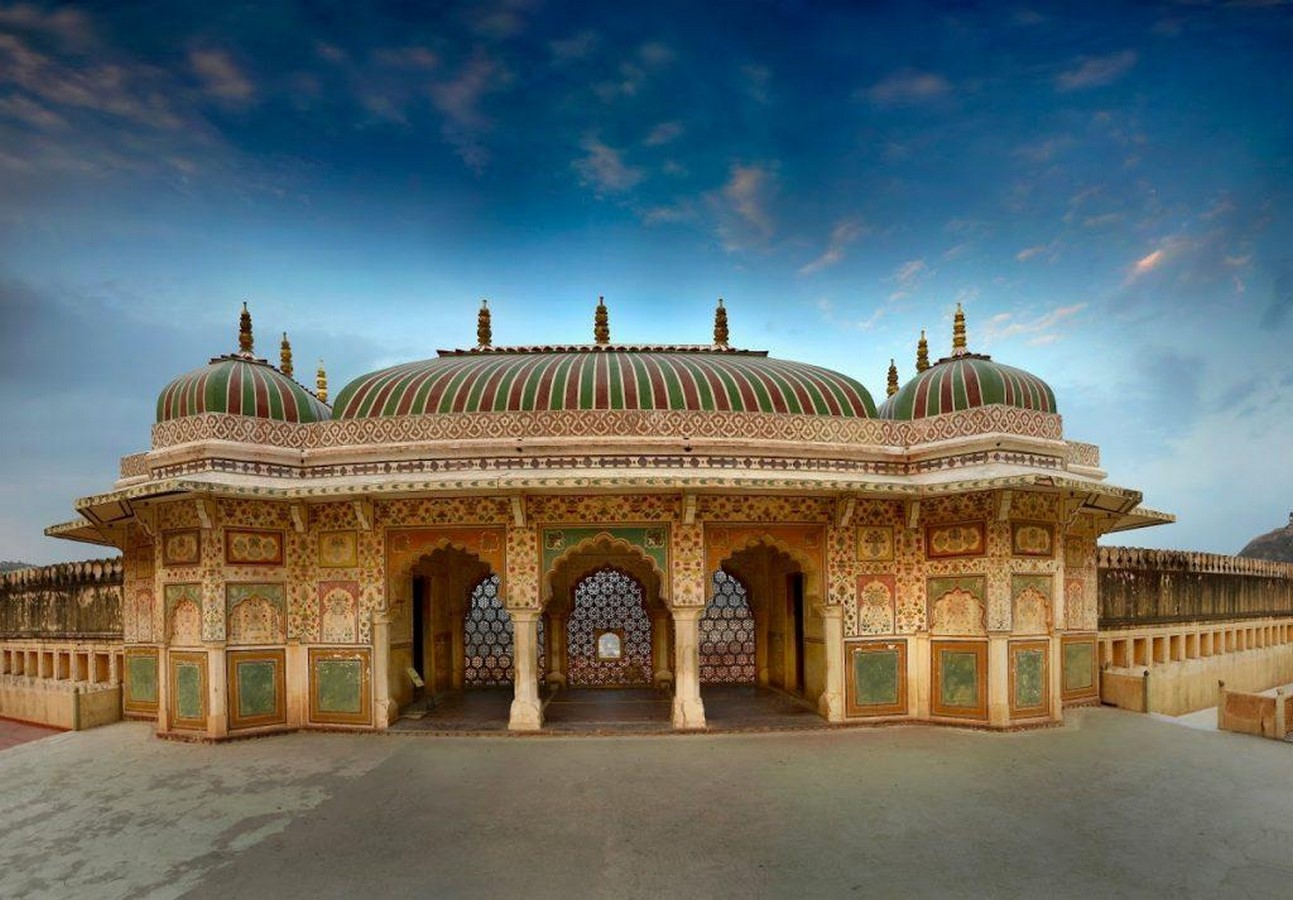
Another significant aspect of Amer Fort is its extensive network of corridors and staircases, which were designed in order to use it strategically during war. This fort is connected to Jaigarh Fort through a reinforced tunnel. The tunnel was designed to transport royal family members and others fleeing during wartime to Jaigarh Fort, which was a safer location.
Cultural Significance
In 2013, Amber Fort was inscribed as a UNESCO World Heritage site, part of a hill fort in Rajasthan, for its outstanding universal value. This fort is a unique reflection of the unique, elaborate, and fortified seat of power of the Rajput princely states. Even today Shila Dev is worshipped as Aaradhya Dev among Jaipur’s royal families and is believed to be protector of the city. During Ashwin and Chaitra festivals thousands of devotees visit for special darshan and rituals. The intricate work throughout the palace and fort shows a high level of craftsmanship under Rajput rulers.
Amber Fort is a testament to the power, wealth, and cultural sophistication of the Rajput rulers who built it. Through its blend of Hindu and Mughal architectural styles, its luxurious palaces and gardens, and its imposing military fortifications, the fort offers a glimpse into the complex political and cultural landscape of medieval India. Today, Amber Fort remains an enduring symbol of Rajasthan ‘s rich history and heritage, drawing visitors from around the world to marvel at its beauty and learn about its storied past. As efforts continue to preserve and protect this magnificent site for future generations, Amber Fort will undoubtedly remain one of India ‘s most cherished cultural treasures for years to come. Today, it is one of the most visited landmarks, even among locals, as the fort hosts evening light and sound shows for visitors showcasing the unique history and folklore of the Amber fort.
Reference List:
Centre, U.W.H. (n.d.). Hill Forts of Rajasthan. [online] UNESCO World Heritage Centre. Available at: https://whc.unesco.org/en/list/247.
Admin (2025). Jaipur’s Amber Fort: History, Significance, and Travel Guide – HiGuide.in. [online] HiGuide.in. Available at: https://higuide.in/jaipurs-amber-fort-history-significance-and-travel-guide/ [Accessed 5 Feb. 2026].
singh, P. (2026). Amer Fort (Amber Fort) Jaipur | History, Architecture, Visiting Hours – Jaipur. [online] Jaipurheritagewalk.com. Available at: http://www.jaipurheritagewalk.com/amber-fort-jaipur.html [Accessed 5 Feb. 2026].
Indiafort.org. (2025). The Story of Amber Fort: An Interactive Exploration. [online] Available at: https://www.indiafort.org/amber-fort.html [Accessed 5 Feb. 2026].
Voice Of Jaipur. (2016). History of amber fort. [online] Available at: https://jaipur.org/2016/08/05/history-of-amber-fort/ [Accessed 5 Feb. 2026].
Century, T., Singh, J. and Mandot, D. (2024). Amber Fort: Its Architectural and Strategic Description, 16 Th & 17. IJFMR240215359, [online] 6(2). Available at: https://www.ijfmr.com/papers/2024/2/15359.pdf.
TOL Admin (2022). A Brief History of Amer Fort – Tree Of Life. [online] Tree Of Life. Available at: https://treeofliferesorts.com/heritage/a-brief-history-of-amer-fort/.
Voice Of Jaipur. (2012). History of amber fort. [online] Available at: https://jaipur.org/2012/09/13/history-of-amber-fort-2/ [Accessed 5 Feb. 2026].
Team, H.D. (2025). Amber Fort Jaipur. [online] Inheritage Foundation. Available at: https://www.inheritage.foundation/blog/heritage/amber-fort-jaipur [Accessed 5 Feb. 2026].
Palace on Wheels Blog. (2017). Amber Fort – UNESCO World’s Heritage Sites in Rajasthan. [online] Available at: https://www.palaceonwheelsindia.org/blog/amber-fort-unesco-worlds-heritage-sites-rajasthan/ [Accessed 5 Feb. 2026].
Tourism-of-india.com. (2026). Amber Fort, Jaipur | Entry Fee | History & Architecture. [online] Available at: https://www.tourism-of-india.com/amber-fort.html [Accessed 5 Feb. 2026].
Jaswal, K. (2024). Amer Fort of Jaipur in Rajasthan. [online] The Grand Indian Route. Available at: https://www.thegrandindianroute.com/everything-you-need-to-know-about-amer-fort-india/ [Accessed 5 Feb. 2026].
history tools (2024). Amer Fort: An Enduring Symbol of Rajput Power and Magnificence – History Tools. [online] History Tools. Available at: https://www.historytools.org/stories/amer-fort-an-enduring-symbol-of-rajput-power-and-magnificence#google_vignette [Accessed 5 Feb. 2026].
Google Arts & Culture. (2024). Explore the Historic Amer Fort in Rajasthan, India – Google Arts & Culture. [online] Available at: https://artsandculture.google.com/story/rQWBiJKzpe-5vA [Accessed 5 Feb. 2026].
Footloose Forever. (2014). Amer Fort – the melting pot of Rajasthan’s heritage, art and architecture. [online] Available at: https://footlooseforever.com/2014/12/30/amer-fort-the-melting-pot-of-rajasthans-heritage-art-and-architecture/ [Accessed 5 Feb. 2026].
Mittal, P. (2023). Delving into Rajput Grandeur – Amer Fort Travel Guide. [online] Savaari Car Rentals Blog. Available at: https://www.savaari.com/blog/things-to-do-in-amer-fort/ [Accessed 5 Feb. 2026].
Trawell.in. (2010). Amer Fort / Amber Fort, Jaipur – Timings, History, Architecture, Best Time to Visit. [online] Available at: https://www.trawell.in/rajasthan/jaipur/amer-fort-amber-fort [Accessed 5 Feb. 2026].
Cultureandheritage.org. (2019). Amber Fort or Amer Fort: Rajasthan’s Majestic Jewel – The Cultural Heritage of India. [online] Available at: https://cultureandheritage.org/2023/10/amber-fort-or-amer-fort-of-rajasthan.html.
Contentplanet.in. (2026). Content Planet. [online] Available at: https://contentplanet.in/articles/about-amer-fort/ [Accessed 5 Feb. 2026].
Meyers, L. (2023). Sheesh Mahal in Jaipur: Amer Fort’s Glass Palace. [online] Laure Wanders. Available at: https://www.laurewanders.com/sheesh-mahal-jaipur/ [Accessed 5 Feb. 2026].
Times of India Travel. (2024). Fascinating facts about Jaipur’s Amer Fort that might surprise you. [online] Available at: https://timesofindia.indiatimes.com/travel/destinations/fascinating-facts-about-jaipurs-amer-fort-that-might-surprise-you/articleshow/110870488.cms [Accessed 5 Feb. 2026].
Journey, A. (2023). ‘Amer Fort: A Fascinating Blend of Architecture, Mythology, and Culture’. [online] A Journey through History and Heritage Sites. Available at: https://historicalandheritageworld.blogspot.com/2023/03/amer-fort-also-known-as-amber-fort-is.html [Accessed 5 Feb. 2026].
history tools (2024). Amer Fort: An Enduring Symbol of Rajput Power and Magnificence – History Tools. [online] History Tools. Available at: https://www.historytools.org/stories/amer-fort-an-enduring-symbol-of-rajput-power-and-magnificence [Accessed 5 Feb. 2026].
phir se udd chala main. (2019). AMER FORT. [online] Available at: https://phirseuddchalamain.wordpress.com/2019/06/12/amer-fort/ [Accessed 5 Feb. 2026].