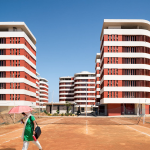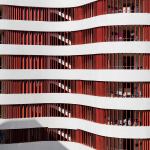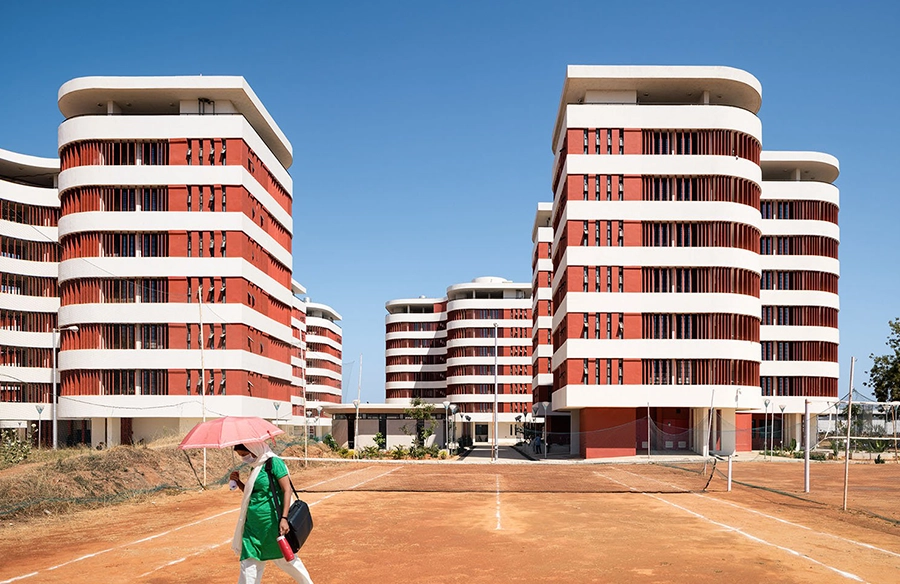
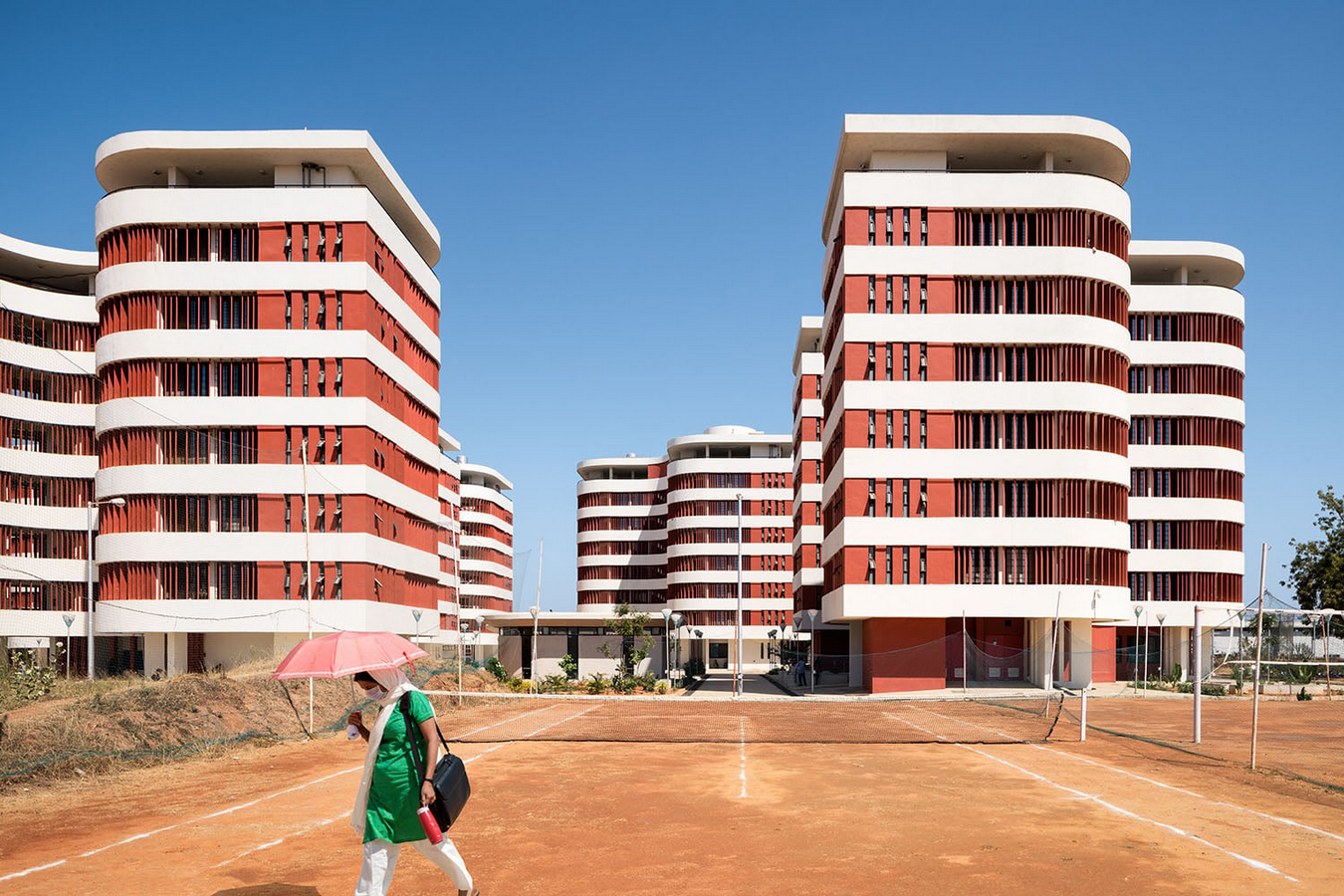
The IIT Hyderabad campus is located around 50 to 60 kilometres from the main city, giving rise to the need for student housing on campus. Designed by GMP Architects von Gerkan, Marg and Partners, the hostel units are modular in structure and can accommodate around 20,000 students over the next 20 years. In 2014, the Telangana State was born, and as a part of this administrative reform, the esteemed Indian Institute of Technology Hyderabad (IITH) envisioned a collective yet diverse architectural design of its campus facilities. The GMP Architects von Gerkan, Marg and Partners, bidding as the only international contender along with its consultants ASTUTE, Engineering Services, and JW Consultants, was awarded the contract to design the student hostels, which comprised housing rooms, dining halls, and recreational areas. Phase 1 of the construction consisted of eight student hostels for boys and two student hostels for girls, each with 196 single rooms, along with dining halls, which were completed and occupied at the end of 2016.
CONCEPT
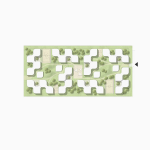
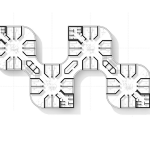
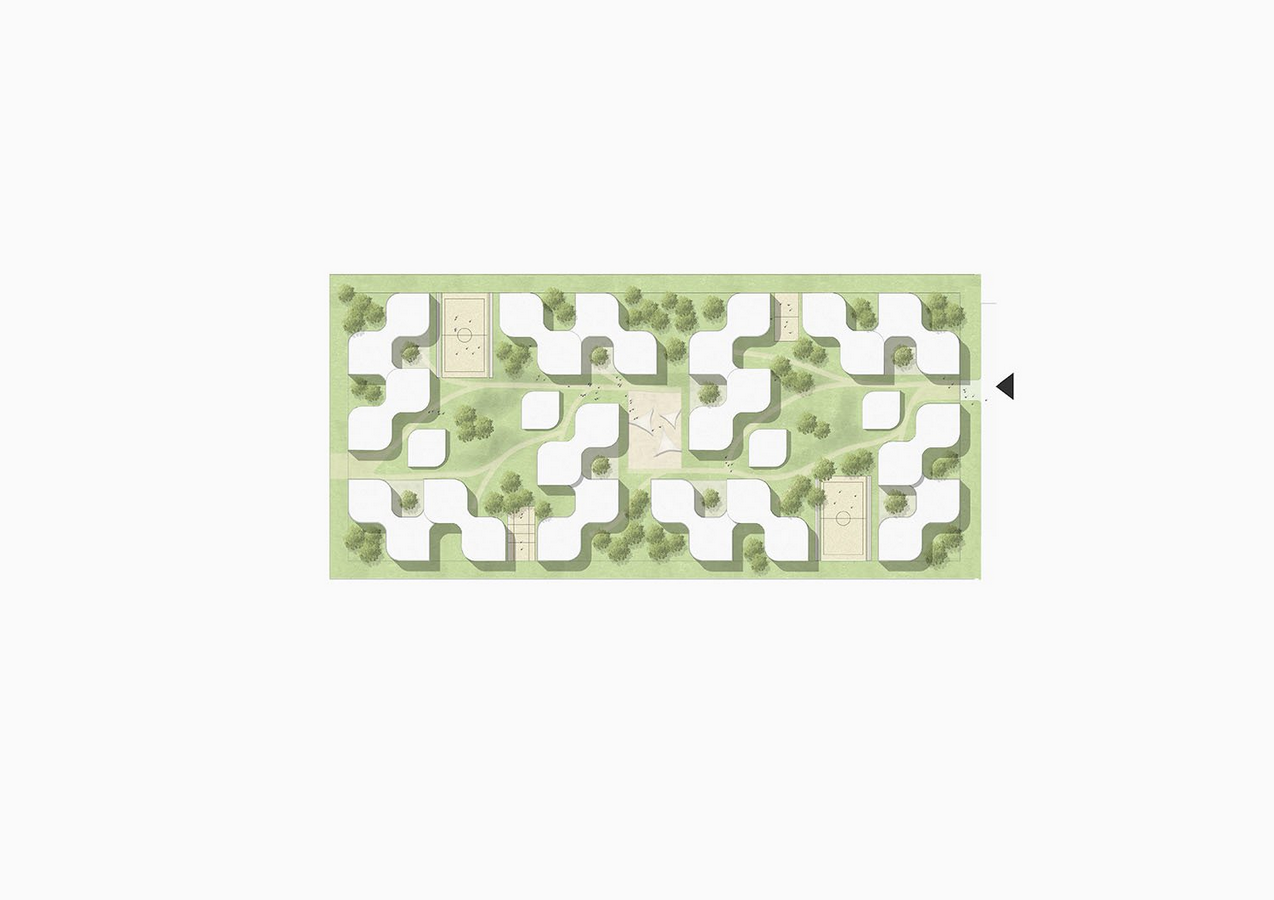
The hostels were designed in clusters, with each cluster inspired to be part of one plant system. The idea was to have a recurring image of leaves connected by branches that grow on a tree and share the same roots to emulate a harmonious ecosystem of a tree. This is to define a new format of social living in which everything is rooted in the landscape and connected through the architectural elements. Each cluster has four “leaves” or buildings placed in an alternating sequence that are connected through the “branches” or corridors. These clusters are then rotated and multiplied, and placed, resulting in mutually shaded common areas that function as well-ventilated courtyards. The recurrence of the leaf motif is done as if they were scattered all over the campus by the wind. The modular design of these cluster blocks was intended to ensure robust construction that is both economic and efficient.
VERTICAL ZONING
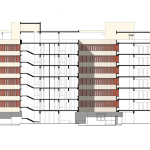
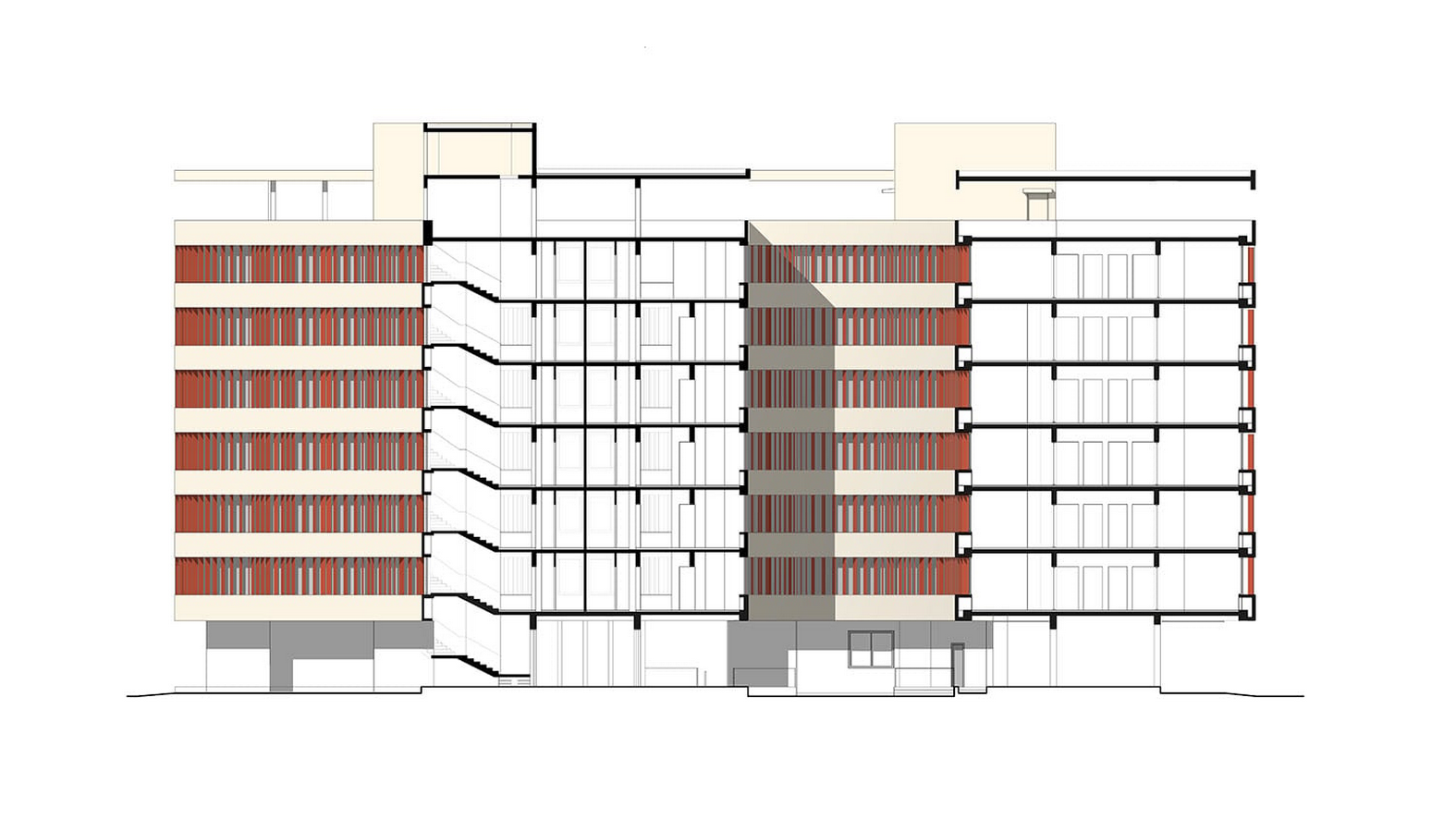
Each cluster module has its ground floor open and is barrier-free to accommodate parking for bicycles. On top of it are six stories with 32 studio-type hostel rooms on each floor, totalling 192 rooms in each cluster. The roof terrace has a shaded exterior space to formally top off the buildings. The multiplication of these clusters creates green, shaded, and well-ventilated inner courtyards connected through the open ground floor. They also provide numerous constellations of semi-public spaces between the buildings, which open up to the dining halls on the ground level. Thus forming an informal permeable ecosystem at the ground level, allowing visual and physical connections between the clusters, nurturing movement and interaction among the students.
HORIZONTAL ZONING
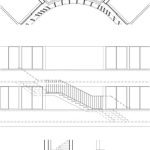
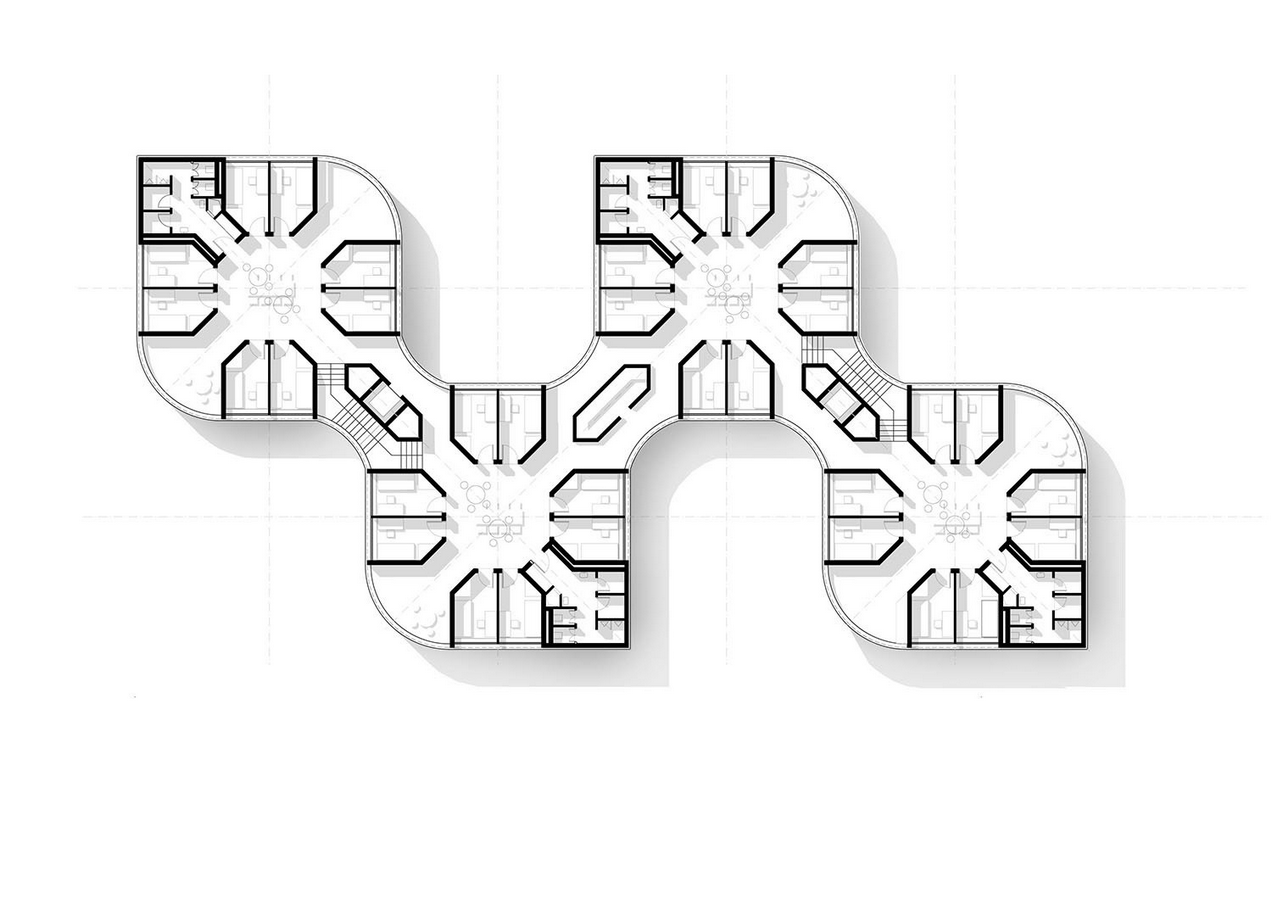
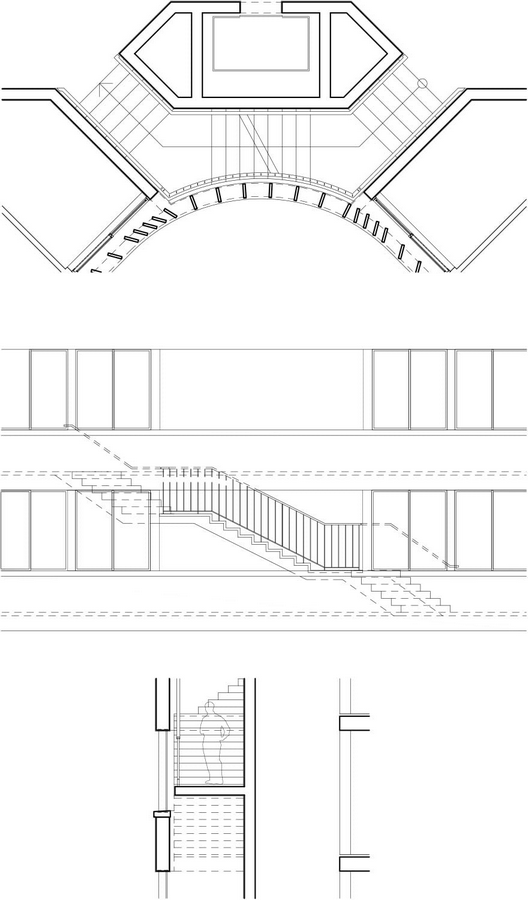
Each “leaf” has eight studio rooms with common washrooms and balconies zoned in its three corners; the fourth corner of the leaf, however, is connected to another leaf via a common staircase, a service core and a corridor or a “branch”. The central area of the leaf functions as a pantry or dining space with natural light entering from the adjacent balconies. The same floor layout is repeated across the six storeys. A single room of 9 m² consists of a study area, a bed and a storage.
FACADE
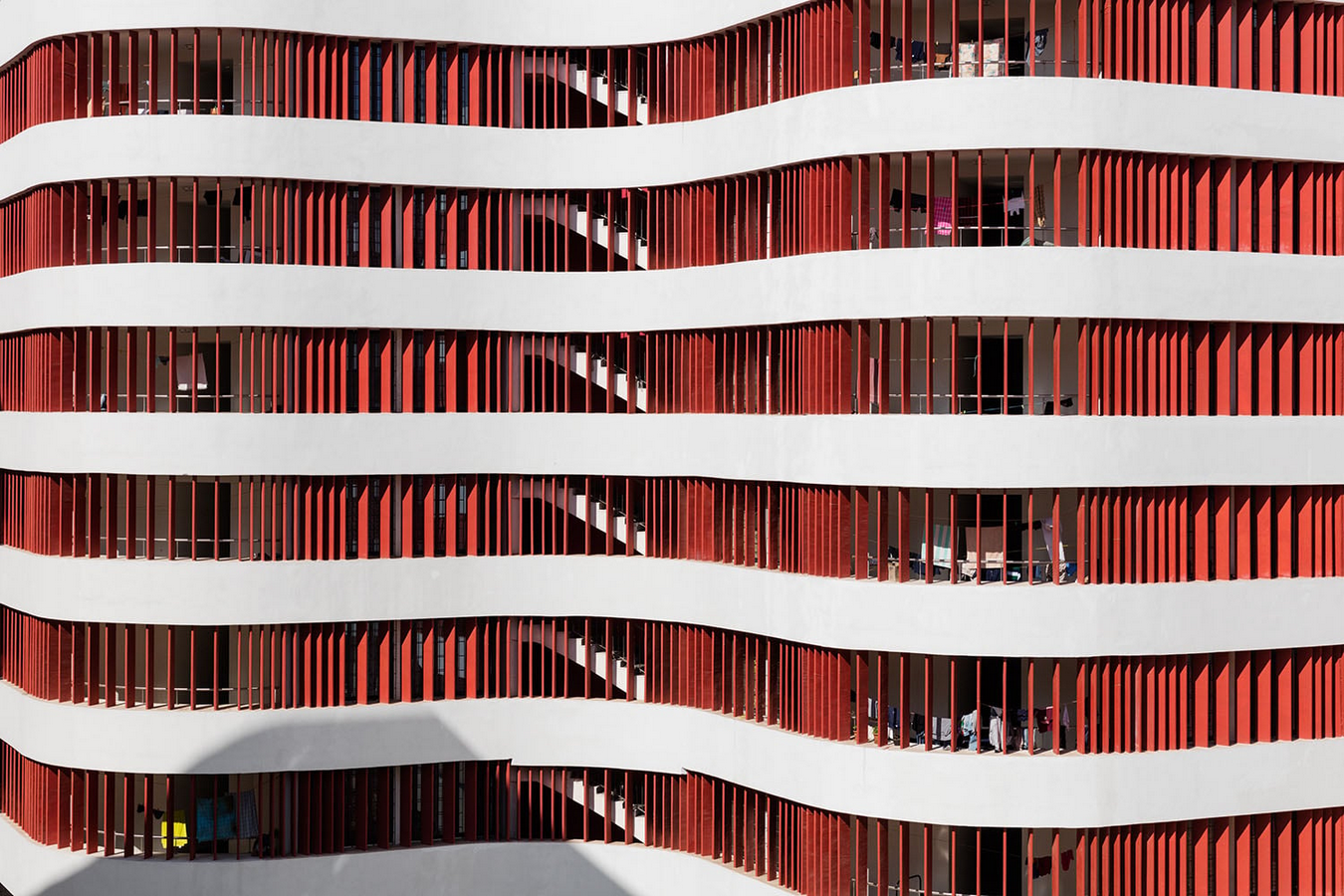
The curved facade, inspired by the red earth in the vicinity, envelops the meandering and curved elevation. In contrast to the white plastered closed surfaces, the striking red vertical bands are precast concrete, running along the length of the openings from the sill level to the lintel level of each floor. These fixed fitted louvres are angled at 45 degrees to the sun’s rays to cut out the harsh sun but welcome abundant light to the interiors, irrespective of the sun’s position. These louvres are positioned smartly; they are placed close to each other when in front of the bed to provide maximum privacy and darkness, whereas they are wider apart in front of the study area for optimal natural light and unobstructed views. In the corridors, the red louvre bands are placed perpendicular to the walls to allow maximum light, as privacy is not necessary in the common areas.
CLIMATE RESPONSIVENESS
The hot climate of Telangana is an owning design factor of these hostels. Permanent cross ventilation is achieved with the help of the louvred but open corridors. The louvres also cut out heat in the studio rooms. In addition to the facade being climatically responsive, the design also incorporates a new technology called “comfort cooling” or underfloor cooling. It utilises a system of pipes in the floor through which cooled water is conducted. This cools the room by approximately 5 degrees below the outside temperature, ensuring a consistently comfortable indoor climate.
CRITIQUE
Despite its salient features, the IITH hostel blocks do have some areas with scope for improvement. The staircase has too much circulation area, which could be an issue during a fire emergency. The louvres, being a striking design feature of the hostels, serve no purpose in the corridor areas, as they are placed perpendicular to the walls to let maximum light and ventilation into the spaces and not at a 45-degree angle like in the rest of the spaces. Implying that in the corridors, it is merely an aesthetic element serving no purpose, like it does in other spaces. While certain aspects can be refined, the hostels at IITH stand out red while balancing architectural innovation and functional student living with the help of its nature-inspired modular clusters and a climate-responsive facade that envelops it.
References:
https://www.theplan.it/eng/award-2018-Housing/student-housing-iit-campus-hyderabad-india-1