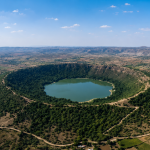
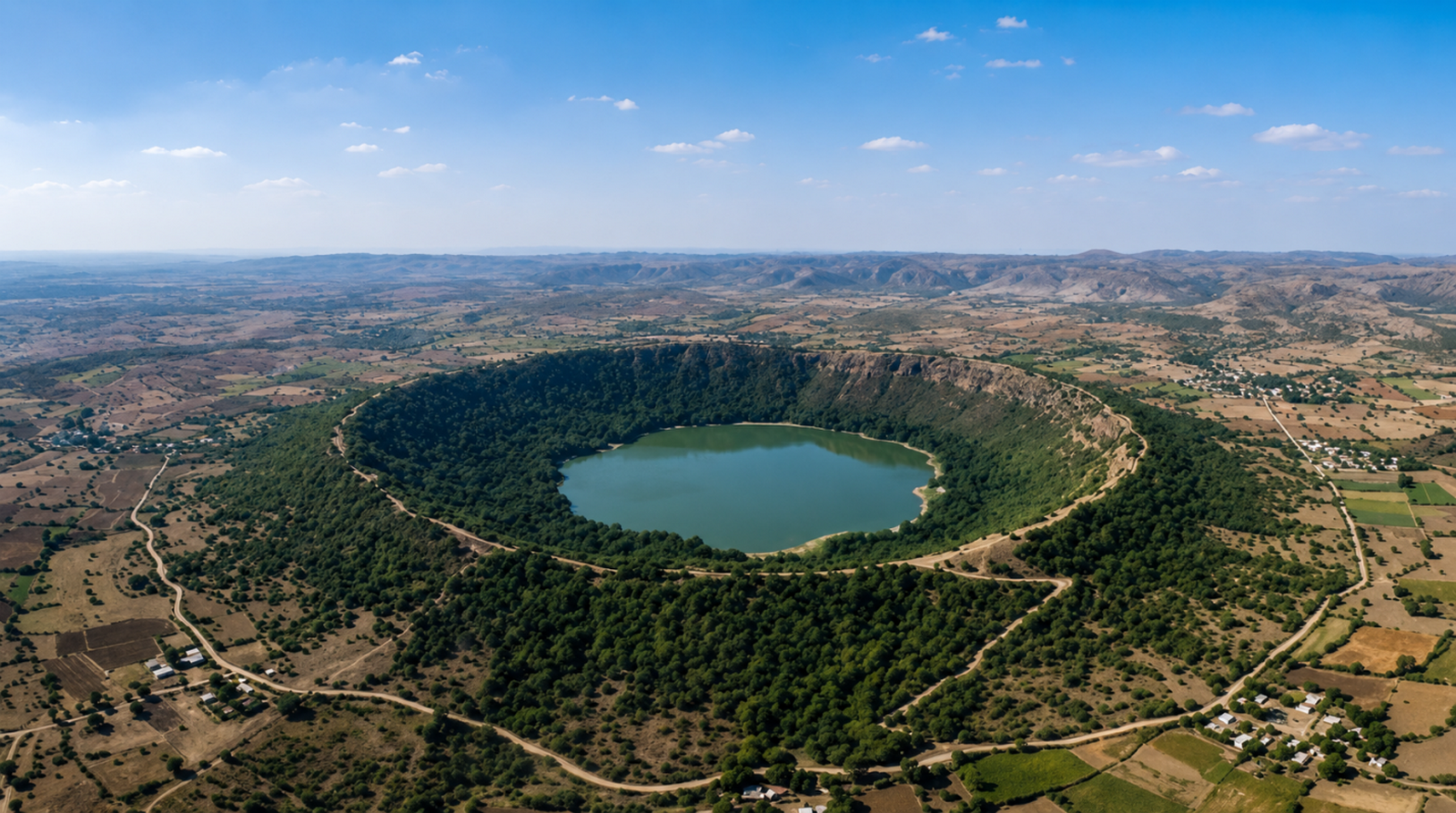
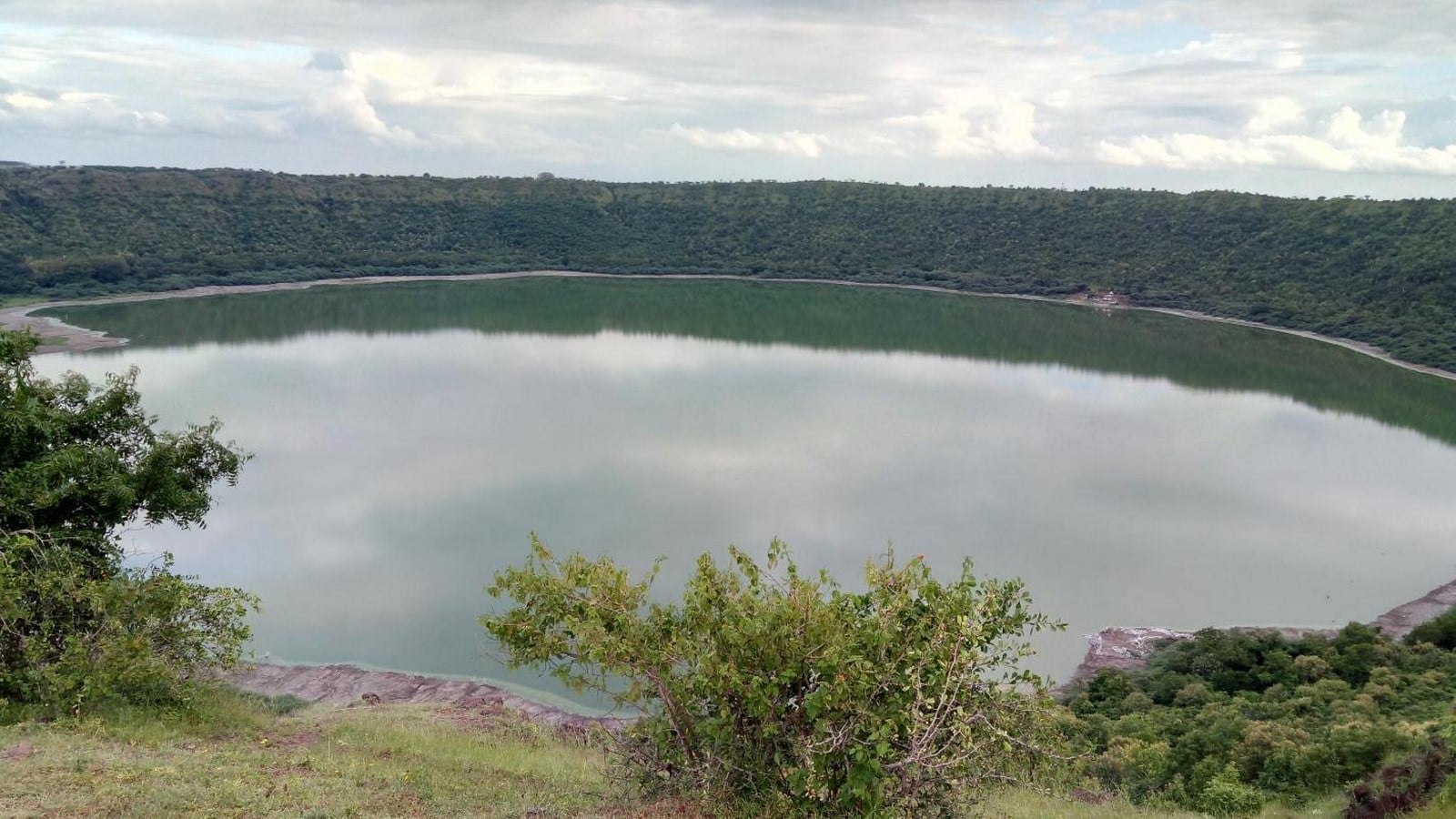
Approximately 50,000 years ago, a meteorite travelling at velocities exceeding 20 kilometres per second struck the basaltic plateau of what is today the Buldhana district of Maharashtra, India, carving a near-circular depression 1.8 kilometres in diameter and nearly 150 metres deep. The world knows this as the Lonar Crater — the only hypervelocity meteorite impact crater in basaltic rock on Earth, and one of only four such confirmed craters of its kind globally. What distinguishes Lonar from other impact sites is not merely its geological rarity, but the extraordinary decision of successive human civilisations to consecrate this anomalous landscape, building upon its rim, its slopes, and even within its depression, a complex of at least 27 temples, seven sacred tanks, and numerous inscribed monuments spanning the 6th to the 14th centuries CE. The Lonar Crater Temple Complex is, in the truest sense, an architecture born of the cosmos — a built environment whose very foundation is a scar left by the universe itself.
Architectural Style, Historical Context, and Design Philosophy
The Hemadpanthi Idiom: Stone Without Mortar
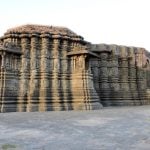
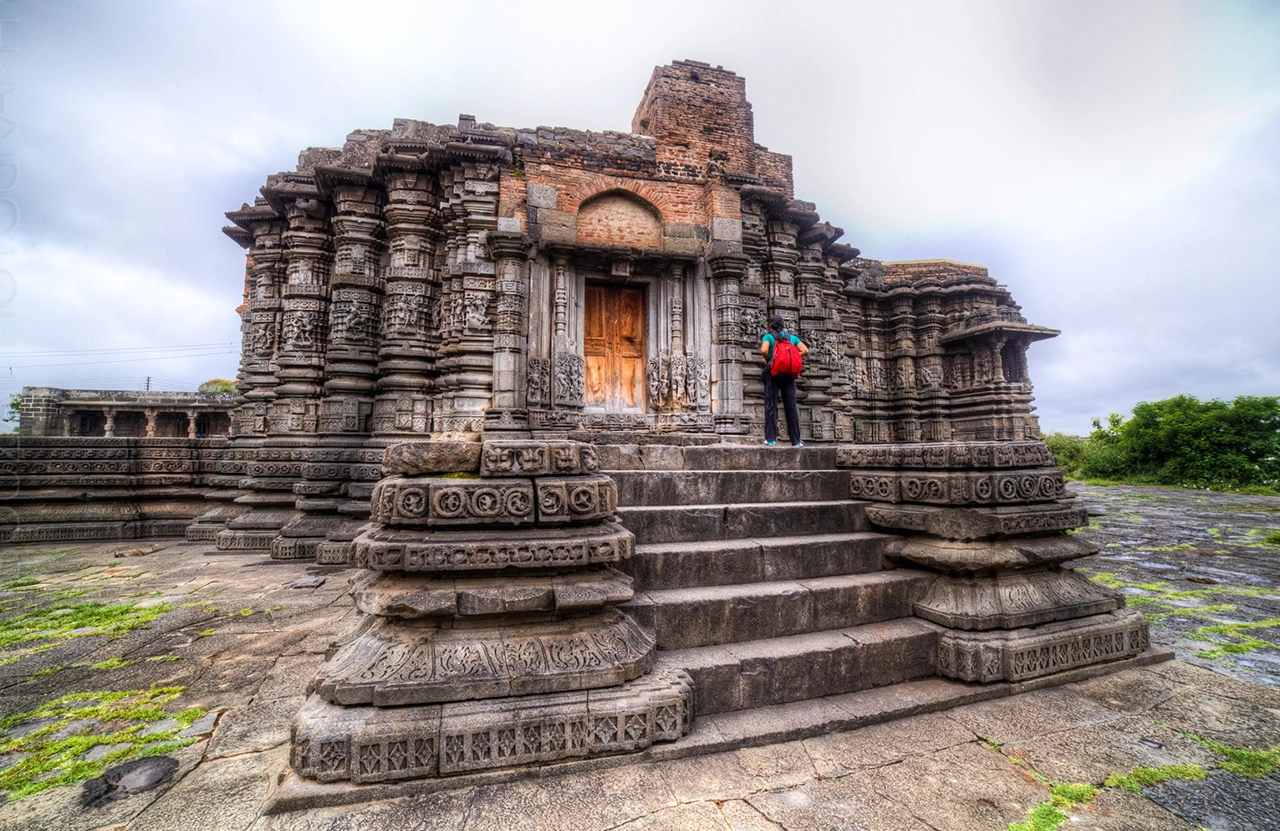
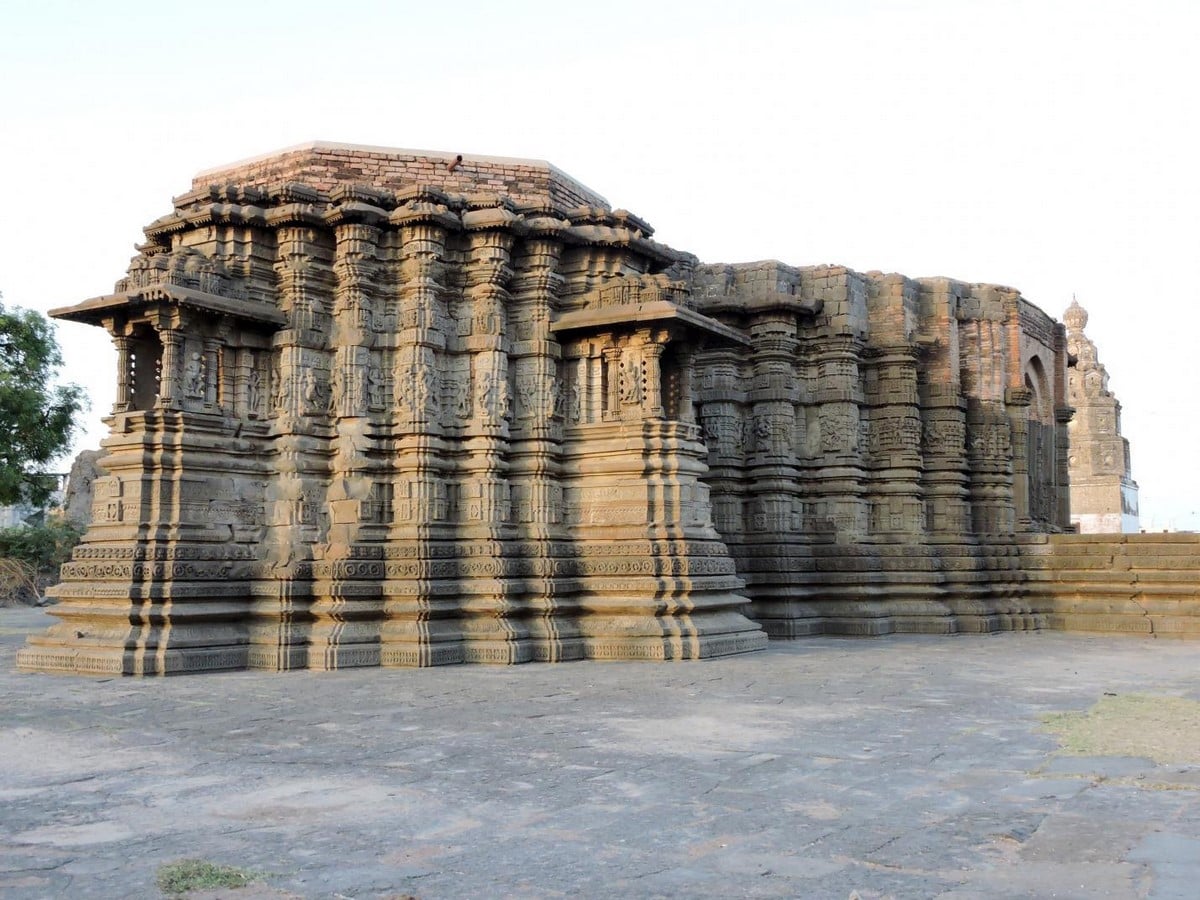
The dominant architectural language of the Lonar Crater Temple Complex is the Hemadpanthi style, a tradition named after Hemadpant — formally known as Hemad Deva — the chief minister of the Yadava king Simhana II, who ruled the Deccan in the 13th century CE. Hemadpant systematised what was, at its core, a radical structural philosophy: the elimination of mortar as a binding agent. Temples built under his patronage were constructed using precisely dressed blocks of locally quarried black basalt, interlocked through careful stonemasonry in a technique that relied entirely on the weight, friction, and geometric precision of the stones themselves. At Lonar, this method found its most distinguished expression in the Daitya Sudan Temple, a shrine dedicated to Lord Vishnu in his avatar as the destroyer of the demon Lavanasura — the very mythological figure after whom Lonar is believed to have been named.
The Daitya Sudan Temple, dating broadly to the 12th 14th centuries CE and reflecting the patronage of both the later Chalukyas and the Devagiri Yadavas, is the best-preserved structure of the Lonar Crater Temple Complex. Measuring approximately 32 metres in length and 25.8 metres in breadth, the temple is arranged in an irregular star-shaped plan — a characteristic Hemadpanthi device that dissolves the rigid orthogonal box into a dynamic, faceted composition. This stellate plan is not merely aesthetic; it serves a tectonic logic, distributing structural load along multiple angled planes while simultaneously multiplying the number of exterior surface facets available for sculptural elaboration. The result is a temple that appears to rotate as one circumambulates it, its carved panels catching and releasing light in continuous variation.
Sacred Topography: The Crater as Cosmological Axis
The spatial logic of the Lonar Crater Temple Complex cannot be understood through the lens of conventional urban planning. The crater is not incidental to the temples — it is the temples’ reason for being. The highest concentration of shrines encircles the crater rim, with the depression and its saline-alkaline lake functioning as the cosmological centre of an elaborate sacred geography. This organisation mirrors concepts found in Hindu cosmography, in which the axis mundi — the vertical axis connecting the terrestrial, celestial, and subterranean realms — is frequently represented by a mountain, a lake, or a crater. At Lonar, the meteorite impact itself appears to have been absorbed into mythological narrative: ancient texts including the Skanda Purana and the Padma Purana reference the site, embedding the geological anomaly within the framework of divine intervention. The crater, in this reading, is not a wound in the earth but a mark of the divine.
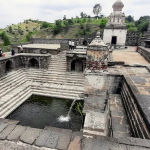
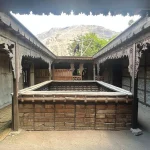
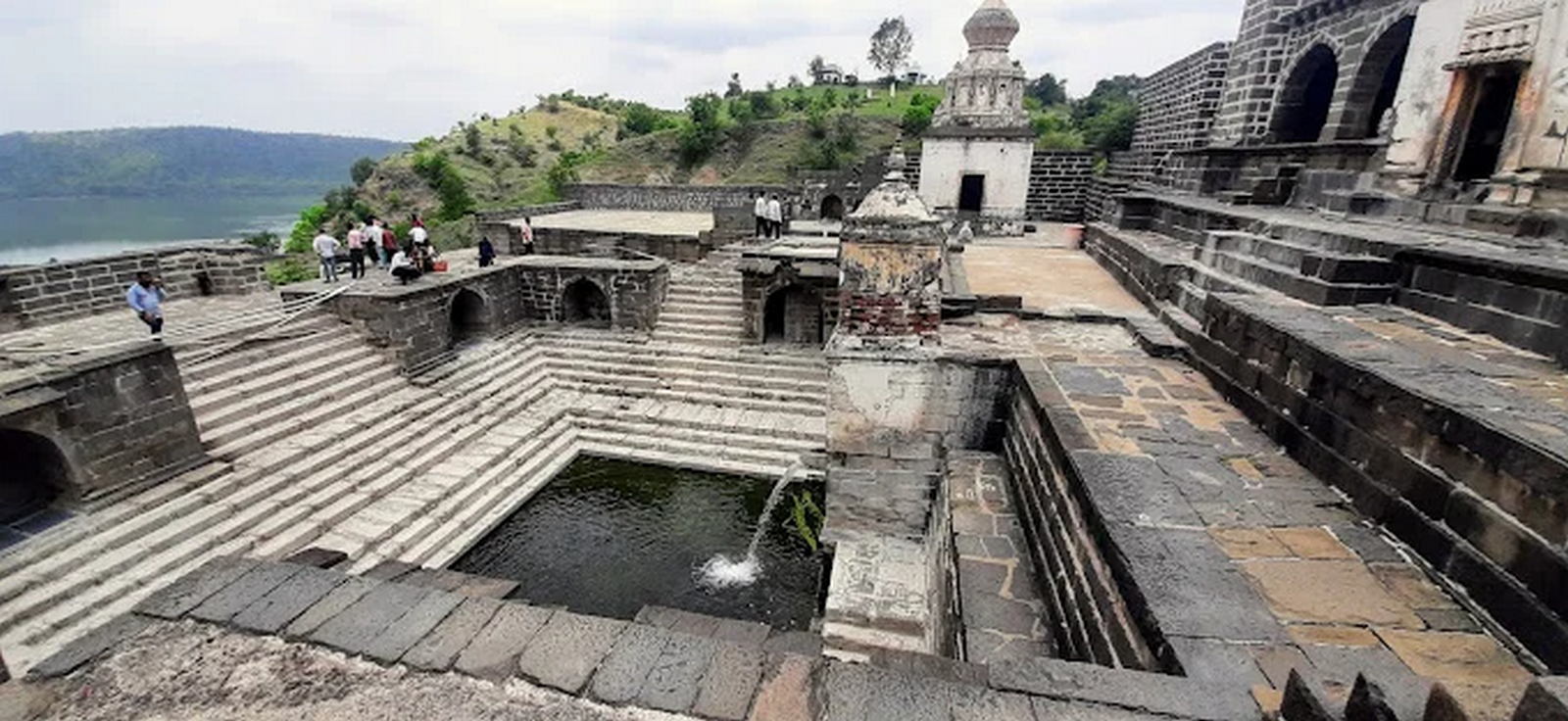
The Dharatirtha complex, situated on the crater rim and fed by a perennial spring, exemplifies this sacred topographic logic. It houses a cluster of shrines dedicated to Vishnu, Narasimha, Renuka, and Ganapati, arranged around water tanks across different historical periods. The architecture here is deliberately unmonumental — utilitarian in its masonry, sparsely ornamented — yet the spatial composition achieves a powerful effect through its relationship with the crater edge. Standing at Dharatirtha, the visitor simultaneously occupies the human world of the shrine and the geological abyss of the impact crater, a phenomenological condition that no architect could manufacture through formal design alone.
Materials, Construction Techniques, and Structural Innovation
Black Basalt: The Geology Becomes the Architecture
The most distinctive material of the Lonar Crater Temple Complex is the same basaltic rock from which the crater itself is formed. The Deccan Traps — a vast volcanic province that underlies the Maharashtra plateau — provided the builders of Lonar with an abundant supply of black basalt, a dense, fine-grained igneous stone of exceptional hardness and dimensional stability. In the Hemadpanthi tradition, this material was not merely practical; it was ideologically significant. By using the stone of the land itself, the temples were conceived as extensions of the geological substrate — buildings that grew from the earth rather than being imposed upon it. This is, in contemporary terms, a profoundly site-specific architectural strategy.
The mortarless construction of the Daitya Sudan Temple deserves particular attention as an act of structural ingenuity. Basalt blocks were cut to precise dimensions — their bed surfaces dressed flat, their joints angled to lock under gravitational load — and assembled in courses that achieve stability through compression rather than adhesion. Centuries of seismic activity in the Deccan zone have not caused the temple’s primary structure to fail, testimony to the accuracy of the original stone-dressing and the structural soundness of the system. Later interventions are instantly legible: the entrance gateway, partially damaged by iconoclastic activity during the medieval period, was repaired using red brick with a characteristically Mughal pointed arch — a historical seam that renders the building a layered record of occupancy and conflict.
Sculptural Technique: A Stone Bible in Basalt
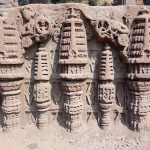
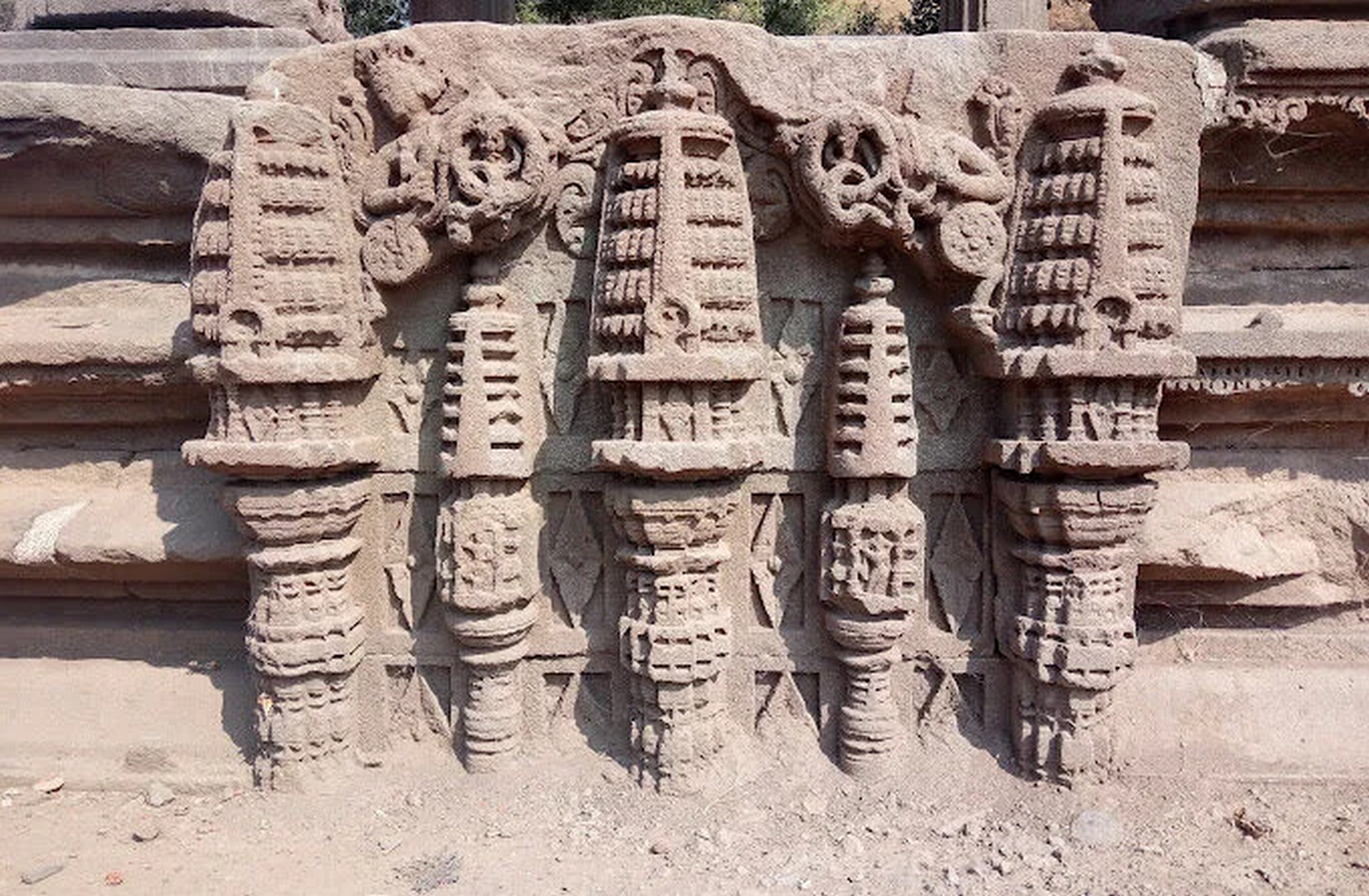
The exterior walls and interior ceilings of the Daitya Sudan Temple are covered in carvings of extraordinary density and technical ambition. Scholars have drawn consistent comparisons to the temples of Khajuraho in Madhya Pradesh, and the parallel is apt: at Lonar, panels of deities, celestial beings, apsaras, erotic couplings, episodes from the epics, and scenes of quotidian medieval life are carved in a style that balances hieratic formality with remarkable naturalism. The deity idol in the main sanctum is of particular material interest: it is fashioned from a ferrous ore with a high metallic content that gives it the appearance of polished stone whilst retaining the magnetic properties of iron — a material choice that has perplexed analysts and added to the shrine’s aura of the anomalous. Three exterior niches, each designed as a miniature complete temple in themselves and dedicated to Surya, Chamunda, and Narasimha respectively, demonstrate the Hemadpanthi tendency to embed the logic of the whole within each of its parts.
Cultural Significance, Social Relevance, and Influence on the Urban Fabric
A Landscape of Contested Sacred Meaning
The Lonar Crater Temple Complex occupies a historically contentious position in the religious and political geography of the Deccan. Evidence of iconoclastic damage — most visible in the truncated and defaced sculptures on the Daitya Sudan Temple’s exterior — speaks to the temple’s encounter with the expansion of the Delhi Sultanate and the Bahmani Sultanate across the Vidarbha region in the 13th and 14th centuries. Yet the temple was never abandoned; unlike many contemporaneous sites, it continued to function as an active place of worship, its community evidently adapting to periods of political subjugation whilst preserving the core of its devotional life. The Devagiri Yadavas, who were arguably the most significant patrons of the Lonar complex, embedded the crater temples within a regional identity politics — a demonstration of cultural continuity and dynastic legitimacy through the sponsorship of sacred architecture.
The Maratha period brought renewed patronage to the Lonar site, with additions and restorations that reflected the eclectic political theology of Chhatrapati Shivaji and his successors, for whom the reclamation of Deccan Hindu heritage was an explicit programme. Lonar appears in Ain-i-Akbari, the administrative survey compiled under Emperor Akbar, attesting to its significance as a regional landmark even within the Mughal imperial imagination. This sustained documentation across divergent political regimes indicates a cultural importance that transcended the specificities of dynastic allegiance.
The Living Temple and the Contemporary City
Today, the Lonar Crater Temple Complex remains an active religious site, not a static museum. The annual Navaratri festival draws substantial pilgrimages to the Kamalaja Devi Temple on the lakeshore, where ritual practice continues uninterrupted across a tradition of many centuries. The town of Lonar has grown organically around the crater and its temples, with the Daitya Sudan Temple occupying a position at the heart of the urban fabric — not on the urban periphery as a monument, but embedded within the lanes and daily life of the town. This integration of the sacred and the civic is characteristic of the pre-modern Indian urban model, in which the temple was simultaneously a place of worship, a centre of economic activity, a repository of artistic production, and a node of social organisation.
The Archaeological Survey of India maintains custodianship of the principal temples, and in 2024, the Maharashtra government submitted a proposal through the ASI for Lonar’s inscription on UNESCO’s Tentative List as a geo-heritage site — a designation that would formally recognise the extraordinary convergence of geological, archaeological, and architectural significance at the site. This bid represents an opportunity not only for the conservation of the Lonar Crater Temple Complex itself, but for a broader reckoning with what conservation practice means for a landscape in which the built and the natural are, quite literally, inseparable.
The Lonar Crater Temple Complex is not merely a heritage site. It is a provocation — an argument, made in stone and space, about what architecture is capable of when it takes seriously the ground on which it stands. The builders of the Hemadpanthi temples at Lonar did not attempt to neutralise or domesticate the anomaly of the impact crater; they amplified it, consecrated it, and built a sacred geography that made the geological theological. In an era when architectural discourse is consumed with questions of context, sustainability, and material authenticity, Lonar offers an example that is simultaneously ancient and radical: a complex in which the material of the building is the material of the earth, the form of the plan responds to the forces of the cosmos, and the absence of mortar is a statement of structural confidence sustained across eight centuries. The Lonar Crater Temple Complex deserves not only conservation, but careful study — as history, as architecture, and as philosophy.
References:
Archaeological Survey of India. (2024). Lonar Crater Heritage Site: Conservation and Management. New Delhi: Archaeological Survey of India.
Association for Asian Studies. (2023). Geological wonder as a sacred landscape: The case of Lonar Crater. Education About Asia, 28(2). Available at: https://www.asianstudies.org/publications/eaa/archives/geological-wonder-as-a-sacred-landscape-the-case-of-lonar-crater/ [Accessed: 20 June 2026].
Chalbanjare.com. (n.d.). Daitya Sudan Temple Aurangabad. Available at: https://chalbanjare.com/place/daitya-sudan-temple [Accessed: 20 June 2026].
Incredible India – Ministry of Tourism, Government of India. (n.d.). Lonar Crater Lake. Available at: https://www.incredibleindia.gov.in/en/maharashtra/nagpur/lonar-crater-lake [Accessed: 20 June 2026].
Maharashtra Tourism Development Corporation. (2025). Lonar Crater. Available at: https://maharashtratourism.gov.in/nature/lonar-crater/ [Accessed: 20 June 2026].
SculpturePedia. (2024). Daitya Sudan Temple – Lonar – Maharashtra. Available at: https://sculpturepedia.com/temples/daitya-sudan-temple-lonar-maharashtra/ [Accessed: 20 June 2026].
The News Dirt. (2025). Daitya Sudan Temple, Lonar: The 13th Century Giant Slayer’s Hidden Marvel. Available at: https://www.thenewsdirt.com/post/daitya-sudan-temple-lonar-the-13th-century-giant-slayer-s-hidden-marvel [Accessed: 20 June 2026].
Rethinking the Future | Case Study | Heritage / Historic Structure | Maharashtra, India