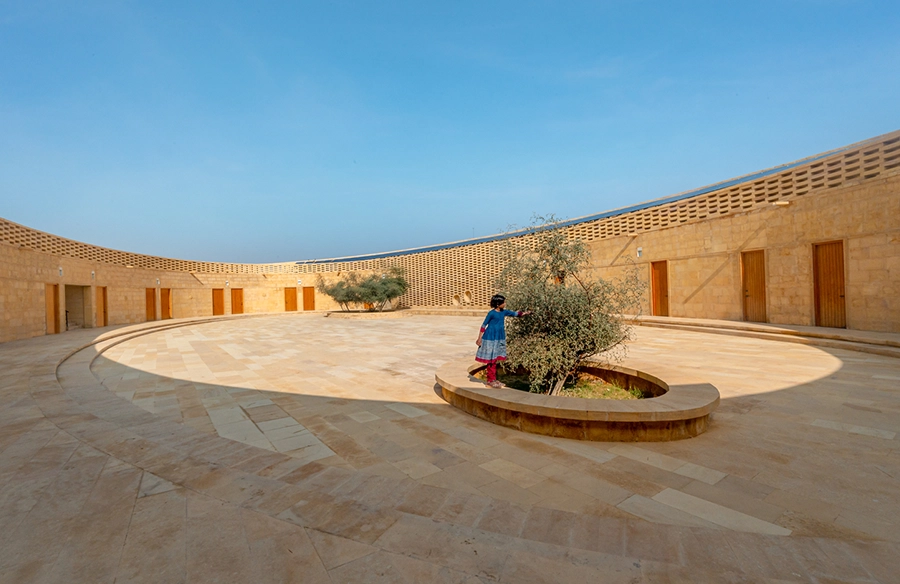
The Rajkumari Ratnavati Girl’s School is an architectural wonder created by Diana Kellogg of Diana Kellogg Architects and commissioned by CITTA, a nonprofit organization aiding development in some of the most economically disadvantaged, geographically isolated or marginalized communities globally.
The project excellently shows how architecture can be a catalyst for change and go beyond just being four walls with a roof above. Blending the expertise of local artisans, sustainability principles and empathy towards an underprivileged group.
Design Philosophy
The core philosophy behind the school lies in creating a space that is environmentally responsive, culturally rooted, and socially impactful. The design draws inspiration from traditional desert architecture while incorporating modern sustainability strategies.
Kellogg’s approach reflects a deep respect for the harsh climatic conditions of the Thar Desert. Instead of imposing an alien architectural language, the structure embraces vernacular principles such as thermal massing, passive cooling, and material authenticity. The aim was to create a comfortable, safe, and inspiring learning environment for young girls while minimising environmental impact.
Concept and Form
“As a female architect designing for women, I looked at feminine symbols across cultures and specifically symbols of strength,” Diana Kellogg said. “I ultimately landed on this oval shape that is representative of femininity and resonated with me as the formulation of infinity,” she added. “I knew I wanted to do a building that simultaneously blended and grew out of the natural landscape, much like the Jaisalmer sandstone.”
The school is a unique elliptical form, which is both symbolic and functional. The oval geometry represents femininity and fluidity, subtly reinforcing the school’s mission of empowering girls.
From a climatic perspective, the form reduces surface area exposed to harsh sunlight and hot desert winds, thereby improving thermal efficiency. The inward-looking configuration creates a protected central courtyard, fostering interaction, play, and a sense of community among students.
The architecture avoids rigid linearity and instead adopts soft, organic curves that harmonise with the surrounding desert landscape.
Planning Aspects
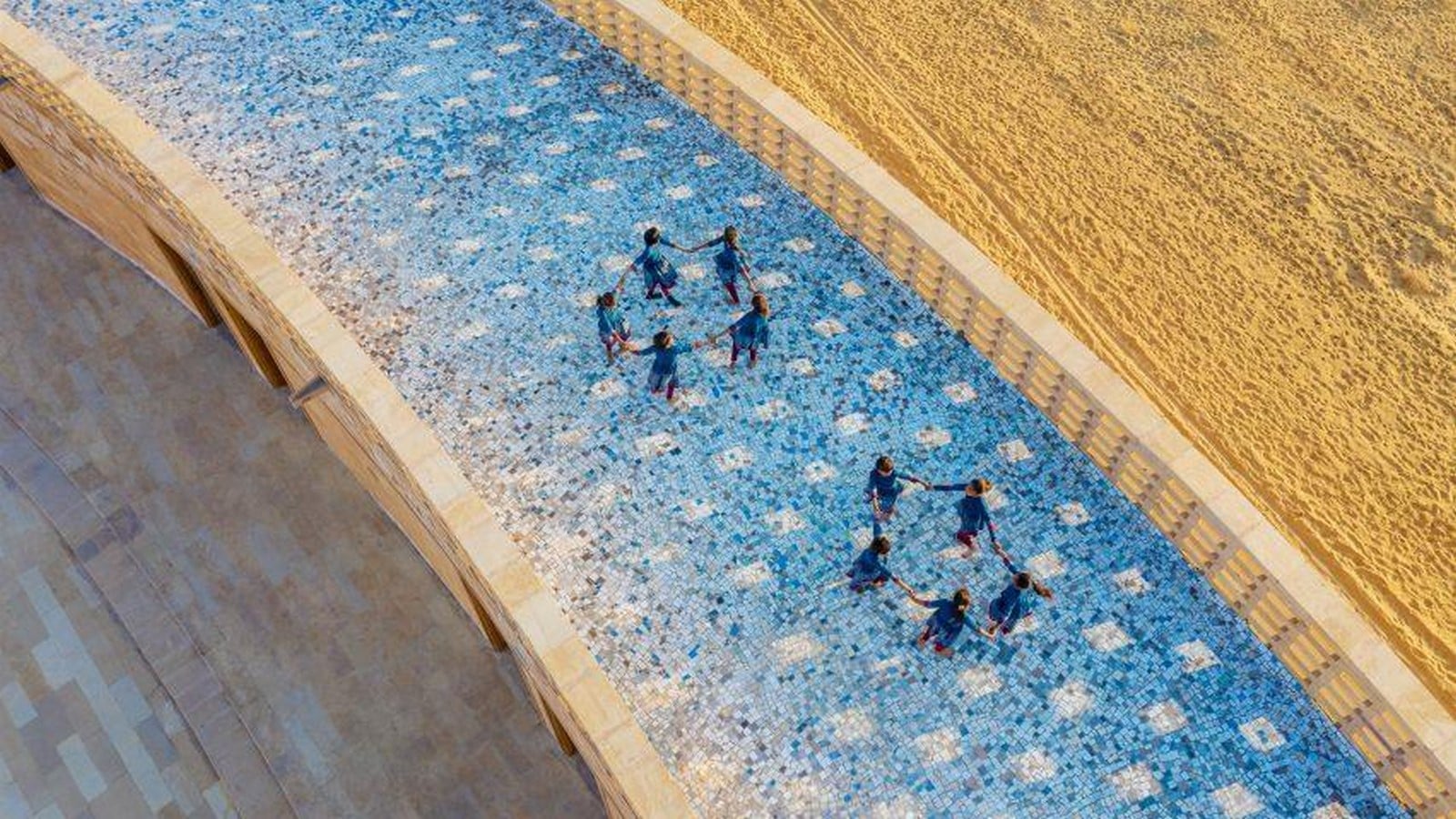
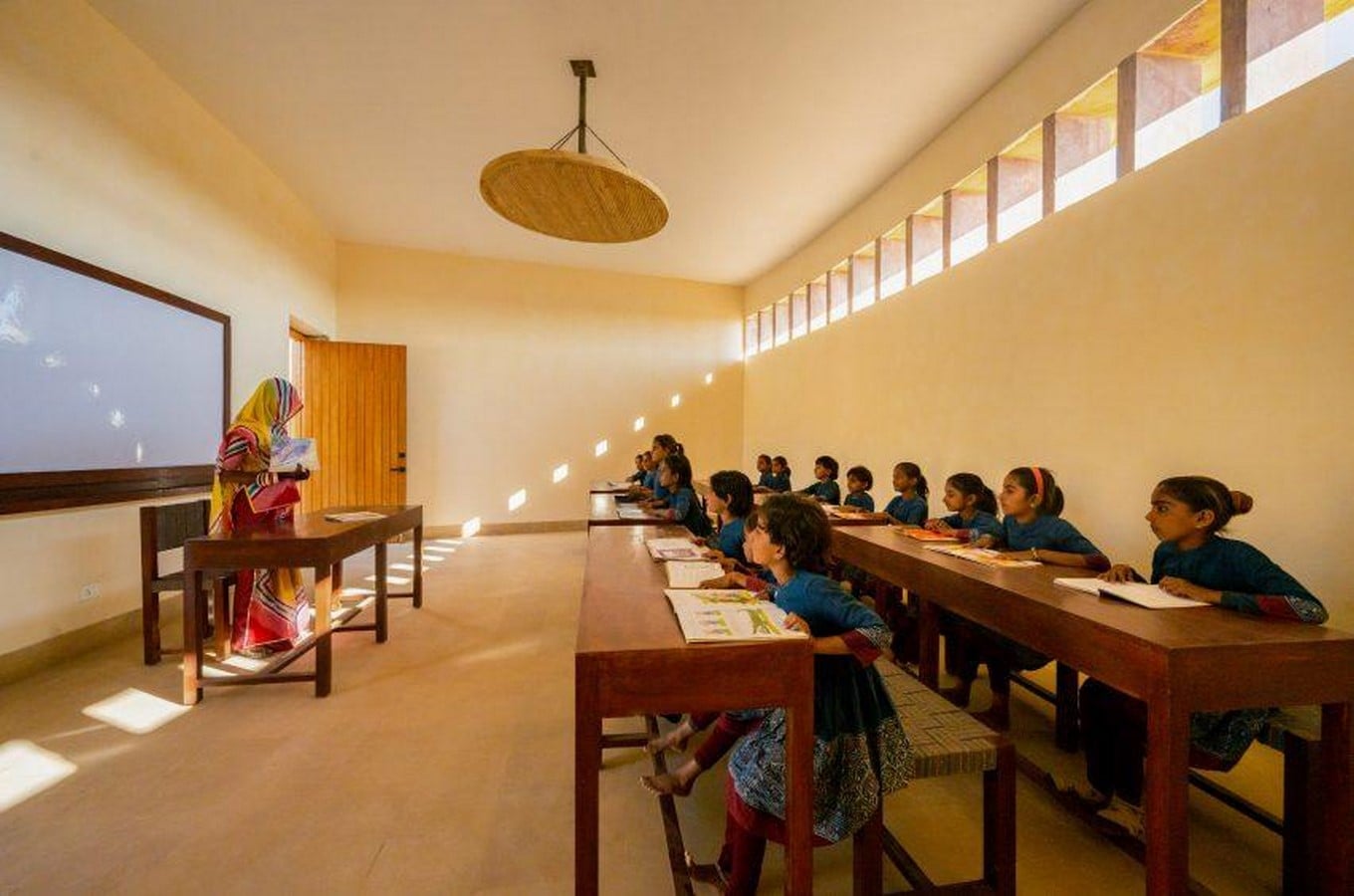
Wooden doors lead from the courtyard through to a computer centre and a collection of 10 classrooms that are linked by a series of winding corridors. Clerestory openings in the classrooms create a dappled light effect throughout the day and allow for natural ventilation. A ramp between the perforated walls forms a shaded corridor that leads up an elevated walkway to the roof.
Materials and Construction
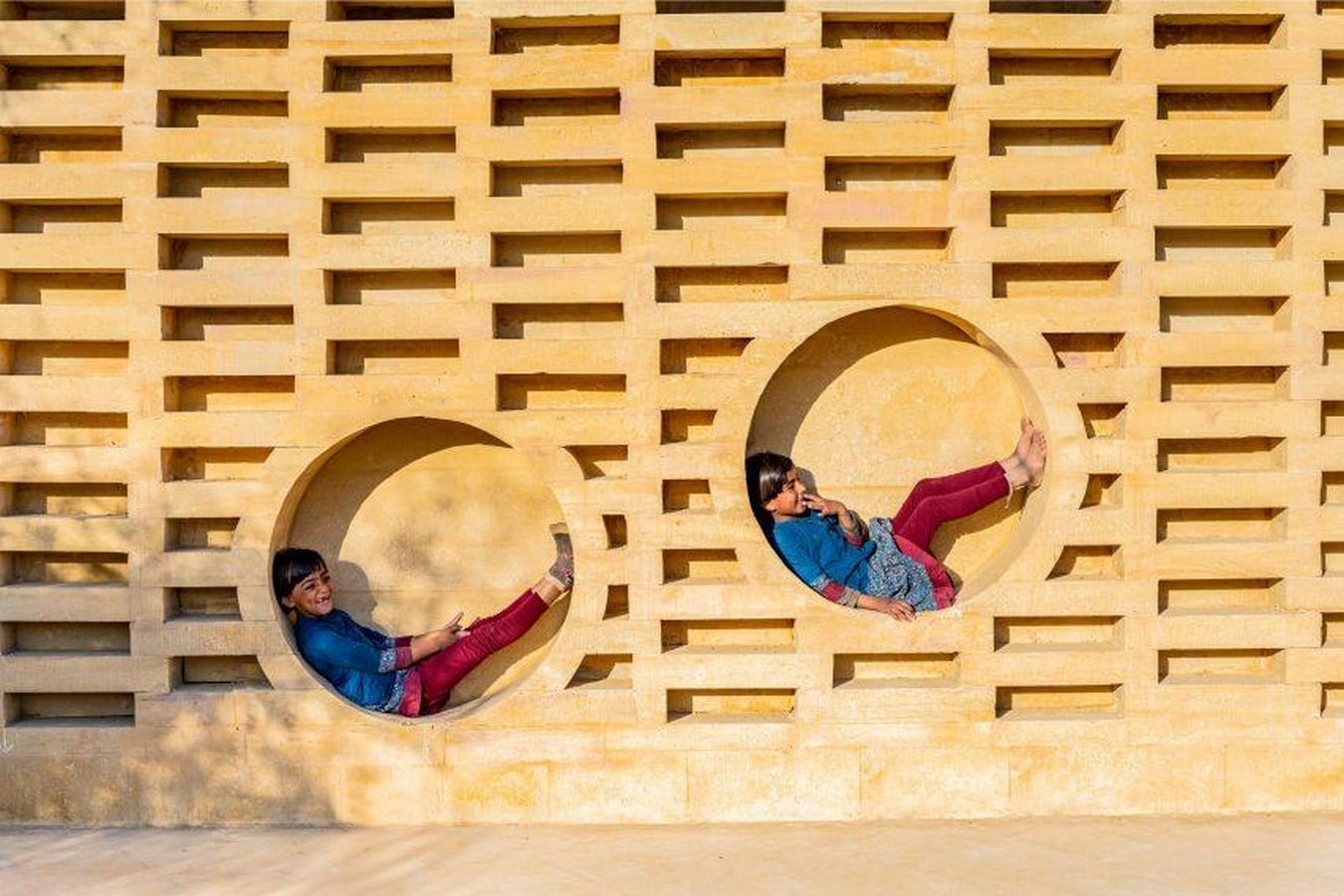
It is made entirely out of local hand-carved Jaisalmer sandstone by local craftsmen. It was vital to Kellogg to include the community in a building made for the community. Using local material to create infrastructure helped reduce carbon emissions, and Kellogg chose to build a solar panel canopy on the roof as a cooling system where temperatures peak close to 120 degrees. Both the canopy and jalis keep the heat out and the elliptical shape of the structure also helps bring aspects of sustainability creating a cooling panel of airflow.
Material Highlights:
- Jaisalmer Yellow Sandstone: High thermal mass helps regulate indoor temperatures.
- Locally Crafted Jaali Screens: Allow filtered light and natural ventilation.
- Traditional Masonry Techniques: Reduce dependency on high-energy construction methods.
The construction process actively involved local artisans, thereby preserving traditional craftsmanship and generating employment within the community.
Climate Responsiveness and Sustainability
The design is well accustomed to the climate of the region which is dry and hot. The tall walls naturally shade the central courtyard as the sun rotates. The thick walls delay the heat transfer through the mass and release it gradually during the evening when it starts to get cooler. Other design interventions such as the age-old technique used in Rajasthan of jaalis was also incorporated which enhances air flow and cools down air, thus reducing load on mechanical cooling systems.
Innovation and Inspiration
The project stands out for its seamless integration of tradition and modernity. Rather than relying on high-tech solutions, it reinterprets age-old architectural wisdom in a contemporary context.
The studio incorporated water harvesting systems that collect and recycle rainwater throughout the school. The inclined walkway leads to the roof solar panels that supply energy to lights and fans were fitted to a steel structure on the roof, which doubles as a shaded canopy area and playscape for the children.
Involving local craftspeople in the building process rejuvenates and conserves traditional skills, guaranteeing that the area’s cultural heritage is handed down to future generations. The school serves as more than an educational institution – it acts as a community center, providing women with vocational training and promoting a sense of empowerment and self-esteem.
Rajkumari Ratnavati Girls’ School is a powerful demonstration of how architecture can respond holistically to the environment, culture, and society. Through its thoughtful design, sustainable strategies, and strong social vision, the project redefines the role of architecture in shaping communities.
In the vast expanse of the Thar Desert, this school stands as a beacon of thoughtful design and meaningful impact, proving that architecture, when done right, can truly change lives.