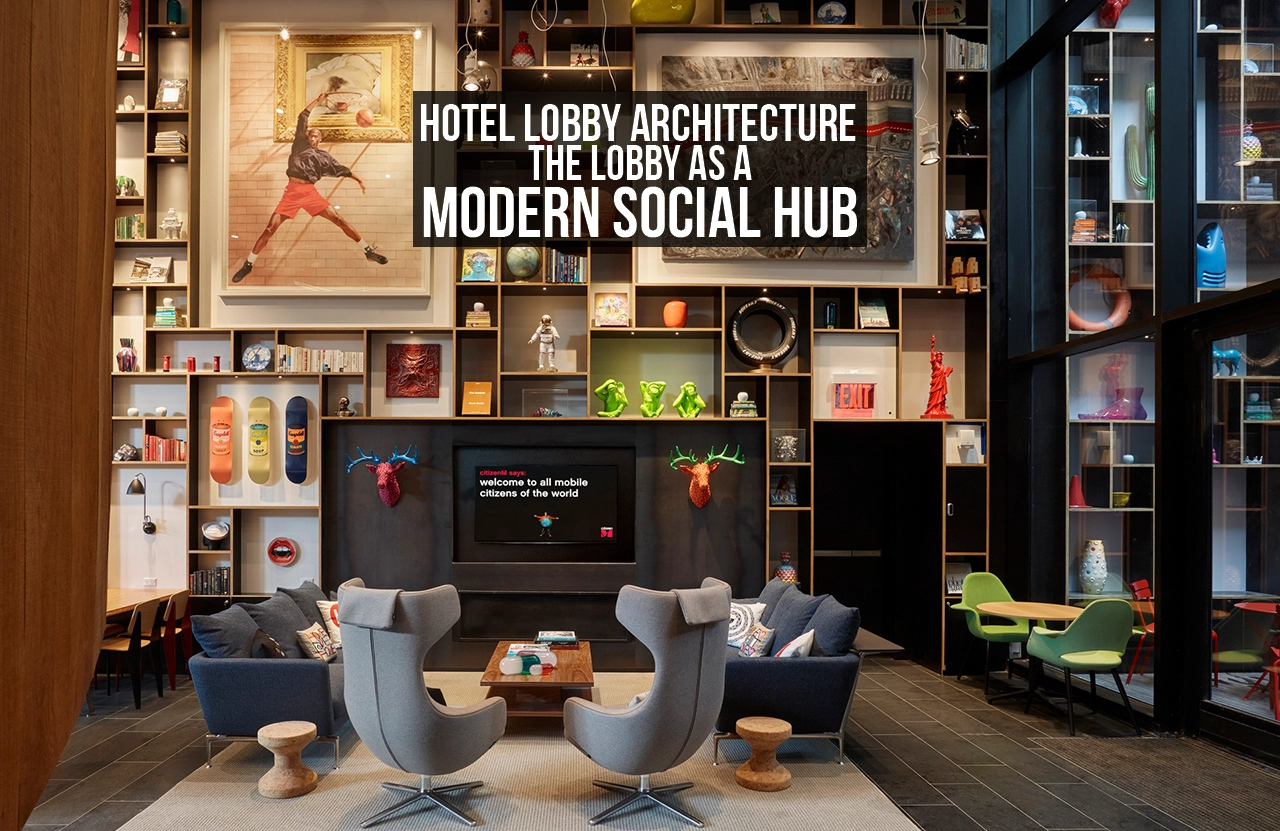
For many travellers, stepping into a hotel lobby is a place of transfer from the reception formalities to settling into their comfortable holiday dwelling. One would see tour groups boredly waiting for their room allocation, happy married couples excitedly checking in, while children on their spring break are happily making the hall furniture into their playground. Since the boom of business travel and the digital nomad lifestyle, lobbies have also become places of trade, with online meetings held in flip-flops next to the tiki bar. The 21st-century lobby is indeed dynamic and has great potential to transform these traditionally private spaces into modern social hubs.
Evolution of Hotel Lobbies
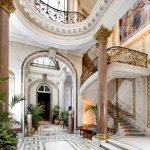
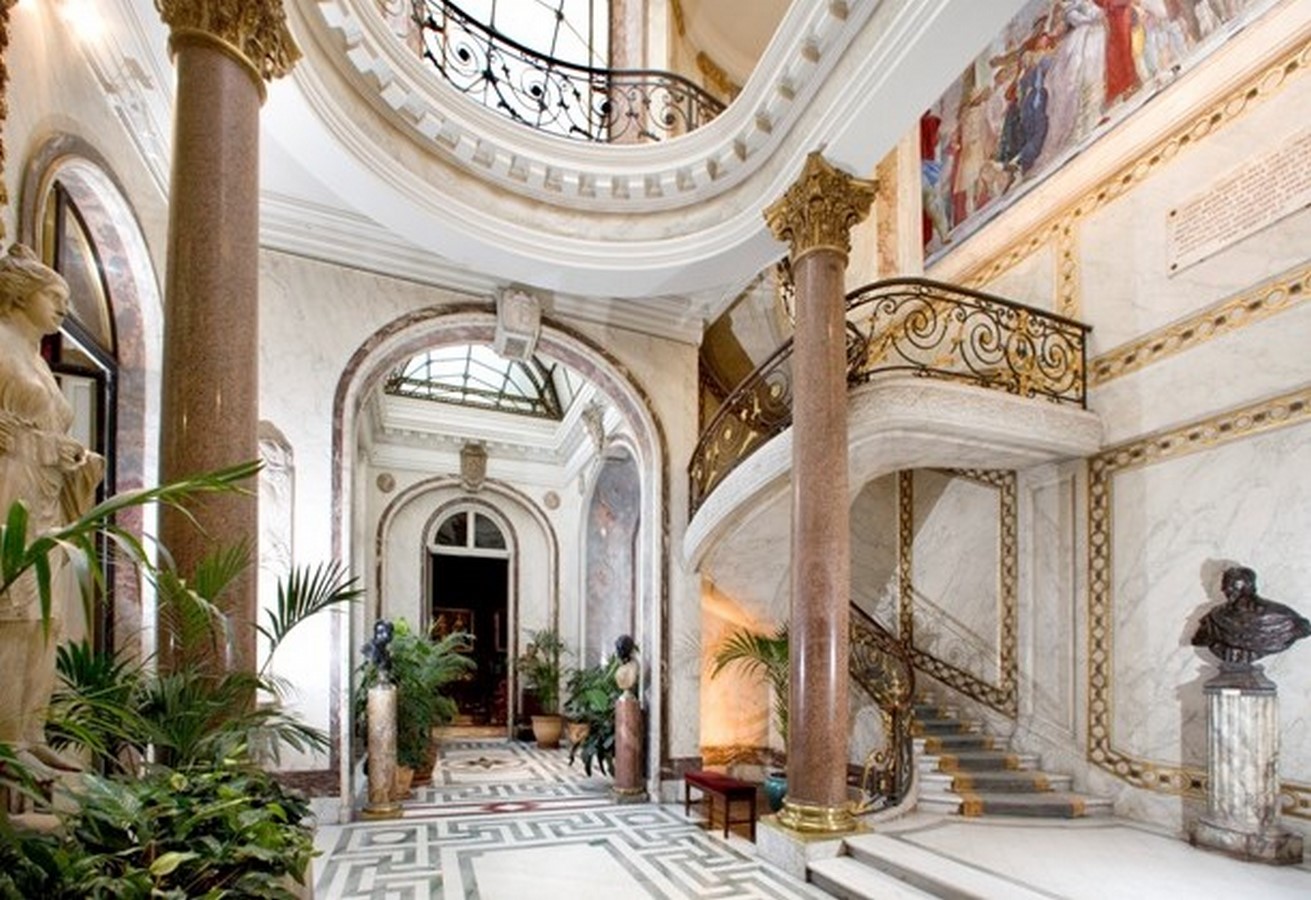
The beginning is the best place to start when exploring the social functions of today’s hotel lobby architecture, as there are surprisingly many similarities to its predecessors on the social front. Looking back at early vestibules, as far as 15th-century Paris, homes of aristocrats, so-called ‘hôtel particuliers’, were rented out to other wealthy visitors – resembling what might today feel like a grandiose Airbnb rather than a purpose-built hotel. While they were private mansions, hosting visitors meant they sat in an ambiguous place between public and private space. Vestibules functioned much like the entrances of aristocratic houses, where sweeping staircases, opulent furniture, paintings, sculptures and decorative rugs signalled status from the moment of arrival.
By the late 18th and early 19th centuries, the rise of hotels in cities such as London coincided with increased mobility brought about by rail travel. During this period, the lobby became a place for the upper classes to see and be seen, reinforcing social hierarchies through formality and ornamentation, while still facilitating social exchange. This model shifted dramatically in the mid-to-late 20th century, as mass tourism and business travel prioritised efficiency over spectacle, reducing hotel lobbies primarily to waiting areas. Finally, towards the end of the century lobbies begin to reclaim their role as social hubs as a response to evolving guest needs and expectations.
Multi-purpose Hotel Lobbies
As the timeline approaches the 21st century, open-plan, multi-functional hotel lobbies became the status quo. Rather than rigidly separating sleeping, working and socialising, contemporary architecture allows the same space to be used flexibly throughout the day. Features such as communal tables, adaptable furniture and integrated technology enable lobbies to function as workspaces in the morning, social lounges in the afternoon and bars by night. Expanding beyond daily routines, these spaces can also operate as cultural centres, hosting exhibitions of local art, seasonal performances, and bonding programmes for families or groups. And as many hotels provide venues for events and conferences, lobbies can serve as in-between places, moving conversations off the main stage and busy exhibition halls into a more relaxed setting.
citizenM, New York City
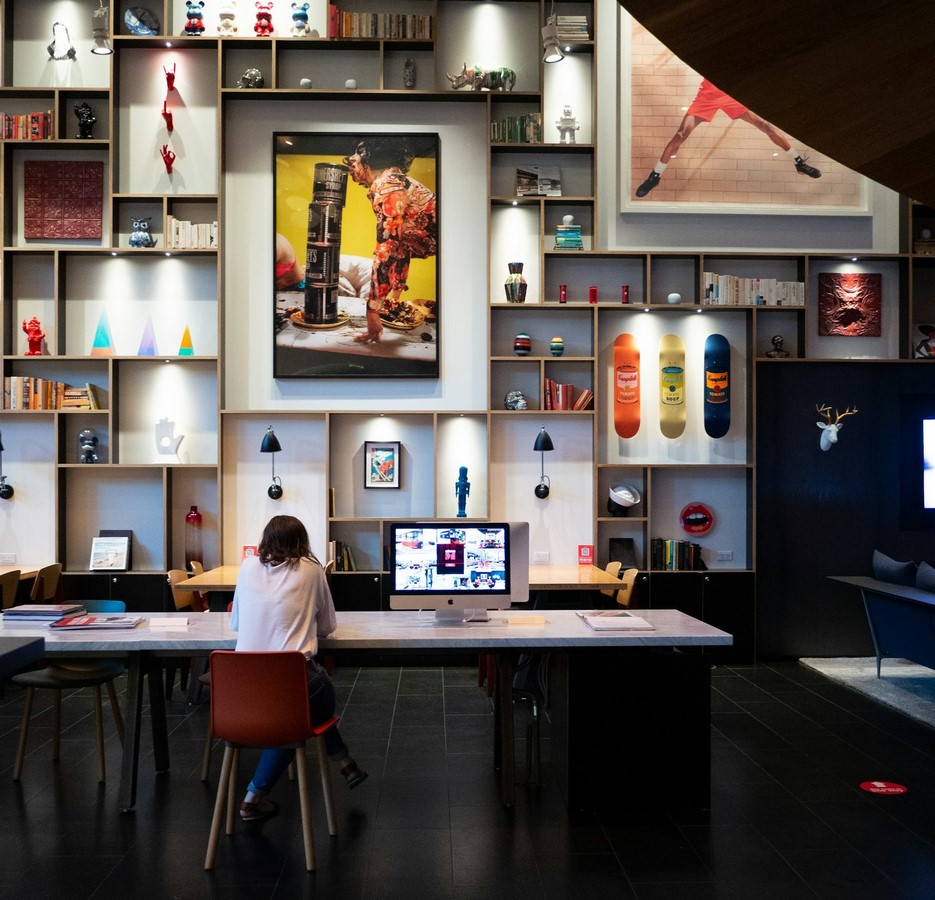
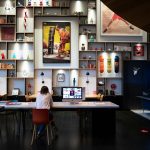
The citizenM chain has become known for reimagining the traditional hotel lobby into an urban living room. Instead of a formal foyer, guests step into a double-height, open space that immediately feels lived-in without clear boundaries of work and social functions. The lobby’s visibility from the street and its connection to an outdoor courtyard provides a sense of openness between the city and the interior. For culture-savvy guests, a wall of shelves stretches through the space, displaying books and contemporary artworks to browse and linger around. Seating is loosely arranged rather than prescribed, so visitors can settle in with a laptop, meet informally, or simply relax. Anchoring the space is the canteenM café-bar, operating throughout the day and subtly shifting the atmosphere from morning workspace to evening social.
Zoku, Amsterdam
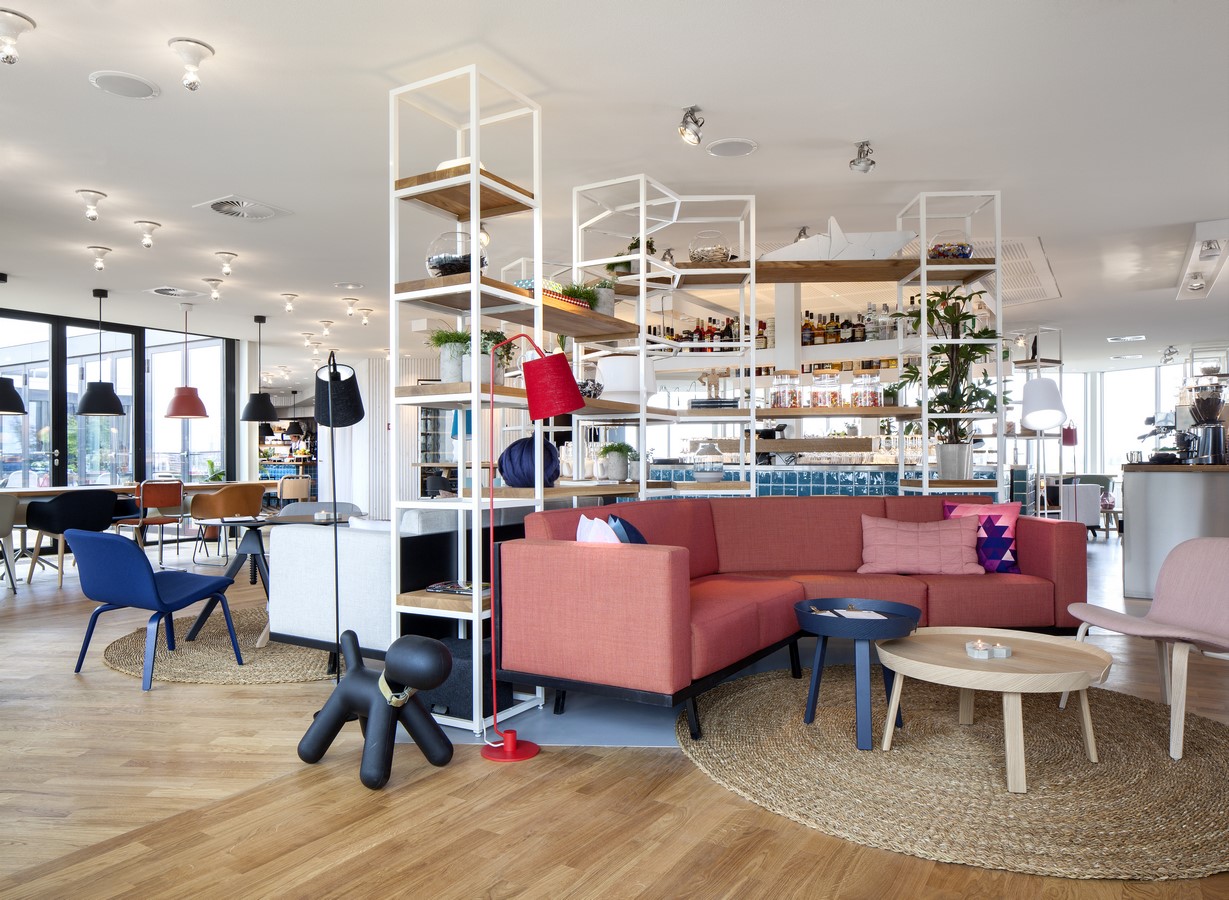
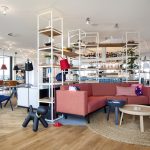
Arriving at Zoku Amsterdam, guests are drawn upwards to the top-floor social spaces, where any activity, be it working or dining, couples with the panoramic view of the city. Rather than a formal reception hall, the lobby experience feels closer to entering a communal home, structured around long tables that support collaborative work and softer lounge areas. Shared facilities, including a communal kitchen and pantry, encourage guests to cook, eat and gather together, reinforcing everyday social interaction as part of the arrival experience. Game rooms, music spaces and flexible meeting areas allow guests to move between productivity and leisure without changing location.
Ovolo 1888 Darling Harbour, Sydney
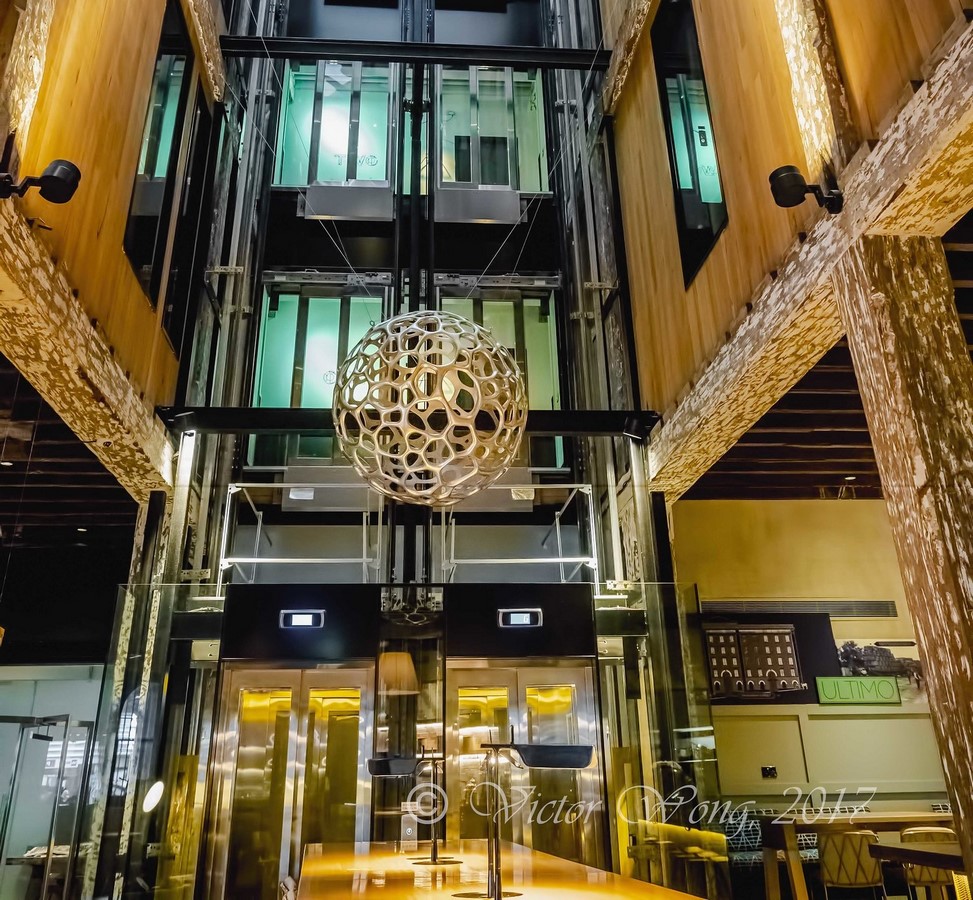
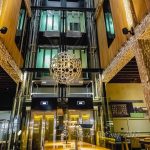
Housed within a restored 19th-century wool warehouse, the atrium-style hotel lobby soars up several levels, filling the space with light and emphasising the building’s industrial heritage through exposed ironbark beams and timber that reach toward the ceiling. Vibrant chairs and button-leather sofas create a clustered seating arrangement to feel more like a stylish lounge than a waiting area. Guests are encouraged to settle into this homely environment whether in a corner with a coffee, or with a business partner for a meeting. A small patch of grass with a tree growing indoors adds a surprising touch of nature, while the adjacent 1888 Eatery & Bar, open to the lobby, dissolves the boundary between arrival space and dining environment.
Breaking Down Walls
As hospitality design continues to adapt to ever-shifting patterns of leisure and business travel, the hotel lobby of the 2020’s is increasingly in a more central role in shaping guest experiences. Blurring the boundary between hotel interior and public realm, contemporary lobbies operate as 24/7 environments that welcome locals alongside guests, while functioning simultaneously as coworking spaces, dining areas, informal meeting points and even cultural venues. These spaces are no longer confined to formal check-ins, but are designed to absorb the rhythms of everyday life, with many of today’s travellers spending more time in the lobby than in their actual guestrooms. Evolving beyond a fixed architectural typology, the hotel lobby is becoming a responsive social setting – one that reflects how people gather, connect and belong in these adaptable environments.
References:
Archilovers (n.d.) Zoku Amsterdam. Available at: https://cdn.archilovers.com/projects/d43481af-1066-415b-bc1d-363b23ba100f.pdf
Bold Traveller (n.d.) World’s most beautiful hotel lobbies. Available at: https://boldtraveller.ca/places-to-stay/hotels/hotel-reviews/worlds-most-beautiful-hotel-lobbies/
DSSPM (n.d.) The evolution of hotel and resort lobbies. Available at: https://www.dsspm.com/blog/the-evolution-of-hotel-resort-lobbies/
France Today (n.d.) L’hôtel particulier: une ambition parisienne. Available at: https://francetoday.com/learn/history/l_hotel_particulier_une_ambition_parisienne/
Gensler (n.d.) Reimagining the hotel lobby as a vibrant social hub. Available at: https://www.gensler.com/blog/reimagining-the-hotel-lobby-as-a-vibrant-social-hub
Hotel Designs (2024) Most unique hotel lobby spaces. Available at: https://hoteldesigns.net/2024/most-unique-hotel-lobby-spaces/
Hotel Management Network (n.d.) Hotel social spaces: creating community beyond the guestroom. Available at: https://www.hotelmanagement-network.com/features/hotel-social-spaces/
Medium – Something Curated (n.d.) Lobby culture: the evolution of the hotel lobby from the 15th century to present day. Available at: https://medium.com/@somethingcurated/lobby-culture-the-evolution-of-the-hotel-lobby-from-the-15th-century-to-present-day-da3d1d34341f
Ovolo Hotels (n.d.) Ovolo Woolloomooloo. Available at: https://ovolohotels.com/ovolo/woolloomooloo/
Oyster (n.d.) Zoku Amsterdam. Available at: https://www.oyster.com/amsterdam/hotels/zoku-amsterdam/
Rolling Stone UK (n.d.) The future of hospitality isn’t defined by walls but by the experiences those walls enable. Available at: https://www.rollingstone.co.uk/culture/the-future-of-hospitality-isnt-defined-by-walls-but-by-the-experiences-those-walls-enable-says-robert-polacek-52111/
Uniq Hotels (n.d.) 1888 Hotel Sydney. Available at: https://www.uniqhotels.com/1888-hotel-sydney/
Zoku (n.d.a) Zoku Amsterdam. Available at: https://livezoku.com/amsterdam/
Zoku (n.d.b) Work remote at Zoku Amsterdam. Available at: https://livezoku.com/amsterdam/work-remote/