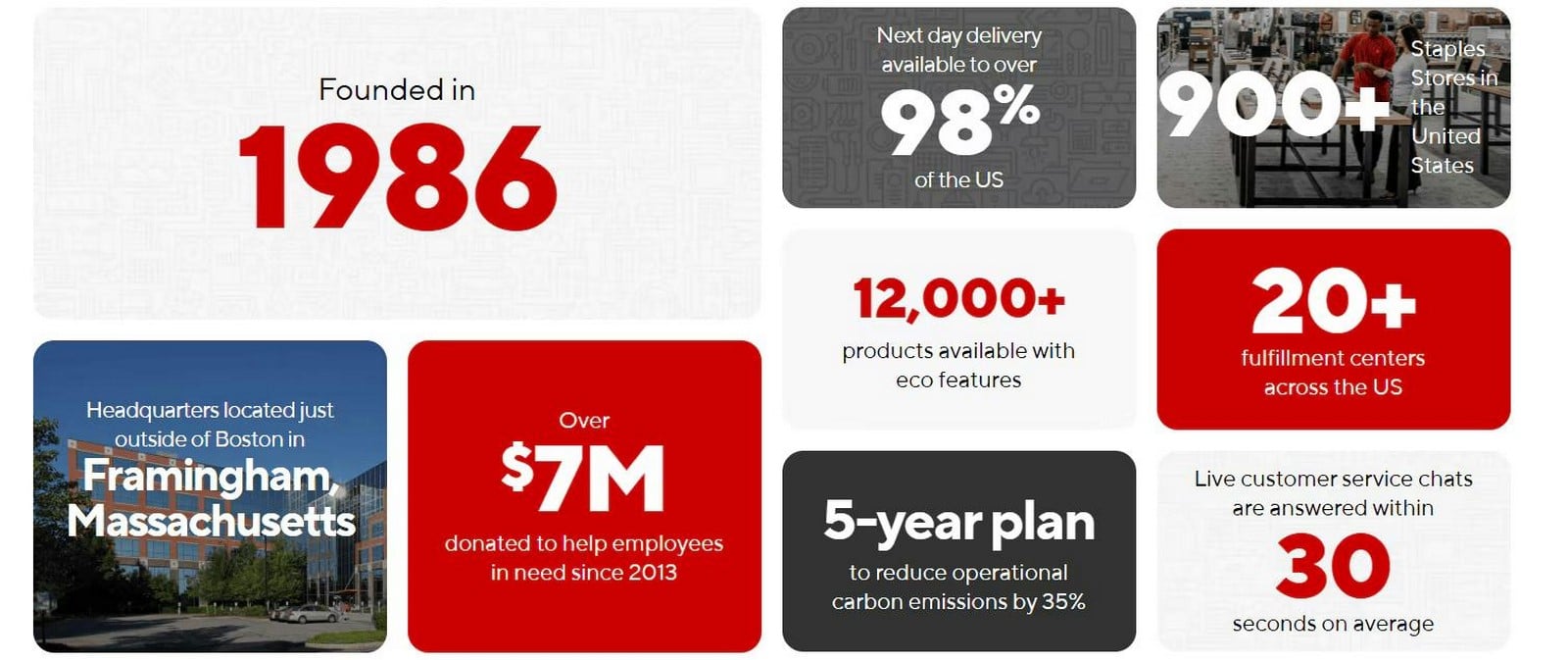
In the show ‘The Office’, the company Dunder Mifflin only sells paper in wholesale, but the real-life company Staples, born in America, sells retail products ranging from high-quality office supplies, janitorial products, technology, furniture, to breakroom essentials, along with strategic services like print & marketing, shipping, travel, and promotional products. Founded in 1986, Staples began with a simple idea: to simplify access to reliable office supplies to everyday users. But how did the idea originate? Did a similar business model exist before? Let’s find out.
Origins of Staples
Before 1986, Thomas G. Stemberg and Leo Kahn were moguls of the supermarket business. Mr Stemberg came up with the idea for the company after experiencing a frustrating situation while trying to buy printer ribbon during a holiday weekend. He realised that there was an accessibility gap in the market affecting small businesses and home offices, as office supplies were only sold in wholesale and bulk quantities. He saw this gap as an opportunity to launch a chain of stores offering a wide array of affordable office supplies and products in a retail setting. He solved two problems in one go: accessibility in an otherwise wholesale environment and exorbitant yet everyday office products.
Chain of Events
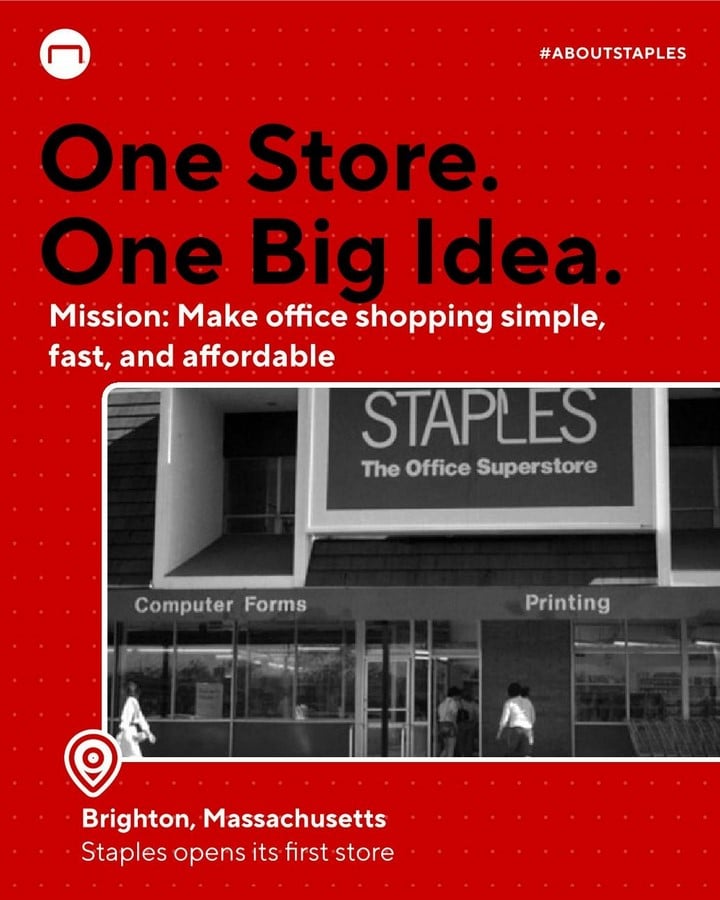
The first store opened on May 1, 1986, in Brighton, Massachusetts, with the strategy to disrupt the existing chain of office product market supply, attempting to eliminate the middlemen, which would in turn lead to reduced prices on the final product for the customers. The store was designed like a warehouse, equipped with 40 employees. The customers could go around in their shopping carts buying retail office supplies at wholesale prices. With the help of initial funding of $500,000 from Leo Kahn and an additional $4 million from venture capitalists such as Bain Capital, the business expanded nationwide. Stores started popping up in high-traffic areas, often near business parks, establishing their widespread presence. Staples also recognised the growing demand for new technology products like computers and printers. Their diversification of product ranges helped capture a broader market share and consolidate their position as a leading office supply store chain.
One of the major milestones of Staples Inc is when the company’s IPO (initial public offering) raised $37 million in February 1989, which fueled further expansion. This caused the sales to surge to 120 million dollars by the end of that month. By 1993, Staples Inc celebrated opening its 200th store with plans to open an additional 130 stores, which boosted its revenues past the $2 billion mark by January 1995. Additionally, in 1998, Staples Inc jumped on the internet bandwagon by launching staples.com. Finally, in 1999, the company opened its 1000th store worldwide, becoming a supply superstore retailer to do so. From the Staples Centre in Los Angeles to the acquisitions of three European office supply companies: Sigma Burowelt of Germany, Office Centre of the Netherlands, and Office Centre of Portugal, Staples dominated the office superstore market.
Logos Over The Years
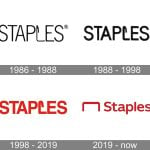
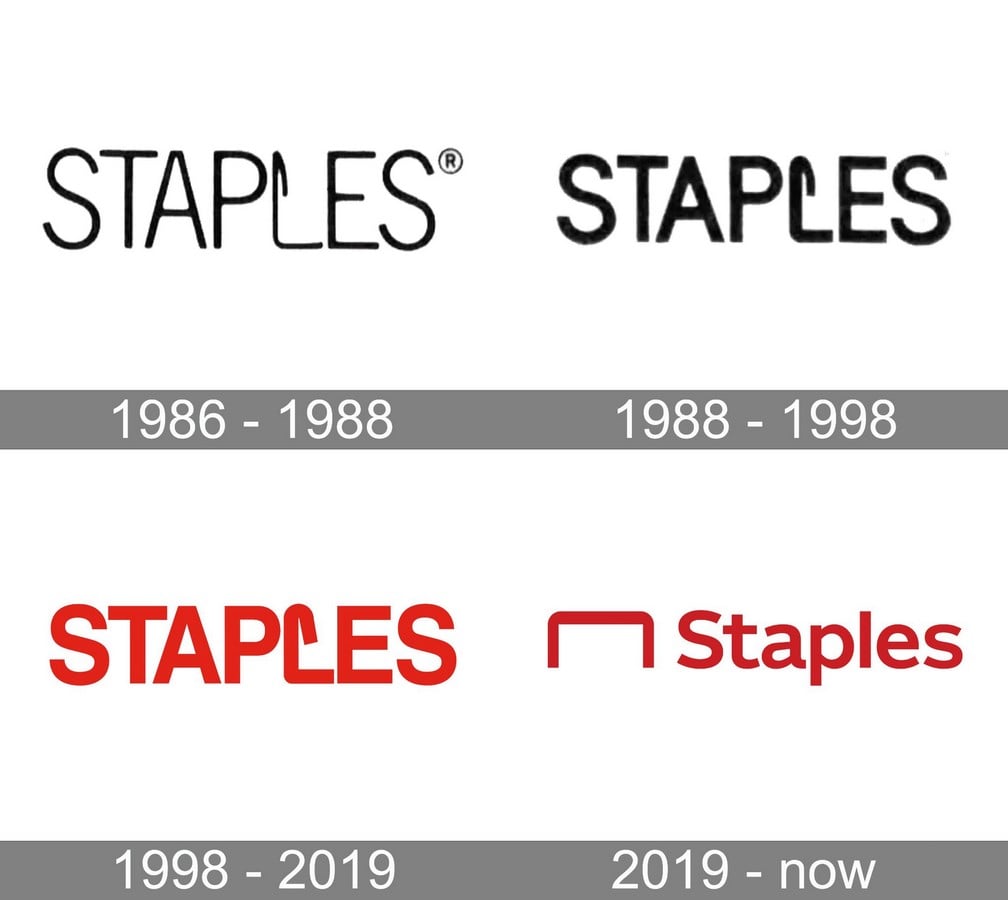
Before the iconic and striking red, Staples’ logo was in black with the ‘L’ bent to resemble a staple. This continued till 2019, after which Staples completely knocked off the staple from its ‘L’, and now it completely stands on its own at the start. The red colour remains, and for the first time, only the S is capitalised, making it easier to read. Over the years, only subtle changes have been made to the logo, with the illusion of a staple in the logo remaining constant. As far as the colour goes, the red attracts attention, striking urgency, a ‘buy now!’ attitude in the customers, making it one of the most memorable and easily recognisable logos.
Starting with simple, everyday office supplies, Staples Inc has reimagined its product diversification to better satisfy its customers over the past 35 years of its existence, from furniture, technology, to cleaning products, and traditional office supplies. Staples is more than just paper and staplers; it is committed to fostering a culture of inclusion. It strives to be responsible through Inclusion & Engagement and Sustainability. Despite intense competition, declining retail sales, and store closures, Staples continues to evolve through customer-focused services. Unlike Dunder Mifflin, Staples Inc caters to the everyday office person and their needs.
References:
https://www.staplesindia.in/about
https://www.fundinguniverse.com/company-histories/staples-inc-history/
https://matrixbcg.com/blogs/brief-history/staples
https://pestel-analysis.com/blogs/brief-history/staples
https://springboardpr.com/new-staples-logo/