Global temperatures are rising, and heat stress is becoming a defining environmental challenge of the decade. The hour is nigh. Sustainable action in the built environment is no longer a trend. It has become essential for survival and perseverance. For architects, designers, and readers open to expanding their knowledge on sustainable and regenerative architecture alike, here are 5 books that deserve a spot on the reading list.

-
HOK Guidebook to Sustainable Design
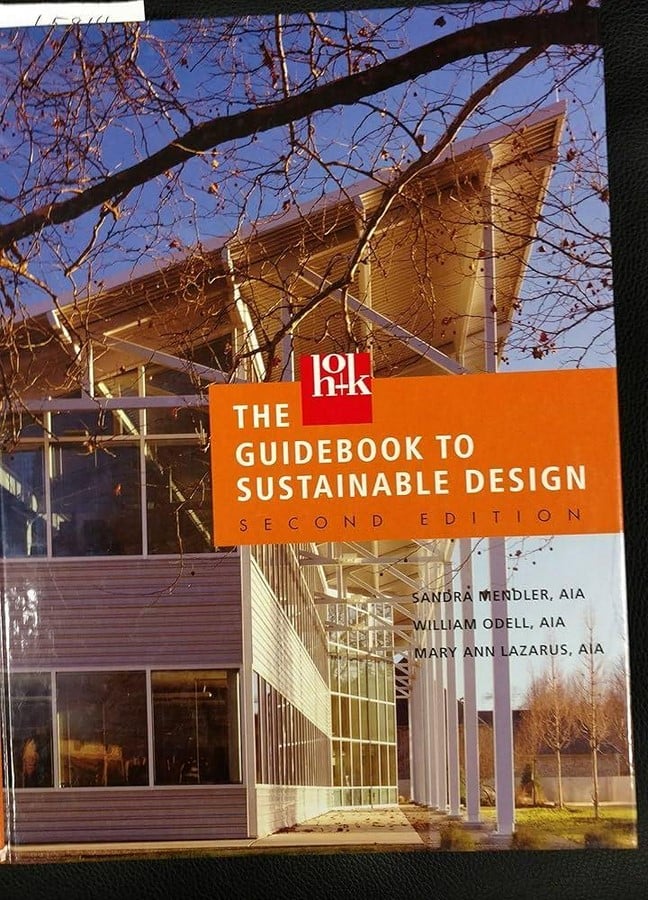
The HOK Guidebook to Sustainable Design presents a practical approach to designing environmentally responsible, high-performance buildings. Illustrated with real-world case studies, it combines design strategies and explores key topics under sustainability, climate-responsive design, energy efficiency, water conservation, material selection, and occupant well-being. Drawing from HOK’s decades of global design experience, the book is a comprehensive guide to creating an environmentally responsive built environment. Balancing technical guidance with design thinking, the book serves as an essential reference for those seeking to translate sustainable principles into high-performance buildings that respond effectively to both environmental challenges and evolving human needs. A distinguishing feature of the guide is its emphasis on interdisciplinary collaboration. Architects, engineers, landscape architects, planners, and consultants are presented not as separate contributors but as integral participants in a unified design process. Through project examples and case studies spanning commercial, institutional, healthcare, educational, and mixed-use developments, the book illustrates how integrated thinking can produce buildings that reduce environmental impact.
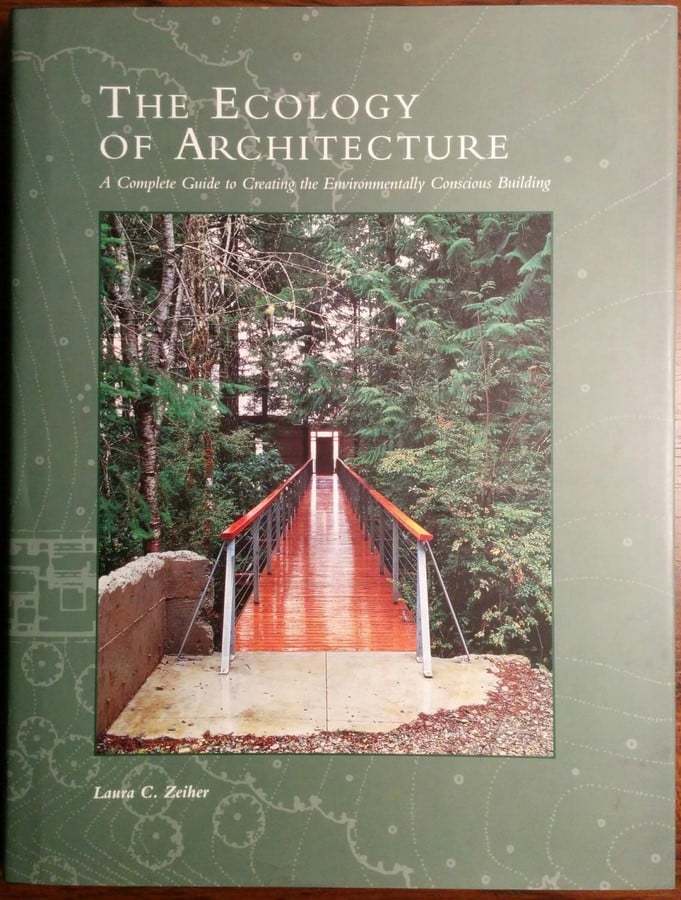
2. Laura C. Zeiher-The Ecology of Architecture: A Complete Guide to Creating the Environmentally Conscious Building
How can buildings be designed to be both ecologically responsible and economically viable while remaining resilient for the future? Rather than viewing architecture as separate from nature, the book argues that buildings should function as part of larger ecological systems. It examines how design decisions from site planning and material selection to energy use can reduce the environmental impact while improving long-term performance. By combining ecological theory with practical design strategies and case studies, the book demonstrates how architects and designers can create spaces that consume fewer resources, respond to local climate and remain adaptable over time. It presents sustainability as a core design principle, making it an essential reference for architects, students, and designers interested in resilient and regenerative architecture.
3. Reshaping Urban Conservation: The Historic Urban Landscape Approach in Action
A strong understanding of architectural history not only informs conservation efforts but also enables designers to create context-sensitive, meaningful, and resilient interventions for the future. Adaptive reuse represents a compelling expression of regenerative architecture. Rather than revisiting the theoretical foundations of UNESCO‘s 2011 Historic Urban Landscape (HUL) Recommendation, this volume turns its attention to implementation, asking a more pressing question: how can heritage conservation meaningfully inform contemporary urban development? Through 28 international case studies, the book investigates how cities have translated the HUL approach into planning and governance. The book’s pragmatic approach makes it particularly valuable for architects, urban planners, heritage professionals, and policymakers seeking evidence-based guidance
4. Julia Watson– Lo–Tek: Design by Radical Indigenism
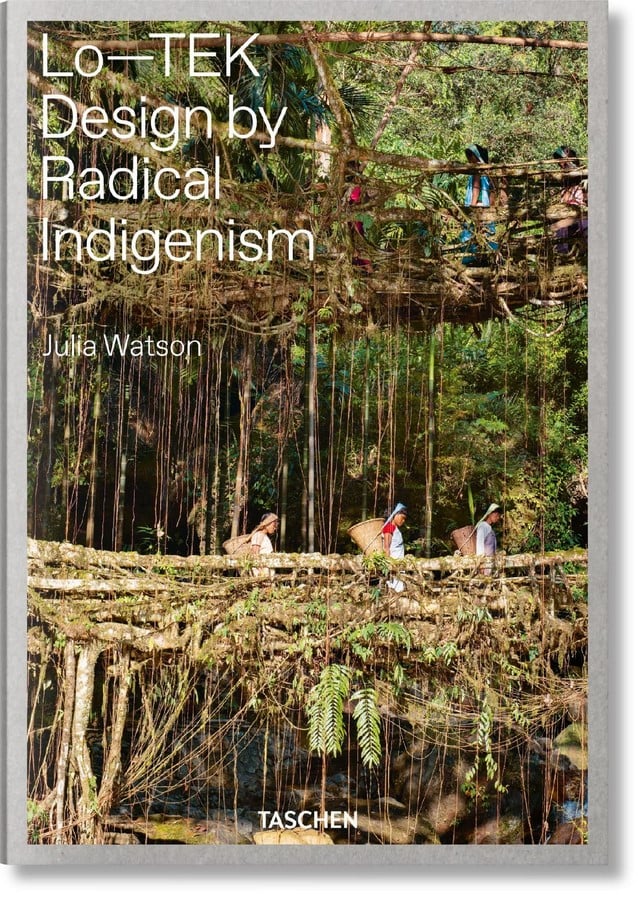
Drawing on the concept of Traditional Ecological Knowledge (TEK), author Julia Watson presents Indigenous innovation as a sophisticated, evolving body of knowledge that has enabled communities to thrive sustainably for generations. Through case studies spanning mountains, forests, deserts, and wetlands across 20 countries, the book examines ecological practices that integrate biodiversity, cultural traditions, and environmental stewardship into the built environment. In times when building technology heavily relies on scientific developments, the book argues that true sustainability lies in ancient knowledge. Through examples and case studies based across 20 countries, the book explores native wisdom behind natural building techniques. More than a study of vernacular techniques, Lo—TEK repositions Indigenous design as a model for regenerative architecture and climate resilience. It urges architects, planners, and designers to rethink conventional notions of progress and embrace ecological intellect, demonstrating that many of the solutions to today’s environmental crises have existed for centuries within traditional cultures.
5. Gernot Minke-Building with Earth: Design and Technology of a Sustainable Architecture
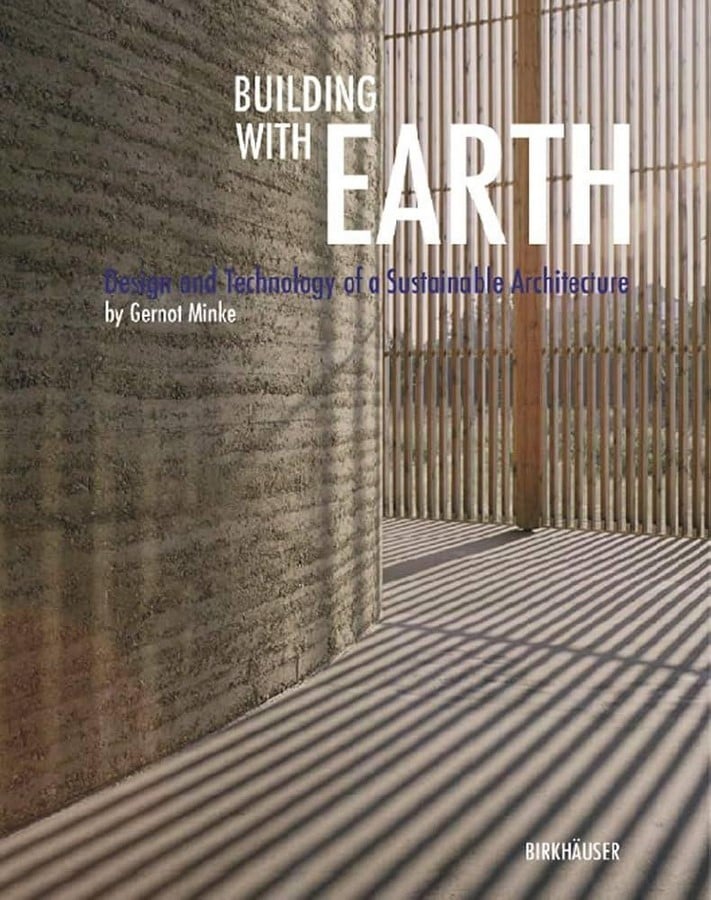
Richly illustrated with technical drawings, construction details, and built examples, Building with Earth: Design and Technology of a Sustainable Architecture bridges traditional building knowledge with contemporary architectural practice. Rather than presenting earth as an alternative material, Minke positions it as a resilient, environmentally responsible solution capable of addressing modern challenges such as climate change, resource depletion, and sustainable housing. It remains an essential reference for architects, engineers, students, and anyone interested in low-carbon, climate-responsive construction. The book is an inclusive guide to earth construction as a viable building method. Merging scientific research with practical design guidance, the book explores the properties, techniques, and performance of earthen materials, including adobe, rammed earth, compressed earth blocks, and earth plasters. It demonstrates how earth can provide thermal comfort, low embodied energy, recyclability, and affordability while responding effectively to local climates and resources.
These are just a few of the many books that provide insight into the concepts of sustainability and regenerative architecture. Rather than offering definitive answers, these urge designers to rethink the relationship between architecture, ecology, and the future of our cities.