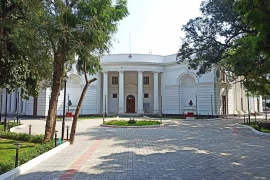
Some places in a city stay with us without us quite knowing why.
Not because the place was beautiful or that it held high value; quite the opposite, actually – it was often dingy, teeming with people and completely anarchic. We remember the stairway where someone told us something we never forgot, the windowsill we occupied well after dark, the bench we were quick to claim because a hot session of gossip awaited and the playground that saw us grow into adulthood. Yet years later, we somehow still remember exactly where we sat, what we spoke about and whom we shared all the giggles galore with. There’s a strange whimsy to what the mind chooses to preserve about a city. Perhaps that is what a city does for its people – beyond its buildings, it quietly makes room for the little moments of life.
But here’s a question to linger on – What makes a place capable of hosting these moments? And what happens when we choose to pay close attention to them and begin to think of them as infrastructures of culture instead of dismissing them as spatial leftovers?
What counts as Cultural Infrastructure?
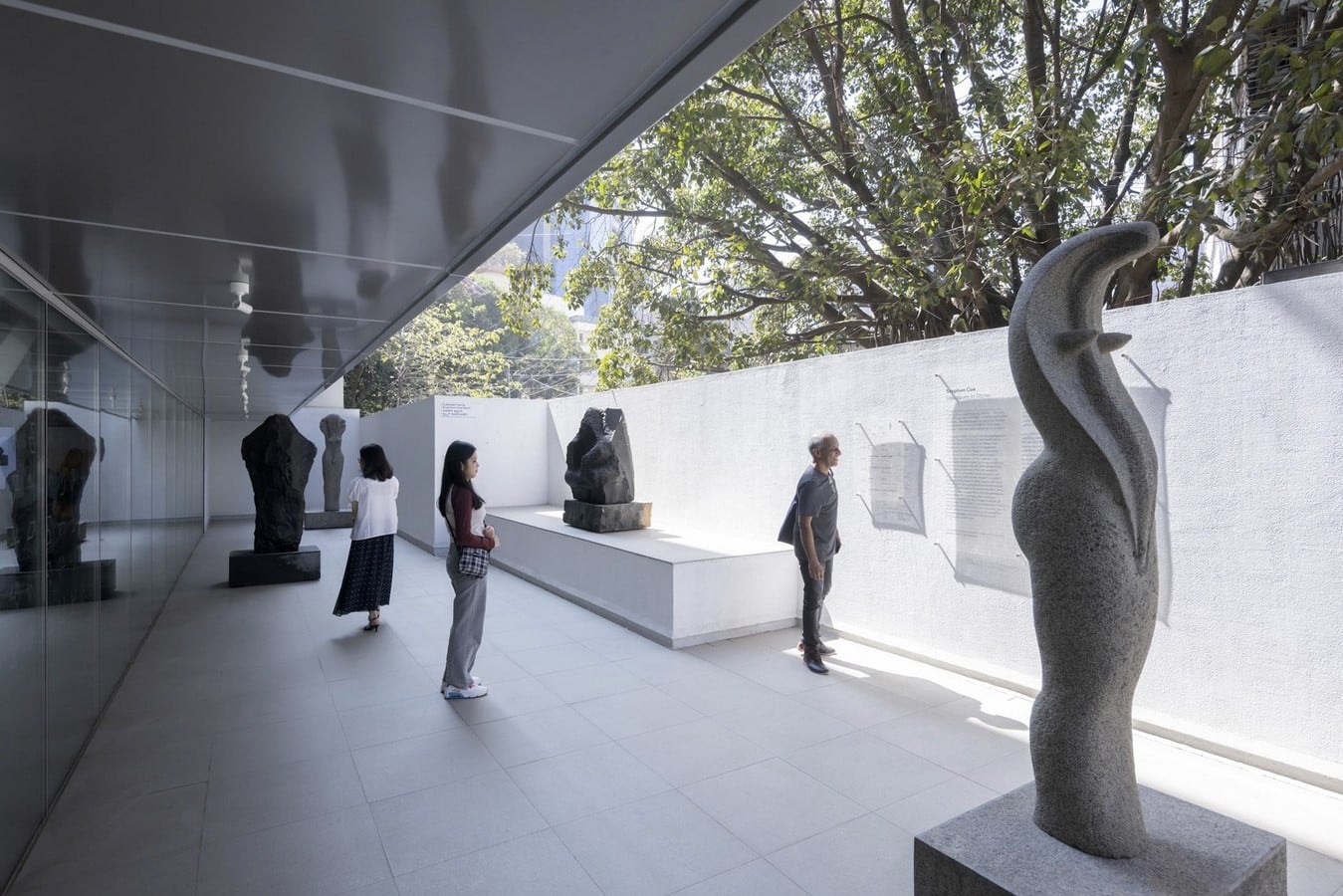
Cultural infrastructure generally holds a fairly conventional and rather rigid meaning – it compels us to mostly think of spaces that have been handed the responsibility of exhibiting culture – museums preserve it, theatres perform it, galleries exhibit it and so on. Such spaces are performative in nature and are formally commissioned, architecturally defined, programmed for specified activities and institutionally managed. But what most don’t realise is that culture isn’t exhibited only in these spaces – it is also discussed, transmitted, shared, contested, improvised and remembered purely through social interaction.
The key difference, however, is that all of these are spaces designed for culture. But spaces such as addas, rowaks, chai tapris or verandahs allow culture to happen, to simply occur. They are spaces that may or may not have been planned for the purpose in question but are definitely recognised for it – as spaces of ease and convenience that welcome all sorts of crowds and all sorts of discussions.
When did conversation become infrastructure?
Someone pulls up a chair, the chai arrives, and you find yourself amongst people who are lost in an intense debate. You don’t know what it is exactly about. You listen, you put your point across, someone makes space for you, and you’re now part of the conversation.
Conversation, I believe, found the need to become infrastructure when its scope was limited to planned, architecturally defined and program-specific institutions.
The adda here is important because it is a space that allows social life to occur, thereby letting culture circulate. So, what about an adda allows culture to occur?
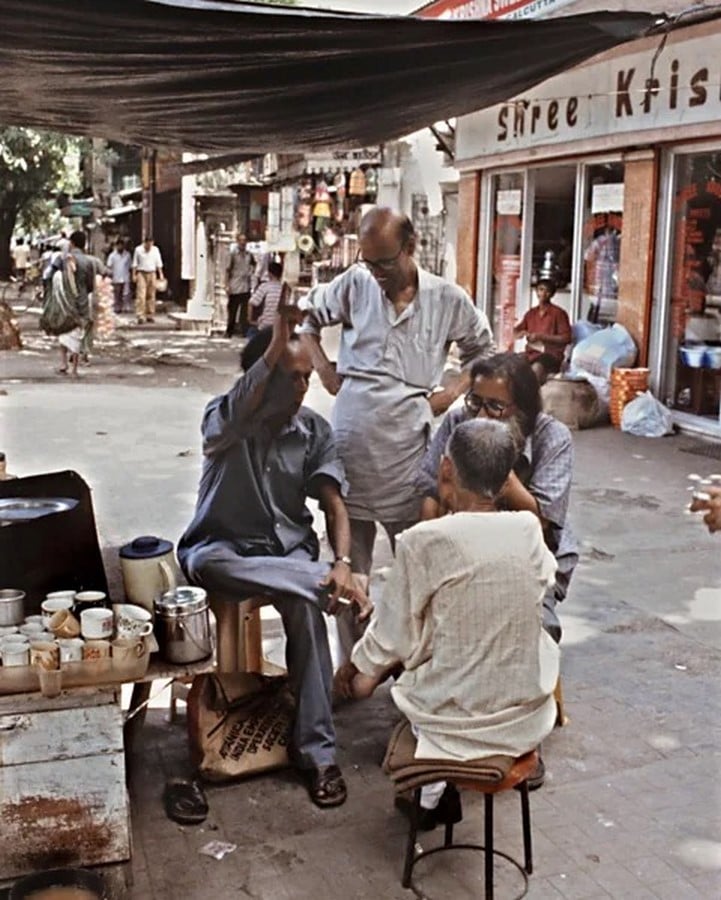
The informality, simplicity and open welcome of an adda are what make it inclusive, encouraging and thus a form of cultural infrastructure. People can arrive without an appointment, encounter new people by chance and engage with them, stay for as long as they want, be as much a part of the discussion as they want to and gradually develop familiarity both with new people and fresh knowledge.
Architecture plays a pivotal role here – the kind of space, the kind of furniture or seating and the presence or absence of other architectural components such as walls and floors define how the space performs for people who wish to gather while also determining the kind of crowds it welcomes.
It’s key to note that design doesn’t create culture; it creates spaces that allow culture to happen.
The Architecture of Nothing
The most overlooked part of cultural infrastructure perhaps is what happens when nothing specific is happening.
As designers, we tend to design spaces around the idea of something constantly happening.
A museum is designed for exhibiting and viewing.
A theatre for performing
A library for reading
A plaza for events
An auditorium for talks or presentations
But what about architecture for activities that were never thought of or planned?
The incidental 30-minute-long conversation that wasn’t planned
The 10-minute break between lectures or meetings
A person who has arrived too early or has nowhere to be yet

A step becomes a seat because you and your friends are eager to discuss something important. A shopfront becomes a meeting place because you notice your friend there while passing by and suddenly remember you have news to share. A chai tapri becomes a place to hang around because you and your friend enjoy discussing everything under the sun with a ciggarette. Even the worn red-oxide floor of your grandmother’s verandah is cherished – not because it was designed as a cultural device but because its familiarity and ease avoid making a spectacle of the people occupying it.
In that sense, cultural infrastructure is not just about offering a space for culture to be shared or cultivated, but it is also about providing conditions that grant the freedom and comfort required for culture to be made.
The Generosity of Ordinary Spaces
So, what made these spaces so good at allowing culture to happen, given how little they seemed to demand from the people who engaged in them? An adda, a rowak, a verandah, a staircase or an Irani café seldom required one to enter with a specific purpose; they let people enter simply because they felt like it.
They were so easily and simply accessible that they were rarely considered something that deserved much thought – this was not just because of the obvious physical accessibility but predominantly because they were also socially accessible.
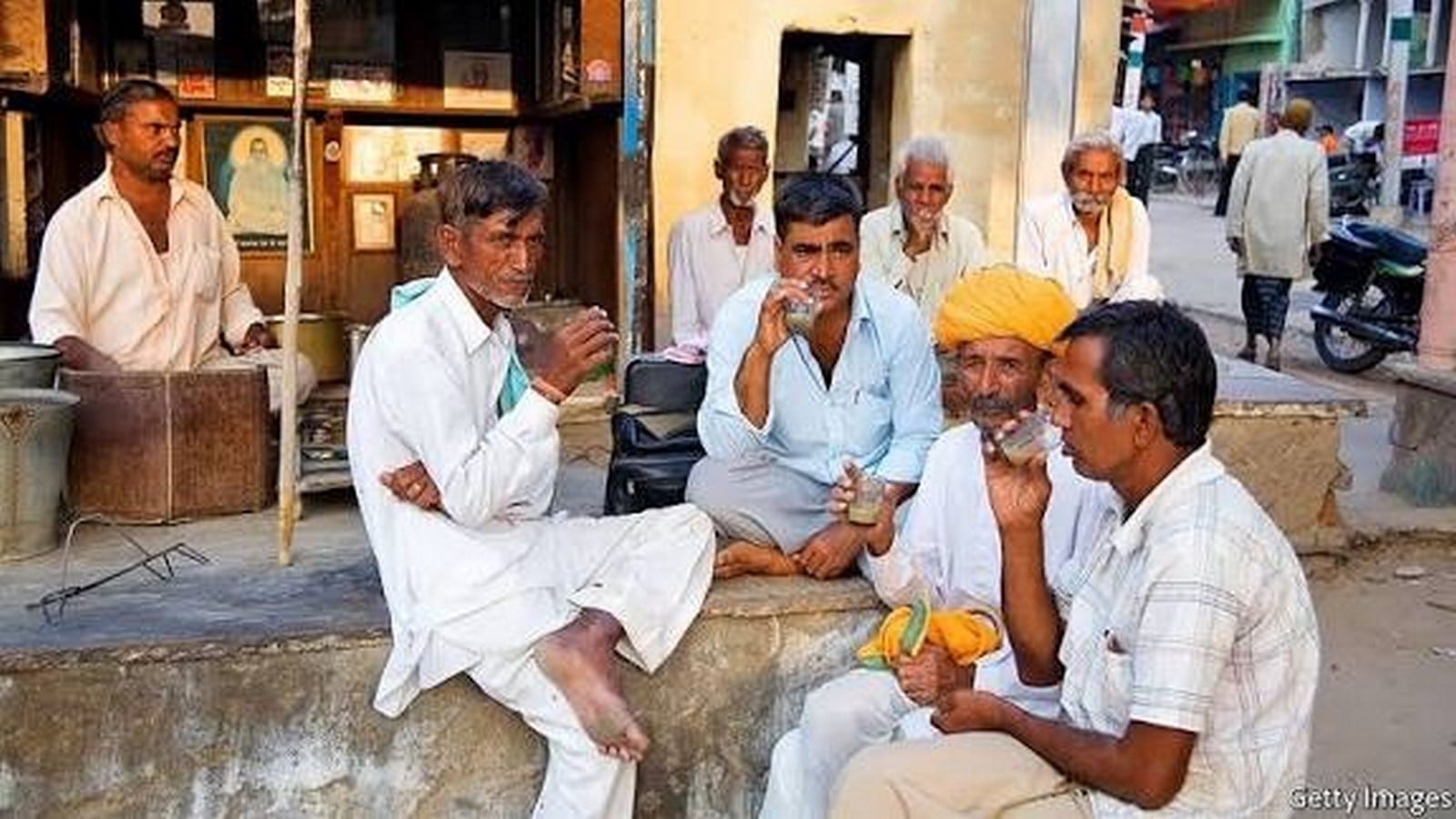
A chai could buy you time and wonderful conversations. A low wall or a stair could offer to become a seat. A verandah could accommodate neighbours without compelling them to enter the house, which made it quick, easy and convenient. It’s almost as though there was a message in the material language of these spaces – they were familiar and affordable, their thresholds could be crossed without ceremony, and their surfaces could bear the evidence of use. Perhaps, this very ordinariness is what caused visitors to feel like participants. A space that screams sophisticated has never been known to make every member of society feel like they belonged.
This, of course, does not mean that the informal spaces of culture were designed to be democratic. They too existed with their own sets of hierarchy, preference and exclusion. Yet something about their informal nature made them inviting and warm.
What happens when we design culture?
There exists quite an interesting contradiction here. We have mastered the skill of designing spaces for culture. We are well aware of how to design museums, theatres, libraries and cultural centres. These spaces are of course necessary – they give art, performance and history a home.
But what changes when we begin designing culture itself?
A space with a designated cultural purpose most often tends to function with an expectation of how it should be used, sometimes by whom too. Its polished surfaces, carefully curated interiors and grand formal entrances quietly tell us that something important is happening here. Instinctively, we sit differently, speak differently and carry ourselves differently. We do not necessarily speak our mind freely – a sense of inhibition, fear of judgement and need to perform exists.
The adda, however, asks for none of this.
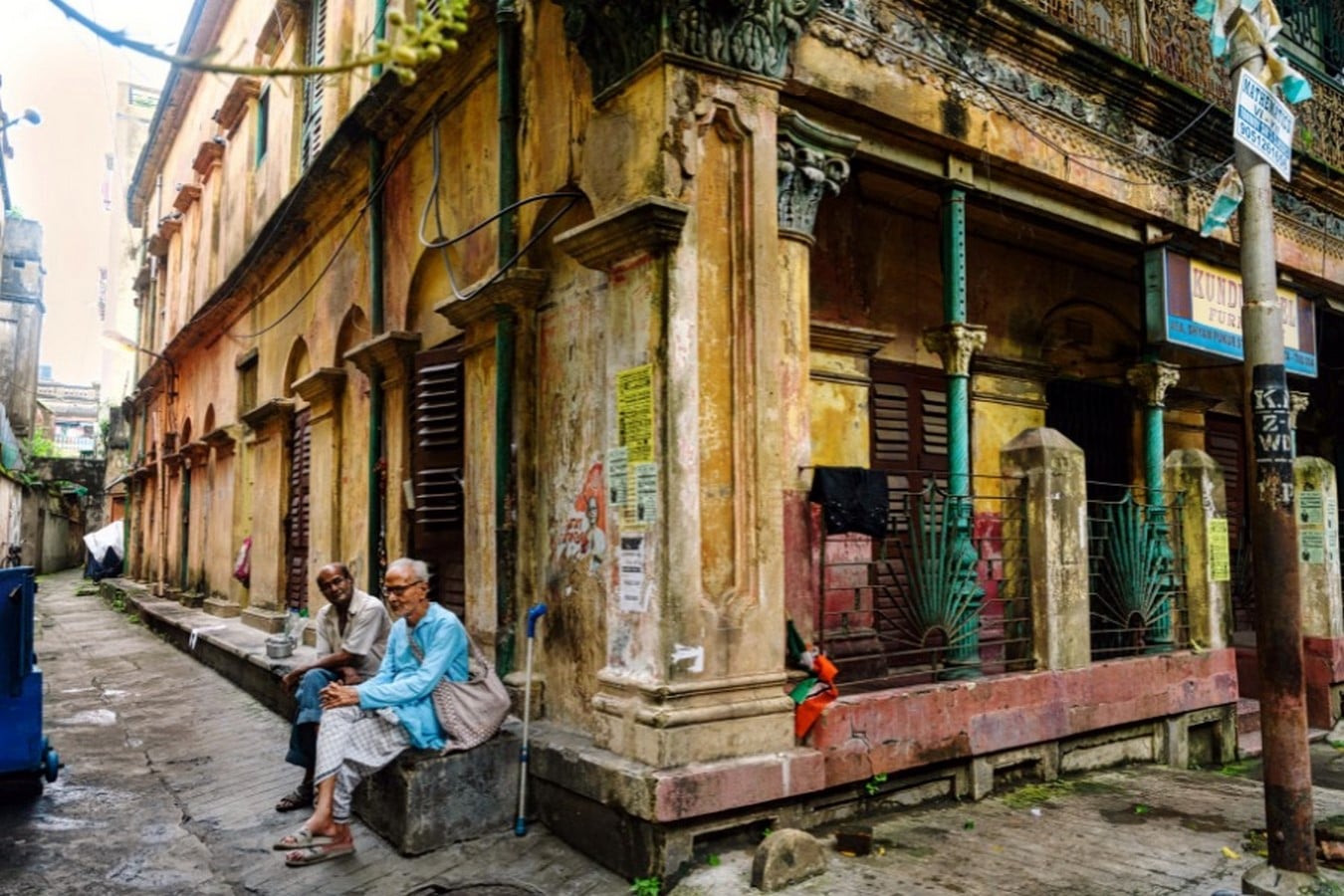
At an adda, the pressure to perform and please disappears. An idea can be unfinished; we can think out loud; we can leave a conversation we are no longer interested in; and we can even comfortably debate in the event of a conflict of interest. Knowledge and culture move impactfully not through presentations but through comfortable conversation.
And perhaps this should be what architects should aim not to lose while designing spaces for culture – not informality as an aesthetic but the freedom it gives people to arrive without having to fear if they belong.
Ek Aur Chai?
I often reminisce about this one tea shop where I found myself sitting much longer than I had intended to. There was nothing remarkable about the space. It was a simple dhaba with blue and red plastic chairs and tables that had seen better days, with a faint stickiness on the tabletop that had hosted too many chais to be entirely clean.
The friend I’d come to meet was already there. As we sipped on our chais, we spoke of film that attracted another person from the neighbouring table. The conversation moved from film to city and from city to history and eventually to a story of a place we’d never been to. Nobody had planned that conversation; neither had we planned to learn anything.
At some point, one of us got up to leave.
“Ek aur chai?”
The question was enough to keep us there for much longer. Years later, I cannot remember what it is that we’d debated for hours, but I still remember the blue and red plastic chairs and the exhausted table. I remember the strange ease of knowing that there was no hurry to leave.
Strangely, that is what good cultural infrastructure sometimes is: not a place that tells us where culture is found, but a place that makes us forget we came looking for it.
Citations:
- Sengupta, T. (2013). Living in the periphery: provinciality and domestic space in colonial Bengal. The Journal of Architecture (Taylor and Francis). Volume 18 (6), pp. 905-943. Available at: https://www.tandfonline.com/doi/full/10.1080/13602365.2013.853683#d1e89
- De, S. Das, A. Mazumder, T. (2024). Does spatial context of third place matter? Revisiting the third place concept based on user preferences: case of Kolkata, India. Leisure Studies (Taylor and Francis). Volume 44 (4), pp. 674-696. Available at: https://www.tandfonline.com/doi/abs/10.1080/02614367.2024.2343308