Our careers eventually teach us how little we can learn alone.
An architect learns from his seniors why a particular detail will fail before it is even built. He learns to answer questions a consultant asks that were missing in the drawing. He learns from a contractor who knows an effective way to make something work, and from a project that didn’t turn out as successfully as he’d hoped.

For a profession that produces independent designers, architecture has always remained an unusual collection of knowledge. But this knowledge traditionally has travelled across studio desks, office tables, construction sites and, at best, conferences. Today, however, architects have the option to carry out the same conversations with people they’ve never met.
Our architecture degrees teach us how to begin.
This doesn’t just change where architects learn from each other but also changes whom they learn from.
How does Networking Evolve Online?
Architecture traditionally has been remarkably local.
Digital platforms have transformed that. Forums have turned the solution-deriving process for a particular problem into a collective one. Whether it’s for innovative ideas for design details or material alternatives for sustainability, there are innumerable people worldwide from ranging backgrounds and practices who are willing to be a part of the discussion.
The discussion is also no longer amongst just architects; it has opened up to various others such as contractors, engineers, consultants, fabricators and manufacturers – each possessing significant amounts of wisdom to pass on.
The professional network is thus no longer defined merely by developing contacts but by understanding what one has to gain from another.
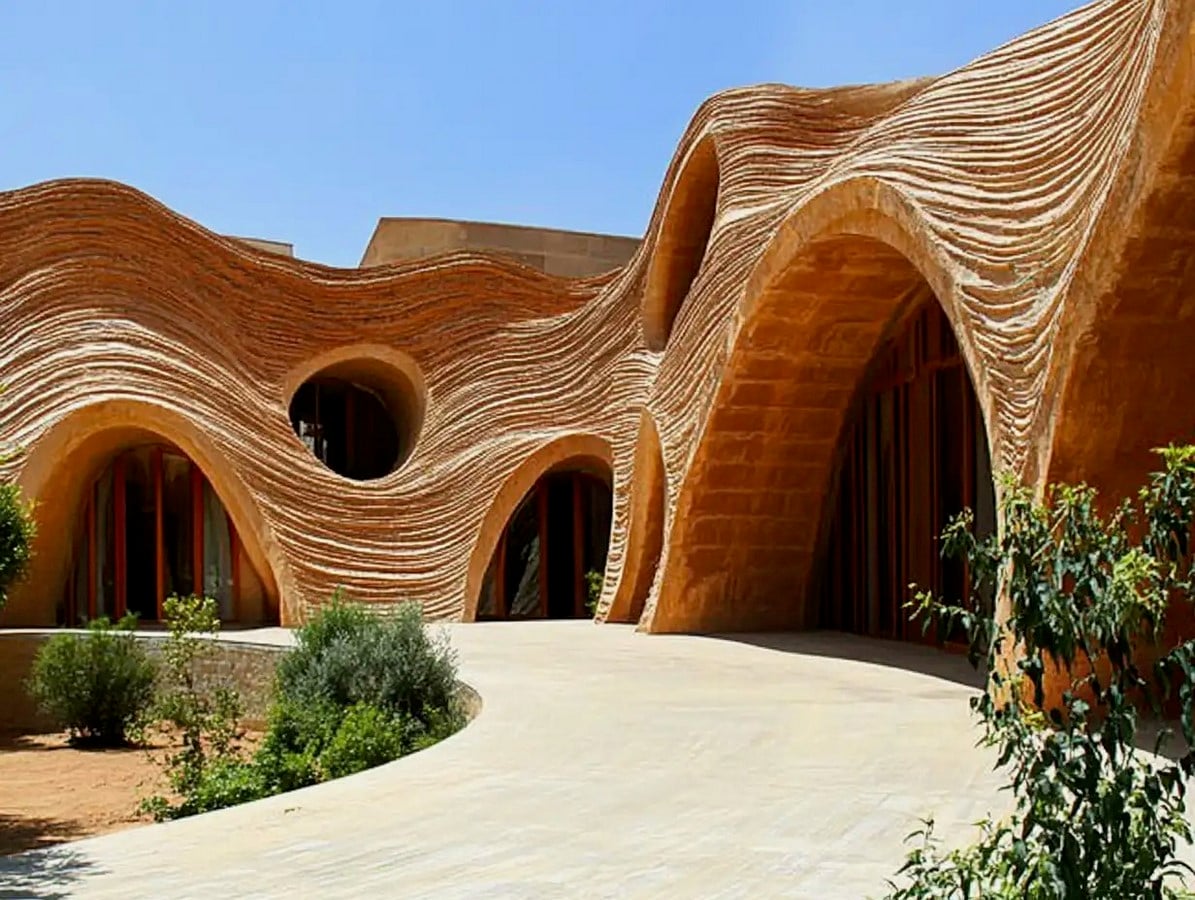
An architect holding a keen interest in rammed earth, for example, may come across an artist who’s worked with the material for decades and knows more about it than most. Someone researching community housing may find what they need from architects, activists and urban researchers. The internet has thus redefined the limits of professional networking by making it less dependent on geography.
Accessibility to technical knowledge beyond the site
Knowledge with respect to construction solutions, material concerns and detail alternatives has traditionally been limited to site and thus only came with experience. Online, however, one only had the option to view photographs of the finished building that had been carefully taken to ensure aesthetics. While publications displayed the building, they rarely portrayed the arguments and the challenges that produced it.
It never showed the detail that had to be redesigned five times, the material that failed testing, the unconventional suggestions the contractor posed and the solutions that had been thought of on site, not in drawings. Significant amounts of useful information have remained in offices and studios for years now simply because it was attached to work experience instead of documentation or education.
Online communities breach this boundary and make learning across multiple situations and scales possible.
Answers to questions such as “How did you solve this” or “Is there a sustainable alternative to this” have proven to be more useful than a set of fifteen well-edited pictures. This is specifically where online exchange becomes extremely useful to architects and valuable to the profession. This exposure does not always come in the form of groundbreaking ideas; quite often it’s a simple solution to a problem someone else would’ve had on site the following Monday.
Architectural Criticism becomes Democratic.
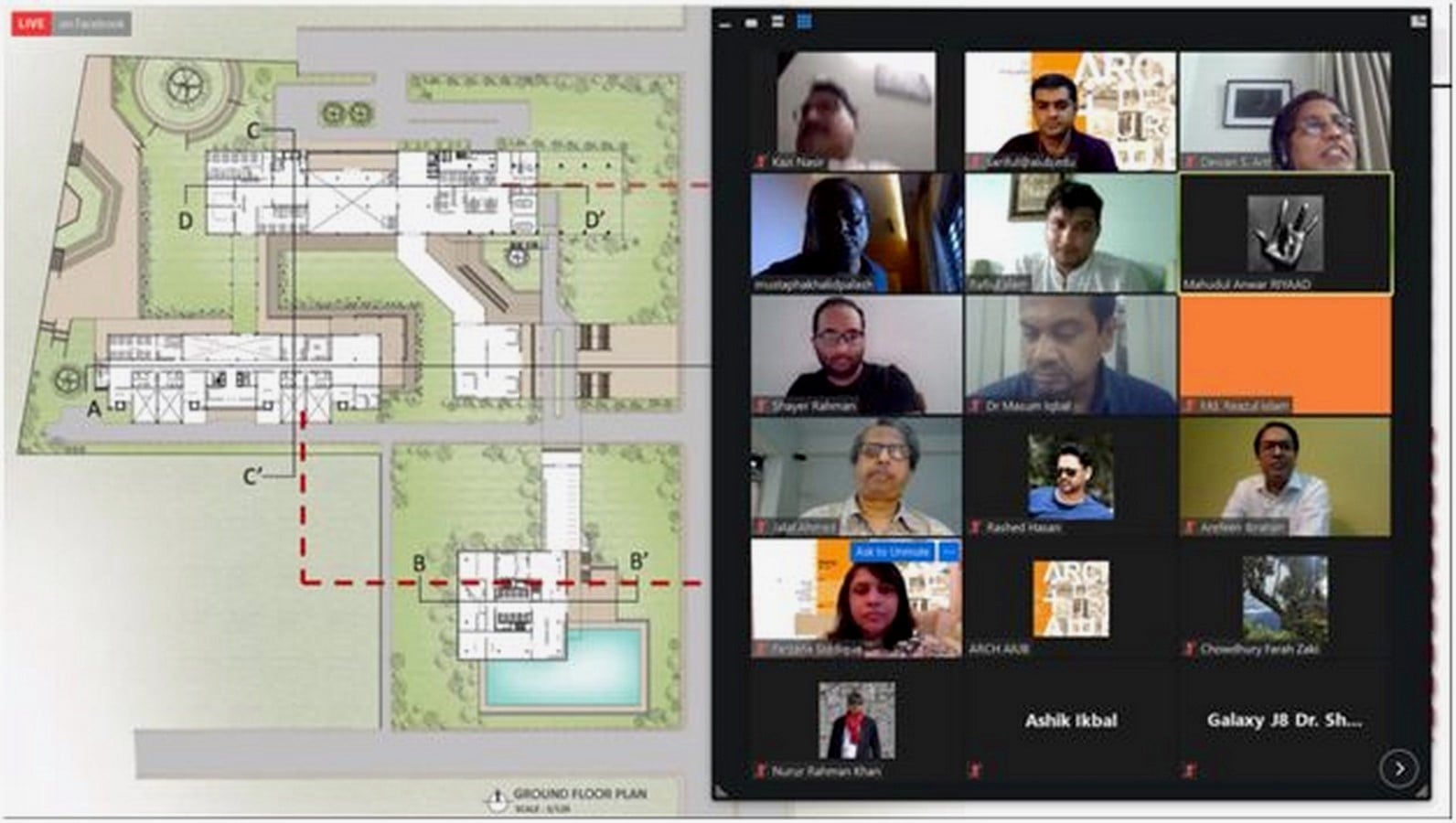
Architecture, beyond gaining a larger library, has also managed to gain a larger room, thanks to online platforms. While the number of conversations has exponentially increased, the variety in them has too. An architecture project no longer has to wait for a jury or a panel for critique – online platforms offer the same, if not better at promised convenience.
Architecture criticism has also traditionally only been welcomed from people of position, power and particular roles. Online, an established practitioner and a fresher to the industry can have an open discussion anyway. A student can exercise the freedom to question a celebrated project, and a contractor can challenge an architect’s understanding of construction methods.
That, of course, does not necessarily mean that every opinion is equally informed or informative, but it does transform who is allowed to be a part of the conversation and that changes the equation fundamentally.
While this does not optimally promise better criticism than the traditional kind, it still does offer continuous, often diverse and unexpected critique.
The Conversation is Never Forgotten
The one final and significant difference that is often overlooked is that conventional networking allowed for conversations to disappear.
An architect could have spent an entire afternoon explaining a novel idea to the team on site, and the contractor and the knowledge would’ve stayed between them. With the existence of online platforms, however, conversations can remain.
An answer to a question today can be accessed by a young practitioner five years from now, and that’s what makes the online platforms efficient and impactful. In that sense, the internet is achieving something far larger than providing platforms for discussion – it’s becoming an archive of the thoughts, opinions, challenges and design processes of today.
This does not make the usual spaces of exchange such as offices, construction sites and classrooms obsolete – knowledge passed down here cannot be separated from context and experience. Although a forum opens up the boundaries of architectural education, it still cannot teach someone the learning on site or how it feels to be at one. This goes to say that both forms of architectural education are fundamental and help achieve an overall exposure to the profession.
Architecture has always been a profession of learning from one another. What online platforms have done is simply eliminate the distance between them, thereby easing the exchange of information.
The most valuable form of architectural education that online platforms can thus offer is that someone, somewhere, has already faced the problems that you are currently facing and is willing to help share their experiences and opinions in order to ease the process for you.
Citations:
- Etemadi, R. (2019). The use of social media for work-related knowledge sharing by construction professionals. Architectural Engineering and Design Management (Taylor and Francis). Volume 16 (6), pp. 426-440. Available at: https://www.tandfonline.com/doi/full/10.1080/17452007.2019.1688637
- Huang, T. (2024). The Built Environment and Social Media: a semi-systematic review of architectural and design disciplines. Archnet IJAR (Science Direct). Volume 19 (2), pp. 318-350. Available at: https://www.sciencedirect.com/org/science/article/abs/pii/S2631686225000044