A heritage city is often imagined through its monuments. Agra is visualised by Taj Mahal, Khajuraho is its collection of 10th- and 11th-century Hindu and Jain temples and Delhi often by its rich indo-sarcenic architecture that includes India gate, Red fort, Qutub Minar and more. The more successfully these elements are preserved, the more successful the city is assumed to be as a heritage destination. Yet a city is not a museum. It is not limited to its buildings rather extends to the people and lifestyles that create a culture within it.
This creates a difficult question for historic Indian cities: when does preserving a city begin to interfere with its ability to remain a living city? This question becomes particularly relevant when the residents of the city and their welfare becomes a point of concern. The challenge arises when development extends to determine what happens to the everyday life around the monuments rather than how to preserve them as isolated decoration of the city.
What does it mean to preserve a city?
Preserving a historic city usually begins with its physical fabric. Buildings, façades, street patterns, monuments, materials and architectural details become the things that are considered and included in the plans for conservation. This is obviously necessary, since once an important and historic structure is damaged and destroyed, the original character of the architecture can simply not be recreated. However, the identity of the historic city extends beyond the individual building.
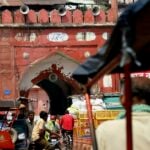
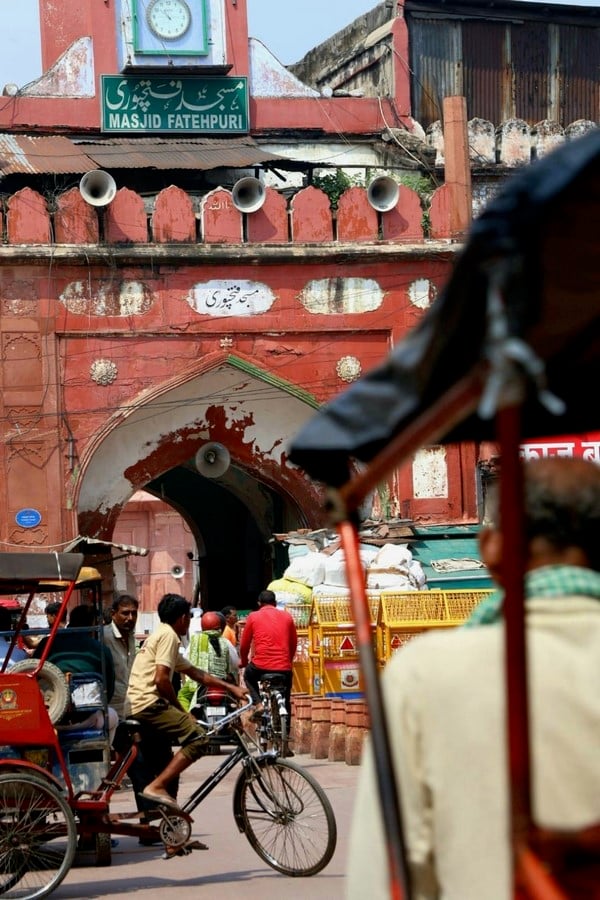
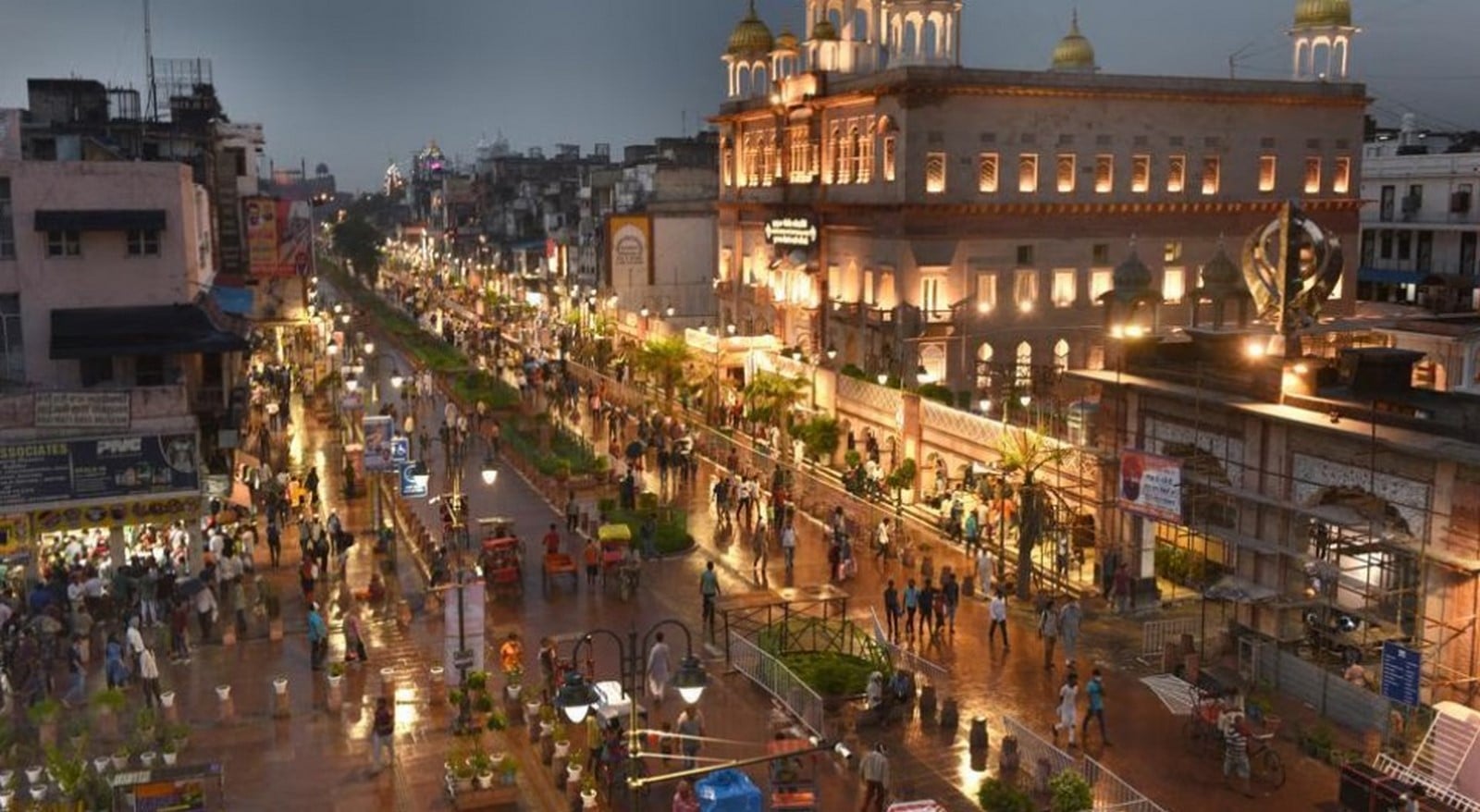
Old Delhi, for instance, is not only a collection of Mughal-era monuments and historic havelis. Its identity is also expressed through its markets, food streets, religious institutions, workshops, residences, informal commerce and dense pedestrian movement. Delhi’s own Department of Archaeology recognises that heritage sites have historical, architectural, functional, economic, recreational and educational value—not merely visual value.
When preservation changes the city?
Heritage conservation brings valuable investment, improves neglected buildings and makes historic areas more accessible. It promotes tourism and hence, creates job opportunities improving the economic condition of the city. The problem begins when a tourist’s experience is given priority over the resident’s experience and daily life. Which ends up creating a ‘museum city’ only intended for decoration and sight seeing rather than a liveable neighbourhood for its inhabitants.
Shops may shift towards products designed for visitors. Residential buildings may acquire commercial functions. Streets may be redesigned to improve the tourist experience while everyday activities are pushed elsewhere. Property values can change, and businesses that have operated for generations may find it increasingly difficult to remain. None of these changes are inevitable consequences of conservation. They are possible outcomes of a heritage strategy that treats historic character primarily as something to be consumed.
A museum preserves objects by controlling change. A city, however, survives through change. Its buildings are repaired, extended and adapted; its businesses change; its population changes; and its public spaces acquire new uses. A city that is protected so rigidly that its everyday activities cannot evolve risks preserving the physical shell while weakening the living system inside it.
Old Delhi: A Heritage City That Is Still Being Lived In
The city contains monumental architecture, but it is equally defined by its organic markets, narrow lanes, religious spaces, food businesses, workshops, residences and informal activities. People do not enter Old Delhi only to experience heritage. They enter it to buy things, work, worship, eat, meet people and move through the city. Buildings have to accommodate contemporary requirements. Streets have to deal with vehicles and pedestrians. Homes require electricity, plumbing, ventilation and other infrastructure that historic buildings were not originally designed to accommodate.
From a purely preservation-oriented perspective, many of these changes could be seen as threats to architectural authenticity. From the perspective of a living city, however, adaptation is unavoidable. The question is therefore not whether Old Delhi should remain unchanged because it cannot. The more important question is how it can change without losing the relationships that make it recognisably Old Delhi.
Hampi: When Preservation Takes a Different Form
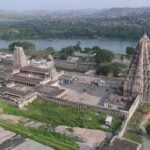
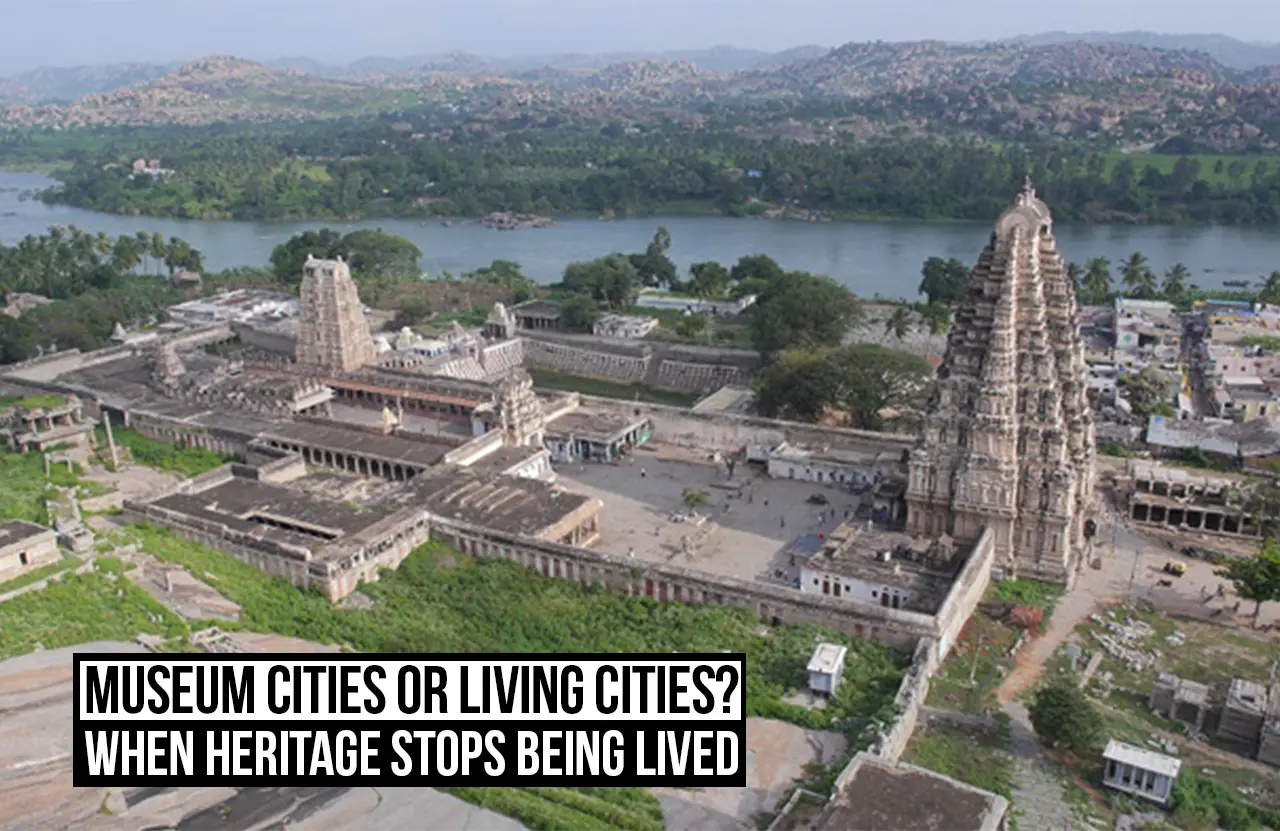
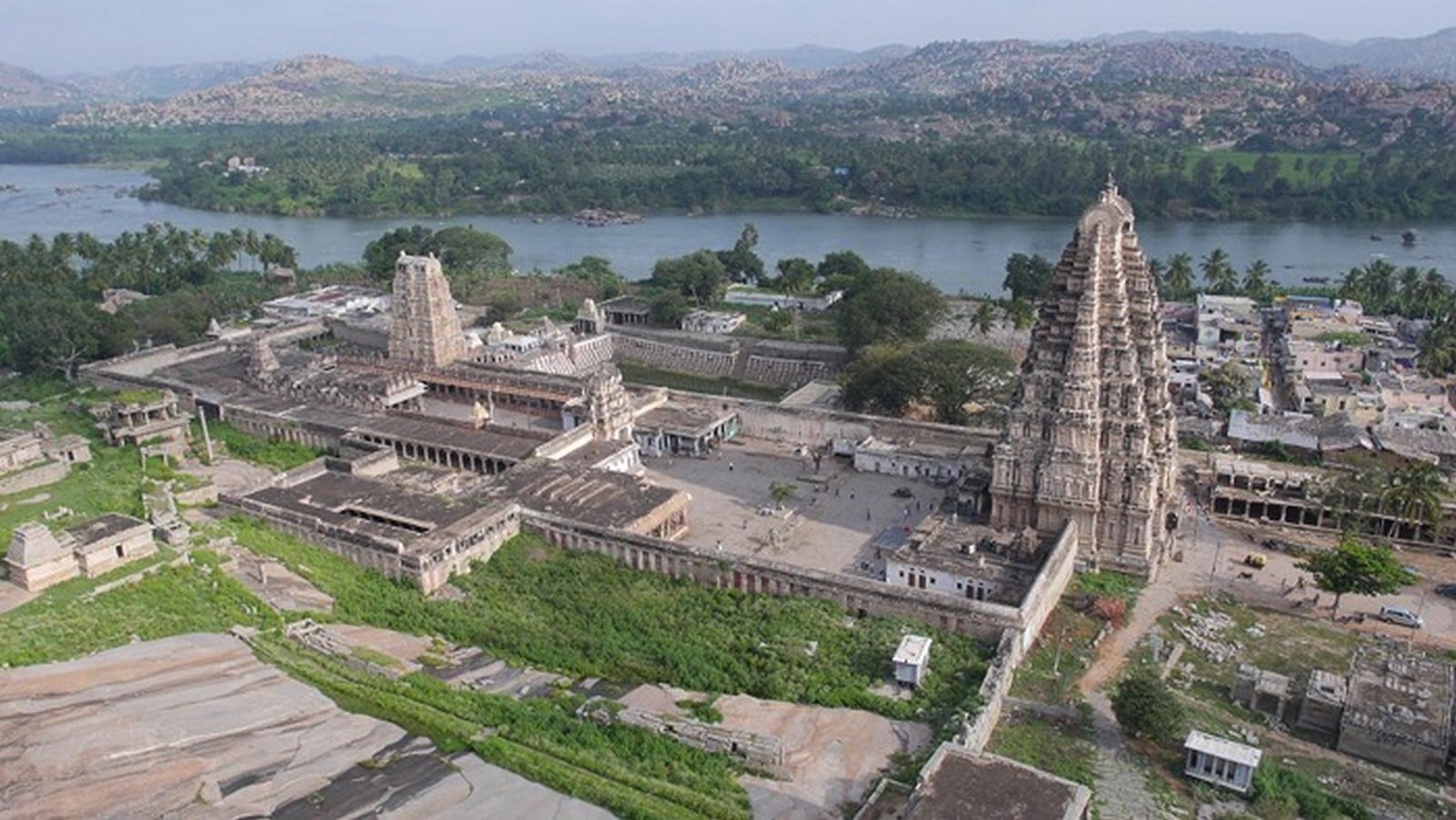
The Group of Monuments at Hampi is a protected World Heritage property containing the remains of the Vijayanagara capital. The Group of Monuments at Hampi includes temples, royal and sacred complexes, gateways, water structures and other traces of its urban system. UNESCO describes the Group of Monuments at Hampi as a testimony to the vanished Vijayanagara civilisation. Here preservation has a different purpose. Much of what’s being protected is archaeological evidence rather than a continuously occupied historic neighbourhood. The Group of Monuments at Hampi is conserved in its existing locations and its physical remains are treated as evidence of the past. The Group of Monuments at Hampi is therefore closer to the image of a heritage landscape.
Yet Hampi complicates the museum-city idea as well. UNESCO identifies Hampi as a living World Heritage site containing 29 villages with continuing cultural and religious traditions. It has also highlighted the need for heritage-sensitive development that considers the livelihoods and aspirations of local communities. This creates a challenging situation. The archaeological remains need a high degree of protection because uncontrolled construction could damage the very evidence that makes the site significant. At the same time, the people living around and within the wider heritage landscape cannot simply be treated as of less priority.
The Question Isn’t Whether Cities Should Change
The success of a heritage city should therefore not be measured only by how closely its buildings resemble the past. It should also be measured by whether people can continue to inhabit, use and adapt those spaces. Old Delhi and Hampi show two very different relationships between preservation and everyday life. Old Delhi continues to change because people continue to live and work within its historic fabric. Hampi requires a much greater degree of protection because its ruins are themselves the remains of a lost urban civilisation. Yet even there, heritage does not exist in complete isolation from the communities and traditions that surround it. Neither condition provides a universal model.
The question for historic Indian cities is therefore not whether they should be preserved or allowed to change. It is what kind of change allows them to remain themselves. A heritage city should not have to choose between being preserved and being lived in. Its architecture may belong to the past, but its city belongs to the people who continue to inhabit it.
REFERENCES:
(No date) Objectives | Department of Archaeology. Available at: https://archaeology.delhi.gov.in/archaeology/objectives (Accessed: 02 October 2026).
Centre, U.W.H. (no date) Technical assistance for the conservation of the group of monuments at Hampi, India, World Heritage Centre. Available at: https://whc.unesco.org/en/activities/30 (Accessed: 02 October 2026).
Chauhan, E. (no date) (PDF) social and economic impact of Heritage Conservation in delhi: Case studies of Shahjahanabad and Nizamudinn Basti. Available at: https://www.academia.edu/33225473/Social_and_Economic_Impact_of_Heritage_Conservation_in_Delhi_Case_studies_of_Shahjahanabad_and_Nizamudinn_Basti (Accessed: 02 October 2026).
Goswami, S. et al. (2024) (PDF) problems and prospects of heritage based City Development in India. Available at: https://www.researchgate.net/publication/358989446_Problems_and_Prospects_of_Heritage_Based_City_Development_in_India (Accessed: 02 October 2026).