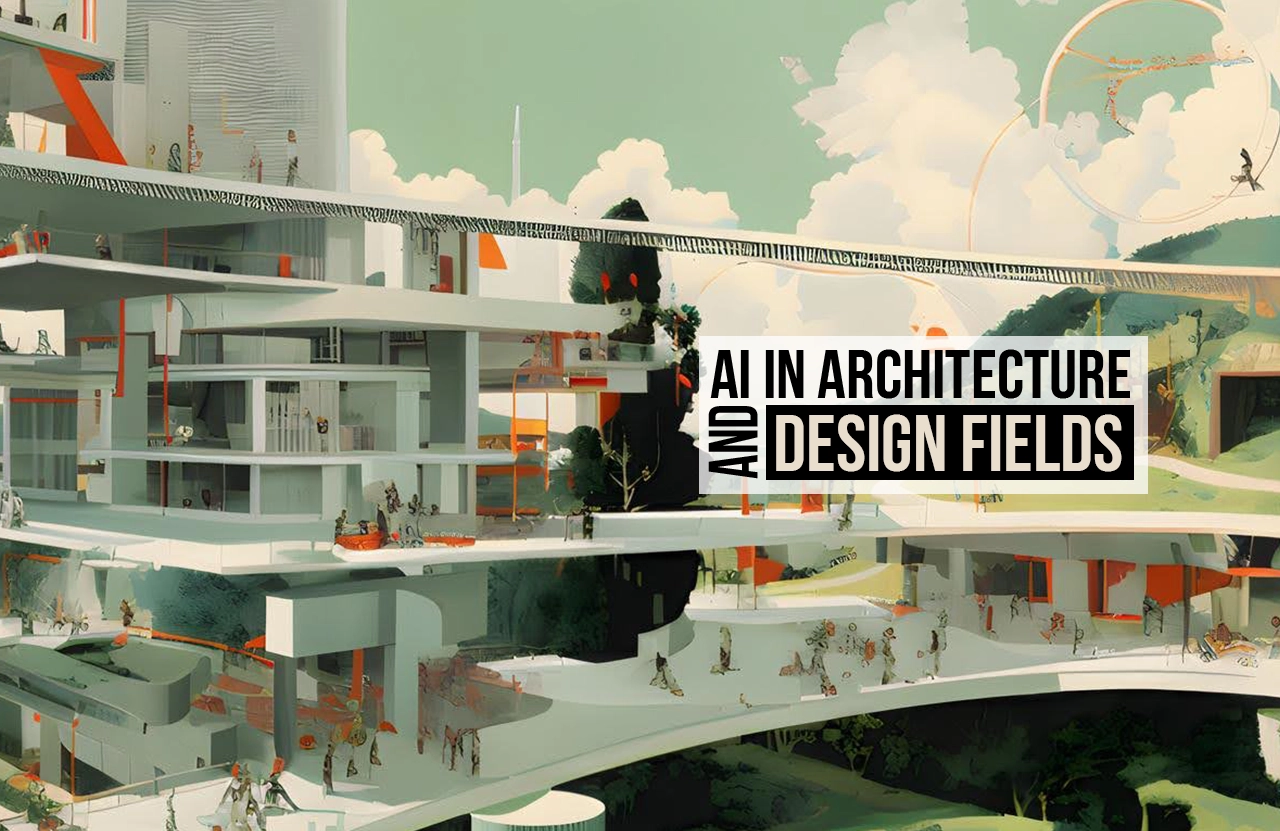
AI, Artificial Intelligence, is the ability of a machine to display human-like capabilities such as reasoning, learning, planning and creativity (What is artificial intelligence and how is it used?, 2020).
With the advent of ChatGPT (OpenAI) and later Gemini, Claude and text-to-image generators like Midjourney, both academia and industry have been taken by storm. The Artificial Intelligence tool became accessible to the general public starting a chain of reactions that have impacted many fields. Design, of course, has also had its share in this output. From art to architecture, AI is integrating itself into different aspects and debatably in a good or bad way, revolutionizing it.
Generative (Gen) AI
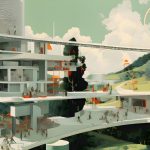
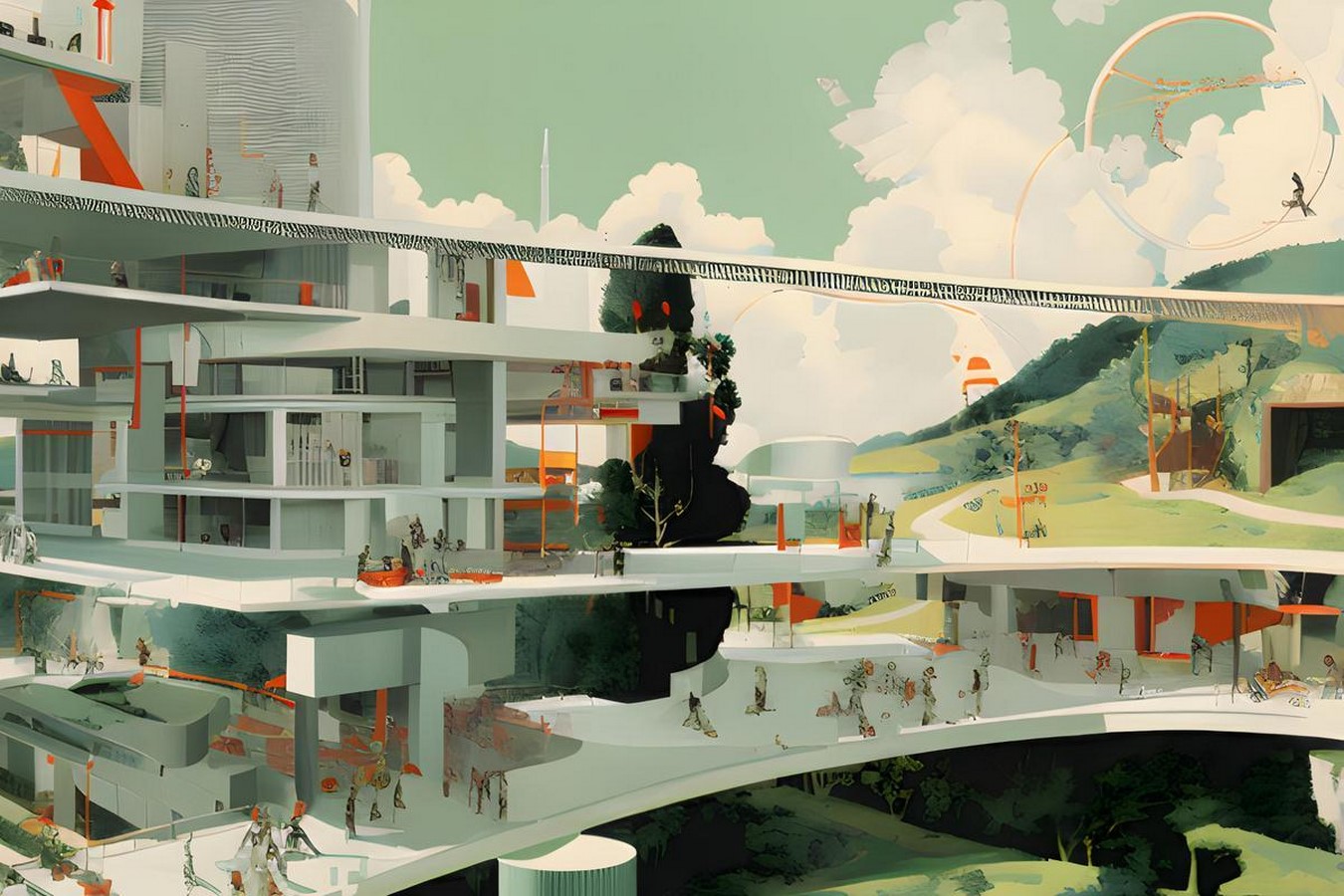
Generative AI or GenAI is the type of Artificial Intelligence that produces new visual or textual media based on a large available dataset. AI tools like Midjourney and ChatGPT have been creating architectural conceptual visualizations. Andrew Kudless, Tim Fu and Manas Bhatia are only some instances of renowned architects using AI in different stages of design.
Involvement in Different Stages
AI has developed enough to now be used in the different stages of the design process in architecture. From concept ideation to iterative design to textual generations and research using AI tools like ChatGPT and to the extent of optimizing the building modelling efficiency, it has now integrated itself deep within the industry and academia.
Concept Generation
For fast concepts and ideas regarding projects and proposals for client meetings, AI has set itself as the ideal assistant to put forth information that can inform design. As it essentially collects and refines data for the user without needing them to delve into deep research, it proves to be subjectively time-efficient while providing many options to choose from.
Iterative Designs
Other AI tools now also give the option to feed one sketch, view or even textual prompt to generate many ideations as per the design concept. This feature is again considered ideal for fast-paced environments where quick results are preferred.
2D Layouts & 3D Visualizations
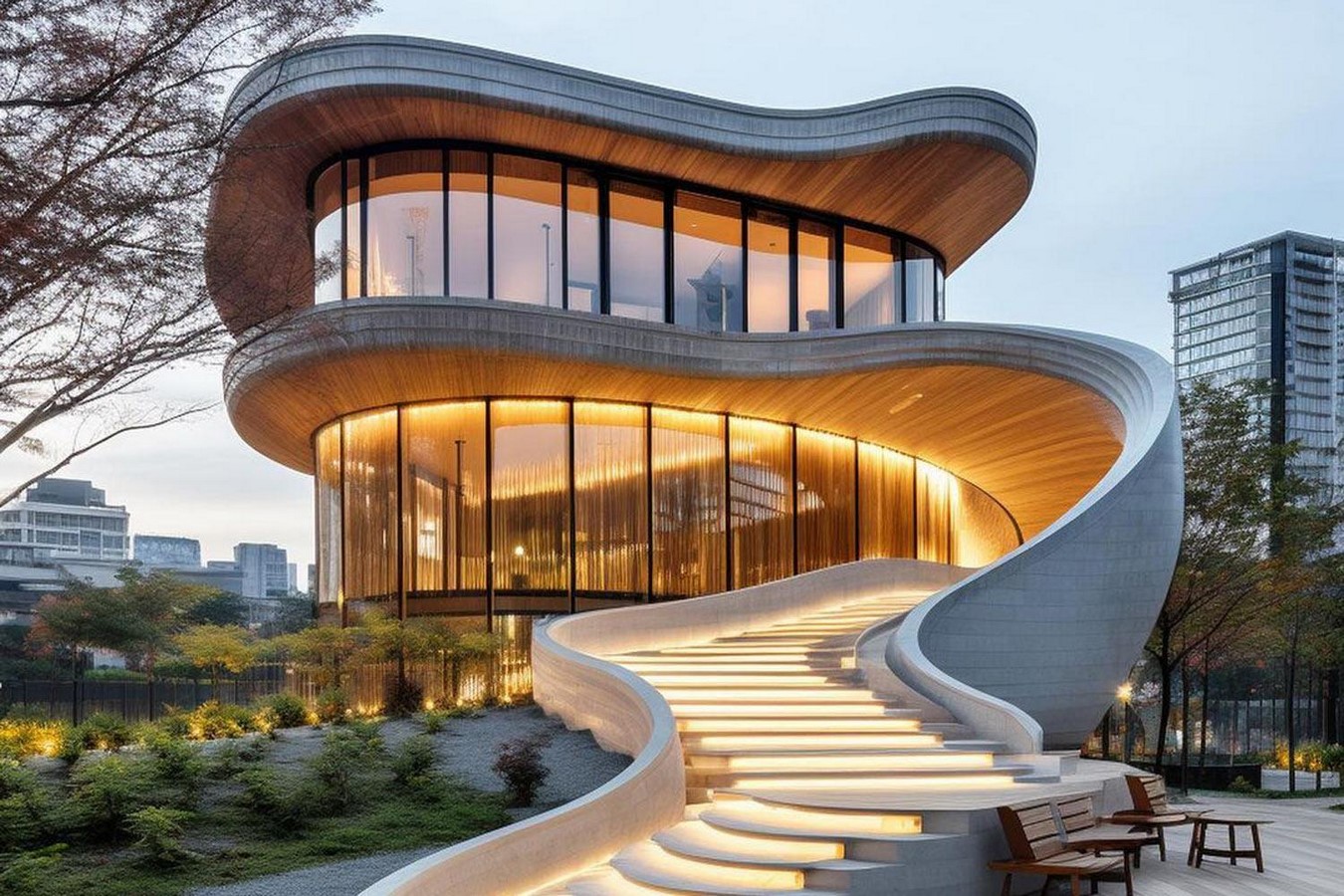
Most of the charm that is found in AI is in its speed and efficiency of things. For instance, based on the prompt given, different AI tools are capable of giving spatial plans to the architect, essentially a base upon which they can further work on. Perhaps even more utilized is the 3D visualization aspect as a single view can be rendered into the required material and colour palettes. If anything is not liked, one only needs to change the prompt a bit to get the desired result. The same thing when manually done will require a heavy rendering software and time to make the changes.
However, the implementation of AI in architecture stems beyond these as well, as many models are trained in sustainability and climate-efficient design terms. Others are trained in creating construction drawings and optimizing building part of architecture.
Ethical Perspective
AI has been inciting extreme reactions from the populace; those who see it as a device to further advance human technological efficiency and those who see it and its use as a great threat to human autonomy and thinking as well as the natural environment. Within this context, there is also the great debate these days of AI risking the jobs of artists and designers. The ethical constraints are not only about the impending damage to the environment but also to humans especially those whose fields are being ‘optimized’ by it. Anyone can create ‘art’ by providing a prompt to a machine that analyses other artworks to create something that is an amalgamation.
Creativity: A Human Endeavour
To create something means to bring an idea to life out of sheer nothingness. It is to take thinking directions that can be new or unconventional but produce results that incite or spark discussion or discourse. Creativity is a singular human endeavour. That is why the use of AI in creative fields sparks debate on the human agency in design.
Rampant AI
The last two, three years have seen AI move and grow like plague in the meta world of design. It has come to a point where many wonder while looking at a piece of media if it is created by humans or AI. Now, when one opens Pinterest to look for inspiration in architectural design, there is a bombardment of cookie-cutter visuals. Originality and uniqueness are perhaps the gambled qualities that are getting lost. With every scrolled picture, the brain is becoming more accustomed to AI generated visuals. After one point, everything starts to look similar, does it not?
What once was inspiring and thought provoking is now a mind-numbing exercise in trying to sift through collections of data to find one truly creative or original thought. The field of design and architecture is heading to the same stand-still. Same outputs produced through the same data sets, again and again in a cursed loop. The biggest difference that one can see is perhaps different shapes or sizes. The method of breaking out of the mould or out-of-the-box thinking is getting lost somewhere. That is why, for designers the question of integrating AI in the creative process arises and becomes more significant day-by-day. Our role has been to identify problems or issues from our lives and come up with solutions through the ingenuity of the human mind, that is also the primary reason why one problem could have hundred solutions; because a hundred different minds are processing that problem. Different lives, different perspectives and different ways of thinking produce results that are unique in their own way. This situation is mostly not true for Artificial Intelligence as its entire thought process is an algorithm that produces from what it has or is fed and is not capable of providing a perspective that is rooted in human experience.
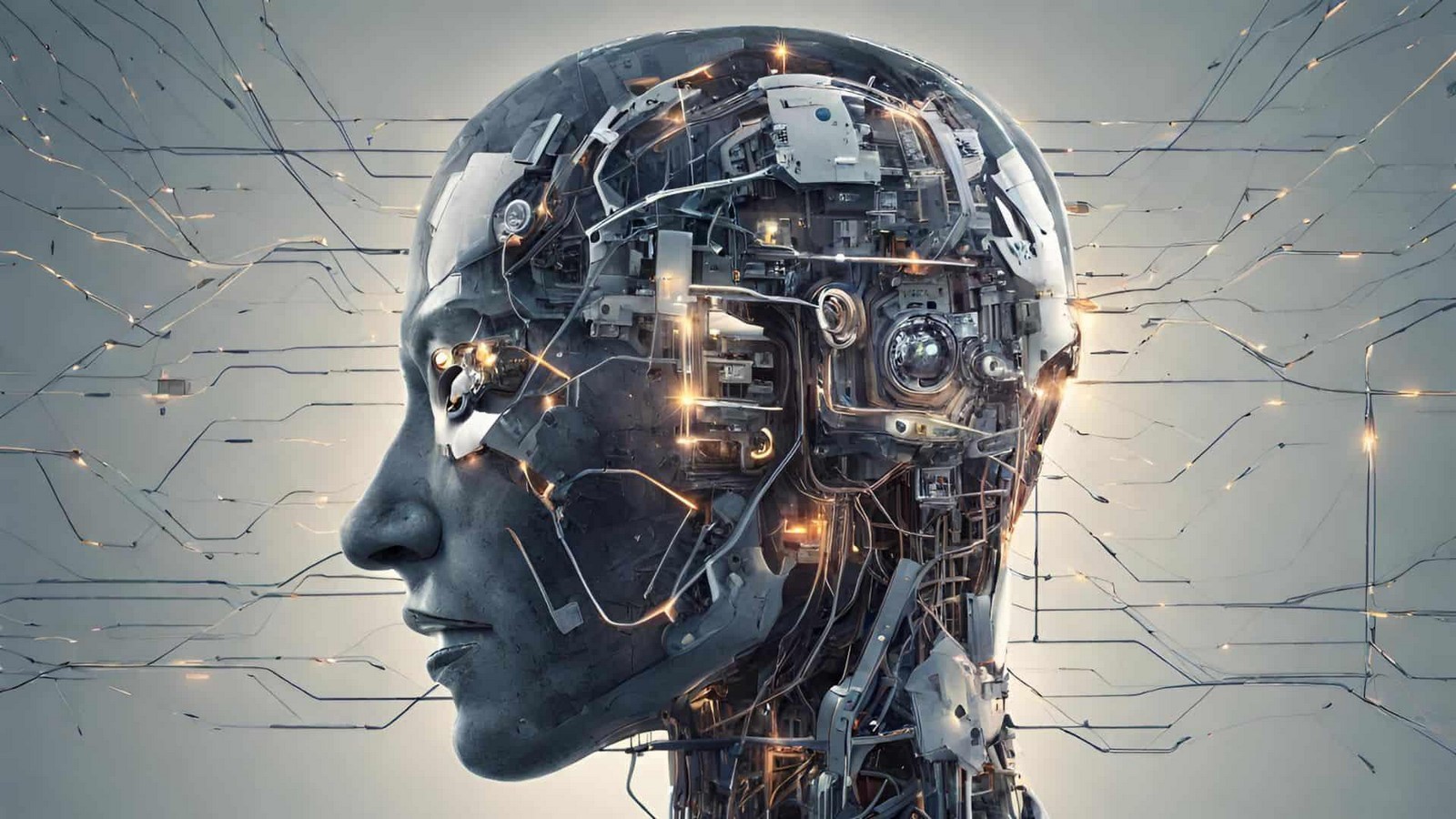
So, are we becoming artificial designers? Are we depending on machines to think on our behalf? Has creativity and human ingenuity become a gambled object in the game of “optimum design efficiency”? The question remains, no matter how much a machine is trained, will it ever truly be able to and should it mimic human creativity? Where does one draw the line between AI being a positive advancement and a substitute thinker for humans?
Reference List:
Cummings, M. (2025) How might ai affect architects? A Yale expert weighs in, Yale News. Available at: https://news.yale.edu/2025/04/23/how-might-ai-affect-architects-yale-expert-weighs
How is artificial intelligence being used in architecture right now? – Royal Institute of British Architects (RIBA). Available at: https://www.riba.org/work/insights-and-resources/professional-features/ai-professional-features/artificial-intelligence-in-architecture/
Klingler, N. (2025) Exploring 3 types of artificial intelligence, viso.ai. Available at: https://viso.ai/deep-learning/artificial-intelligence-types/
Sharma, P. (2023) 8 AI-powered architectural rendering programs you should try, Parametric Architecture. Available at: https://parametric-architecture.com/8-ai-powered-architectural-rendering-programs-you-should-try/
Submissions, R. (2023) Architects vs. AI: Who will design the future?, ArchDaily. Available at: https://www.archdaily.com/1006681/architects-vs-ai-who-will-design-the-future
What is artificial intelligence and how is it used?: Topics: European parliament (no date) Topics | European Parliament. Available at: https://www.europarl.europa.eu/topics/en/article/20200827STO85804/what-is-artificial-intelligence-and-how-is-it-used#:~:text=What%20is%20artificial%20intelligence%20(AI,previous%20actions%20and%20working%20autonomously.