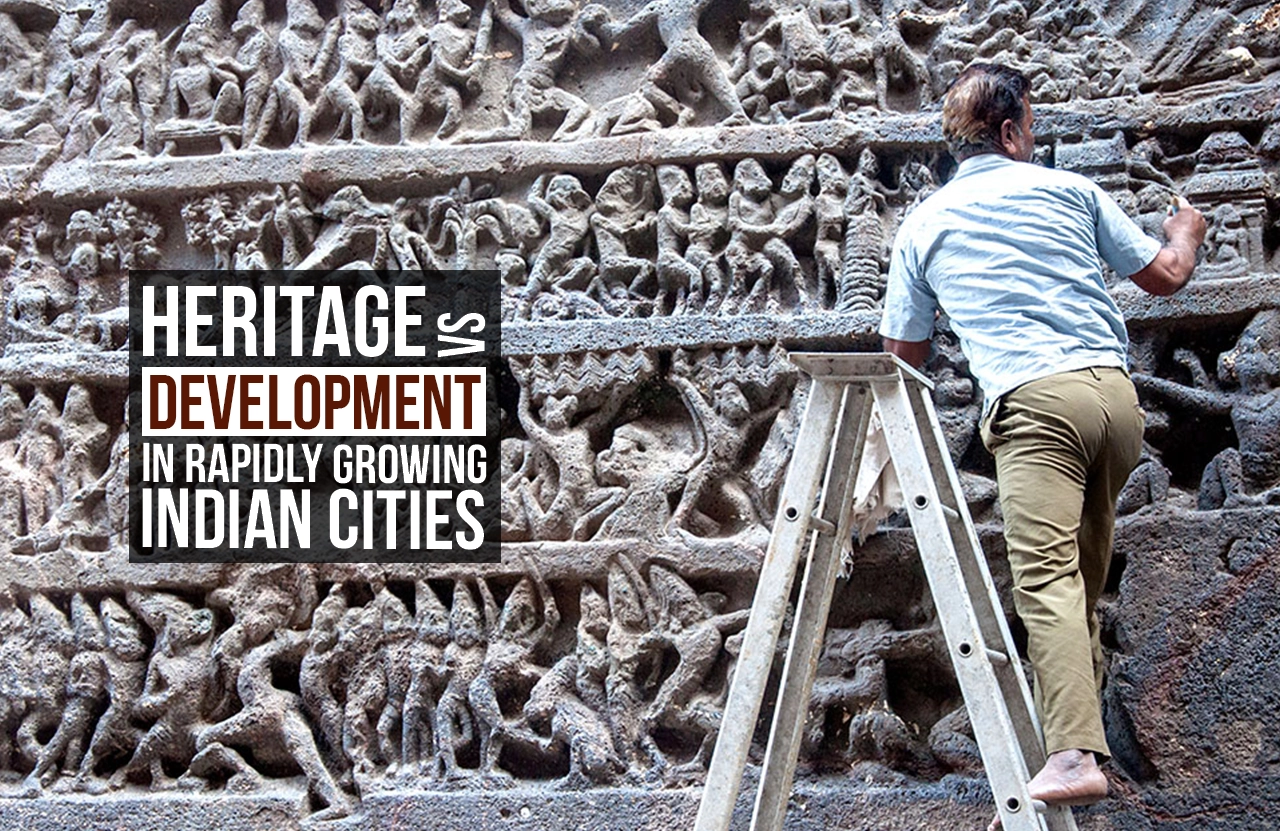
India is witnessing a transformation in its urban face. The ever-expanding cities are striving to accommodate a growing population, rising economic aspirations, and increasing infrastructural needs. The dilemma is between heritage conservation and modernization. This dilemma is quite evident in cities with a rich heritage, where centuries-old built environments are in stark contrast with modern ambitions. The dilemma is not between heritage conservation and modernization but finding a balance between both.
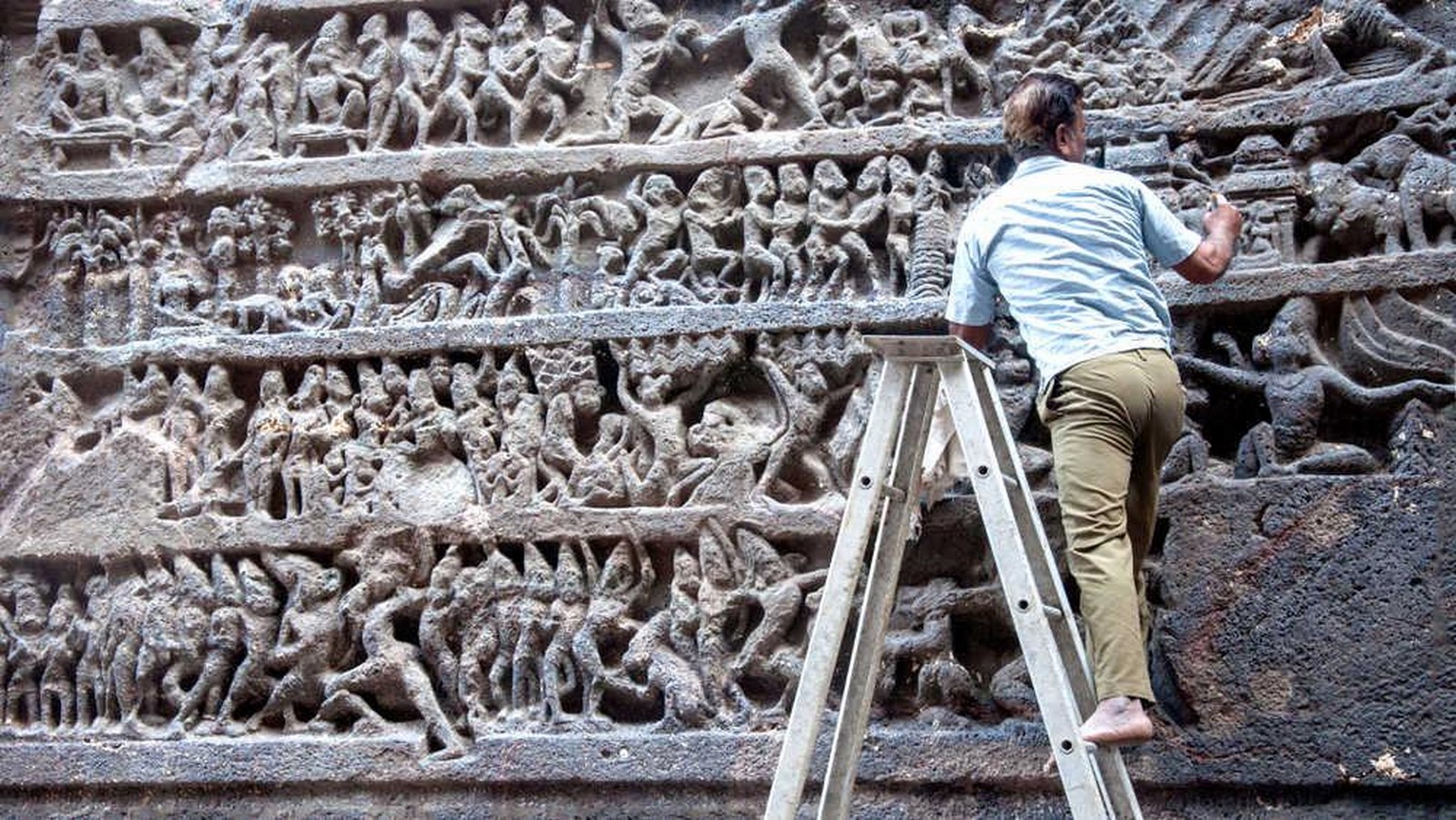
The conflict between heritage conservation and modern development is not merely a logistical problem; it is a struggle for the very identity of the Indian city. Can a city be smart if it forgets its past? Can a city be modern if its heritage is a crumbling obstacle to development?
Clash of Priorities in Urban Heritage Conservation
For cities in growing India, space is the ultimate premium. Growth often involves expanding roads, building flyovers, or constructing high-density housing. Old heritage buildings, often located in congested areas of the “Old City,” are perceived as dead capital, the space not being used to its maximum economic potential.
The conflict may take three main forms:
- Infrastructure vs. Preservation: Modern infrastructures, such as the Metro, may pass through historical areas, causing damage to the integrity of monuments because of the vibrations, or even requiring the demolition of the monuments.
- Gentrification: As property values rise, old neighborhoods, such as the traditional ‘Pol Houses’ of Ahmedabad or the ‘Wadas’ of Pune, may be replaced by commercial structures.
- Encroachment: As a result of a lack of zoning, unauthorized structures may come up, overshadowing and hiding the monuments, as is the case in the areas surrounding the Qutub Minar or the Taj.
Case Study of Urban Heritage Conservation
The success of Ahmedabad:
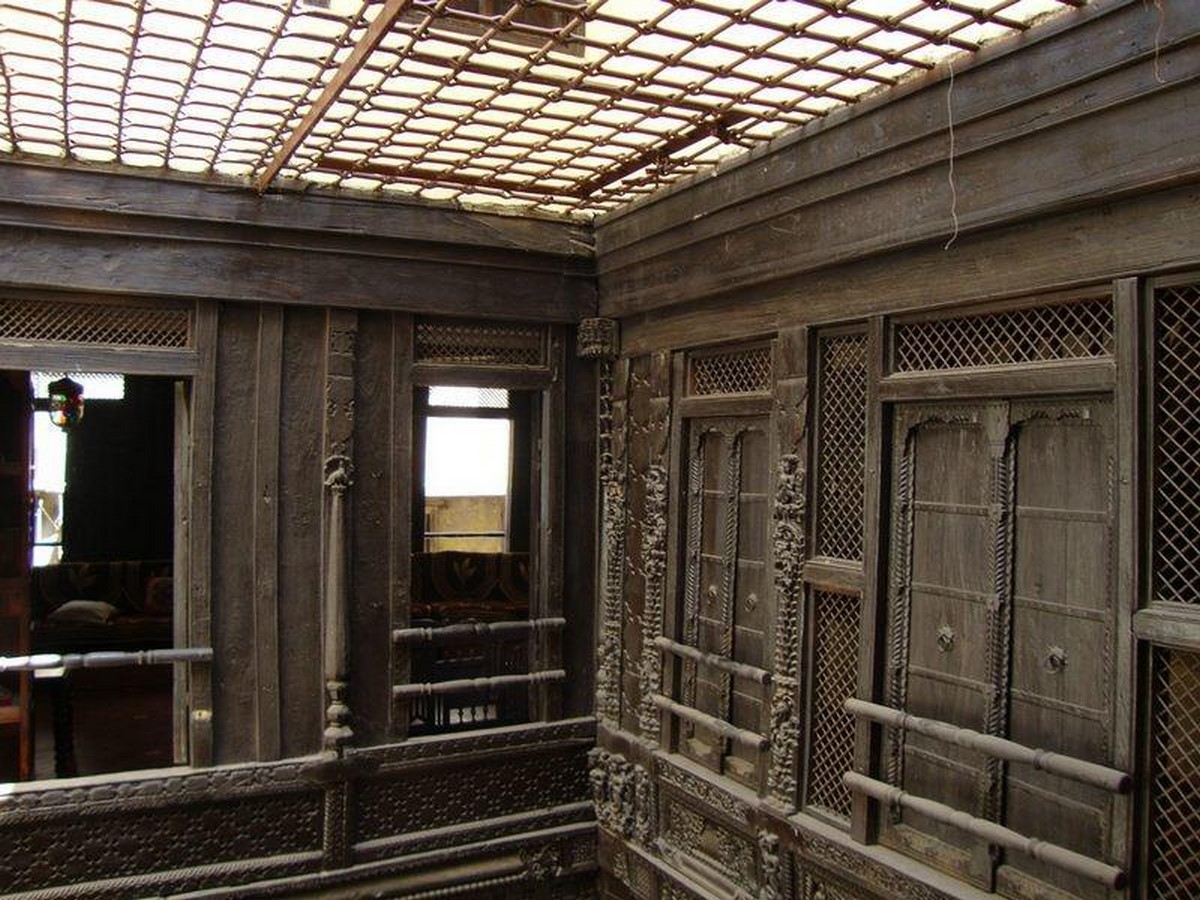
In 2017, Ahmedabad was declared India’s first UNESCO World Heritage City. This has been done, however, not by preserving it as it is but by a new concept of “Living Heritage.” Ahmedabad’s heritage areas are made up of pols: residential areas with intricate carvings. The AMC did not attempt to remove these areas to create wider roads. Instead, it incentivized people to restore their properties through a new concept called Tradable Development Rights (TDR). This allowed people to sell their heritage plot’s development potential to builders in new areas of the city, enabling them to restore their properties.
The struggles of Bengaluru and Hyderabad:
On the other hand, Bengaluru, which once went by the illustrious title “Garden City,” has witnessed a rapid erosion of its colonial and pre-colonial heritage. The relentless drive towards accommodating the IT boom has resulted in the demolition of many bungalows and the deterioration of the city’s tanks or Keres.
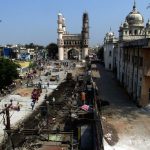
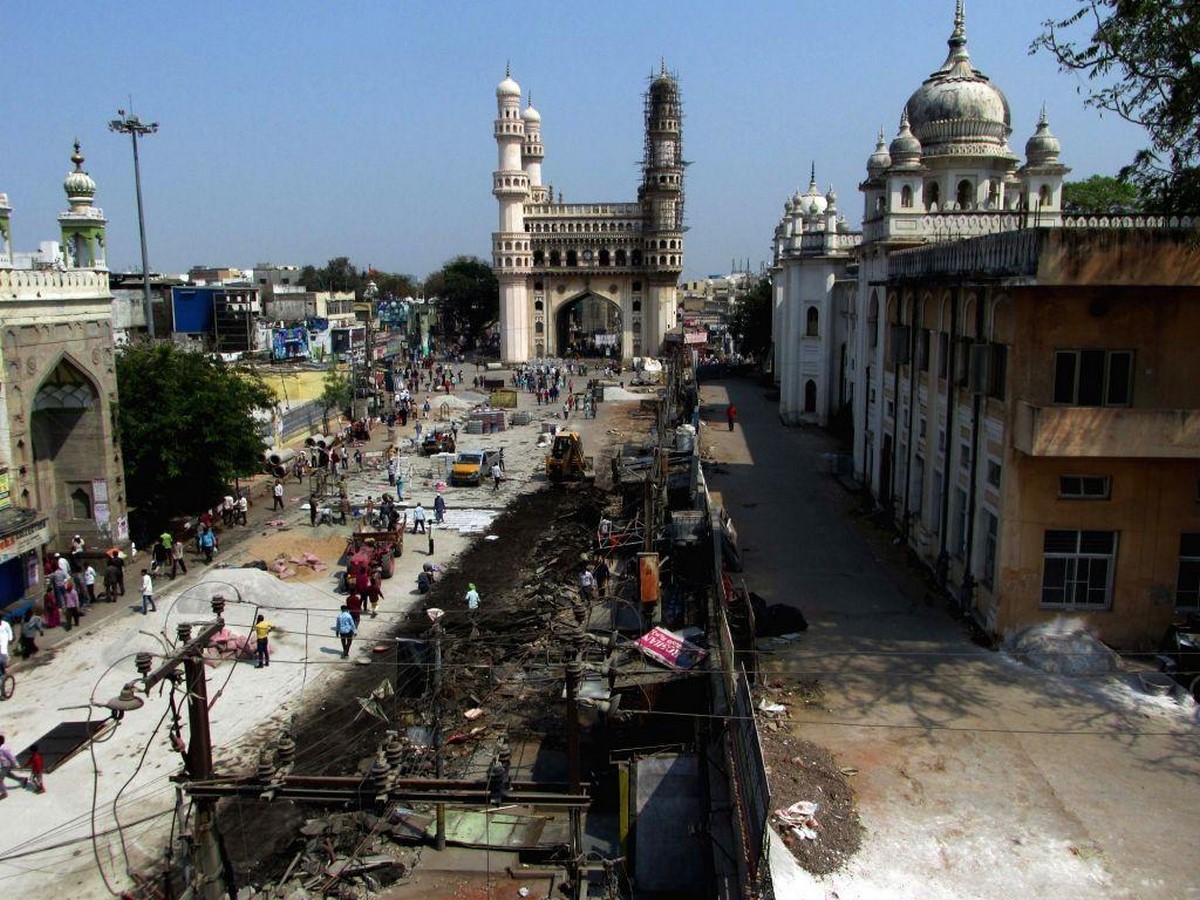
The Charminar Pedestrianization Project, which has been implemented in Hyderabad, can be seen as a hopeful and cautionary tale. The famous monument, which dates to the 16th century, had been desecrated by traffic, pollution, and illegal hawkers. The drive towards “development,” which had taken the form of modern markets and roads, had also led to conflict with the city’s conservationists. However, the decision to finally bar traffic and pave the area with granite has resulted in the restoration of some semblance of dignity to the monument, which can now be seen as an example of “betterment” and not “replacement.”
Bridging the gap in Urban Heritage Conservation
To resolve the debate of Heritage vs. Development, India must shift its paradigm from an “either-or” mentality to a “Heritage-led Development” approach.
- Adaptive Reuse: Rather than allowing old buildings to decay, they should be reused as boutique hotels, libraries, or government offices. The restoration of old havelis in Old Delhi to restaurants is a good example.
- Integration of Heritage with Master Plans: The conservation of heritage sites should not be an afterthought. Instead, the integration of heritage sites with the City Master Plan (CMP) should be a part of the planning process from the outset, so that new constructions, such as the Metro, are integrated with heritage sites.
- Community Participation: The conservation of heritage sites cannot be imposed from the government centre. Rather, the local population must be made to feel that they benefit from the conservation of heritage sites, whether through the creation of employment, increased sanitation, or a sense of national pride.
Understanding Economics in Urban Heritage Conservation
The common perception is that heritage is a “luxury” that a developing country cannot afford, which is a complete fallacy. Heritage cities are magnets for tourists, both domestic and international, thereby providing a boost for the hospitality and handicraft industries. Indian architecture has been “green” by its very nature. Lime plaster, thick walls for insulation, and courtyard ventilation are much more sustainable and eco-friendlier as compared to the glass and steel boxes that we construct today.
A city without its heritage is a city without a soul. Heritage gives a “sense of place,” which is critical for the psychological health of people in a fragmented world. For example, the city of Jaipur has maintained its identity as the pink city while maintaining its heritage.
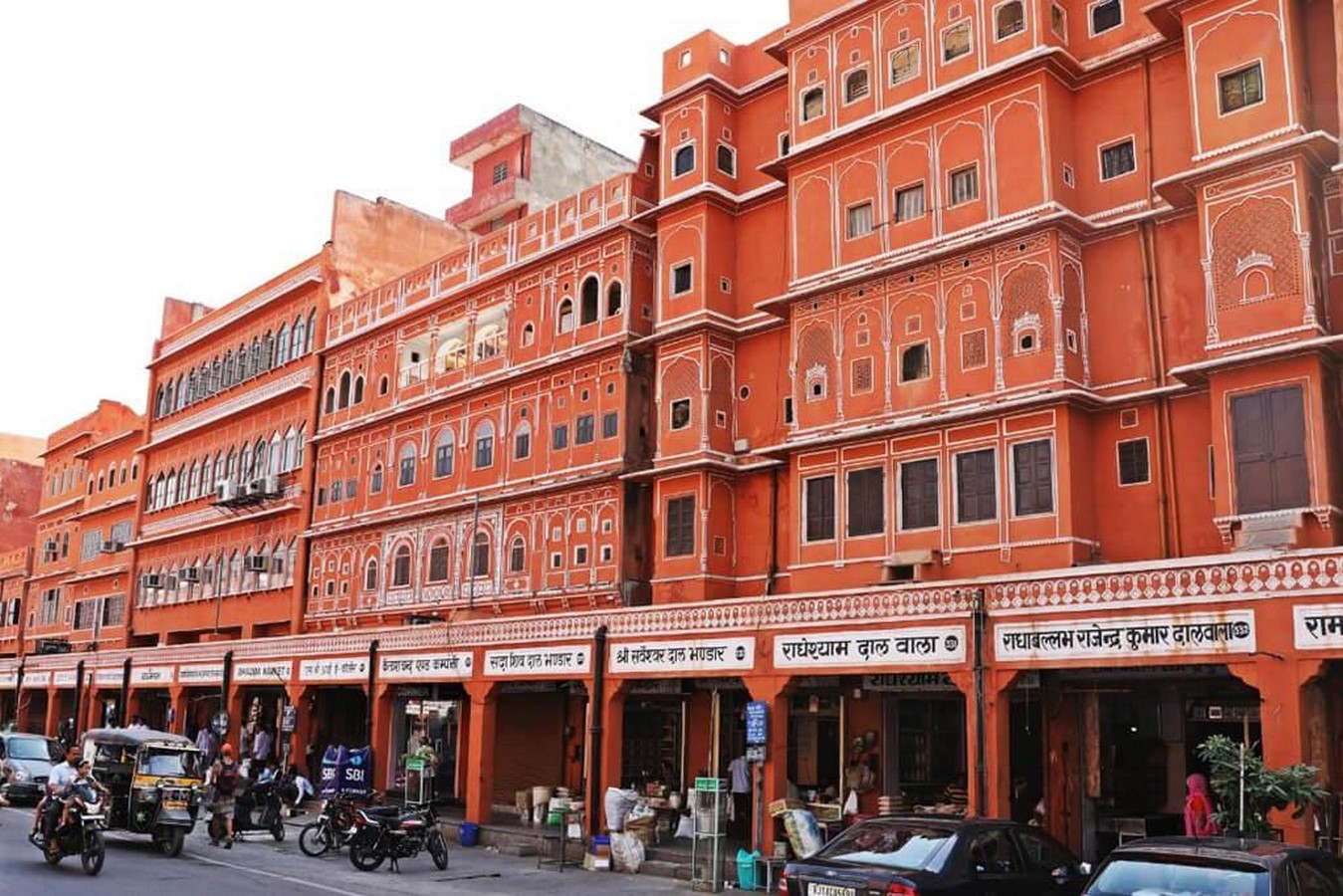
In conclusion, it is not necessarily the case that heritage and development must be at odds with each other. Rather, the two can work in tandem, creating a cityscape that is at once progressive and meaningful. It is in this balance, where the echoes of the past add richness to the possibilities of the future, that the future of India’s cities must be forged. Indian cities have their strength in their layering, their capacity to have a 500-year-old temple and a 5G tower side by side.
The “global city” of the 21st century should not be a carbon copy of New York or Shanghai. Development is necessary to get millions of people out of poverty. It should not, however, come at the expense of cultural touchstones that define us as a people. By seeing cultural heritage as a resource to be managed, rather than a problem to be overcome, Indian cities can create a model of development that is at once economically and culturally rich.