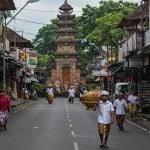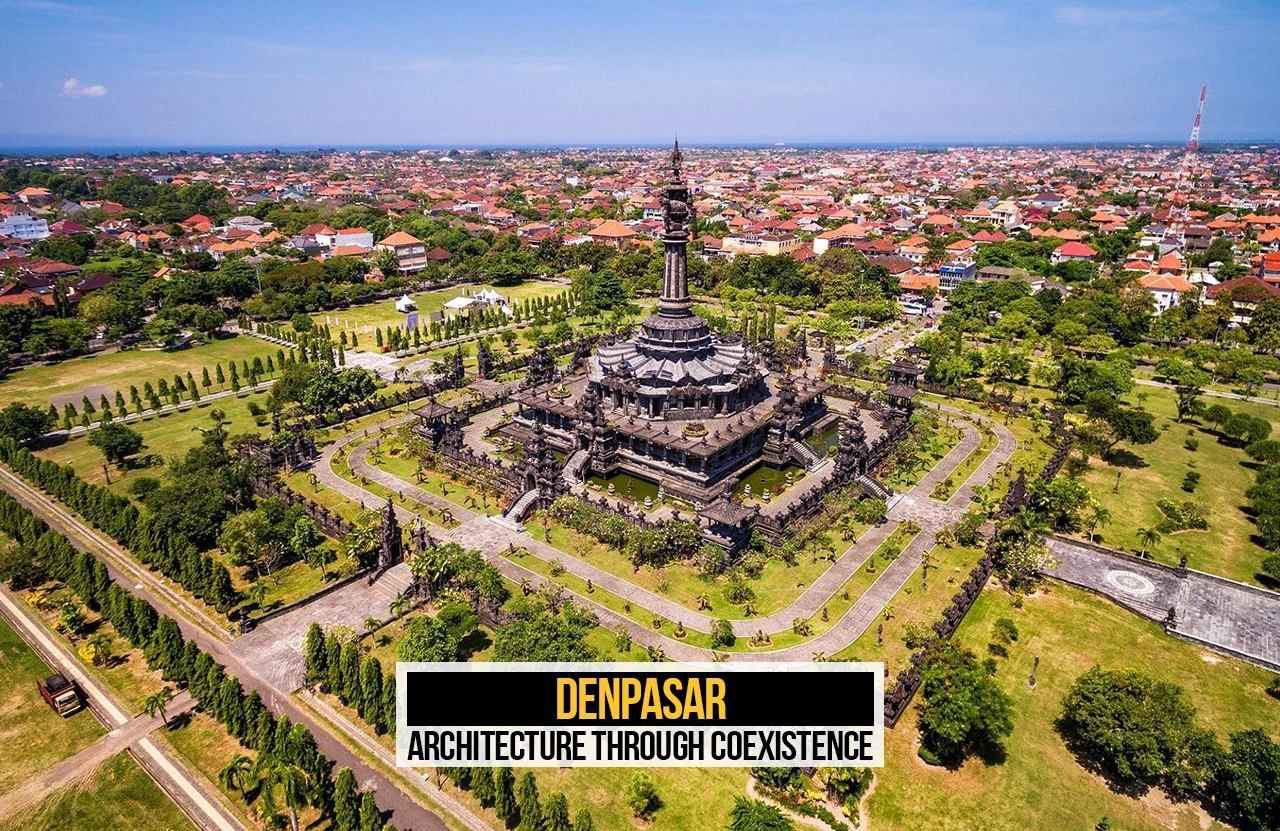
For an architecture student arriving in Denpasar to explore Tri Hita Karana through its built form, the city feels far removed from the carefully constructed image of Bali often associated with resorts, beaches, and curated serenity. Streets remain crowded with commerce, storefronts extend into pedestrian circulation, and markets continue spilling outwards onto bridges and pavements. Yet within this intensity, fragments of another spatial language begin to emerge gradually through shrines placed beside shopfronts, trees appearing between the densely built fabric, and moments where rivers, temples, and public spaces remain embedded within everyday urban life.
Commerce and Ritual
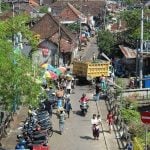
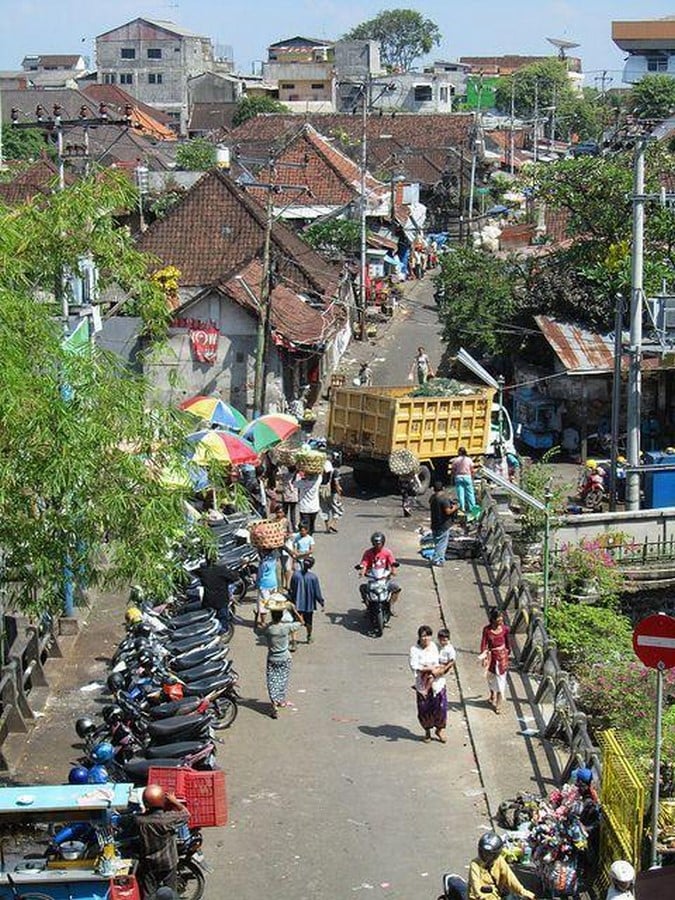
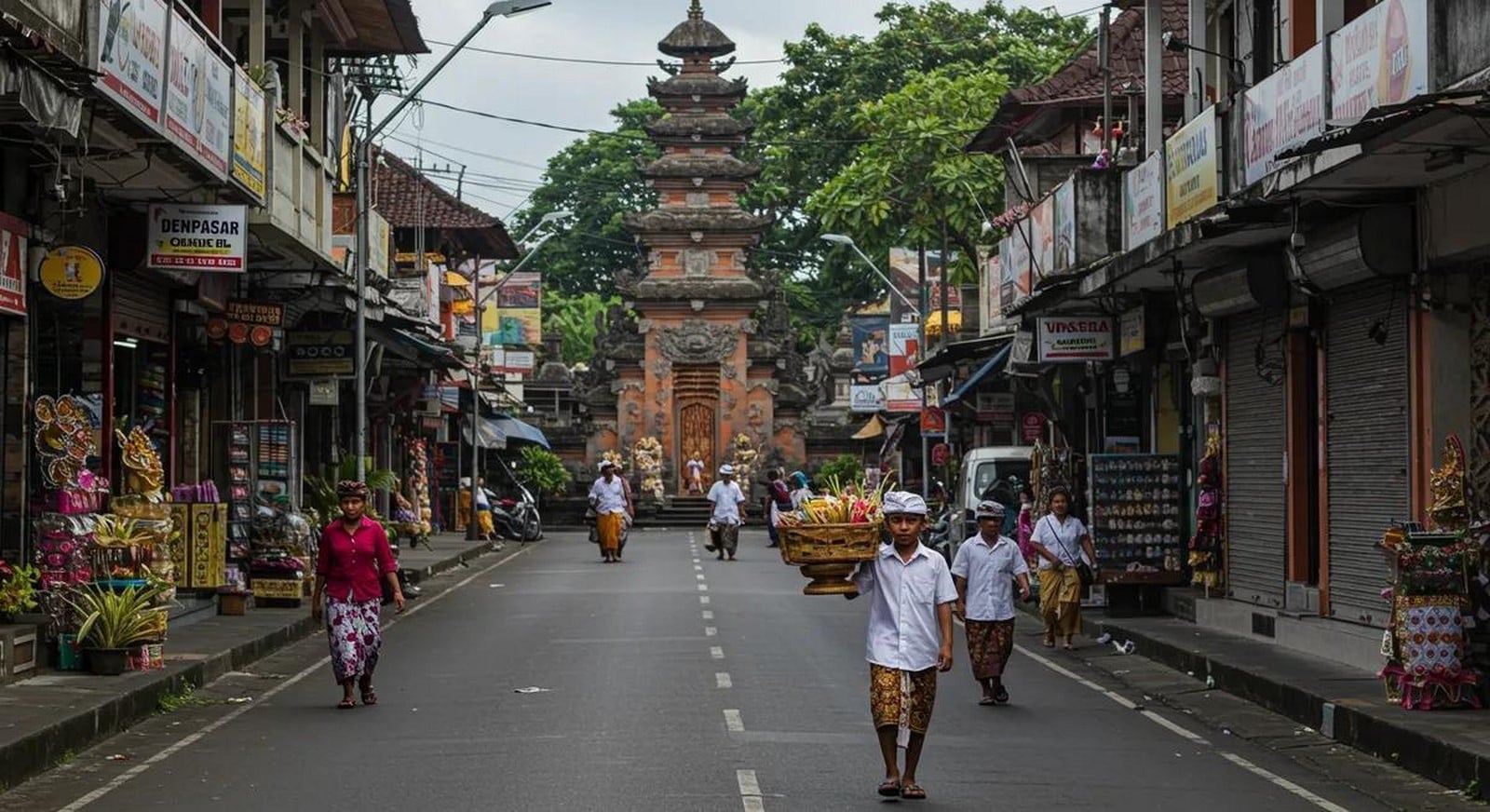
Moving through the dense circulation spaces around Pasar Badung, Denpasar initially reveals itself through commerce. Vendors overflow into circulation paths, bridges remain congested with traffic, and traditional Balinese buildings tucked between shopfronts continue holding their ground against the density pressing around them. Amidst this intensity, brief glimpses of the Tukad Badung riverfront begin appearing between the bridges. Beyond fresh produce and household goods, the market is also filled with religious items and ceremonial offerings woven from palm leaves and flowers. Commerce here does not operate separately from ritual life. The sacred exists within the same spaces as trade, movement, and everyday activity, while natural materials remain part of the city’s visual language despite increasing urbanisation.
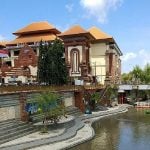
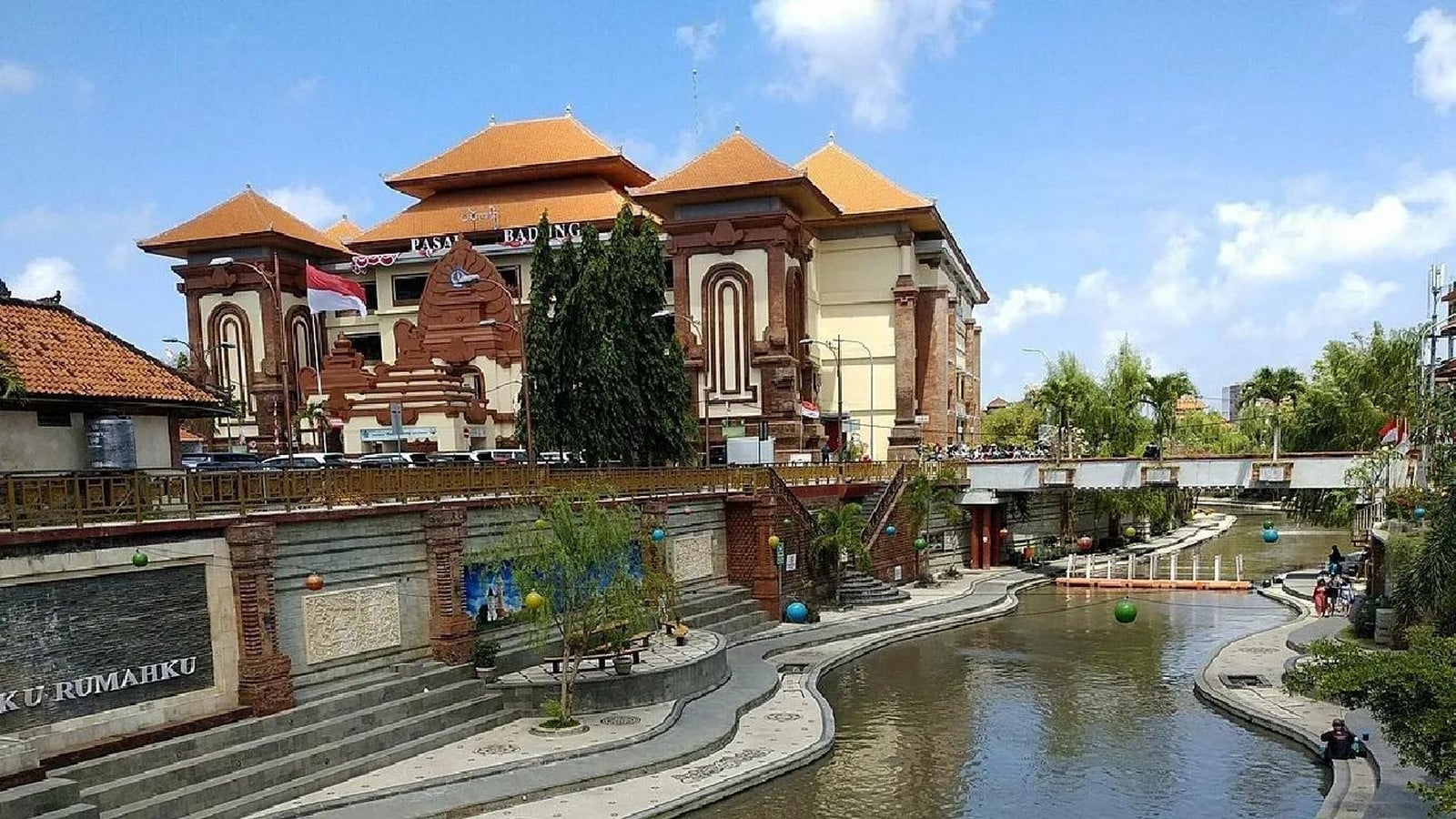
Arriving at the riverfront shifts the spatial experience entirely. The water moves quietly through the city while people occupy the stone seating along its banks, shaded by trees leaning inwards from both sides. Despite Denpasar’s density, the space does not feel separated from the city around it. Commerce, movement, and nature continue to exist alongside one another.
Sacred Space Within the City
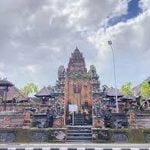
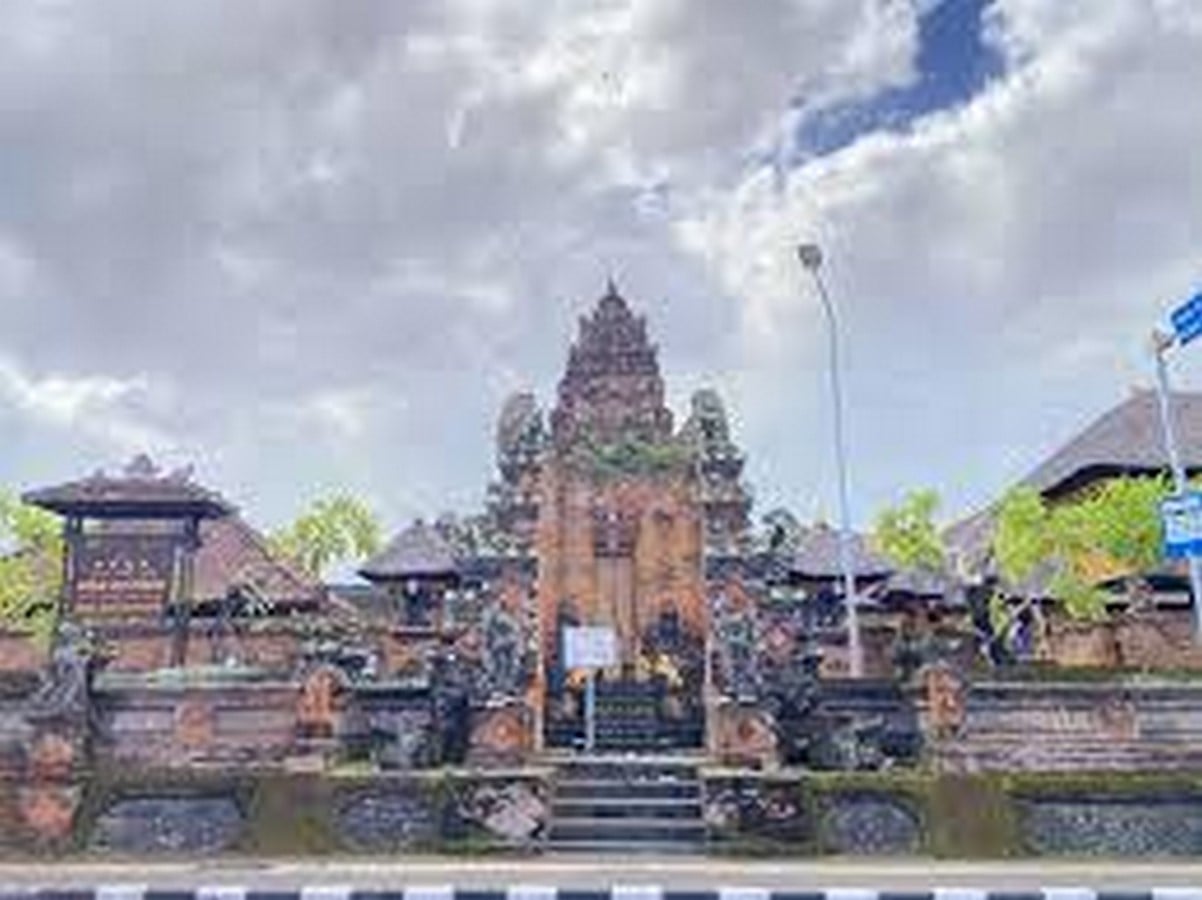
Turning away from the crowded market streets, Pura Desa stands directly across the road, surrounded by traffic, storefronts, and continuous movement. Vendors extend towards its edges while offerings continue appearing between commercial shopfronts and narrow lanes. The temple does not compete with the market opposite; it simply persists. Sacred and commercial life occupy the same street without hierarchy, each becoming part of the other’s everyday presence.
Moving away from the dense market streets, the edges of Lapangan Puputan Badung emerge gradually through shaded pathways and clusters of trees before the space finally opens into the square itself. Despite its defined boundaries, the transition into the park feels softer and more gradual than expected, with pedestrian movement and surrounding urban activity continuing seamlessly along its edges. Children occupy the lawns while people sit beneath the trees, allowing the square to function less as a formal memorial ground and more as an active civic space. Named after the Puputan resistance against Dutch colonial rule in 1906, the square carries a political and historical weight that contrasts with the casualness of its present occupation.
Monumentality and Political Memory
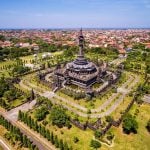
After moving through Denpasar’s crowded streets, the approach towards Bajra Sandhi Monument feels abrupt. The monument begins to appear above the trees long before its full scale becomes apparent, and upon entering the grounds, the openness around it feels noticeably different from the dense and layered spaces experienced elsewhere in the city. The pathways become more ordered, movement more directed, and the monument itself remains constantly centred within the landscape. Constructed in 1987 under the initiative of the Bali Governor during Indonesia’s New Order period, Bajra Sandhi carries both cultural and political symbolism within the city. Yet compared to Denpasar’s softer and more porous public spaces, the monument feels intentionally imposing, asserting itself through symmetry, scale, and distance.
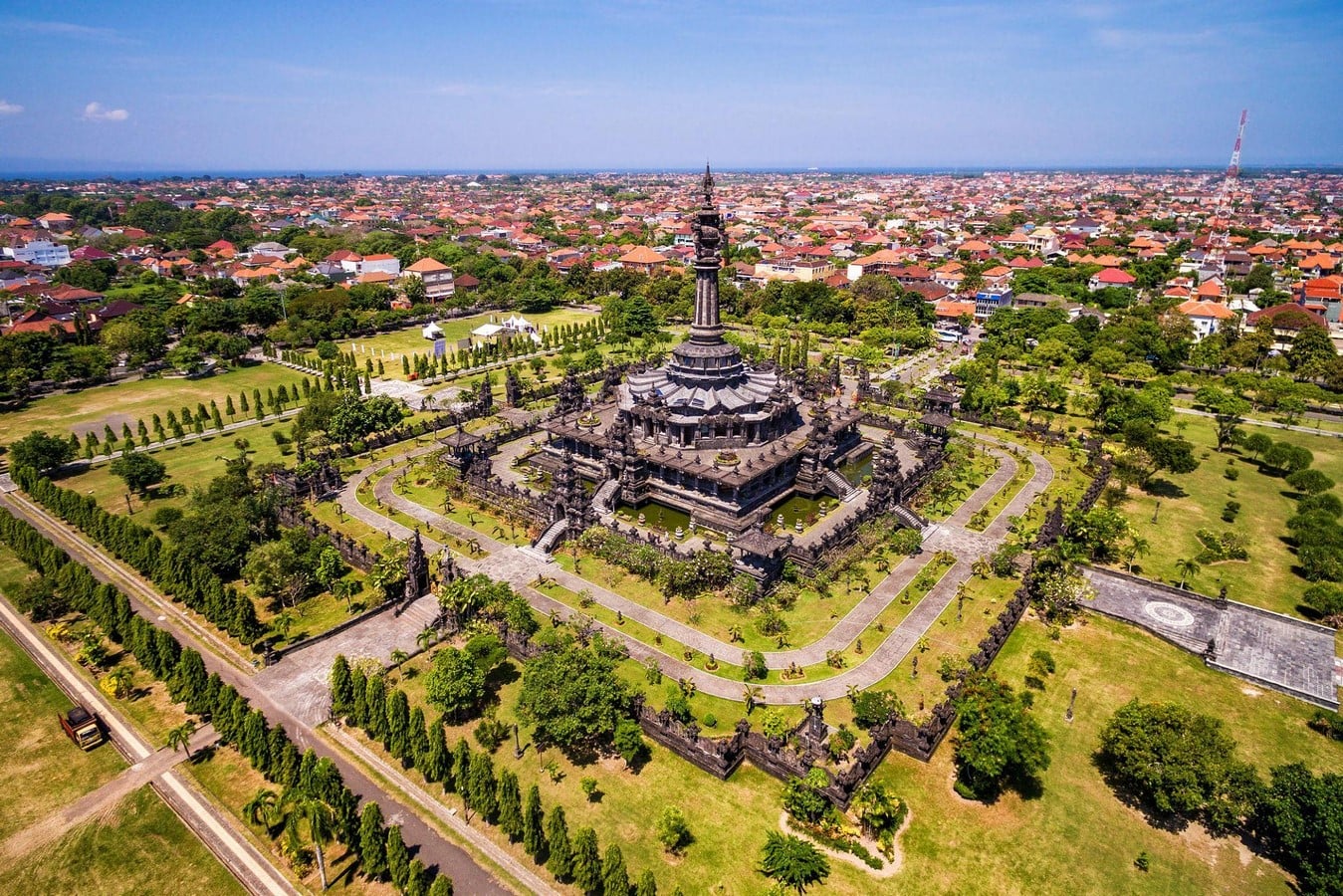
It is only after moving through Denpasar that the relationships between its spaces begin to feel intentional. The riverfront remains connected to the movement of the city, temples continue to exist beside dense commercial activity, and public spaces such as Lapangan Puputan Badung function simultaneously as civic grounds and everyday gathering spaces. Together, these spaces reflect Tri Hita Karana, a Balinese philosophy centred around harmony between people, nature, and the sacred. It is not only a belief system but a principle that shapes how buildings are oriented, how nature is integrated into built fabric, and how sacred and everyday spaces are positioned in relation to one another. Within a city shaped by coexistence and layered occupation, the monumentality of Bajra Sandhi Monument begins to feel less like a continuation of this urban fabric and more like an interruption of it.
Denpasar no longer resembles the carefully constructed image of Bali encountered before arrival. Instead of existing as a preserved cultural landscape separated from urban life, the city reveals itself through density, movement, and layered occupation. Markets spill outwards into bridges and circulation paths, temples remain embedded within commercial streets, and public spaces shift constantly between civic, political, and everyday social functions. Even with increasing urbanisation and commercial expansion, ritual and nature continue occupying visible positions within the city’s fabric rather than being isolated from it.
References:
Udara Bali (2023) Tri Hita Karana: A Balinese Concept for Harmonious Living. Available at: https://www.udara-bali.com/trihita-karana/ (Accessed: 28 May 2026)
Travelnata (2025) Bajra Sandhi Monument. Available at: https://blog.travelnata.com/bajra-sandhi-monument/ (Accessed: 28 May 2026)
Lonely Planet (no date) Puputan Square. Available at: https://www.lonelyplanet.com/indonesia/bali/denpasar/attractions/puputan-square/a/poi-sig/1210410/356551 (Accessed: 28 May 2026)
Krypto Trekker (31 Jan 2025) Denpasar Bali Walking Tour. [Online video] Available at: https://youtu.be/IjjcfVXIkPU (Accessed: 28 May 2026)
H., C. (2011) Denpasar Street, flickr. Denpasar. Available at: https://www.flickr.com/photos/unforth/5742436665/in/set-72157626806465586/? (Accessed: 2026)
unknown (2025) Badung Market, tripxl. Denpasar. Available at: https://tripxl.com/blog/badung-market/ (Accessed: 2026)
Sedana Yoga, I Made (2025) Pura Desa, nusaheritage. Denpasar. Available at: https://www.nusaheritage.id/detail-objek-warisan-berwujud-preview/pura-desa-lan-puseh-kota-denpasar (Accessed: 2026)
Desk Photo (2014) Bajra Sandhi, flickr. Denpasar. Available at: https://www.flickr.com/photos/humanoiz/ (Accessed: 2026)
Denpasar Street (2025) planvacationasia. Denpasar. Available at: https://planvacationasia.com/denpasar-travel-guide (Accessed: 2026)