The last decade has witnessed a remarkable transformation in the way people participate in financial markets. What was once considered a complex activity reserved for professional traders and investors has become more accessible to the average individual. A major driver of this shift has been the rapid evolution of stock market trading applications.
Today, an app for stock market trading does much more than facilitate buy and sell orders. From research and portfolio tracking to advanced analytics and real-time market updates, these platforms have transformed how investors analyse markets and execute trades. Technological advancements, increased internet penetration, and widespread smartphone adoption have collectively reshaped the investment landscape in India and around the world.
The Early Days of Mobile Trading
The early years of mobile stock market trading were marked by limited functionality. Most trading platforms were designed primarily for desktop users, while mobile applications offered only basic features such as viewing stock prices, checking portfolios, and placing simple buy or sell orders.
Investors also faced technological limitations. Internet connectivity was slower, smartphones had lower processing power, and user interfaces were less intuitive than they are today. As a result, many investors continued to rely on traditional brokerage services or desktop-based trading platforms instead of using an app for stock market trading.
Rise of Smartphone Adoption
The rapid adoption of smartphones significantly accelerated the use of mobile trading applications. As devices became more powerful and affordable, investors gained the flexibility to access financial markets from virtually anywhere.
With a modern app for stock market trading, investors no longer needed to wait until they reached their desktop computers to monitor market movements or place trades. Real-time access to market data enabled quicker decision-making and faster responses to changing market conditions.
The growing popularity of mobile technology also encouraged financial service providers to invest heavily in improving the speed, reliability, and overall user experience of their trading platforms.
Improved User Experience and Accessibility
One of the most significant developments over the past decade has been the shift towards user-centric platform design. Modern trading apps are designed to cater to both first-time and experienced investors.
Features such as simplified dashboards, intuitive navigation, customisable watchlists, interactive charts, and personalised alerts have made investing far more accessible. Many platforms also integrate educational resources, tutorials, and market insights directly within the application, helping investors improve their understanding of financial markets while building confidence.
These improvements have played a major role in increasing retail participation in the stock market.
Real-Time Data and Advanced Analytics
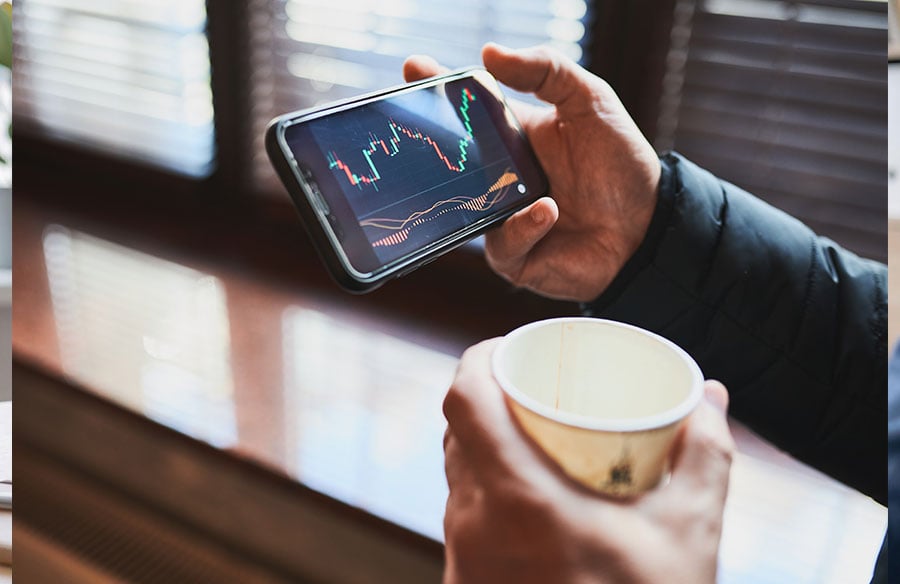
Advanced market analysis tools were once largely available only to institutional investors and professional traders. Today, an app for stock market trading provides access to many of these capabilities, including:
- Real-time market data
- Interactive charts
- Technical indicators
- Research reports
- Portfolio analytics
These features enable retail investors to make more informed decisions without relying on expensive software or specialised infrastructure.
The availability of advanced analytics has empowered individual investors to adopt a more disciplined, data-driven approach to investing.
Seamless Digital Onboarding
Digital onboarding has significantly simplified the account-opening process. Investors can now complete KYC verification, upload documents, and activate their trading accounts entirely online through secure digital platforms.
This convenience has reduced paperwork, shortened account approval timelines, and made investing more accessible to first-time participants. As a result, retail investor participation has grown substantially over the past decade.
The ability to open and manage investments remotely has become a defining feature of every modern app for stock market trading.
Wrapping Up
Over the past decade, stock market trading applications have evolved from basic mobile tools into comprehensive investment ecosystems. Improved accessibility, real-time information, enhanced security, advanced analytics, and AI-driven capabilities have fundamentally transformed how investors engage with financial markets.
As technology continues to evolve, an app for stock market trading is expected to become even more intelligent and feature-rich, helping investors research opportunities, manage portfolios, and participate in financial markets with greater convenience and confidence.