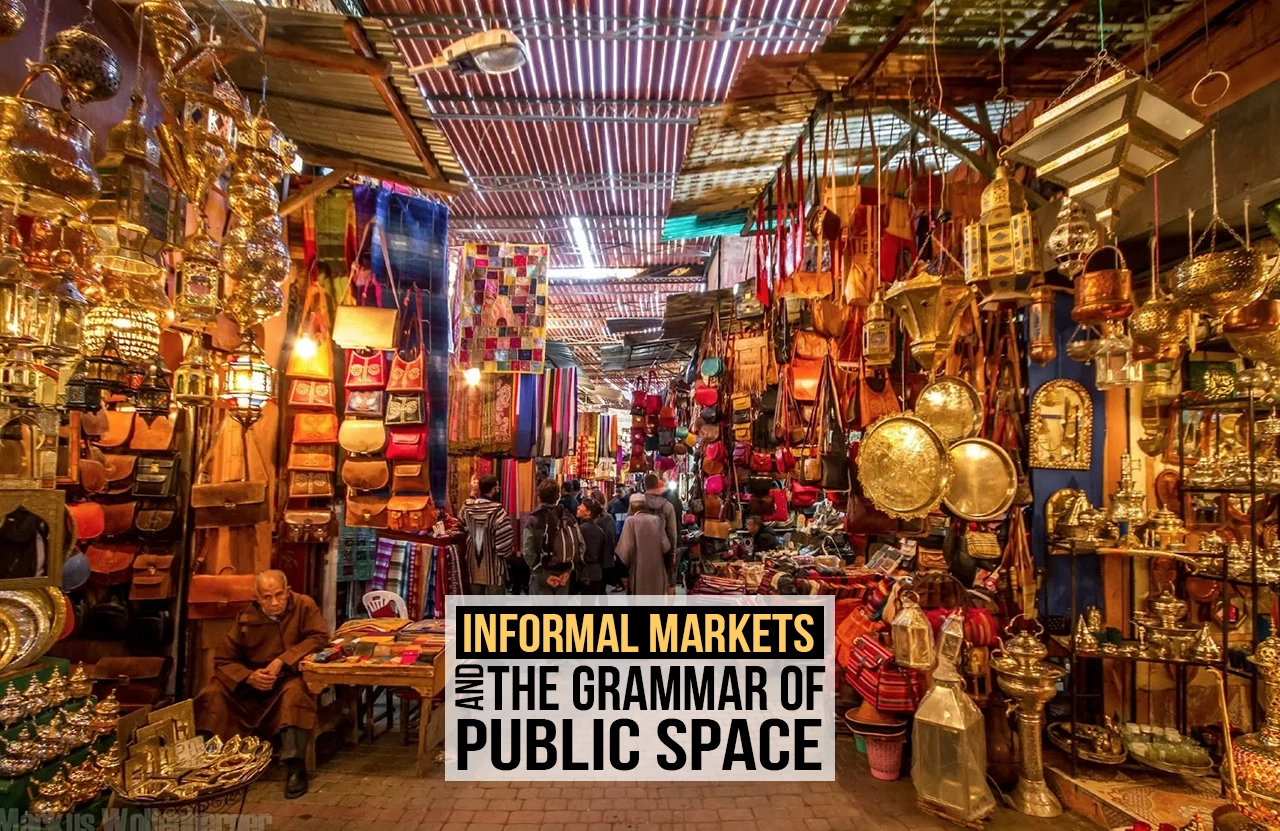
Cities are often defined by their infrastructure, such as their roads, buildings, parks, and planned public spaces. However, these are not the most active and vibrant parts of a city. Any celebrated space in a city is often not formally planned; rather, they emerge from the everyday actions of people.
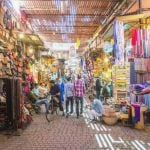
Informal markets, street shops and shopping streets are a few of the examples. These spaces are found in the city’s streets, sidewalks, vacant plots, transport hubs, and other public spaces where vendors gather to sell goods and services. These are not planned but rise through demand, possibilities and needs.
Although these markets may appear chaotic at first glance, they follow their own systems of organisation and order. It is only through their informality that these markets become important spaces of economic activity, cultural exchange, and community life.
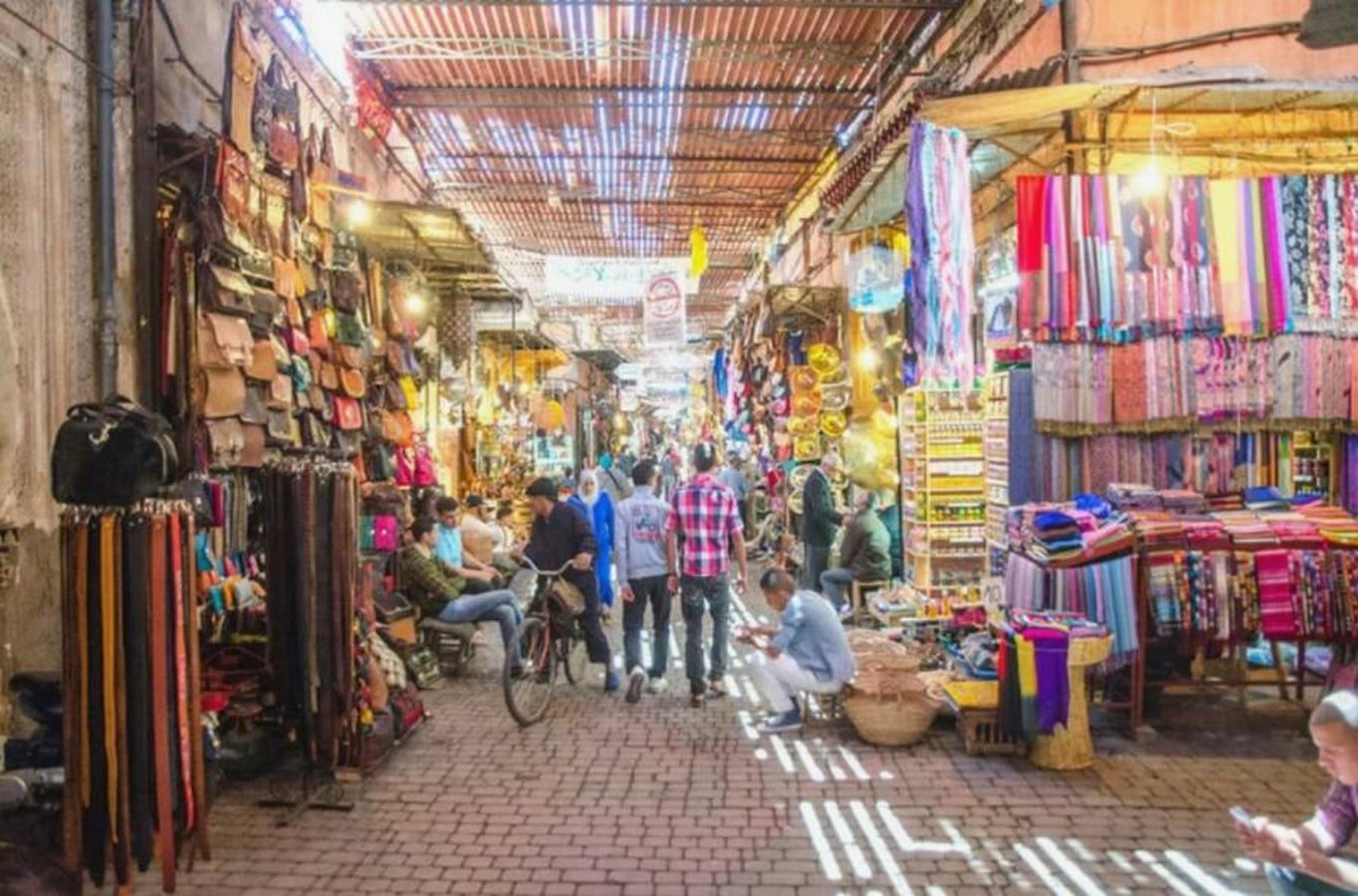
This essay explores how informal markets position themselves spatially and socially in the city and among the residents, and also their contribution to urban life.
Informality in Cities
Informality is any activity that is not subjected to formal regulations, planning systems or government control. In urban areas, the informal market consists of street vendors, food stalls, temporary shops, flea markets and other types of small-scale trade. They are often the result of a lack of formal economic opportunities available to many people.
Casual is not chaotic. Informal markets may be unsanctioned but usually operate on the basis of well-established routines and social agreements. The vendors know where to set up, how much space they can take up and how to deal with the other sellers around them. It takes time to create and establish a working system that benefits both vendors and customers.
In many parts of the world, informal markets act as an economic support system that provides employment opportunities for thousands of people while offering goods at affordable prices.
Spatial Logic of Informal Markets
An interesting thing about informal markets is the spatial logic. They are rarely designed by architects or planners and often have a good sense of organisation.
Vendors usually choose sites based on pedestrian flow. Busy intersections, bus stops, railway stations, schools, temples and commercial streets attract a large number of people and become ideal places for trade. The stalls are placed with care. Sellers carefully position themselves where they can get visibility and customers.
Time is the pattern for these informal markets. Food streets are planned on the weekends when people are freer to access and enjoy them. And everyday goods are sold in the evenings, as people can buy those while returning home
Clothes, electronics, flowers or household item vendors tend to be concentrated in specific areas. These clusters help the customers to find out what they want easily and also increase the overall attractiveness of the market.
Circulation is another important aspect of spatial logic. Unlike rigid planned spaces, informal markets constantly evolve. Their layouts change according to demand, seasons, festivals, and local events. This adaptability is one of their greatest strengths.
Community Networks
These informal markets are not just about the space, location and arrangement but they are shaped by the social relationships and networks. They are built on trust, cooperation and mutual understanding between the stakeholders involved.
There is also an unspoken understanding and agreement between many vendors and customers, and neighbouring sellers. Suppliers, prices, and opportunities are usually communicated in social networks, not formal systems. Sometimes market associations or informal leaders help to settle disputes and keep order.
These structures are community builders and community makers. Vendors look out for each other’s stalls, help in emergencies, and bargain together with local authorities when needed. Such unity and cooperation can not be developed formally.
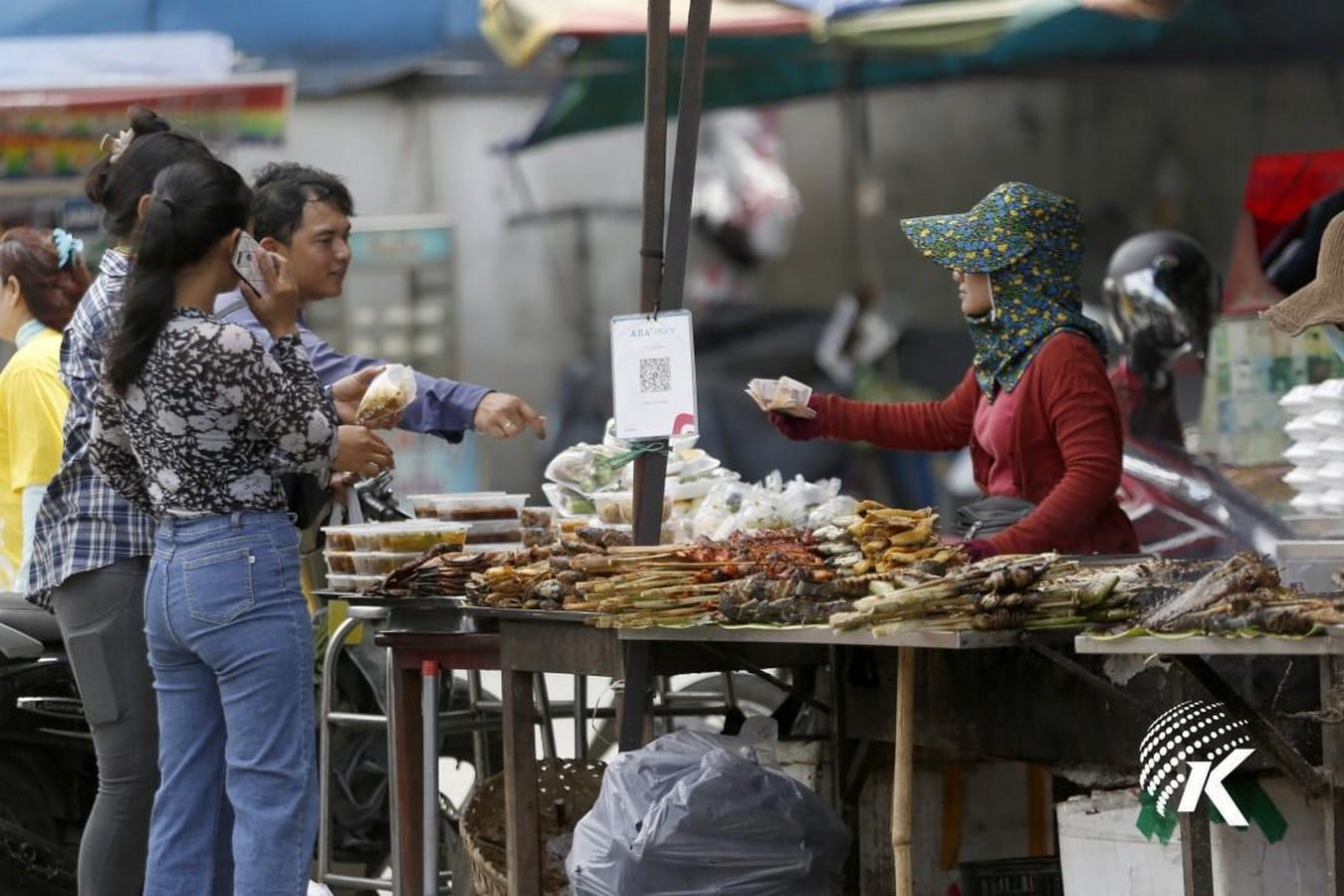
Customers also become part of these communities’ networks. Regular buyers develop personal relationships with the vendors, leading to trust, friendship and loyalty. This social interaction creates a more human and personalised shopping experience compared to many formal retail markets.
Urban Recognition
A major issue about these informal markets is the question of legitimacy. Though these markets provide valuable services and employment, they do not have official recognition.
These are viewed only as traffic obstacles and a cause of violation and congestion by the governing officials. This point of view results in evictions, fines, and relocation. Despite these challenges, the common people depend on these markets for affordable goods and easy access.
This raises important questions about people’s right to use public spaces. Public spaces are meant to serve citizens, but their use is often controlled through regulations and planning policies. In recent years, some cities have begun recognising the value of these informal economies. Instead of removing vendors, planners have experimented with designated vending zones, flexible regulations, and inclusive policies that integrate informal activities into urban development.
Challenges
Though these markets are highly important for the everyday life of a city, they are highly vulnerable to changes in terms of laws, planning and development. They lack legal protection there is a constant anticipation of being relocated or destroyed. Urban redevelopment projects, such as road widening and commercial developments, involve the displacement of these informal markets.
Economic uncertainty is another challenge. Income levels can fluctuate daily depending on weather conditions, customer demand, and competition. Many vendors lack access to financial services, insurance, or social security systems.
These highlight the need for more inclusive urban policies that recognise and incorporate the need for informality rather than treating it as a problem to be eliminated.
Contribution to Urban Life
Informal markets play a large role in city life. Economically, they generate jobs, encourage local entrepreneurship and provide affordable products. Informal trade is an important income source for many families.
These markets serve to socially unite people. They provide opportunities for interaction among different groups and build community ties. Markets are often places where people meet, exchange information and participate in everyday urban culture.
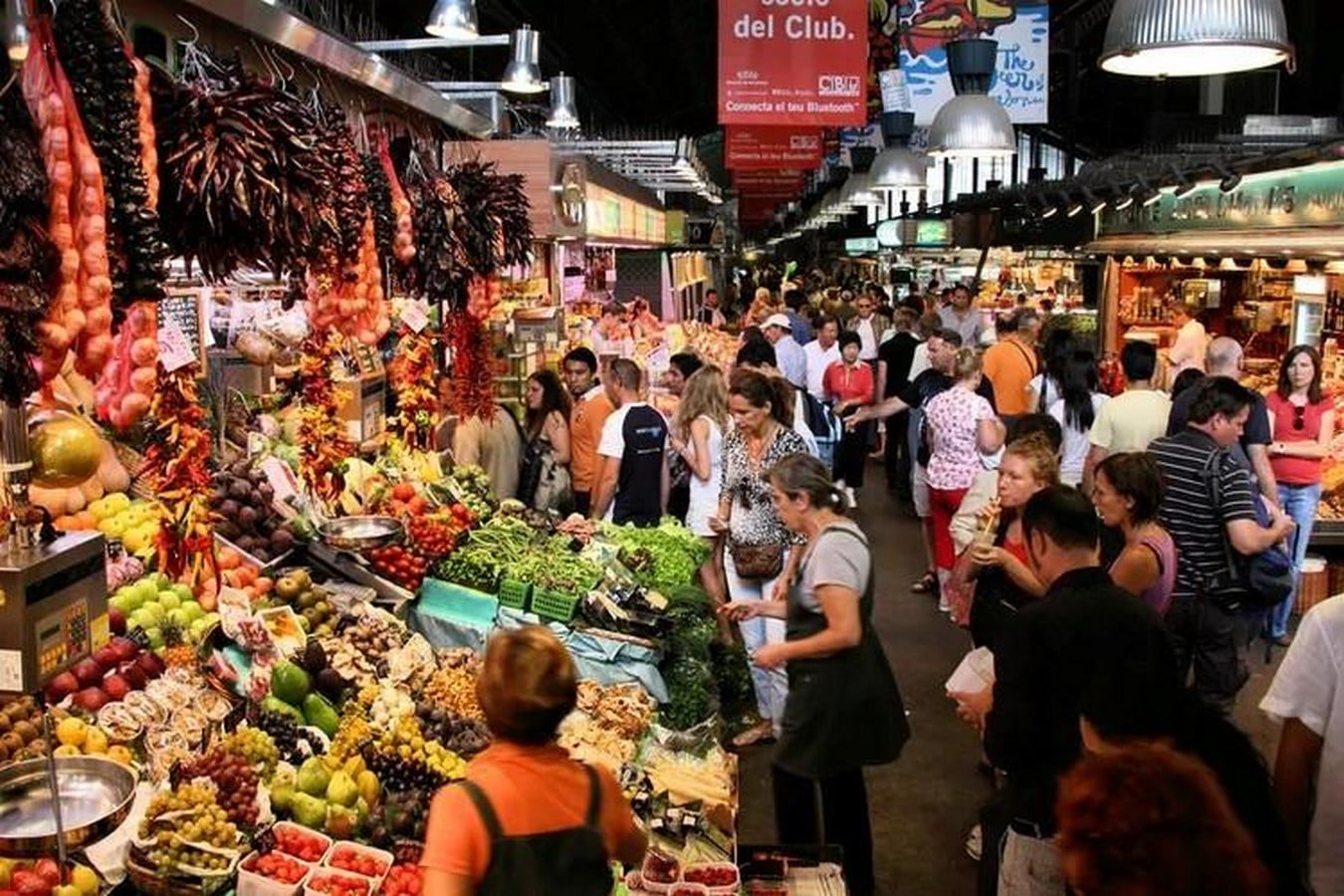
From a spatial perspective, informal markets enliven public spaces. Otherwise, vacant streets are transformed into lively and engaging environments. Vendors bring people out on foot, increase safety because the area is always occupied, and add to the character of a place.
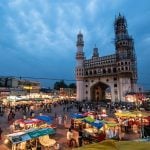
Many cities and localities, such as Charminar in Hyderabad and Malleshwaram in Bangalore, are remembered not just for their monuments and buildings but also for their street markets. These spaces bring people together and are expressions of the local customs, food, crafts and daily life. They bring a city’s identity and authenticity that any formal planning can easily reproduce.
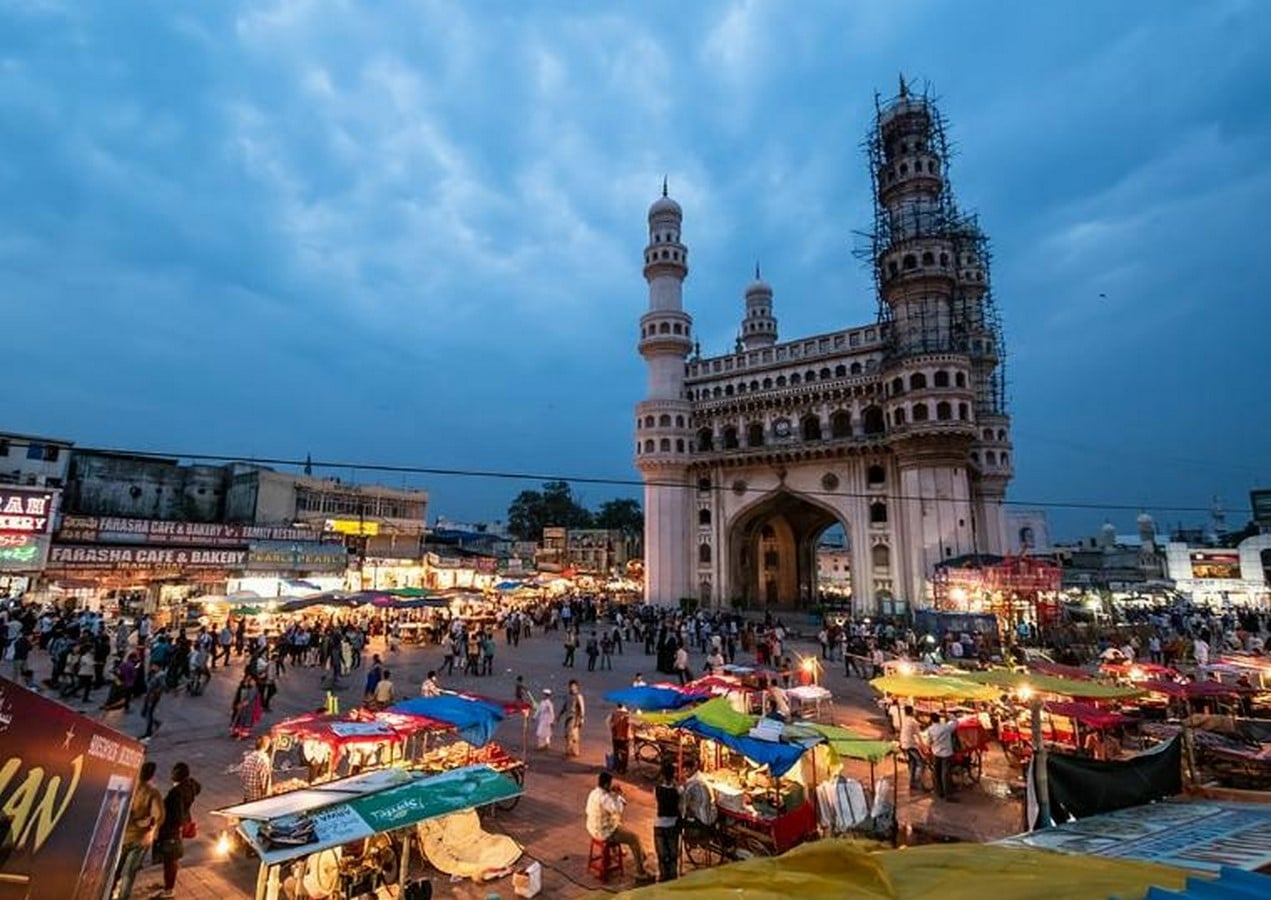
Informal markets demonstrate that cities are shaped not only by official plans but also by the everyday actions of their residents. Through their own spatial logic and social organisation, these markets create vibrant and functional public spaces. While they may operate outside formal systems, they are far from disorganised. Instead, they reveal complex patterns of adaptation, cooperation, and resilience.
At the same time, informal markets face challenges related to legitimacy and vulnerability. Urban authorities often struggle to balance regulation with inclusion. Rather than viewing informality as a problem, cities should recognise its value and work toward policies that support both public order and economic opportunity.
In conclusion, informal markets are an important part of any urban life. Enrich public spaces, make them lively and remind people that cities are environments that are shaped by its people and not by the plans. Their development and existence show us the importance of flexibility, growth and the human dimensions of urban design