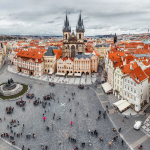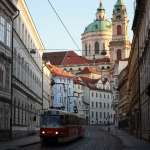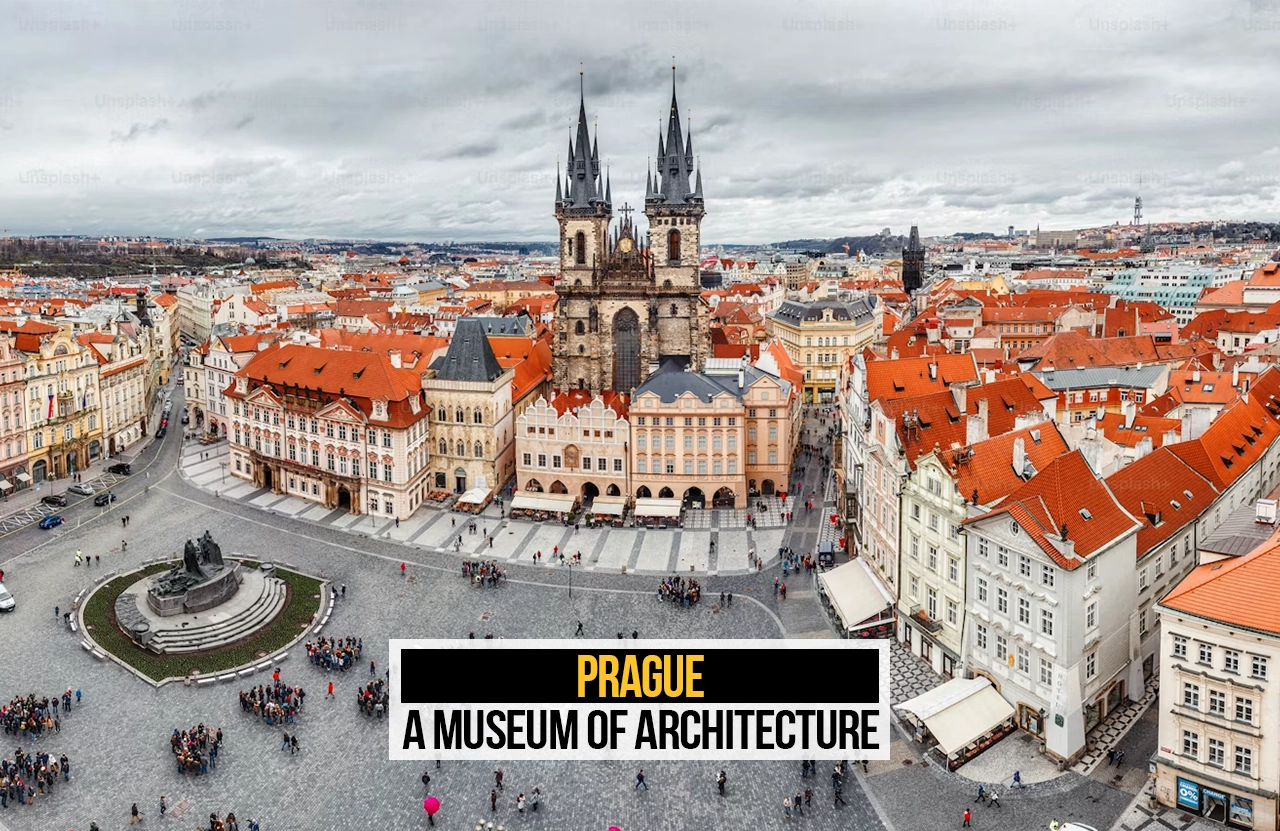
Unlike cities like Berlin or Tokyo, Prague preserved its historic urban fabric, escaping large-scale destruction during wars or sweeping modernist resets over the years, making the city a museum for different architectural styles. The result is a city that has archived architecture over the centuries. When concrete and glass arrived, stone and ornament still survived. Walking through Prague, one can notice a Gothic spire, a Baroque dome, an Art Nouveau ornament next to a contemporary experiment. The city has evolved without erasing what came before.
Romanesque architecture – 10th to 12th Centuries
The oldest surviving buildings in Prague are Romanesque. The style swept across central Europe with the spread of Christianity in this time period and is widely associated with the early days of the Bohemian (Czech) Kingdom. Robust stone walls, rounded arches, and barrel vaults are some of the defining features of the Romanesque architectural style. The city of Prague houses many Romanesque rotundas, which are circular churches like the Rotunda of St Martin at Vyšehrad Citadel and the Rotunda of the Holy Cross. The city’s best-known Romanesque building is the Basilica of St George at Prague Castle; although its exterior is Baroque, its interior is completely Romanesque.
Gothic architecture – 13th to 15th centuries
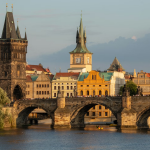
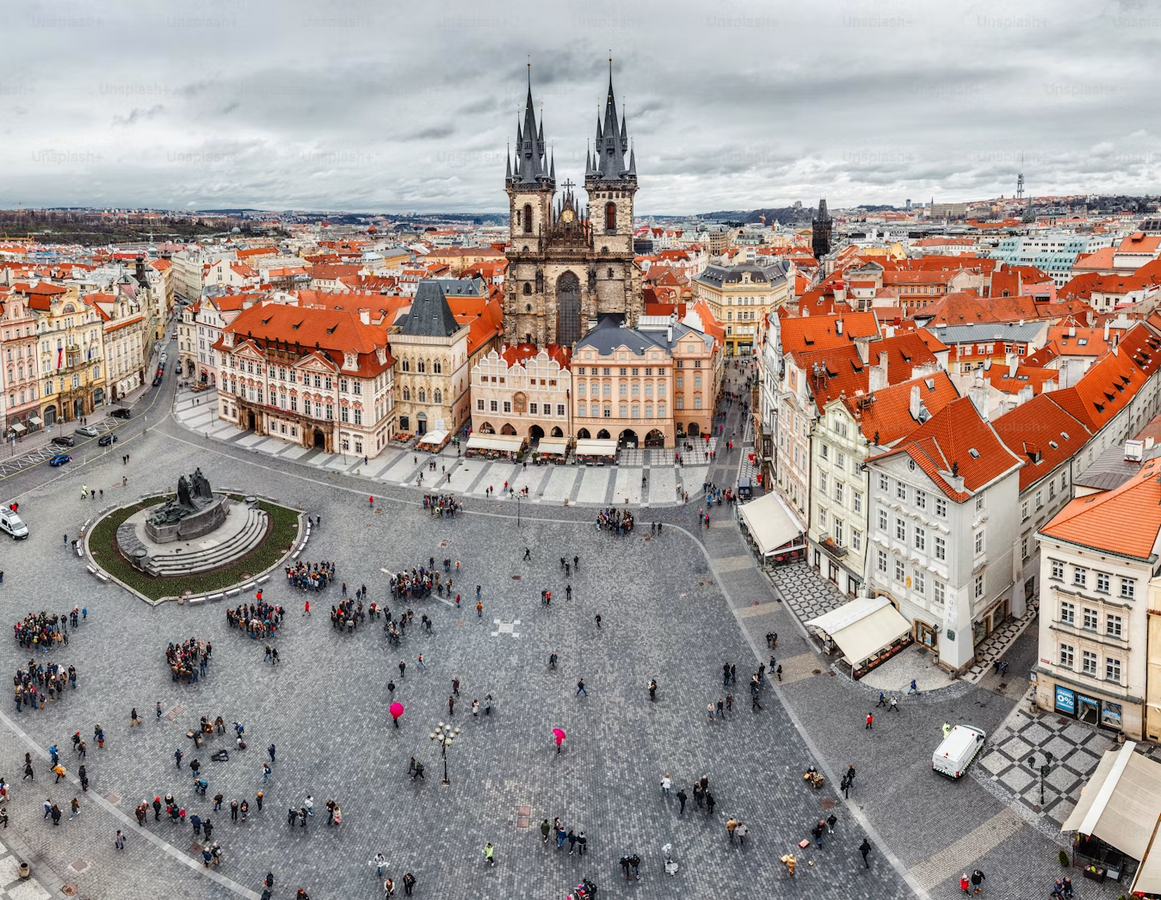
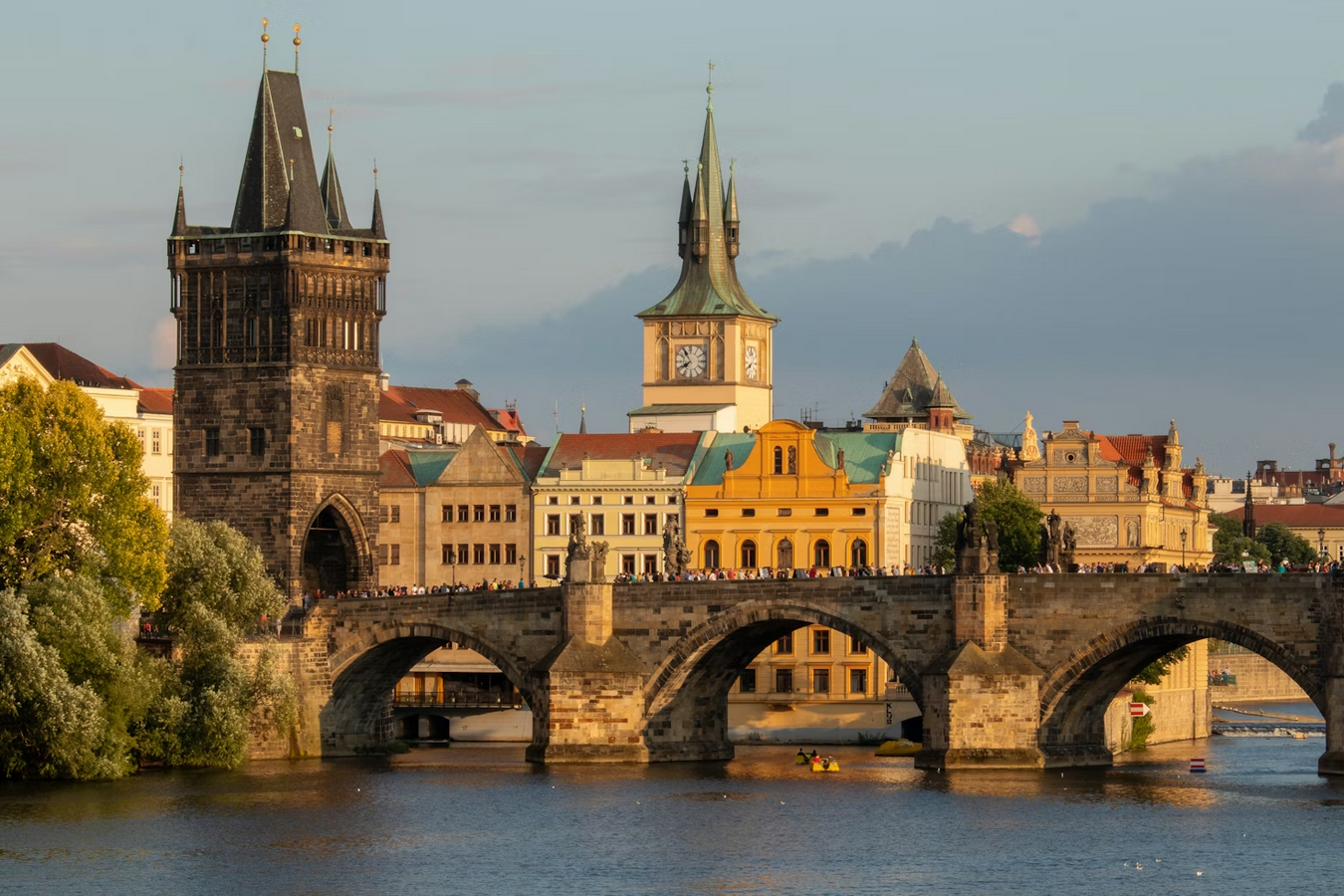
During the 13th century, Romanesque architecture evolved into Gothic Architecture, from rounded arches to pointed ones. Gothic architecture flourished under the Holy Roman Emperor and Bohemian King Charles IV in the 14th century. The St. Vitus Cathedral stands as a testament to the Gothic style of architecture in Prague, with its towering spires and ornate interiors. Other gothic structures include the Old Royal Palace at Prague Castle, the Old Town Bridge Tower, the Church of Our Lady before Týn, and the Old Town Hall Tower. A notable mention would be the Gothic Old Town Tower at the eastern end of Charles Bridge. For centuries, it was the only way to cross the Vltava River, making it a prominent landmark in the city.
Renaissance architecture- 16th century
As the Bohemian Kingdom started falling apart in the 16th century, with the entry of powerful Austrian nobles who started preferring the “Renaissance” style then emerging out of Florence. The Gothic fad started to fade away, and inspiration from the Greeks and Romans’ penchant for symmetry and proportion was taken under the new architectural style, “Renaissance.” Structures were laid out with mathematical precision, with columns laid out at equal intervals. The Summer Palace in the gardens north of Prague Castle is a good example of the Renaissance style in Prague.
Baroque architecture -17th & 18th centuries
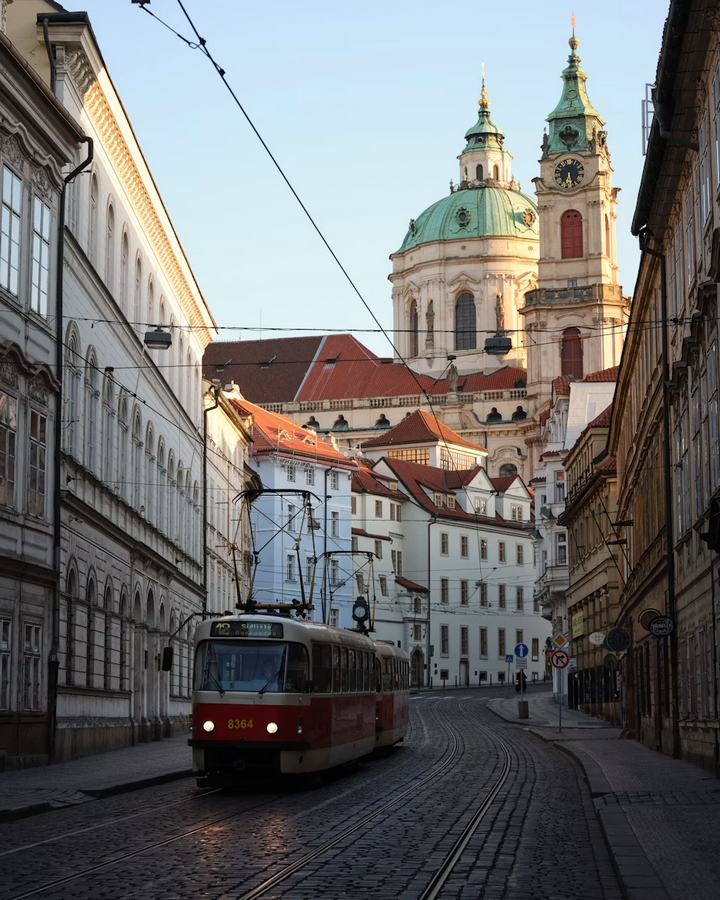
Baroque architecture spread in Prague as the catholic church and nobility extended their influence to Europe. Painted ceilings, marble columns and copious use of metallic colours were some of the defining features of Baroque seen in Prague in the 17th and 18th centuries, as well as across Europe. Many of these Baroque structures are places of worship, such as St. Nicholas Church in Malá Strana, with its frescoes that dissolve ceilings into painted heavens.
Art Nouveau architecture – 1890-1910
Art Nouveau takes inspiration from nature, its organic forms resembling leaves, stems and roots. The facades of the Municipal House and the Grand Hotel Evropa are clearly examples of classic Art Nouveau; the latter hotel also served as set locations for movies such as Titanic and Mission Impossible, even housing prominent figures such as Franz Kafka. The hotel also has a heroic past for housing hundreds of Jewish children before World War II. With its ironwork and striking colours on its facade and floral motifs, this hotel is a quintessential example of Art Nouveau architecture in Prague.
Czech Cubism architecture – 1910-20
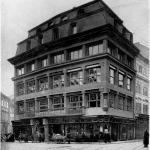
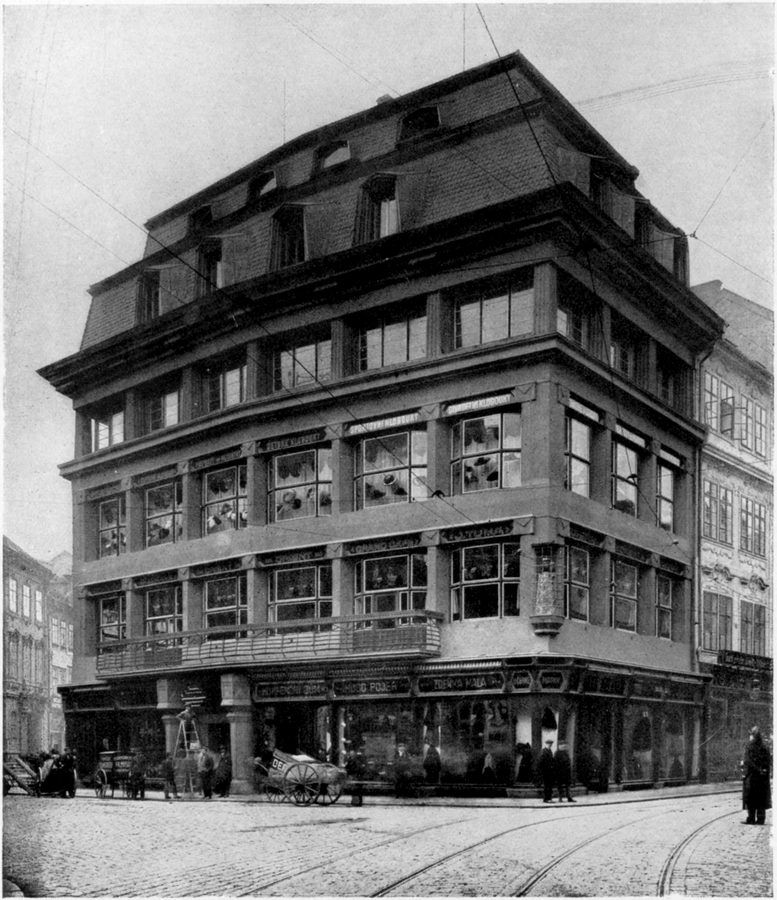
Only a few cities in the world can claim a Cubist architectural era, and Prague is one of them. The Cubist architects drew inspiration from the painting style popularised by artists such as Pablo Picasso and Georges Braque. The most notable Cubist building in Prague is the “House of the Black Madonna” in Old Town by the Cubist architect Josef Gočár. The old town is also incidentally home to the city’s Cubist museum. Josef Chochol was another Czech architect who designed a small group of Cubist Villas along the Vltava River, below the Vyšehrad citadel.
Contemporary architecture
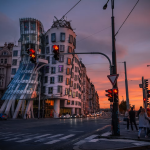
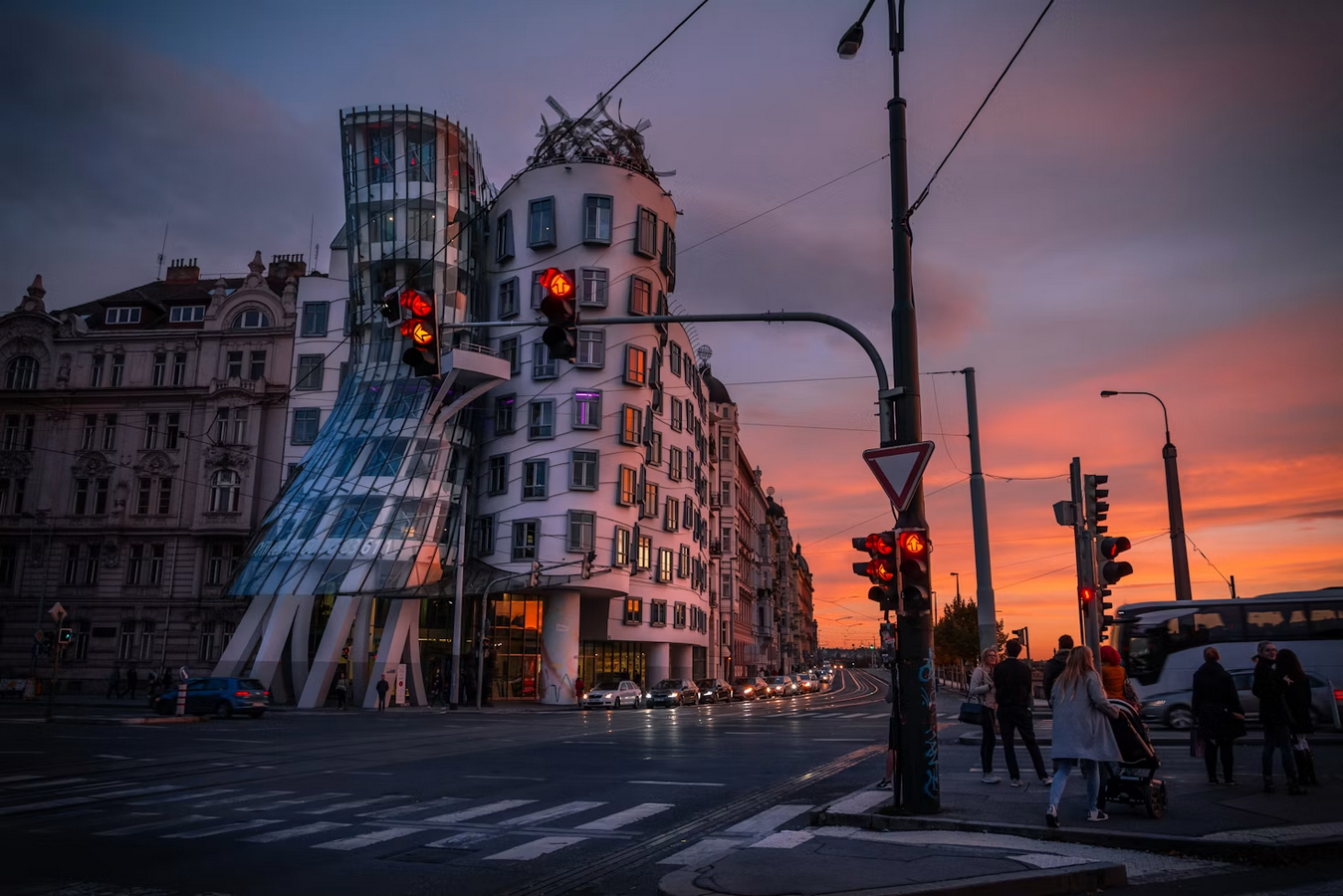
The literal meaning of contemporary is “occurring in the present time”, and in recent years, the Dancing House by architect Frank Gehry has become one of the most recognisable buildings from Prague in the contemporary style. This structure is celebrated for its deconstructivist style and shows how Prague has evolved its architectural style. The mosaic of Prague continues to evolve while retaining its originality, be it the Gothic stone, Baroque curves, Art Nouveau’s ornament or Zaha Hadid’s futuristic facade. Walking in the streets of Prague will be a layered experience where one can move from one era to another within minutes. Prague is a city that doesn’t rebuild but retains.
References-
https://www.kkhotels.com/the-mosaic-of-prague/
https://markbakerprague.com/part-two-a-primer-for-reading-buildings/