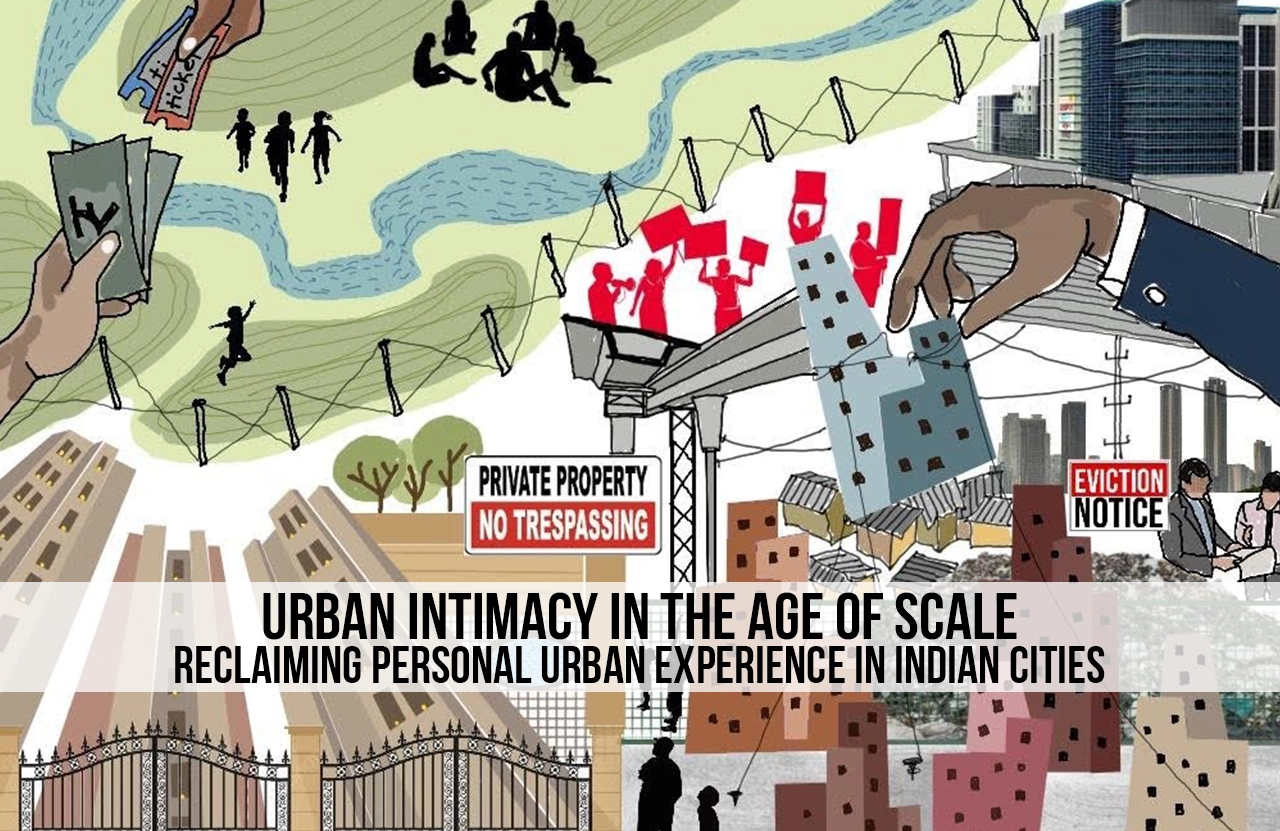
The cities we live in now are growing faster than ever before. The sheer extent of growth is marked by the development of infrastructure, connectivity, and the economy. However, what is often overlooked are the experiential dimensions of such growth, i.e., those dimensions of cities which cannot necessarily be quantified but affect one’s experience and perception of their environment.
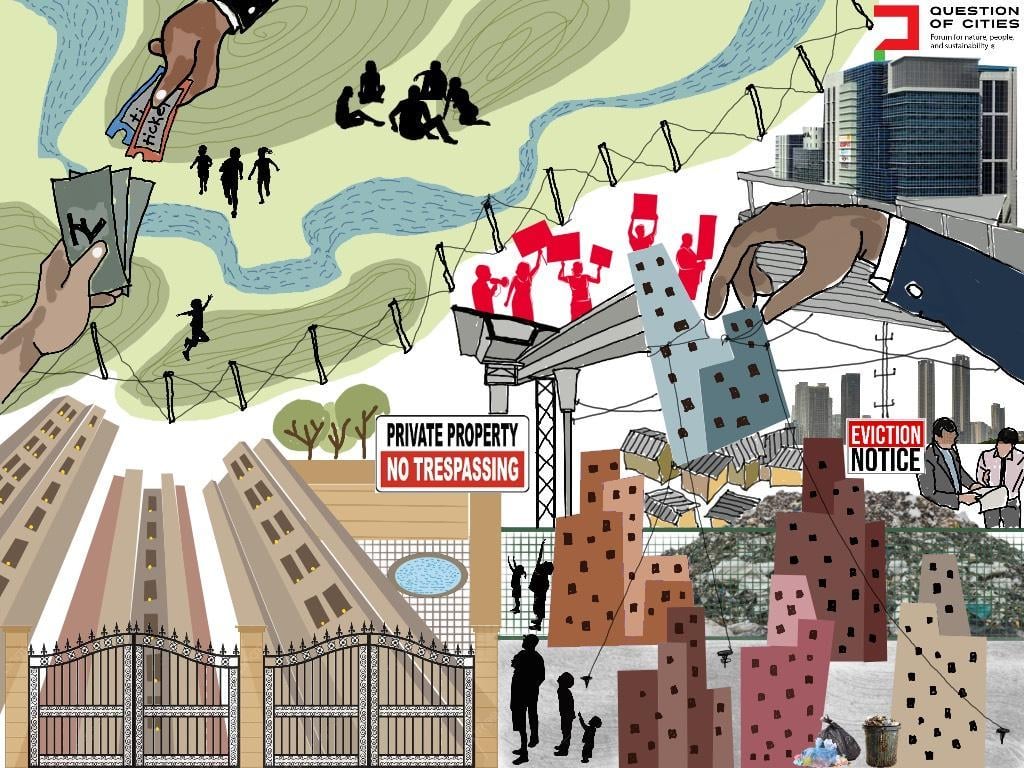
Thus, an important question arises regarding the ability of cities to maintain their personal nature amid such rapid growth. This brings us to the concept of ‘urban intimacy’, which represents a counter-approach to large-scale urbanisation. This approach emphasises the experiential, sensual, and emotional dimensions of cities and city-making.
In turn, urban intimacy does not refer to physical density or compactness. Instead, urban intimacy denotes the ability of the urban environment to create a sense of familiarity and comfort through everyday experiences, whether it is a shaded verandah, an active intersection, or simply a transition space between private and public realms.
Through this article, we hope to explore the concept of urban intimacy in depth and discuss how this phenomenon can help cities preserve their intimacy amidst their growth, drawing particularly on Indian examples.
Image 1: This image shows how, in Indian cities, there is a continuous relationship between the spaces of privacy and public interest. This visual helps support the assertion that urban intimacy is about negotiating the edges between spaces. It reiterates the claim that urban intimacy is created through spatial interactions – including balconies, thresholds, street edges, and the blurring of domestic and urban spaces.as the image helps introduce the key concept that in Indian urbanism, there is no strict binary relationship between “private vs public.”
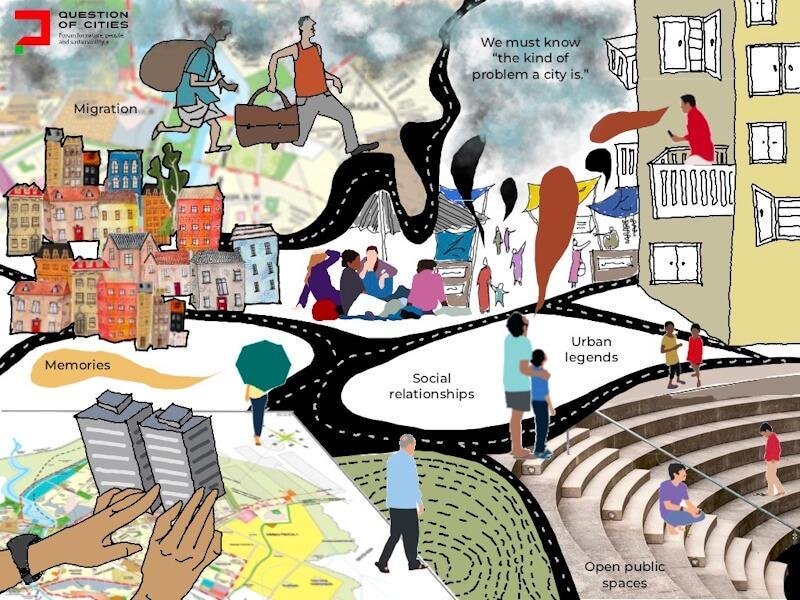
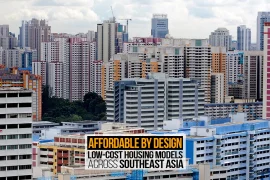
The image emphasises the dynamism and development of Indian cities, which come about due to perpetual migration, slums, and infrastructure. This image portrays the ‘scale problem’ mentioned in the passage, as there can be growth without coherence. This image helps you make your case for the “Problem of Scale” in your section because urban growth not only refers to expansion but also involves change of boundaries, which can weaken human scale connections and relationships.
Understanding Urban Intimacy
Urban intimacy refers to the nature of a particular space where one can relate with the environment around, with other people and even with themselves. Intimacy does not depend on size but rather develops within the interactions between people, space and experience.
According to Pallasmaa (2012), architecture is experienced with the body and its sensations, and not just visually. This kind of body perception brings about emotional experience, which is an essential part of intimacy. Similarly, Gehl (2010) advocates for human-sized cities, considering movement, interactions, and experiences in design.
Urban intimacy emerges through:
- Human-scale spatial design
- Sensory richness
- Opportunities for interaction
- Cultural continuity
- Temporal rhythms and everyday practices
These elements collectively transform urban environments from abstract systems into lived, meaningful places.
The Problem of Scale in Modern-Day Cities
While modern-day cities have grown significantly through efficiency, speed, and standardisation, these elements can sometimes be detrimental to the experience.
The Absence of Human Scale
The construction of high-rise buildings, extensive road networks, and large-scale development projects limits human scale and proximity, which facilitates interaction.
Uniformity of City Design
Global design processes lead to visually identical cities, often detached from their immediate surroundings.
The Deterioration of Informality
Controlled and sanitised city spaces tend to exclude the natural informalities of cities, including street markets and impromptu assemblies.
According to Jacobs (1961), the two ingredients that make vibrant cities include variety and unpredictability.
Urban Experience as a Multi-Sensory Phenomenon
The urban experience transcends mere sight into something more intricate. It is affected by several layers of sensory stimulation that impact perception, cognition, and behavior.
Urban sounds, ranging from voices, footfall, ambient noise, to bells from temples, form rhythm and identity (Schafer, 1977).
Smellscapes
Smell stimulates memory; the smell of food, incense, and rain adds to one’s sense of familiarity and place.
Tactiles
Surfaces and materials, be it stone, wood, or shadows, stimulate one’s senses and provide a sense of spatial context.
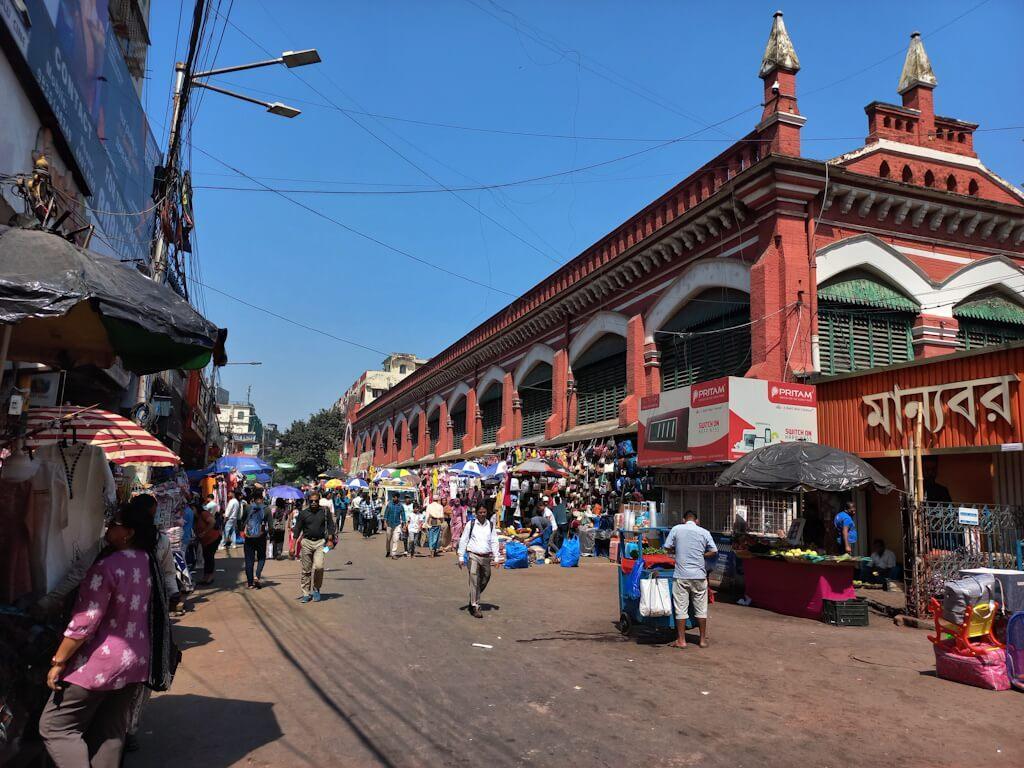
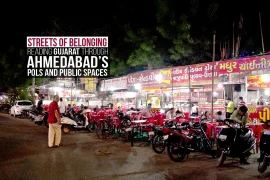
The image illustrates the emergent nature of informal economies in existing urban environments. The adaptability of the streets and building edges to serve multiple purposes highlights the role that informality plays in creating rich sensory environments and intimate connections. This image reinforces your point about “Everyday Urbanism,” illustrating how informal systems help maintain intimacy through ongoing use, negotiation, and sensory experience.
Thermal Comfort
Factors such as microclimate, including shade, air movement, and temperature, affect the use of space.
Together, these sensory layers create immersive environments that foster intimacy by engaging users holistically.
The Role of Transitional Thresholds
According to Alexander et al. (1977), such intermediate spaces are essential for creating environments that feel humane and alive.
The Role of Transitional Thresholds
Transitional thresholds, usually ignored, are important in terms of urban intimacy.
Defining Thresholds
Thresholds consist of verandahs, courtyards, arcades, plinths, and partially enclosed spaces acting as intermediaries between various spatial states.
Spatial and Social Function
They facilitate smooth transitions from the public domain into the private domain without discouraging informal relationships.
Climatic Responsiveness
In several traditional contexts, transitional thresholds also serve the purpose of moderating sunlight, air circulation, and temperature.
As Alexander et al. (1977) point out, intermediate areas are necessary for developing living environments.
Everyday Urbanism and the Culture of Interaction
Urban Intimacy is about everyday living rather than architecture.
Street Life
The street becomes a place of exchange where movement and interaction can be found.
Rituals and Routine
Walking, shopping, and socialising lead to an understanding of and emotional bond with the space.
Cultural Activities
Festivals, markets, and ritual performances imbue space with significance.
Lefebvre’s assertion that space is socially produced further underlines the point that urban intimacy results from experience.
Urban Intimacy in Indian Settings: Insights from Case Studies
Indian cities offer rich examples of how intimacy can coexist with density and complexity. These environments demonstrate how sensory richness, thresholds, and cultural practices shape the urban experience.
Ujjain: Ritual Landscapes and Temporal Intimacy
The historic city of Ujjain reveals how intimacy is shaped through ritual and temporality.
- Ghats along the Shipra River act as thresholds between sacred and everyday life
- Daily rituals create time-based transformations of space
- Smellscapes (incense, flowers) and soundscapes (chants, bells) reinforce identity
Insight: Intimacy emerges through shared participation and recurring practices, making the city deeply personal despite its scale.
Indore (Rajwada & Sarafa): Everyday Urbanism
In Indore, the Rajwada–Sarafa precinct demonstrates dynamic urban intimacy.
- Streets transform from markets to night-time food zones
- Strong foodscapes define sensory identity
- Plinths and shop edges act as informal social thresholds
Insight: Temporal adaptability allows users to build personal connections with space.
Ahmedabad Pols: Dense yet Personal
The traditional neighbourhoods of Ahmedabad illustrate how density can support intimacy.
- Narrow गलियाँ create enclosure
- Courtyards and otlas foster interaction
- Strong community networks reinforce belonging
Insight: Spatial structure actively enables social relationships.
Varanasi Ghats: Collective Intimacy
The ghats of Varanasi present an intense sensory environment.
- Continuous transitions from city to river
- Overlapping ritual and everyday activities
- Strong multi-sensory immersion
Insight: Intimacy can be collective and immersive, not just quiet or individual.
Old Delhi (Shahjahanabad): Negotiated Space
In Delhi, intimacy is embedded in dense, layered urban fabric.
- Narrow गलियाँ and mixed-use edges
- Streets extend domestic life
- Informal negotiation shapes spatial use
Insight: Intimacy thrives through flexibility and negotiation, not rigid planning.
Temple Towns (Madurai / Srirangam): Cultural Continuity
Cities like Madurai demonstrate integrated urban life.
- Concentric planning supports movement and ritual
- Threshold spaces mediate climate and activity
- Strong cultural rhythms create familiarity
Insight: Spatial order combined with cultural continuity fosters a deep connection.
Reclaiming Intimacy in Contemporary Design
To preserve intimacy in the expanding urban realm, design needs to change its priorities:
- Human-Scale Design: Focusing on pedestrian-friendly, proportionate spaces.
- Sensory Design: Taking into consideration sound, scent, materials, and climate.
- Thresholds and In-between Spaces: Creating transitional, semi-public spaces.
- Promoting Flexibility and Adaptability: Allowing a wide variety of potential functions.
- Contextual Design: Reflecting regional practices and culture.
Limitations
- Current legislation favours standardisation
- Efficiency-oriented market-driven development
- Sensory and emotional aspects are hard to measure
- Negative perception of informalities
Such limitations call for new policies and design approaches.
In the world of scale, the problem lies not in the growth per se, but in the inability to connect people within ever-expanding cities. The concept of urban intimacy allows us to look at the urban realm differently, giving attention to sensual quality, continuity, and interactivity.
The Indian urban context proves that urban intimacy can exist even in the densest cities by way of thresholds, rituals, and practices. These lessons cannot be considered purely nostalgic – on the contrary, they have become imperative for designing future cities.
The future is bright indeed, if cities are meant to be lived in.
References:
Alexander, C., Ishikawa, S., & Silverstein, M. (1977). A pattern language: Towns, buildings, construction. Oxford University Press.
Gehl, J. (2010). Cities for people. Island Press.
Jacobs, J. (1961). The death and life of great American cities. Random House.
Lefebvre, H. (1991). The production of space. Blackwell.
Pallasmaa, J. (2012). The eyes of the skin: Architecture and the senses (3rd ed.). Wiley.
Schafer, R. M. (1977). The tuning of the world. Knopf.
Whyte, W. H. (1980). The social life of small urban, Project for Public Spaces.
Chandavarkar, P. (2025, September 17). Private space and public interest in the Indian city – Question of Cities. Question of Cities. https://questionofcities.org/private-space-and-public-interest-in-the-indian-city/
Chatterjee, S. (2026, March 6). Let’s transform Kolkata into a care-based feminist city – Question of Cities. Question of Cities. https://questionofcities.org/lets-transform-kolkata-into-a-care-based-feminist-city/