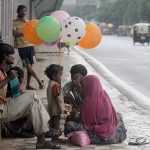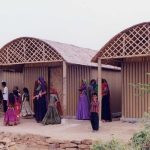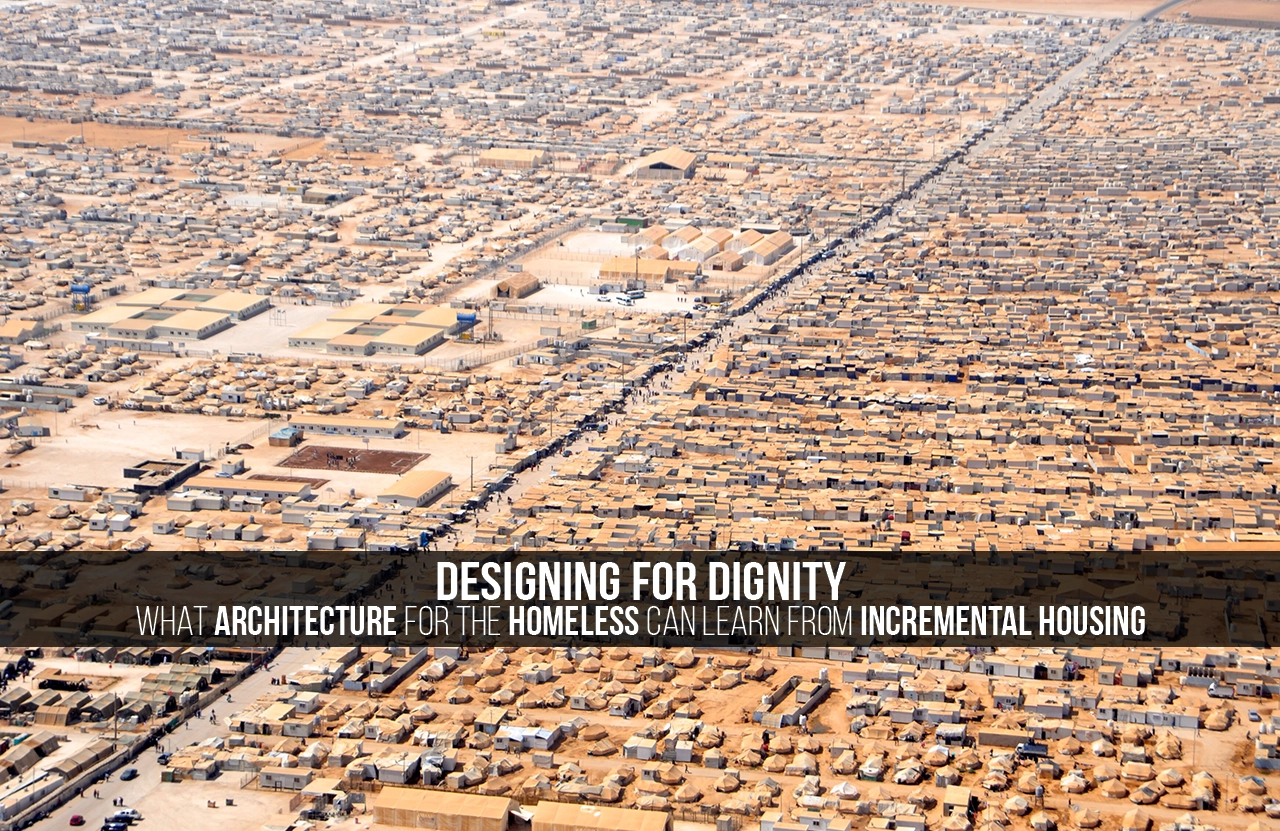
A roof gives shelter, but it does not always ensure dignity.
This difference matters because most homeless shelters focus on survival, but feeling at home takes more than that. Staying dry and safe meets basic needs, yet housing is not just about keeping people alive. Privacy, ownership, identity, community, and belonging are just as important.
Worldwide, homelessness, displacement, and lack of housing have led governments, architects, and humanitarian organisations to seek quicker and cheaper housing solutions. Shelter solutions that can be produced efficiently and in large numbers are certainly an important consideration, especially during times of emergency. However, efficient design does not automatically lead to places that people want to call home.
The issue therefore goes beyond simply offering shelter; it entails the creation of spaces that respect the dignity of those who inhabit them.
Such a change of viewpoint radically alters the nature of architecture itself. Rather than considering housing as something offered to someone, it now becomes a context for the restoration of identity and stability. The most successful housing schemes understand one basic fact – people do not just need houses.
They need places where life can take place.
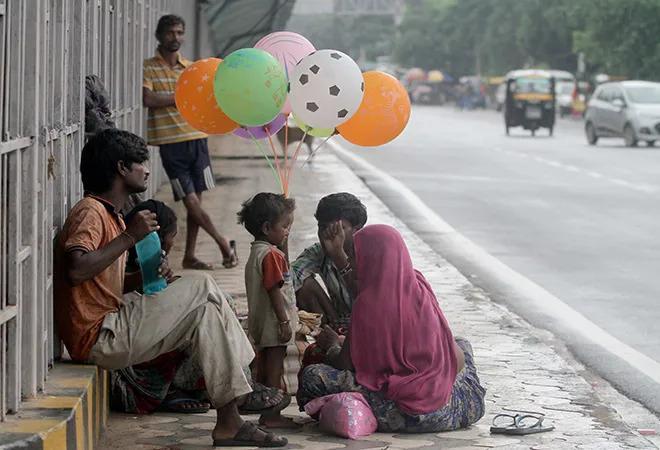
When Temporary Becomes Permanent
A solution that comes up repeatedly when there is displacement and homelessness is emergency shelter. Refugee camps, transitional housing, emergency housing and disaster relief camps are all built on the basis of emergency. Their main goal is fast implementation.
This is absolutely necessary in times of emergencies. After earthquakes, floods, war and any other reasons for forced displacement and homelessness, emergency housing becomes crucial. However, many temporary houses end up facing a dilemma of their own. People live there for much longer than expected.
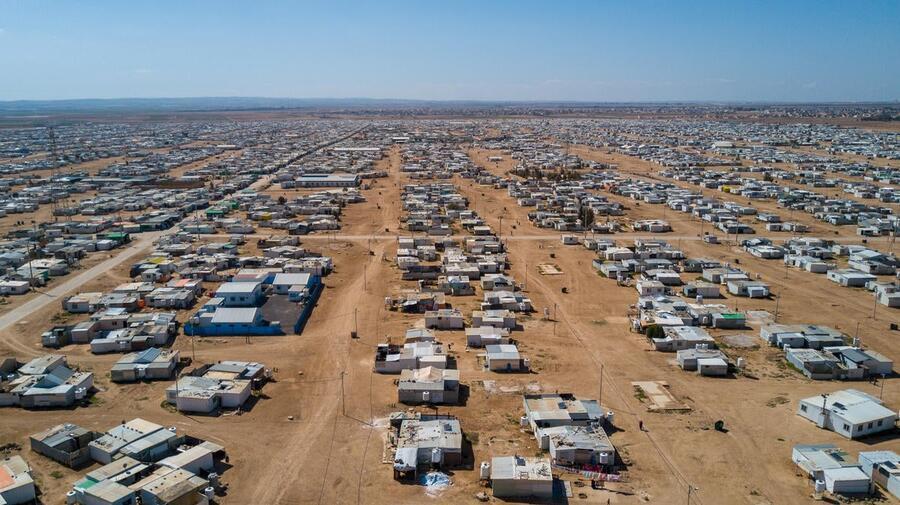
Temporary refugee camps meant to provide only short-term shelter turn out to be inhabited for decades. Temporary homes turn into permanent ones and even neighbourhoods. People make families and create their lives there.
The architecture, on the other hand, is usually frozen in a state of emergency.
While repetitive modules provide efficient living space for larger communities, they rarely allow room for customisation, personalisation, and interaction. People become consumers of architecture, rather than creators of it. The consequence is a dissociation between a shelter and a home.
This problem is not merely aesthetic; it is an issue of agency.
In cases when architecture offers no possibilities of adjustment, addition, and expression, it stands to be in danger of transforming housing into infrastructure. The task for the architect is thus not just to design rapidly, but to design knowing that temporary conditions often turn into permanent ones.
Designing for Agency
One of the most compelling challenges to traditional social housing has possibly come from the projects of Alejandro Aravena and his studio, ELEMENTAL, in Chile.
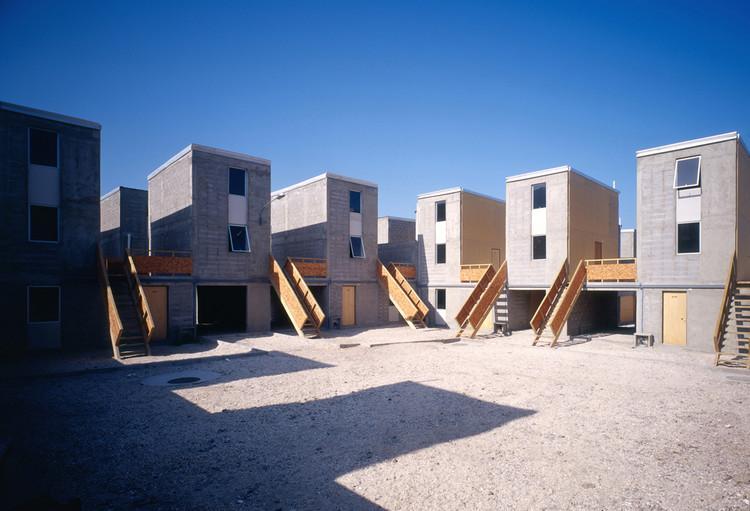
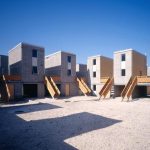
With strict financial limitations and an increasing need for social housing, the Quinta Monroy Housing Project offered an alternative to the usual approach to social housing construction. Instead of trying to build whole houses within the restrictions, the project opted to offer what Aravena called “half of a good house.”
Essentially, the idea was straightforward enough. The basic services, structures, kitchens, bathrooms, and main living areas were built first, while additional space for extension was left open. This way, people would be able to extend their houses to their requirements and means.
But what was remarkable about the project was that it was not just about cost-effectiveness.
It acknowledged the fact that people are not mere consumers of architectural design, but rather its creators.
The residents were granted the power of personalising, adapting and extending their dwellings. Housing was no longer a process of completion but rather one of becoming. The architecture spoke about aspiration and not imposition.
Such an approach is especially crucial to talk about homelessness and displacements. People who have experienced instability tend to lose control over many aspects of everyday routine. Architecture cannot solve all social problems, but it can provide possibilities of choice and adaptation.
In such a situation, dignity does not lie in what architecture offers, but also in what it enables people to be.
Designing for Community
Housing does not exist in isolation.
Housing is formed not just through walls and roofs, but streets, courtyards, thresholds, public spaces, and relationships. It is often the case that the success of housing depends not so much on the quality of the individual units, but rather on the life within the community.
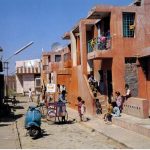
An example is the Aranya Low-Cost Housing project, designed by Balkrishna Doshi in Indore, India. The project, built in 1989, was intended to solve the problem of housing shortage while taking into account the economic diversity of residents.
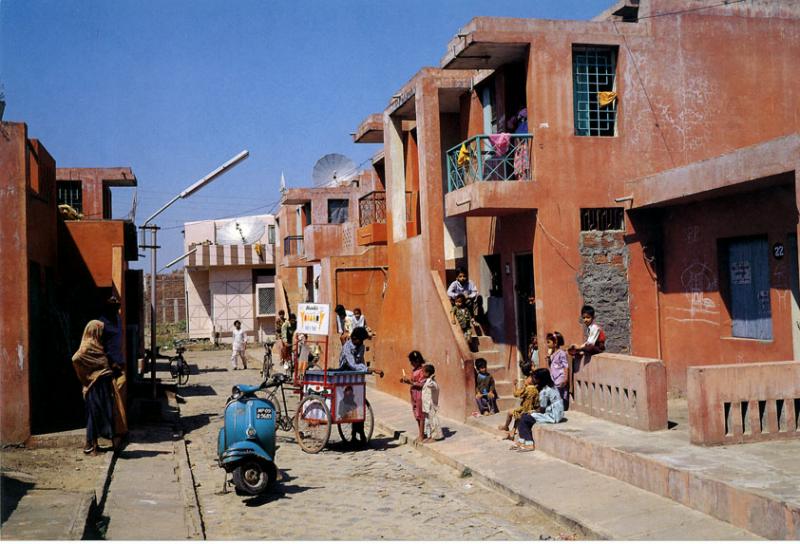
Instead of designing individual houses, Aranya paid attention to the neighbourhood. Narrow streets, courtyards, terraces, and public spaces foster social interaction between the residents. The neighbourhood itself was designed to be incrementally grown, allowing residents to improve their houses over time.
The unique feature of Aranya is that it resists architectural homogeneity.
Each house develops uniquely in accordance with the requirements of its inhabitants. What gives consistency to the whole is not homogeneity of buildings, but rather an urban context which accommodates diversity.
In the case of the underprivileged, this idea acquires particular significance. Social networks usually serve as a source of security, jobs, care for children, emotional sustenance, and a sense of belonging. While such housing provides shelter physically, it may neglect the broader realities of everyday life.
A housing unit can be duplicated. A neighbourhood has to be developed.
Replication Without Uniformity
However, the concept of a “replicable housing model” frequently brings up the idea of replication.
Identical design, identical units, identical results.
However, there are examples of replicable housing projects that challenge this assumption.
Replication doesn’t mean replicating the design. It can mean replication of principles. Adaptability, participation, affordability, incremental development, and community building can be replicated from one place to another without resulting in identical buildings.
Something that works well in Chile might work differently in India. What suits an urban environment may need adaptation in a rural area. The climate, culture, household structure, building technology, and economy affect the way people live in their houses.
The problem of overly standardised architectural solutions stems from treating the residents as interchangeable.
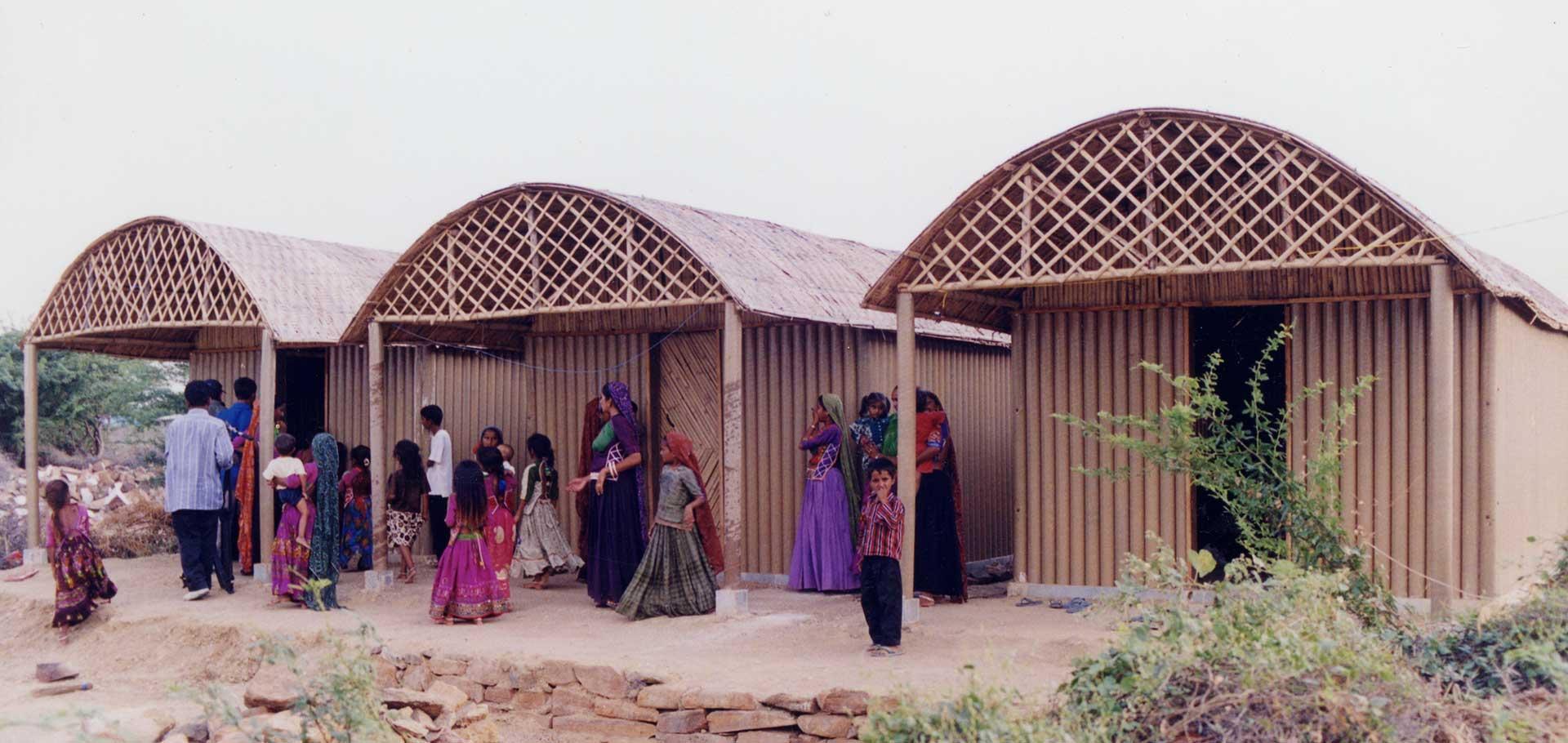
Architecture is made into a product that is to be produced rather than an environment that is to be inhabited.
The most durable housing systems do not suffer from such problems. They set up conditions rather than dictate solutions. They create possibilities for growth and allow people to shape their surroundings to fit their needs.
Replication should not be seen in this case as reproducing buildings. Replication means reproducing possibilities.
What Makes a House a Home?
The question seems quite simple at first glance.
A building offers shelter; a home offers something more.
While hard to quantify, privacy, identity, ownership, familiarity, and sense of belonging are some of the things that usually decide whether a building can fulfil its role in protecting human life or not. These things are normally considered second priorities in the process of building a house, as they become priorities only after the questions of affordability and efficiency.
But these aren’t luxuries. These are essential elements of dignity.
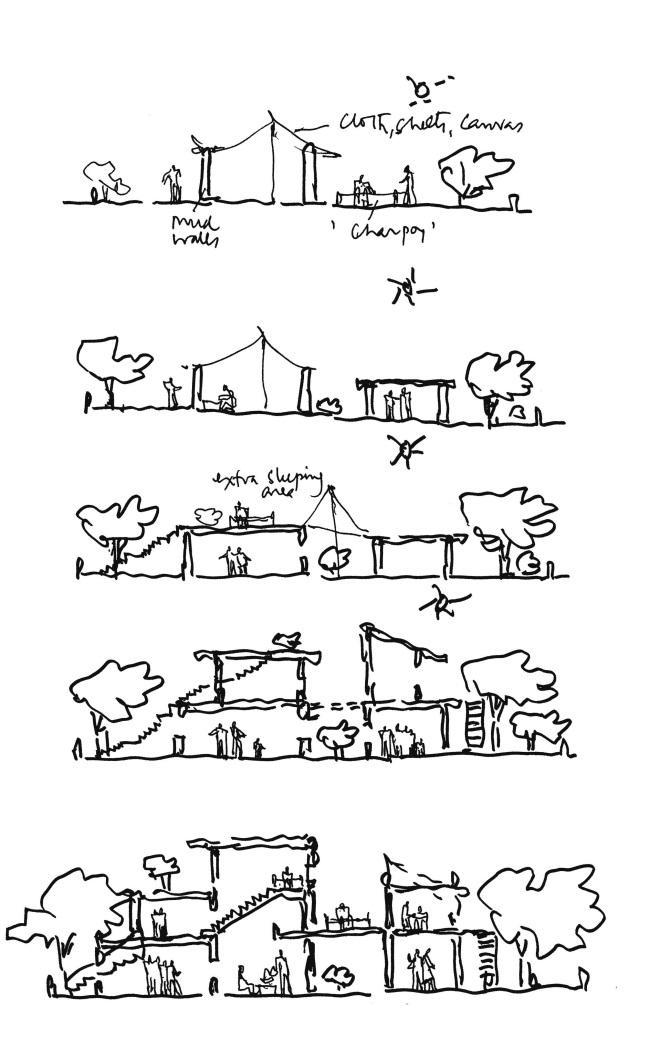
The ability to decorate one’s room, meet neighbours in a shared courtyard, change one’s facade, grow one’s garden or just feel like an owner of one’s space plays a big part in creating an experience of home. These actions help people establish themselves and reconnect after times of doubt or displacement.
Architecture doesn’t have the power to end homelessness through design itself. Shortages of housing are created due to economic, political and social conditions that go far beyond the architectural profession. However, architecture has its own unique power to affect the way housing is provided.
It all lies within those design choices.
Architecture for the homeless is always talked about using terms of scarcity – scarcity of money, scarcity of space, scarcity of materials, and scarcity of time in providing housing solutions.
But there are other architectural concerns that go above these considerations.
How much privacy does one need? What extent of environmental control does he/she have? Can housing be something more than just a roof over the head and help one create their identity and sense of belongingness?
It is clear from projects like Quinta Monroy and Aranya Housing that dignity cannot be treated as some extra element provided along with housing.
A roof provides shelter. A house provides accommodation. But the real worth of architecture lies in creating conditions for people to create their own lives.
The best housing solutions are never those that can be endlessly replicated. They are the ones that understand the basic humanity of those who live there.
And this is where the architecture for the homeless should start, not with buildings, but with dignity.
References:
- Aravena, A. and Iacobelli, A. (2016) Elemental: Incremental Housing and Participatory Design Manual. Ostfildern: Hatje Cantz.
- Turner, J.F.C. (1976) Housing by People: Towards Autonomy in Building Environments. New York: Pantheon Books
- UN-Habitat (2022) World Cities Report 2022: Envisaging the Future of Cities. Nairobi: United Nations Human Settlements Programme.
- UNHCR (2024) Global Trends: Forced Displacement in 2024. Geneva: United Nations High Commissioner for Refugees.
- Davis, M. (2006) Planet of Slums. London: Verso.
- Dovey, K. (2016) Urban Design Thinking: A Conceptual Toolkit. London: Bloomsbury.
- ELEMENTAL (n.d.) Quinta Monroy Housing Project. Available at: https://www.elementalchile.cl/downloads/quinta-monroy-housing-plans (Accessed: 5 July 2026).
- Aga Khan Award for Architecture (n.d.) Aranya Community Housing. Available at: https://www.akdn.org/architecture/project/aranya-community-housing (Accessed: 5 July 2026).