Ahmedabad is India’s first city to have been designated as a UNESCO World Heritage City in the year 2017. One reason for this is its small neighborhoods, known as pols, that are the very heart and soul of this ancient city that is more than 600 years old. Ahmedabad was founded in the year 1411 by Ahmed Shah of the Gujarat Sultanate, who established it as his capital city. Even though it was set up by an Islamic monarch, the city welcomed people of all cultures to establish their identity here.
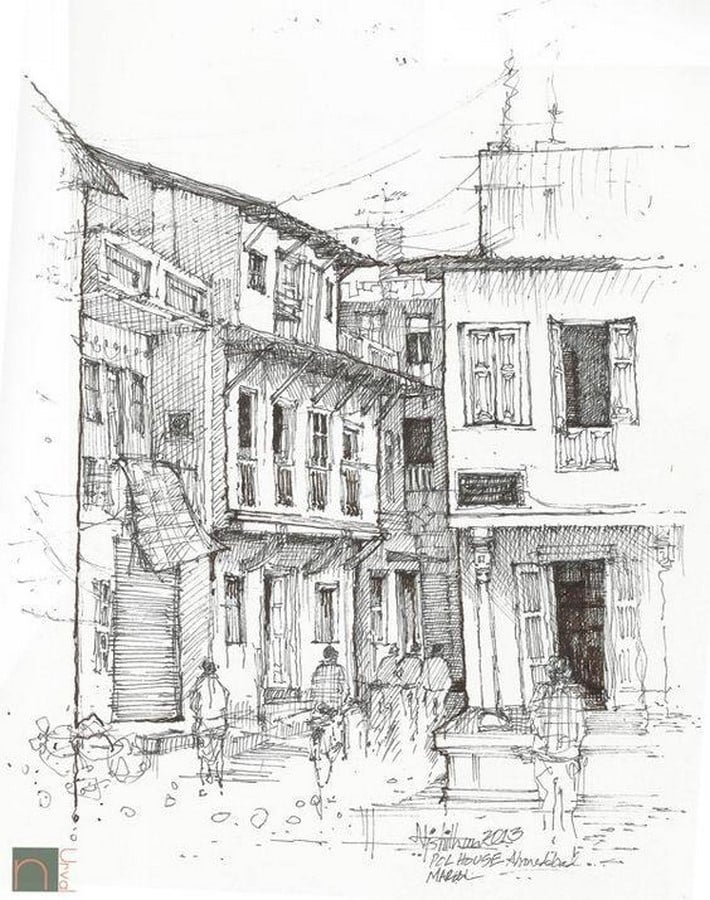
Indian cities traditionally divide themselves into neighborhoods, where houses are clustered together – they are the mohallas of North India, peths in Pune, paras in Bengal, and pols in Ahmedabad. The term ‘pol’ is derived from the Sanskrit word ‘pratoli’, which means ‘gate’.
Ahmedabad has about 600 pols, some over 600 years old, such as the Muhurat Pol near Manek Chowk, in the heart of the old city and said to be the city’s first pol. There is a certain structure as well as a function in pols. Each pol has an entrance gate with a guard residing in the residence above it. There is a notice board outside each pol, which passes on messages to its residents.
Many of the names of pols in Ahmedabad are quite intriguing. Some are named after the local community, while others are named after individuals, animals, places, gods/goddesses, and temples; others are even based on family relationships. For example, one of the pols is known as Kansara Pol because it is named after the community of Kansaras who traditionally made metal utensils. Another is Desai ni Pol, which is named after the Desai community who originally lived there. Similarly, Zaverivad was the place where jewelers lived, while the name of Haja Patel ni Pol is possibly based on that of an individual named Haja Patel, and there is also Mama ni Pol.
Another thing about the pols was that they had a unique system of safeguarding their occupants in case of a siege or raid. They all had gates made of timber protecting their entry point. When the door was closed, there was no way anyone could access the pols. The doors had sophisticated lock systems, which could not be broken easily. They were connected through several passages, which appeared like houses’ façades. One of those passages can be found near the Shantinath ni Pol.
Apart from that, the buildings in the pols are all connected, making it possible for their occupants to move from one roof to the other. All these systems helped the occupants communicate fast and flee in case of any catastrophe or attacks. Right after the revolt of 1857, the first thing that the British did was remove the doors from the pols’ entryways.
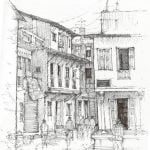
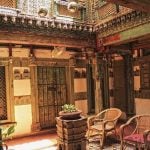
The buildings constructed in the 18th, 19th, and early 20th centuries possess distinct characteristics. The building consists of common walls and straight planning, with a great central courtyard (chowk). The chowk connects the essence of everything together and provides a feeling of unity and oneness. The whole indigenous building structure depicts a sense of closeness, hence no chance of isolation and loneliness. The chowk not only has sentimental value but is a necessity for natural light and ventilation, in addition to being a place of visual beauty and trot-out. The houses are small in size, and the inner area is dark since, most of the time, houses are connected; hence, rooms have openings either towards the street or anywhere that opens into the central court. The houses have otlas on the front side along the street for meeting other people of the community. It seems like a modern-day social networking site for communication. The wooden windows, the protruding balconies, the rustic façade, all are unique features that distinguish the Pol. The façade varies in scale and detailing depending upon the economic condition of the family.
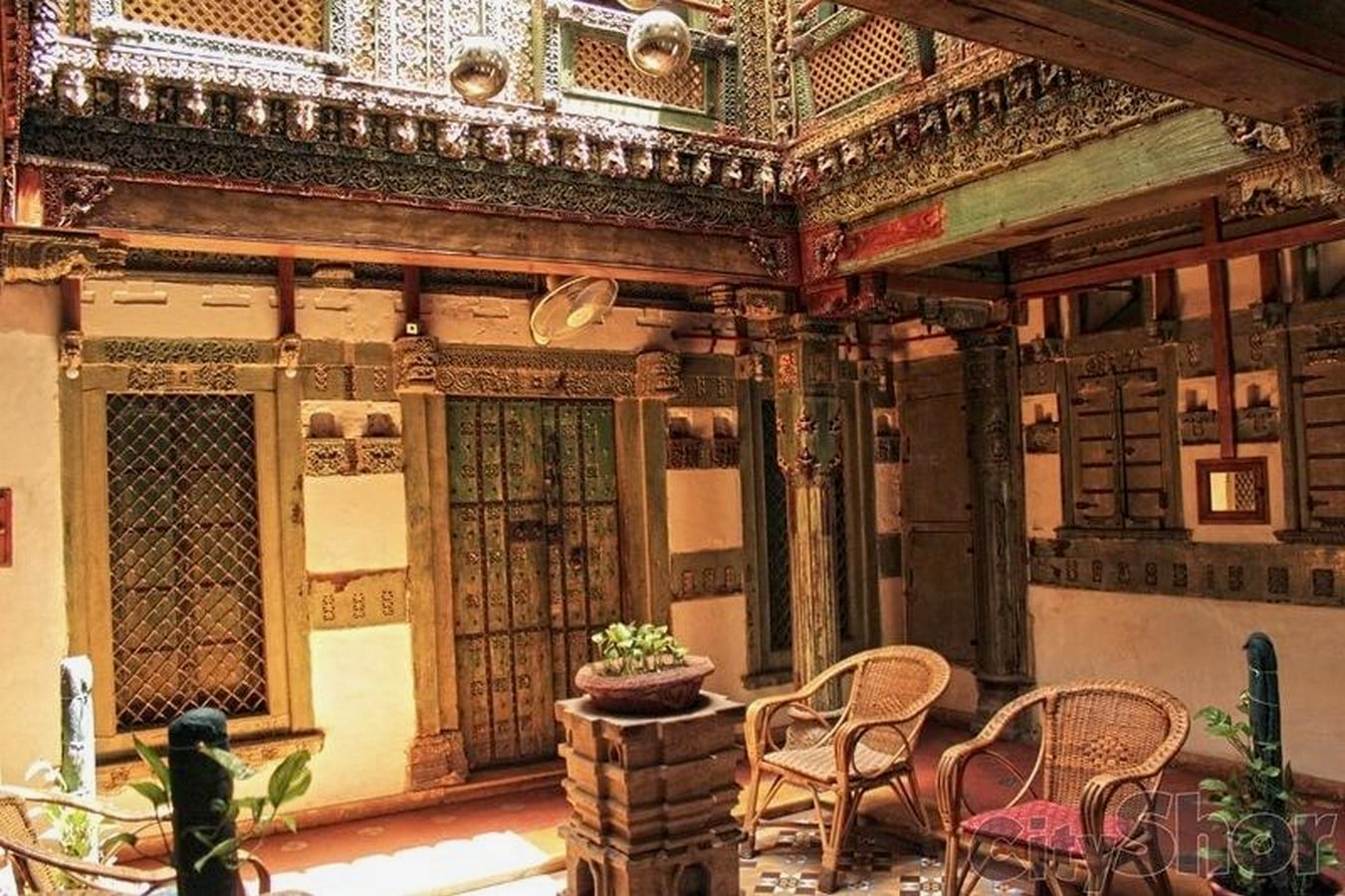
The settlement also has provisions for birds and animals, symbolizing the inclusive nature of existence in harmony with all beings. There are several Chabutra (bird feeders), which are artistically made in various colors. Most of the ancient dwellings have stairs, which have become resting places for cows during rain or scorching heat. The aspect of privacy of one’s own personal space in pols was of less significance, and people preferred to be interactive.
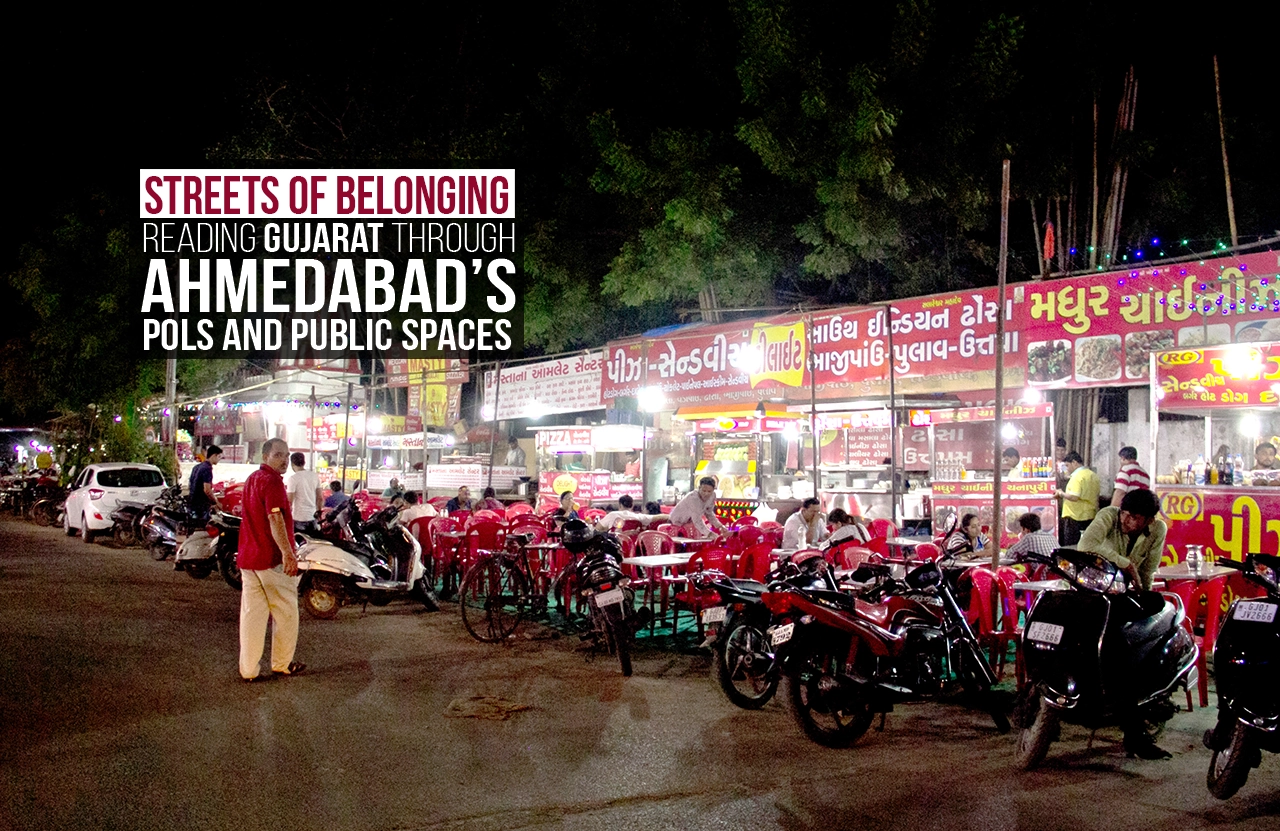
Ahmedabad, one of the most sacred cities for India’s textile industry, is also famous for its lively Manek Chowk. Beginning its day as a market for vegetables, turning into a place for buying jewelry or Sarafa bazar and one of the biggest bullion markets in the country in the afternoon, and ending up as a food street in the evening, Manek Chowk symbolizes a diverse city life. Manek Chowk derives its name from the 15th-century Hindu saint Maneknath, who helped Ahmed Shah I build the Bhadra Fort. The historical significance of Manek Chowk lies in its history, which can be felt in the layers of different activities that have gained intensity and diversity over time. Landmarks like Jumma Masjid, Badshah-no-Haziro, Rani-no-Haziro, and Muhurat Pol add to the place’s unique character. L-Shaped Chowk connects these landmarks with Muhurat Pol, the city’s oldest residential area, along with the Stock Exchange building.
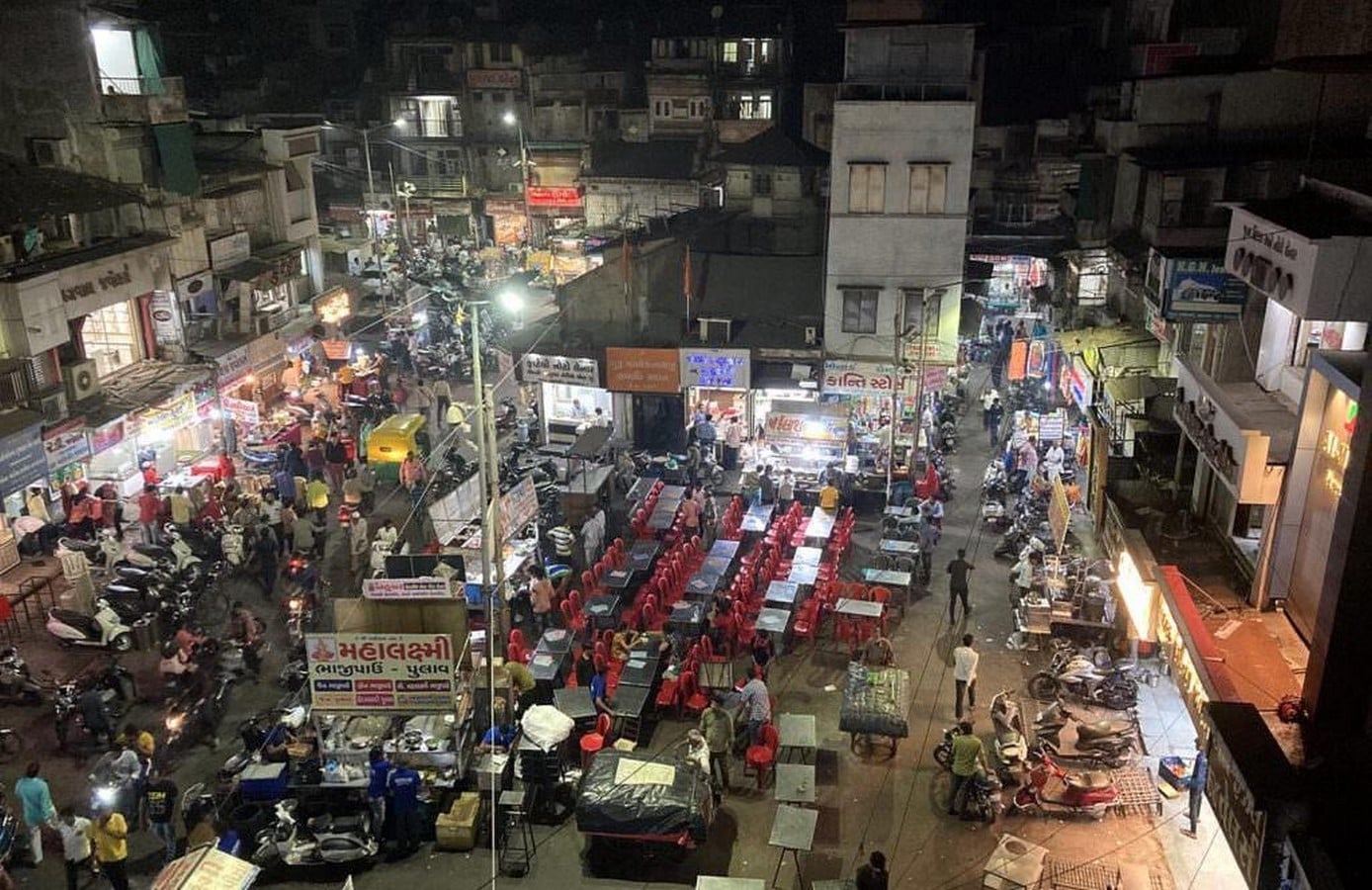
Ahmedabad started as a business settlement, and Manek Chowk was the ideal place for traders, merchants, and moneylenders. This is because the stock market and jewelry shops still exist today. The Chowk was an important place for formal rituals, as religious processions used to start from there. Religious needs have always been an important part of the regular market activities that helped the Chowk retain its importance in supporting minuscule but significant activities. Almost every house in the pol has been provided with water for drinking in an underground water reservoir known as the ‘chowk’.
As a part of people’s daily activities and rituals, the Friday market had developed permanent elements. The combination of ritual and the urban landscape contributed to building an identity and sense of belonging within the community and the city. Activities like buying, selling, and eating remained important rituals for a long. With the closing of stock exchanges and stores, owners of food carts take control of the evening. The Chowk becomes a hangout place. Its current form is thus full of value due to time, history, and people’s collective efforts.
Narrow streets enable the houses to look down upon and participate with the people around them. The complex web of streets that are connected and wind around each other forms a closely-knit community. Dense urban fabric with shared walls gives rise to shaded areas that stand tall as human habitation and are responsive to the climate due to the necessity for social interaction and protection. Almost like an endless fabric, where the mass proportions are similar to those of the open spaces, resulting in the wonderful urbanity of the city.
References:
Architectural Digest India (n.d.). How pols, Ahmedabad’s traditional cluster housing, were designed to keep communities close. [online]. Available at: http://architecturaldigest.in/content/ahmedabad-designed-homes-cluster-housing/.
D’Souza, S. (2022). Pols in the Walled City of Ahmedabad. [online]. (Published 14 October 2022). Available at: https://www.joinpaperplanes.com/pols-in-the-walled-city-of-ahmedabad/.
Jaglan, A.K., Korde, N. and Patel, P. (2023). Pol’s houses in Ahmedabad: the evolution of architectural elements and their influence on community living. International Seminar on Vernacular Settlements (ISVS #12), pp.369-379. Available at: https://arch.su.ac.th/images/publications/ISVS12/19-Amit.pdf.
Jain, A. (2020). Ahmedabad: Live Life Pol-Size. [online]. (Published 29 January 2020). Available at: https://www.livehistoryindia.com/story/places/ahmedabad-live-life-pol-size.
Kaushik, T. (2023). An ever-changing street of Ahmedabad: Manek Chowk. [online]. (Published 12 May 2023). Available at: https://enrouteindianhistory.com/an-ever-changing-street-of-ahmedabad-manek-chowk/.
Modo Designs (n.d.). Pols of Ahmedabad. [online]. Available at: https://www.mododesigns.co.in/blog-detail/pol-of-ahmedabad/.
UNESCO World Heritage Centre (2023). Urban Heritage Atlas: Historic City of Ahmedabad (India). [online]. Available at: https://whc.unesco.org/en/urban-heritage-atlas/ahmedabad.