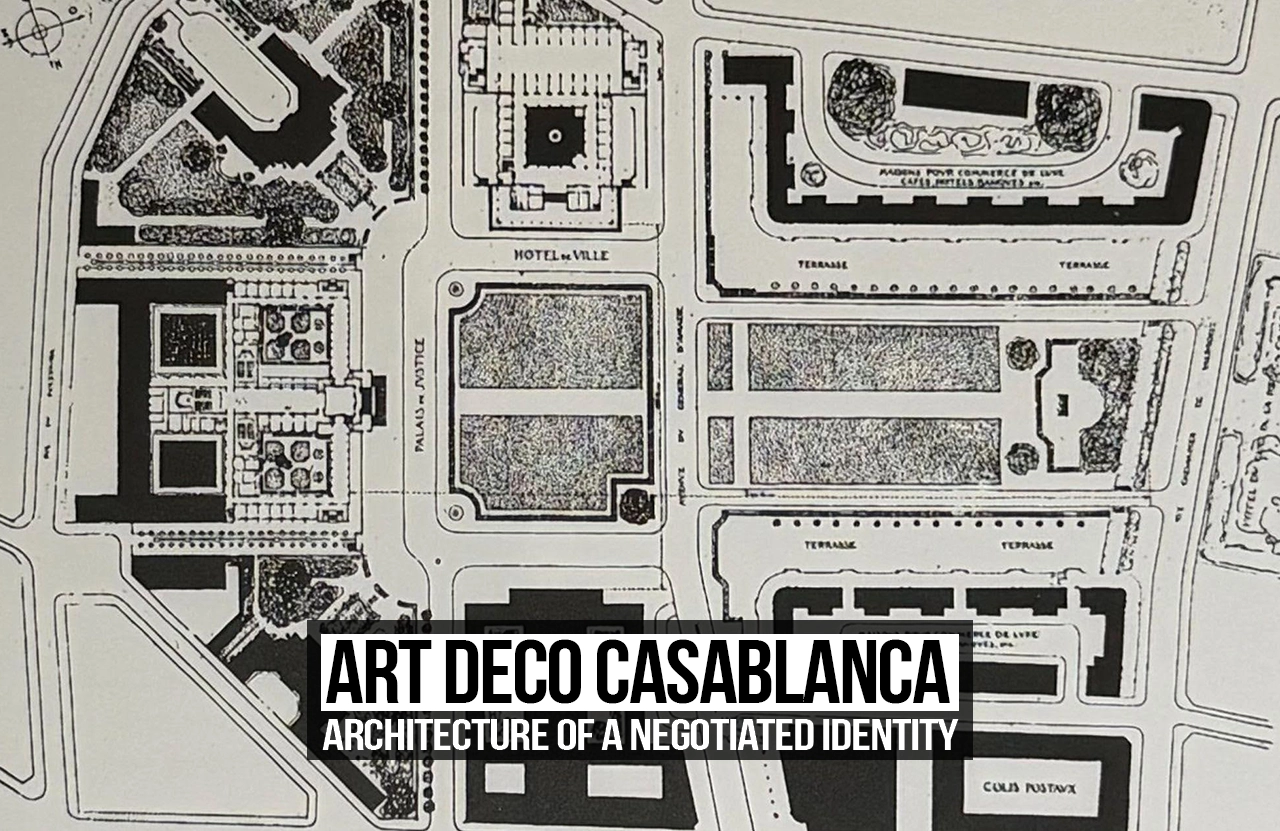
Casablanca has been widely called the “Art Deco city”, since it has been an open air laboratory for architectural experimentations. But its history is more nuanced than this plain simplification.
The French planners were “testing the waters” with a neo-mauresque style, dressing up European institutional buildings in borrowed Moroccan ornament, from the mid-1920s, as the vocabulary of Art Deco, popularised by the 1925 Paris Exposition Internationale des Arts Décoratifs (a style not even called “Art Deco” at the time) filtered into the city’s architectural production. Some architects adopted the new geometric, unornamented register entirely. Others kept folding in Moroccan materials and motifs, producing genuine hybrids.
What follows tracks that layering: where Art Deco negotiated with the néo-mauresque idiom, and where, by the 1930s, it stopped negotiating altogether.
Aiming to have an understanding of the “Casablancan” Art Deco, the following traces it’s context, evolution, and abandonment for a modernist vocabulary.
Néo-Mauresque and an identity imposed (1912–1925)
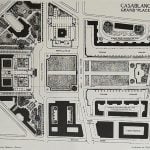
The Place Mohammed V houses many institutional buildings embodying the néo-mauresque style: a deliberate, French-authored fusion of Moroccan decorative motifs with European institutional planning, built to project a hybrid Franco-Moroccan identity.
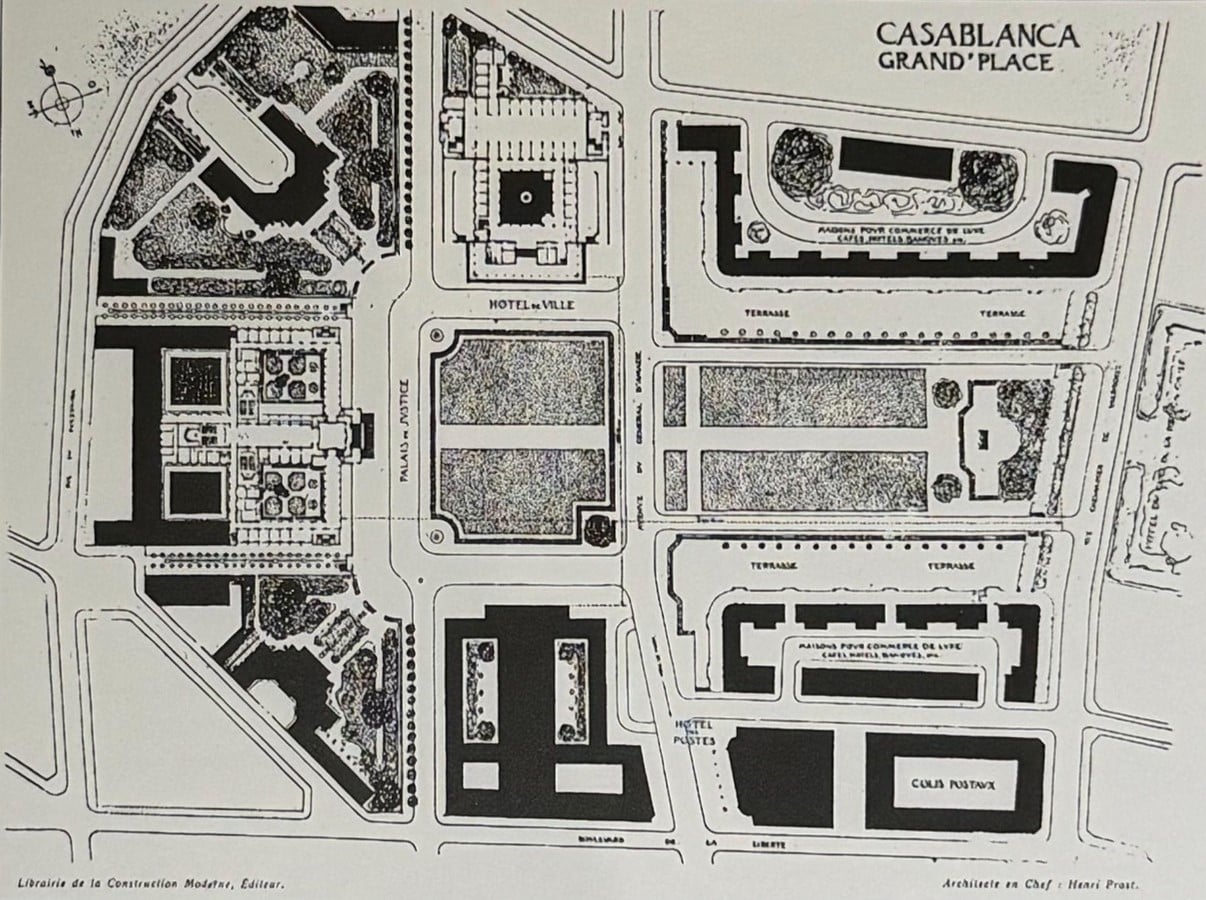
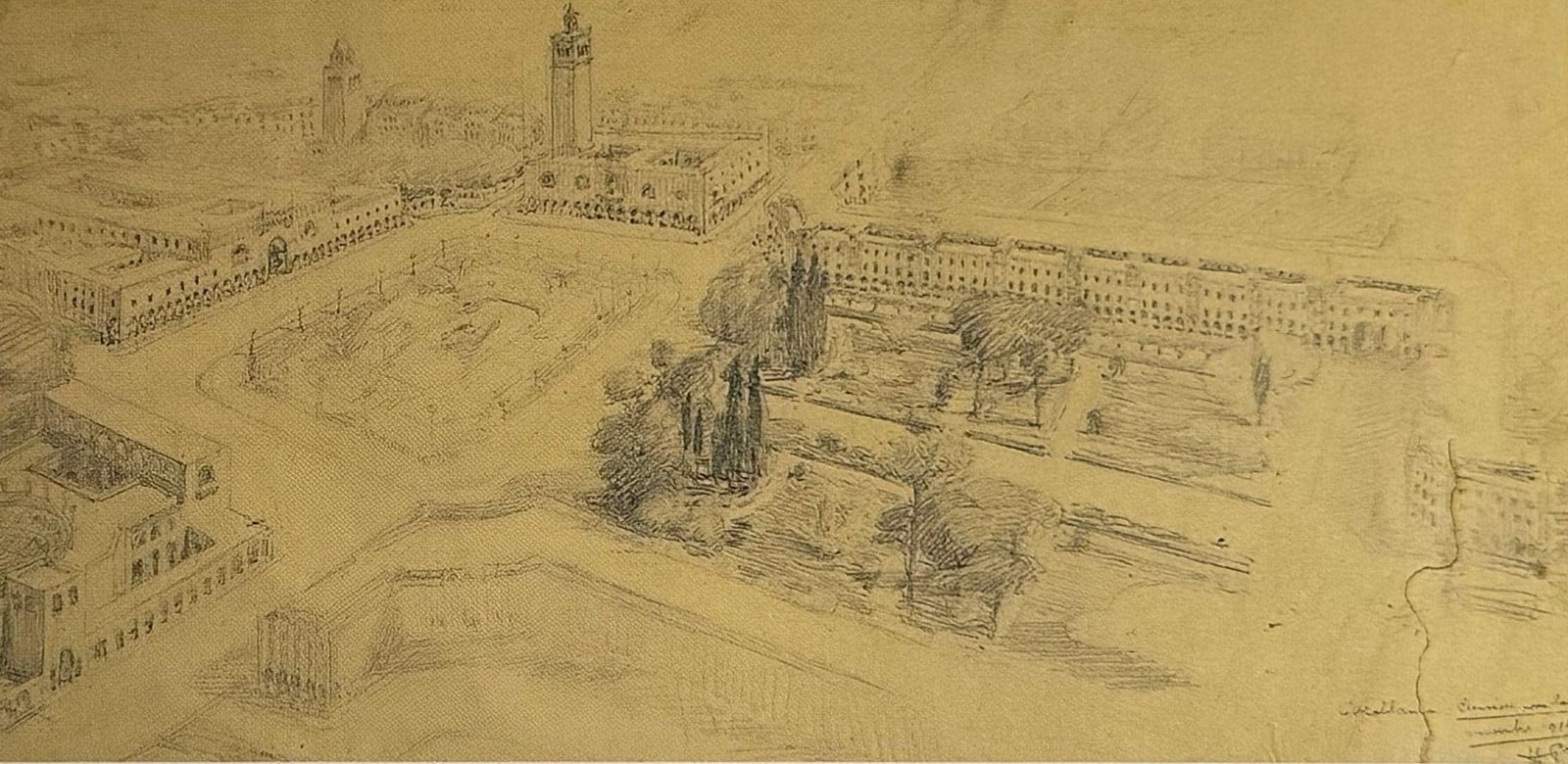
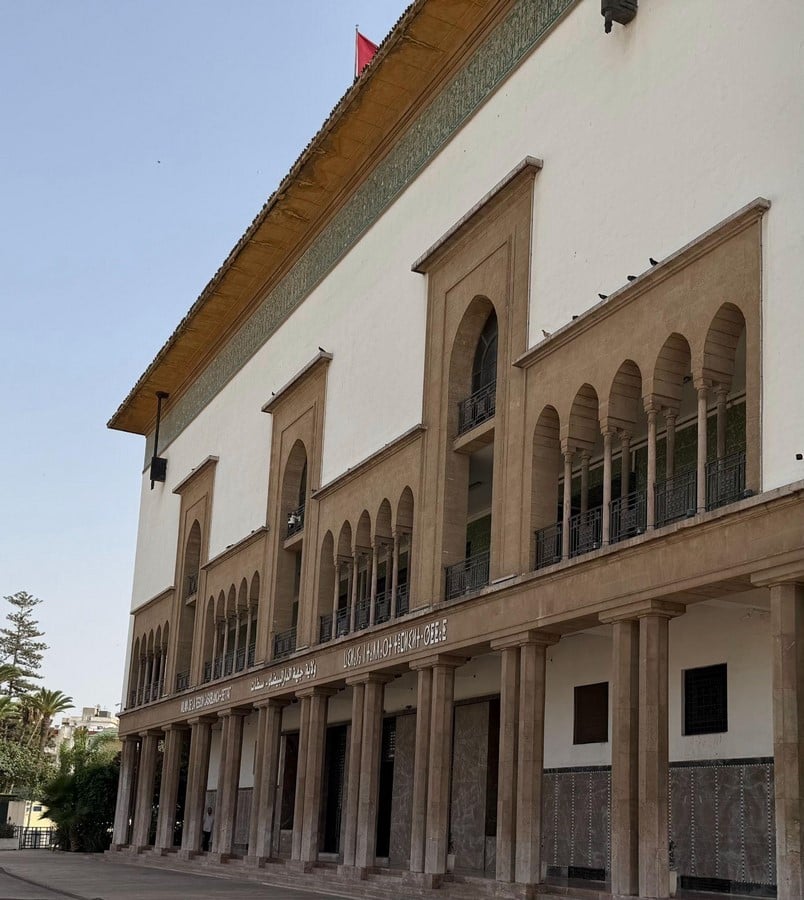
The Central Post Office, completed between 1918 and 1920 under the architect Adrien Laforgue, is the clearest early example. Its design was intended, in the words of Laprade at the time, to offer a model that any Frenchman could envy the people of Casablanca for having. Resident-General Lyautey reportedly insisted, at the end of construction, that red roof tiles already laid be replaced with green ones, in keeping with Moroccan convention. A revealing instance of the administration policing its own performance of local authenticity.
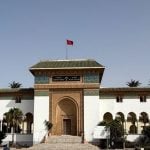
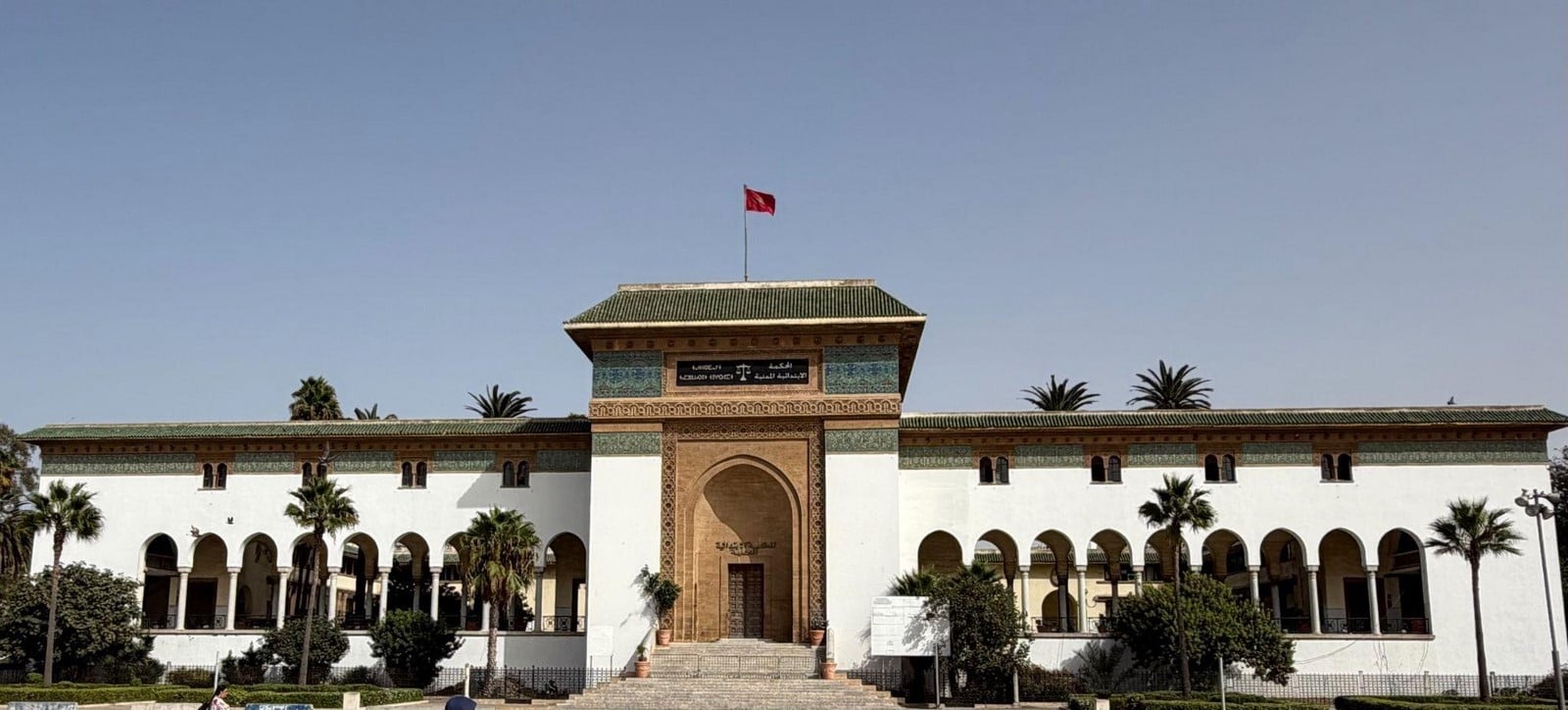
The Palais de Justice, built by Joseph Marrast between 1918 and 1923, followed the same logic. The project was conceived as a paradigm for public architecture across the entire Protectorate: a fusion of Moroccan arabo-andalou ornament with a distinctly European institutional monumentality.
Art Deco and the erasure of compromise (late 1920s–1930s)
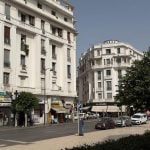
It was only from around 1925, as the Paris Exposition Internationale des Arts Décoratifs et Industriels Modernes popularised the geometric, machine-age vocabulary that would later be called Art Deco, that Casablanca’s architecture began to shift register. The change is visible in the accumulating stock of residential and commercial buildings along Boulevard Mohammed V and its side streets, and it is here that the contemporary record, drawn from Jean-Louis Cohen and Monique Eleb’s research, is unexpectedly precise about how uneven this shift actually was.
Cohen and Eleb describe the ville nouvelle’s façades in these years as governed by a real decorative pluralism with no single dominant style. One current simply recycled pre-1914 Parisian tastes: a diluted Art Nouveau in competition with neoclassicism, producing buildings on streets such as Rue de l’Horloge dense with lion’s heads, shells, and garlands. A second, more inventive current pursued genuine strategies of assimilation with Moroccan culture: ranging, in their account, from mimicry to pastiche to more considered adaptation.
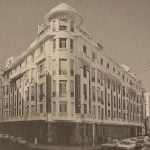
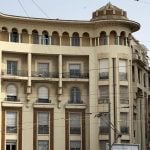
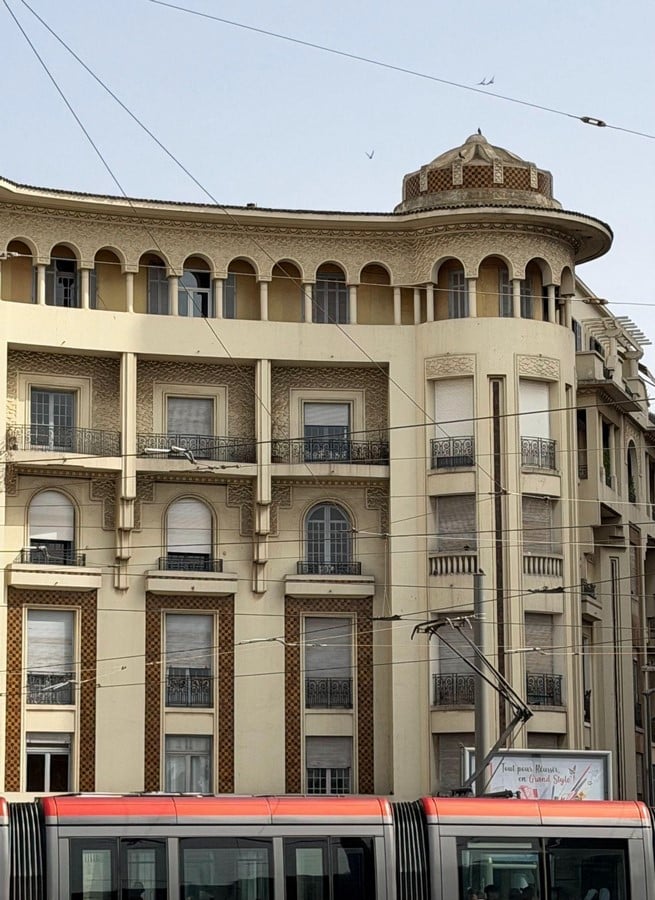
Several buildings from this period illustrate that hybrid current clearly. The Immeuble IMCAMA, designed by Albert Greslin on the Avenue Lyautey axis in 1928, represents the delicate reconciliation of urban luxury with interior comfort behind a curved façade opening onto the park. Its zellij-clad arcades represent a “Moroccanisation” of an otherwise European Art Deco volume.
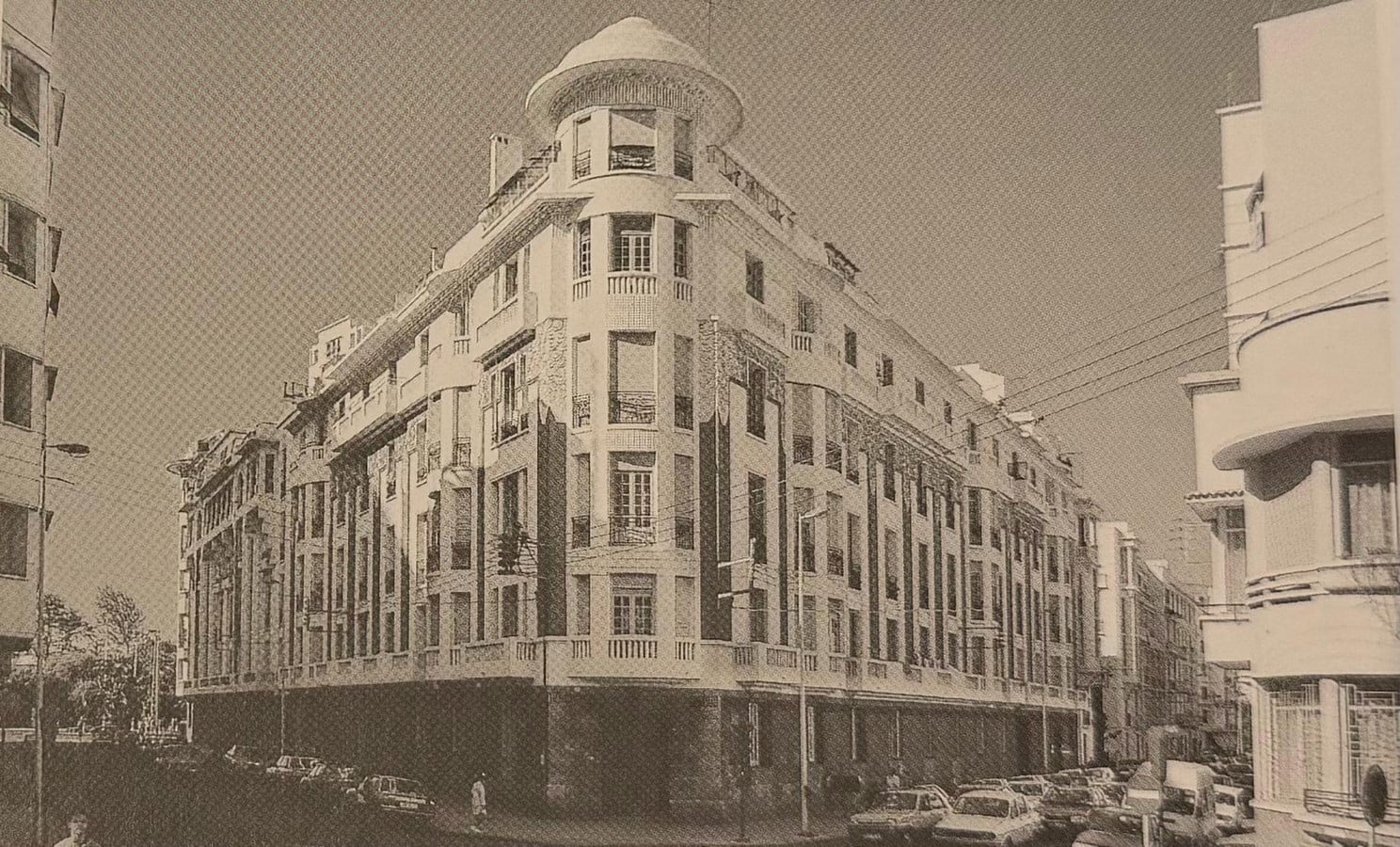
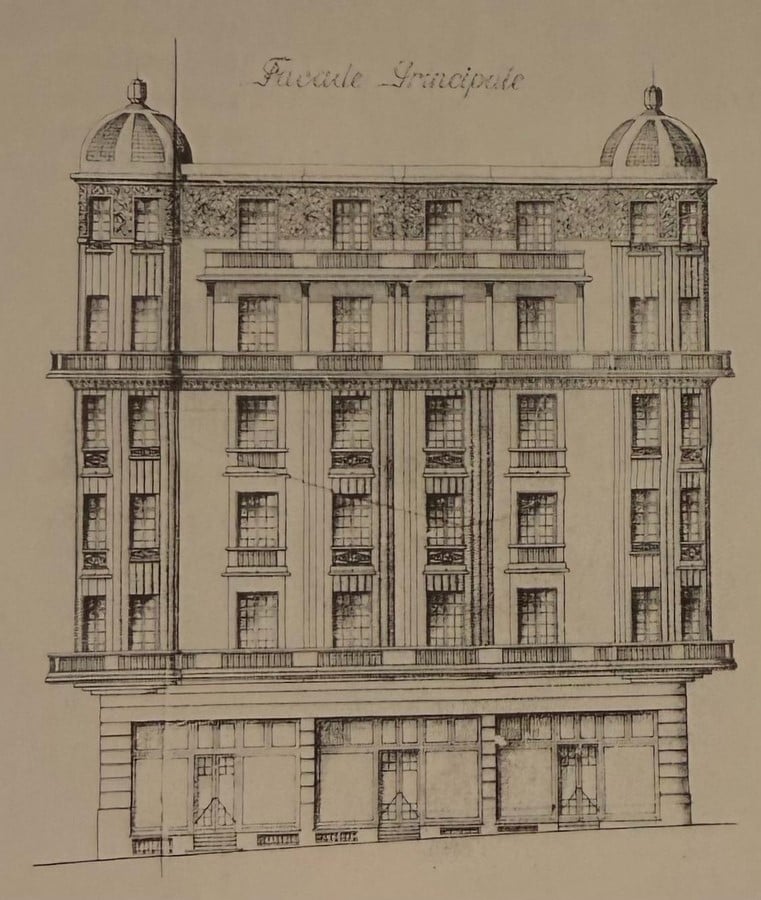
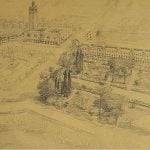
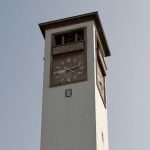
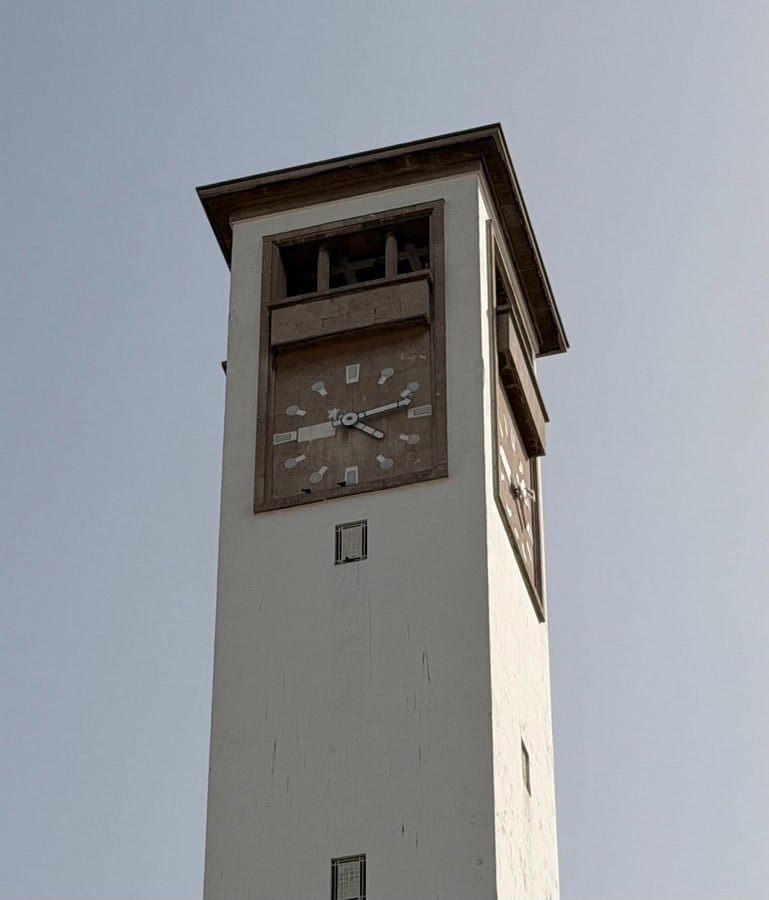
The Wilaya (the former Préfecture) sits at the pivot of this transition more literally. Marius Boyer won the design competition in 1927; construction ran through to the mid-1930s. Its architectural classification is, listed as both “néo-mauresque” and “Art Deco”. A building that began in one idiom and was completed in another, its clock tower is still the single clearest image of the Protectorate’s ambition to give the city a distinct visual identity.
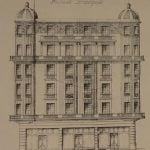
By the 1930s, though, a generation of architects reacted against decorative excess altogether. Marius Boyer himself, speaking at a 1929 conference, praised what he called an emerging drive toward stripped-down, unornamented design, distinguishing it from what he saw as the tired, superficial neo-Moorish gestures of the previous decade. Buildings such as the Immeuble Escot (Gustave Cottet, 1929) and the Immeuble Ettedgui (Aldo Manassi, 1927) show this progressive simplification directly: symmetrical façades, restrained cornicing, decoration concentrated at a few strategic points: balconies, corner turrets, the occasional band of zellij, rather than spread indiscriminately across the whole surface. Not everyone welcomed the change; contemporary critics accused the newer, plainer blocks of an impoverished, “hungry” aesthetic, stripped of the ornamental richness that had briefly defined the boulevard.
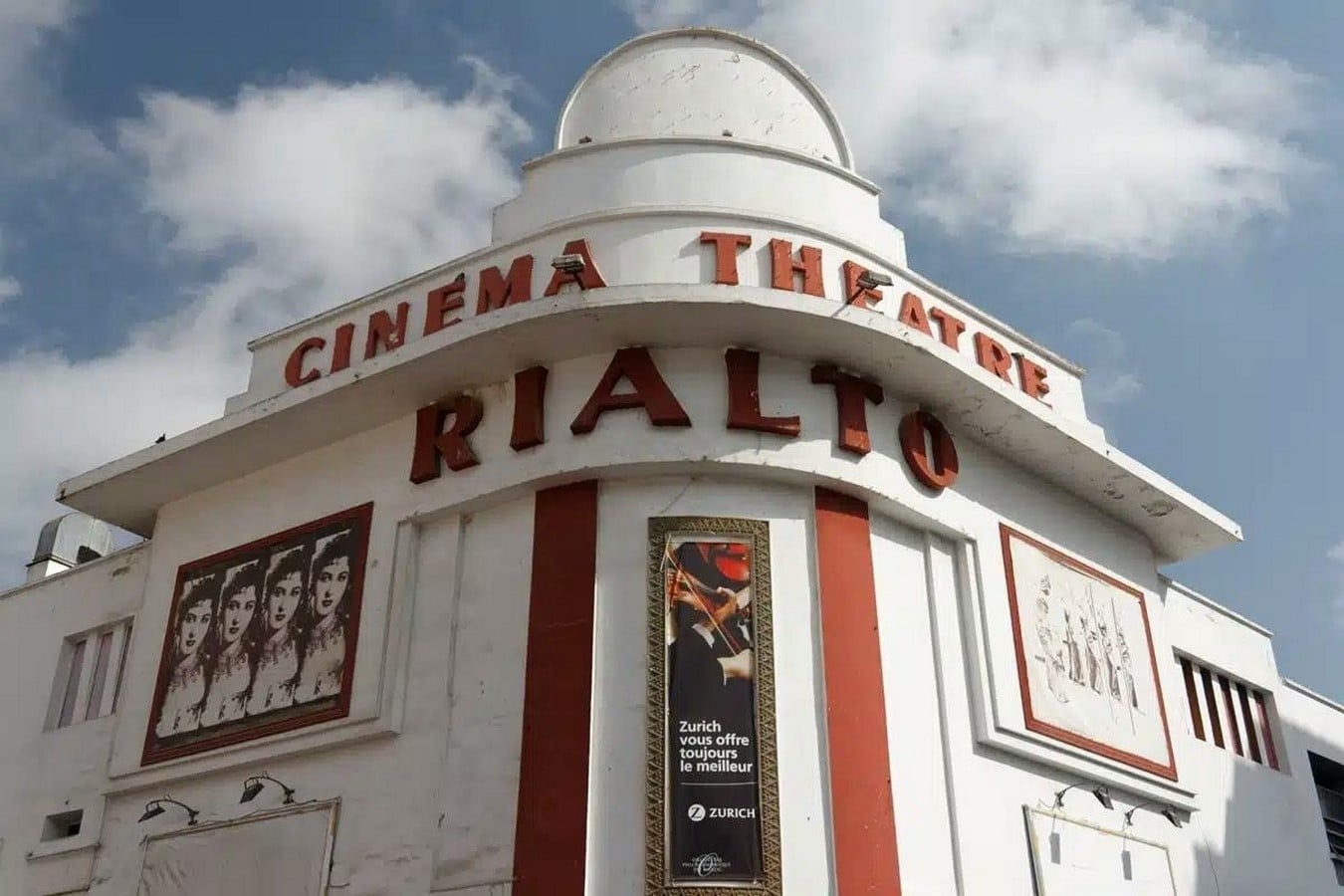
Cinema Rialto, designed by Pierre Jabin in 1929, belongs unambiguously to this Art Deco register, and its scale makes it one of the few buildings from this period whose Art Deco identity is not seriously contested in the sources.
Memory Under Threat
Casamémoire, the heritage association founded in 1995, has spent three decades documenting a built inheritance that keeps disappearing even as it is being catalogued. Villa Mokri was demolished in 1995. Cinema Vox, an Art Deco cinema completed in 1935, was demolished in the 1970s. The Piscine Orthlieb, an Art Deco-era public pool from 1934, was destroyed in 1986 to make way for the Hassan II Mosque.
Each demolition was a decision about which version of the colonial past was worth inhabiting and which could be erased.
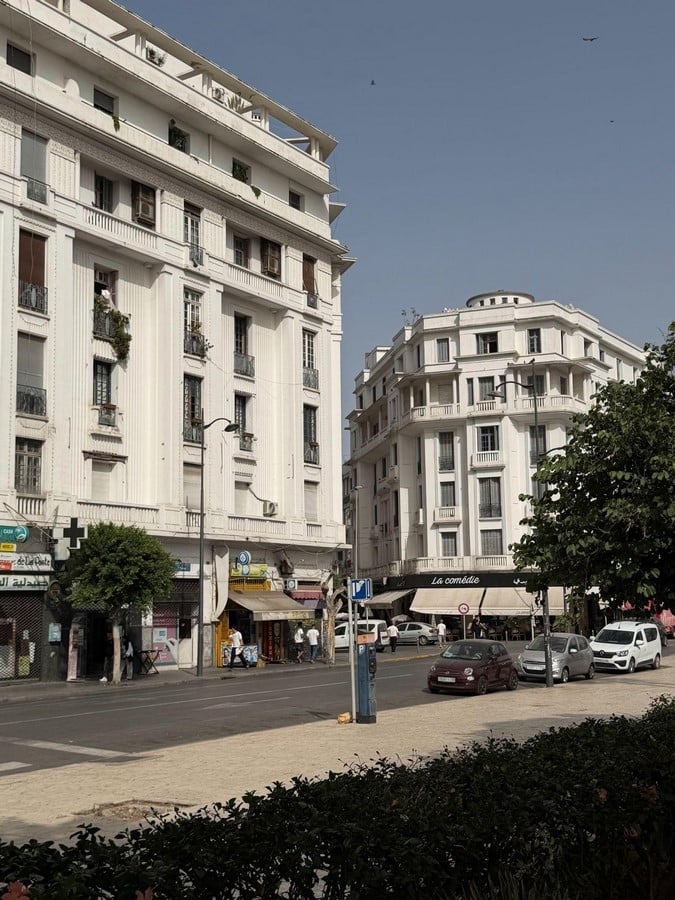
By the mid-1930s, a stylistic drift happened. A shift from decorative arts to modernity. The clientele driving Casablanca’s architecture had changed. A new generation: Boyer among them, alongside Desnoyer, Hinnen, and Renaudin, was no longer building for an administration eager to stage a hybrid Franco-Moroccan identity on every façade. They were building for a Casablancan bourgeoisie that simply wanted comfort: stripped interiors, modern conveniences, none of the ornamental weight that néo-mauresque and early Art Deco had carried.