For centuries, the fundamentals of architecture have been stability; buildings are expected to stand upright, offer clear visuals and communicate a sense of logical order through balance, symmetry and predictable geometry. An upright structure with a rhythmic visual flow was considered to be a good example of architectural practice. It was impossible to comprehend buildings beyond these set practices. Then came a revolutionary movement that refused to play by the rules. In the late 1980s, Deconstructivism came onto the architectural stage, introducing the world to stubborn buildings. These structures appeared to rebel against gravity, rejecting conventional harmony and fiercely resisting the expectation that a building should be a quiet backdrop to human life. (Barsoum, 2021)
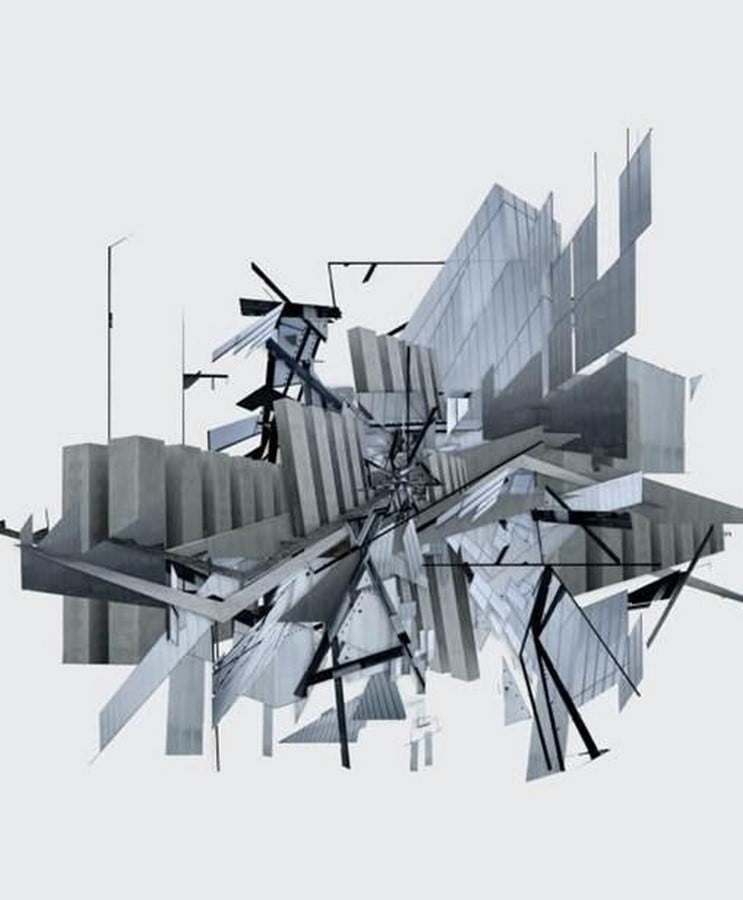
Deconstructivism weaponised architecture as a force; it didn’t merely occupy a space; it argued with it. It became an architectural language of fragmentation, defiance, distortion and glorious complexity, proving that the built environment doesn’t need to obey and simply adjust; it can be challenging and rugged and still be relevant to the humans who inhabit it.
The legend of architectural defiance
Deconstructivism was not just a construction style beginning with bricks and mortar, but a philosophy of defiance. The term itself is a portmanteau born from two formidable intellectual and artistic movements: the literary theory of Deconstruction, and the bold, dynamic visual language of early 20th-century Russian Constructivism.
Deconstructivism borrowed its intellectual roots from the French philosopher behind Deconstruction: Jacques Derrida. He argued that language and meaning are undeniably precarious, hidden with paradox and underlying assumptions. A group of radical architects viewed this philosophy as a foundation for their philosophy of reading buildings as literary texts. They reached the question: “What if chaos, anxiety and complexity of modern existence are exposed, leaving behind the strict form follows function ideology of Modernism? What if the rigid, undisputed commandments of conventional architectural styles are dismantled?”

The roots of this rebellious art form can also be traced back to the Constructivism philosophy of Russia. However, despite aesthetic similarities, the core intentions of the two movements remain fundamentally opposed. On one hand, Constructivism relies on fragmented geometry and projects a unified, utopian socialist vision; Deconstructivism acts as a visual language, conveying chaos, instability, and an intentional rejection of structural permanence. It borrowed the radical visual language, use of fractured geometry, colliding planes, and dynamic diagonals and merged them together to create the great legend of defiance in architecture.

In the summer of 1988, this defiance was formally codified and broadcast to the world at the Museum of Modern Art (MoMA) in New York. A simple exhibition titled “ Deconstructivist Architecture” became the ultimate manifesto of this architectural insurgency. This unique exhibition was curated by Philip Johnson and Mark Wingley, and they showcased the avant- garde works of seven defiant visionaries: Frank Gehry, Zaha Hadid, Rem Koolhaas, Peter Eisenman, Daniel Libeskind, Coop Himmelb(l)au, and Bernard Tschumi. (Shrisha, 2025)
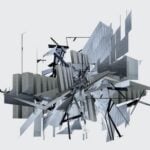
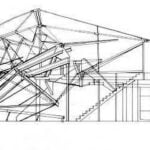
Their philosophies were an anomaly in the pristine architectural establishment, long sedated by the polite, functional boxes of different international styles. The deconstructive pieces appeared as explosives frozen in time in the form of models and illustrations.
All seven of these architects, though they didn’t share a singular aesthetic, were driven by their unified craze and a fierce obsession: the intentional violation of the pristine cubes and rigid angles of modernism.
Engineering the impossible: A war against ‘Gravity’
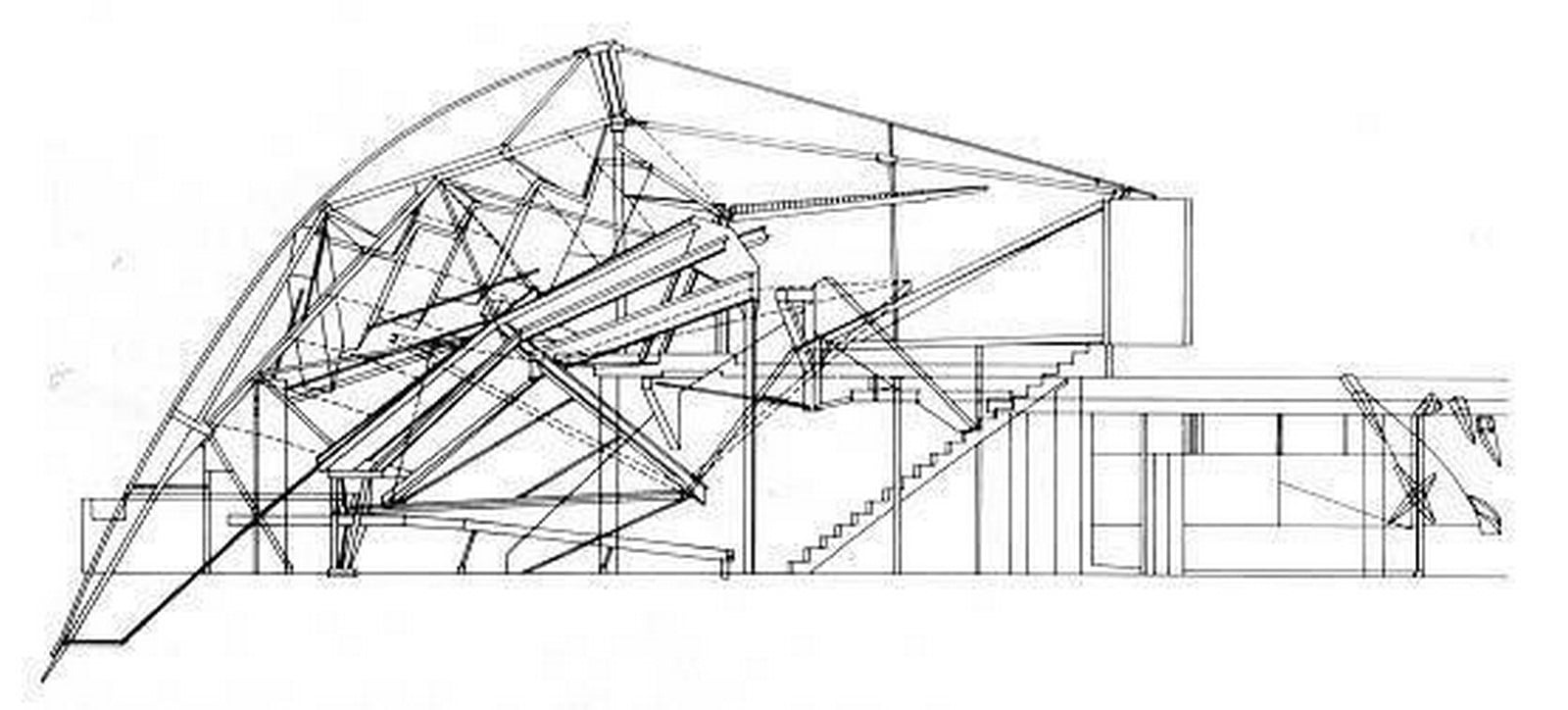
As a concept of architectural design, Deconstructivism was a unique revolution. However, for it to become a statement, an identity, certain questions were yet to be answered. A structure that appears to be colliding, collapsing or floating needed a stable footing without succumbing to gravity. Though it appeared haphazard, this chaotic visual deception was calculated, as the unyielding structures were anchored in rigorous computational exactness. This revolution required more than radical philosophies; it demanded the algorithmic power of modern aerospace engineering.
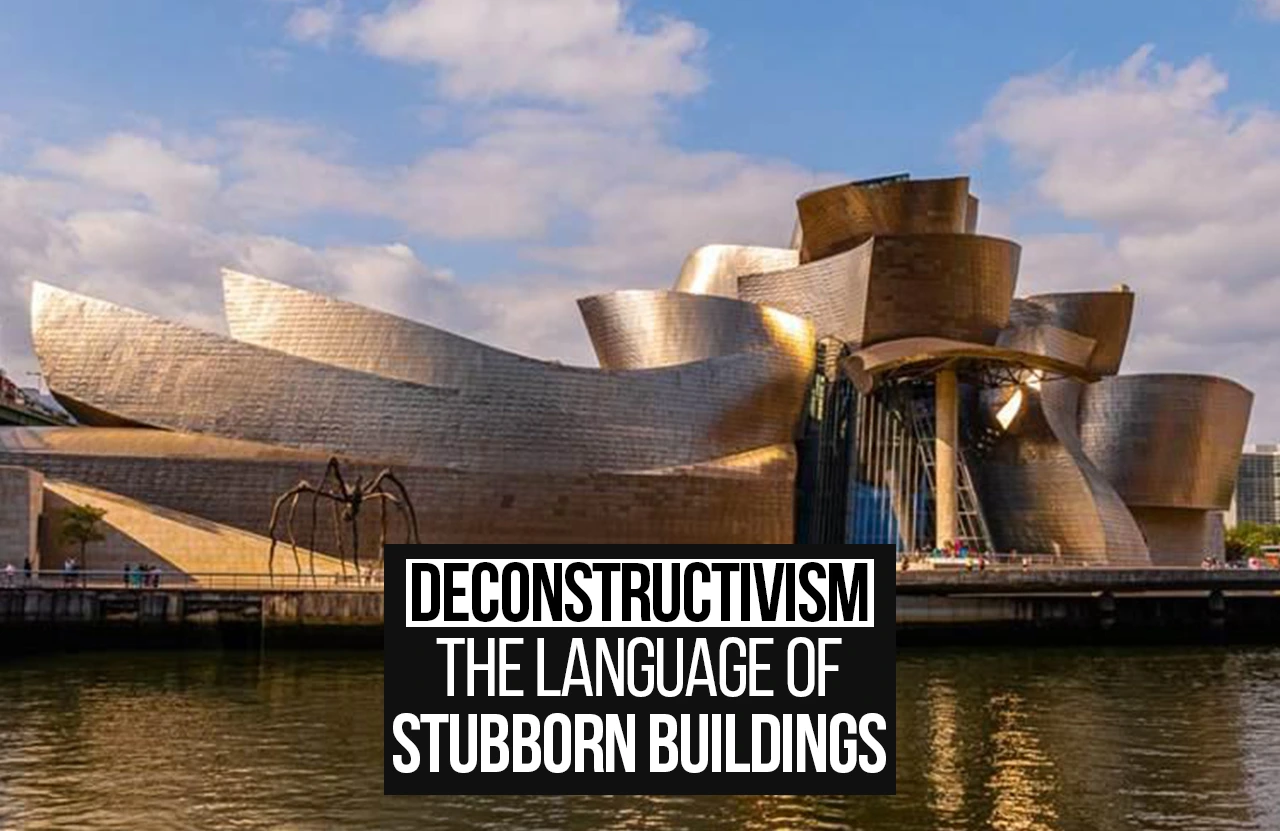
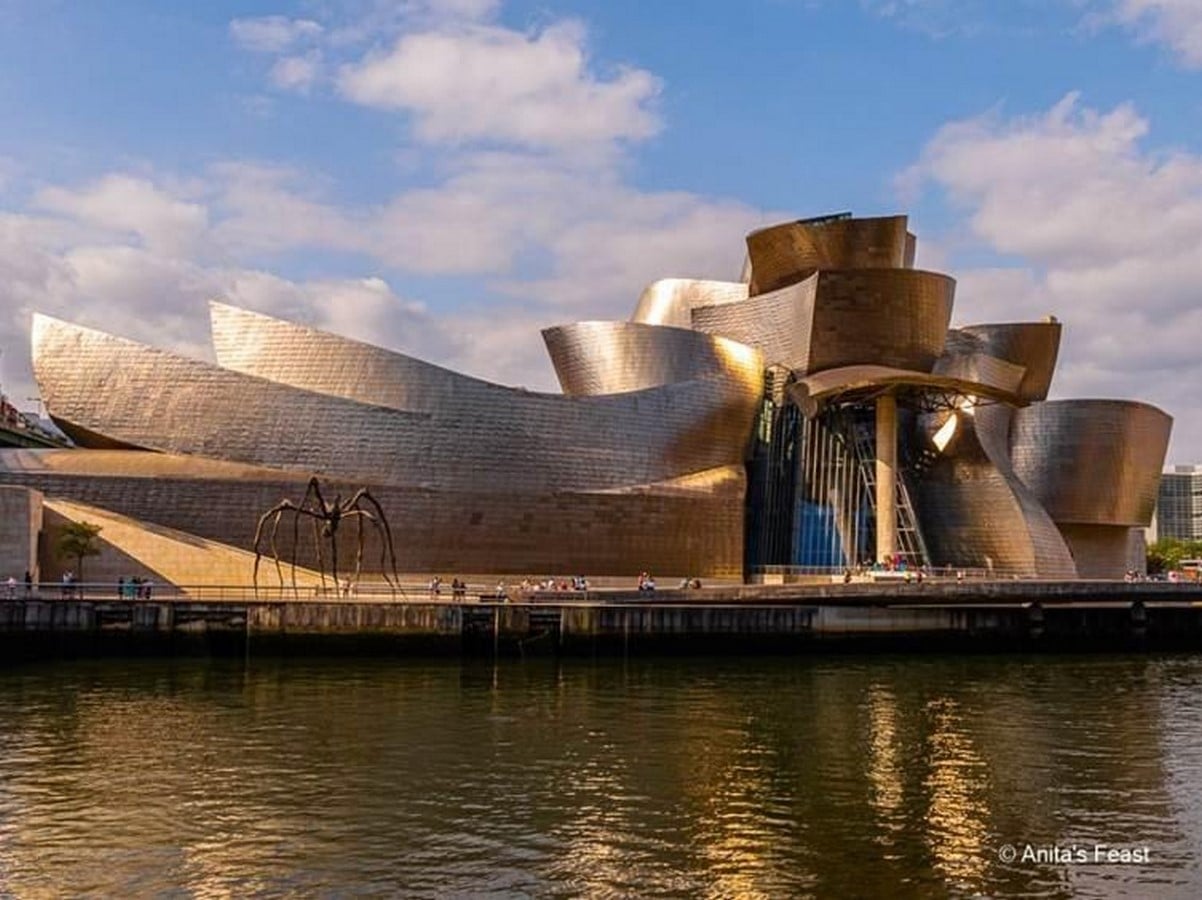
This substantial convergence of artistic vision and computational precision finds its quintessential manifestation along Spain’s Nervión River, where Frank Gehry conceived the Guggenheim Museum Bilbao. The structure was unveiled in 1997, boldly disrupting the surrounding landscape. It refused to quietly abide in and occupy its environment and instead created a drastic contrast. Enveloped in a gleaming facade of ultra-thin titanium, its sweeping, fluid contours evoke a sense of deliberate unpredictability, abandoning traditional architectural norms to function as a monumental sculptural form that continually reflects the evolving daylight. (Editorial, 2026)
An unyielding style of architecture
At its core, Deconstructivism stems from its defiant spirit and clear rejection of architectural decorum. This movement was a demonstration that structural systems and spaces need not serve as mere vessels for humans shaping themselves passively according to the laid functions. It was a greater movement than just another architectural style.
Deconstructivism dismantled the myth of an orderly and predictable world; it became a reflection of unrest, complexity, chaos and the inherent turmoil of contemporary existence.
‘A forged testament of unyielding structures that perpetually challenge the mighty sky.’
References:
Barsoum, J., 2021. Deconstructivism in Philosophy, Architecture, and Reusability Contribution. International Journal of Emerging Science and Engineering.
Editorial, S. M., 2026. Studio Matrx. [Online]
Available at: https://www.studiomatrx.org/guides/guggenheim-bilbao?utm
Shrisha, J. N. J. h. M. S., 2025. Deconstructivism in Architecture – A Movement of Transformation and its Resonance in Evolution of Architecture.