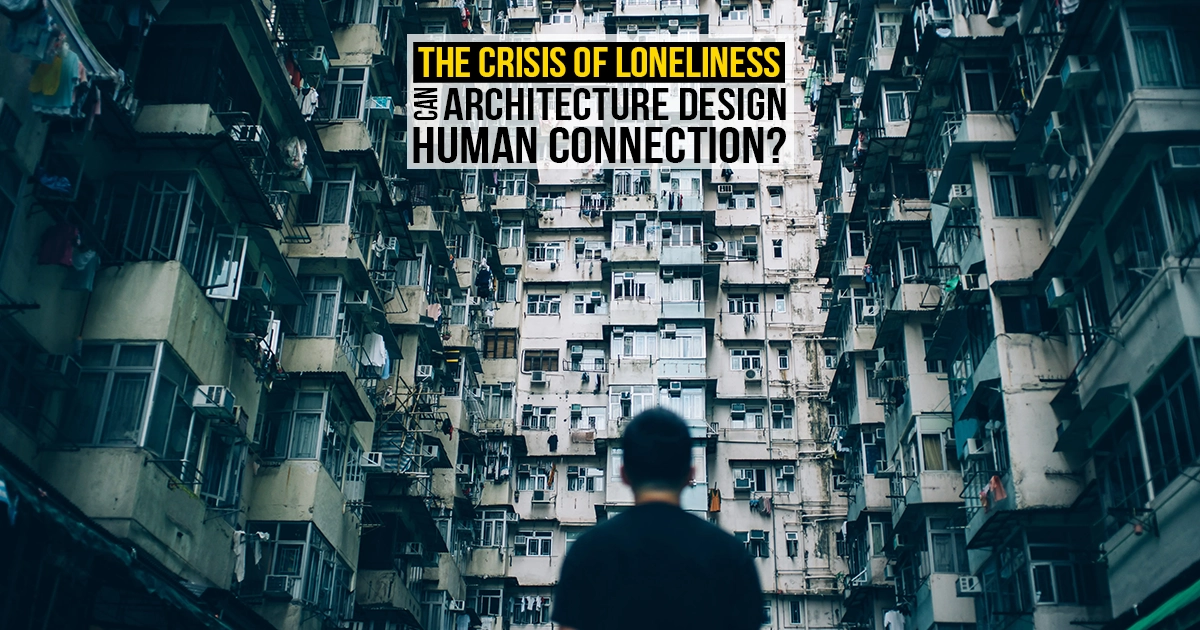
There is something quietly unsettling about modern cities. We live closer to one another than any other generation before us, yet we tend to be the most isolated generation as well. We are structurally separated only by apartment walls, elevator doors, and narrow balconies. Yet people are alien to one another every single day.
Thousands of strangers share the local commute, and cafes are filled with people working or absorbed in their screens. Gated communities and residential towers continue to rise higher while the connection quietly disappears.
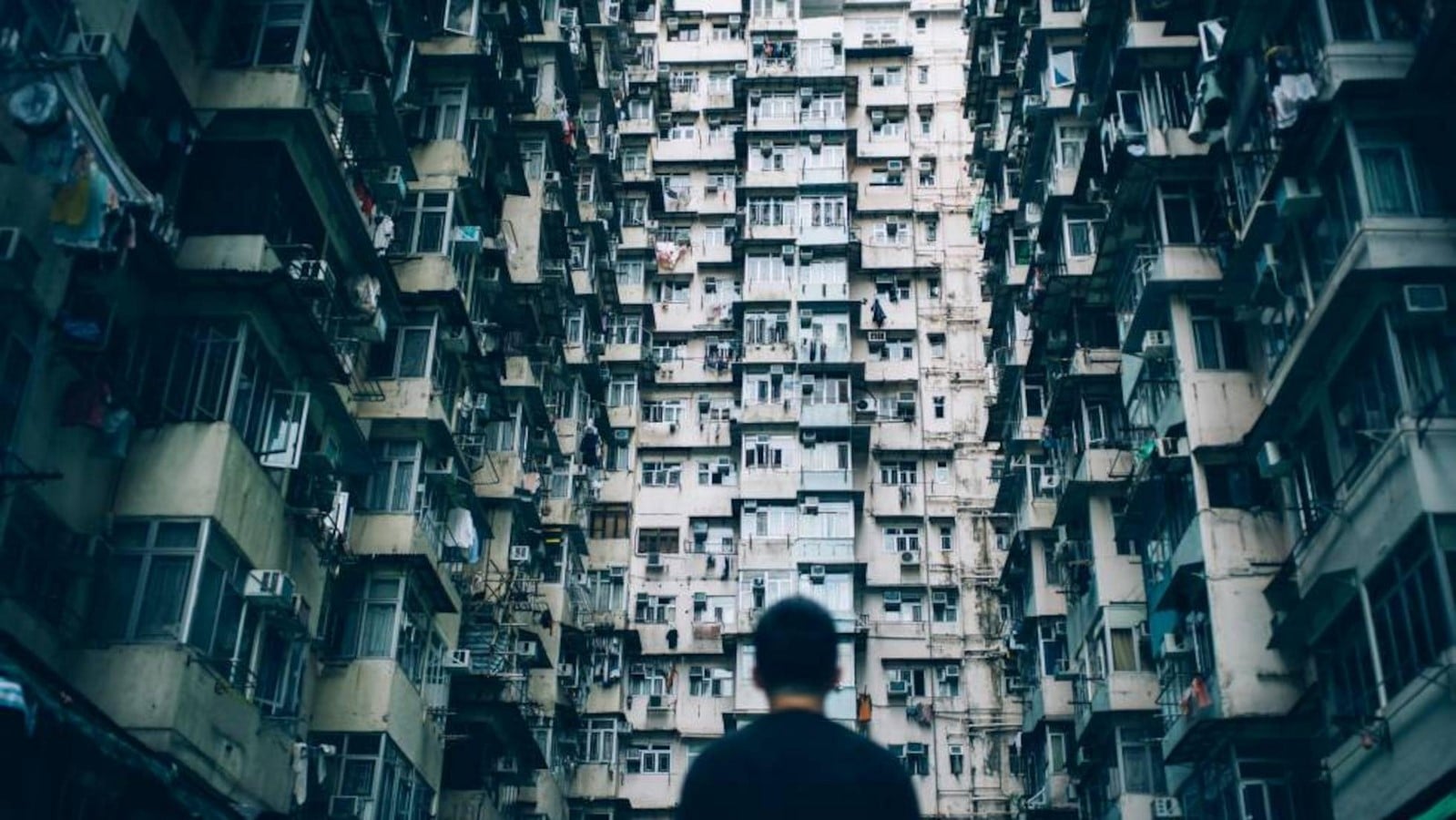
In 2023, the World Health Organization (WHO) identified loneliness and social isolation as a growing global public health concern, recognising their impact on both mental and physical wellbeing. Although loneliness is often discussed as an emotional or psychological issue, perhaps part of the story has been hidden in plain sight.
Could the places we design also influence how connected or disconnected we feel?
From an architectural perspective, loneliness can be understood as more than a social condition. It cannot create group bonds, nor can it eliminate loneliness. However, it can shape the opportunities for people to meet, pause, observe, and interact. A bench beneath a tree, a shared courtyard, a neighbourhood tea shop, or even a staircase can become places where strangers gradually become neighbours.
When Buildings Stop Introducing People
Cities today are remarkably designed for efficiency. Residential towers maximise land use, roads prioritise vehicles more, and technology allows people to complete everyday tasks without leaving home. Privacy has become one of the defining qualities of contemporary housing. Food is delivered, meetings happen online, and shopping takes place online. While these evolutions offer convenience, they have also reduced many spontaneous public encounters that once formed part of daily life.
Architect Jan Gehl argues that the quality of public life depends largely on the quality of public spaces. Streets are no longer simply corridors for movement; they are places where people observe one another, exchange greetings, and develop a sense of belonging. When these opportunities disappear, cities risk becoming collections of isolated individuals rather than connected communities.
The crisis of loneliness therefore extends beyond psychology. It becomes visible in architecture when buildings are designed without considering the social experiences they produce.
Spaces That Invite Conversation
Human relationships are rarely planned. More often, they begin through ordinary encounters. Public squares, neighbourhood parks, courtyards, verandas, tea shops, libraries, and shared staircases all function as spaces of encounter. They allow people to simply share space without expectation, creating opportunities for conversation and familiarity.
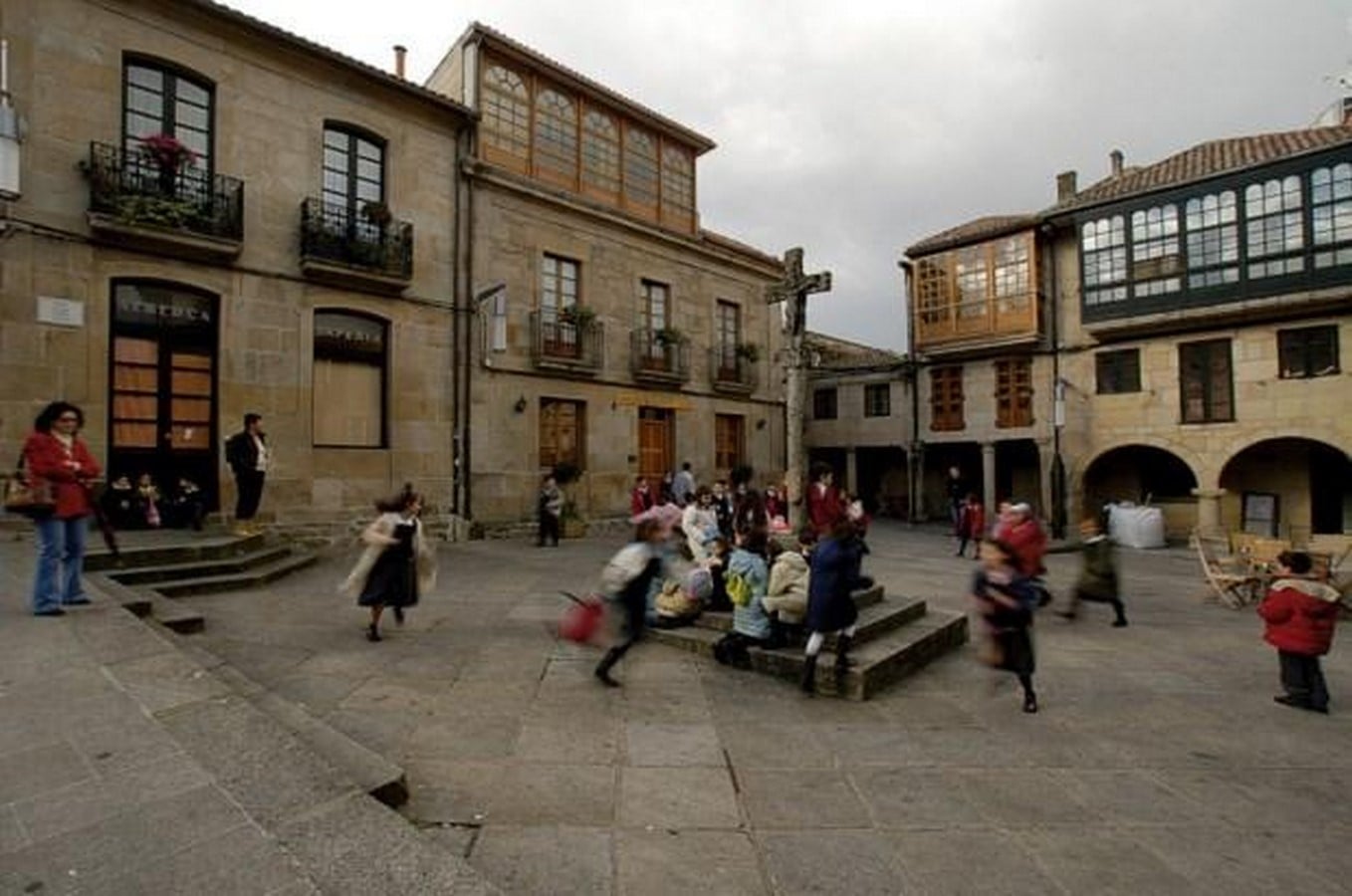
Architecture provides the setting where these small interactions naturally occur. William H. Whyte’s observations of public spaces demonstrated that people are naturally drawn towards places where other people gather. Similarly, Ray Oldenburg described cafés, parks, and community spaces as “third places”—environments outside home and work where social life develops. These places may appear ordinary, yet they play a significant role in reducing social isolation.
Architecture therefore becomes more than shelter; it becomes infrastructure for everyday relationships.
What we might have lost
Long before loneliness became recognised as a global concern, many traditional settlements naturally encouraged social interaction through their spatial organisation. In many Nepali/Indian neighbourhoods, shared courtyards, open verandas, temple squares, and neighbourhood rest houses created spaces where everyday life unfolded collectively. Cooking, celebrations, festivals, and ordinary conversations naturally unfolded within these semi-public spaces.
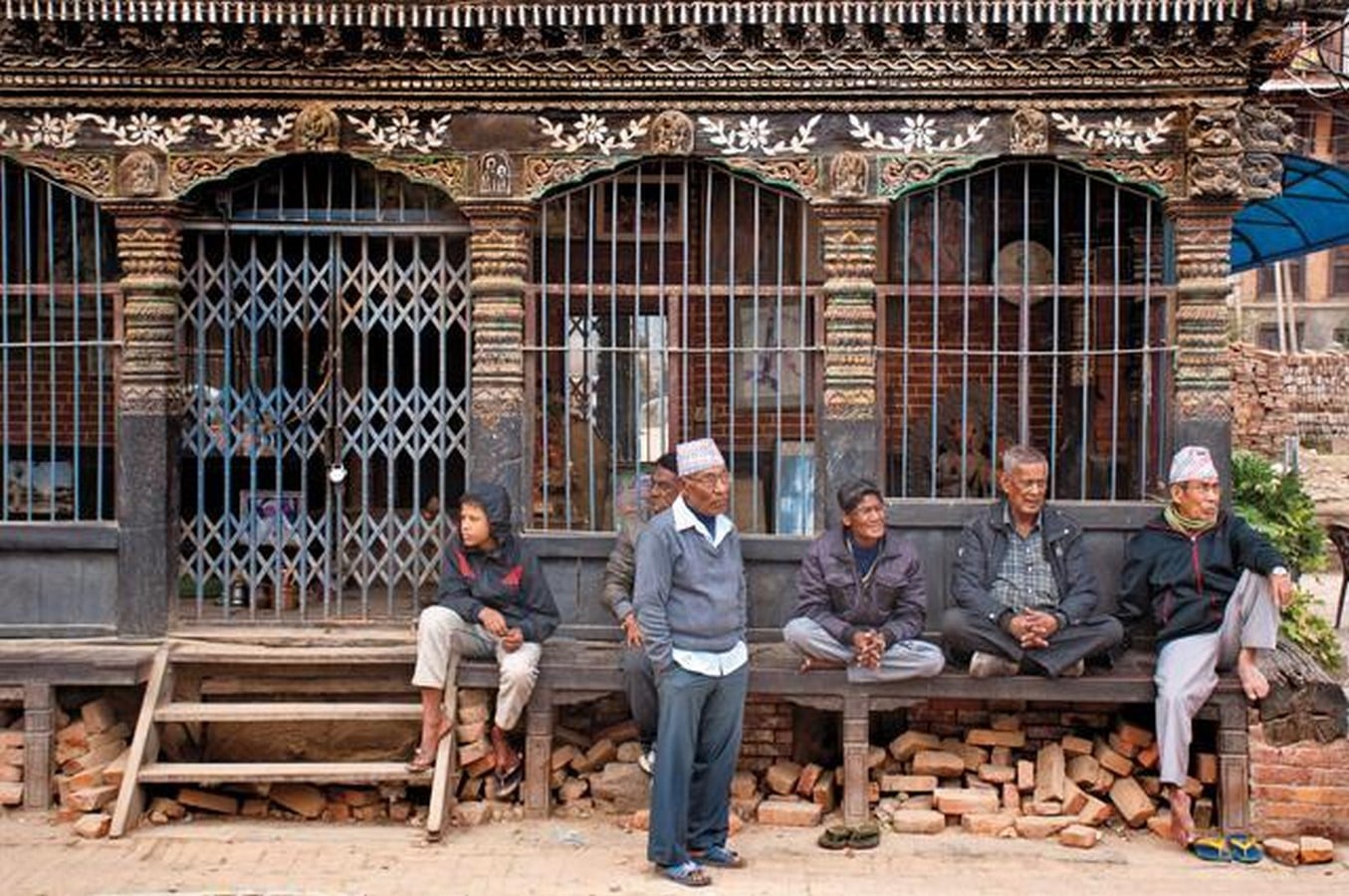
Many contemporary developments, however, prioritise individual privacy and efficiency. High walls replace front porches, elevators replace staircases, and private balconies replace communal courtyards. While these designs respond to changing lifestyles, they often reduce opportunities for neighbours to know one another.
This shift illustrates how architecture quietly influences behaviour. When spaces for gathering disappear, social relationships become increasingly dependent on intentional effort rather than everyday coincidence.
Designing for Human Connection
If architecture can contribute to loneliness, it can also contribute to belonging. Around the world, architects and urban designers are increasingly exploring housing models that place community alongside privacy.
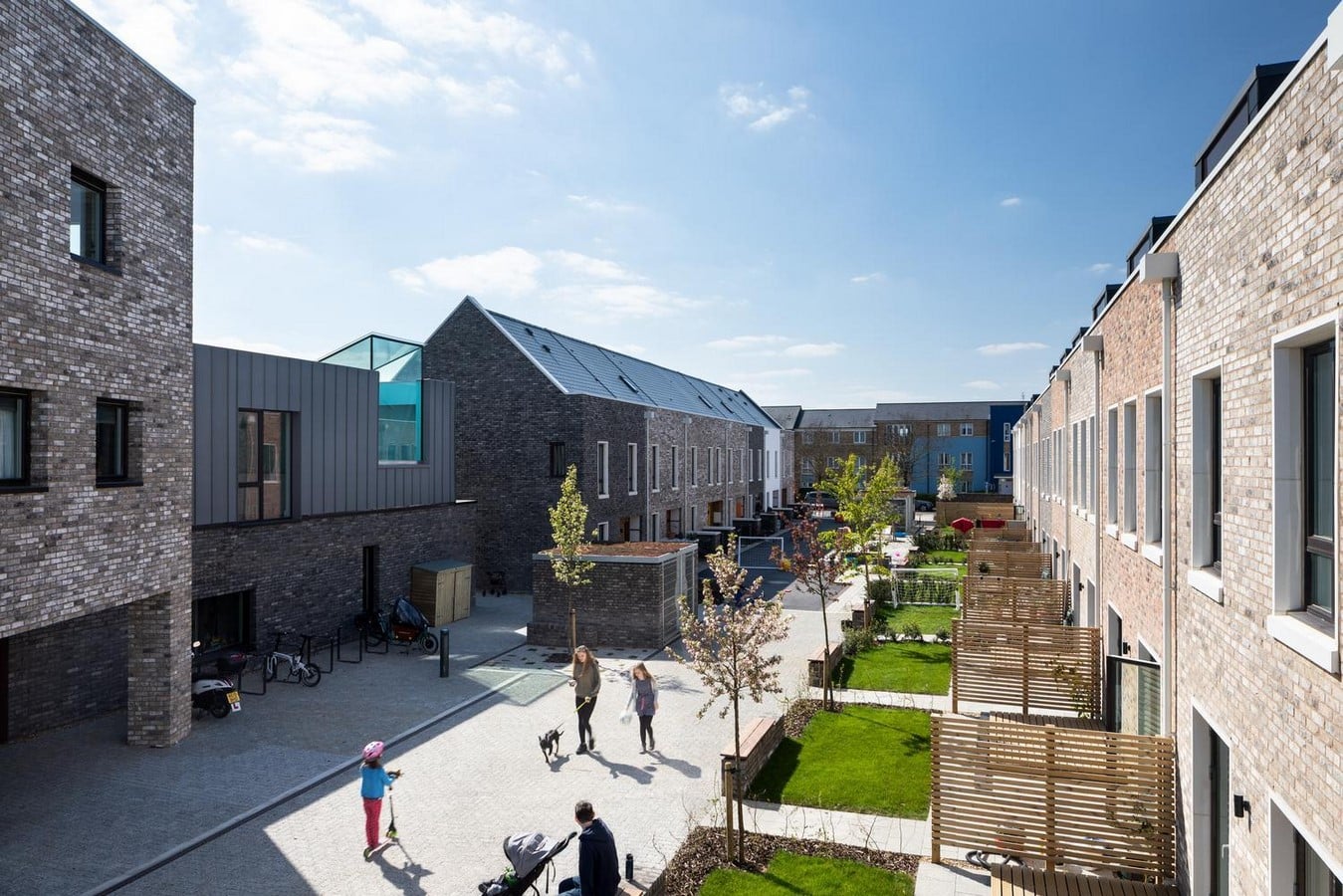
Co-housing developments, shared gardens, neighbourhood libraries, community kitchens, pedestrian-friendly streets, and mixed-use developments encourage daily interaction without forcing it. Perhaps designing for connection is less about creating monumental public spaces and more about paying attention to ordinary moments.
The objective is not to eliminate privacy but to create a balance between personal space and collective life. Good architecture recognises that human wellbeing depends not only on comfortable buildings but also on meaningful social relationships.
Learning from the Crisis
Some of the strongest examples of community emerge in places created during moments of crisis.
Refugee settlements and post-disaster housing are often designed as temporary responses, yet residents gradually transform them into neighbourhoods by creating markets, cafés, schools, and gathering spaces. Despite limited resources, people instinctively reshape their surroundings to create places where community can exist.
This transformation reminds us that the desire for connection is deeply human. Even when architecture begins as emergency infrastructure, people adapt it into places that support everyday life.
If communities experiencing displacement naturally recreate public life, perhaps architects should ask why many permanent cities struggle to achieve the same sense of belonging. Also, the question is not whether architecture can create community, but whether it can support people’s natural desire to build one.
Architecture cannot eliminate loneliness, nor can it create friendship on demand. What it can do is shape the everyday settings where conversations begin. Every courtyard, street corner, park, and public bench carries this quiet potential.
As architects continue to design for growing urban populations, the success of planning and execution should not be measured only by density, efficiency, or aesthetics. It should also be measured by whether our cities make it easier for people to feel that they belong.
Perhaps the greatest measure of good architecture is not how many people a building can hold, but how many meaningful human connections it quietly makes possible.
References:
- The Great Good Place
Oldenburg, R. (1999) The Great Good Place. New York: Marlowe & Company.
- Life Between Buildings
Gehl, J. (2011) Life Between Buildings: Using Public Space. Washington, DC: Island Press. - Cities for People
Gehl, J. (2010) Cities for People. Washington, DC: Island Press. - The Social Life of Small Urban Spaces
- Whyte, W.H. (1980) The Social Life of Small Urban Spaces. Washington, DC: Conservation Foundation.
- World Health Organization World Health Organization (2023) Social Isolation and Loneliness. Available at: https://www.who.int/ (Accessed: 11 July 2026).