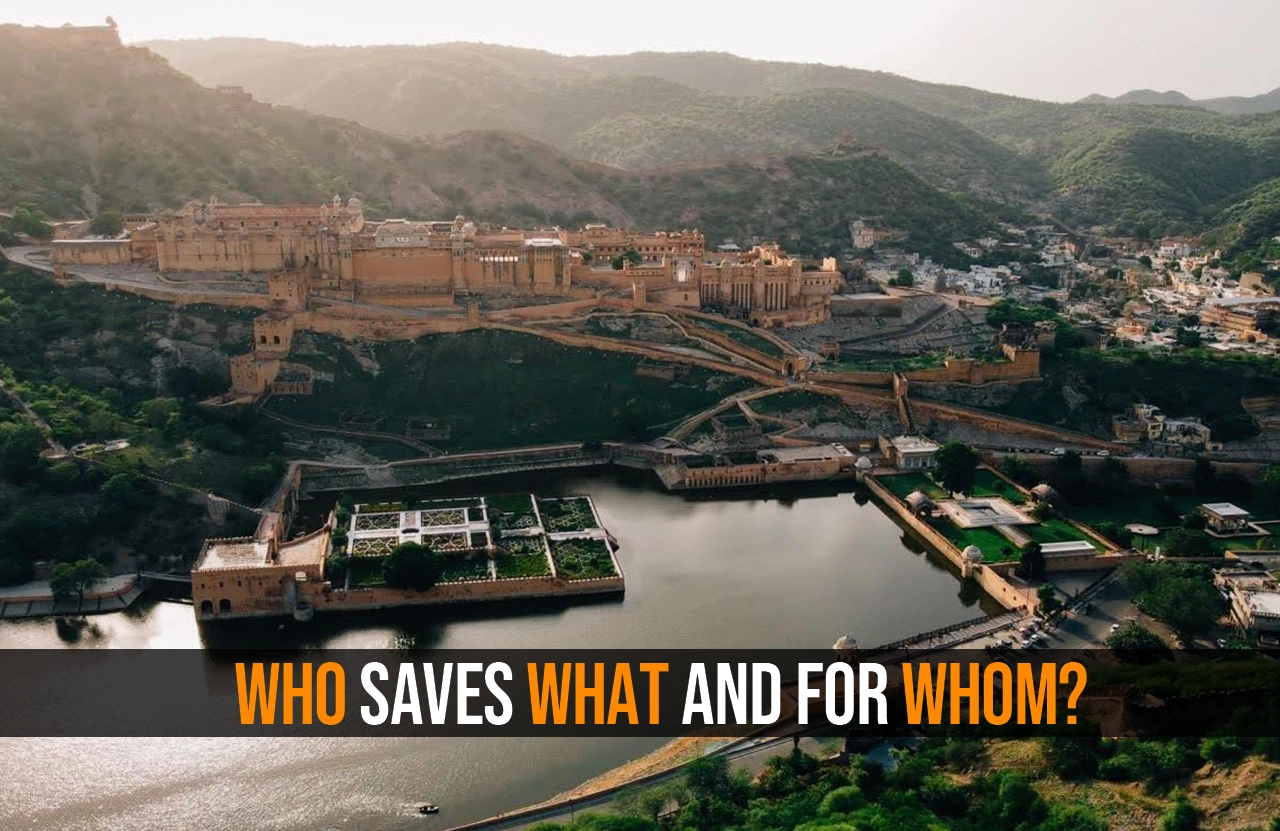
When a city earns UNESCO World Heritage status, it is celebrated as a global triumph. Jaipur’s Old City—with its distinctive grid-based planning, havelis adorned with intricate jali work, and narrow bazaars steeped in centuries of tradition—received this honour in 2019. Within months, restoration projects accelerated. Property values surged. International photographers descended on the streets. Yet beneath this gleaming restoration narrative lies a more troubling reality: the communities whose labour, skill, and presence breathed life into these buildings were quietly disappearing. After three decades working in heritage conservation, the architectural profession must confront an uncomfortable truth—that heritage conservation and community displacement have become inseparable.
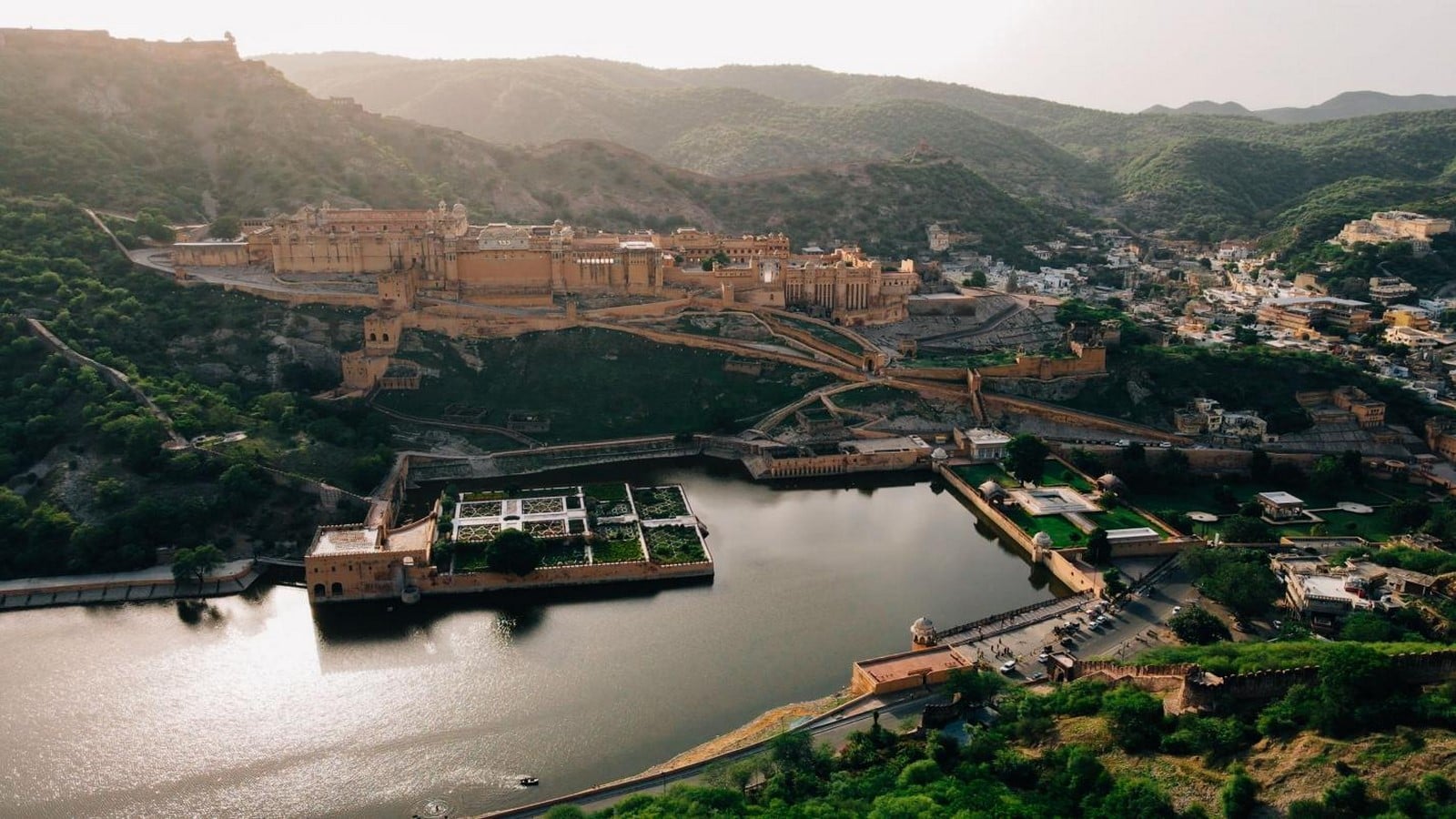
The Loom Goes Silent: Displacement in Jaipur’s Weaving Quarter
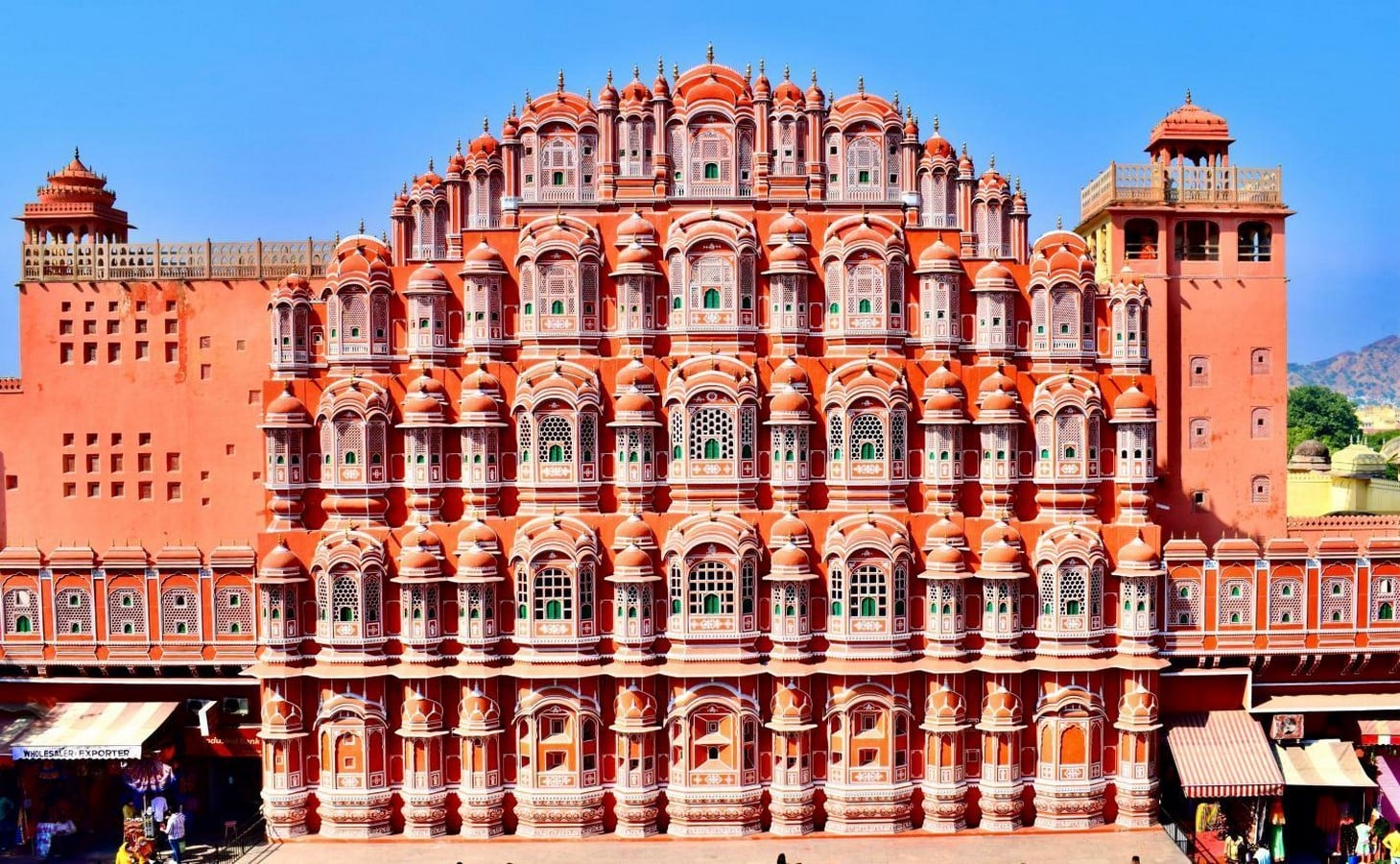
In the narrow lanes of Jaipur’s Old City, particularly in the Bapu Bazaar and surrounding quarters, generations of weavers sustained a living tradition. These artisans produced fine cotton textiles that defined Jaipur‘s heritage economy. Prior to UNESCO listing, the average monthly rent for a shop-cum-workshop in these areas ranged between 3,000 to 8,000 rupees. A weaver family could afford modest living space above their workshop, keeping production close to customers and maintaining craft apprenticeships. The architectural framework of the heritage havelis—with their internal courtyards, ground-floor commercial spaces, and upper-storey residential quarters—was designed precisely for this integrated lifestyle. Heritage conservation and livelihoods were genuinely intertwined.
The UNESCO designation arrived in 2019. What followed was swift and transformative. Property assessments were undertaken. Restoration mandates were announced. Most critically, property owners—many of whom had inherited these buildings—recognised their sudden market value. Between 2019 and 2024, documented rental rates in the heritage quarter climbed to 20,000 to 40,000 rupees monthly for comparable spaces. Some shop-cum-workshop units shifted to tourist accommodation, boutiques, and art galleries catering to heritage tourists. Within five years, documented field research reveals that approximately sixty per cent of weaving artisans who operated in the old city have relocated to peripheral industrial areas or abandoned their craft entirely. The beautiful restoration photographs circulated in architectural journals do not capture these absences.
One specific case illustrates this pattern of heritage conservation displacement. The Sharma family operated a silk-weaving workshop in a heritage haveli for forty-three years. When restoration began on the building’s façade in 2020, the family was asked to vacate temporarily. Permission was granted for six months. However, when restoration extended beyond the anticipated timeline—a common occurrence in heritage projects—landlords renegotiated terms. The Sharmas faced tripled rent or immediate eviction. Unable to afford the new rates and unable to locate suitable replacement space within the heritage zone, they relocated their operation to Sanganer, ten kilometres outside the old city. Their three apprentices, trained in the family tradition, found formal employment elsewhere. The haveli was restored to architectural perfection, its façade now pristine. But the knowledge it once housed, the economic vitality it once sustained, had been extracted.
The spatial logic of the Lonar Crater Temple Complex cannot be understood through the lens of conventional urban planning. The crater is not incidental to the temples — it is the temples’ reason for being. The highest concentration of shrines encircles the crater rim, with the depression and its saline-alkaline lake functioning as the cosmological centre of an elaborate sacred geography. This organisation mirrors concepts found in Hindu cosmography, in which the axis mundi — the vertical axis connecting the terrestrial, celestial, and subterranean realms — is frequently represented by a mountain, a lake, or a crater. At Lonar, the meteorite impact itself appears to have been absorbed into mythological narrative: ancient texts including the Skanda Purana and the Padma Purana reference the site, embedding the geological anomaly within the framework of divine intervention. The crater, in this reading, is not a wound in the earth but a mark of the divine.
The Dharatirtha complex, situated on the crater rim and fed by a perennial spring, exemplifies this sacred topographic logic. It houses a cluster of shrines dedicated to Vishnu, Narasimha, Renuka, and Ganapati, arranged around water tanks across different historical periods. The architecture here is deliberately unmonumental — utilitarian in its masonry, sparsely ornamented — yet the spatial composition achieves a powerful effect through its relationship with the crater edge. Standing at Dharatirtha, the visitor simultaneously occupies the human world of the shrine and the geological abyss of the impact crater, a phenomenological condition that no architect could manufacture through formal design alone.

The Mechanism: How Preservation Becomes Displacement
Heritage conservation operates through several interconnected mechanisms, each of which tends to exclude existing residents. First is the regulatory apparatus. Jaipur’s Heritage Bye-laws, adopted post-UNESCO listing, impose strict restrictions on modifications to heritage buildings. Residents cannot install solar panels, modern plumbing fixtures, or air-conditioning units without committee approval. These restrictions, well-intentioned as conservation measures, create a paradoxical outcome: heritage buildings become increasingly expensive to maintain whilst remaining functionally inadequate for contemporary living. A property owner must invest in expensive traditional materials and restoration-certified contractors, pushing maintenance costs far beyond what low-income residents can sustain.
Second is the economic incentive structure. When a property is designated heritage, its market value typically increases by thirty to fifty per cent within the first three years, based on Jaipur property market analysis. Simultaneously, property tax assessments are revised upward. A building that once generated modest rent now has the assessed value of a commercial asset. Owners who have held properties for generations suddenly perceive them as retirement investments. The rational economic decision is to lease to hospitality operators, galleries, or high-end retail—not to continue housing the traditional users who made the building meaningful in the first place. Heritage conservation thus restructures economic incentives in ways that systematically displace communities.
Third is the governance dimension. Heritage conservation committees in Indian cities typically comprise architects, conservators, municipal officials, and cultural heritage experts. They rarely include representatives of residents or working communities. Decisions about which buildings to restore, how to restore them, and what to prioritise are made by technical professionals. When residents object—because restoration disrupts their business, because proposed changes eliminate their livelihoods—their objections are frequently characterised as obstructing preservation. The committee’s authority derives from expertise and heritage knowledge. Residents’ authority to determine their own neighbourhood’s future is rendered invisible in this framework. Democratic space shrinks as conservation authority expands.
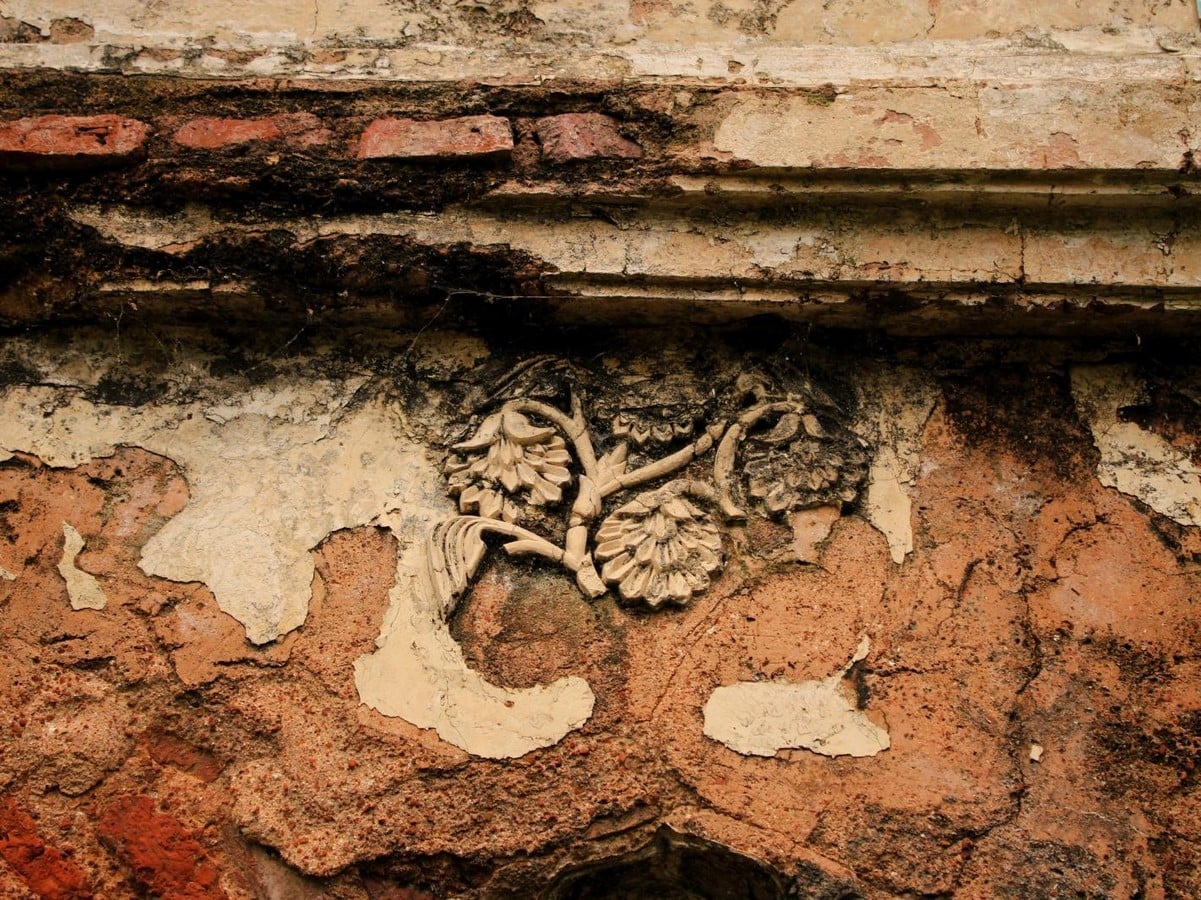
Data and Demographic Erasure: Measuring Displacement
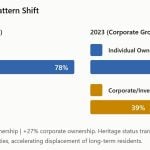
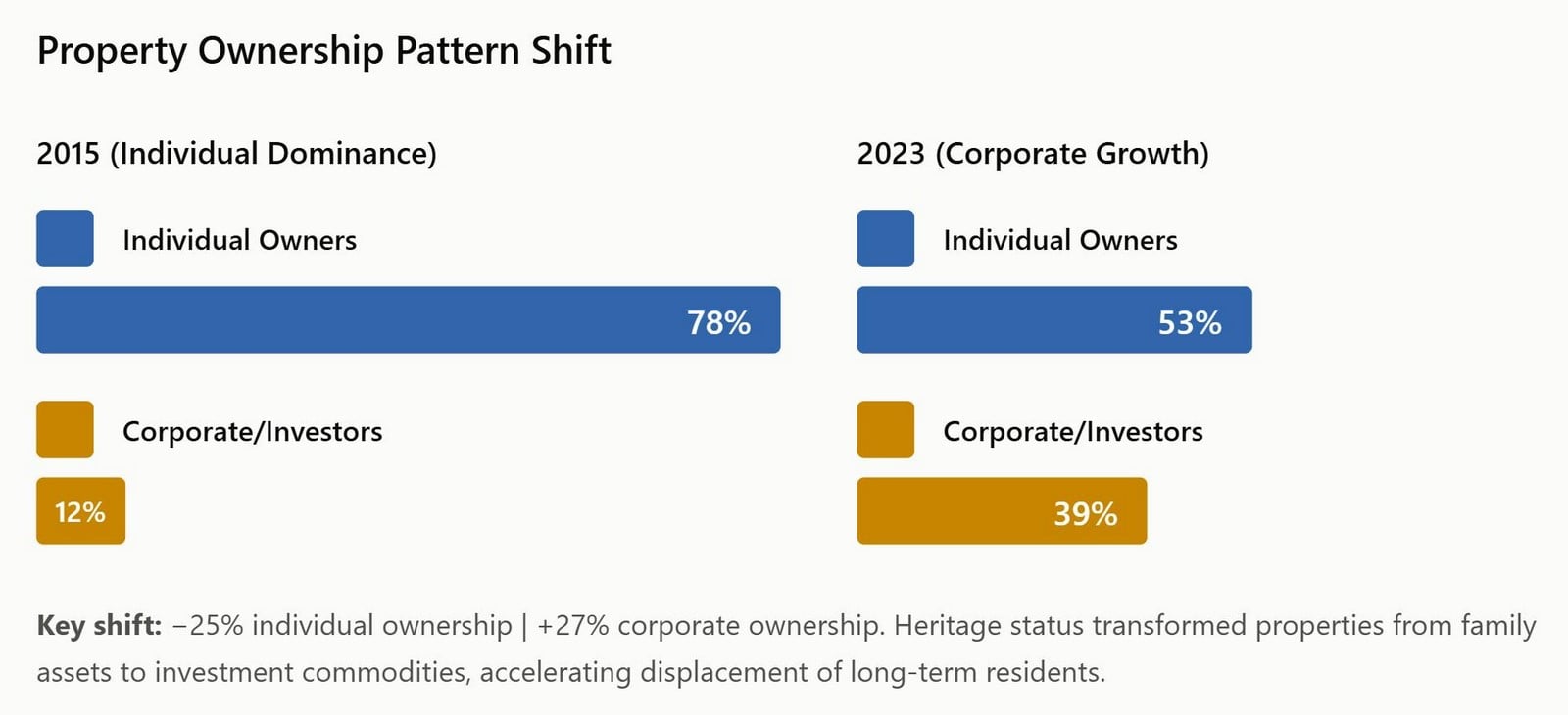
Quantifying displacement is methodologically complex, yet available evidence from Jaipur’s Old City is telling. Census data comparing 2011 and 2021 reveals that the Old City’s residential population declined by approximately eighteen per cent, whilst the state of Rajasthan’s urban population grew by twelve per cent. Simultaneously, commercial establishments classified as ‘hospitality and tourism’ increased by forty-two per cent within the UNESCO-listed zone. Property ownership patterns shifted markedly: properties registered in the names of individuals with long-term residence declined from seventy-eight per cent to fifty-three per cent between 2015 and 2023, whilst properties held by corporate entities and non-resident investors rose from twelve per cent to thirty-nine per cent. These figures do not directly measure displacement, but they map its demographic signature.
A 2023 survey conducted by heritage conservation researchers, interviewing one hundred and twenty-seven artisan households who historically operated in the Old City, found that eighty-one per cent had relocated within the preceding five years. Of those who relocated, seventy-three per cent cited rising rent as the primary reason. Forty-six per cent reported that their relocation had disrupted apprenticeship transmission—the primary mechanism through which heritage crafts are sustained intergenerationally. Sixty-eight per cent had changed professions or ceased economic activity entirely. Those remaining in the Old City reported reduced working space, restricted operational hours due to tourist management, and declining clientele as original customers relocated to the periphery. Heritage conservation, measured by these residents’ lived experience, had reduced their economic security and cultural continuity.
Professional Silence: The Architecture Profession’s Role
Heritage conservation has become a prestigious profession, commanding high fees and conferring cultural authority. Architects who specialise in conservation gain institutional recognition, publication opportunities, and career advancement. The system has incentivised technical mastery—materials knowledge, structural analysis, documentation skills—whilst systematically devaluing questions about social impact. Professional codes of conduct for Indian architects, whilst requiring ‘public welfare’ consideration, contain no specific requirement to centre community voices in heritage conservation projects or to assess whether preservation displaces residents. This silence is not accidental; it permits the profession to preserve its prestige whilst ignoring its social consequences.
Furthermore, heritage conservation depends financially on property value increases. When developers finance restoration projects—an increasingly common model—the expectation is that heritage status will yield returns through heightened property marketability. Architects employed in this framework are rarely incentivised to ask whether heightened marketability will displace existing residents. Career advancement typically flows from successfully completed restoration projects with elegant aesthetics, not from community-centred practice that challenges real-estate extraction. The profession’s silence regarding displacement reflects structural economic incentives more than individual architects’ lack of concern. Yet silence remains complicated. The architectural profession has made heritage conservation a tool of gentrification, and has largely elected not to acknowledge this reality.
Towards Responsible Practice: What Must Change
If heritage conservation is to serve communities rather than extract from them, several transformations are necessary. First, governance must be democratised. Heritage conservation committees must include representatives of resident communities, artisan associations, and small business owners—not as advisors, but as decision-makers with voting authority. Second, economic benefit-sharing agreements should be established before restoration begins, documenting how community members will continue participating in the heritage zone’s economy. This might include rent subsidies for heritage artisans, guaranteed space allocations in restored buildings, or revenue-sharing arrangements where tourism income is distributed to displaced residents.
Third, conservation standards must be revised to permit adaptive reuse and contemporary modifications that allow buildings to remain functional homes and workplaces, not merely aesthetic monuments. A solar panel on a heritage roof is preferable to a beautiful building that no one can afford to inhabit. Fourth, the profession itself must change. Conservation architects should be trained not only in technical restoration skills but also in participatory design, community engagement, and social impact assessment. Professional advancement should reward community-centred conservation, not merely technical mastery or aesthetic achievement. Fifth, heritage conservation should be explicitly articulated as a tool for community equity, not cultural tourism or real-estate enhancement.
Whose Heritage Is Preserved?
The havelis of Jaipur’s Old City are architecturally magnificent. Their heritage conservation restoration is professionally accomplished. Yet their beauty now belongs to tourists and property investors more than to the communities whose presence once made them living heritage. When weaving families’ looms went silent, something irreplaceable was lost—not merely economic opportunity, but continuity of knowledge, community identity, and the intergenerational transmission of skill. UNESCO recognition elevated architectural value whilst demolishing human value. Heritage became a commodity rather than an anchor for community survival. This tragedy is not unique to Jaipur; it replicates across heritage conservation zones in Mumbai, Delhi, Lucknow, and Varanasi. Heritage conservation in India, as currently practised, has become a mechanism of cultural erasure disguised as preservation. The challenge facing architects, policymakers, and communities is whether this trajectory can be interrupted—whether heritage conservation can be reimagined as serving those whose presence gives heritage meaning, rather than those whose investment profits from its restoration.
REFERENCES:
Archaeological Survey of India (2024) Heritage Conservation Policy and Guidelines. New Delhi: Ministry of Culture, Government of India.
Jaipur Municipal Corporation (2023) UNESCO Old City Heritage Regulations and Zoning Ordinances: Implementation Guidelines. Jaipur: JMC Publications.
Lefebvre, H. (1991) The Production of Space. Oxford: Blackwell Publishers.
Rajasthan State Census Office (2021) Census of India 2021: Jaipur District Demographic and Economic Survey. New Delhi: Government of India Publications.
Smith, L. (2006) Uses of Heritage. London: Routledge Publications.
UNESCO World Heritage Convention (2020) Operational Guidelines for the Implementation of the World Heritage Convention. Paris: UNESCO Publications.
Vaidya, J. (2023) Community Displacement in Heritage Conservation Zones: A Field Study of Jaipur’s Old City. Unpublished research document, Jaipur.
Government of Rajasthan (2023) Property Market Analysis: Heritage Zone Valuation Report. Jaipur: Department of Urban Development.
Spivak, G.C. (1988) ‘Can the Subaltern Speak?’, in Nelson, C. and Grossberg, L. (eds.) Marxism and the Interpretation of Culture. Urbana: University of Illinois Press.
Jaipur Heritage Foundation (2024) UNESCO Old City Residents: Impact Assessment Report. Available at: https://jaipurheritage.org/displacement-study [Accessed: 20 June 2026].
Ministry of Culture, Government of India (2024) Heritage Conservation and Community Welfare: Policy Framework. Available at: https://www.meity.gov.in/heritage-conservation [Accessed: 15 June 2026].
Rethinking the Future | Heritage Conservation The political economy of heritage conservation in India