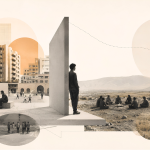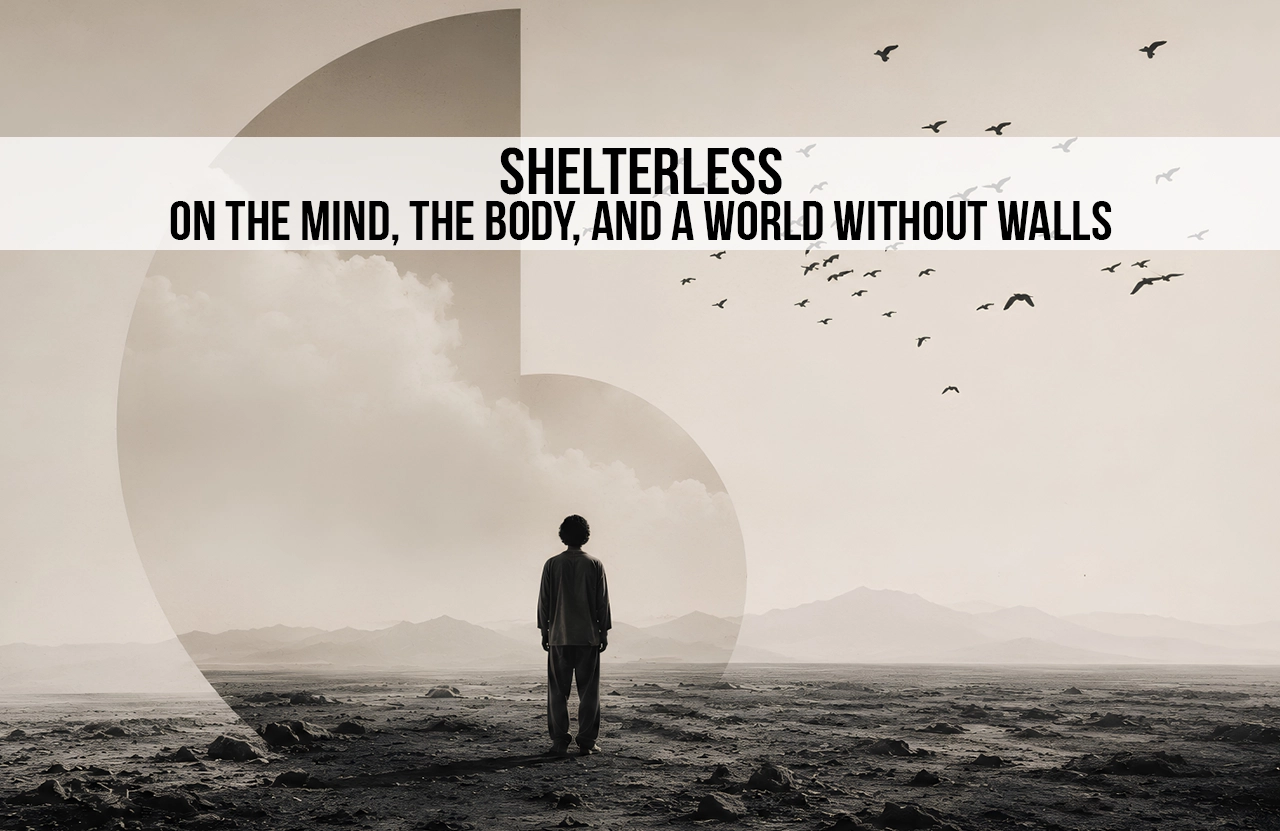
A speculative meditation on human existence, the psychology of place, and what architecture silently does to us by imagining a world in which it never existed at all.
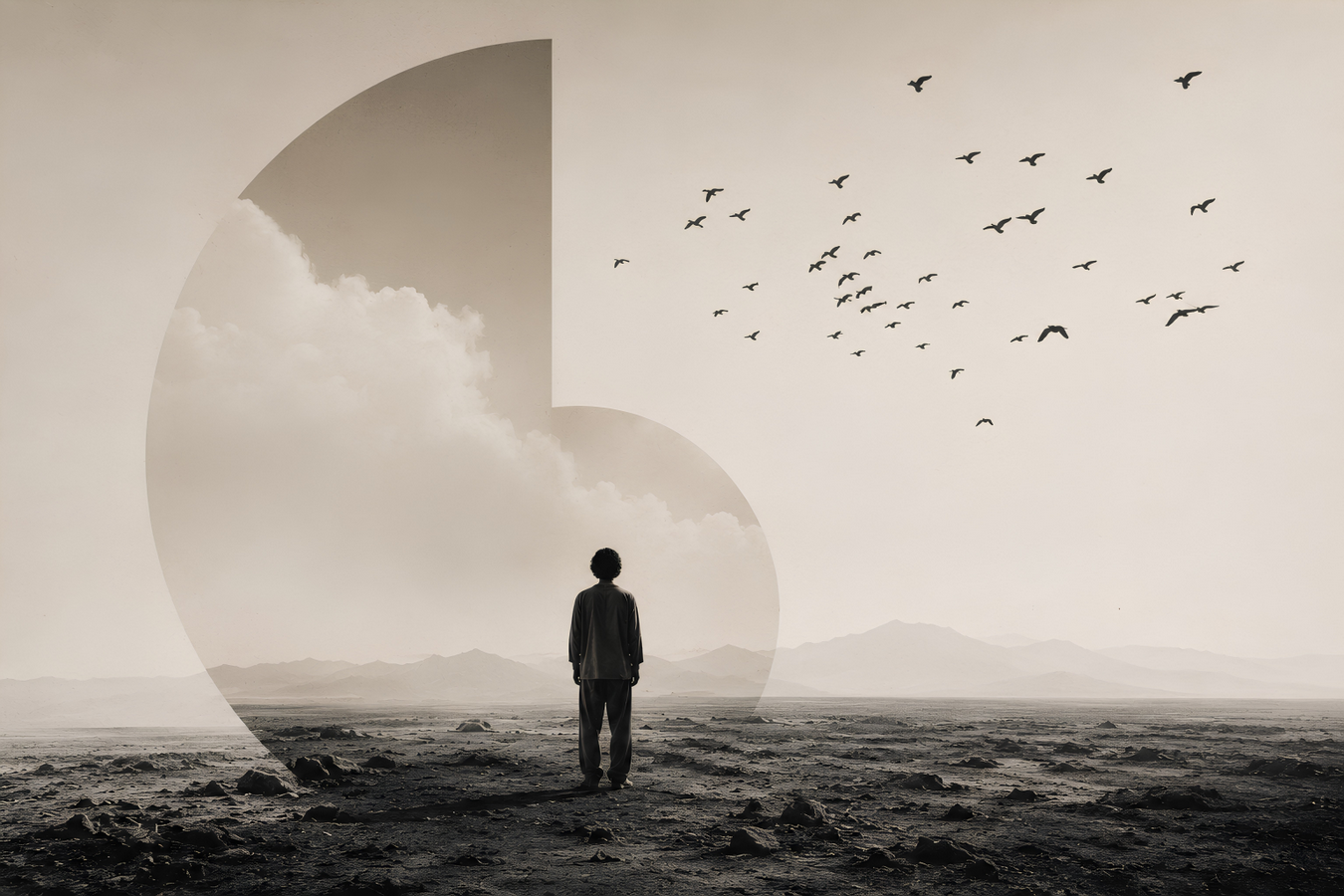
“We shape our buildings; thereafter they shape us.” ~Winston Churchill, 1943
Consider, for a moment, the subtraction. Not the loss of ornament or grandeur, not the disappearance of the Pantheon’s oculus or the Guggenheim’s spiraling ramp, but the complete erasure of the built environment itself, every wall, every roof, every threshold between inside and out. What would remain of the human story if architecture, in all its forms, had never existed? The question sounds fantastical, almost childish. And yet it is precisely this kind of radical imagining that illuminates what architecture truly is: not a profession, not a product, but the oldest technology of the self.
Albert Camus once wrote that “man is the only creature that refuses to be what he is.” Architecture is, in many ways, the material evidence of that refusal the act of refusing the bare earth, refusing exposure, refusing the formlessness of the open world. To imagine a humanity without it is to imagine a species that, somehow, accepted what it was given. That species would be unrecognisable to us.
The Exposed Animal: Psychology Without Shelter
The field of environmental psychology has long argued that the spaces we inhabit are not neutral containers for human life; they actively participate in producing it. Roger Ulrich’s landmark 1984 study demonstrated that hospital patients recovering from surgery healed measurably faster when their windows looked out onto trees rather than brick walls. The built environment, in other words, is not background. It is a protagonist.
In a world without architecture, the human nervous system would have developed in a state of chronic environmental exposure. The amygdala the brain’s threat-detection centre — would have remained in near-perpetual activation. Without the psychological anchor of a threshold, of a door that closes, of a ceiling that says “you are contained and therefore safe,” the cortisol cycle would have found no natural valley. Stress, in the architectural imagination, is partly the condition of being uncontained.
Abraham Maslow’s famous hierarchy of needs places shelter at the base of the pyramid, alongside food and water, as a prerequisite for all higher human functioning. Without it, the ascent toward love, esteem, and self-actualisation becomes not merely difficult but neurologically improbable. The philosopher Gaston Bachelard understood this intuitively. In “The Poetics of Space” (1958), he argued that the house is not merely where we live but where we dream it is the first universe of the self, the place where the imagination learns what it means to be interior. Without the house, Bachelard implies, the interior life itself may never have formed.
Colour, Temperature, and the Unbuilt Sensorium
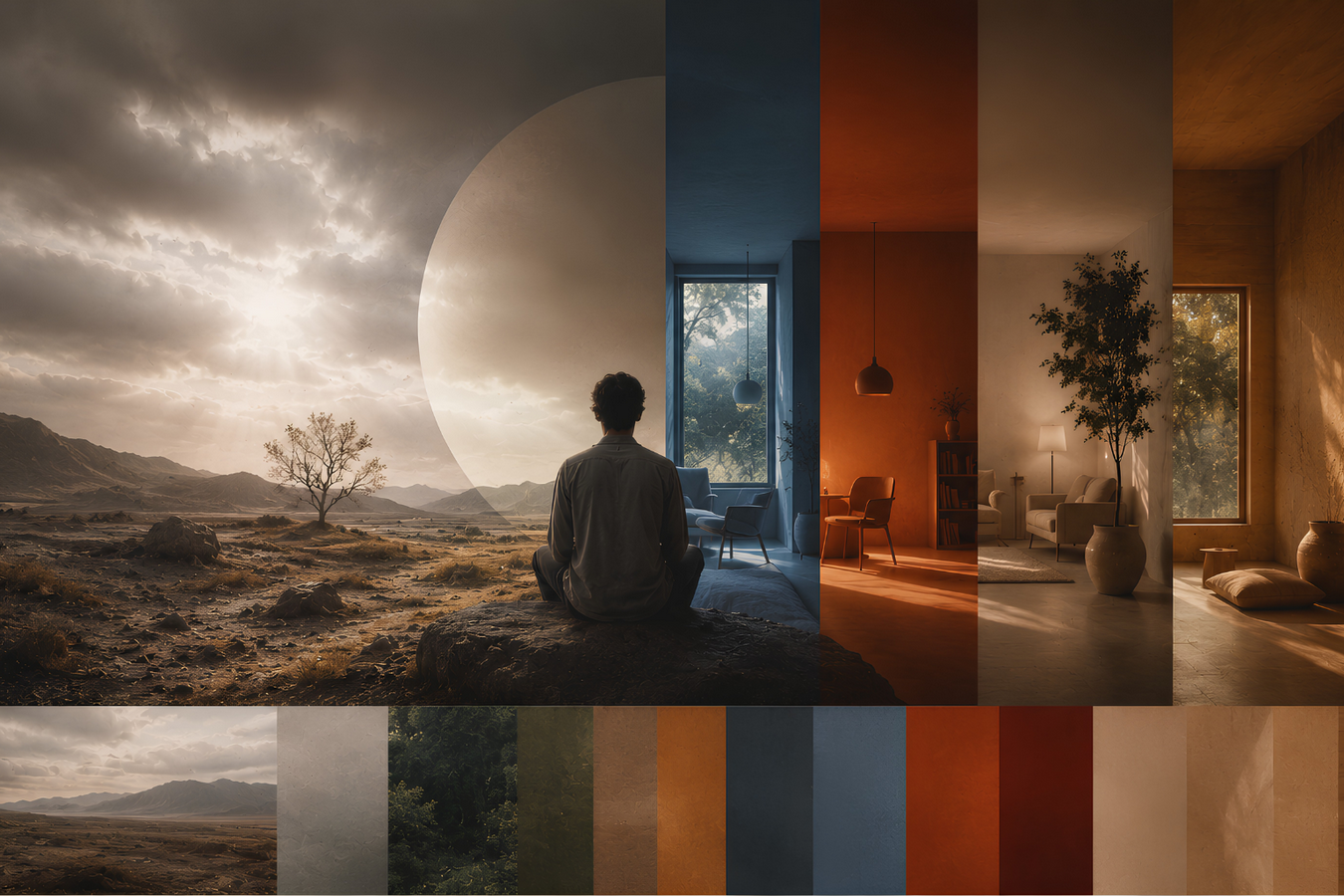
Architecture does not merely provide shelter. It organises the sensory world. Colour psychology, now well-established in environmental design, suggests that the hues of our interiors produce measurable physiological responses. Blue tones lower blood pressure and slow respiration; red accelerates the heart rate; the warm neutrals of stone and timber evoke safety and groundedness. These responses are not merely cultural conditioning; they are evolutionary inheritances that architecture has learned to play like an instrument.
In a shelterless world, colour as a designed experience would not exist. The palette of human perception would be the palette of the unmediated landscape: the greens and browns of vegetation, the grey of open sky, the ochre of bare earth. Without the ability to construct chromatic environments to paint a room the particular blue that calms a child, to flood a workspace with the diffused light that sustains concentration humans would have lost one of the most powerful levers of psychological self-regulation available to them.
Temperature control, similarly, is not merely a matter of physical comfort. Thermal environments profoundly affect cognition and mood. Research published in the “Journal of Applied Psychology” has shown that performance on cognitive tasks declines significantly in both very cold and very hot ambient conditions, with an optimal range of approximately 21–22°C for sustained intellectual work. A species permanently exposed to the thermal variability of the open environment would have been cognitively disadvantaged in ways that might have fundamentally altered the trajectory of abstract thought.
“The house shelters daydreaming, the house protects the dreamer, the house allows one to dream in peace.” ~ Gaston Bachelard, The Poetics of Space
The Unwritten Social Contract: Community Without the Wall
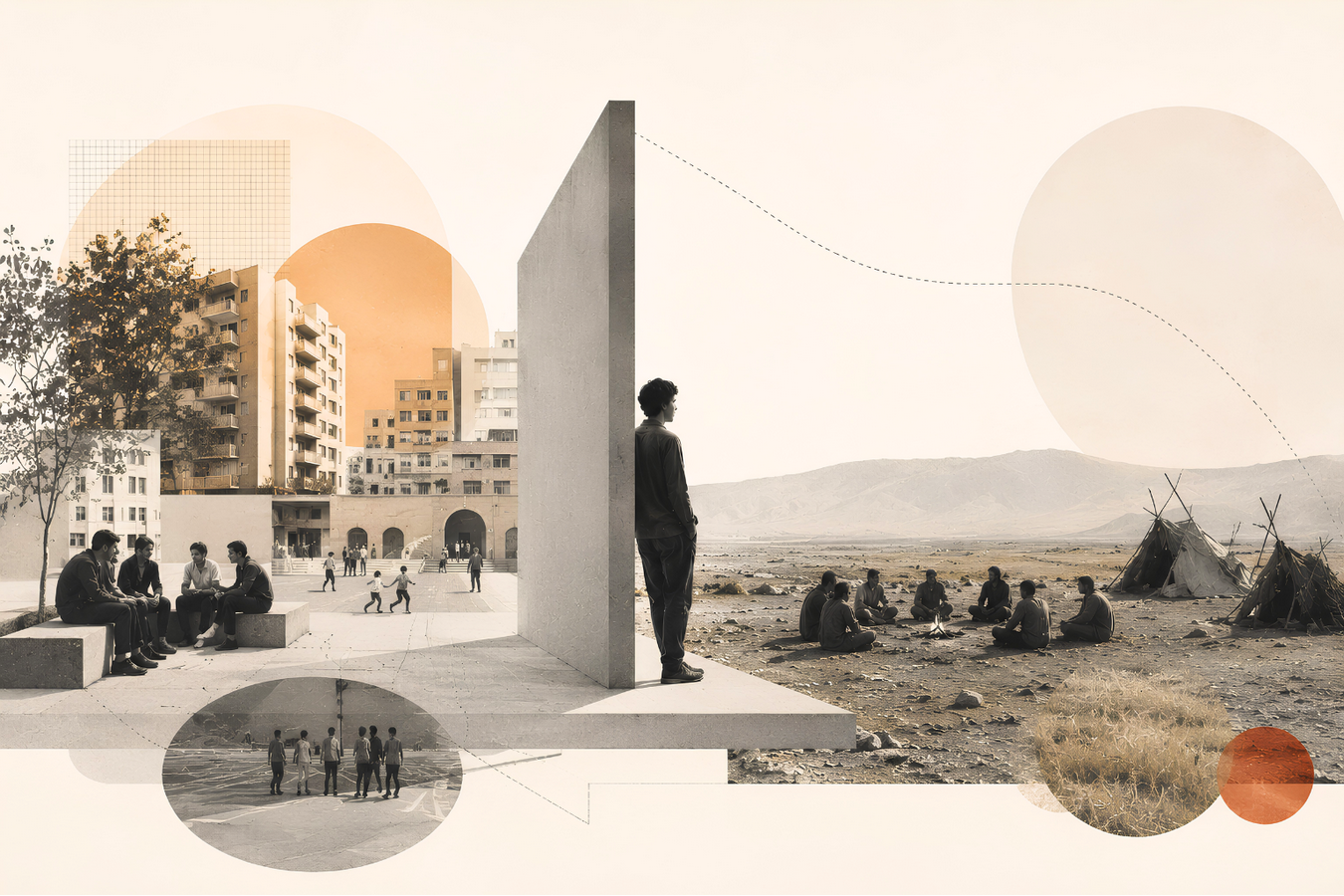
In 1948, the Italian director Vittorio De Sica released “Ladri di Biciclette” (“Bicycle Thieves”), a film in which the entirety of the social drama plays out on the streets and in the open squares of post-war Rome. The film is a masterpiece of neorealism, and yet even its radical rejection of interior space depends entirely on the presence of the city: on the wall against which the protagonist leans in despair, on the apartment block that defines neighbourhood and community. Without those walls, there is no neighbourhood. Without neighbourhood, the social drama De Sica depicts dissolves into mere proximity.
Architecture, at its most fundamental, is the technology of social organisation. The wall that divides inside from outside simultaneously creates the possibility of “us” and “them,” of the domestic and the civic, of private grief and public assembly. Without it, human sociality would have remained at the level of the nomadic band fluid, kinship-based, and fundamentally unable to sustain the institutions that complexity requires. There would have been no agora, no forum, no parliament, because those things are not merely activities but spaces, and spaces require construction.
The anthropologist Tim Ingold has argued that dwelling is not something humans do in space, but something through which space itself comes into being. The act of making a home of orienting oneself within an environment and marking a place as distinct from the surrounding world is the act that produces the concept of place at all. A humanity without architecture would be a humanity without place in the most profound sense: not merely homeless, but placeless, moving through an undifferentiated world in which every point is equivalent to every other.
Art, Cave Walls, and the First Architecture of the Imagination
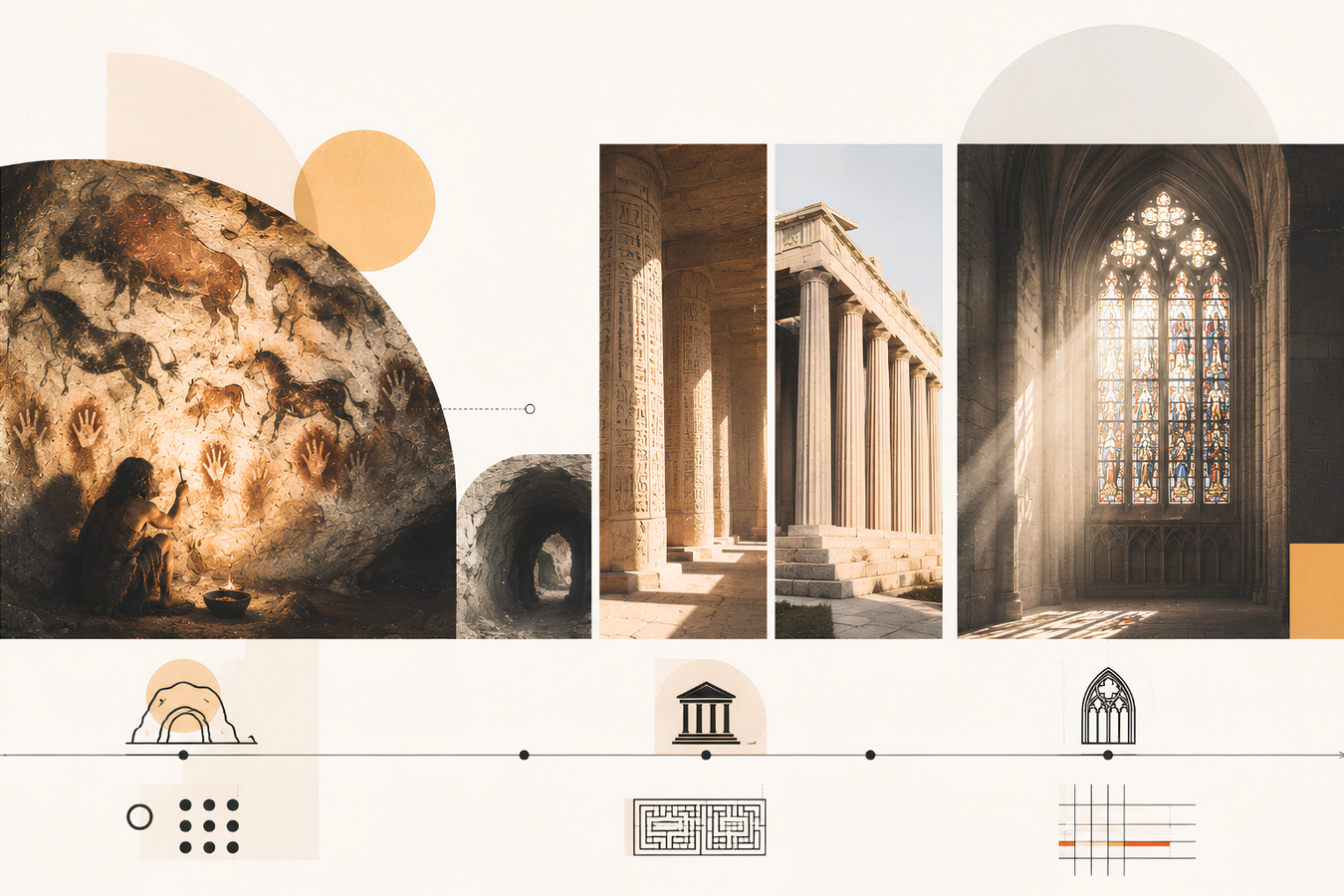
It is perhaps no coincidence that the earliest known examples of human art are found inside architecture of a kind: the caves of Lascaux, Altamira, and Chauvet. The cave is the earth’s own built form, and the Palaeolithic painters who entered its depths to render bison, horses, and human hands in ochre and charcoal were, in a sense, doing what all architects do transforming a found space into a charged one, a container of meaning. Art could not exist without the enclosure.
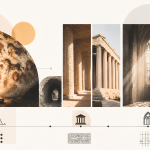
Without the impetus to build, the development of art itself might have followed a fundamentally different trajectory. The monumental traditions of ancient Egypt, Mesopotamia, Greece, and Rome were inseparable from their architectural ambitions: the frieze exists because the temple exists; the mosaic exists because the floor exists; the stained glass window exists because the cathedral exists. Art and architecture have always co-evolved, each enlarging the possibilities of the other. A world without walls would have been a world without many of the surfaces on which human meaning has most durably been inscribed.
What Architecture Quietly Does
It is the habit of those outside the profession to regard architecture as a matter of aesthetics — of beauty versus ugliness, of taste and fashion. This speculative exercise suggests otherwise. Architecture is, at its root, a cognitive and social technology: it manages the relationship between the human nervous system and the physical world; it produces the conditions under which community, culture, and interiority become possible; it mediates between the animal that we are and the civilisation that we have, improbably, managed to construct.
The architectural theorist Juhani Pallasmaa has written that “every touching experience of architecture is multi-sensory; qualities of space, matter and scale are measured equally by the eye, ear, nose, skin, tongue, skeleton and muscle.” This totality of engagement is what is at stake when we ask what a shelterless humanity would have been. The answer is not merely a humanity exposed to rain, but a humanity deprived of the full sensory orchestration that architecture performs without announcement.
Contemporary practice often risks forgetting this. In the age of parametric facades and photogenic forms, it is worth asking, with some urgency, whether the buildings being produced are doing what buildings have always done: not merely sheltering bodies, but sheltering minds; not merely organising space, but producing the conditions under which human life, in its fullest sense, becomes possible. The thought experiment of a world without architecture is, in the end, a mirror held up to everything that architecture does — most of it silently, most of it outside the frame of any photograph.
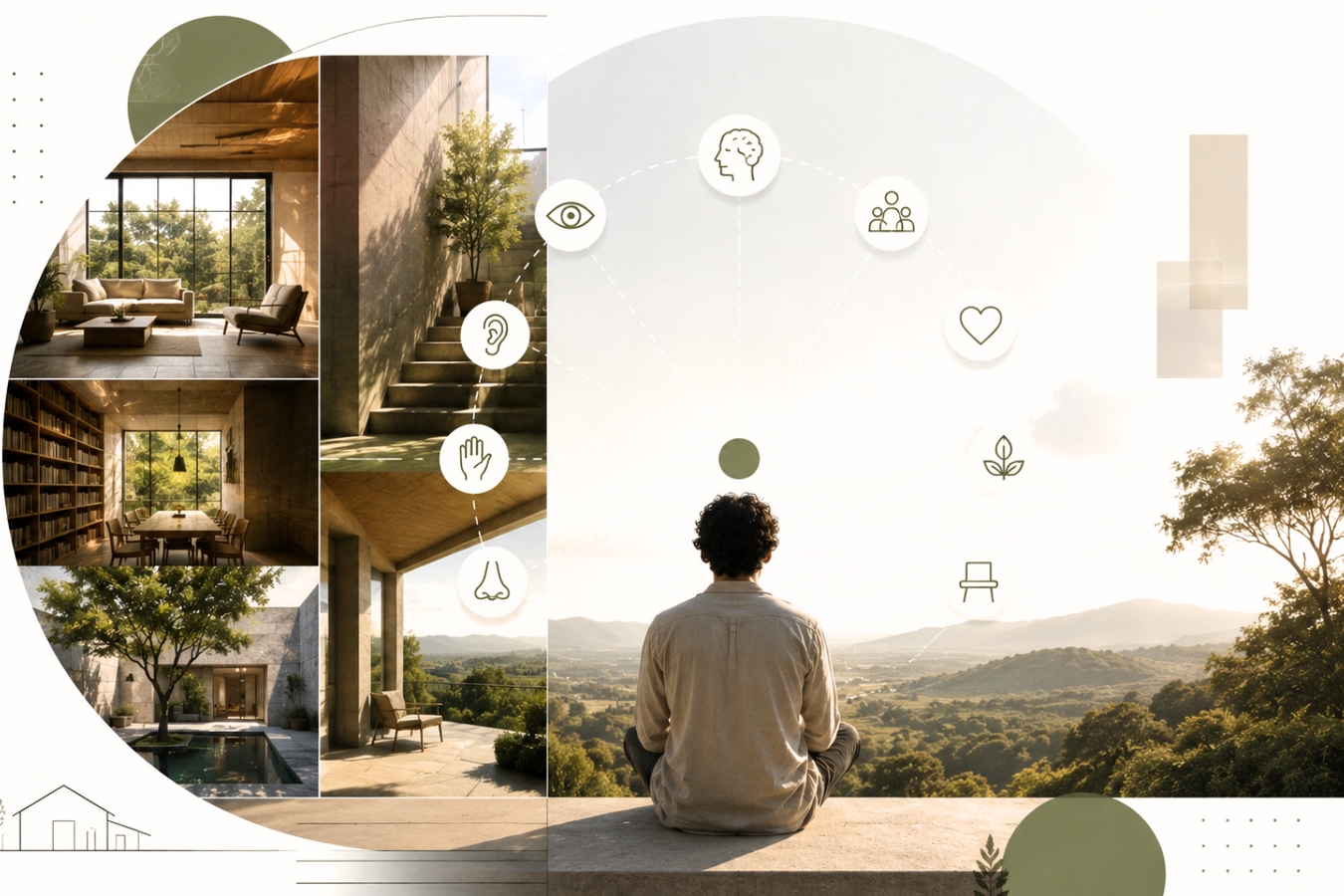
“Architecture is the masterly, correct and magnificent play of masses brought together in light.” ~ Le Corbusier
To design without asking what a building does to the human body and mind is to misunderstand the task entirely. The story of human existence is, in no small part, the story of what we have built. Subtract the buildings, and the story does not merely lose its setting it loses much of its plot. Architecture is not the backdrop of civilization. It is, quietly and stubbornly, one of its authors.