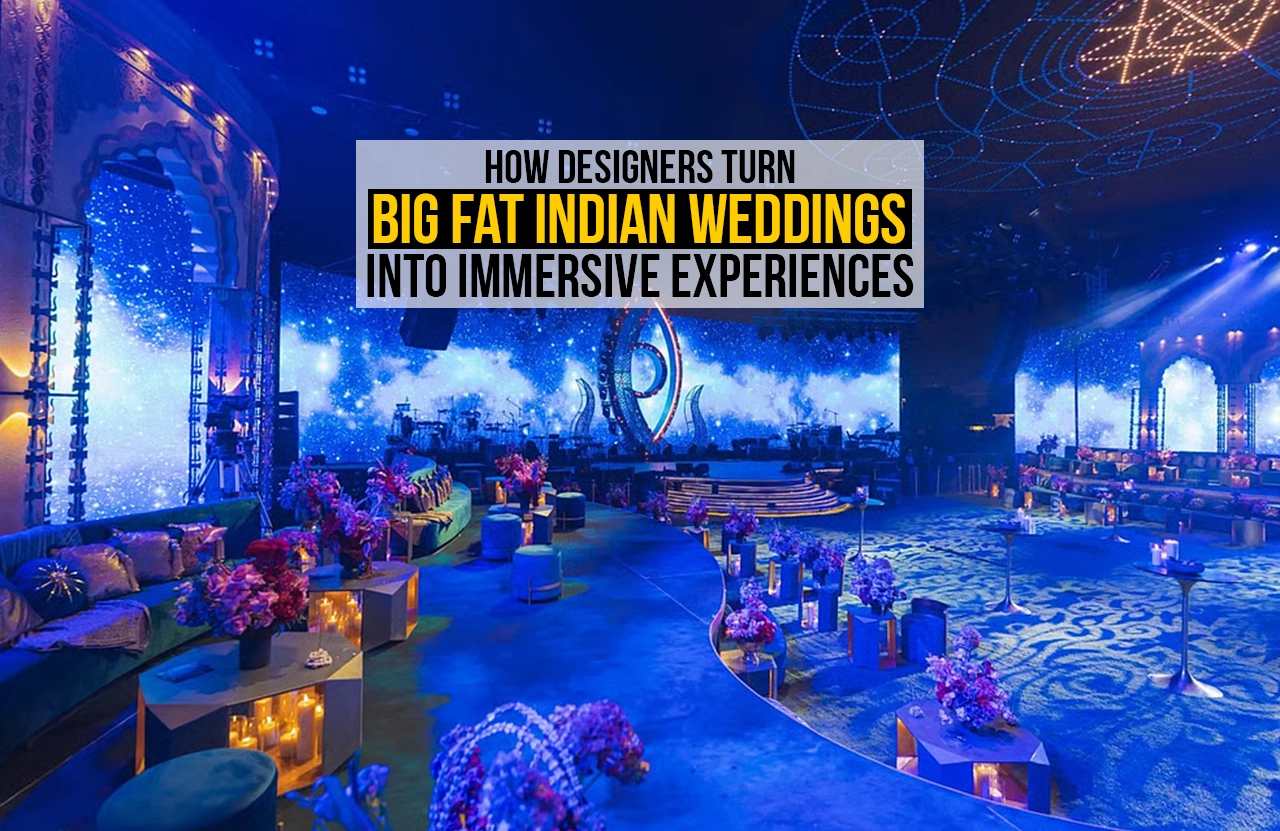
Anyone who has attended an Indian wedding knows that there is colour, music and chaos in every direction they look. There are flowers hanging from every visible surface, relatives moving in from all directions, music flowing from corridors and food counters which seem to go on forever. Yet if one pauses for a moment and looks behind this spectacle, another story emerges, that is rarely discussed or appreciated.
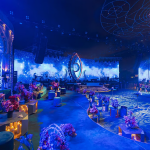
Big Fat Indian Weddings have always been associated with grandeur, extravagance and excess. Behind these elaborate decorations, choreographed entries and lavish venues lies an increasingly sophisticated design practice. Today, the wedding designers no longer simply decorate spaces; they craft immersive environments that engage the attendees’ memories, emotions and senses.
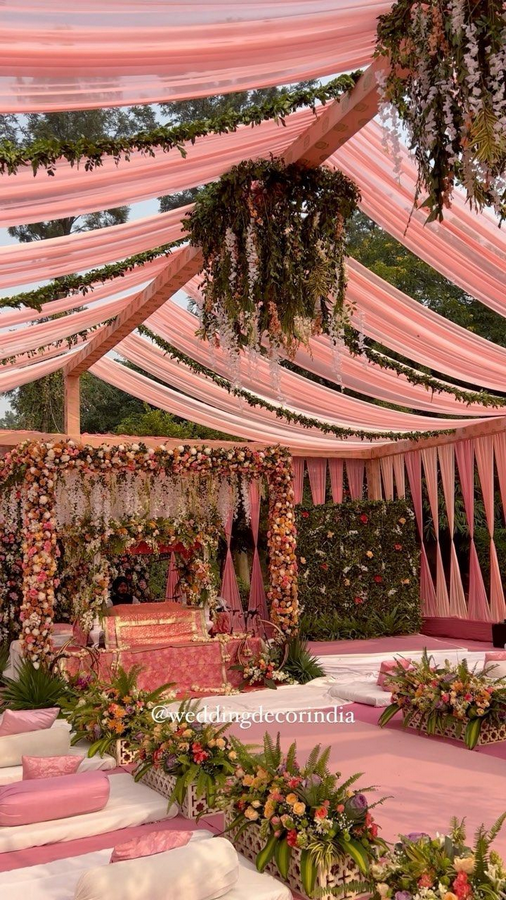
The Indian wedding industry, one of the largest in the world, presents an extraordinary design brief. Designers must understand the wishes and wants of the couple and their families, create an entire world of experience that must be executed within a matter of days, host thousands of guests, evoke a sense of cultural understanding and belonging and then dismantle everything within 72 hours.
Planned for months, built in a few days, experienced once and then removed without a trace, Still these temporary marvels remain largely absent from serious architectural disclosure.
Hosting guests and curating experiences
The approach to wedding design in India has evolved remarkably over the past two to three decades. Earlier, weddings were primarily focused on accommodating the large number of guests and relatives. The Family homes, street corners, community halls and temples were sufficient to facilitate rituals effectively, while décor was just a supporting factor. The emphasis was entirely on hospitality and practicality.
Today, however, weddings are becoming increasingly intimate and deeply personalised. Smaller guest lists have enabled the families to invest more in the experience and magnify the rituals which were routine before. Every event, the mehendi, sangeet, haldi and wedding ceremony is now expected to possess its own identity.
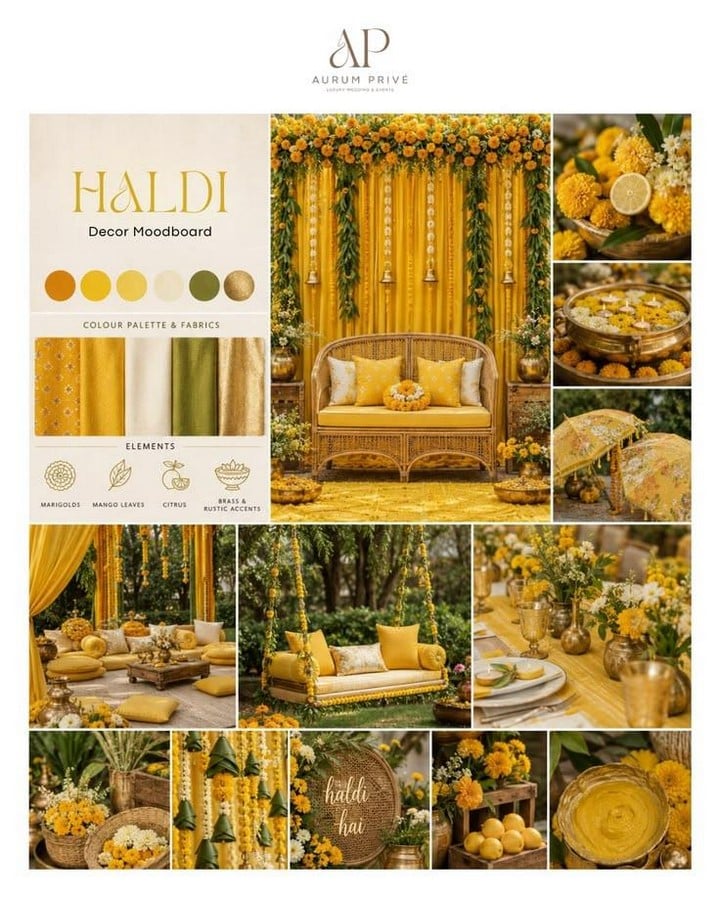
With social media continuously raising standards, there is a growing pressure to generate original themes and unconventional concepts. Wedding designers are constantly challenged to think outside the box but still create something that is deeply personal. This has resulted in a design culture where even the smallest details, from personalised signage, stationery, to table settings and return gifts, are meticulously planned.
Designing a Story
We have seen that celebrations are migrating from familiar spaces like family homes, local temples and village streets to unfamiliar places like resorts, palaces and destination venues. With this development, there emerges a new challenge: How can unfamiliar places be made to feel personal?
This is often done through storytelling. Successful wedding design begins with understanding the couple, their personalities, shared experiences, family traditions and aspirations for the celebration. The process bears fruit when couples and their families are able to express their scale and vision for their wedding whilst remaining open to experimentation and expert guidance.
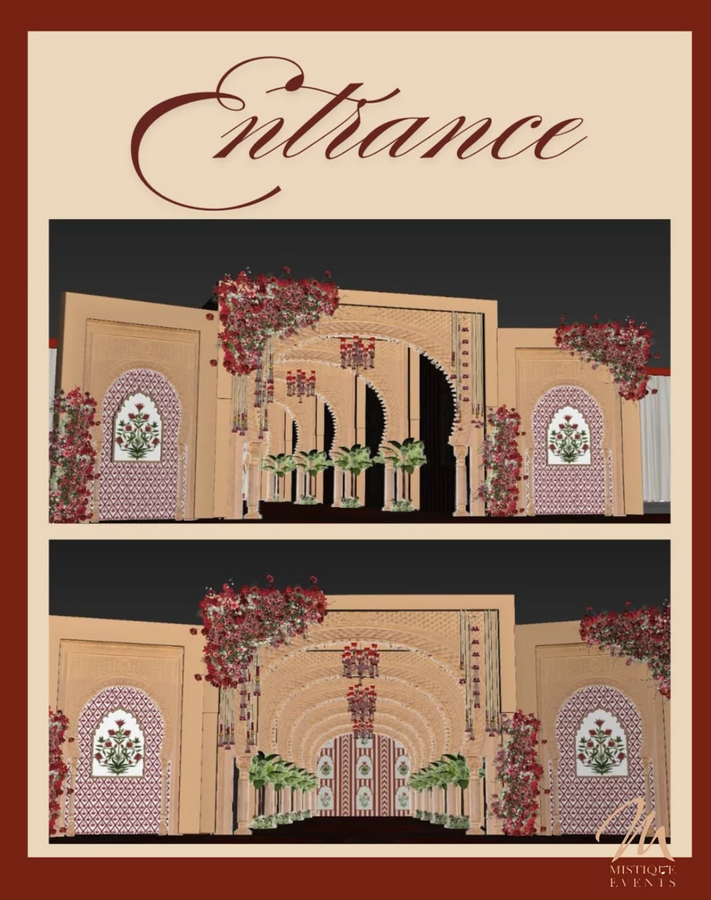
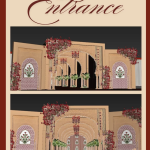
Much like any design project, wedding design undergoes multiple stages of development and refinement. Initial discussions evolve into concepts, mood boards, material palettes, spatial drawings and 3-D renders. Depending on the scale of the celebration, this process can extend anywhere between 3 to 6 months.
Experience through Movement
Architecture has always prompted immersive experiences through movement and the Indian weddings amplify this principle.
The bride’s entrance, for instance, is designed as a spatial narrative. Long processional routes, framed vistas, changing lighting conditions and carefully timed music collectively build anticipation. Designers orchestrate what the attendees see first, second and so on, much like designers of a museum. The difference lies only in the temporality: wedding spaces exist only briefly, yet they are expected to leave lasting impressions.
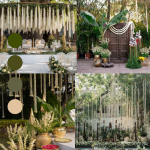
This experience extends far beyond the visual spectacle. Modern wedding designers increasingly incorporate all five senses to shape a memorable experience. Fragrance from flowers, texture from various materials, music from live performances, the play of natural and artificial light, and the endless supply of food become integral design tools.
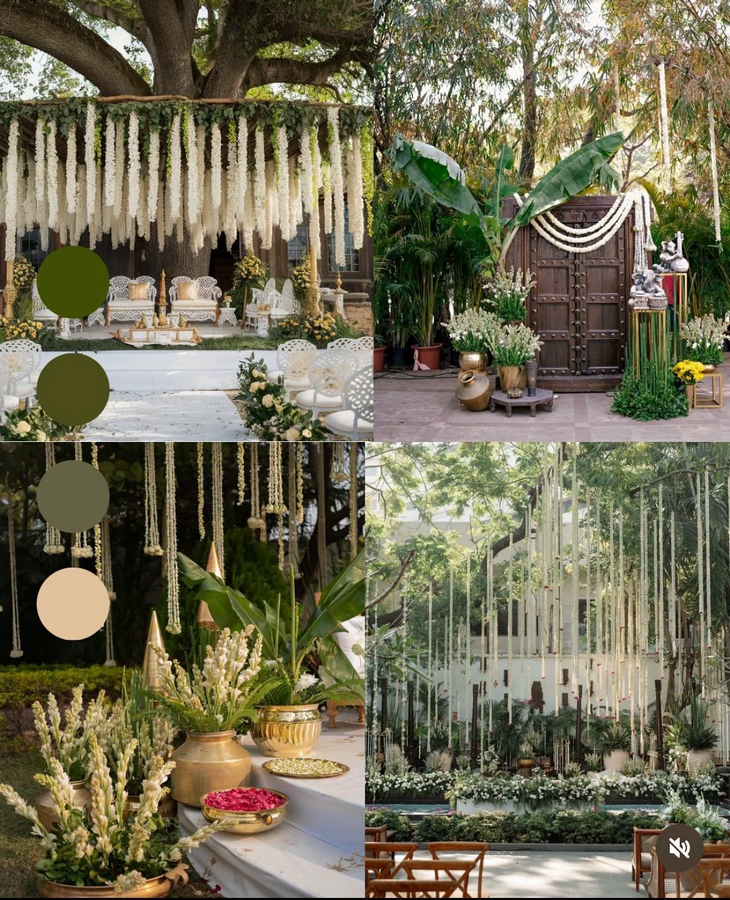
These sensory layers not only help the guests to connect with the event or the main couple, but also with the culture and place in which it unfolds. This sensory environment takes months of planning and curating to feel authentic. For example, a South Indian wedding may combine the use of jasmine and sandalwood with banana-leaf decorations and sustainable leaf tableware, whilst a celebration in the palaces of Rajasthan incorporates local crafts, the palace grandeur, folk performance and regional cuisine.
The challenge of Temporality
There is a famous saying that “a thing isn’t beautiful because it lasts”. Maybe that is the reason why the Big Fat Indian Wedding remains ephemeral in nature.
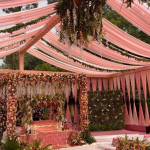
Entire streetscapes are constructed overnight. Temporary pavilions are constructed that rival permanent architecture in their scale and complexity. Intricate mandaps, elaborate facades and immersive installations are assembled within days and dismantled within hours.
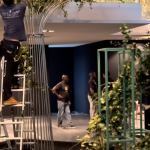
This execution itself is immensely complicated; different functions may occur in the same venue with very little time separating them. Entire spaces often need to be stripped overnight , requiring the execution team to work through the night under significant pressure. The logistical precision and the physical labour demanded by these transformations deserve far greater recognition.
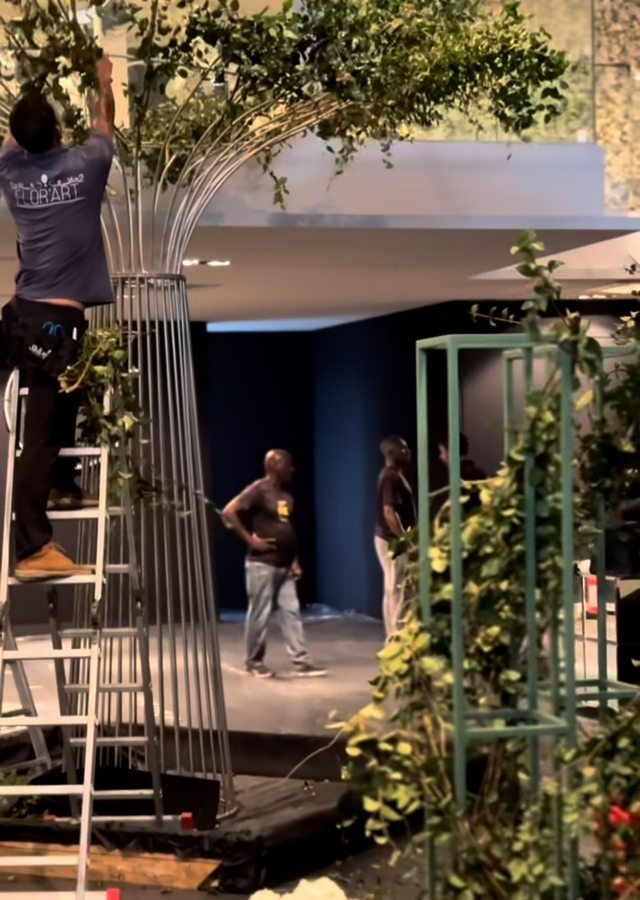
Yet despite months of planning, wedding architects face one unprecedented challenge: the weather. Unexpected rains, high winds and extreme heat can alter carefully planned experiences within minutes. Consequently, contingency planning becomes essential, backup venues, smarter material choices, and rapid responses become part of the design process.
Changing the Indian wedding scenario
For a very long time, the Big Fat Indian Weddings were dismissed merely as spectacles of excess. Viewed from a designer’s lens, though, they reveal a far more complex reality.
They are libraries of temporary architecture, storytelling, sensory design, logistics and cultural expression. They bring together architects, designers, lighting consultants, artists , fabricators, florists, local vendors, make-up artists and performers to create immersive worlds that exist only for a fleeting moment. These generate tons of employment and remain forever in the memories of the guests.
The attendees may forget the menu or certain decorations, but they often remember how the spaces made them feel. In this way, wedding design also demonstrates that great design is not solely about grandeur or permanence. It is equally about experience. It also presents an opportunity for design discourses to take weddings seriously.
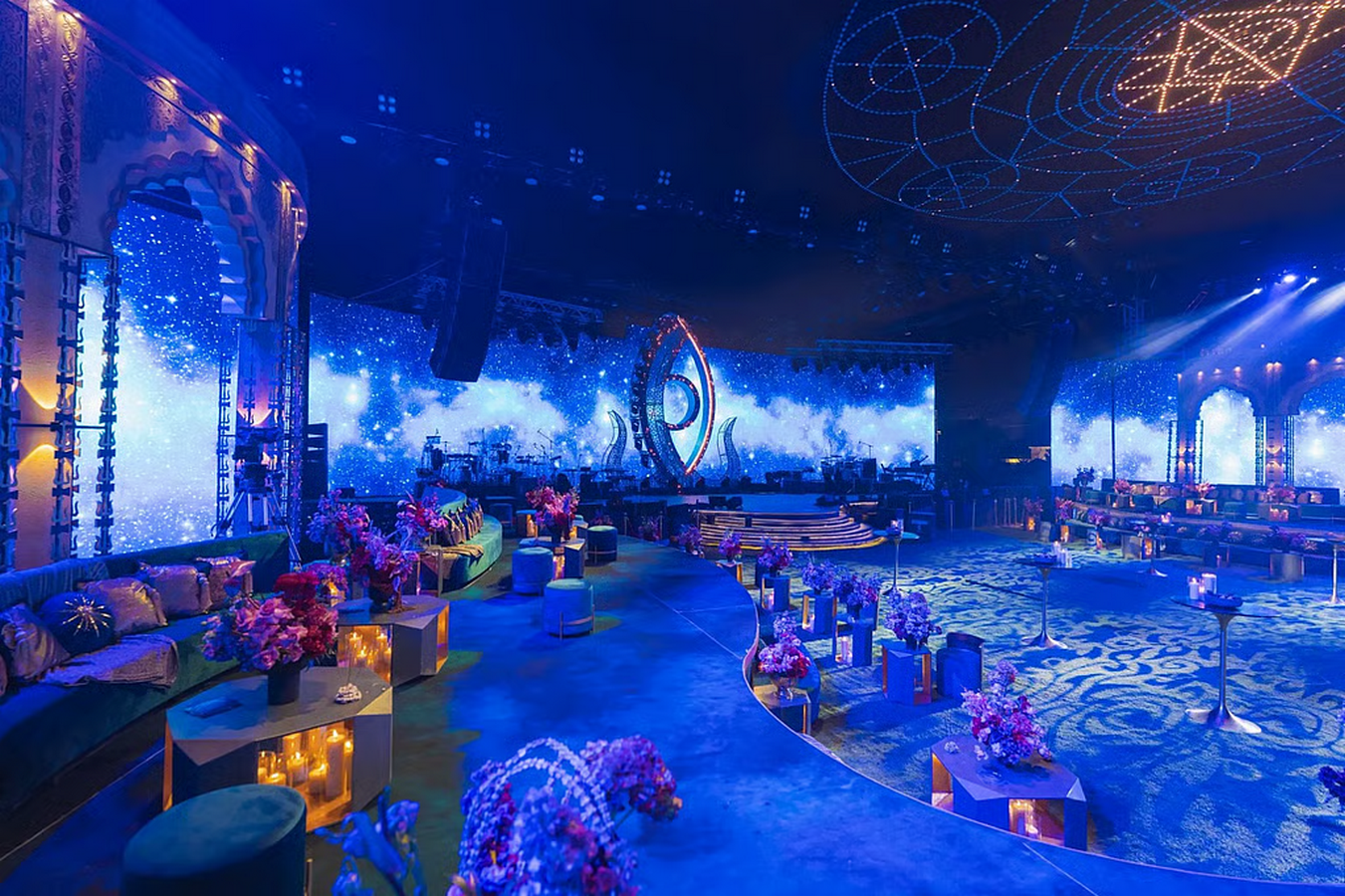
After all, if architecture is all about shaping human experiences and creating lasting effects, there are few moments in life as significant or as emotionally charged as a wedding.