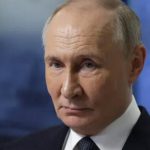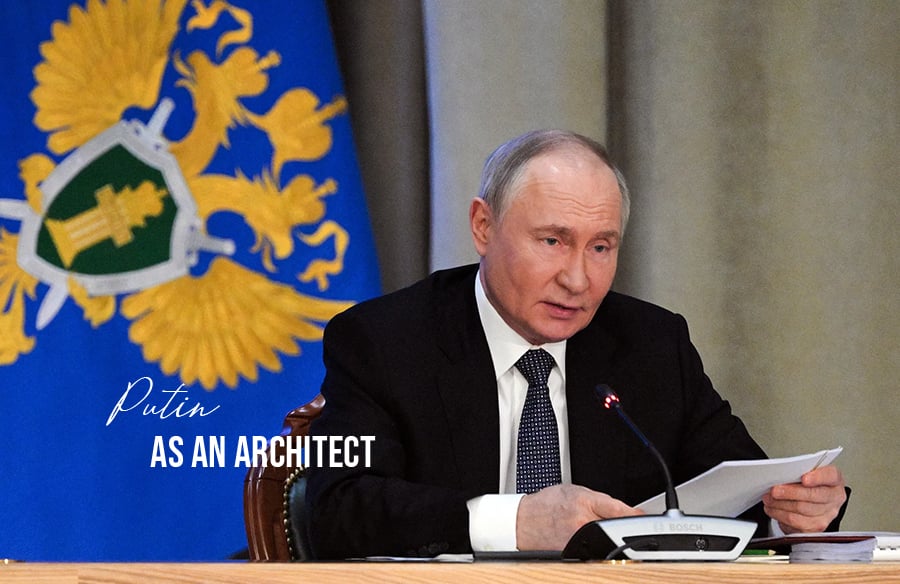
Vladimir Putin is a well-known Russian politician and former intelligence officer, known for his calculated pragmatism, sense of nationalism, and style of rule characterized as authoritarian and the subjugation of the Russian people. Until 2012, Putin was in pursuit of and obtained the position of President of Russia at the time. He is the longest-serving Russian president and he has served since the dissolution of the Soviet Union, which accounts for the many times he has served as president. If he was indeed an architect, his buildings would take on the nature of pervading signs that exemplify his rule – power, dominance, security, strength, permanence, and splendor. In this article, we will look at the personal, political, and ego characteristics of Putin’s civic sensibility as an architect with a conditional-cultural architectural lens by pointing to examples of history, famous architects, and buildings that have the same mindset about architectural history.
The Architectural Philosophy
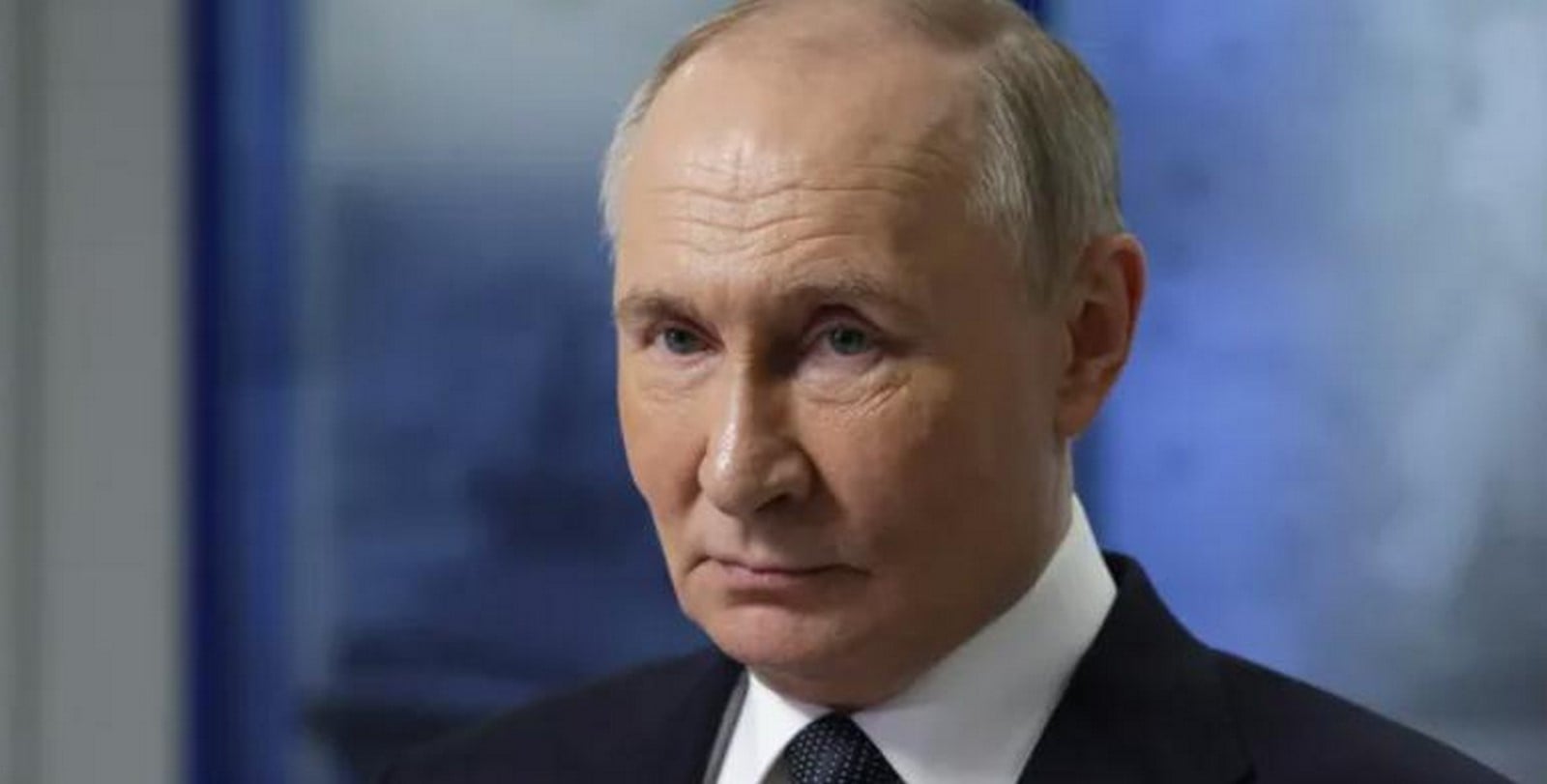
Putin’s leadership has been marked by authoritarianism, strategic means of appearance-making, and fiercely Nationalistic interpretations of Russian history. He would pick an architectural style suggesting power, strength, permanence, and nationalism, avoiding fanciful and experimental. Putin instead would create works suggesting authority, power, and expansion and deeply historical, both in terms of tradition and of using modern sensory forms that can withstand strength and military power and expansion. The points below will be made and emphasize whether or not Putin was the architect.
Monumentality and Political Symbolism
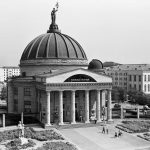
Putin’s buildings would not just be buildings; they would be vomit. They would inevitably incorporate elements of Stalin’s and the Neoclassical tradition, and they would remain references to power – political, economic, or military. Think of Moscow’s, “The Seven Sisters”: those enormous buildings planned and built during the Stalinist period of Soviet power. Putin’s architectural aspirations would seem to have originated from this very tradition of architecture that is simply about domination, and their success would be conditionally based on scale and conventional symmetry. Think also here of Albert Speer’s notion of the “Theory of Ruin Value” when buildings are purposely conceived and built for the grandeur of ruins to possess and last for centuries. Putin’s buildings would be built for the long haul with blocks of reinforced concrete, thick stone facades, and bomb-proof foundations.
Nationalism and Russian Revivalism
Putin has made an image of himself as a defender of Russian traditions, and he continues to draw on Tsarist and Soviet pride. As an architect, he most likely would be an advocate for Russian revivalism, a uniquely Russian blend of Orthodoxism, and Orthodox state monumentality. His architecture would pull upon Russian classicism including onion domes, gold ornamentation, and expansive colonnades. In addition to historical revivalism, he would modernize for security, technology, and energy independence to produce fortress-type, smart cities.
Fortress Urbanism & Surveillance-Driven Spaces
Putin is known for his strategic use of media, information, and surveillance. He would inhabit the Fortress Urbanism design, where the constructed environment is designed for control, security, and hierarchy. Like China’s smart cities, Putin’s cities would look like state-operated and enabled smart cities with AI surveillance, control of human movement, and zoning based on power/ hierarchy. The interior will feature the opulence of a Baroque style for the elite, while the exterior will maintain an austere, militarized, and architecturally designed indestructible space. People spaces will be room-like, utilitarian spaces designed for efficiency and control, not artistry.
Comparable Architects & Influences
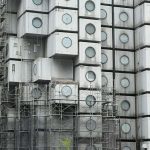
Even if Putin, as an architect, had his unique aesthetic, there would be some parallels, likely, to some of the individuals listed: Albert Speer and the Nazi architect, for example, would design monumental, grandiloquent buildings to mark a state of absolute power; the architects of Joseph Stalin’s Soviet neoclassicism were relatively nascent when Stalin requested a grand series of imposing government buildings that formed the city’s skyline. Le Corbusier was a pace-setter, and his sprawling, master plans for new utopian cities illustrate the pitiable stripping of democratic energy, and such thinking could serve as some of the bedrock for Putin’s steadfast and narrowed political realities. Kisho Kurokawa would have militarized yet concierge-like approaches to his projects, we may imagine, as the deployment of his modular cities may illustrate Putin’s idea of self-sufficient, state-built urbanism.
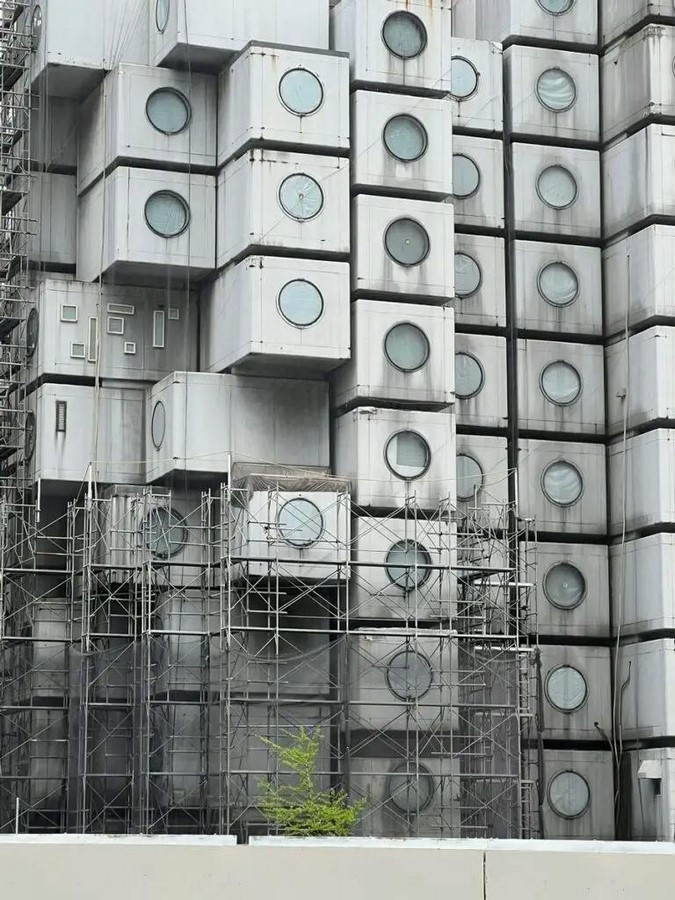
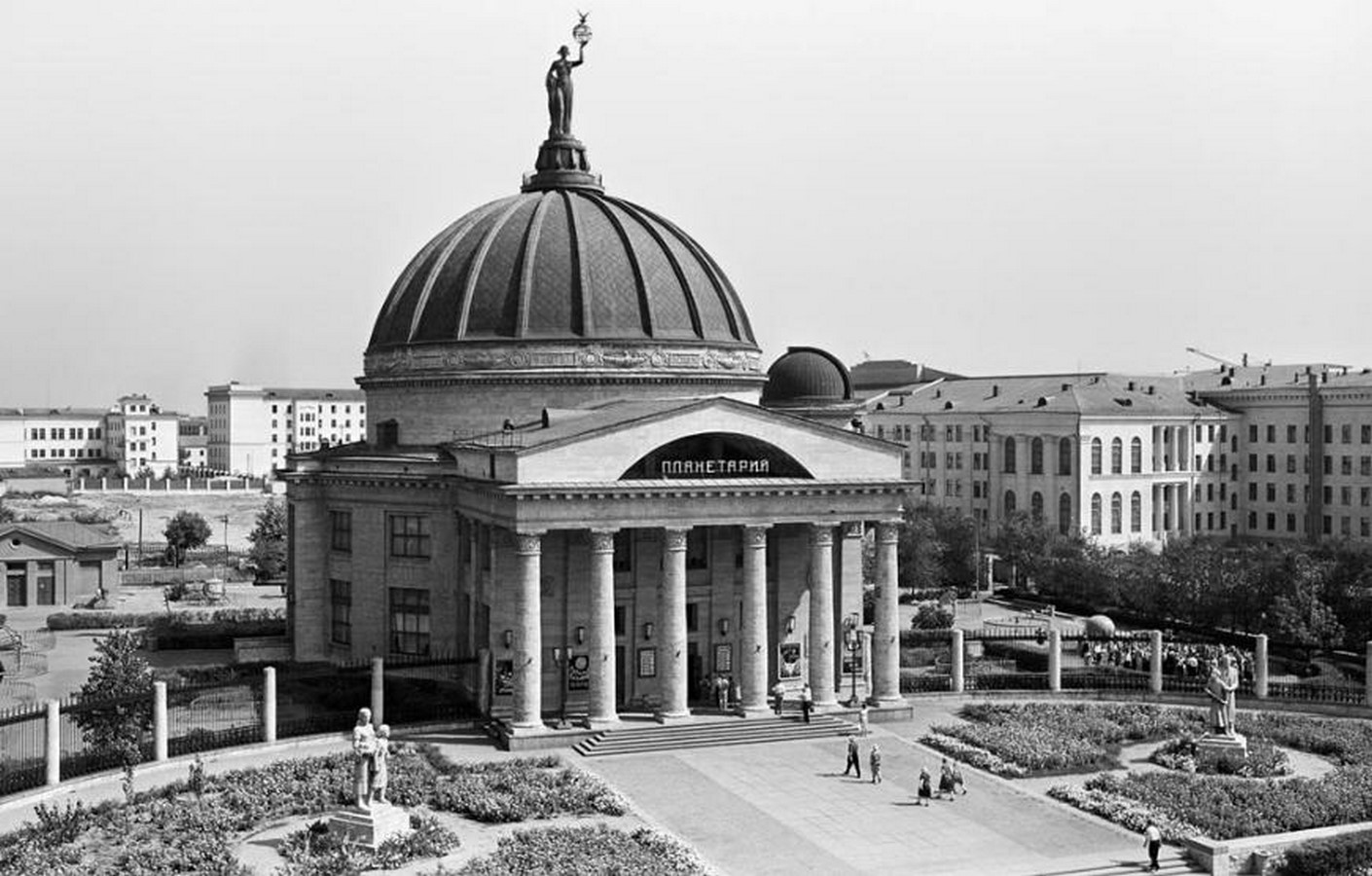
If he were an architect, Putin would channel his energies not toward the more joyful, human-scaled places or spaces, but toward control, permanence, and psychological domination. It would be architecture that aimed for a permanent state and was hence impervious to destruction, examination, or apology. Architecture rich with nationalistic imagery, sweeping and grandiose Tributes to the Tsars, and the same rigorous, disturbing rationality of the Soviets, infused with ordering mechanisms, ensured permanence and purity. The architecture would not simply be spaces for living, working, and interacting with each other, but rather channels or reminders of physical power and ideology meant to discipline and transform the behavior of human beings within. Be this through imposing government buildings, urban spaces with complex and far-reaching surveillance, or fortified enclaves, Putin’s architecture would convey commanding orders, exert control, and dominate the public’s imagination with slightly brute grandeur.
Citation:
- Wikipedia Contributors (2025). Vladimir Putin. Wikipedia.
- Michael Ray (2018). Vladimir Putin | Biography, KGB, Political Career, & Facts. In: Encyclopædia Britannica. [online] Available at: https://www.britannica.com/biography/Vladimir-Putin.
- Popeski, R. (2025). Russian President Vladimir Putin suggests temporary administration for Ukraine to end war. [online] USA TODAY. Available at: https://www.usatoday.com/story/news/world/2025/03/28/vladimir-putin-suggests-temporary-administration-ukraine/82702051007/.
- Donina, D. (2016). The frightening splendor of Stalinist-era Empire style. [online] Russia Beyond. Available at: https://www.rbth.com/multimedia/pictures/2016/01/11/the-frightening-splendor-of-stalinist-era-empire-style_558403.