Le Corbusier – Greatest Architects / Best Architects In The World
Le Corbusier, a renowned Swiss-French architect, is hailed as a pioneer in modern architecture. His groundbreaking contributions have left an indelible mark on the architectural landscape, influencing generations of designers and shaping the way we perceive and interact with built environments. This article delves into the life, architecture style, and notable works of this visionary architect.
Early Life and Education
Charles-Édouard Jeanneret, later known as Le Corbusier, was born on October 6, 1887, in La Chaux-de-Fonds, Switzerland. His early exposure to the world of art and craftsmanship, owing to his watchmaker father, laid the foundation for his future endeavors. Le Corbusier studied at the École des Beaux-Arts in La Chaux-de-Fonds and later in Paris, where he absorbed the prevailing architectural trends of the time.
Architecture Style: Towards Modernism
Le Corbusier played a pivotal role in the transition from traditional architectural styles to the modernist movement. Rejecting ornamentation and embracing functionality, he advocated for a new approach that responded to the needs of the rapidly changing society of the early 20th century. His architecture style, often characterized by clean lines, open spaces, and a harmonious blend of form and function, revolutionized the field.
Five Points of Architecture
One of Le Corbusier’s most influential contributions to modern architecture is the formulation of the “Five Points of Architecture.” These principles, outlined in his manifesto “Vers une architecture” (Toward an Architecture), became the cornerstone of his design philosophy.
1. Pilotis
Le Corbusier emphasized the use of pilotis, or slender columns, to lift the structure off the ground. This allowed for an open ground floor, creating a sense of openness and freeing up space for various purposes.
2. Free Plan
The concept of a free plan involved eliminating load-bearing walls, providing flexibility in interior space arrangement. This innovation allowed for more creativity in designing functional living spaces.
3. Free Facade
A departure from traditional constraints, the free facade was liberated from the structural responsibilities of the building. This enabled architects to design facades without being limited by load-bearing considerations.
4. Ribbon Windows
Ribbon windows, another hallmark of Le Corbusier’s architecture, replaced traditional small windows, providing abundant natural light and unobstructed views. This contributed to the overall aesthetic and functionality of the structures.
5. Roof Garden
Le Corbusier envisioned the roof as a usable space, transforming it into a garden or terrace. This not only added a green element to urban environments but also maximized the use of available space.
Notable Works
Le Corbusier’s portfolio includes a diverse range of projects, from residential buildings to urban planning initiatives. Here are 15 exemplary works that showcase the breadth and depth of his contributions to architecture.
1. Villa Savoye (1929-1931)
Situated in Poissy, France, Villa Savoye is an iconic representation of Le Corbusier’s Five Points of Architecture. Its elevated structure, free plan, and ribbon windows exemplify modernist principles.
2. Unité d’Habitation (1947-1952)
Located in Marseille, France, the Unité d’Habitation is a residential housing design that embodies Le Corbusier’s vision of communal living. The building features modular apartments and communal spaces.
3. Chandigarh Capitol Complex (1951-1963)
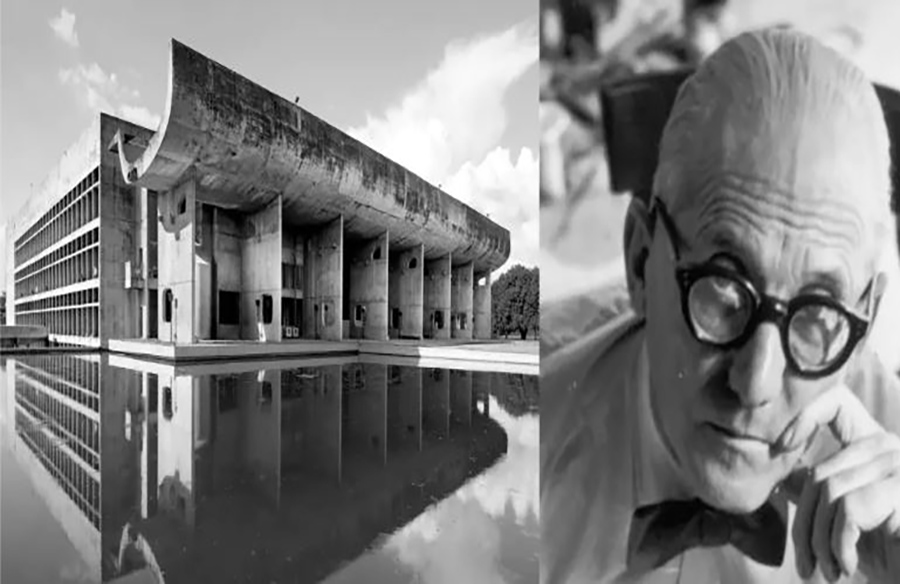
Commissioned to design the administrative center of Chandigarh, India, Le Corbusier created a modernist masterpiece. The Capitol Complex includes the Secretariat, High Court, and Legislative Assembly buildings.
4. Ronchamp Chapel (1950-1954)
The Notre Dame du Haut in Ronchamp, France, is a religious landmark that deviates from Le Corbusier’s typical style. Its sculptural form and the interplay of light showcase his versatility as an architect.
5. Carpenter Center for the Visual Arts (1961-1963)
Harvard University’s Carpenter Center in Cambridge, Massachusetts, is Le Corbusier’s only building in North America. Its sculptural design and emphasis on verticality make it a standout in the urban landscape.
6. Cité Radieuse (1952)
Also known as La Maison du Fada, this housing complex in Marseille is a manifestation of Le Corbusier’s urban planning ideals. The building incorporates shops, apartments, and communal spaces in a vertical city concept.
7. Villa La Roche (1923)
Situated in Paris, Villa La Roche is a residential building designed to accommodate an art collection. It reflects Le Corbusier’s early exploration of geometric forms and innovative spatial arrangements.
8. National Museum of Western Art (1959)
Located in Tokyo, Japan, this museum is a testament to Le Corbusier’s global influence. The building’s design integrates modernist principles with Japanese architectural elements.
9. Maison Guiette (1926)
A house and studio in Antwerp, Belgium, Maison Guiette showcases Le Corbusier’s mastery in merging living and working spaces. The building is a UNESCO World Heritage site.
10. Palais de la Cité (1953)
Although unrealized, Le Corbusier’s design for the Palais de la Cité in Paris provides insight into his urban planning concepts. The proposal aimed to transform the Île de la Cité into a modern urban center.
11. High Court of Chandigarh (1951-1956)
Part of the Chandigarh Capitol Complex, the High Court building is characterized by its distinctive roof and the use of raw concrete. It exemplifies Le Corbusier’s commitment to merging functionality with aesthetic appeal.
12. Maisons Jaoul (1954-1956)
A pair of private residences in Neuilly-sur-Seine, France, Maisons Jaoul exhibit Le Corbusier’s exploration of traditional forms and materials within a modernist framework.
13. Sainte Marie de La Tourette (1956-1960)
This Dominican priory near Lyon, France, is a radical departure from conventional religious architecture. Le Corbusier’s design focuses on communal living and contemplative spaces.
14. Firminy-Vert (1965-2006)
The master plan for Firminy-Vert in France encompasses various structures, including a church, cultural center, and stadium. Although posthumously completed, the project reflects Le Corbusier’s enduring influence.
15. Villa Stein (1927-1928)
Commissioned by a French banker, Villa Stein in Garches, France, epitomizes Le Corbusier’s avant-garde approach to residential design. It features an elevated structure and an emphasis on open, flowing spaces.
Legacy and Impact
Le Corbusier’s legacy extends far beyond his lifetime, with his ideas and principles continuing to shape contemporary architecture. His impact on urban planning, housing design, and the integration of art into architecture reverberates globally.
Conclusion
In conclusion, Le Corbusier’s contributions to modern architecture are immeasurable. His innovative design principles, manifested in iconic structures around the world, have left an enduring legacy. As we continue to evolve in the realm of architecture, Le Corbusier’s work remains a beacon of inspiration, challenging us to push the boundaries of creativity and functionality in the built environment.
Calls to Action
- Explore Le Corbusier’s Works: Take the time to visit and study the various works of Le Corbusier mentioned in this article to gain a deeper understanding of his architectural genius.
- Attend Architectural Exhibitions: Look for exhibitions or events showcasing Le Corbusier’s work in your local area or online. These exhibitions often provide valuable insights into his design philosophy.
- Join Architectural Forums: Engage in discussions and forums dedicated to architecture and design. Share your thoughts on Le Corbusier’s influence and learn from the perspectives of other enthusiasts and professionals.
- Consider Modernist Design Principles: If you’re involved in architecture or design, consider incorporating modernist principles into your projects. Experiment with open spaces, clean lines, and innovative use of materials.
By immersing oneself in the legacy of Le Corbusier, architects and enthusiasts alike can contribute to the ongoing dialogue surrounding the evolution of architectural thought and practice.