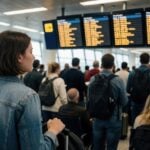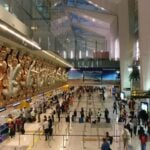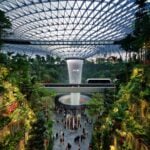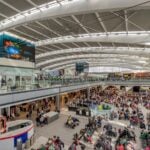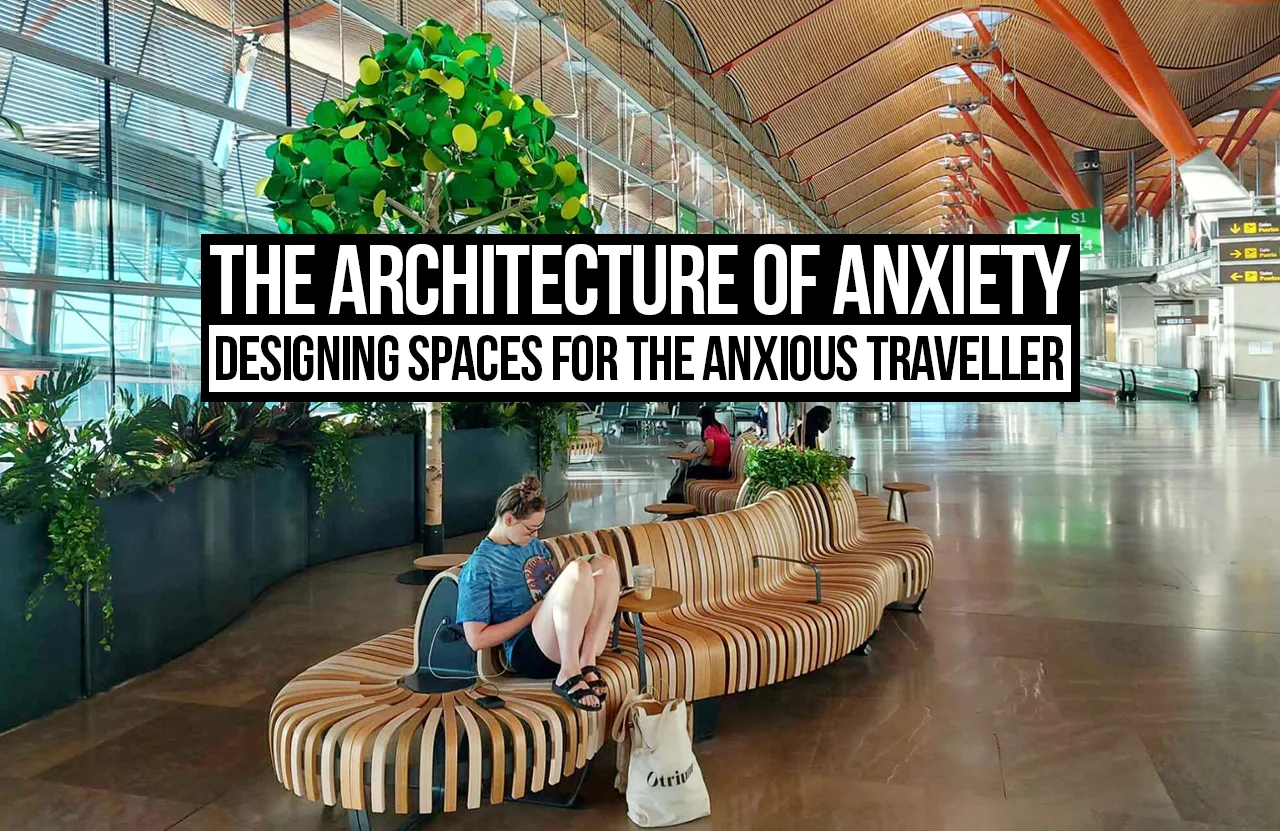
We usually locate travel anxiety in the aircraft, the turbulence, the take-off, and the fear of flying itself. But many travellers are unsettled long before they board. It starts in the terminal, somewhere between check-in and the gate, when the corridors lengthen, the announcements blur together, and the clock starts to feel louder than the building. This raises a question architecture rarely asks of itself. Can a building make the people inside it anxious? I think it can, and the airport, a building we judge almost entirely by how efficiently it moves people, is where the question matters most.
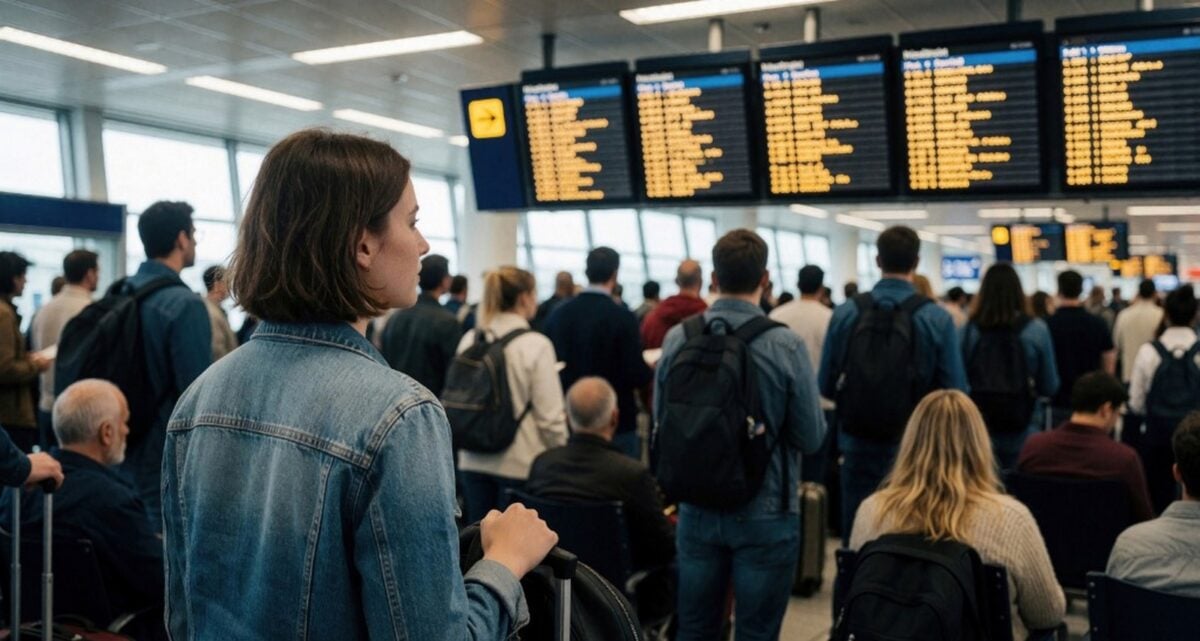
When Movement Becomes Anxiety
Fear of flying is one problem; unease in transit is another. It is situational. It appears when unfamiliar surroundings meet a deadline; a missed sign, an unexpected queue, or a route that doesn’t explain itself can quickly make you feel like you’re losing control.
Imagine arriving at an airport you don’t know with an hour before boarding. People move in every direction, signs compete for your attention, and an announcement you can’t quite make out has just changed something. The terminal might be a celebrated piece of architecture, yet in that moment its beauty is beside the point. What matters is whether you can read the space.
Environmental psychology puts it plainly. How we feel in a place is closely tied to how well we can perceive and understand it. Spaces that are ambiguous, overcrowded or overstimulating raise our discomfort and weaken our sense of control. An airport asks passengers to make decisions, so it is exactly the kind of building where these conditions bite hardest.
Yet airport design has traditionally been organised around capacity, security and operational flow. Those priorities are essential, but they leave the passenger’s emotional experience as an afterthought. A terminal can process thousands of people without difficulty and still feel hostile to each of them. So I’d suggest a different test of success: not only how efficiently an airport moves people, but also how confidently they move through it. To understand what produces that confidence, we need to look at what shapes the experience in the first place.
The Four Elements That Shape The Travel Experience
Research in environmental psychology, passenger experience and architectural design points to four connected dimensions. Each tells us something about where airports tend to fall short.
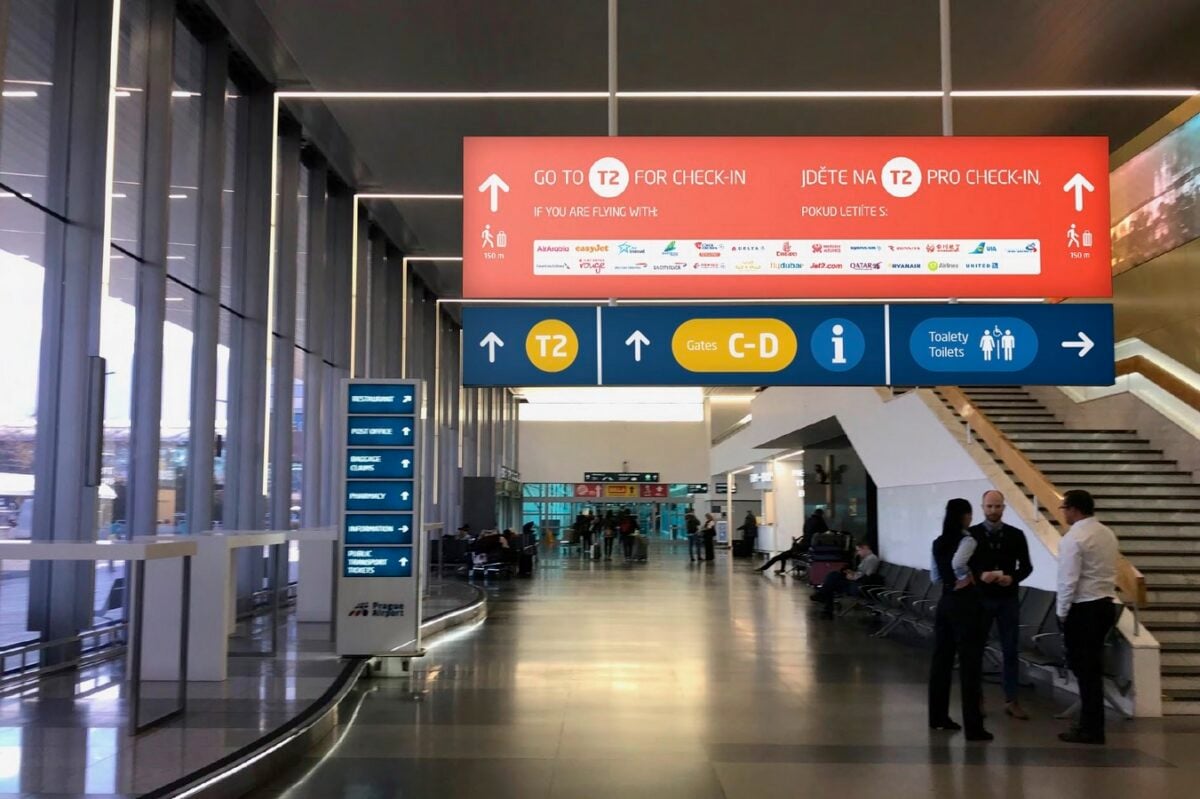
The first is spatial legibility, meaning how easily a person can understand where they are, where they need to go and how to get there. Clear signage, visible landmarks, intuitive routes and unobstructed sightlines all let passengers decide without asking for help. Clear wayfinding plays an important role in shaping a passenger’s experience within an airport. What may seem like a minor design issue can quickly become a source of stress, particularly in an unfamiliar environment where time is limited. Wayfinding, therefore, is not simply about helping people reach their destination; it is about giving them the confidence to navigate a space independently.
The second is sensory environmental quality. Light, noise, temperature and air. Constant announcements, harsh lighting, uncomfortable temperatures and poor acoustics wear people down, especially in places where they wait for hours. Good daylight, balanced lighting, thermal comfort and acoustic zoning make a terminal less overwhelming.
The third is social and spatial conditions. Crowding, queues, too little seating and cramped circulation. This is where the research produced its most interesting result. In the expert survey, crowding and queuing ranked as the biggest contributors to passenger stress, ahead of wayfinding. The gap between what passengers report and what experts rank is worth pausing on. It suggests that a terminal’s character depends less on its total floor area than on how people, queues and routes are organised within it. A vast building can still feel congested if several activities compete for the same space.
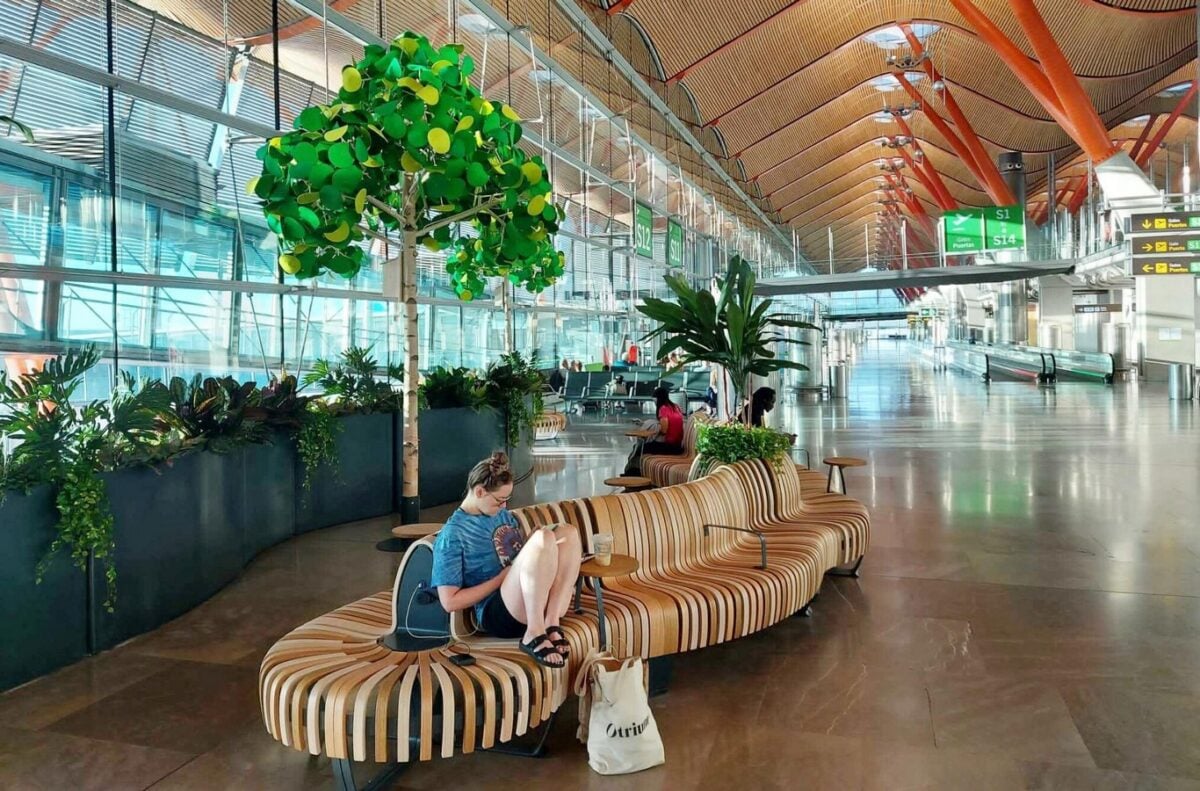
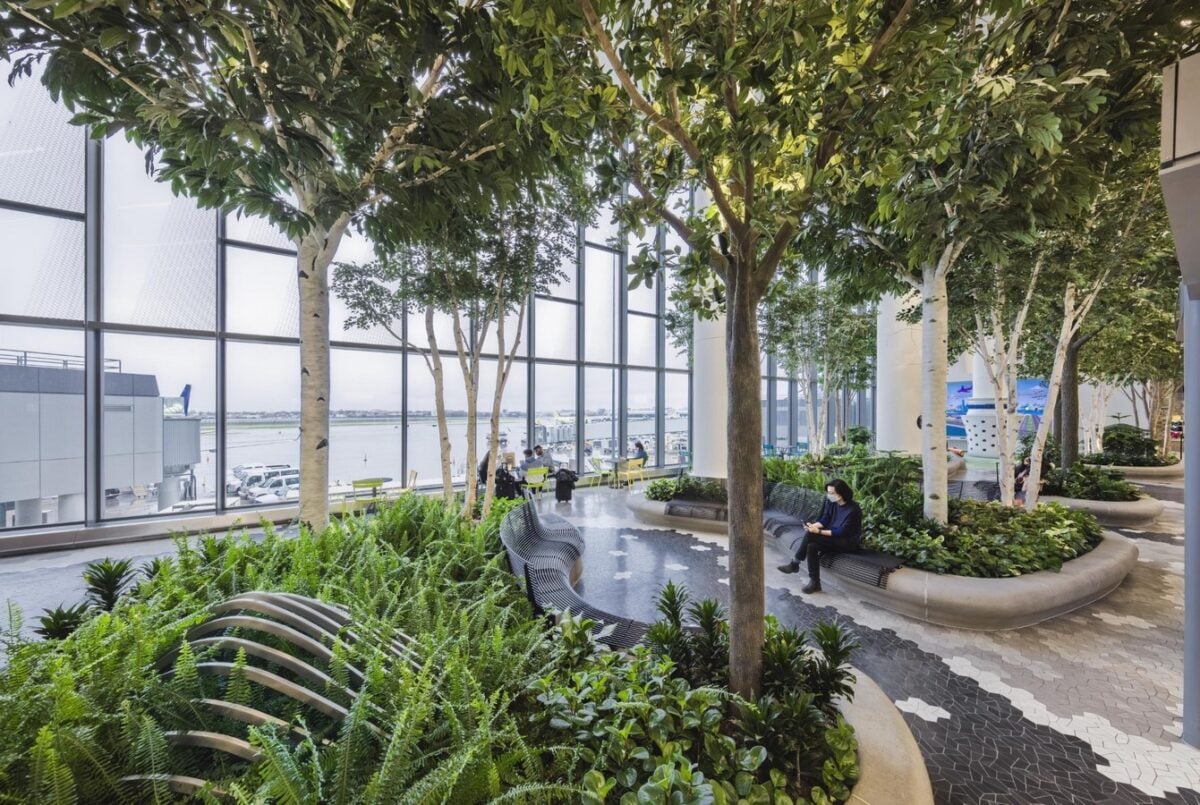
The fourth is supportive and biophilic environments, which bring in the idea of restoration. Natural light, planting, water, natural materials and comfortable places to rest offer pockets of calm in an otherwise demanding setting. They may not remove the causes of anxiety, but they help people recover from it.
None of these works alone. Passenger wellbeing comes from how the four interact, which is why the case studies are so revealing.
What Do Airports Teach Us
I compared four terminals. Indira Gandhi International Airport T3 in Delhi, Kempegowda International Airport T2 in Bengaluru, Singapore Changi and London Heathrow T5. Each shows a different strength and a different weakness.
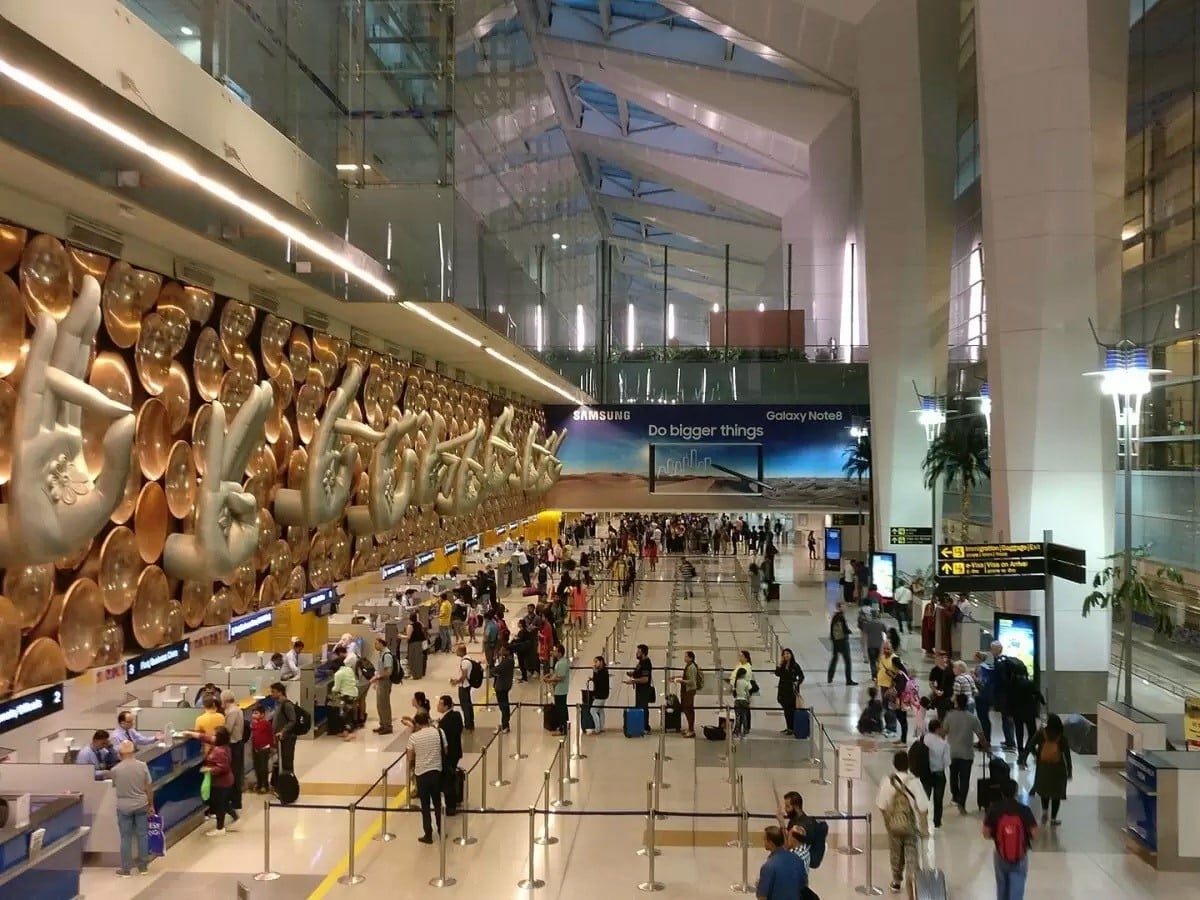
Delhi T3 is the clearest warning against assuming that more signage means less stress. It is large and well organised, yet peak-hour congestion, security queues and confusion during inter-terminal transfers still make navigation hard. Wayfinding only works when crowds are managed alongside it.
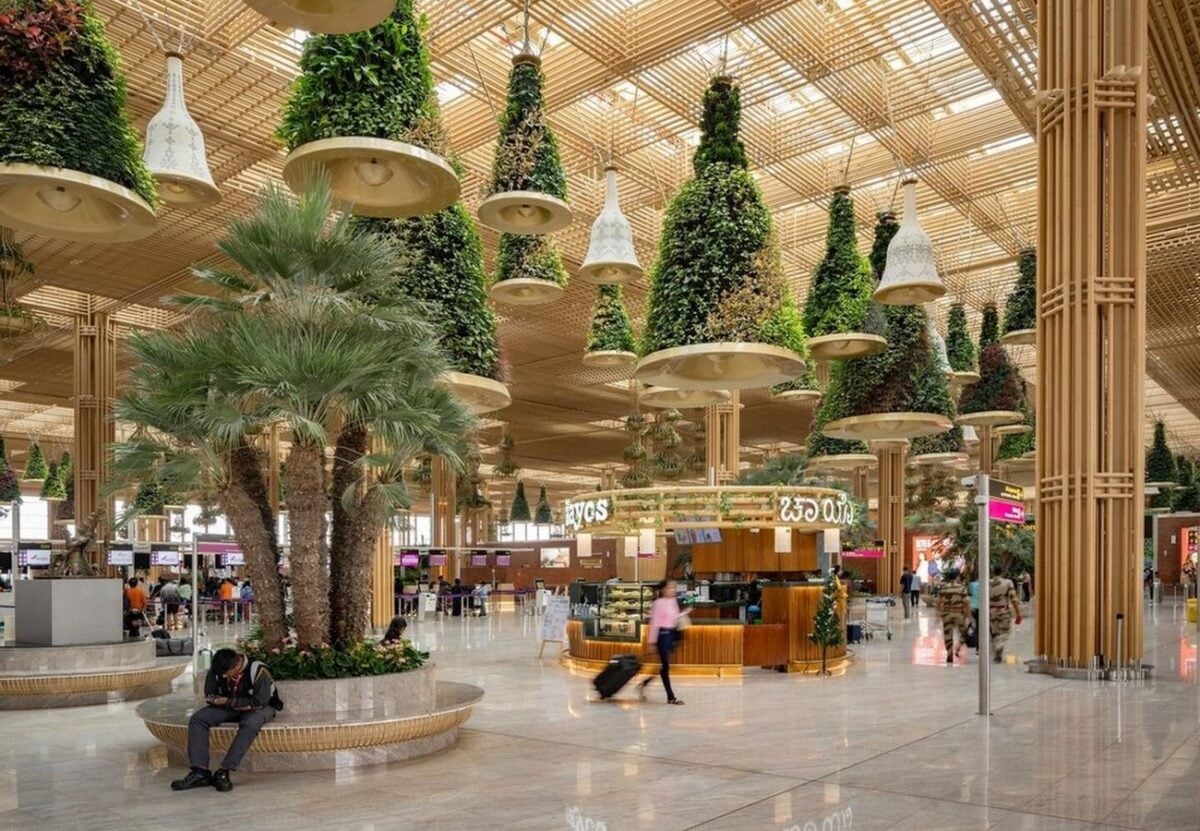
Bengaluru’s T2 offers a useful contrast. Greenery, natural materials, daylight and open space give it a calmer atmosphere. Bamboo and landscape features, together with strong visual connections across the building, create a sense of spaciousness, and clear signage supports movement. What I find convincing is that the biophilic elements are part of the architecture rather than decoration applied afterwards.
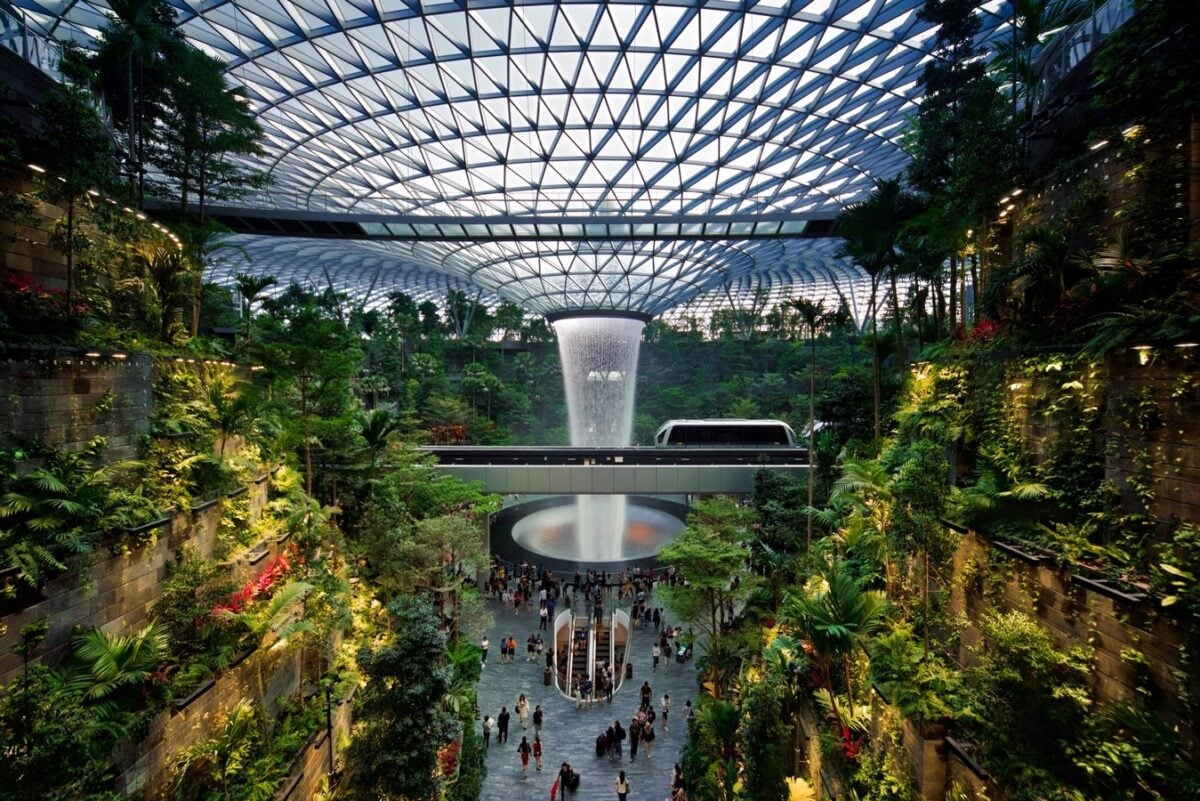
Changi pushes this further. Organised circulation, indoor landscapes, natural light and restorative spaces let movement and relaxation coexist. Jewel and its Rain Vortex turn nature into part of the architectural experience, so the airport stops being a space you merely pass through and becomes one where you might choose to pause.
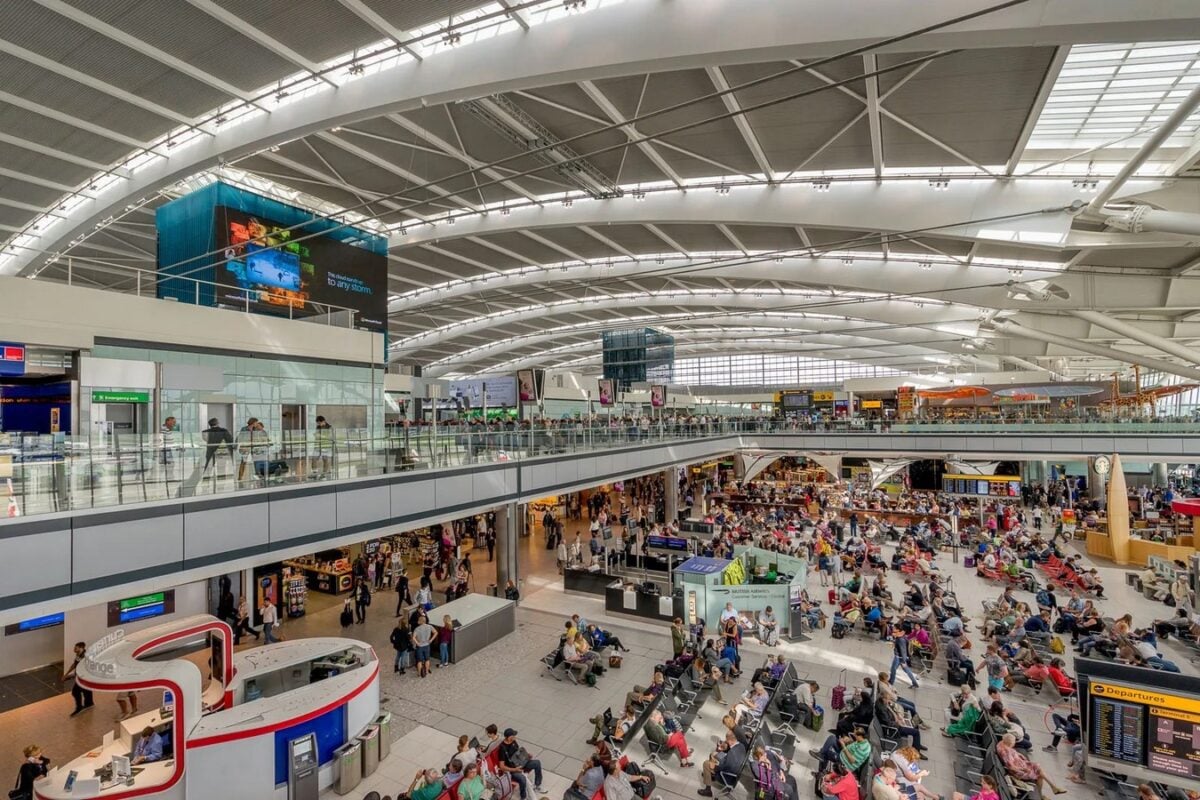
Heathrow T5 teaches a different lesson, about scale. Its layout is open, daylit and clearly organised, yet the sheer size of the terminal and the long walking distances can bring on physical and mental fatigue. Visual clarity, it turns out, cannot cancel out the effort of covering the ground.
Taken together, the four terminals suggest that no single intervention makes a comfortable airport. Bengaluru T2 and Changi perform best because they combine legibility, sensory quality, spatial organisation and restorative space, rather than relying on one of them to carry the whole experience.
Reimagining The Airport As The Space For Wellbeing
If the way a building is organised can shape how people feel, then transport buildings need to answer to more than movement and capacity. That doesn’t have to mean bigger terminals or spectacular features. Often the most meaningful changes are modest. Putting signs where decisions are actually made, improving views between spaces, spreading seating along long routes, handling queues better, and bringing natural elements into waiting areas.
Technology can help too. Reliable real-time information on gate changes, queue times and walking distances takes away a good deal of uncertainty, and acoustic zoning can separate noisy operational areas from quieter places to wait.
But the case studies remind us that these measures can’t stand in for one another. Greenery cannot make up for poor wayfinding, and clear signage cannot fix overcrowding. The response has to be integrated because of the sources of discomfort.
There is a further reason to take this seriously. The airport is one of the few buildings where people of every background, age and level of travel experience arrive together, usually in a hurry. Designing for that range of people means understanding how they perceive and interpret space, not only how they flow through it.
Perhaps the better question for the next generation of terminals is not how many passengers a building can handle, but how many of them leave it feeling that they understood where they were. Architecture will never remove every uncertainty from travel. It can, however, make sure the building is not one of them.
References:
- Lynch, K. (1960). The Image of the City. MIT Press. [Accessed: 9th November 2026].
- Passini, R. (1984). Wayfinding in Architecture. Van Nostrand Reinhold. [Accessed: 9th November 2026].
- Bitner, M. J. (1992). Servicescapes: The impact of physical surroundings on customers and employees. [Accessed: 9th November 2026].