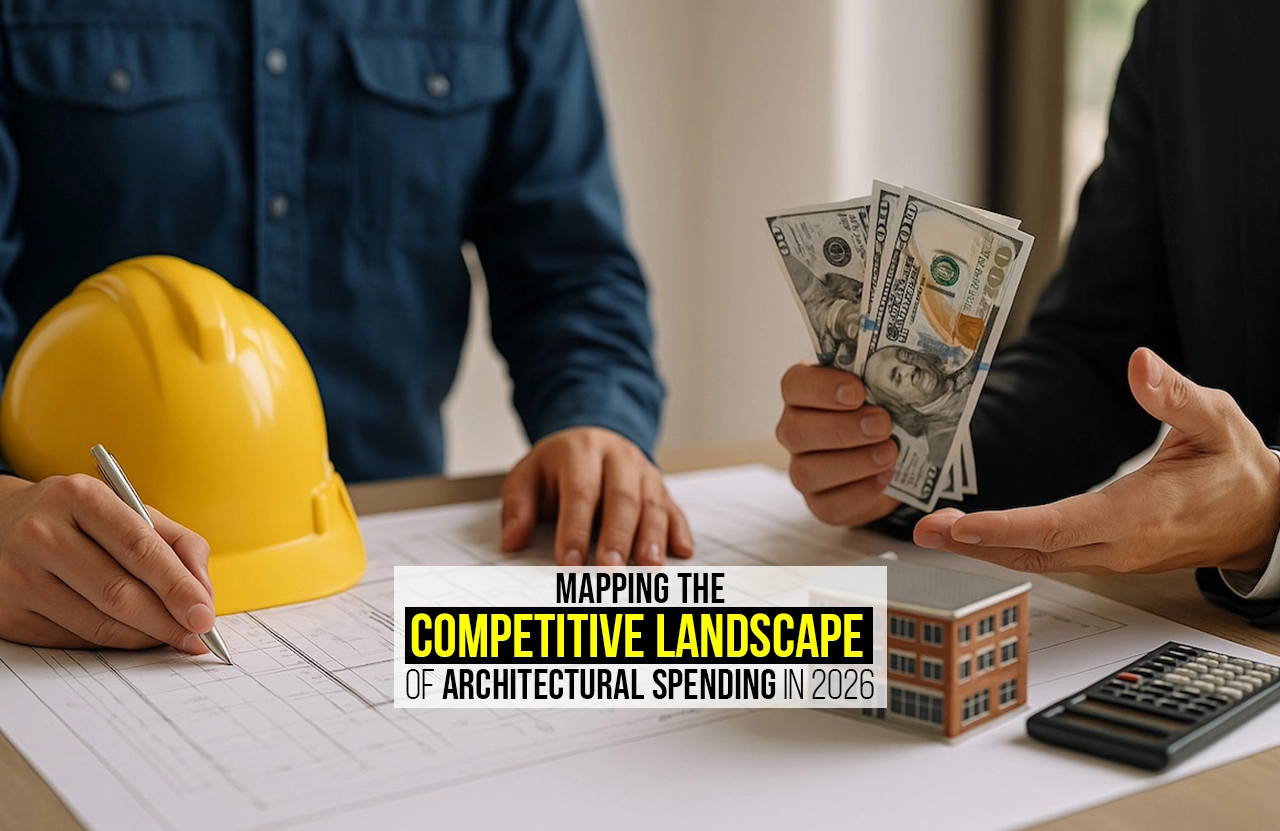
The profession of architecture in 2026 finds itself at an extremely important junction of economics, ecology, technological progress, and societal change. While architectural spending was traditionally associated with the mere construction of buildings, in 2026 it has become a complex multi-dimensional system of investments related to sustainability, adaptive reuse, digital infrastructures, climate resilience, public health, and cultural identity. With governments, private sector companies, institutions, and communities increasingly aware of the long-term consequences of the built environment, more emphasis is being placed on sustainable spending practices that involve proper use of materials, energy-efficient design, and socially oriented urban planning. This article provides an analysis of the competitive environment of architectural spending in 2026 by discussing global and regional trends, technological shifts, sustainability concerns, labor market changes, and the economic dimension of circular construction.

In addition to that, the role of architecture in addressing the issues of resource scarcity, carbon footprint, and urban lifestyle will be explored in greater detail. The connection between architectural spending and material sensibility will be analyzed in relation to resource optimization. According to the article, the future of architectural spending will be determined not only by economic capability but also by the capability of architects and associated industries to add value in terms of resilience, adaptability, ecology, and sustainability.
Architecture has traditionally represented the aspirations, values, and priorities of civilizations. Through great religious buildings, royal palaces, industrial plants, and current smart cities, trends in architectural expenditure show that societies invest in architecture to represent culture, promote economic development, advance technology, and adapt to the environment (Frampton, 2007). In 2026, there will be a paradigm shift in architecture due to climate change, economic instability, technological innovation, rising urban populations, and heightened environmental awareness.
In today’s world, expenditure on architecture goes beyond just the cost of construction. It involves the expenditure on sustainability, technology, energy efficiency, public health, climate adaptation, reuse, and building performance (Kibert, 2016). The role played by the built environment in determining ecological balance, social well-being, and economic output is widely understood by governments, private enterprises, and organizations.
It can be seen that the architectural profession faces several challenges as follows:
- Growing climatic threats
- Scarcity of resources and increase in material prices
- Fast urbanization
- Housing affordability concerns
- Need for healthy environments
- Tech disruptions
- Homogenization of culture
- Infrastructure resiliency
As a result, the trends in architectural spending in 2026 reveal a significant change in direction from unsustainable consumption to sustainable consumption, adaptive design, and lifecycle considerations. The assessment of buildings is no longer limited to aesthetics, but considers the building’s performance environmentally, socially, adaptively, and sustainably.
In addition, the competitive environment of architecture finance is influenced by the conflicts that exist between growth and sustainability, technology and humanity, globalization and regionality, and speed and resilience. Contemporary architecture needs to meet economic requirements while minimizing its ecological impact and ensuring cultural continuity. This article attempts to examine the changing competitive environment of architectural finance in 2026. The focus of the article is on analyzing global investment trends, the need for sustainability, material considerations, technological advances, and new economic systems in defining the future of architecture. Particular attention will be paid to material efficiency and ecology.
Understanding Architectural Spending in 2026
Architectural expenditure is defined as the overall investment made in planning, designing, constructing, operating, maintaining, retrofitting, and managing built environment projects. Architectural expenditure covers financial investments made in residential architecture, commercial projects, institutional buildings, urban infrastructure, public spaces, smart cities, heritage preservation, landscape architecture, and environmental planning. Architectural expenditure in the year 2026 has been growing more interdisciplinary than ever before.
-
Climate Change and Environmental Regulations
Building plays a crucial role in contributing to greenhouse gas emissions globally by construction process, manufacture of building materials, and energy use (Kibert, 2016). In this regard, governments all over the globe have come up with stronger environmental policies, energy efficiency guidelines, and carbon emission reduction policies. As a consequence, large sums of money have been invested in green building technologies and other related areas.
-
Urbanisation and Population Growth
The rapid pace of urbanization continues to be one of the major factors that spur expenditure on architecture, especially in emerging markets (United Nations Human Settlements Programme [UN-Habitat], 2022). Urban areas keep growing because of immigration, economic opportunity, and demographic expansion. Nonetheless, in contrast to the previous decades marked by rampant urban sprawl, modern investments in architecture are oriented towards compact urbanism, transit-oriented development, mixed use, transit, and walkability.
-
Technological Transformation
Technology has brought about a revolution in both the economics and methodology of architecture. Technologies such as BIM, Artificial Intelligence, generative design, digital twins, and automation in construction have become part of the cost of doing architecture. These technologies enhance efficiency in construction, optimize resources, coordinate designs, manage life cycles, and energy performance..
-
Post-Pandemic Spatial Adaptation
The global pandemic changed forever our perception of space, health, and flexibility. Spending on architecture increasingly focuses on flexible spaces, hybrid spaces, healthy interiors, open public spaces, and adaptable housing. Spaces are increasingly perceived as a means for improving health both physically and psychologically..
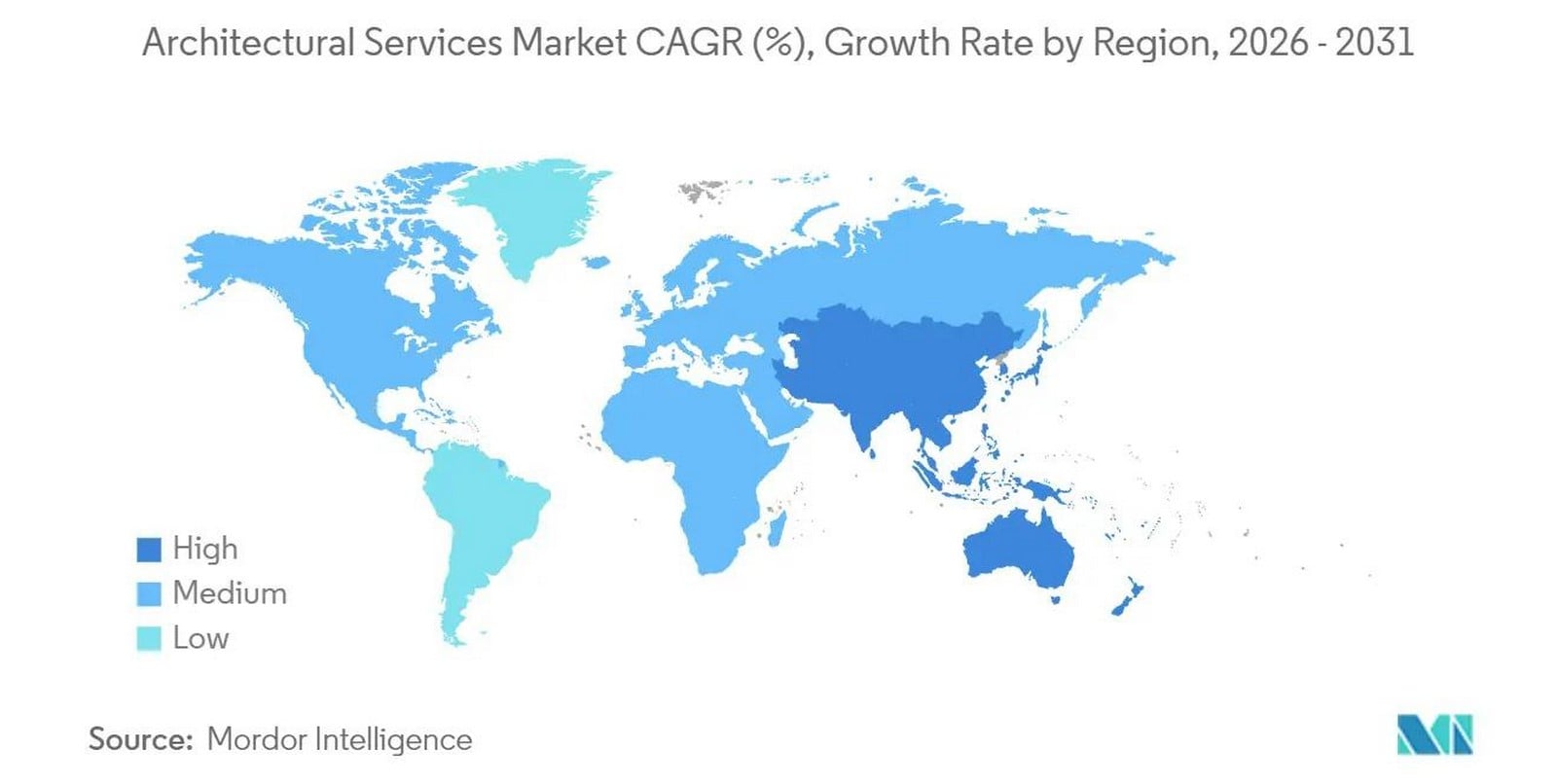
Global Trends in Architectural Spending
-
North America
In North America, architecture investments are heavily tilted towards infrastructure renewal, sustainable city regeneration, health care institutions, and energy retrofitting. Both the government and private entities have shown huge interest in infrastructure that promotes climate resilience as well as adaptive re-use projects. Cities with reduced office occupancy are increasingly turning their commercial spaces into residences, co-working spaces, educational institutions, and cultural centers. The process of adaptive re-use is becoming recognized not only as eco-friendly but also economically sensible (Lehmann, 2019). Prefabricated construction and modular housing are becoming popular in North America due to labor shortages and high costs.
-
Europe
The continent of Europe is still the top investor in architectural sustainability and environmental responsibility across the world. Nations like Germany, Denmark, Sweden, and the Netherlands have set themselves high targets for carbon neutrality and circular economy models.
In architectural investments within Europe, there is a very strong emphasis placed on energy retrofits, passive systems, wood structures, urban greening, heritage preservation, and public transport. European cities do not rely on massive demolition and reconstruction but rather on improving existing buildings.
-
Asia
Asia continues to be one of the largest architectural markets because of rapid urbanization and infrastructural growth. Nations such as India, China, Indonesia, Vietnam, and the Gulf States are still investing heavily in residential structures, transport systems, smart cities, industrial belts, learning centers, and business areas.
But the architecture needs of the continent are beginning to shift. Climate change, flood risks, heat stress, and environmental destruction are prompting architects to consider climate-based designs. In India, for instance, architectural investment is increasingly being made on affordable housing, smart infrastructure, heritage restoration, enhanced public spaces, transit-based architecture, riverfront regeneration, and climate-sensitive urbanism. Vernacular design, passive cooling mechanisms, and local building materials have also gained traction (Ghosh, 2021).
Sustainability as the Central Competitive Driver
By 2026, sustainability has ceased to be a specialized architectural issue and has become a primary factor for competitive advantage. Architectural practices will be judged according to their capacity to reduce carbon emissions, conserve resources, achieve high energy performance, integrate into ecosystems, promote social sustainability, conserve water, and manage waste. Sustainability narratives will give way to environmental results..
-
Embodied Carbon and Material Accountability
Among the key changes that have occurred in architectural spending is the consideration of embodied carbon. Embodied carbon can be defined as carbon dioxide emitted through the extraction, processing, transport, and installation of construction materials (Bossink, 2015). The use of conventional construction materials such as steel and concrete has been found to result in massive amounts of global emissions. Hence, architectural spending today focuses on the use of alternatives like engineered wood, bamboo, recycled aggregates, earthen materials, lime plaster, biocomposites, and recycled metal.
-
Circular Economy and Adaptive Construction
The circular economy concept emphasizes reusing, repairing, recycling, and regenerating materials rather than disposing of them (McDonough & Braungart, 2002). In architecture, it has resulted in designing for deconstruction, reusable structures, recycling of materials, modular construction, and adaptive reuse. It is not motivated just by the environment but also the rising prices of materials and uncertain supply chains.
Technological Disruptions and Digital Investment
Technology is having a drastic impact on the field of architecture and on spending practices in architecture.
-
Building Information Modelling (BIM)
The use of Building Information Modelling has been established in big projects. BIM enables architects, engineers, and contractors to work together in digital environments. BIM spending in architecture helps avoid construction mistakes, waste of materials, delays, and coordination problems.Technology is radically transforming the architectural profession and influencing patterns of architectural spending.
-
Artificial Intelligence and Generative Design
AI systems allow architects to create several designs depending on the environment, economy, and space. The use of generative design allows for optimization of building orientation, building structure, daylighting, ventilation, energy efficiency, and material efficiency. Architectural budgets have shifted from intuitive methods to optimization using data.
-
Smart Buildings and Internet of Things (IoT)
Modern buildings are incorporating intelligent systems that monitor energy consumption, indoor air quality, occupancy patterns, water usage, thermal comfort, and security systems. These intelligent systems may cost money to install initially, but they save on operational costs.
Material Sensibilities and Better Usage in 2026
Ethical obligations concerning material use are part of what defines architectural spending in 2026. For many years, architecture was characterized by celebration of waste via energy-intensive skins, disposable interiors, and highly refined materials. Modern architectural discussion, on the other hand, is characterized by appreciation for simplicity, longevity, reparability, and appropriateness.
-
Local Materials and Vernacular Intelligence
Modern architects are reconsidering vernacular methods not only for their aesthetic value but also as climatically intelligent (Rapoport, 1969). Local materials minimize the carbon footprint of transport, lower construction expenses, lessen reliance on supply chains, and minimize the impact on the environment. In India, there is a revival of stabilised earth blocks, lime plaster, bamboo, terracotta, stonemasonry, and recycled wood (Ghosh, 2021).
-
Minimalism and Resource Efficiency
Modern minimalism in architecture is more about being responsible with materials rather than being empty visually. Responsible building is more focused on durability, flexibility, and intelligent detailing (Zumthor, 2010). In turn, spending on architecture increasingly favours modular construction, durable detailing, flexible plans, repairable parts, and multi-purpose spaces..
-
Adaptive Reuse as a Material Strategy
The demolition of buildings leads to huge amounts of energy wastage. The concept of adaptive reuse ensures that the energy is conserved and there is no wastage during construction (Lehmann, 2019). In many global cities, old factories and industrial buildings are being converted to residential buildings, learning centers, hotels, and innovation centers. Adaptive reuse illustrates the potential for using materials responsibly.
The Economics of Green Architecture
Green architecture used to be considered a luxury. Nevertheless, the economics have shifted greatly in 2026. Even though sustainable technologies may entail high expenses at the outset, they usually provide economic gains in the long term by means of energy savings, lower maintenance expenses, better performance, higher real estate value, and climate change adaptation capabilities.
-
ESG Investment and Real Estate
There are several ESG factors that can impact architecture expenditure (Raworth, 2017). The current trend shows that institutional investors are increasingly interested in the assessment of carbon footprint, social inclusion, community effects, climate risk, and governance prior to financing any big projects. This means that sustainable architects become more competitive.
-
Net-Zero Buildings
Net-zero buildings generate as much energy as they use in a year. The architectural cost of net zero building systems involves incorporating solar panels, efficient facades, passive ventilation, thermal insulation, energy efficiency, and renewable energy systems. There are increasing government regulations that require public buildings to be net zero or near-net zero buildings..
-
Housing, Affordability, and Social Equity
Nevertheless, housing still stands out as one of the greatest sectors of architectural spending around the globe. The affordability crisis in many urban settings has made it necessary for governments and developers to rethink their speculative approach to development. Architectural spending on affordable housing is increasingly focused on incremental housing systems, community participation, infrastructure sharing, modular architecture, and climate-responsive designs. The question here is how to achieve affordability without compromising dignity, environmental quality, and sustainability. In most developing nations, architectural spending on affordable housing is increasingly geared towards improving slums rather than evicting their occupants..
Public Infrastructure and Civic Spending
In the modern world, governments are increasing their architectural expenditures on public infrastructure as a strategy for economic growth, social welfare, and adaptation to climatic changes.
-
Transportation Infrastructure
There is increased architectural expenditure on transport infrastructure such as metros, railroads, cycle paths, footpaths, and transit stations.Transformative changes are taking place in contemporary cities through architectural expenditure on transport infrastructure.Governments across the world are expanding architectural expenditure on public infrastructure as a means of economic development, social well-being, and climate adaptation.
-
Educational and Healthcare Facilities
The pandemic emphasised the need for resilient education and healthcare infrastructure. Investment in architectural infrastructure for these industries now favours flexibility, natural ventilation, psychological health, outdoor spaces, and infection control measures.
-
Public Spaces and Urban Landscapes
There is increasing understanding within cities that good public spaces are essential for prosperity and community building (Gehl, 2011). As a result, expenditures on parks, waterfronts, streetscapes, urban plazas, and cultural districts have increased..
Competition Among Architectural Firms
The competition of architectural expenditures impacts the field of architecture.The architectural firms of today not only compete based on aesthetics but also on sustainability, technology, research, climate knowledge, interdisciplinary thinking, and community involvement.
Multinational corporations have many technological advantages and global reach. The small regional practices, on the other hand, are more sensitive to context. The combination of both is highly valued in 2026.
Architectural Spending and Climate Resilience
Climate resilience has emerged as one of the most pressing issues impacting architectural spending. Flooding, drought, heat waves, wildfires, and sea level rise have compelled cities to rethink how buildings are designed and managed. Architectural spending has come to be directed towards flood-proof infrastructure, water-wise urbanism, heat protection systems, disaster-proof buildings, and high-rise buildings. In hot climates, passive cooling systems have gained renewed significance due to increased energy prices and environmental considerations. Architectural spending has come to be directed towards courtyards, ventilation towers, shading systems, thermally massive buildings, and green roofs.
Cultural Identity and Architectural Spending
Globalization used to promote homogenized architecture but there is an increasing awareness that culturally grounded architecture builds strong social identity and relevance to the environment. Spending on architectural conservation of heritage sites has greatly risen because of tourism, cultural consciousness, and urban identity. There is also greater awareness that adaptive reuse of historic areas is not only economically sound, environmentally sustainable, and socially relevant but also necessary for resistance against placeless urbanism.
Challenges Affecting Architectural Spending in 2026
Despite the rise in innovations and investments, there still remain some issues within the industry.
- Inflation and economic uncertainty
- Shortage of workforce
- Supply chain disruptions
- Greenwashing
- Tech inequality
Some smaller companies and countries might find it difficult to have access to new technologies and research facilities.
The Future of Architectural Spending
The future of architectural spending will surely be characterized by integration rather than fragmentation. Architecture will become more and more a synthesis of ecology, technology, culture, economy, social justice, and public health. Future spending on architecture could shift from sustainability to regeneration where structures play a positive role in healing the environment. Investment in architecture will definitely pay more attention to walkability, inclusivity, social interaction, mental well-being, and accessibility. Material innovation and carbon accountability will continue to be key competitive aspects in architectural spending.
In terms of the competitive landscape of architectural spending in 2026, the paradigmatic shift in society’s attitude to the constructed space will be evident. Architecture is no longer seen solely as a form of form-finding or development of economics but is now regarded as a vital tool for solving environmental problems, dealing with social inequalities, maintaining culture and cities’ sustainability (Sennett, 2018). Contemporary architectural spending goes beyond construction costs and involves sustainability, adaptive reuse, digitization, healthcare, climate adaptation, resource optimization. The most competitive architectural firms and urban policies will be those which will successfully combine economic efficiency and ecological and social responsibility.
One of the key ideas in contemporary architecture is the realization that more effective material usage is not a restriction but a possibility. Vernacular intelligence, adaptive reuse, resource-conscious design and circular construction can prove that sustainable architecture can be created via restraint and respect rather than through consumption.
With growing climate challenges and an increasing population in cities, architectural spending will shift towards resiliency, flexibility, and sustainability. Thus, in the future, the success of architecture will not be defined by what gets built, but rather by how smartly, ethically, and sustainably it is designed.
In this emerging paradigm, architects are no longer just creators of buildings; they are mediators between economy, ecology, culture, and society. What will make architectural spending competitive in 2026 is the potential of creating economically sustainable, ecologically regenerative, socially inclusive, and culturally durable environments.
References:
Aksamija, A. (2019). Integrating innovation in architecture: Design, methods and technology for progressive practice and research. Wiley.
Beatley, T. (2016). Handbook of biophilic city planning and design. Island Press.
Bossink, B. (2015). Circular economy and sustainable construction. Routledge.
Frampton, K. (2007). Modern architecture: A critical history (4th ed.). Thames & Hudson.
Gehl, J. (2011). Life between buildings: Using public space. Island Press.
Ghosh, S. (2021). Sustainable urbanism and climate-responsive architecture in India. Journal of Urban Design, 26(4), 412–429.
Kibert, C. J. (2016). Sustainable construction: Green building design and delivery (4th ed.). Wiley.
Lehmann, S. (2019). Urban regeneration: A manifesto for transforming UK cities in the age of climate change. Palgrave Macmillan.
McDonough, W., & Braungart, M. (2002). Cradle to cradle: Remaking the way we make things. North Point Press.
Rapoport, A. (1969). House form and culture. Prentice Hall.
Raworth, K. (2017). Doughnut economics: Seven ways to think like a 21st-century economist. Chelsea Green Publishing.
Sennett, R. (2018). Building and dwelling: Ethics for the city. Farrar, Straus and Giroux.
United Nations Human Settlements Programme. (2022). World cities report 2022: Envisaging the future of cities. UN-Habit
Zumthor, P. (2010). Thinking architecture (3rd ed.). Birkhäuser.
Limited, G. (n.d.). Pay as you Go Architectural Service | Ray Kelly Architects in Wexford. Ray Kelly Architects Limited. https://www.raykellyarchitects.ie/pay_as_you_go/designing_extending_a_new_home.html