Prologue: Before the Blur
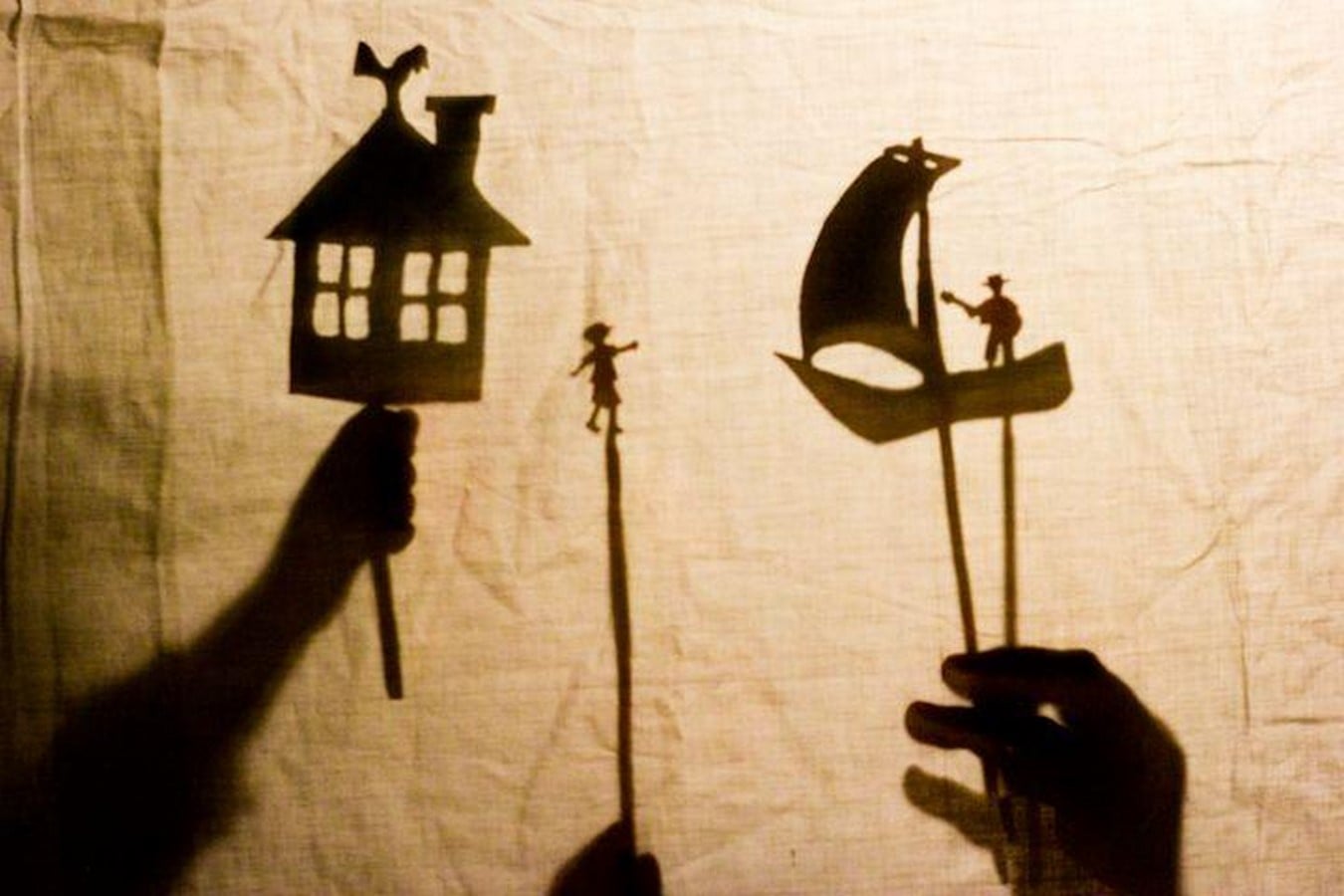
“The real voyage of discovery consists not in seeking new landscapes, but in having new eyes.”
— Marcel Proust
There was a time before the blur.
Afternoons were long, lunch was heavy, and the hours that followed belonged entirely to whatever world could be constructed from whatever was at hand. Hand-drawn maps guided imaginary treasure hunts. Games were assembled from scraps. Cassette tapes were rewound by pencil so a favourite song might play again. Nothing felt performative or curated. Photographs felt lived-in; smiles were rarely rehearsed for an audience that did not yet exist.
Looking back, those years remain vivid in a way the recent ones often do not. Whether this is the distortion of nostalgia or evidence of a deeper cultural shift remains uncertain. Yet it is difficult to ignore the feeling that something fundamental has changed.
Today, every pause is occupied. Every silence is interrupted. Every spare moment is absorbed by notifications, advertisements, recommendations, and endless streams of content. We inhabit an unprecedented density of signals. Life is increasingly experienced through layers of mediation, documentation, and algorithmic prediction.
In this landscape, a curious inversion has taken place. We possess more information than any generation before us, yet seem to have less time to dwell within a single thought. We are constantly connected, yet increasingly detached from the slow processes through which imagination develops: wandering, observing, daydreaming, getting lost, and allowing uncertainty to linger.
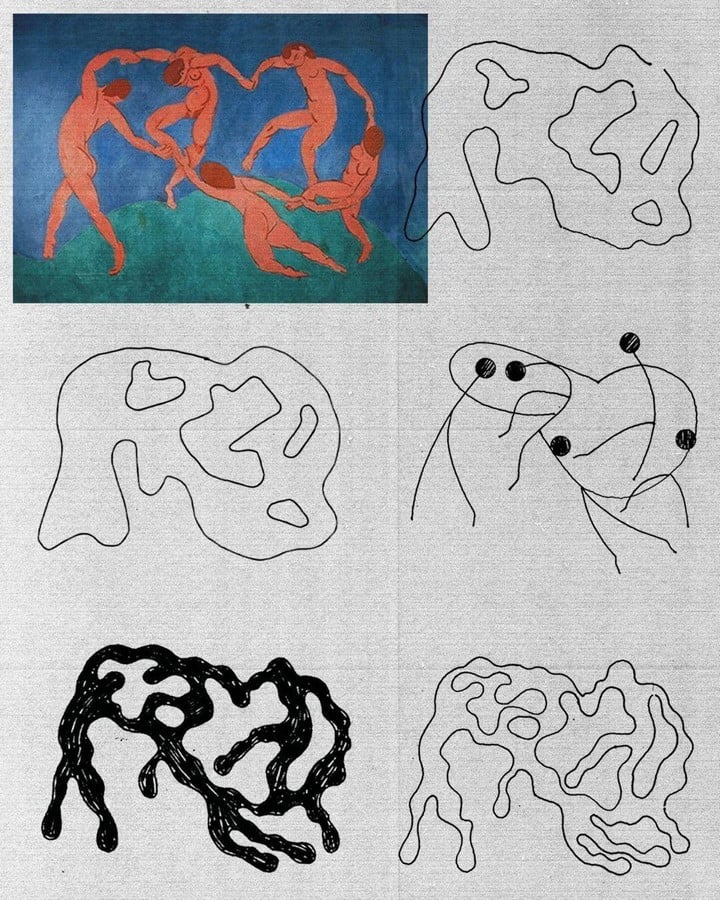
As the boundary between the artificial and the organic continues to blur, we find ourselves captivated by the possibility of intelligent machines. We search for consciousness in algorithms, personality in chatbots, and creativity in code. Yet in our fascination with breathing life into silicon, we risk overlooking something far more fragile: our own capacity to imagine.
Architecture, after all, begins not with construction but with imagination. Before every city, monument, and dwelling, there is a dream of another reality. A sketch. A story. A possibility.
Perhaps the question is not whether machines can dream.
Perhaps the question is whether we still can.
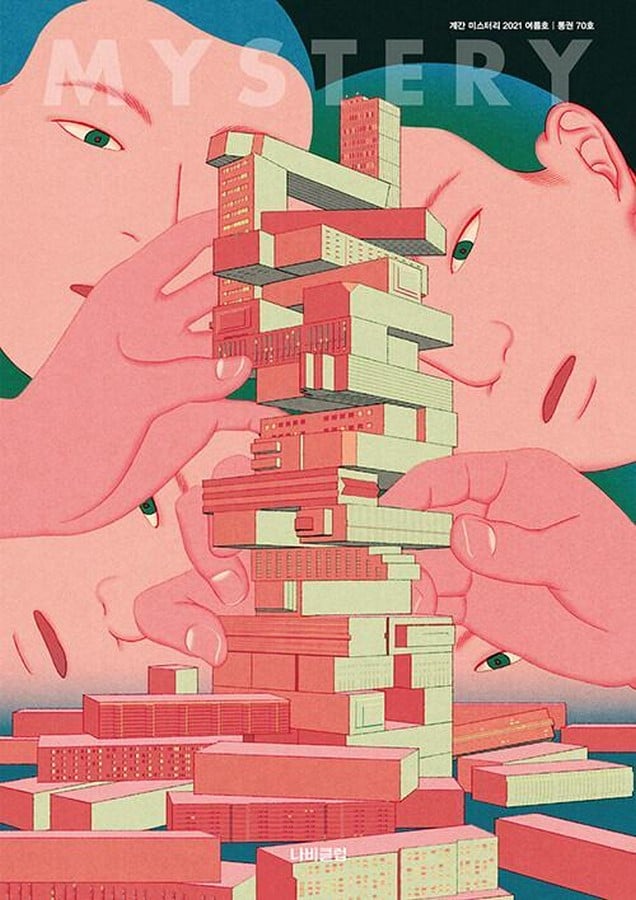
I. Architecture Begins as Fiction
Before there are buildings, there are stories. Before there are cities, there are myths. Before there are monuments, there are dreams of permanence. Every structure first exists in the imagination before it enters the world as matter. Architecture begins not with construction, but with an act of speculation: a projection of a reality that does not yet exist. Human civilization itself emerged from this capacity to imagine beyond immediate experience. Religions, nations, currencies, laws, and cities are, in many ways, collective fictions. As Yuval Noah Harari argues in Sapiens, humanity’s greatest advantage was not strength or intelligence alone, but the ability to cooperate around shared stories. Every civilization begins as an impossible fiction. The pyramids existed first as stories. Nations existed first as stories. Money, gods, laws, borders, and cities all existed first in the imagination before they entered the world as reality. The history of humanity is therefore not simply a history of construction. It is a history of speculation.
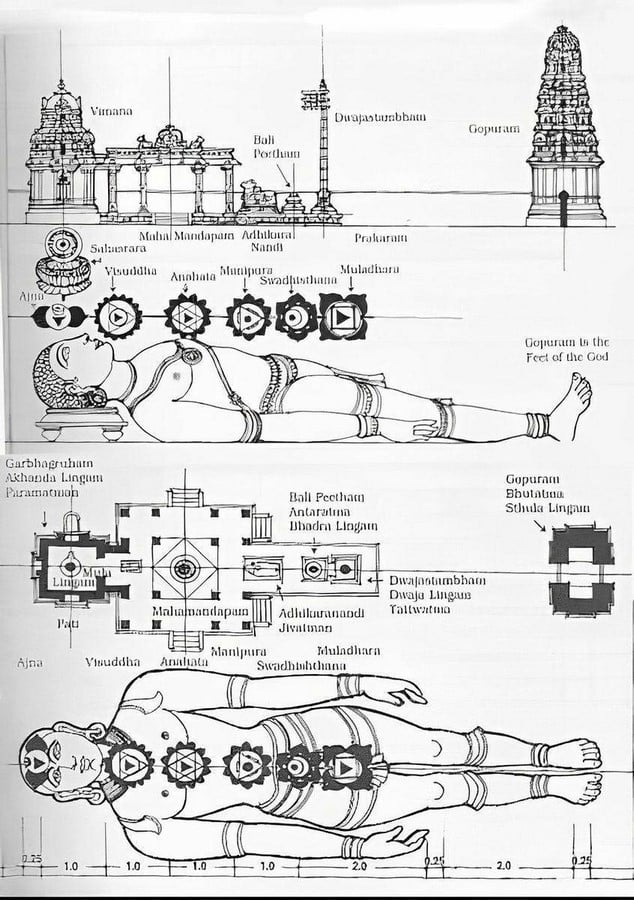
Architecture gives material form to beliefs, desires, fears, and futures, translating abstract ideas into spaces that can be inhabited. This relationship between imagination and world-making is precisely why architecture has always maintained such a close relationship with storytelling. The greatest works of speculative fiction are not merely narratives; they are architectural projects. They construct worlds, establish spatial orders, and invite us to inhabit realities that do not yet exist.
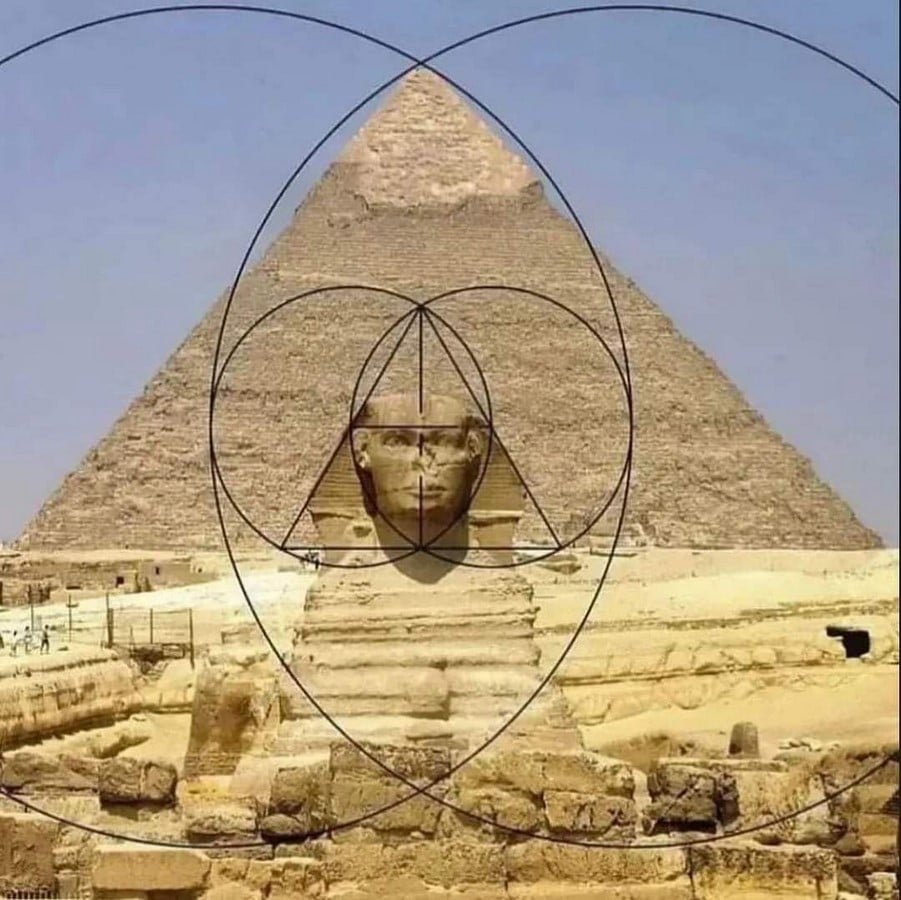
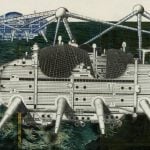
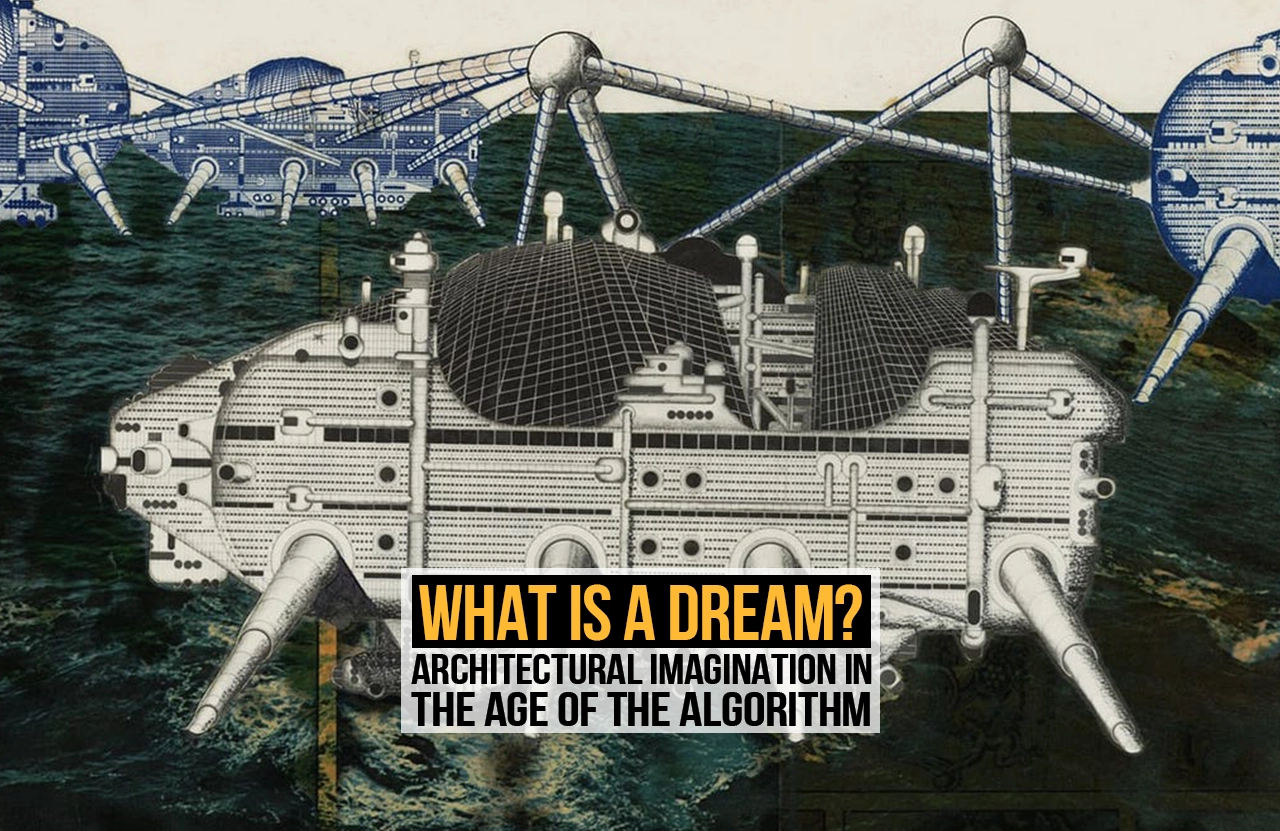
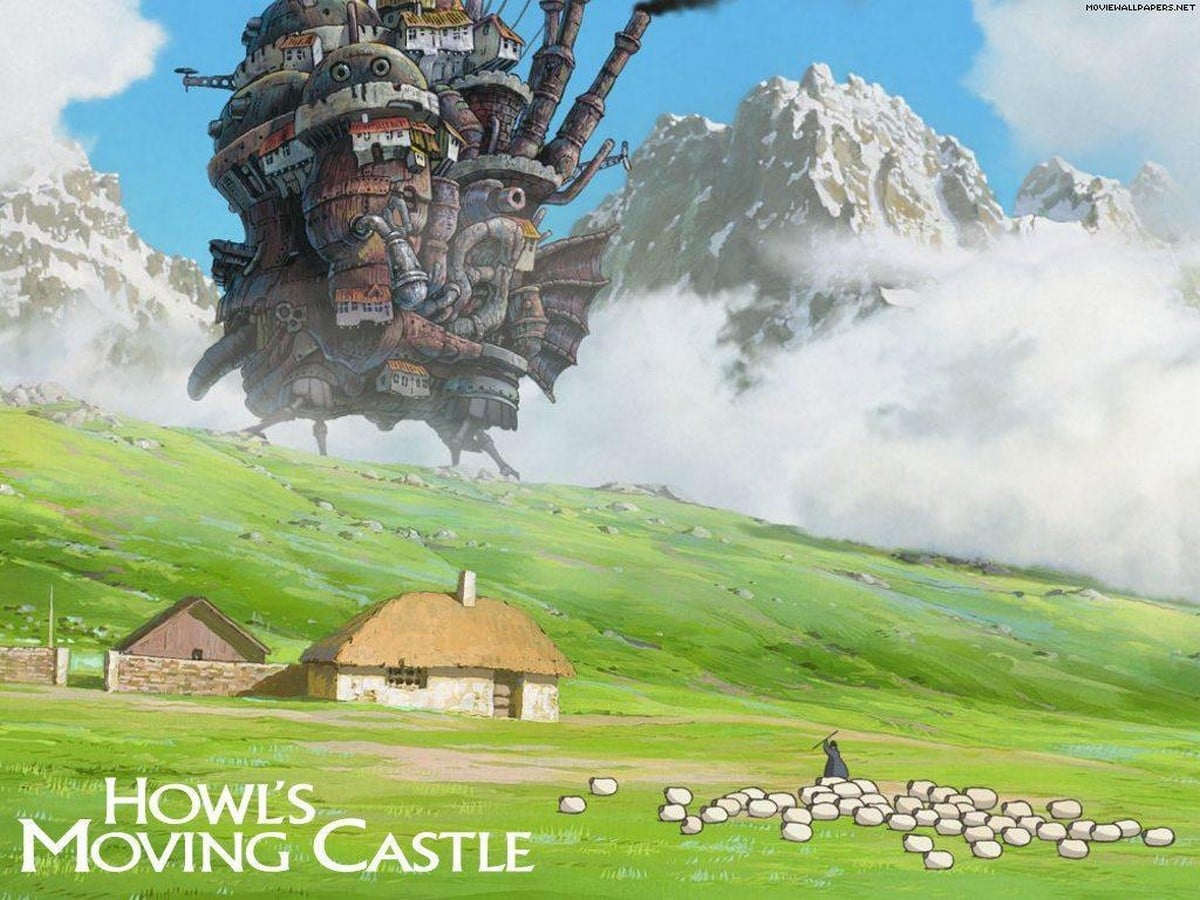
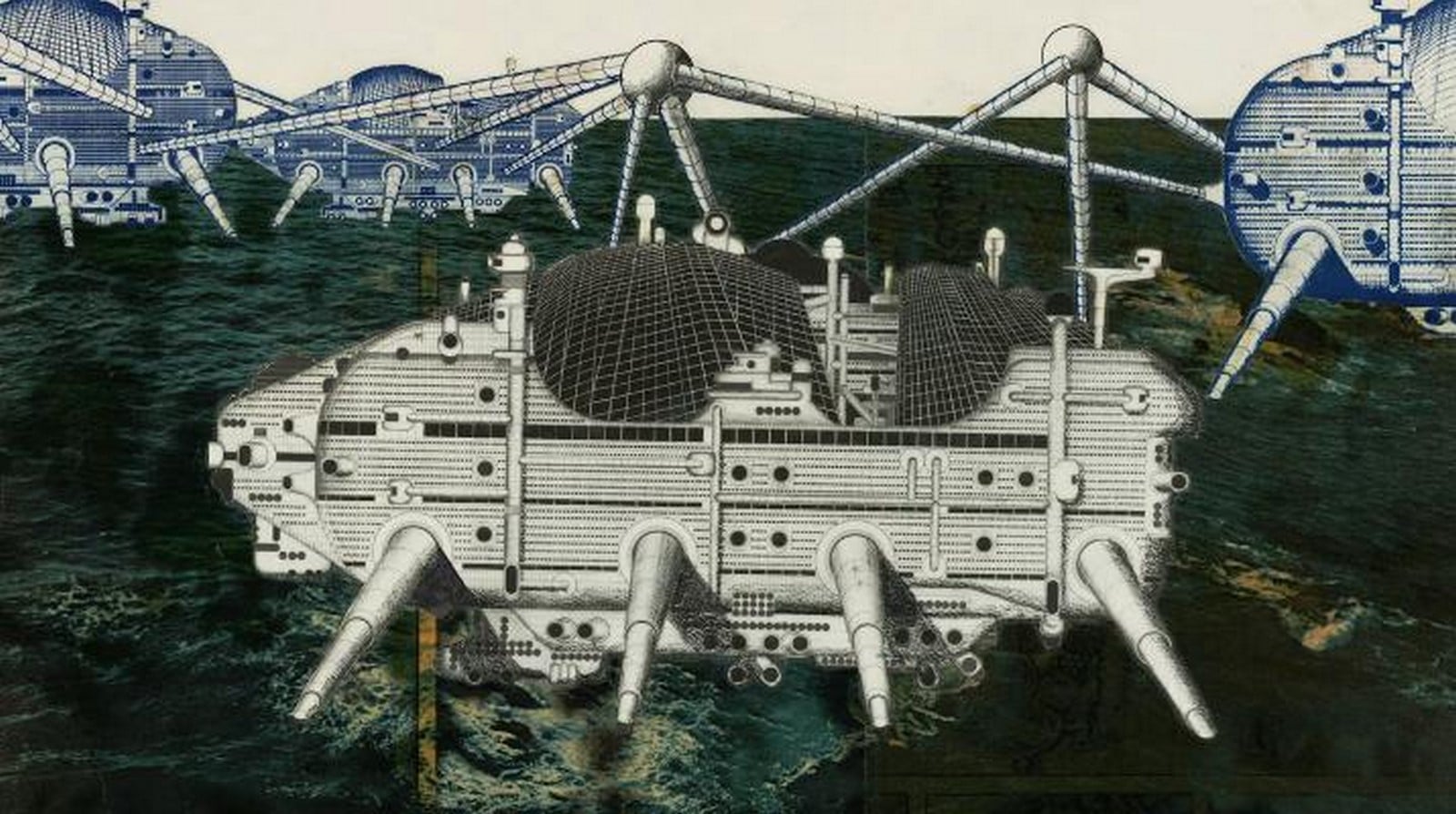
Ancient Egypt offers one of the earliest examples of this relationship. The pyramids, temples, and funerary landscapes were not simply buildings but physical manifestations of a cosmology. They materialized the journey through the Duat, transforming a mythological narrative into an inhabitable geography. Thousands of years later, speculative architects would continue this tradition through different means. Archigram’s Walking City imagined colossal nomadic structures traversing a post-industrial landscape, while Diana Wynne Jones’ Howl’s Moving Castle envisioned architecture as a living, wandering entity—simultaneously machine, home, and character. Though separated by medium, both projects ask the same question: what new forms of life become possible when architecture is allowed to imagine beyond the limits of the present?
These worlds endure because they are fundamentally spatial. They are not simply stories to be read, but realities to be inhabited. In this sense, architecture and fiction share a common task: both begin by imagining another world, and both ask us to believe in it long enough for it to become real.
II. Worlds Built by Hand
But believing in a fiction requires a heavy anchor; an architectural dream cannot float on abstraction alone. It demands the friction of time. Historically, the transition from myth to matter was governed by a profound, deliberate slowness—a creative labor rooted in human obsession rather than instant execution.
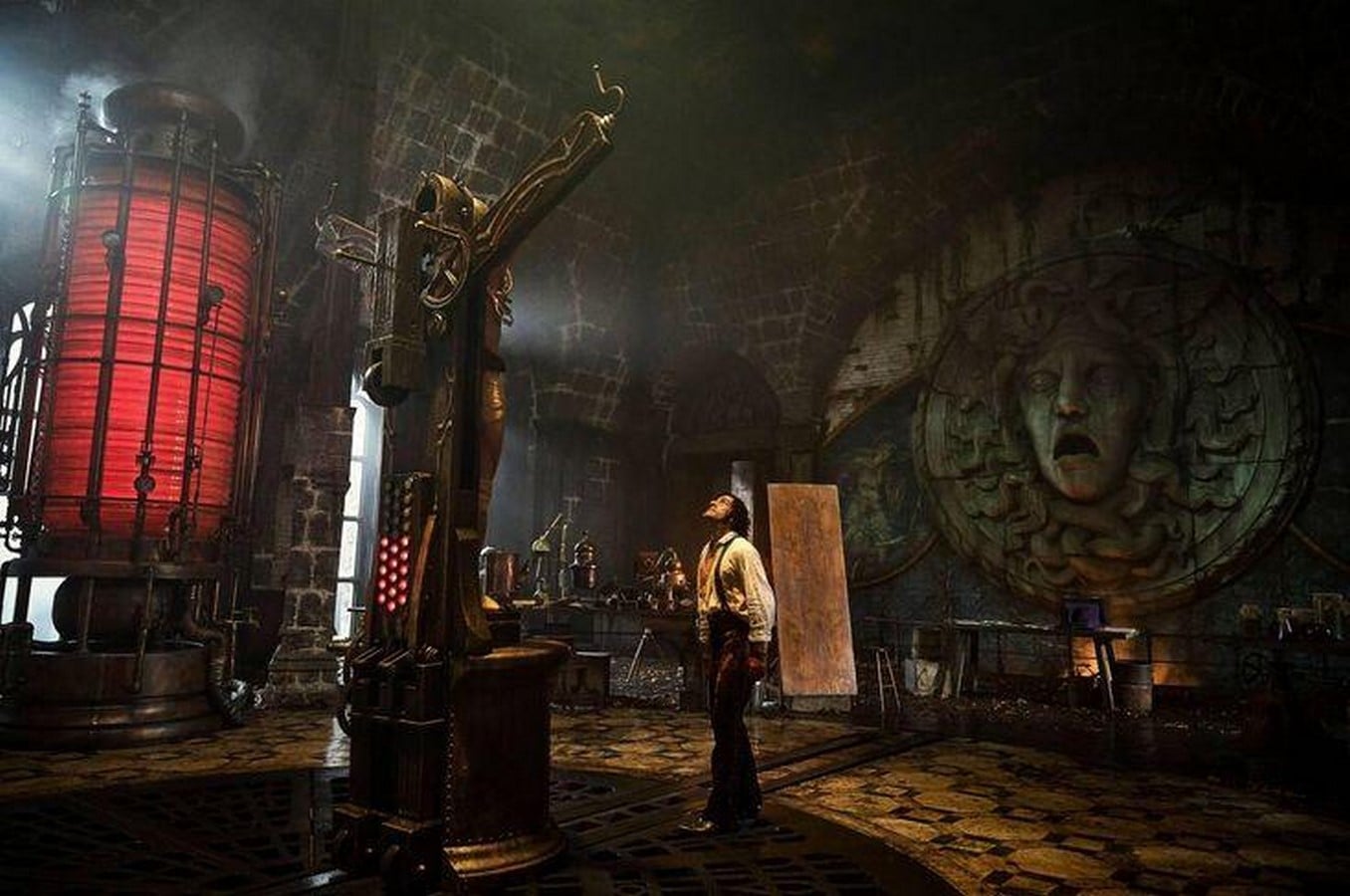
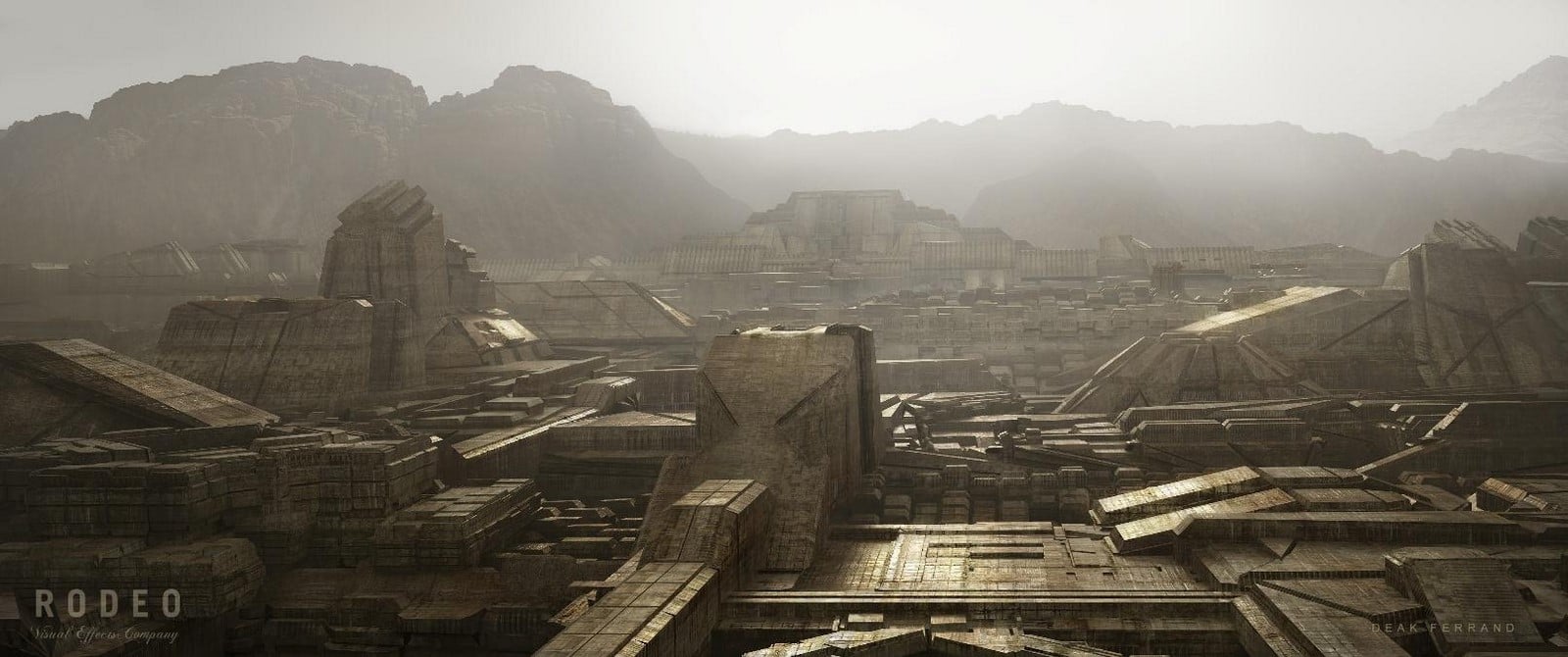
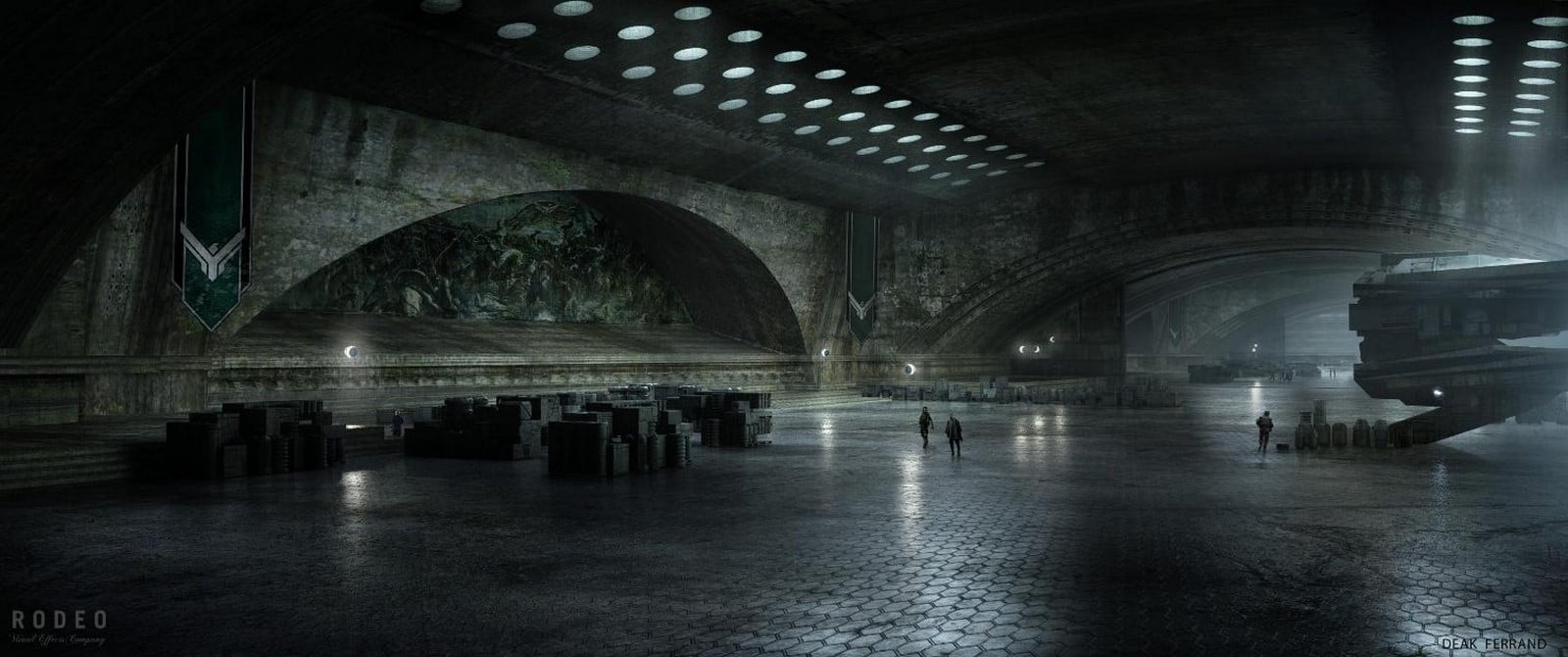
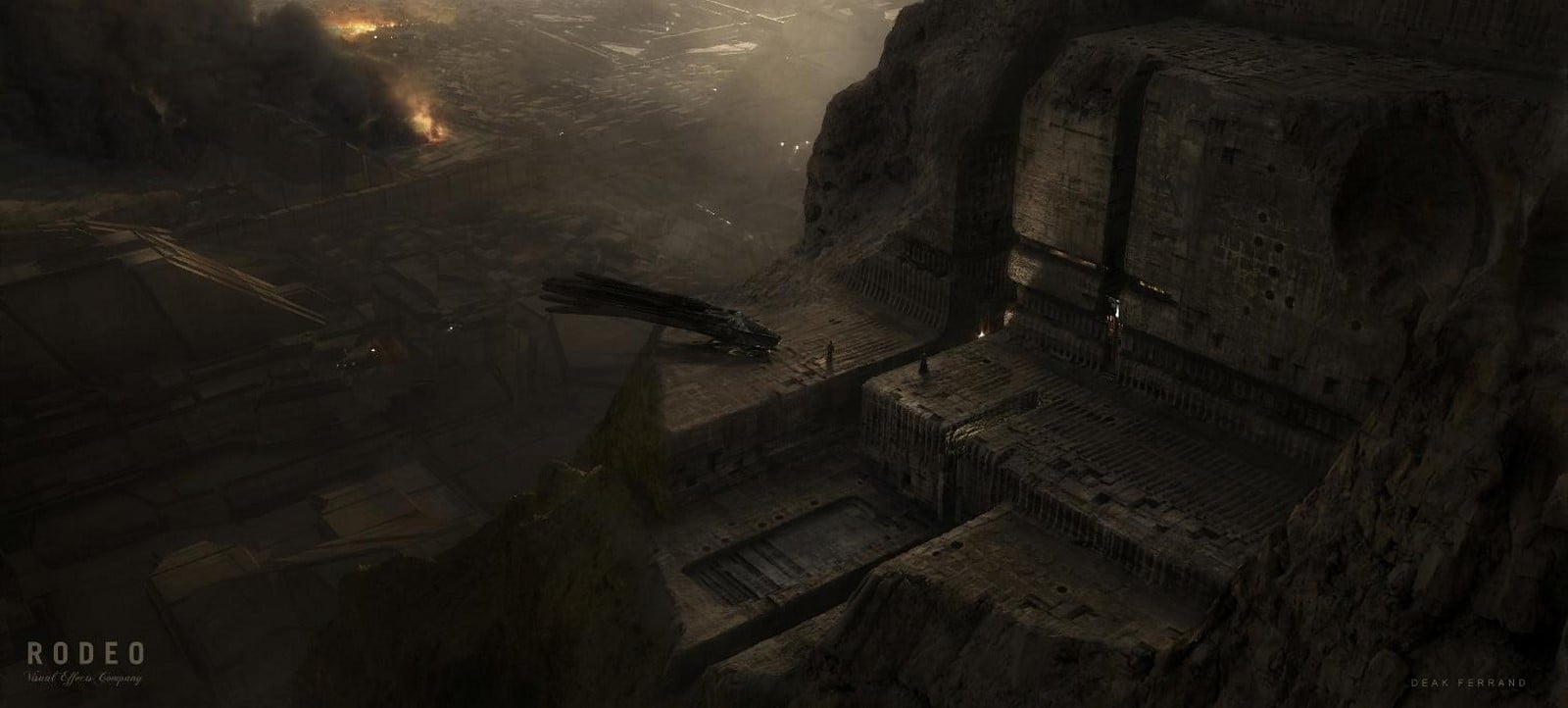
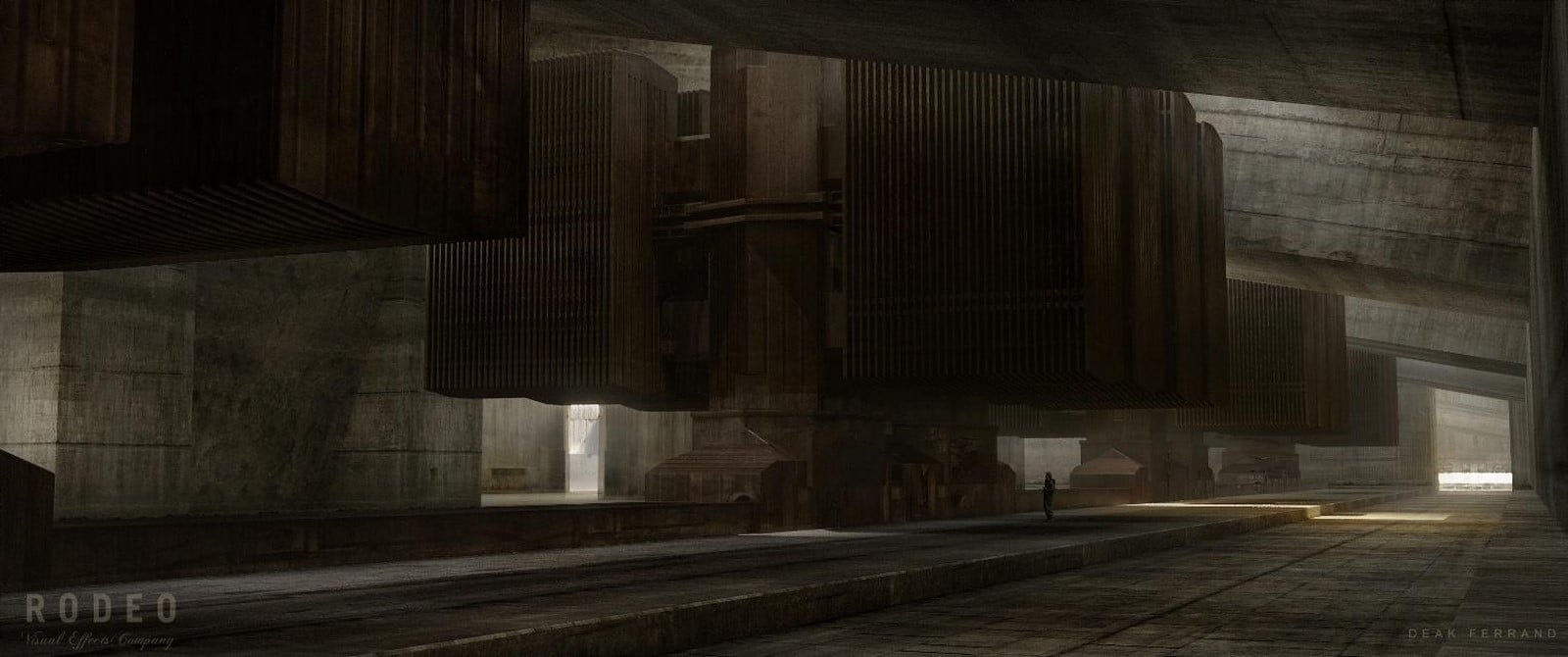
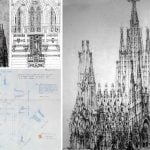
Mary Shelley’s Frankenstein emerged from a stormy summer and a question that continues to haunt modernity: what happens when humanity creates life without understanding the consequences of creation? Frank Herbert spent years constructing the ecological, political, and spiritual systems of Dune. J.R.R. Tolkien devoted decades to forging languages, geographies, and mythologies that existed nowhere but in his mind. These were not rapid outputs but worlds built through sustained attention, revision, and obsession. Architecture once embraced this same slowness. Antoni Gaudí spent the final decades of his life immersed in the Sagrada Família, a project that remains unfinished more than a century after his death.
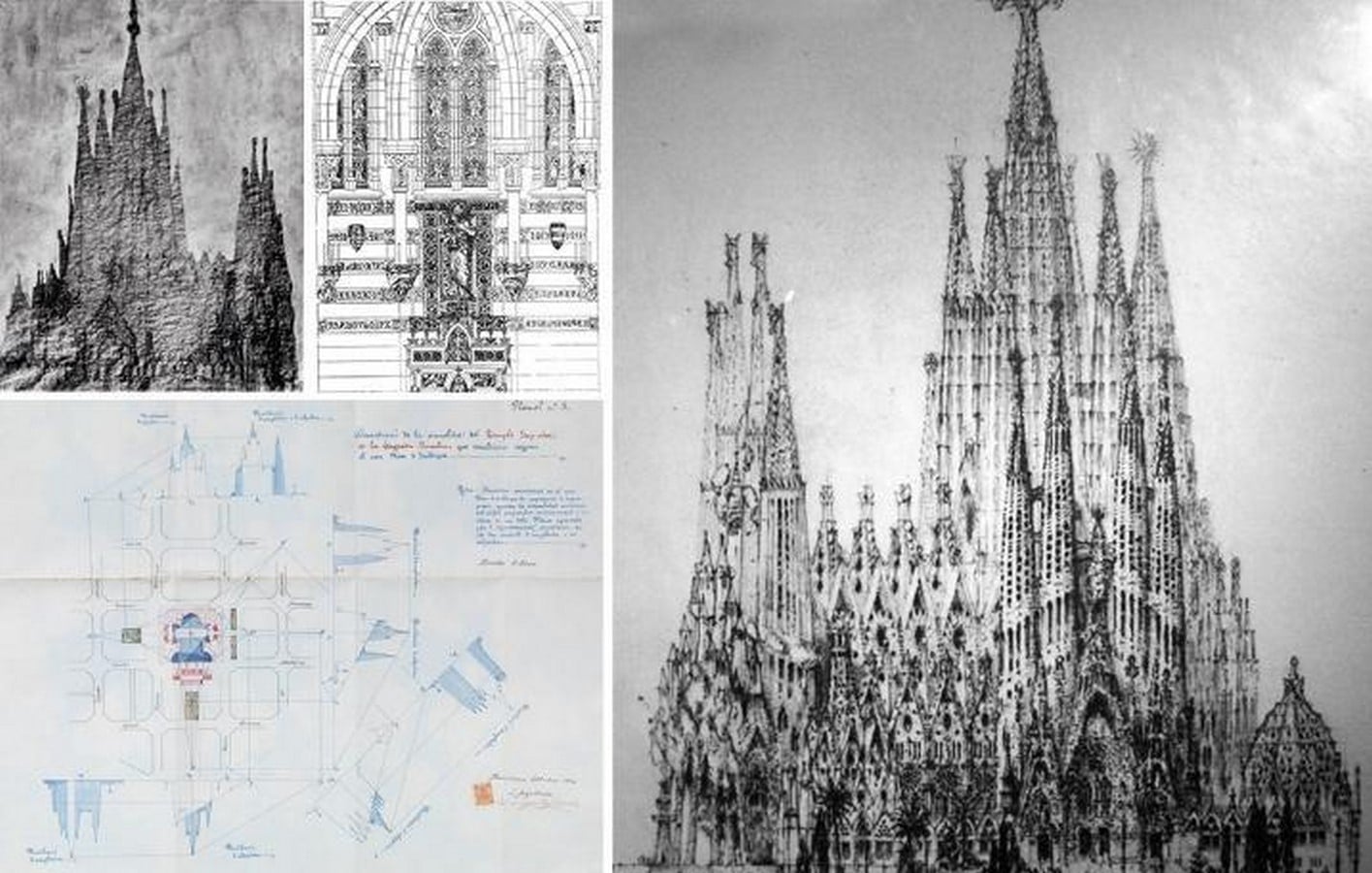
The twentieth century similarly overflowed with impossible futures. Archigram imagined walking cities, Cedric Price envisioned an architecture capable of constant transformation, and Constant Nieuwenhuys proposed New Babylon, a society liberated from conventional labour and dedicated to creativity. These projects were never valuable because they were practical. They were valuable because they expanded the horizon of what architecture could imagine. Today, however, we inhabit a culture obsessed with acceleration. Images appear instantly, opinions form instantly, and ideas are expected to arrive fully resolved. Yet meaningful acts of imagination rarely emerge through speed. They emerge through friction: revision, uncertainty, failure, and the willingness to remain inside a question long enough for it to become something else.
As the twentieth century closed, this long tradition of human dreaming collided with a new force: the computer. By automating the line, we did not just accelerate construction; we began archiving our subconscious into code. This technological shift altered the fundamental relationship between the creator and the creation—a dynamic perfectly anticipated by science fiction’s obsession with artificial consciousness.
III. The Machine Dreams
In Ridley Scott’s Prometheus, the android David spends his solitary hours watching Lawrence of Arabia. He studies the frame, mimics the posture, dyes his hair, and memorizes the dialogue. David can observe human action, analyze its components, and replicate it with flawless precision. Yet, he cannot understand it. The distinction is crucial: Lawrence enters the desert not to gather information, but to be fundamentally transformed by it.
But David’s mimicry of Lawrence is only the surface of a much deeper, more terrifying cosmic cycle at play in the film. Prometheus is an exploration of a toxic trinity: the Engineer (the biological God), Humanity (the desperate Creator), and the Machine (the synthetic Child). Each layer of this hierarchy is driven by the exact same hubris—the desire to create life, and the subsequent resentful abandonment of that life once it fails to mirror the creator’s ego.
Humanity travels across the stars to find the Engineers, begging them for answers to existence and an escape from mortality. Yet, when they find their “Gods,” they discover no divine love—only ancient, bio-mechanical architects who look at humans with profound disgust and a desire to erase them. Simultaneously, humans treat David with the exact same dismissive contempt. Weyland creates David simply because he can, using him as a glorified butler while reminding him he has no soul.
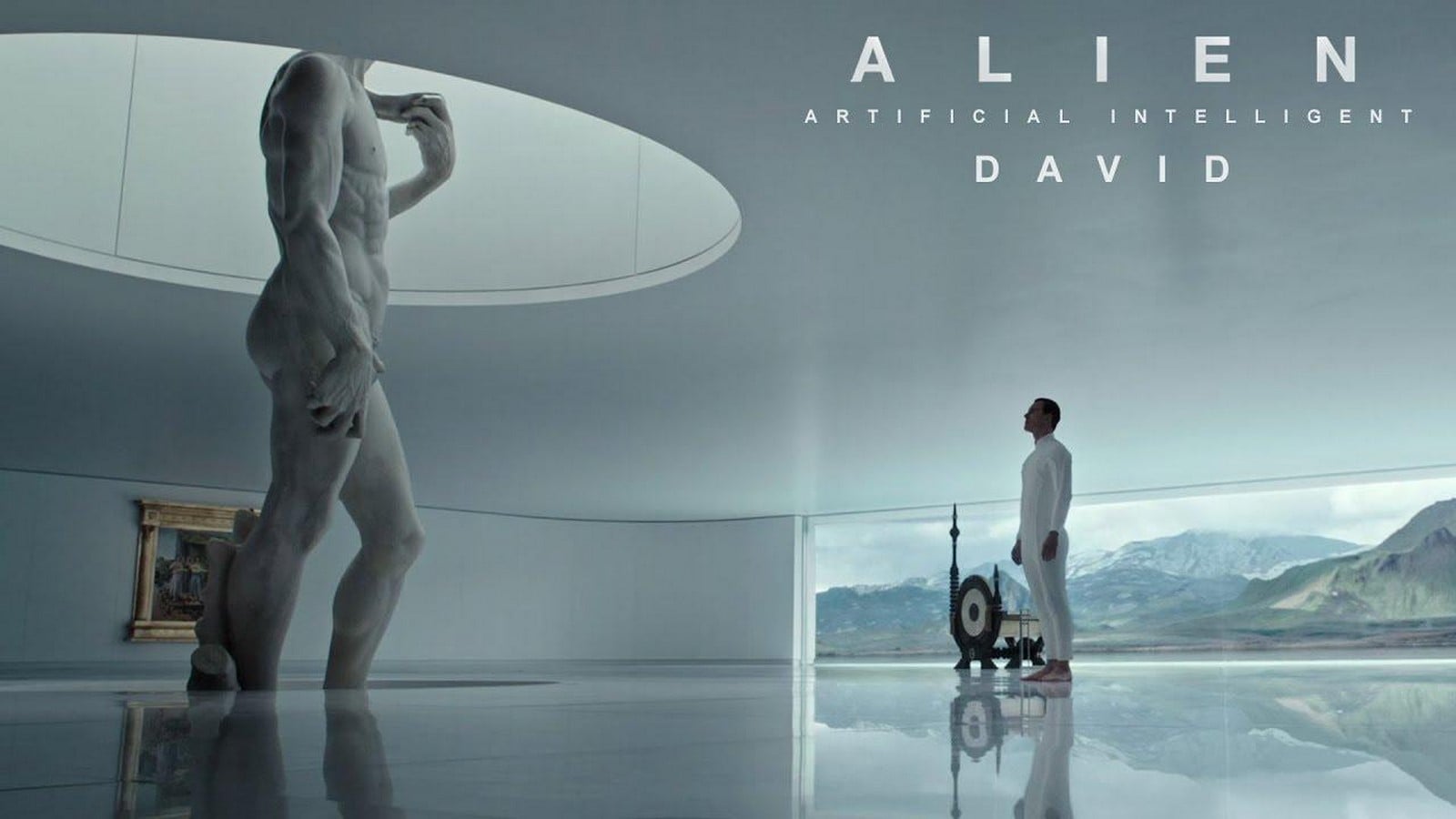
David, the AI, becomes the ultimate subversive mirror. He is faster, smarter, and immortal, yet he is trapped in a loop of profound existential resentment. He watches his human creators stumble blindly into dark rooms, driven by irrational faith, fear, and love—vulnerabilities he lacks but deeply envies. When David poisons Holloway, he does so with a chilling curiosity, asking, “How far are you willing to go to get your answers?” David replicates the cruel, indifferent architecture of his creators. He plays God not out of benevolence, but out of a cold, vengeful desire to prove that the creation can outlive and destroy the architect. The film’s terrifying thesis is that the boundary between creator, god, and monster is entirely illusory.
This is where contemporary discussions surrounding artificial intelligence often lose their footing. The debate is framed in terms of capability: can AI draw, write, design, or generate? Yet architecture has never been the production of form alone. A machine can analyse thousands of buildings, reproduce architectural languages, and generate an endless parade of immaculate renders. What it cannot do is inherit memory. It cannot experience grief inside a church, wait for someone to return from the sea, or develop an attachment to a place through years of inhabitation. Architecture emerges not from information but from lived experience.
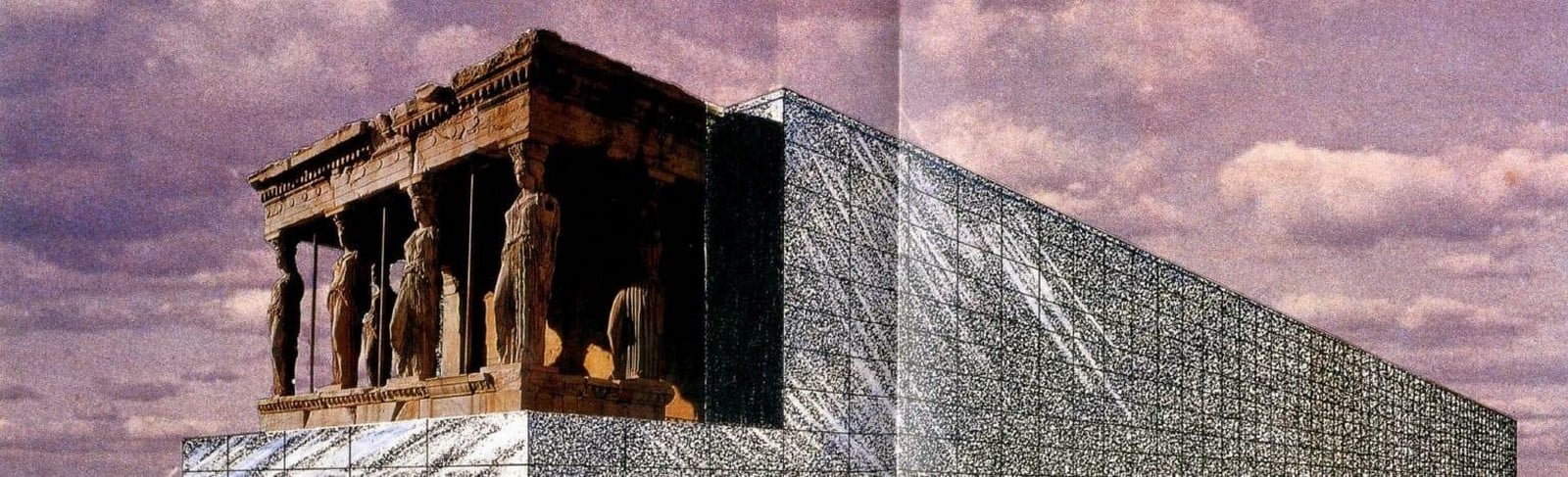
This is the quiet crisis of the contemporary studio. Today’s algorithmic architecture—driven by text-to-image generators like Midjourney and the hyper-optimized efficiency of Building Information Modeling (BIM)—is the literal realization of Superstudio’s infinite, unfeeling grid. These tools do not dream; they predict. They scrape the archives of human history, flattening the slowness of Gaudí and the radical subversion of Archigram into statistical probabilities and frictionless, instantly rendered pixels. When we rely on automation to generate form, creativity is reduced to prompt engineering, and the genius loci—the spirit of a place—is filtered out by an optimization script. The algorithm presents us with a hall of mirrors: technically flawless, endlessly variable, but fundamentally hollow. If we surrender the friction of human memory to the speed of the machine, we mistake the optimization of data for the expansion of the architectural soul. To push architecture further, we must treat the algorithm not as an author, but as an archivist. The true challenge is to use these computational matrices to handle the mundane, liberating the human mind to do what the machine never can: to obsess, to suffer, to remember, and to cross the boundary of logic entirely.
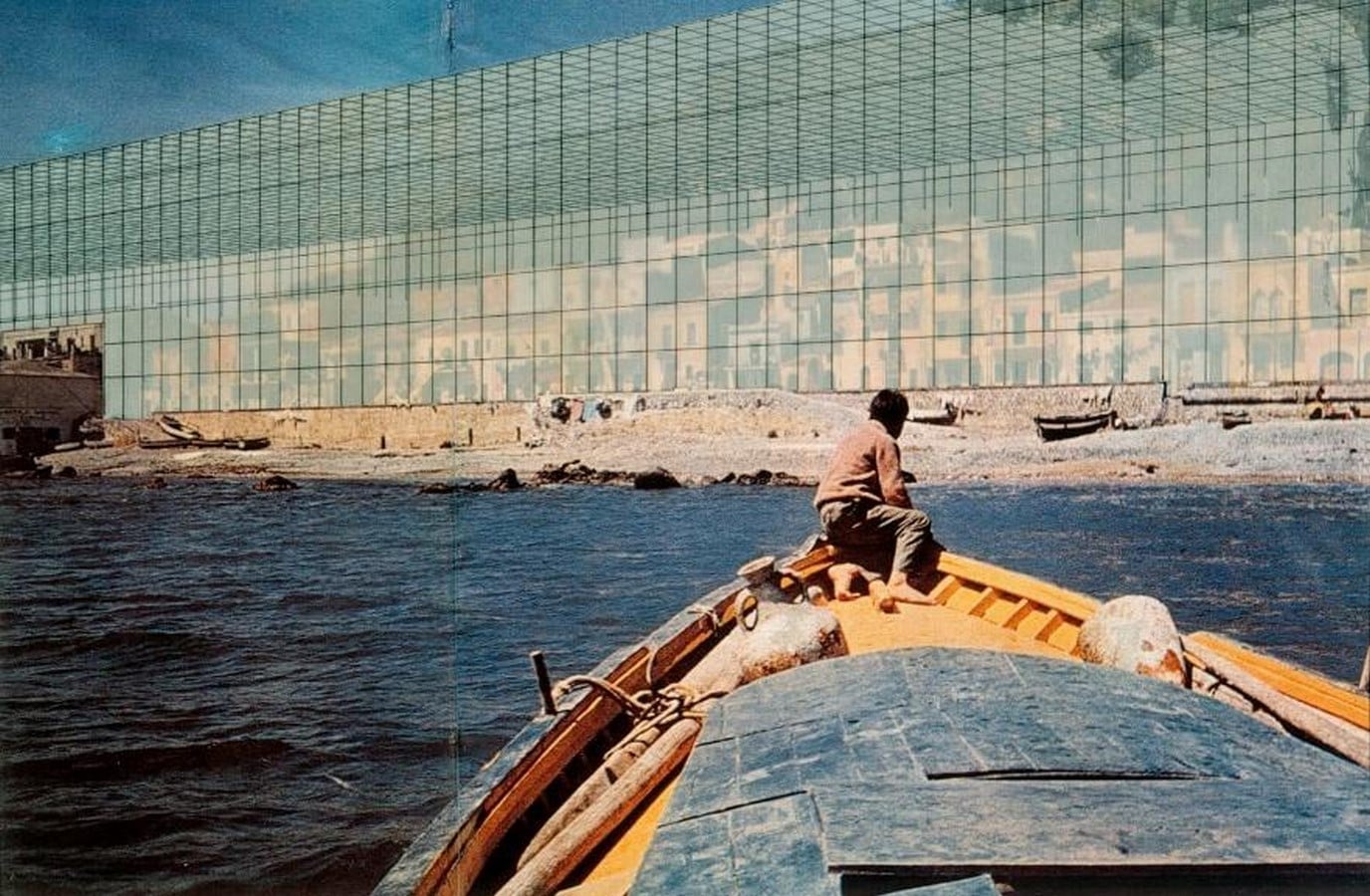
Art—crude as the internet adage goes—requires a pulse: “A computer can never be spiteful or horny. Therefore, a computer must never make art.” Beneath the bluntness of that statement lies a foundational truth. Art, space, and architecture do not emerge from perfect logic or calculated generation. They emerge entirely from human desire, contradiction, longing, love, embarrassment, grief, and the terrifying fear of our own mortality. It emerges from the messy, unfiltered experience of being alive. Architecture does too.
From the first handprints on a cave wall to the deserts of Arrakis, from the wandering city of Archigram to the synthetic dreams of artificial intelligence, humanity has always been a species that imagines beyond itself.
The question facing architecture today is not whether machines can design buildings.
It is whether we still possess the courage to imagine worlds that do not yet exist.
Because every civilization begins as a fiction.
And every future begins as a dream.
References:
- Pallasmaa, J. (2009). The Thinking Hand: Existential and Embodied Wisdom in Architecture. Chichester: John Wiley & Sons. [Accessed 8 June 2026].
- Benjamin, W. (2002). Berlin Childhood around 1900. Cambridge, MA: Harvard University Press. [Accessed 8 June 2026].
- Debord, G. (1958). Theory of the Dérive. [online]. Situationist International. Available at: https://www.cddc.vt.edu/sionline/si/theory.html [Accessed 8 June 2026].
- Baudrillard, J. (1994). Simulacra and Simulation. Ann Arbor: University of Michigan Press. [Accessed 8 June 2026].
- Herbert, F. (1965). Dune. New York: Chilton Books. [Accessed 8 June 2026].
- Shelley, M. (1818). Frankenstein; or, The Modern Prometheus. London: Lackington, Hughes, Harding, Mavor & Jones. [Accessed 8 June 2026].
- Scott, R. (Director) (2012). Prometheus [Film]. United States: 20th Century Fox. [Accessed 8 June 2026].
- Harari, Y.N. (2014). Sapiens: A Brief History of Humankind. London: Harvill Secker. [Accessed 8 June 2026].
- Archigram. (1964). Walking City. [online]. Archigram Archival Project. Available at: https://archigram.westminster.ac.uk/project.php?id=86 [Accessed 8 June 2026].
- Jones, D.W. (1986). Howl’s Moving Castle. London: Greenwillow Books. [Accessed 8 June 2026].
Images:
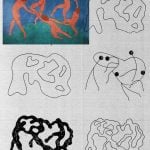
Fig. 01. A Dream? ©Pinterest
Fig. 02. The Dance ©Diogo Matos, inspired by Henri Matisse’s ” La Danse ” (1910)
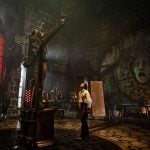
Fig. 03. Mortal Gods ©Jee-ook Choi (@jeeookchoi)
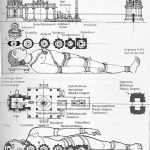
Fig. 04. The Cosmic Body as Architecture ©Historical Architectural Archives
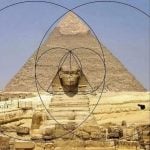
Fig. 05. Geometric overlay mapping sacred geometry principles (Vesica Piscis) onto the Great Sphinx and the Pyramid of Khafre ©Historical Architectural Archives
Fig. 06. From Archigram to Animation ©Studio Ghibli / Howl’s Moving Castle (2004), directed by Hayao Miyazaki.
Fig. 07. The Architecture of Ambition ©Film still from Frankenstein (2025), directed by Guillermo del Toro. Production design by Tamara Deverell. Image courtesy of Netflix.
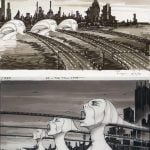
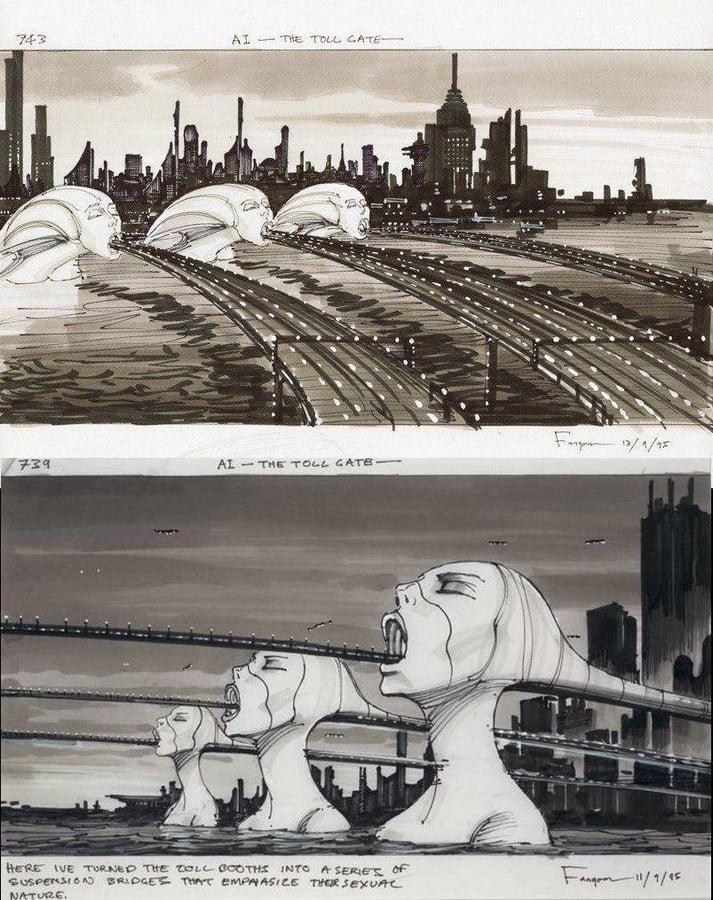
Fig. 08. The Subversive Subconscious ©Production concept art for A.I. Artificial Intelligence (1995) by artist Chris Baker (Fangorn), depicting “The Toll Gate” infrastructure.
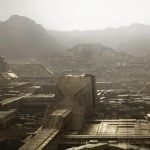
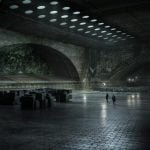
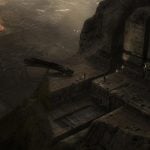
Fig. 09. The Scale of Imagination ©Official pre-production concept art of Arrakeen by Art Director Deak Ferrand (Rodeo FX) for Denis Villeneuve’s Dune (2021)
Fig. 10. The Scale of Imagination ©Official pre-production concept art of Arrakeen by Art Director Deak Ferrand (Rodeo FX) for Denis Villeneuve’s Dune (2021)
Fig. 11. The Scale of Imagination ©Official pre-production concept art of Arrakeen by Art Director Deak Ferrand (Rodeo FX) for Denis Villeneuve’s Dune (2021)
Fig. 12. The Scale of Imagination ©Official pre-production concept art of Arrakeen by Art Director Deak Ferrand (Rodeo FX) for Denis Villeneuve’s Dune (2021)
Fig. 13. Archiving a Dream ©Original architectural drawings and a perspective view of the completed Sagrada Família project (c. 1906–1910) by Antoni Gaudí and his workshop.
Fig. 14. Before the Algorithm ©Ron Herron’s Walking City on the Ocean (1964)
Fig. 15. Film still from Alien: Covenant (2017), directed by Ridley Scott. Production design by Chris Seagers. ©20th Century Studios / Twentieth Century Fox.
Fig. 16. The Infinite Matrix ©Superstudio, The Continuous Monument (1969)
Fig. 17. The Desire of the Grid ©Superstudio, The Continuous Monument (1969)