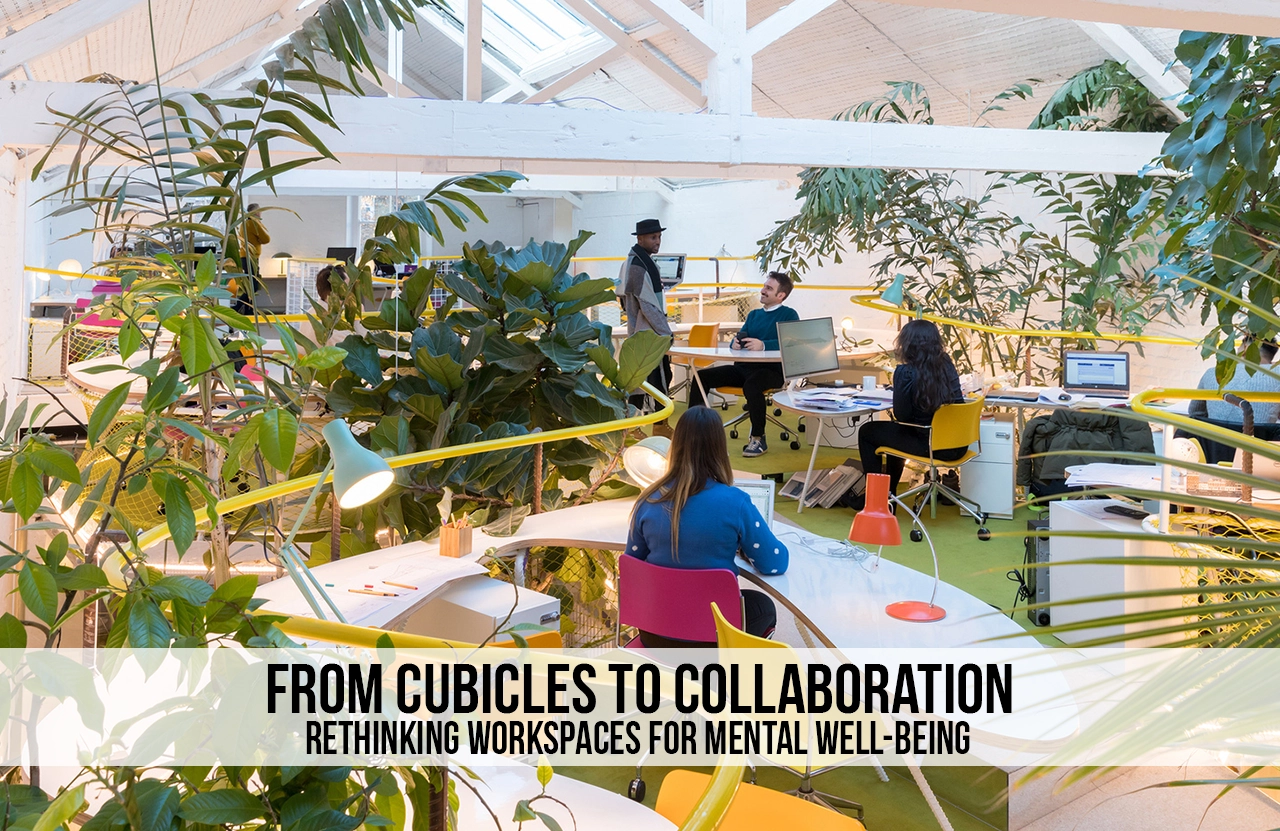
Workspaces can be endeavoured as a second home to many employees. However, over the years, there have been various turbulences with office design due to external factors such as socio-economic trends. Priorities of society took a paradigm shift towards capitalism and making a profit rather than preserving the true purpose of design. Hence, as architecture evolves in various spectrums, designing a comfortable space is essential to promote inclusivity and well-being. Revisiting the 1960s, the fulcrum of prolific advancement began in that period, specifically in the realm of design. Drifting away from quintessential rows of tables and chair workstations, delegated power was given to the employees to make a decisive decision to improve social collaborations (Overstreet, 2020).
Rethinking Revolution: A Reccurring Loop?
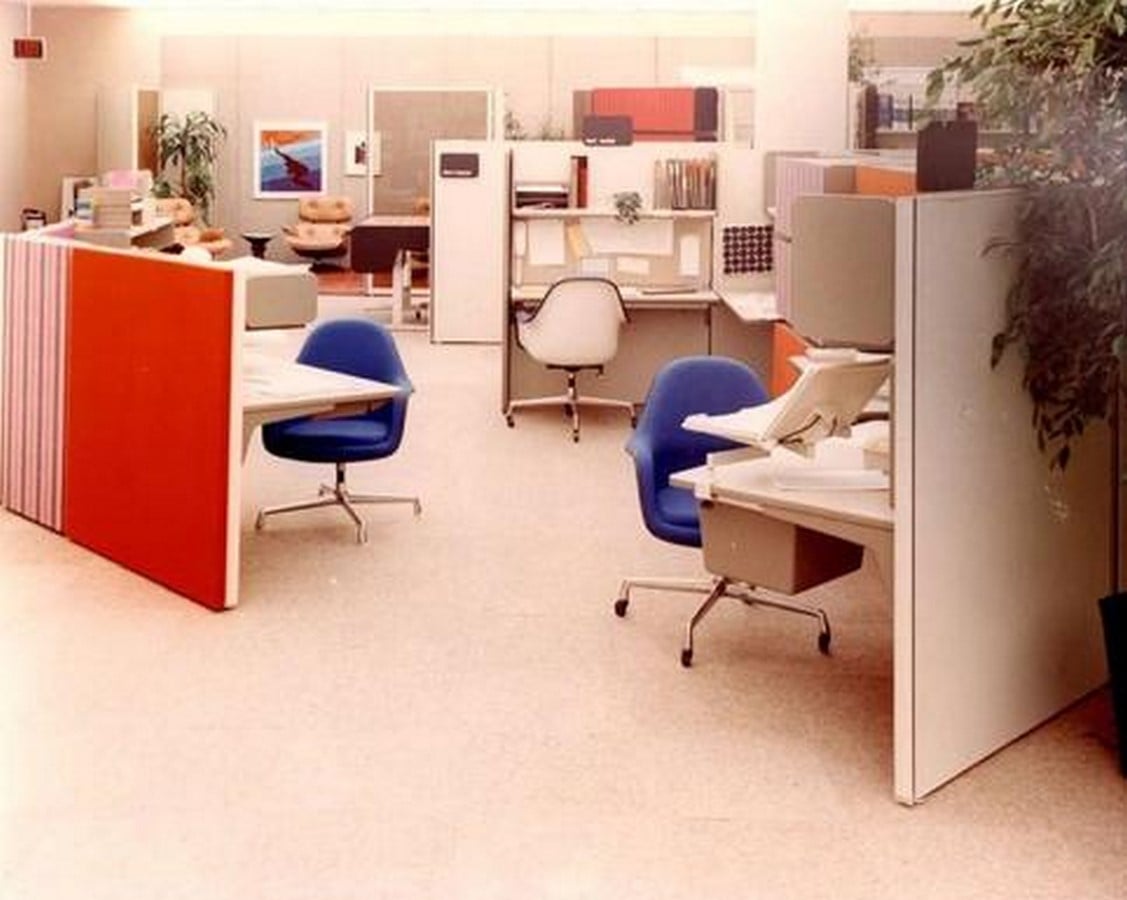
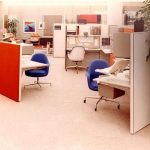
However, the early 1980s pivoted towards the corporate culture of profitability, and the introduction of cubicles occurred. The futile notion of ‘sell them cheap, stack them high’ (Overstreet, 2020). This can be claimed as social segregation as it affects the mental well-being of employees. Lack of comfort and social conversations resulted in a depressive office design and manoeuvred away from employment motivation.
Unprecedented circumstances, such as technological advancements, COVID-19, etc., yet again reinstated the development of office design due to the hybrid pattern of working and movement. Although, one side of the argument still resides on the idea of separation through cubicles to impose social distancing. Consequently, through perpetual research of designers studying the office environment and the interpersonal relationship with its employees, the situation stands as a labyrinth of how the space will look in the future. Throughout the world, stalling during the COVID-19 pandemic allowed designers to discover the future potentials with the correlation of technological advancements, work policies, and people’s movement to rethink workspaces.
‘Work from home’ has been a work-life cultural phenomenon since COVID-19. This awakened endless questions in relation to how collaborations between ideas and people can come together. Is it the future of collaboration? Do design spaces need to be reconsidered post the pandemic? Many architectural firms, such as DLR Group, claimed that working from home seems easy because “everyone is forced to participate in this way of collaborating” (Overstreet, 2020).
Eden: Prototype for the Future?
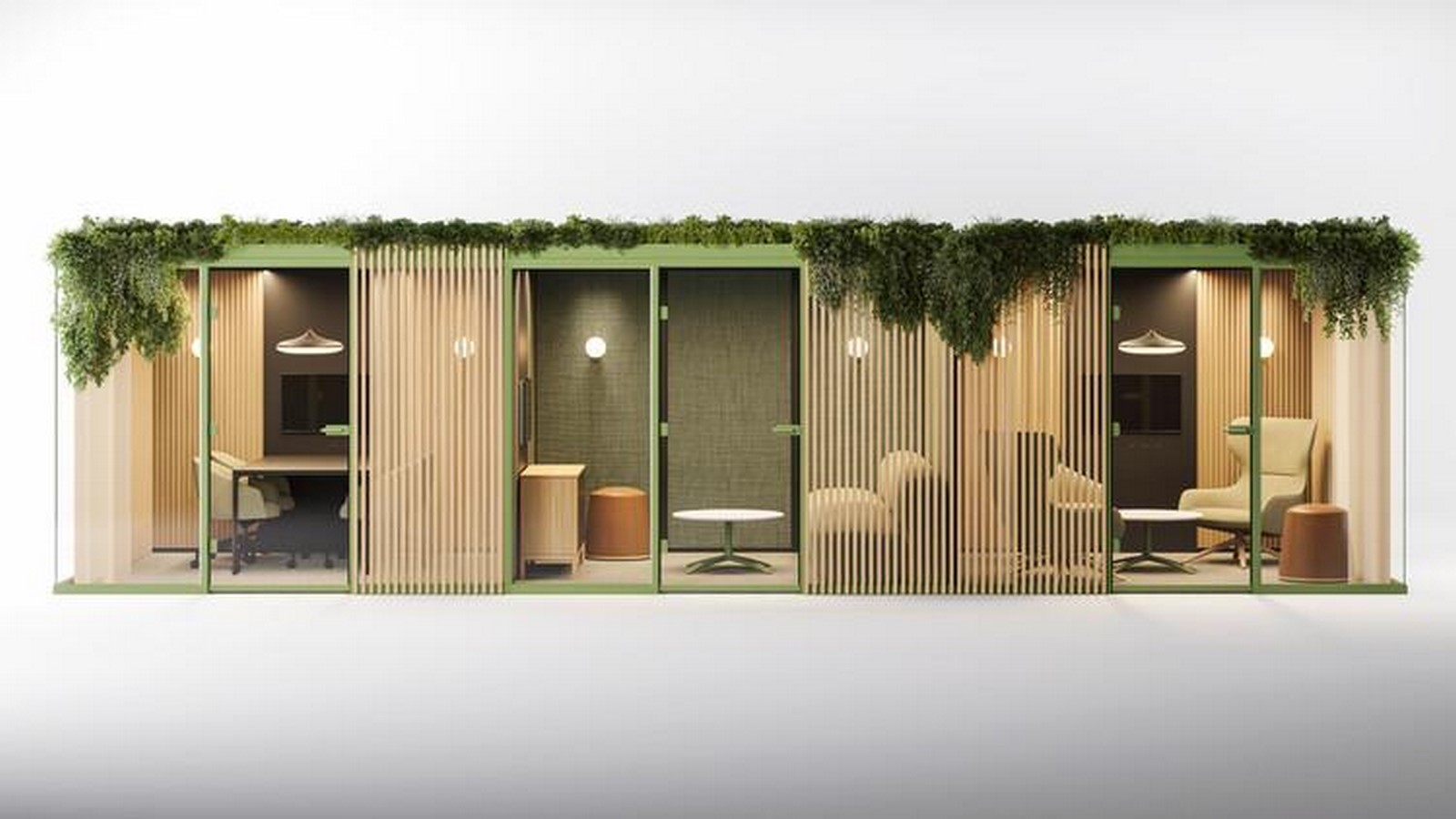
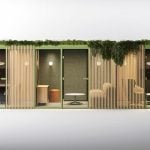
Main features of the Eden Pod System include uninterrupted glazing to maximise natural light penetration, clean lines, and a geometric design that enhances the serenity of the mind by eliminating distractions of the design itself. The arrangement of the pod itself improves human interactions as it consists of four modules, ranging from an individual focus pod to a meeting space for six members that fosters individualistic connections. Additionally, Eden pods have managed to intertwine a biophilic design approach into their design.
- Earthy tones colour palette within the pod
- Foliage arrangements to bridge the gap between the outdoor and indoor environments
- Acoustic timber panels to provide privacy, yet a peaceful atmosphere
As mentioned by Ben Mitchell, who is the head of Eden Pods in Tovar (2025), “Exceptional design and sustainability are always central to our process, but with Eden, we’ve focused more than ever on the user experience. Features such as its timber strip privacy screening, beautiful ombré curtains, and biophilic foliage arrangements put people at ease, helping foster creativity, communication, and the ability to focus.” Therefore, sustainability has been a pivotal focus for Boss Design, and all the materials, such as timber, glass, and aluminium frames, are fully recyclable. Moreover, textiles are made from recycled plastics from ocean waste.
On the whole, with the evolving times, there can be various ideologies coming with staying relevant towards contemporary architecture. However, the intention can be claimed as a positive welfare towards the larger society. In that case, Eden supports the well-being, adapts to specific user needs, and contributes towards sustainable architecture (Tovar, 2025).
References:
- Overstreet, K. (2020). A Brief History of Workplace Design and Where it Might be Headed Next. [online] ArchDaily_© https://www.archdaily.com/940538/a-brief-history-of-workplace-design-and-where-it-might-be-headed-next.
- Tovar, E. (2025). An Eden within the Workplace: Flexible Pods with Biophilic and Human-Centered Design. [online] ArchDaily_© https://www.archdaily.com/1025776/an-eden-within-the-workplace-flexible-pods-with-biophilic-and-human-centered-design.