
Life in a Shoebox
Step inside a tiny apartment, and the first thing you notice is how quickly the room runs out. The bed folds into the wall. The desk pulls down like a theatre prop. If you lean too far while making coffee, you might almost knock on your neighbour’s wall. It’s not claustrophobia, it’s choreography. Everything is measured, considered, rehearsed. This is life in the shoebox apartment. What was once dismissed as student housing or a last resort for struggling workers is becoming a new kind of urban normal. Cities are learning to live small. And strangely enough, the smaller the homes get, the larger the ripple they send through the city around them.
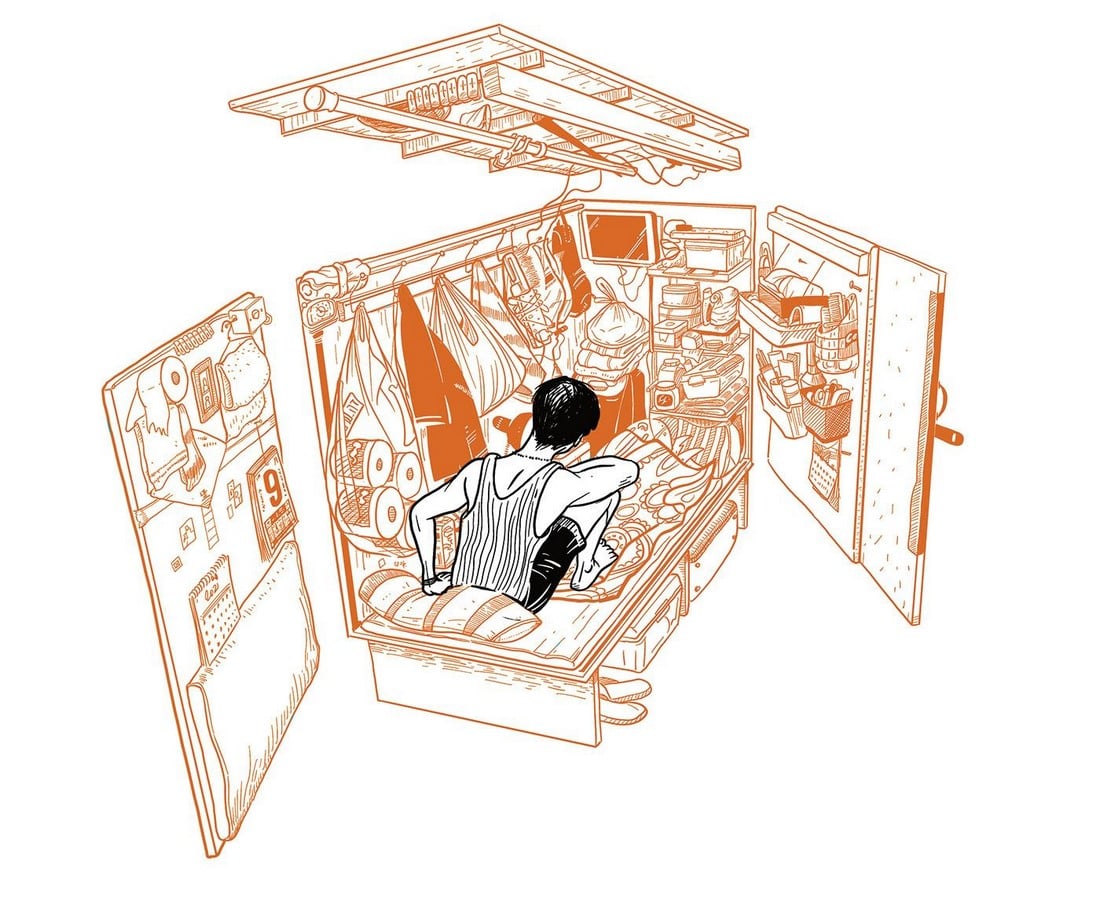
Why Are We Shrinking Our Homes?
It wasn’t always this way. For most of modern history, a bigger home meant a bigger life. Villas and bungalows flaunted wealth, while suburban houses promised middle-class security with spare rooms and driveways. But in present cities, the hierarchy has flipped. A cramped studio near the centre often outranks a spacious flat on the outskirts.
The reasons are obvious enough: spiralling land prices, soaring rents, and endless commutes. But it’s also about how younger generations think about “home.” For many Millennials and Gen Z, experiences matter more than possessions. Freedom trumps permanence. They’ll trade a guest bedroom for a buzzing street outside their window. The pandemic only intensified this reckoning. When the world shrank to four walls, people began questioning how much space was truly necessary (Florida, Rodríguez-Pose and Storper, 2021).
In short, big houses have lost a bit of their shine. Living small is no longer just survival. It’s increasingly framed as a choice.
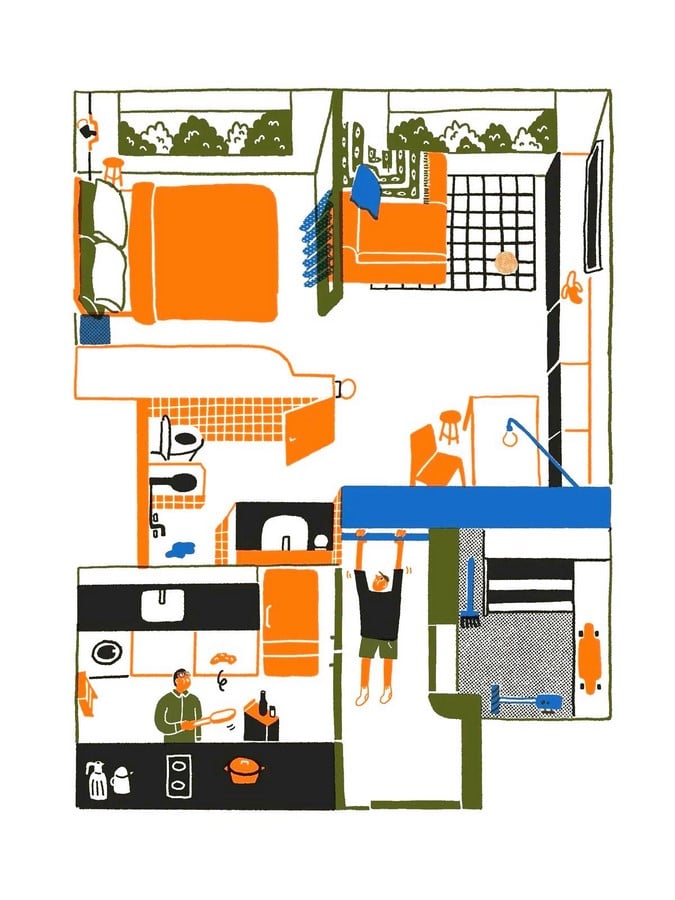
Architecture as Origami
Designers have leaned into this shift with a kind of theatrical flair. In tiny apartments, architecture stops being static and starts to perform. A wall becomes a desk, a bed disappears into a cabinet, and a dining table folds out just in time for dinner. Living here is less like occupying a room and more like learning a routine.
This “origami architecture” borrows heavily from places where smallness has long been the norm. Tokyo’s capsule hotels, stacked pods that resemble futuristic honeycombs, have existed since the 1970s. Hong Kong has experimented with subdivided flats for decades. And now, the West is catching on. When New York City introduced Carmel Place, its first official micro-unit building, demand was high despite the compact dimensions (Kontokosta, 2015).
In these contexts, size isn’t everything. Ingenuity is.
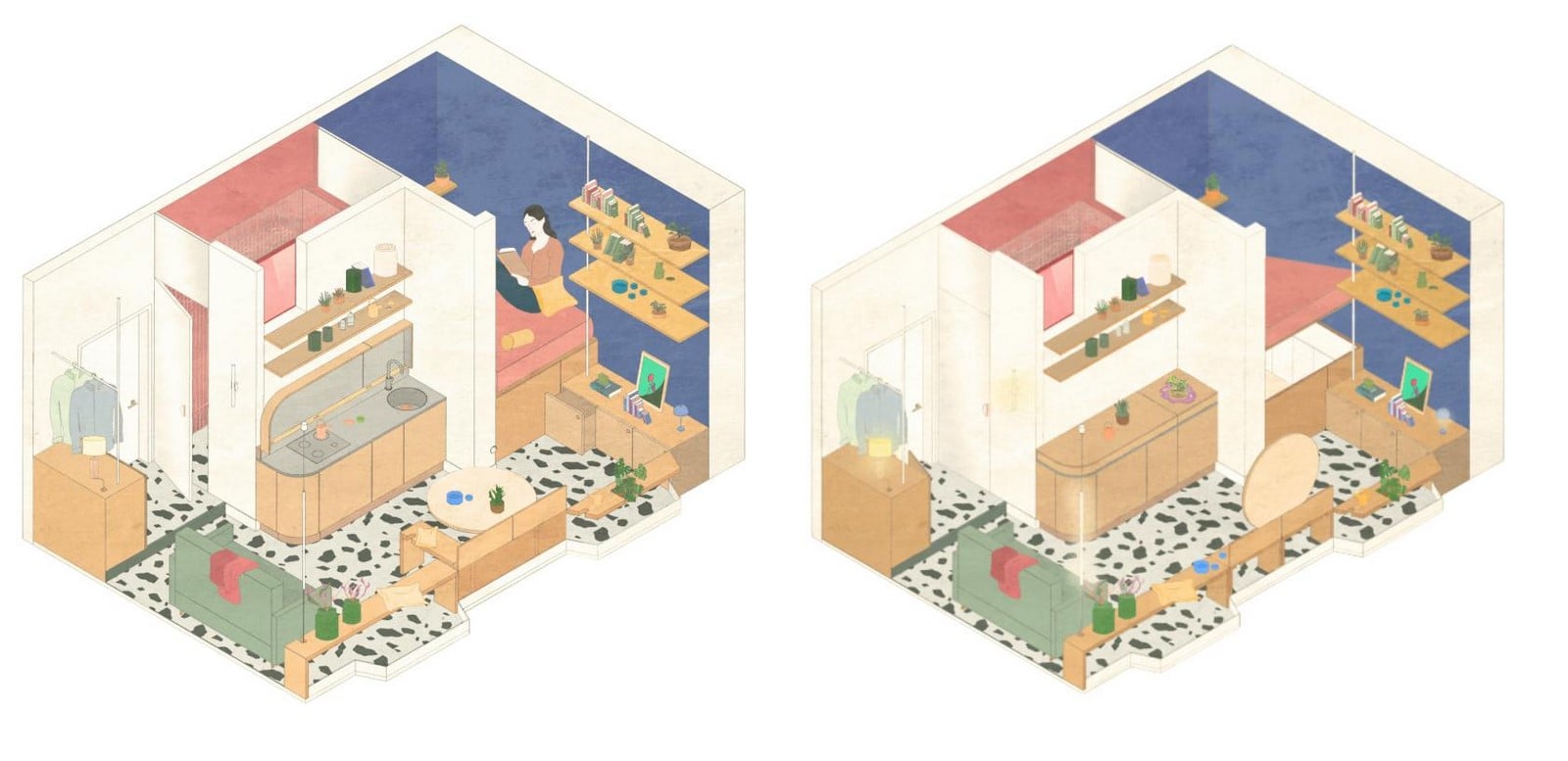
Macro-Impact: The Butterfly Effect of Tiny Living.
Here’s the paradox: when homes shrink, cities grow more flexible.
A smaller flat means fewer materials to build and less energy to heat or cool. Multiply that across thousands of units, and the savings add up. Wilson and Boehland (2005) showed that as houses get larger, they consume disproportionately more resources. In other words, downsizing isn’t just a lifestyle choice; it’s a climate strategy. There’s more. Dense housing brings people closer to shops, services, and transit. Streets stay alive because cafés and corner stores have steady foot traffic. Public transport improves because more people use it. A single Murphy bed folding down in Brooklyn might not change much, but the collective effect of many such homes can reshape a city’s metabolism.
Ivanova et al. (2022) argue that reducing dwelling size is one of the most effective ways to cut household carbon footprints. Kuittinen et al. (2023) add that tiny homes, if well-integrated into communities, can drastically reduce material use and emissions. So the shoebox apartment isn’t just a personal compromise, it’s a small piece of a larger urban solution.
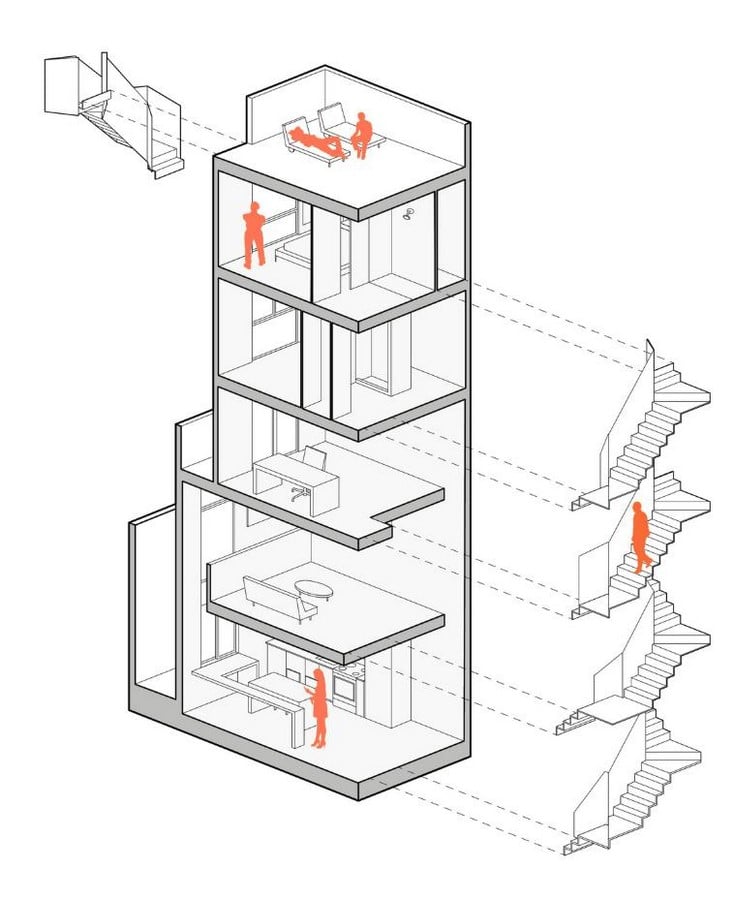
The Human Side: Minimalism or Madness?
Of course, the picture isn’t all neat folds and energy savings. Living small is emotional. For some, it’s liberating. Less clutter, fewer chores, more clarity. Schafer (2016) suggests that cutting down possessions can feel like cutting down stress. People who thrive in tiny apartments often talk about the freedom of not being weighed down by unnecessary junk.
But not everyone thrives. Psychologists warn that cramped housing can intensify stress, erode privacy, and create tension, especially when families are squeezed together (Evans, 2003). What feels cosy to one person feels suffocating to another. Culture also matters. In Japan, compactness fits a tradition of restraint and efficiency. In India, where joint-family homes once symbolised stability, the shift to micro-studios feels abrupt and, at times, alien (Mehrotra, 2011). In Manhattan, though, there’s an odd pride in saying, “Yes, my apartment is smaller than a garage, but it’s on the island.”

Tiny Apartments Across the World
Each city’s relationship with small homes tells a different story:
Tokyo: Capsule hotels and micro-apartments embody radical efficiency. Every inch is accounted for, turning smallness into a kind of national design ethos.
New York: Carmel Place proved that micro-units could be desirable, even stylish, but also highlighted ongoing debates about affordability (Kontokosta, 2015).
Mumbai: From the crowded chawls of the 19th century to today’s slick studio apartments, compact living has always been part necessity, part cultural adaptation (Mehrotra, 2011). Together, these examples show that tiny living isn’t a fad. It’s a global pattern, shaped by local pressures.
When IKEA Dreams Become Kafka Nightmares
And yet, there’s a darker chapter. Not every micro-apartment glows with soft lighting and clever shelving. In some cases, “compact luxury” is just a marketing term slapped on overpriced boxes. Peter Marcuse (2015) points out that gentrification often dresses inequality in stylish packaging. Micro-units risk becoming symbols of exclusivity rather than accessibility. A space the size of a cupboard suddenly carries a rent tag that excludes the very people it was meant to house affordably.
When developers prioritise profit over dignity, small isn’t beautiful; it’s brutal.
Lego Cities and Suitcase Living
What lies ahead could look even stranger. Imagine cities as Lego towers, with pods that can be stacked, swapped, or shipped elsewhere. Some predict apartments could one day function like Netflix subscriptions: “Upgrade your space, cancel anytime.” It sounds dystopian, but hints of this are already visible. Co-living complexes, where residents sacrifice private kitchens for shared lounges and gyms, are spreading worldwide. Remote work and digital nomadism have only accelerated the appetite for flexible living. Kuittinen et al. (2023) argue that tiny homes can succeed if they’re tied into community infrastructure rather than left as isolated boxes.
In other words, the future of small living may depend less on square footage and more on how cities weave these homes into larger systems of belonging.

Small Homes, Big Futures
Tiny apartments are contradictions in concrete. They can be liberating or suffocating, sustainable or exploitative, empowering or excluding. But one thing is clear: they are no longer a fringe experiment. They are reshaping cities from within. Perhaps the real question isn’t about size at all. It’s about balance. Can we design homes that are small enough to tread lightly on the planet, but generous enough to give people dignity and joy?
Tiny apartments may not let us stretch our arms without bumping into a wall. But they just might give our cities and our future the room to breathe.
References:
- Evans, G.W. (2003) ‘The built environment and mental health’, Journal of Urban Health, 80(4), pp. 536–555.
- Florida, R., Rodríguez-Pose, A. and Storper, M. (2021) ‘Cities in a post-COVID world’, Urban Studies, 60(8), pp. 1509–1531.
- Ivanova, D., Barrett, J., Wiedenhofer, D. and Macura, B. (2022) ‘Implications of shrinking household sizes for meeting environmental goals’, Journal of Cleaner Production, 361, 132208.
- Kontokosta, C.E. (2015) ‘The micro-unit housing trend in New York City’, Cityscape, 17(2), pp. 223–230.
- Kuittinen, M., Kuittinen, T. and Vihma, A. (2023) ‘Are “tiny homes” good for the environment?’, Housing, Theory and Society, 40(6), pp. 801–819.
- Marcuse, P. (2015) ‘Gentrification, social justice and personal ethics’, International Journal of Urban and Regional Research, 39(6), pp. 1269–1277.
- Mehrotra, R. (2011). Architecture in India: Since 1990. Mumbai: Pictor.
- Schafer, R. (2016). The Minimalist Home. Colorado Springs: WaterBrook.
- Wilson, A. and Boehland, J. (2005) ‘Small is beautiful: U.S. house size, resource use, and the environment’, Journal of Industrial Ecology, 9(1–2), pp. 277–287.