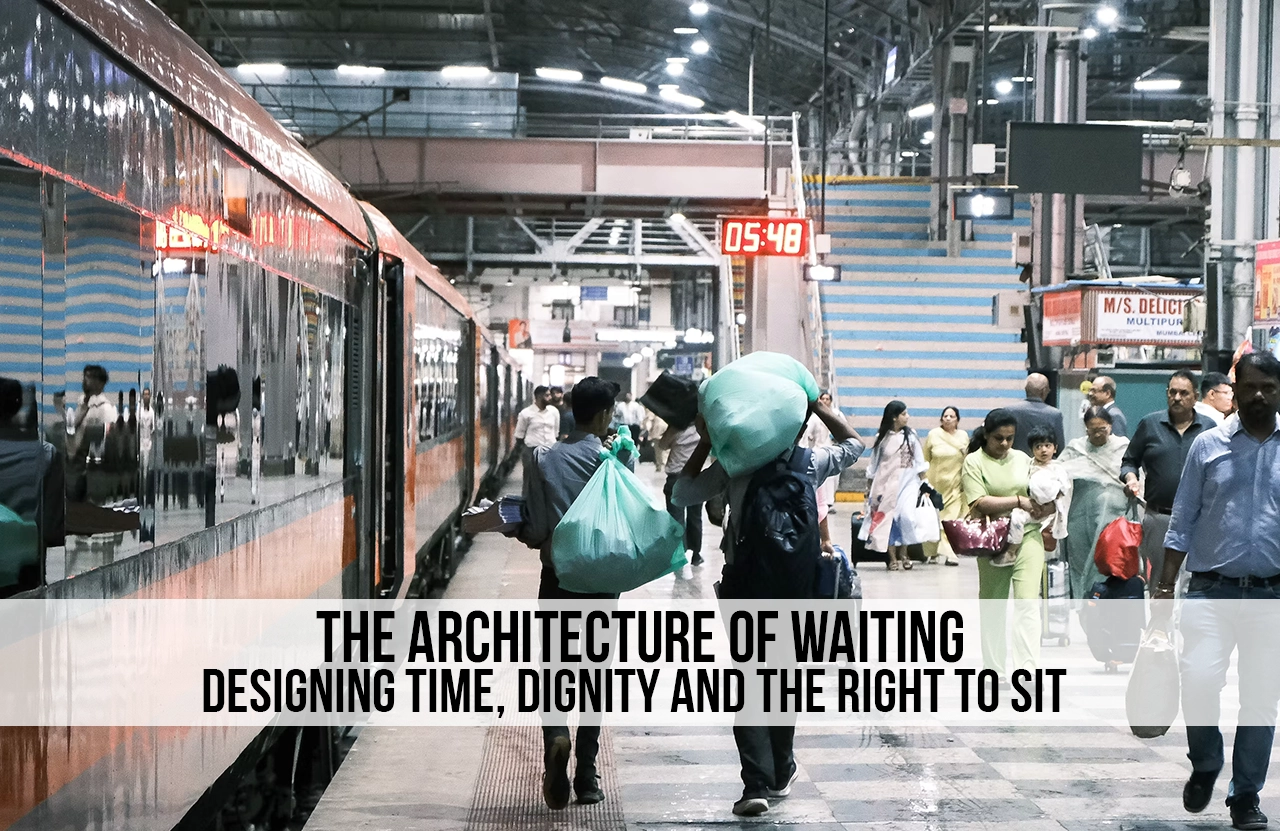
The Everyday Experience We Rarely Design For
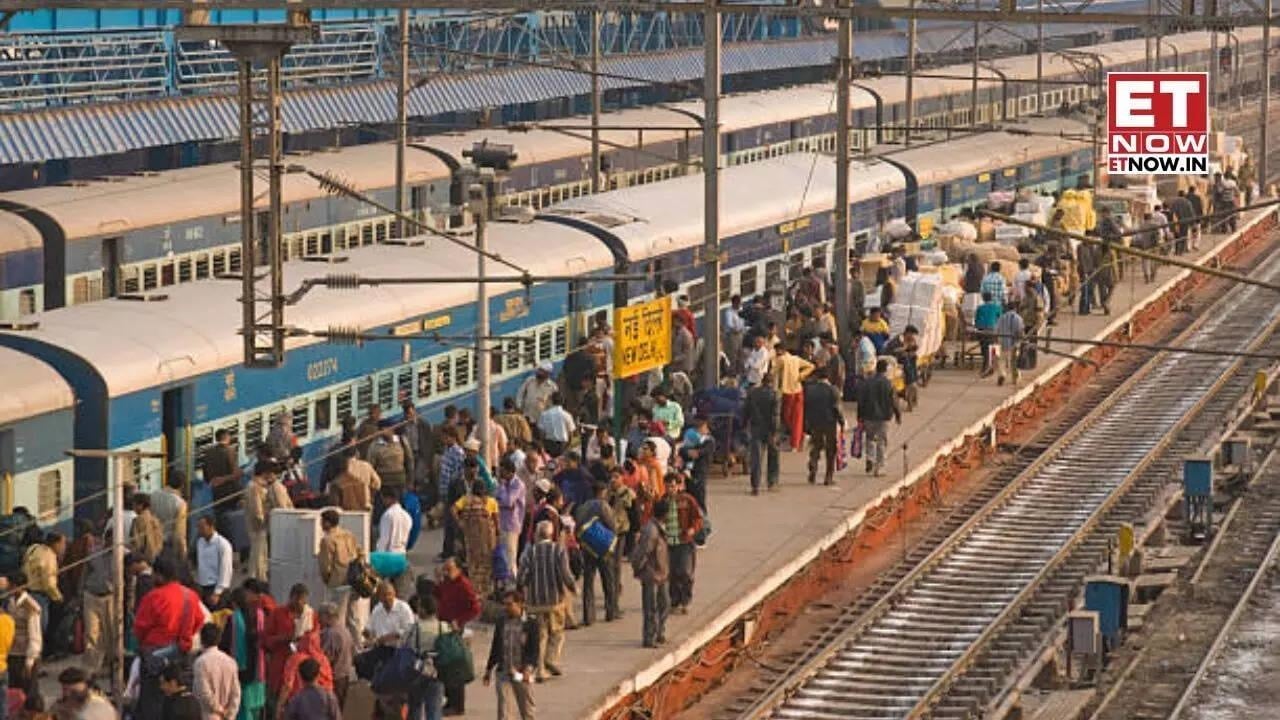
Waiting consumes more time from our lives than most people think, but it is not really regarded as an experience in architecture. Waiting can be done for a bus, for a train, for a doctor, for a school child, for a friend, for food, for some service offered by the government or simply while waiting for traffic. In Indian cities, waiting is such a part of daily life that we hardly pay any attention to it. We wait in front of hospitals, at bus stops, on the stairs of a shop, against railings, at the edges of pavements, under a tree or sitting on a wall. It might not seem important in relation to the bigger issues of urban planning like mobility, infrastructure, housing, transportation, and development. However, it tells us a lot about the way in which the city deals with its inhabitants. If the city asks us to wait, then where does it ask us to wait, and how?
The question becomes particularly pertinent in the context of Indian cities today, wherein development is invariably linked to speed, efficiency, connection, and movement. Roads are widened to facilitate vehicular flow, transportation networks are designed to cut down time in transit, pavements are improved to facilitate pedestrian movement, and new developments need to become more efficient. All of this is an essential aspiration for growing cities. However, a city cannot be lived in just through movement. One does not move from point A to point B, stopping somewhere in between. Life in the city is also about resting, meeting others, watching, talking, eating, working, waiting, and at times even just remaining in one place.
The contrast between speed and slowness has become increasingly pertinent to how India approaches urban planning. The Economic Survey 2025-26 by the Government of India on urbanisation makes a comparable case that livability cannot be created solely by improving infrastructure but depends upon how cities organise the time and choice-making of their citizens (Ministry of Finance, 2026). Earlier, the Liveability Standards by the Ministry of Housing and Urban Affairs emphasised open space, inclusiveness, walkability, safety, mobility and transportation within the greater context of urban quality as opposed to the improvement of infrastructure alone (Ministry of Housing and Urban Development, 2017). Maybe, then, the question is not about whether we want our cities to be fast or slow, but whether our cities accommodate the coexistence of different paces of life.
This makes sitting as an architectural topic quite significant. One might sit at the bus stop and wait for the bus, yet also watch the street, talk to other people sitting at the bus stop, use their phone, eat something, watch after a kid or take rest after walking. A retired man sitting on the low wall might need to have a rest. A parent who sits near the school gates is waiting for his kid. A person working at the factory who is resting under the tree needs rest after hard work during the day. Sitting thus cannot be seen as inactivity all the time.
This leads to a much bigger question: Have we planned for the contemporary city for all its moving parts, but forgotten about the stationary ones? This is not a point against movement itself. We need more movement, better transit and infrastructure within Indian cities. However, the problem arises when movement itself becomes the criterion for a good city and any interruptions to that become obstructions. A pedestrian who stops for a minute, a trader who stands at the periphery, an elder who sits down, or a group of people gathering can all be thought to use the public realm in the wrong way. However, this could be the very thing that makes a street vibrant.
The Street as a Place, Not Merely a Route
The theorists who have studied urbanism have been suggesting that we understand urbanism in terms of our daily lives, not just movement and infrastructure. Appleyard’s book ‘Livable Streets’ made it clear that streets were not only ways for the movement of vehicles, but that traffic volume and its nature could affect people’s social life and their relationship with the environment (Appleyard, 1981). The same thing was made evident by William H. Whyte in his book ‘The Social Life of Small Urban Spaces’. Successful urban spaces depend much more on the actions of people than on the intentions of designers (Whyte, 1980).
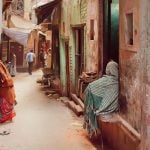
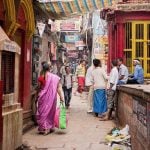
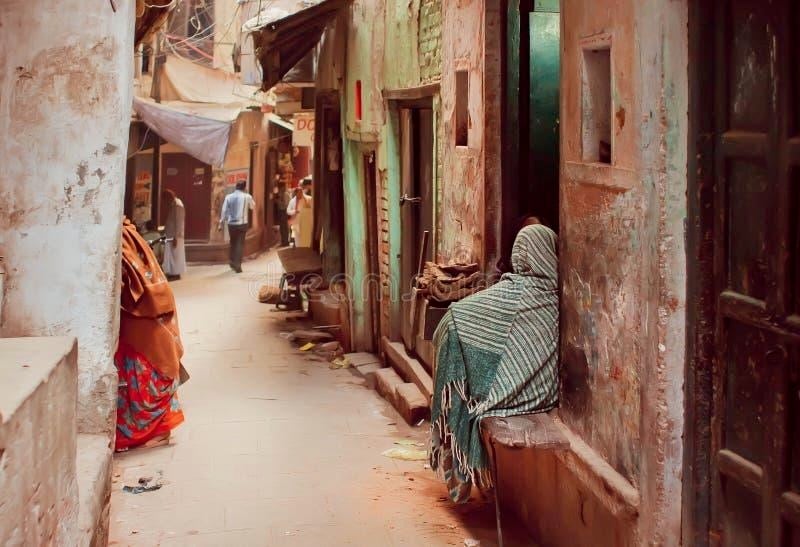
These concepts acquire special significance in light of Indian cities where streets have served a much more complex role than just being a corridor for mobility. For instance, the street could serve as a market, workplace, assembly space and social space in addition to being an extension of the domestic interior. The otla, verandah, temple plinth, chaupal, tree edge, shop front, and raised platform could perform several roles at different points of time in a day. One could sit, talk, relax, watch the street life, carry out transactions, or wait for someone without the necessity of labelling the space for any of those purposes.
These kinds of spaces were significant in part because their use was not predetermined. A platform could be a place where one could sit in the morning, transact in the afternoon, and get together in the evening. The shaded edge could also serve multiple roles like waiting, chatting, working informally or relaxing. Architecture need not always tell the inhabitants about what one was supposed to do.
This idea is consistent with Whyte’s emphasis on the need for observation. He showed that the design of public spaces could get inspiration from where people stopped and gathered (Whyte, 1980). For today’s Indian cities, the implication is that the design process needs to start with observation before trying to apply any formula for public space. Where do people tend to stop? Which are the edges that remain inhabited? Where do they like to have shade? Which places do they tend to avoid? What is it that makes one place inviting and another one not?
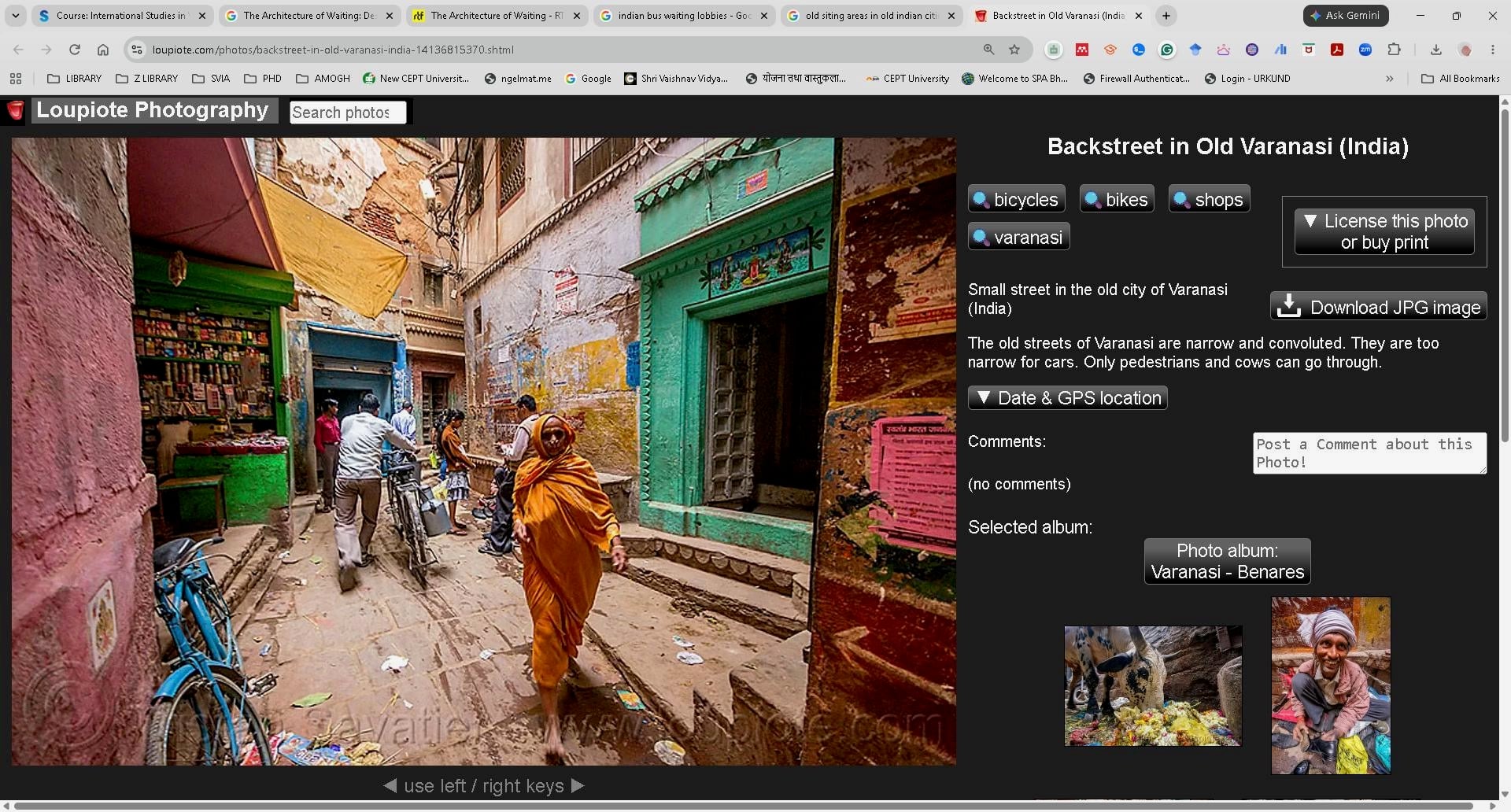
However, the Indian city today is transforming. Rising land prices, motorisation, infrastructural growth, commercialisation and changes in housing patterns have changed the interaction between the buildings and streets. The otla might have turned into a parking lot, the verandah might have turned into an enclosure, the tree edge could have been removed due to road widening, and the open threshold might have turned into an entry point. There is much that the street now has to accommodate: parking, vehicles, services and commercial activities.
Such a transformation need not be seen as an opposition to modernisation. Modernisation is needed by Indian cities, which lack good infrastructure. The question is how the positive features of earlier urban spaces that made them liveable may be adapted, and not destroyed.
Sitting Is Not Doing Nothing
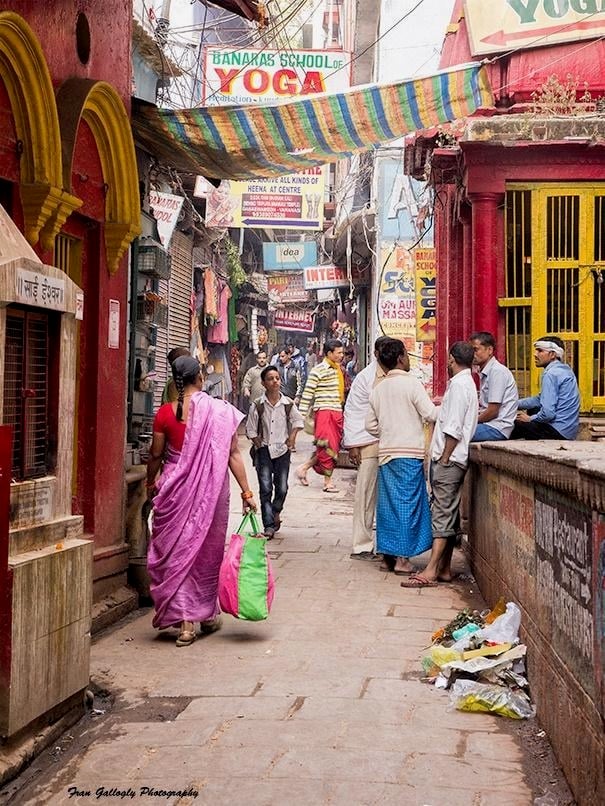
One possible explanation of why sitting is neglected in modern urban design might be in its perceived inactivity. However, what are people sitting for? They could be waiting for a bus, watching their children, communicating with a neighbour, having lunch, working, relaxing after walking, studying the street scene, waiting for someone else, or simply taking some time for themselves. Thus, sitting could be interpreted as an act of participation in public life.
Gehl (2011) differentiates three types of activity: necessary activity, optional activity, and social activity. Necessary activity takes place as long as people need to perform it, regardless of the quality of the environment. Optional activity, on the other hand, is more dependent on the conditions of the environment; people are more willing to sit, stay, watch, or relax in places which are pleasant to them. Social activity comes out of the presence of people in places with possibilities for interaction. It is an important observation: the quality of the physical environment plays a role in turning urban life from functional into social.
The pedestrian walking along the street is only passing through it. The person sitting in it is having a different relationship with the environment. Sitting enables people to see, recognise others and come across events that otherwise would have been ignored. The shopkeeper sitting at the entrance of his shop becomes a participant in the life of the street. Older people sitting outside their houses watch the everyday rhythm of the neighbourhood. Kids sitting outside the house convert the circulation edge into a social edge.
This is the reason why we cannot treat the seat only as furniture. The seat can be the social infrastructure of the area. The bench, plinth, steps, verandah, or any shaded edge can allow activities that enhance the social fabric of the area. Therefore, the issue is not simply about the availability of seats in a public area but the environmental conditions that encourage people to stay there.
Waiting Is an Experience of Time
Waiting is another element that brings another aspect of architecture to light: time. We can measure distance, area, density, capacity, travel time, but not how those are felt by the person who experiences them. Ten minutes can be experienced very differently in one place compared to another.
Ten minutes of waiting in a shady spot with something to sit on, a view of the street, and feeling safe can go unnoticeably quickly. Ten minutes of waiting next to a busy street in full sunlight, without knowing when the bus will come, can be very tiring. While the clock measures time, architecture plays a part in how that time feels. In this way, creating waiting spaces is also about creating time.
This becomes particularly critical in Indian cities where the act of waiting is intrinsically linked to both climate and infrastructure. The summer heat, monsoon rains, dust, noise, and air pollution make the simple process of waiting physically taxing. A bus shelter with no provision of shade and seating shifts the problem of climate from the infrastructure to the person waiting. A public building can be said to be accessible to some extent. However, if one is made to wait outside in a harsh climate with no provisions of drinking water, toilets, or information about the services provided in the building, then the accessibility of the structure is not fulfilled.
Thus, the waiting process becomes one of dignity. Seating suggests that your body counts. Provision of shade implies the provision of physical comfort. Information indicates that your time counts. Good lighting and visibility are related to safety. This may sound like small provisions on the part of architecture, but collectively they send out a message: You matter here, and you need to be comfortable here.
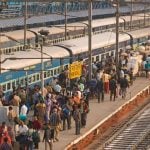
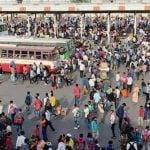
This is especially important at hospitals, government offices, railway stations, bus stations, and schools, since people cannot choose not to wait. In these places, people are not waiting for entertainment but because they need to receive some service or attend a school. Thus, the waiting space becomes an integral part of the institutional experience.
The Right to Sit—and the Right to Remain
The matter of sitting gains even more importance in relation to the topic of social equality. Who gets the privilege to sit in the city? A client entering the café can buy a chair. A visitor to the shopping centre is provided with comfortable seats. A passenger at the airport might be offered an organised waiting area. However, what about the one standing by waiting? What about the street vendor, delivery person, domestic help, security guard, elderly pedestrian or a parent waiting for her kid outside of the school?
Public seating is important because it enables people to exist in the city without necessarily consuming something. With increasing commercialisation of public spaces, some of the most comfortable places for sitting are available in cafés, shopping centres, restaurants and other commercial spaces. These places offer comfort and services, but access to them is usually linked to consumption. A really liveable public space needs to provide other options where people could stay without purchasing something.
This results in a wider concept that is worthy of some more thought in terms of urban planning: the right to remain. There are many things we discuss, such as the right to the city, right to mobility, accessibility, and the right of access to public space. However, the right to stop for some time without being viewed as an obstacle simply because they stay in one place is just as important. The right to remain does not mean the right to stay indefinitely and irrespective of other people. The right to remain implies that the public space needs to provide an opportunity for a legitimate period of stopping, waiting, observing and social interaction.
This is particularly relevant in light of the diversity of bodies inhabiting the Indian urban landscape. Children, elderly individuals, pregnant women, people with disabilities, people who have something to carry, and labourers who engage in physically demanding work need more frequent chances to rest. The lack of rest points on a walkway may make the walkway accessible in terms of circulation but hard for some to use. Therefore, accessibility cannot simply be considered in terms of access and movement.
The Architecture of the Edge
Many traditional Indian settings included a form of architecture of pause that could be described as such. The otla, verandah, courtyard periphery, shaded seating and shop periphery provided a way to occupy that which is between the inside and outside, to watch the streets without actually having to enter them, to meet someone without making an appointment and to take a break without needing to go into some designated public space.
It is not the physical form of these spaces that matters but rather what was possible within these spaces – shade, proximity, visibility, flexibility, sociability and humanness. Modern architecture does not have to replicate the traditional literally. It would be silly to turn a modern transport hub into a traditional verandah or a modern building into an otla. However, the principles behind these spaces remain just as valid. Shaded seating edge, comfortable threshold, protected pedestrian zone, and low walls can do the same things.
Edges become significant because they offer a position where people enjoy the feeling of support without being alienated from the rest of what is happening. A wall creates a feeling of being protected; a shaded edge provides a shelter from weather conditions; a position oriented to the street offers something to look at. Moreover, finally, a threshold allows you to enjoy the vicinity of activities without being directly involved in them.
As the urban environment becomes more regulated, these edges may get lost. Issues of security, traffic, maintenance and even commercial interests make a city more enclosed and thus less friendly. There is no problem with safety and order, but when everything becomes regulated, the city loses its informal possibilities.
This does not mean that every informal occupation is beneficial. Urban areas have to be safe, accessible and usable. What we need to understand is the difference between problematic occupation and appropriation. When people occupy some space on the edge regularly due to the lack of some feature in the design, the problem remains. The city often tells us what it needs through these everyday acts.
Beyond Fast and Slow: Different Rhythms of Urban Life
While Appleyard’s work has been seen as one of contrasting vehicular flow and human flow, the real point is that cities do not need to be made slow. Indian cities cannot and will not refuse movement, efficiency, and all that comes with them. People need to get to their jobs and schools and hospitals and markets. Goods have to move around. Transportation systems need to work. Emergency services need to reach places reliably. What is really important is whether efficiency and liveability are compatible.
Can a bus system be efficient and provide comfortable places to wait? Can a market stay active and provide comfortable resting places? Can a pathway allow people to move about and still stop? Can a street allow traffic and retain its edge life? Thus, the debate becomes much more than a simple matter of fast versus slow. The question does not lie in the pace that all must adhere to. The question is whether people have a choice in how they interact with the urban environment.
An individual might have to be in a hurry in the morning, getting ready to go to work, and then desire to be quiet in a park in the evening. An employee can be required to hurry when they are working, but they need to relax during their free time. A parent might need to hurry through a station to pick up a child. The idea of liveability, thus, is also partially about coexistence. A contemporary city has to enable mobility without preventing people from relaxing.
Designing for the Climate and the Body
Waiting room architecture, meanwhile, serves as a reminder that the body is at the heart of our experience of the city. When everything around us is technological and advanced, it is easy to forget about the basic biological needs of humans. After all, we feel heat through our bodies, tiredness in our legs, rain on our clothes, and uncertainty in our minds. Climate-oriented public space design, then, is not just an act of environmental design. It becomes an issue of human dignity. Shade, trees, ventilation, water, weather protection and comfortable surfaces will define the usability of the public space in different seasons and times of the day.
While a shaded seating area would comply with the standard requirement of providing a seating area, it may prove ineffective. While a nicely landscaped plaza will score high on aesthetics, it may be underused because of the lack of shade. A bus shelter without wind protection would have little value during the rainy season. Moreover, a pedestrian pathway without places for rest might become inaccessible for those who cannot walk all the way. This is also why the design of waiting is not simply about providing benches according to standard designs. An effective waiting zone is one where the combination of seat, shelter, visibility, information, access, mobility and activity becomes a reality.
In fact, a similar philosophy is now increasingly becoming evident in contemporary urban policies. The current Indian urban policy has more focus on the public realm, walkability, safe school zones, non-motorised transport and tree-lined footpaths. This indicates an inclination to view mobility as an experience rather than only as a capacity for transport (Ministry of Housing and Urban Affairs, 2026).
Observation as a Design Method
The most useful response may be surprisingly straightforward: observe before prescribing.
Observe where people stand in the queue. Observe where people choose to sit. Observe where people do not like to stand or sit. Observe where shadows fall throughout the course of a day. Observe whether people like to stand or sit in the middle of a space or at the periphery. Observe whether people like to face the street or not. Observe how long people stay there. All these observations will lead to design knowledge through an understanding of daily behaviour.
The person waiting on the kerb shows that there is no seat available. The group congregating under the tree shows that shade has worth. The mother sitting on the boundary wall of the school shows that there is something wrong with the waiting area. The trader waiting by the building edge shows that the threshold has value. The older person halting halfway on a footpath shows that accessibility does not only include the smoothness of the surface. These actions are not necessarily going against the plan, but they show how the city functions.
This method will also help us differentiate the activities that should be protected from those that need redesigning. It is not that all informal activities are good and all formal interventions are bad. The challenge is to know the connection between the behaviour and the space before making changes. The city could turn into a kind of fieldwork. The routine could turn into data. The regularity could turn into a design brief. From Infrastructure to Care
Maybe that is how the architecture of waiting turns out to be the architecture of care.
To design spaces where people can comfortably wait is to acknowledge that their time, body, and experience count. This is a small quantity of civic generosity on the part of the city. The city does not have to provide entertainment and spectacular experiences for every moment and space that is available. It simply needs to acknowledge the fact that people are not machines traversing networks. They are tired bodies, pausing minds, meeting people, resting workers, waiting parents, and communities formed out of everyday encounters.
It is also in line with the larger notion of sustainable urbanisation provided by UN-Habitat, which recognises social, environmental, and intangible aspects along with economic importance and emphasises the fact that the process of urbanisation should improve the quality of life instead of just creating infrastructure (UN-Habitat, 2020).
The lesson here is crucial for the practice of architects. Architecture or a public space cannot be evaluated only according to its program. It needs to be evaluated according to the experiences that it enables.
Can it offer people a chance to rest?
Can it offer people shelter from the elements?
Does it facilitate interaction?
Is it accessible to all ages and abilities?
Can people stay there without spending money?
Can it acknowledge the worth of people’s time?
This is not an addition to the questions that need to be addressed. This is part of the design itself.
Questions for Consideration: What Can Make Our Cities More Livable?
Instead of rushing ahead with another great public space, maybe we need to step back and ask some smaller questions first.
Where can an elderly individual rest after walking twenty minutes?
Where can a parent rest near their child’s school, without obstructing the sidewalk?
Where can the courier rest without being seen as an obstruction?
Where can the pedestrian rest without going into a store?
Where can one rest in the shade on an Indian summer’s day?
Where can one rest during the monsoon season?
Can a person rest here without purchasing anything?
Can public space accommodate people who are not young, mobile and physically able?
Does the street allow people to remain, or does it only allow them to pass through?
What happens to the public realm after 8 p.m.?
Who feels comfortable sitting here, and who does not?
What does the city provide for the person whose journey has been interrupted?
These queries might be perceived as insignificant in the context of the problems currently faced by cities, but in fact, they take us back to the basics. The city is experienced with the body – walking, standing, sitting, waiting, relaxing, watching and being watched. It is all these small things that build up our sense of the city being comfortable or tiring.
These queries help to redefine the role of the architect. While traditionally the architect was asked to focus solely on the place of pedestrian movement, now she can pay attention to where people come to a halt. Rather than focusing on official public places, she can think about informal zones of pause. Instead of treating the act of sitting on the steps as misuse, she can investigate what makes them so appealing. Rather than moving away the people occupying a shady part of a street, she can wonder whether there is enough shade provided in the public domain. Sometimes the answer to these questions would not result in creating more infrastructure, sometimes – in its protection. However, what is most important is that the action should be based on the need, not on assumptions.
Conclusion: The Value of the Pause
Perhaps the test of a liveable city is not so much its efficiency at moving people but its capacity to accommodate different rhythms. People will move, but also wait, sit, rest, chat, watch, meet – and sometimes do nothing at all. These are not intrusions on the rhythm of urban life. They are the rhythm of urban life.
It follows that the problem for architects and urban planners is not one of having to choose between fast cities and slow cities. It is rather that of designing cities in which different rhythms may coexist. This involves designing cities in which movement may be efficient yet pause not be impossible, productivity not exclude rest, and infrastructure not forget its human users. A city which has efficient public transport may offer a shady place to wait. A bustling market may continue to be productive and leave room for chat. An institution may run efficiently and treat its waiting customers with respect. It might turn out that it is not the bench itself that counts. However, the message of a bench, or of a plinth, or veranda, or shady wall, or tree-edge, or well-designed step is profound indeed.
The future of India’s cities need not look backwards in terms of nostalgia for a slow life, nor need it involve a celebration of speed as the ultimate marker of progress. Rather, what it requires is a deeper sensitivity towards how people live their lives in cities. The important lessons of the traditional Indian city lie in its capacity to incorporate shade, proximity, informality, interaction and moments of rest, and not in its forms. In the same way, the lessons from Appleyard, Whyte and Gehl lie in understanding the relationship between the built environment and human beings, rather than slowing the cities down (Appleyard, 1981; Gehl, 2011; Whyte, 1980).
Architecture not only enables us to get to our destination; it also enables us to find places to stop along the way. Architecture is sensitive to the needs of human beings who are not mere units of movement within the city, but physical entities that tire, minds that rest and people that meet. Thus, perhaps the true concern regarding liveability is not the speed at which people can travel in cities, but whether such cities provide enough dignity for them to pause and rest. Moreover, the next time that we come across someone sitting along a pavement’s edge, on stairs, on shop pavements, or under trees, we might want to hold back our questions about why they sit there and instead ask ourselves: What does this city tell us through where the person is sitting?
References
Appleyard, D. (1981). Livable streets. University of California Press.
Gehl, J. (2010). Cities for people. Island Press.
Gehl, J. (2011). Life between buildings: Using public space. Island Press.
Jacobs, J. (1961). The death and life of great American cities. Random House.
Lynch, K. (1960). The image of the city. MIT Press.
Ministry of Finance, Government of India. (2026). Economic Survey 2025-26: Urbanisation: Making India’s cities work for its citizens – Government of India.
Ministry of Housing and Urban Affairs, Government of India. (2017). Liveability standards in cities. Government of India.
Ministry of Housing and Urban Affairs, Government of India. (2026). Urban Challenge Fund: Guidelines. Government of India.
United Nations Human Settlements Programme (UN-Habitat). (2020). World cities report 2020: The value of sustainable urbanisation. United Nations.
Whyte, W. H. (1980). The social life of small urban spaces. Conservation Foundation.
Mondal, A. (2025, March 10). Indian Railways New Platform Rules: Railway Ministry plans to build permanent outside waiting areas, wider FOBs at 60 major stations. ET Now. https://www.etnownews.com/infrastructure/indian-railways-crowd-control-railway-ministry-plans-to-build-permanent-outside-waiting-areas-wider-fobs-at-60-major-stations-article-118812639
India.com News Desk. (2021, April 19). Migrants rush home as Delhi enters lockdown, massive crowds at bus stands | See visuals. Latest News, Breaking News, LIVE News, Top News Headlines, Viral Video, Cricket LIVE, Sports, Entertainment, Business, Health, Lifestyle and Utility News | India.Com. https://www.india.com/news/india/delhi-lockdown-news-anand-vihar-bus-depot-kaushambi-migrant-crisis-see-pictures-4598219/
Radiokafka. (n.d.). Poor people in long traditional scarves sitting on the grunge street of an ancient Indian city. Dreamstime. https://www.dreamstime.com/editorial-photography-poor-people-long-traditional-scarfs-sitting-grunge-street-ancient-indian-city-varanasi-india-jan-january-image64626067
Savatier, T. (n.d.). Photo of backstreet in Old Varanasi (India). Loupiote Photography. https://www.loupiote.com/photos/backstreet-in-old-varanasi-india-14136815370.shtml
PIN on Aanandita portfolio. (n.d.). Pinterest. https://sk.pinterest.com/pin/200550989654185881/