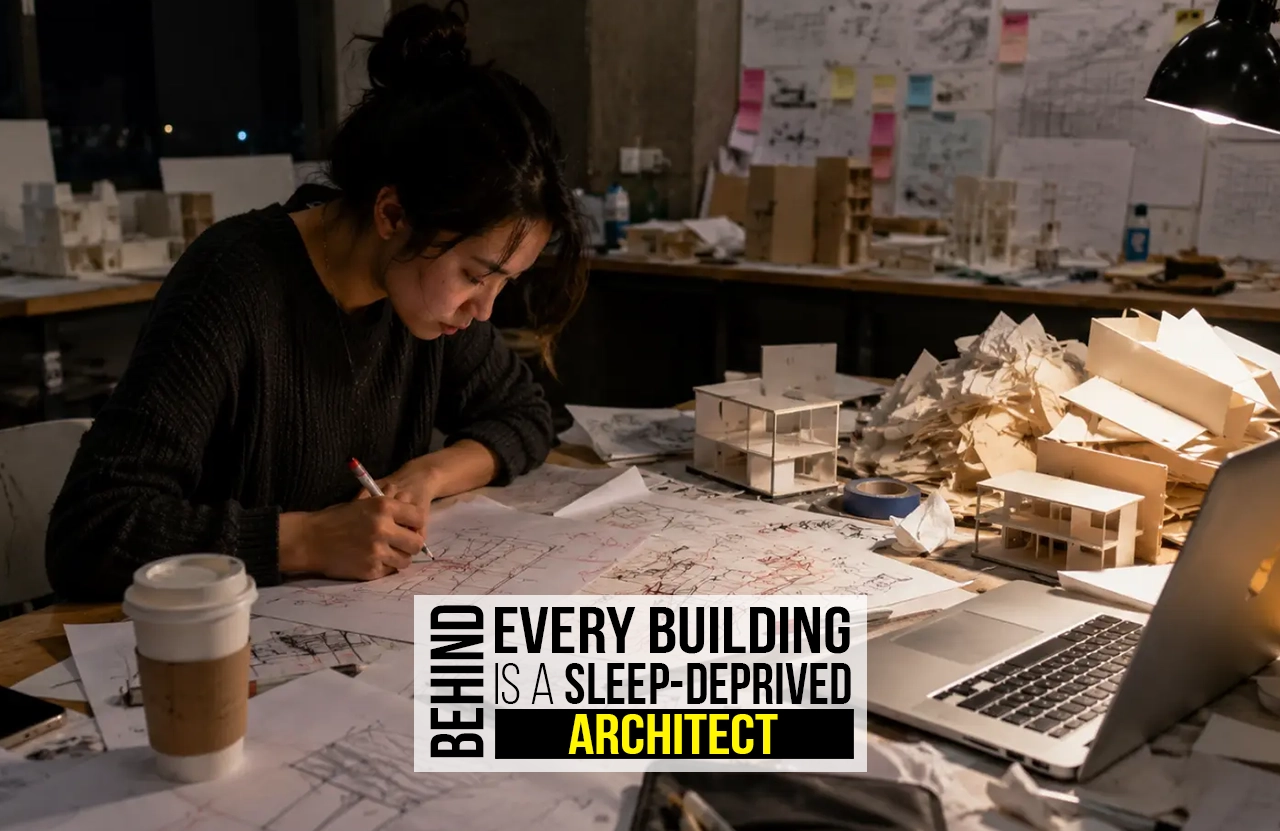
The life of an architect is often portrayed on the glossy covers of magazines, iconic skylines and dramatic design presentations. Architecture is viewed as a creative profession where any sketch can easily transform into an award-winning building. But behind every iconic structure is a reality we seldom discuss: a profession filled with endless deadlines, endless revisions, sleepless nights, and relentless resilience. Characteristic structures of cities are not just figments of fancy. These are the results of years of dedication, compromise and perseverance. Buildings leave traces visible on the world, but the travels of their builders are often invisible.
Coffee, Deadlines and Controlled Chaos

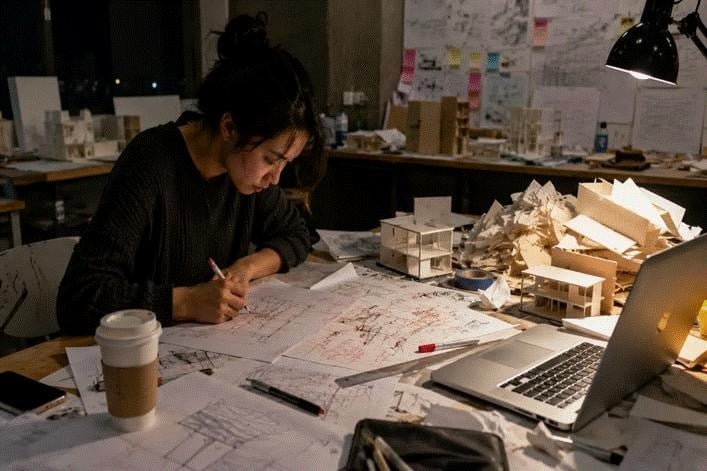
The Life of an Architect begins each day with a familiar routine. An alarm cuts through half-finished dreams, coffee replaces breakfast, and the day begins with an ever-growing list of tasks that already feels impossible to complete. Sleep becomes negotiable and caffeine an unofficial building material.
The commute to work or studio is seldom a comfortable one. Missed buses, delayed taxis, endless traffic, overflowing inboxes are all part of everyday life. New emails, with deadlines and client requests, have arrived by the time the workstation is reached. What appeared to be finished last night needs to be revised again. A wall has to move a little, a staircase has to be redesigned, a façade suddenly seems “too plain”, or a kitchen has to be adapted to a client’s latest inspiration. In architecture, the tiniest change can have the incredible potential to turn into a few more hours of work.
The Profession That Never Really Sleeps
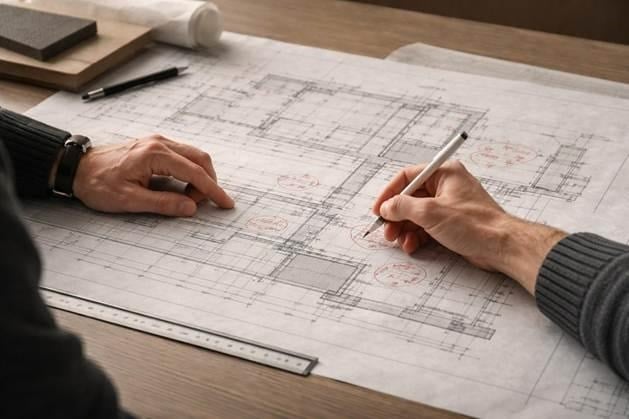
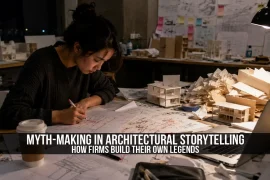
Most professions have weekends off to recover. For architects, they often become part of the working week. There are no holidays, just presentation boards to be finalized, AutoCAD drawings that need precision, BIM models that require updating and rendering software that takes up every hour you have.
Architecture school teaches students to think critically, design creatively and communicate visually. But professional practice involves a far greater set of responsibilities. The Life of an Architect is so much more than making drawings. Architects work with clients and clients’ expectations that are constantly changing, coordinate with consultants, resolve conflicts on site, meet regulations, stay within budget, and respond to contractors who run into unexpected problems in the field.
Success is measured not only by beautiful designs but also by the ability to balance creativity with practicality. Every project becomes an exercise in patience, adaptability and problem-solving, where technical expertise is just as important as artistic vision.
Creativity Meets Constant Criticism
Architecture is perhaps one of the few creative professions where criticism forms part of everyday routine. Every design proposal is questioned, every decision evaluated, and every detail examined from multiple perspectives. While constructive feedback strengthens projects, continuous revisions can gradually become emotionally exhausting.
A single drawing may pass through dozens of iterations before receiving approval. Clients change their minds, regulations evolve, and project requirements shift unexpectedly. An architect quickly learns that perfection is rarely permanent.
Ironically, some of the profession’s greatest achievements often remain anonymous. Buildings become landmarks, clients celebrate successful projects and contractors complete construction, yet the architect quietly moves on to another deadline. Recognition is rarely immediate, and appreciation often arrives years after a project has become part of everyday life. The Life of an Architect therefore teaches resilience as much as it teaches design.
The Invisible Responsibility Behind Every Building
There are fun stories to be had of sleepless nights and lots of coffee. But architecture has much larger responsibilities than aesthetics. Every drawing represents decisions that directly influence human safety, comfort and well-being.
Architects design schools to help children learn, hospitals to save lives, public spaces to bring communities together and homes to bring families together to make memories. They build environments that impact behaviour, access, productivity and mental health.
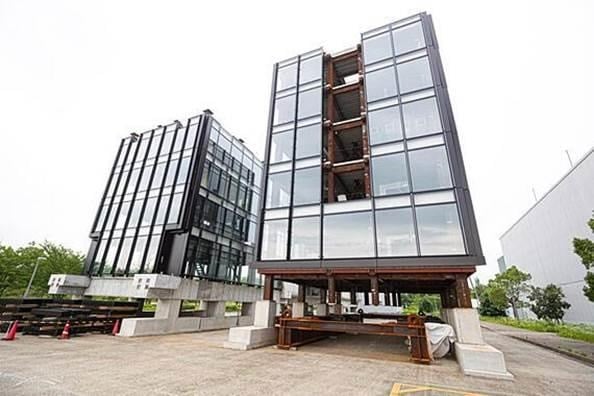
Their input is even more essential in times of crisis. Good designs such as Japan’s earthquake-resistant housing can help reduce loss of life. The cyclone-resilient buildings of Odisha are an example of how architecture can respond to extreme climatic conditions. Post-disaster reconstruction in Uttarakhand is a clear example of how architects can help to rebuild not just physical structures, but communities, livelihoods and hope too.
The Life of an Architect is therefore defined by responsibility just as much as creativity.
Architecture Is Ultimately an Act of Service

It’s pretty plus some. To each line drawn on paper, there is an obligation attached. Architects are always weighing beauty against strength, green against cost, big ideas against human needs.
The job requires patience with difficult conversations, flexibility with changing project needs and empathy for those who will one day occupy these spaces. The concerns of today’s architectural practice are sustainable materials’, inclusive planning, disaster resilience and contextual design. The architect designs not buildings anymore, but better ways of life.
Yes, it’s a profession that often requires you to give up weekends, sleep and have a bottomless cup of coffee. But it returns something remarkably meaningful.
Architects leave behind spaces that continue serving society long after the final drawing has been archived.
The Legacy Hidden Behind Every Skyline
Architects may not get their due. The names of the builders are often forgotten, but the buildings they have raised are usually remembered. You see their quiet commitment in every well-designed classroom, every sound bridge, every welcoming public park and preserved heritage building.”
Architecture is not only about projects and dramatic skylines. It is measured in thousands of lives improved through thoughtful design, safer environments and meaningful spaces that become part of everyday experience.
There’s an architect behind every building who chooses responsibility over recognition, resilience over comfort, vision over convenience. They quietly build the cities we live in, the communities we create, and the memories we form.
So here is to the architects, the invisible hands behind visible worlds. Through endless revisions, impossible deadlines, unwavering determination and perhaps one cup of coffee too many, they continue crafting spaces that outlive drawings, careers and even generations. Their legacy is not simply architecture; it is the world people proudly call home.