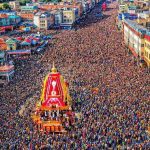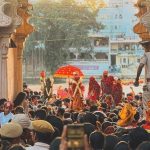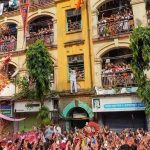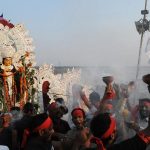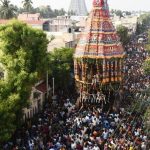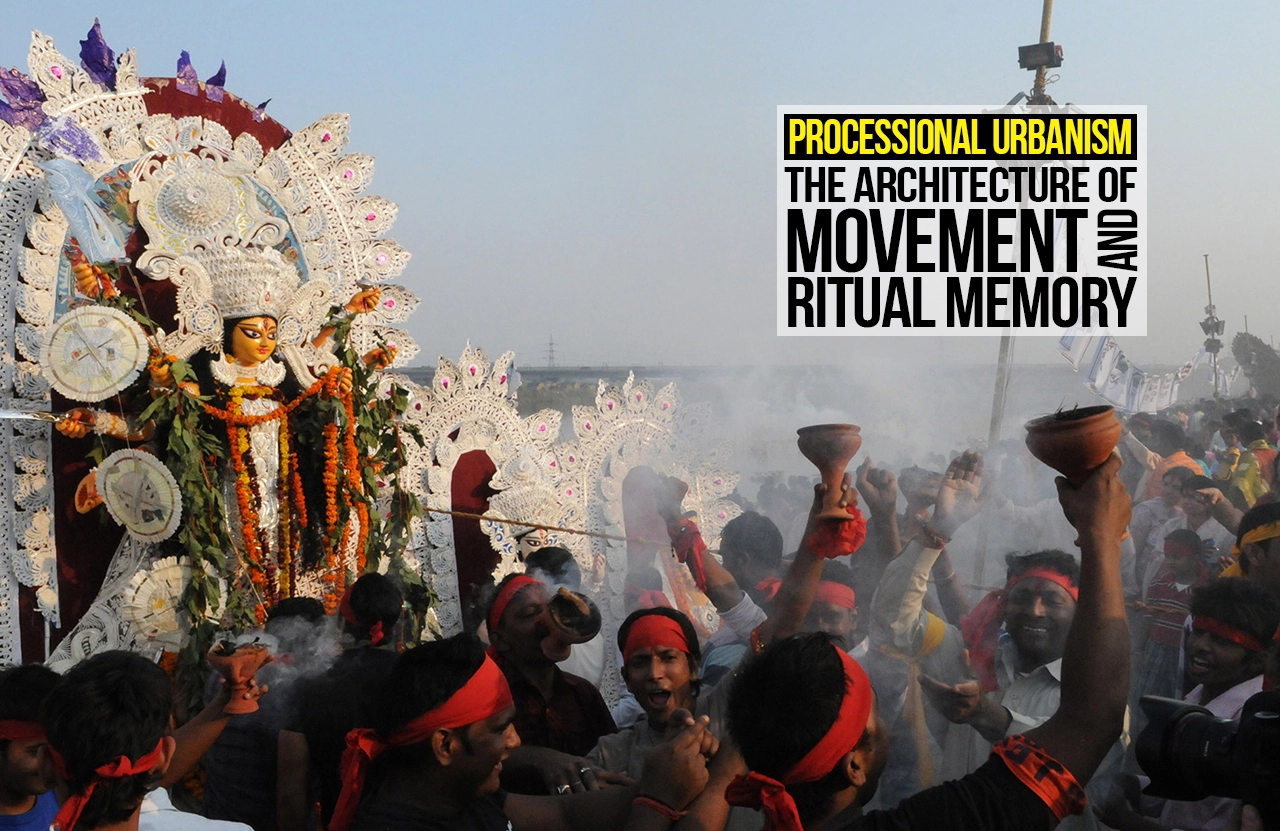
While designing for urban centres, cities are often classified into buildings that stand and streets that divide them, into solids and voids. A city serves as a stage for performance, a fundamental truth of human habitation often overlooked by the solid and void binary. In urban studies, a procession is a potent phenomenon. Be it a religious yatra, a festive carnival, or a political rally, a procession serves as a collective movement that transforms a city’s infrastructure into a living theatre. Processional Urbanism recognises architecture beyond the static walls of the street, understanding the kinetic energy of people who move through them. It studies the influence of temporality, rhythm, ritual and social theatre on the city.
Movement and Pause
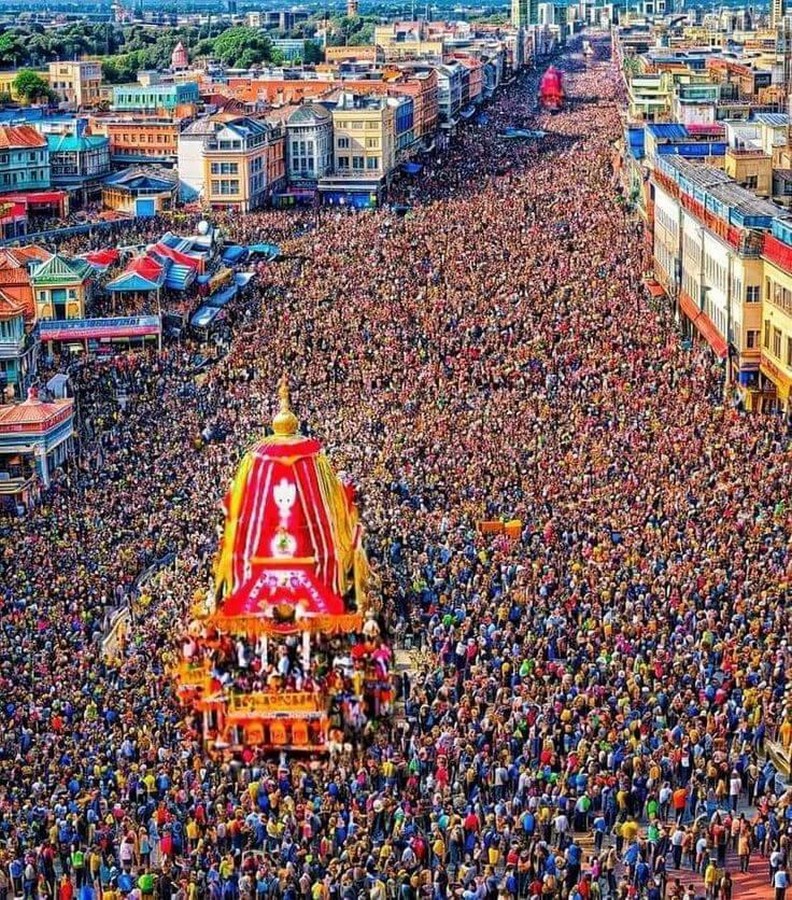
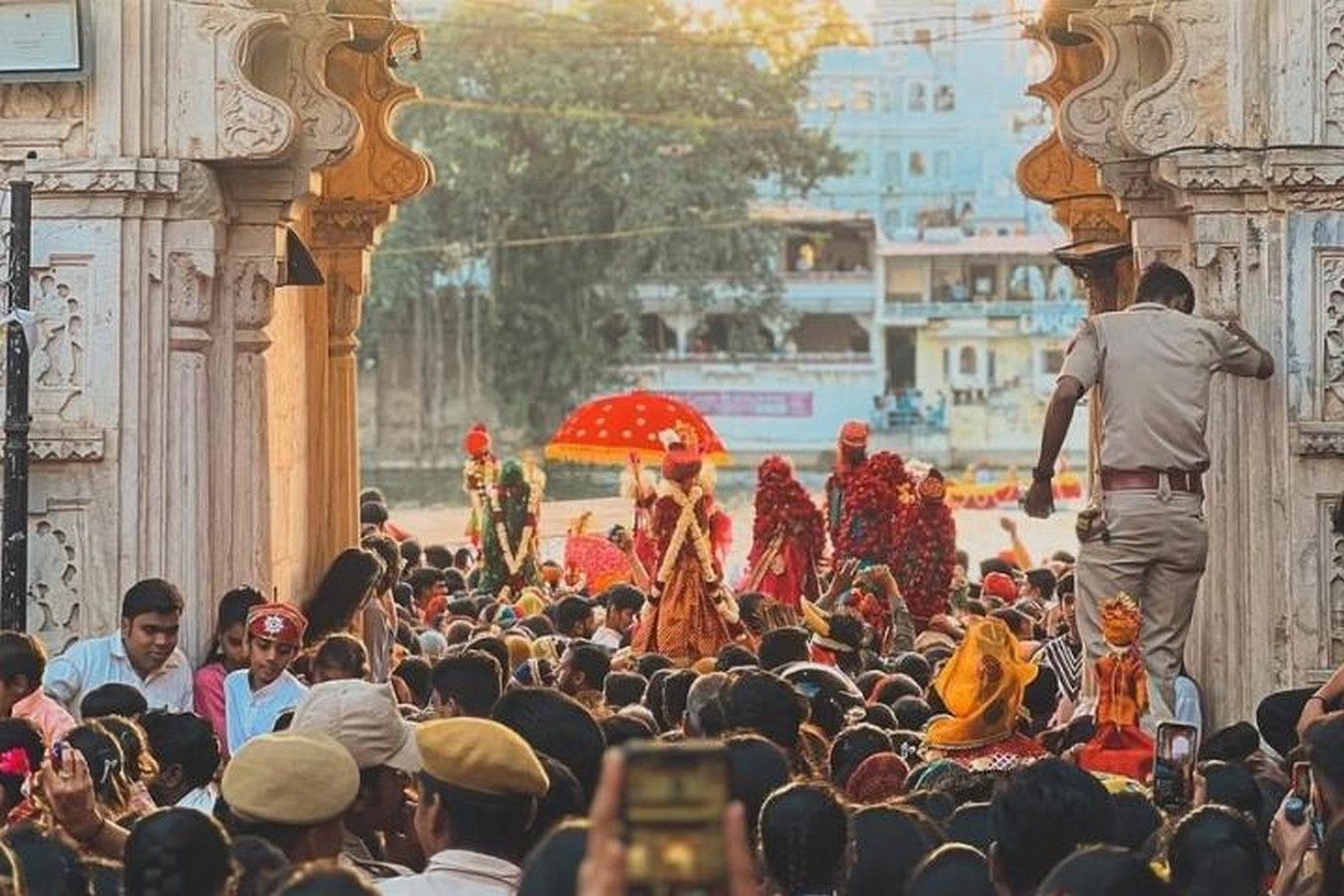
A procession is rarely a linear journey from one point to the other and often adopts a multi-stop route, becoming an intricate choreography of movement and pause. It does not merely pass through a street; instead, it establishes certain nodes as temporary anchors. The shrines, water tanks or chowks all become a part of its pause and play. These pauses are not arbitrary either. These nodes are often historical or communal landmarks. From an architectural lens, these pauses function as temporary public spaces, transforming a node into a plaza for the duration of the ritual. A traffic-congested zone is reclaimed as a high-intensity social interaction zone. This rhythm that the city embraces for a short while creates a spatial experience that a static routine architecture cannot achieve. It creates a pulse of collective movement, expanding on stops and contracting in motion (Lynch, 1960).
The Vertical Stage
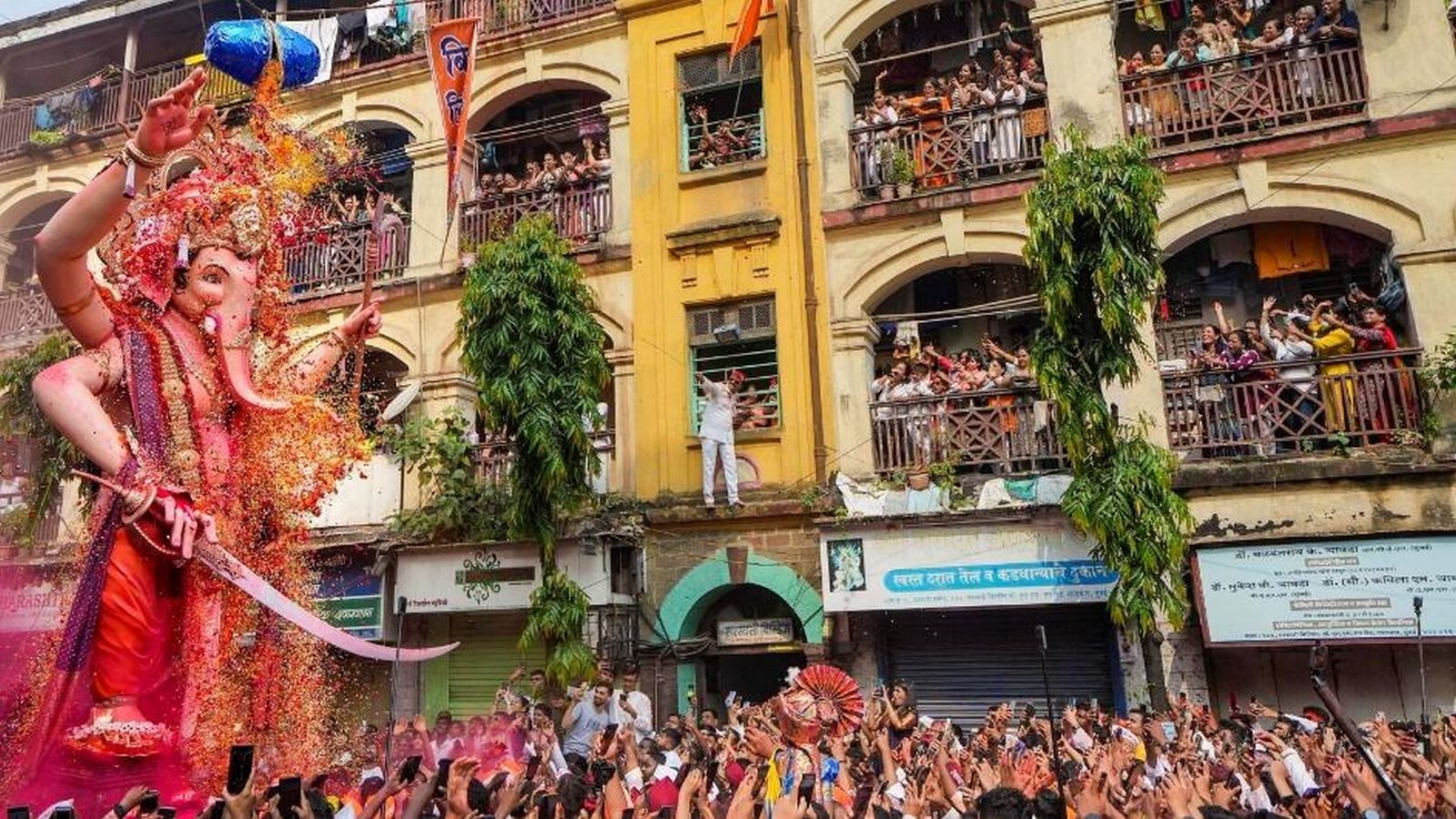
A procession, while being all-inclusive, is often hierarchical as a phenomenon. This hierarchy becomes a cause for one of the most fascinating aspects of the procession: verticality. While the idol, the politician, or the palanquin occupies centre stage at the street level, the city and its architecture, the balconies, the rooftops and the courtyards serve as a multi-tier viewing gallery. In cities with a rich history of processions, the building facades that open up onto the streets function as much of an interface to the rituals as to the weather. Here, a spectator is not passive. A spectator showering flower petals from the third-floor balcony is as much a participant in the social theatre as the person present on the street. Interactions such as these blur the boundary between the public and the private realms, setting the stage for a multifaceted ritual (Mumford and Turner, 2002).
Sacralisation of the Profane
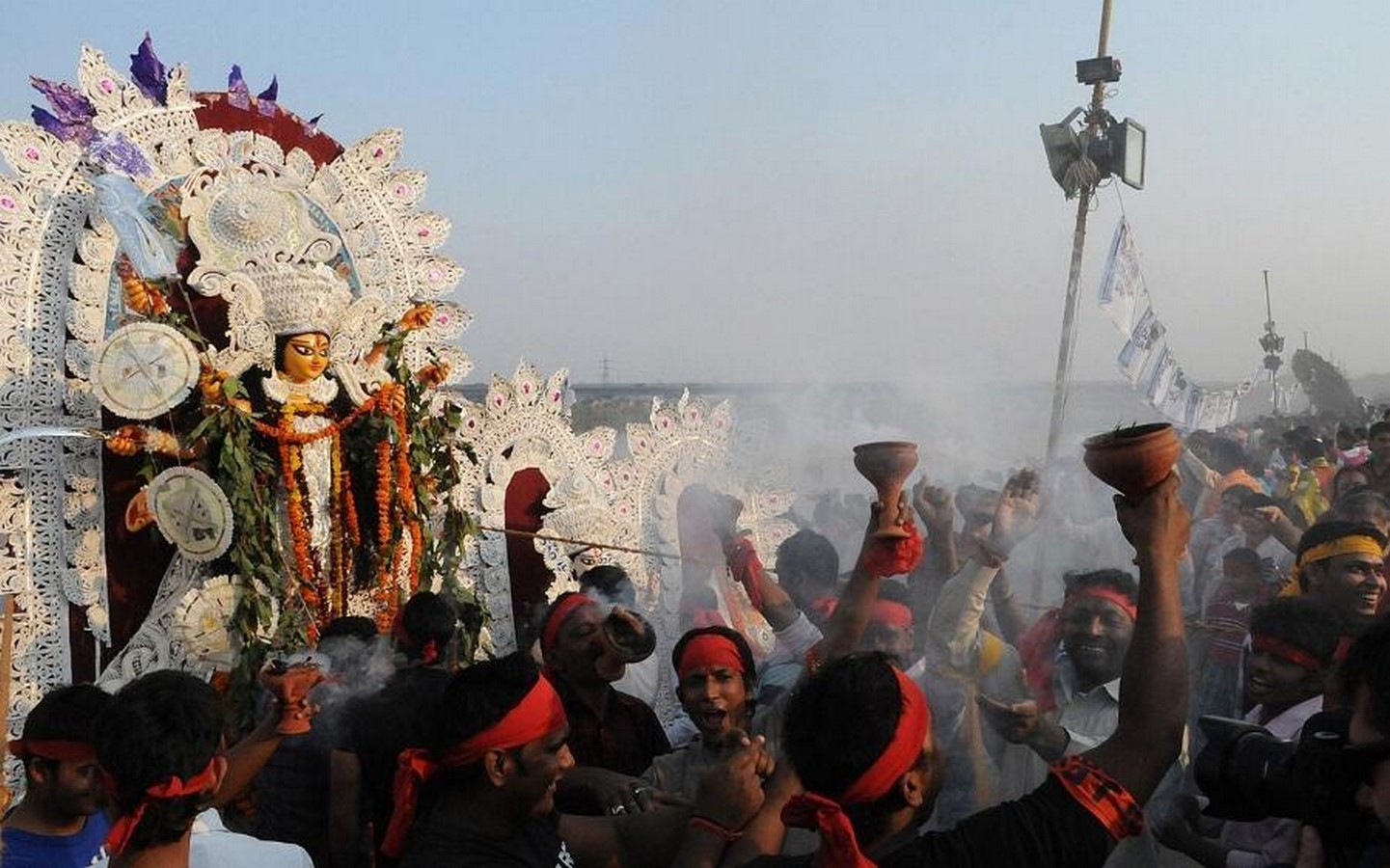
When a procession travels through a city, it transforms the streets for a short while. The mundane everyday elements of the city suddenly become reverent. This profound philosophical impact that a procession has on the streets is the Sacralisation of the Profane. When the ordinary asphalt becomes as holy as the marble flooring in a temple, it proves that the meaning in architecture is not embedded within a material, but rather within the manifestation of its intent with the masses. The memory of a deity’s passage through a particular street remains imprinted as a spiritual layer even after the crowd has dispersed. This otherworldly phenomenon shows how spaces primarily gain their value not through their cladding or ornamentation but through their ability to foster meaningful human experience.
Social Theatre and Urban Memory
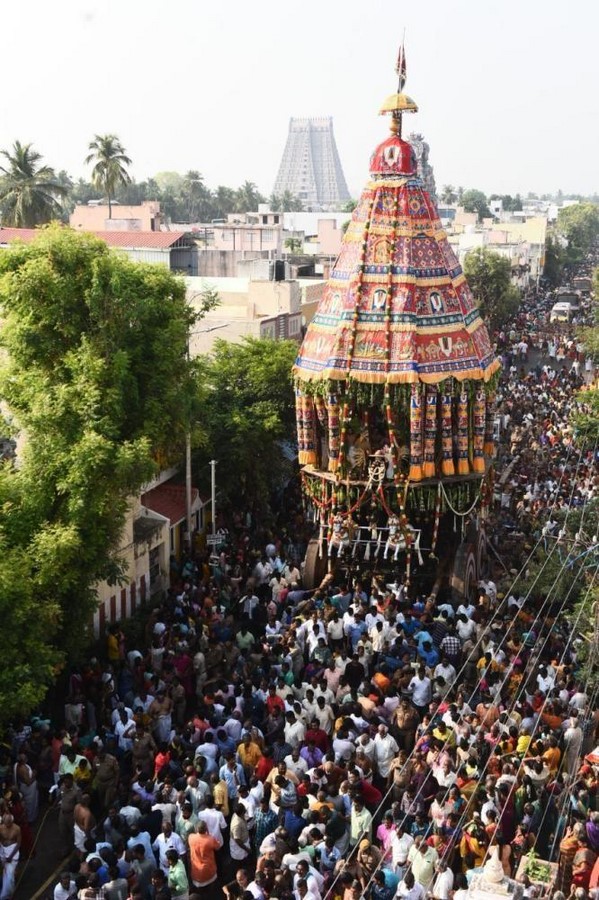
Processions are live performances where every participant and every building has a role. However, the impact is not just ephemeral. Repeated over centuries, these movements leave a ghost footprint on the city’s physical form. This is the Urban Memory. This is seen in the widening of specific streets to accommodate large chariots, the placement of permanent shrines at traditional pause nodes, and the orientation of shopfronts toward the processional route. The temporary event eventually dictates the permanent master plan. In many historic cities, the most vibrant commercial and social road networks are those that were originally carved out by the path of a procession (Rossi, 1982).
The Modern Challenge
The tragedy of modern, car-centric urbanism is its inability to host the procession. Rigid zoning, gated communities, and high-speed transit corridors have sterilised the street, removing the friction required for ritual movement. When cities are designed solely for efficiency, the capacity for Social Theatre is lost. Architects today must look at the Processional Route not as a nuisance to traffic, but as a blueprint for Inclusive Urbanism. If the streets are designed with wide thresholds, accessible rooftops, and porous nodes, a city that can breathe with the rhythm of its people will be created (Mumford and Turner, 2002).
The True Objective
The study of processions is the ultimate critique of modern architecture’s obsession with the static. Sometimes billions are spent on iconic buildings that often feel dead the moment the ribbon is cut. Meanwhile, a simple street, when activated by a procession, becomes the most vibrant, meaningful, and inclusive piece of architecture in the city. The true objective of an architect should not be to create a monument that stands against time, but to create a framework that allows for the temporality of human life. A procession should not be viewed as an interruption of the city but rather as the city’s most honest expression. The city is not a map; it is a movement. If we fail to architect for that movement, we are merely building a museum of empty boxes.
Reference list:
Lynch, K. (1960). The Image of the City. London: The MIT Press.
Mumford, L. and Turner, B.S. (2002). The culture of cities. London: Routledge/Thoemmes.
Rossi, A. (1982). The architecture of the city. Cambridge, Mass, MIT Press.