A building that lives and breathes. What better way to describe a space that has a symbiotic relationship with nature? Housing a variety of plants that are not native to Pennsylvania, the West Conservatory at Longwood Gardens, designed by Weiss/Manfredi and Reed Hilderbrand, thrives as a centre of innovation and cultivation. From the overall form, down to the sustainable details, this building leaves a lasting impression on its visitors. Rooted deep in the founder’s legacy, this whole property, consisting of several buildings and gardens, is meant to educate as well as advance garden design and technology.
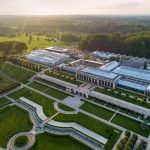
Longwood Reimagined Plan
Over time, Longwood Gardens became a place rooted in innovation and cultivation. In the beginning, in 1906, Pierre S. du Pont purchased the farmland in Brandywine Valley that would turn into Longwood Gardens. The gardens did not start as some sort of master plan, but rather were built slowly over time. He had an interest in horticulture, as well as technology. As a world traveler he was inspired by the exhibitions at world fairs, in particular the water features at the 1876 Centennial Exposition in Philadelphia and the 1893 World’s Columbian Exposition in Chicago.
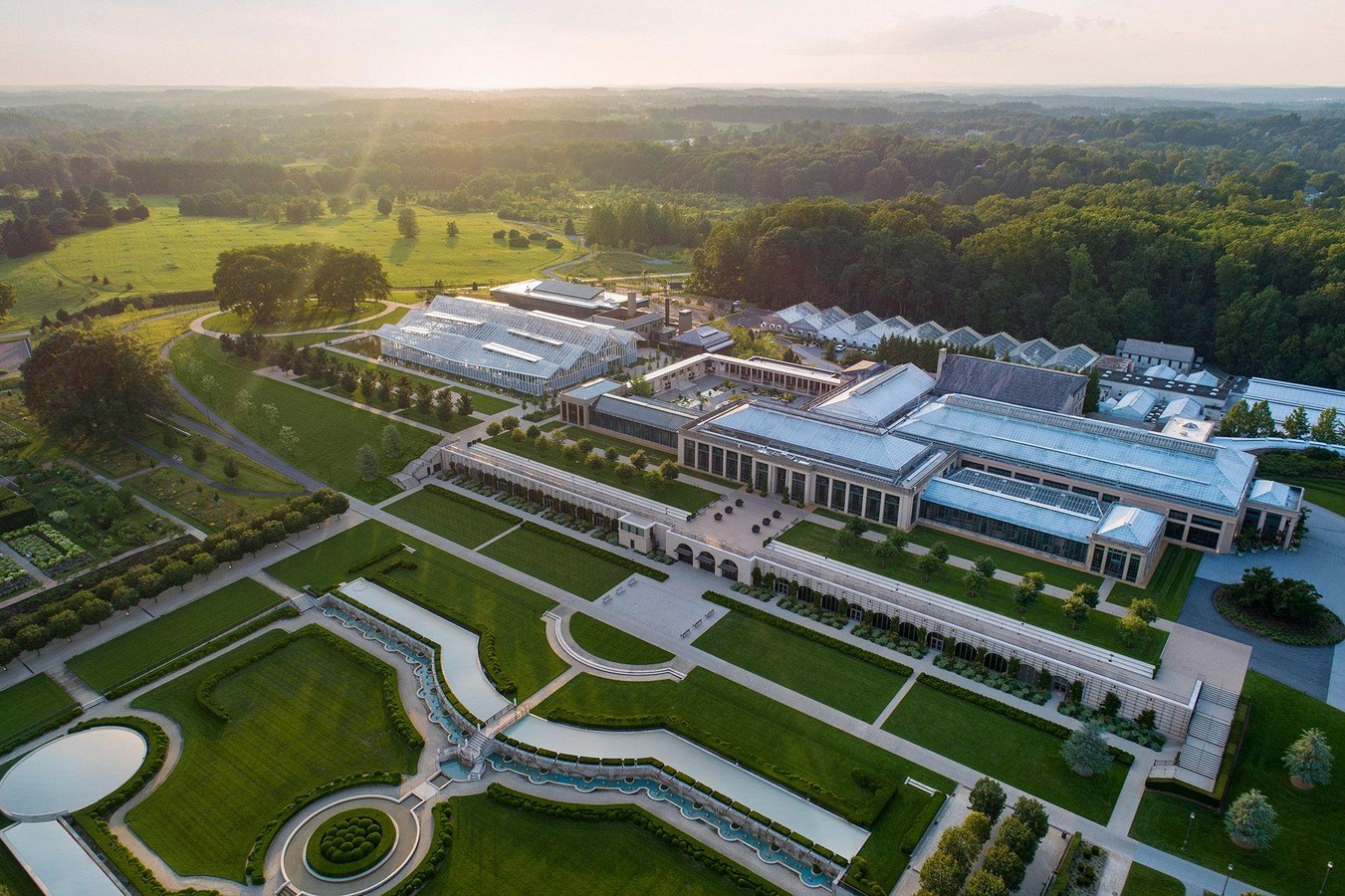
The West Conservatory at Longwood Gardens is a part of a master plan to continue the legacy of horticultural excellence that the gardens have held. Aptly titled Longwood Reimagined: A New Garden Experience, and first introduced in 2010, Weiss/Manfredi has been a part of the project along with West 8 Urban Design & Landscape Architecture and now Reed Hilderbrand. The goal of the project is to elevate Longwood’s history while expanding upon its innovation in glasshouses and garden design. Beyond what du Pont envisioned, the designers combine both art and science to create an exciting and educational place to experience.
Conservatory Concept and Design
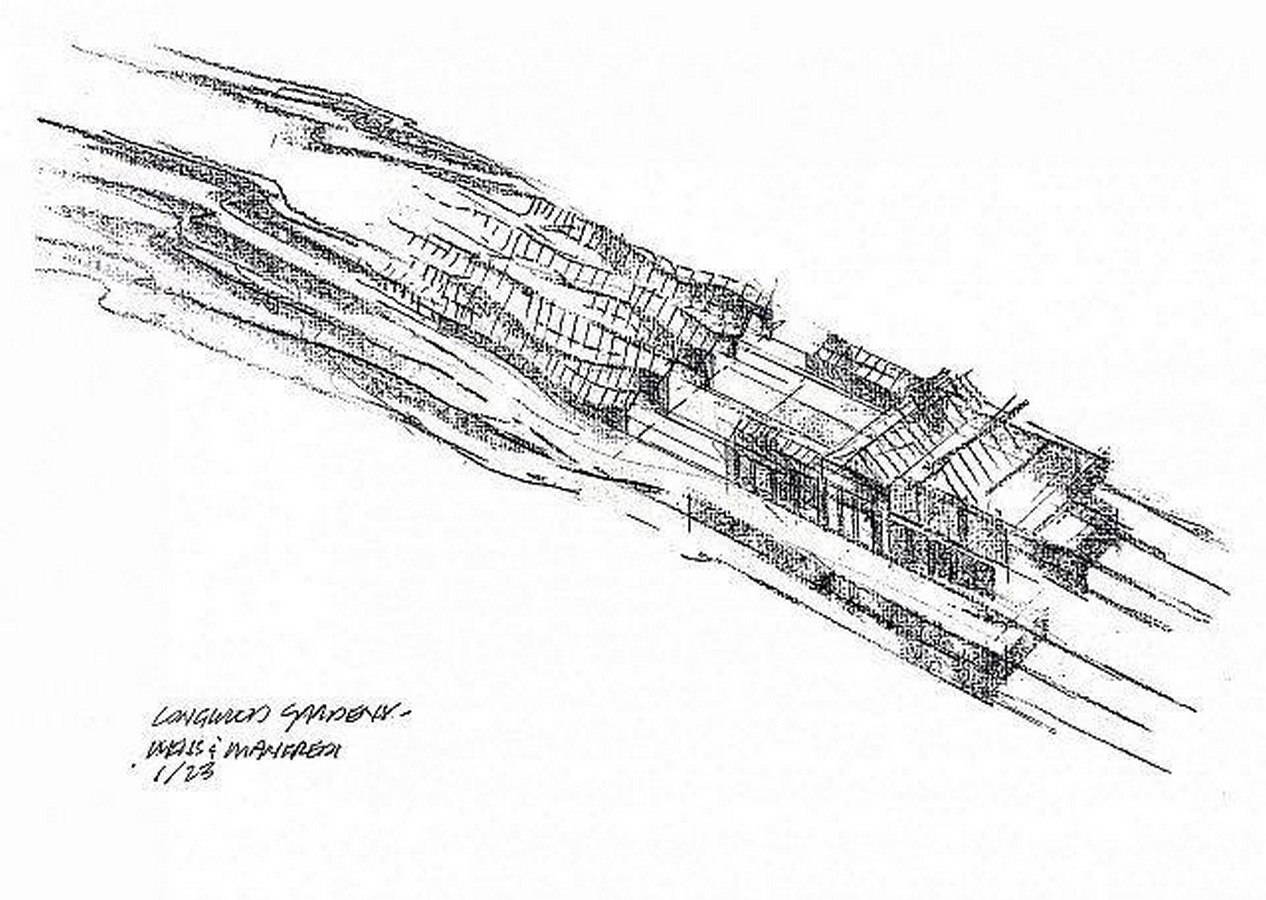
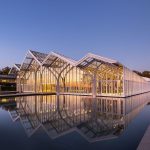
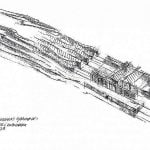
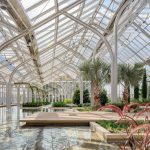
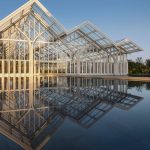
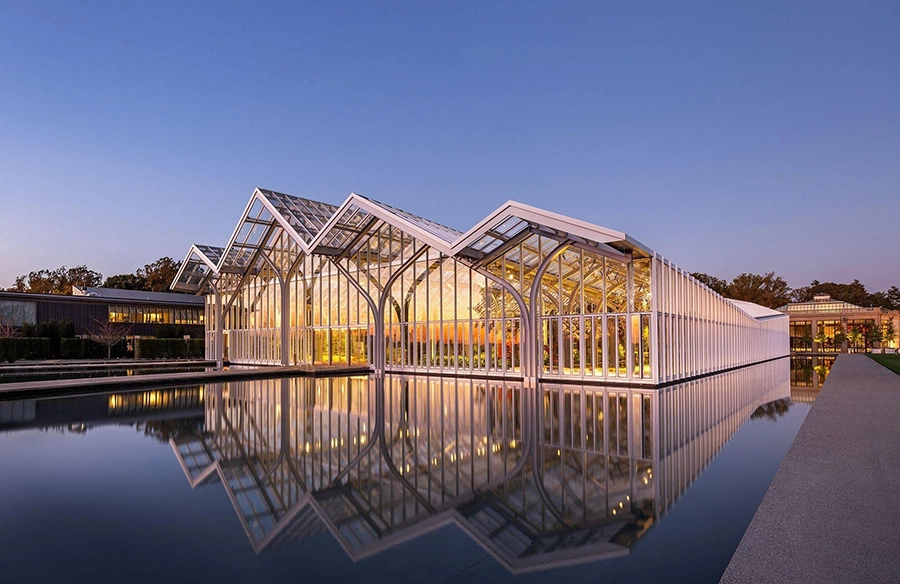
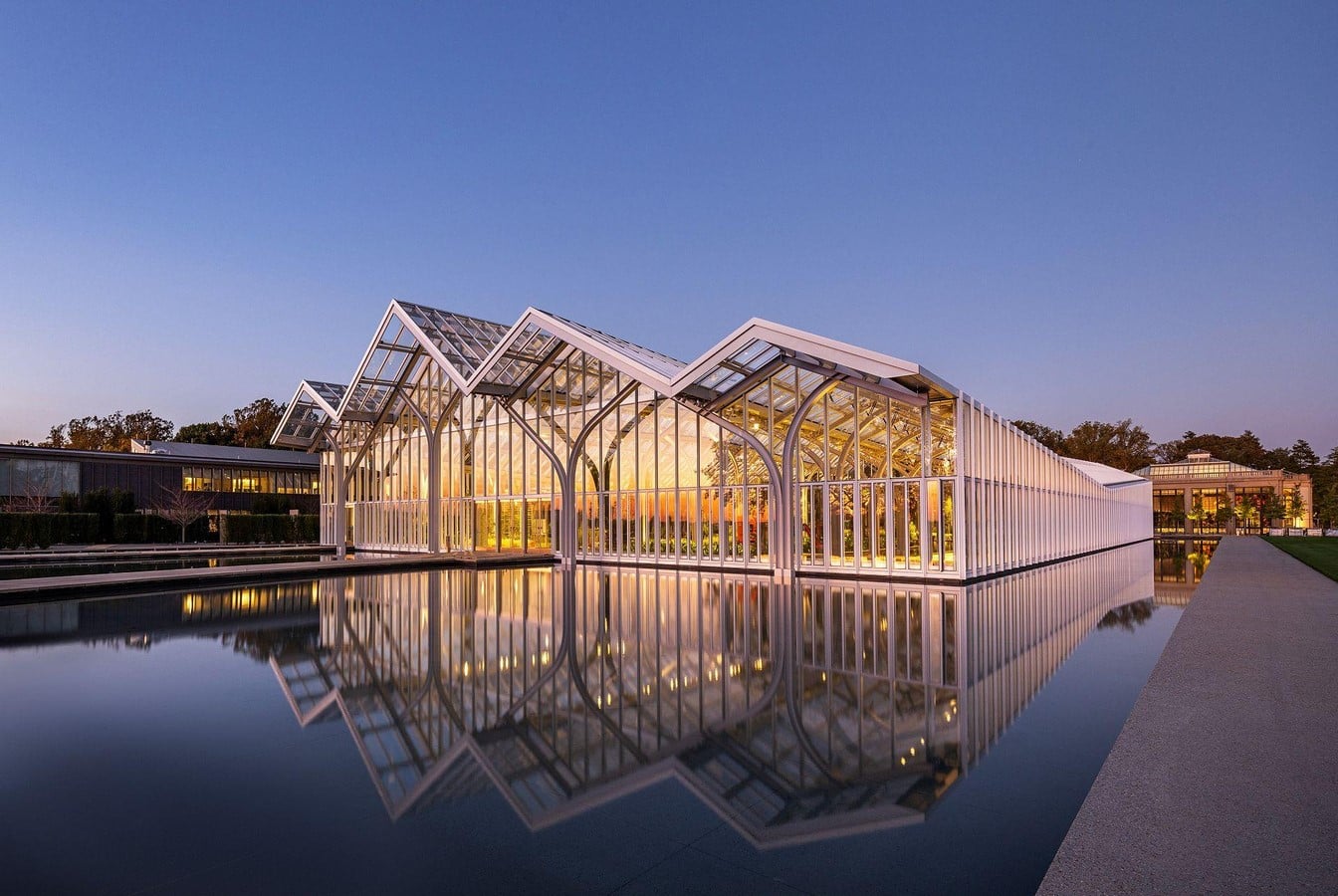
The West Conservatory at Longwood Gardens is a 32,000-square-foot glasshouse that seems to float over the water, with pools and gardens, designed by Reed Hilderbrand. The steel columns and arches mirror the trees in the surrounding landscape. An angled roof highlights the asymmetrical nature of organic forms while maintaining balance. The “crystaline conservatory” delicately combines design principles with practical technological advancements for climate control and sustainability. This is where the idea of “a building that breathes” comes into play. The whole structure embodies the idea of architecture, a true blend of art and science.
Passive Strategies
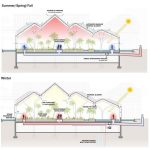
With Longwood Gardens’ long history of innovation, Weiss/Manfredi used a combination of passive and active systems to fill the project’s need for environmental control while embracing sustainable practices. This is especially relevant due to the site’s location. Pennsylvania, being a state in the Mid-Atlantic region of the United States, experiences all four seasons and therefore a variety of temperatures and weather conditions. Housing plants from around the world, including Mediterranean regions, climate control of the glasshouse is an important factor.
Natural Ventilation
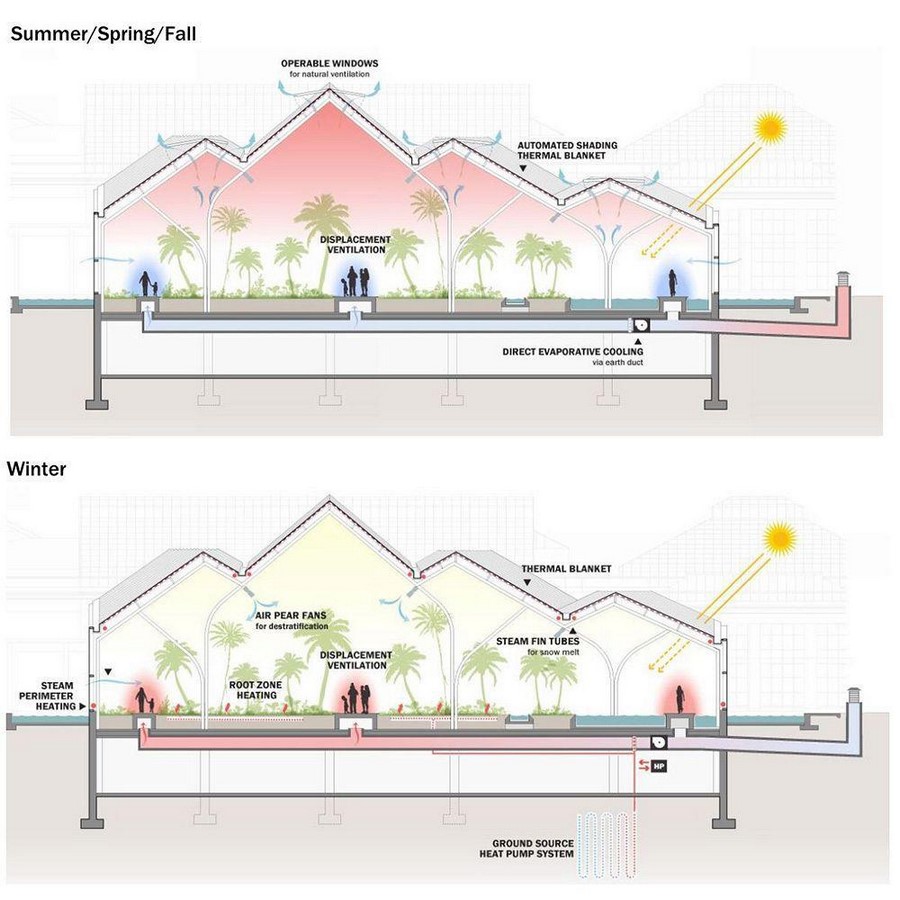
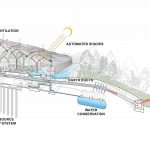
The glasshouse at Longwood Gardens uses natural ventilation with the glass panels opening in the roof. Because of the need for a controlled environment with the plants, the airflow in the space is important. Being able to control the temperature is a necessity. An automated shading system also helps control the temperature system. Where passive does not quite cut it, a mechanical system can heat or cool the space when necessary, but of course, these other systems are prioritised for energy efficiency and cost-saving measures. A computer system closely monitors the temperature and can make changes as needed.
Stormwater Collection
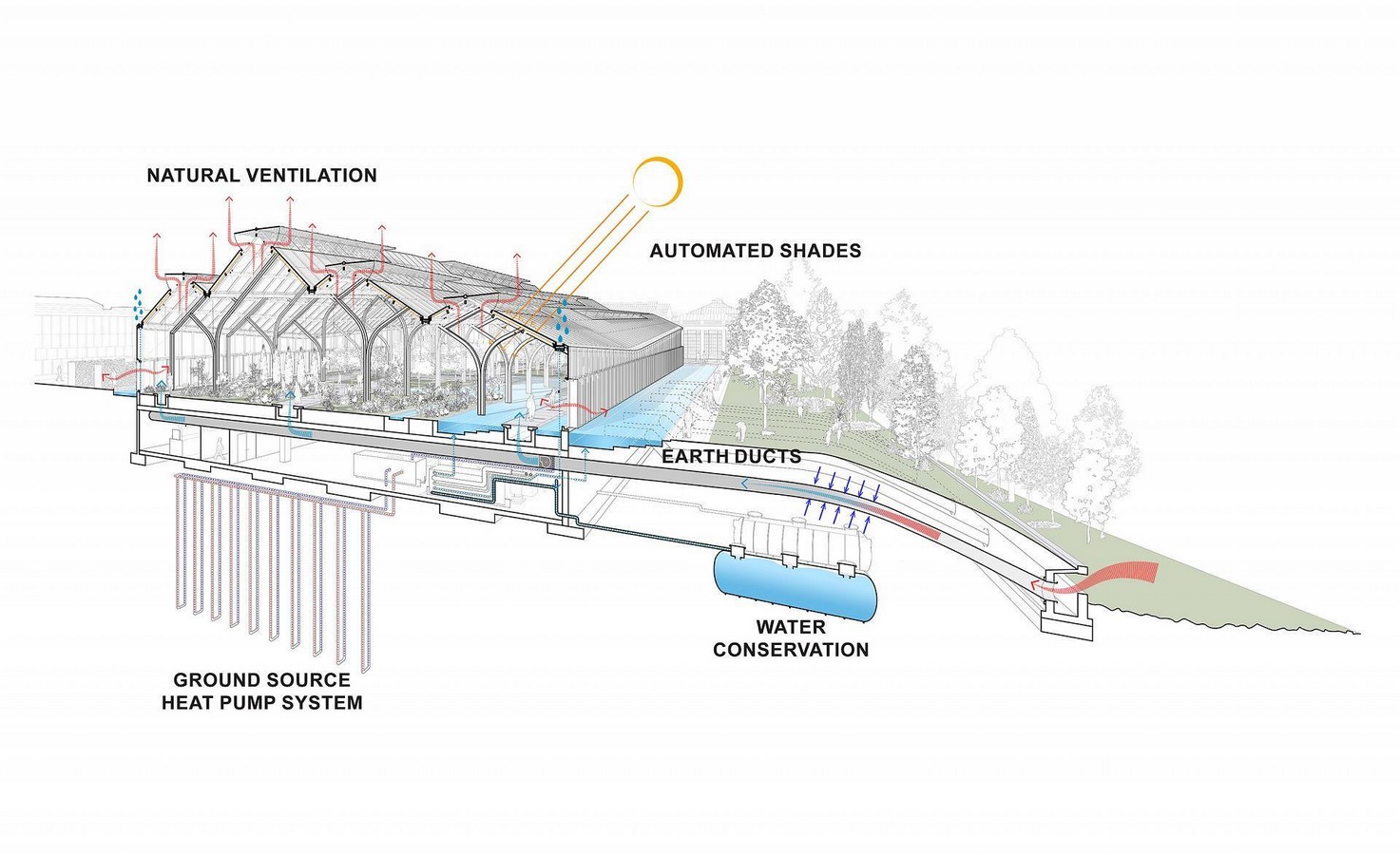
Water is not only an important element for the plants, but one of introspection and reflection, as the conservatory sits atop the floating pools at Longwood Gardens. The angles of the glasshouse’s roof system mirror the experience of nature, with manmade materials of glass and steel. But within the angled form lies a system for rainwater collection. Downspouts and underground tanks work together to harvest and then filter the water for reuse. This relates to the gardens’ efforts with One Water, the idea that properly treated water can be reused many times to support the needs of the grounds.
Steel Frame
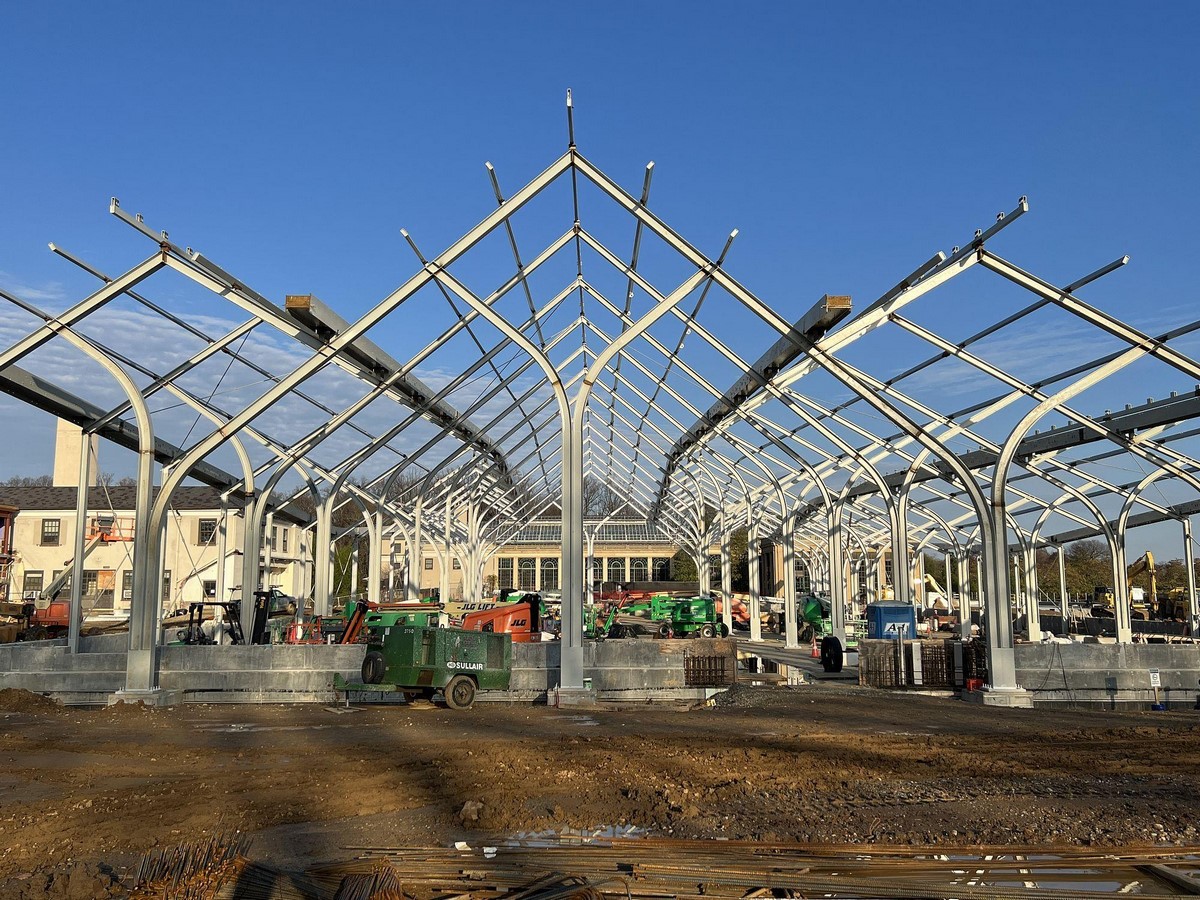
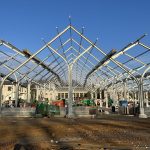
At Longwood Gardens, an exposed steel frame supports the West Conservatory glasshouse. The juxtaposition of a structure being rigid in its materiality, combined with the curved arches mimic the organic forms of tree branches. Different angles to these curved frames help to support the undulating roof shape. The resemblance to the trees of the landscape is evident, in form, but also through the glass reflection between the steel structure. The columns and beams support the glass panels as well as the passive and active mechanical systems necessary for a structure like this to function.
Glass Panels
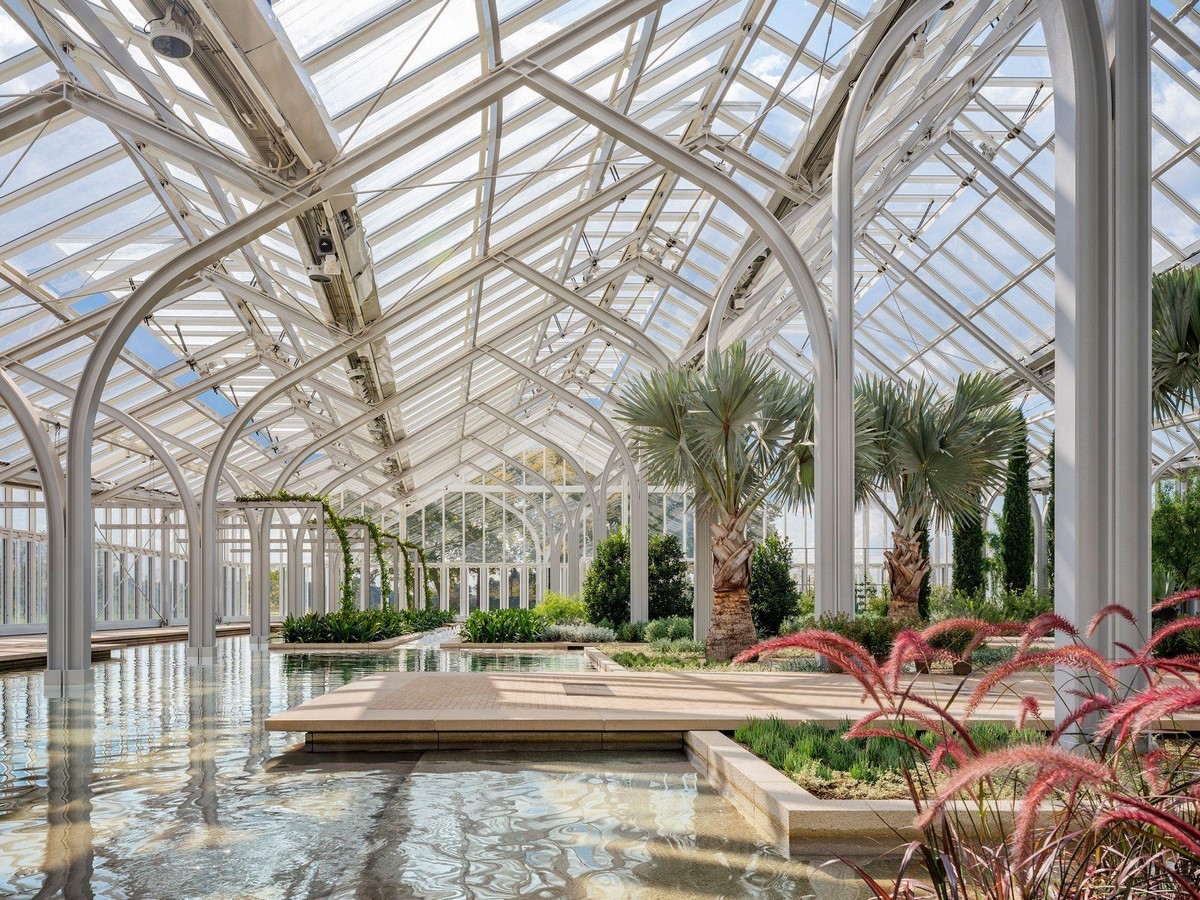
Glass, a symbol of both reflection and transparency, is the perfect material to not only house vibrant plant life but also to explore the complexity and intricacy of nature, in the heart of Pennsylvania. Again, going back to Pierre S. du Pont’s inspiration for Longwood Gardens from the world’s fairs, the innovation continues, with 1,958 panels used. The building strives to protect more than plants, including wildlife. One common con with using glass or another transparent material is the harm it can cause to birds. In this structure, the glass uses reflective dots to be more visible, so fewer collisions are likely to occur.
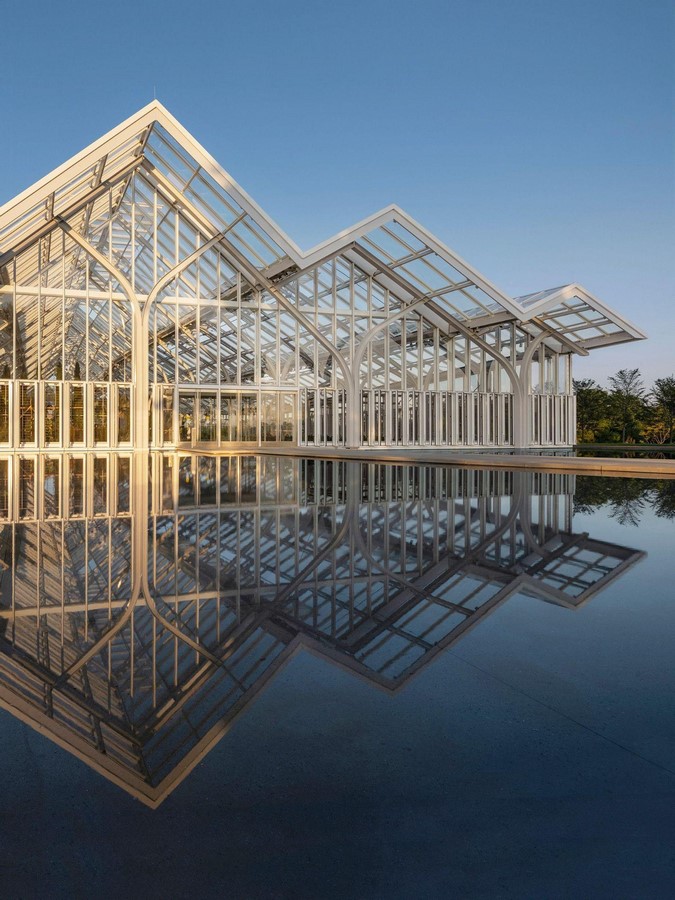
Great architecture is more than aesthetics. It solves problems, relates to the site, and can even advance technology. The legacy of one gardener in Pennsylvania led to innovation and the cultivation of a new garden experience. The conservatory of Longwood Gardens is modern in its sustainability strategies and design, while paying homage to traditional glasshouses. From the structure’s form to its passive strategies, the new West Conservatory by Weiss/Manfredi and Reed Hilderbrand embodies the idea of growth. Blooming to life, it truly exhibits living, breathing architecture.