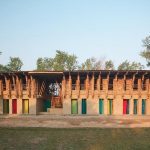
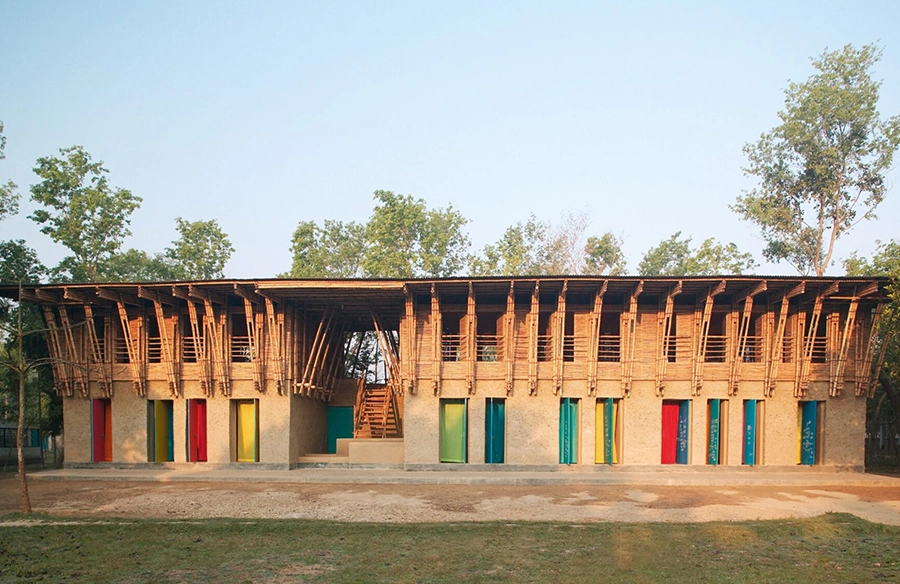
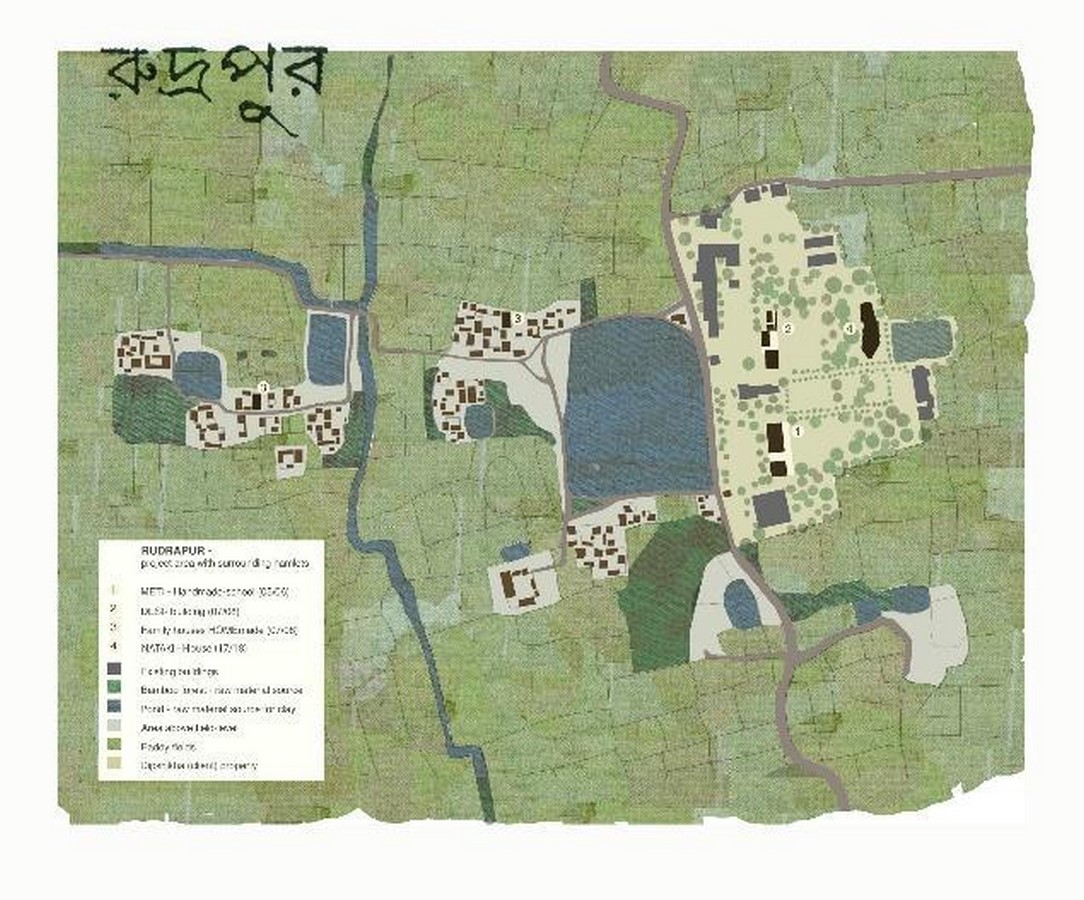
As Anna Heringer said, it is the basic right of people to know how to build using vernacular materials. The METI (Modern Education and Training Institute) handmade school stands out as one such structure that was built predominantly of such materials by human labour and the living tractors- buffaloes.
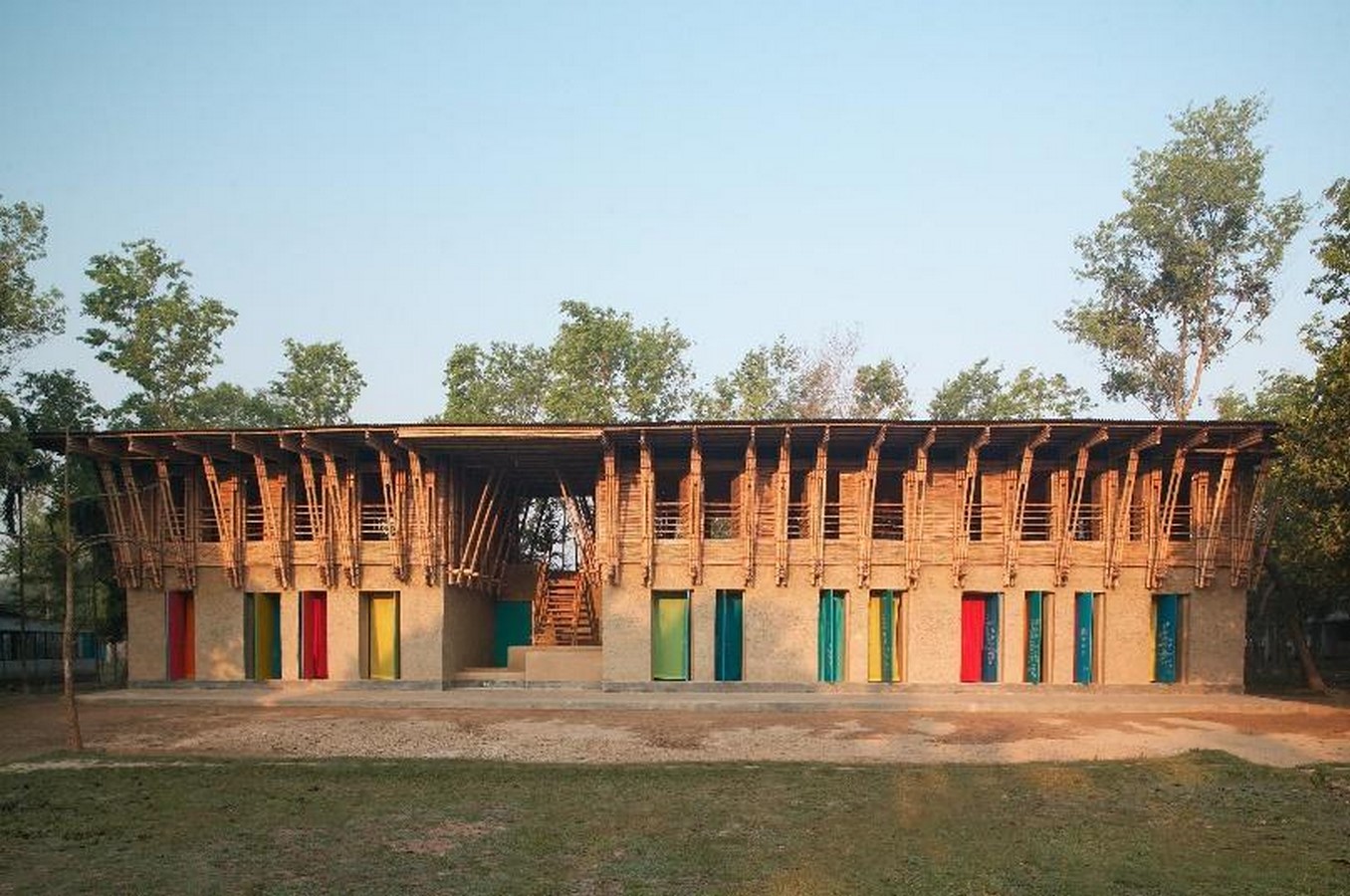
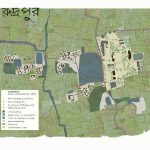
With a floor area of 325 m², it was constructed in six months (2005). The school provides education to children aged 6 to 14 and also conducts workshops, offering an all-inclusive education that strengthens the community. The vernacular buildings at Rudrapur were lasting only about 10 years due to the poor construction technique, which used straw and earth, resulting in a shift to using concrete and cement. To prevent this and instill a sense of confidence among the community’s people, the use of earth and straw with improved techniques was introduced.
Design and Planning
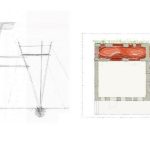
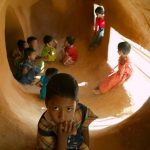
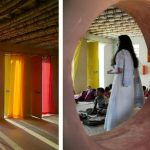
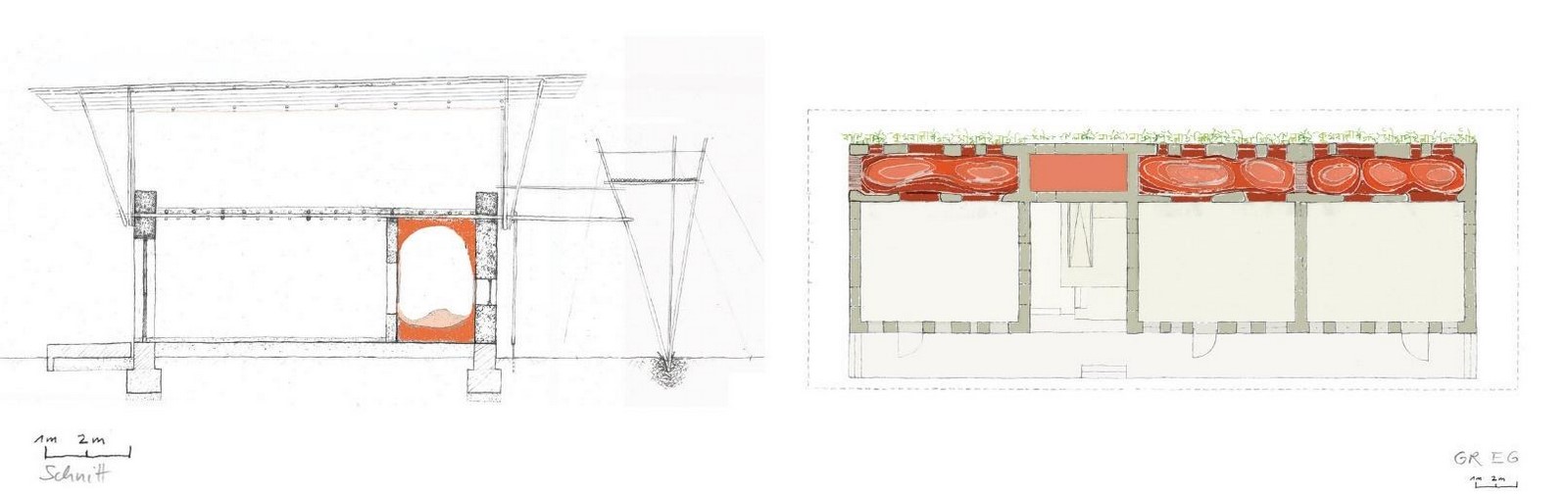
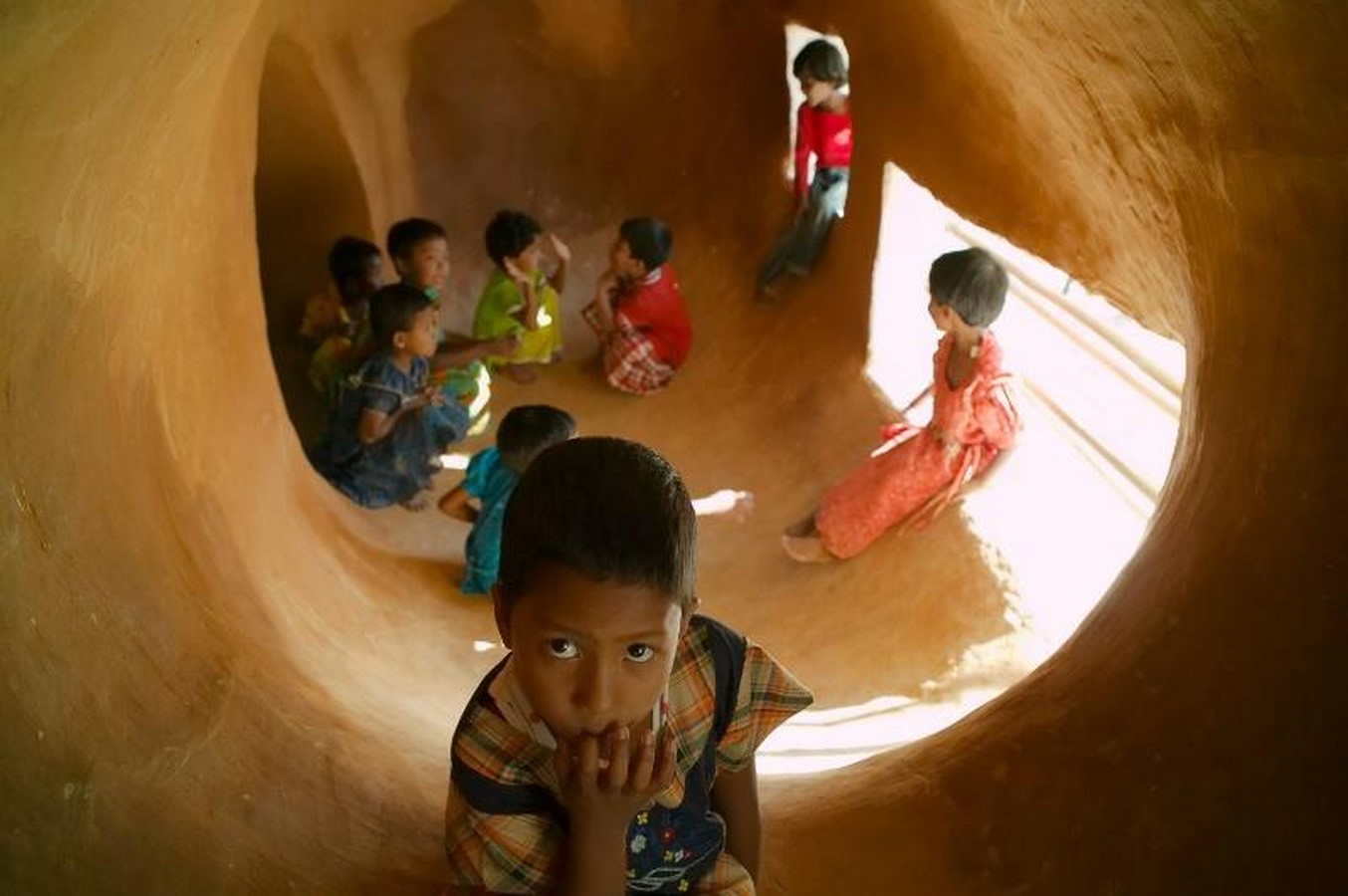
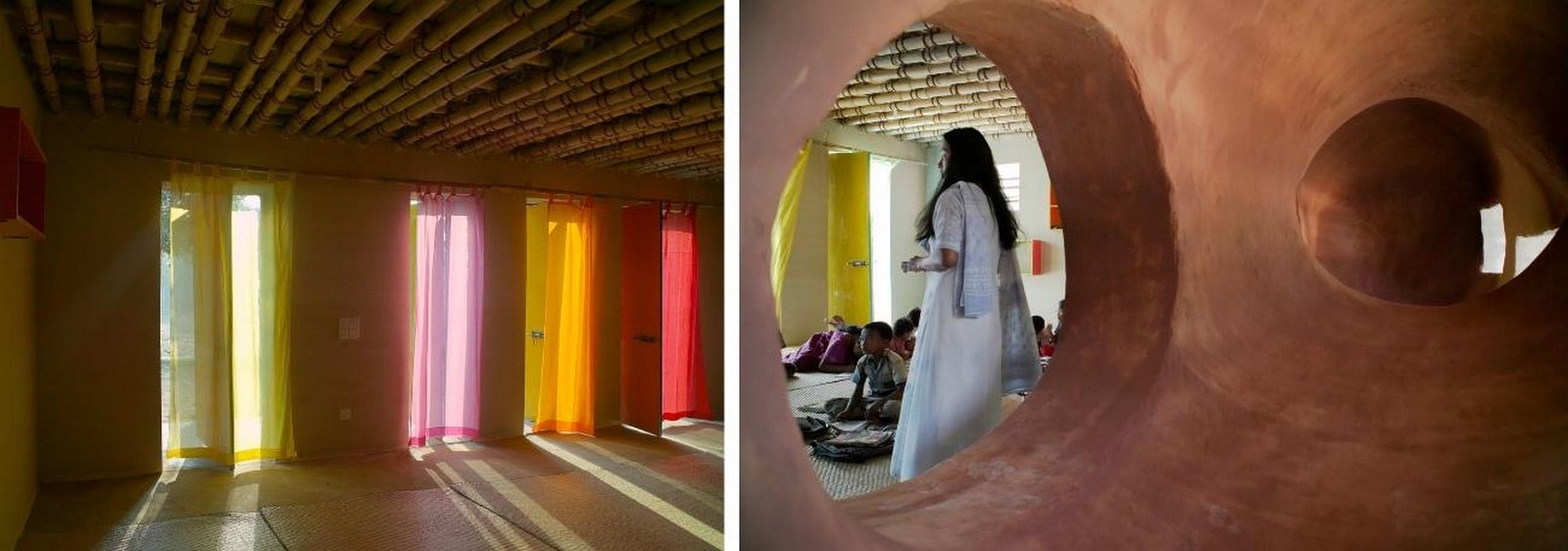
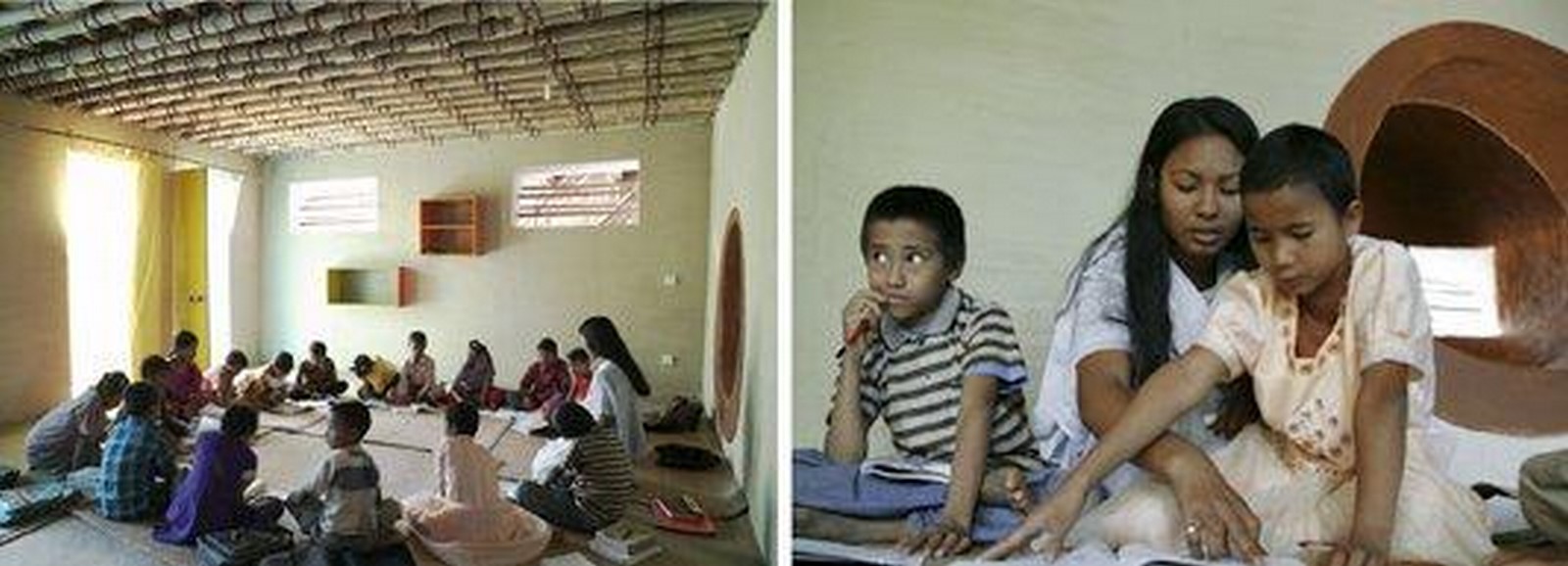
METI handmade school comprises two floors; the ground floor has three classrooms, each with a separate access in the front end and a cave-like structure in the rear end. These cave-like structures are hand sculpted to form organic openings and are made of earth and straw and then daubed with earthen plaster, giving them a red colour finish. This space mimics the feeling of being inside a cocoon-like environment, giving the children a space to contemplate and feel protected.
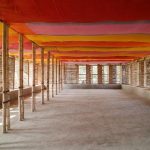
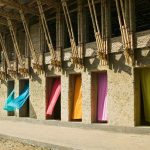
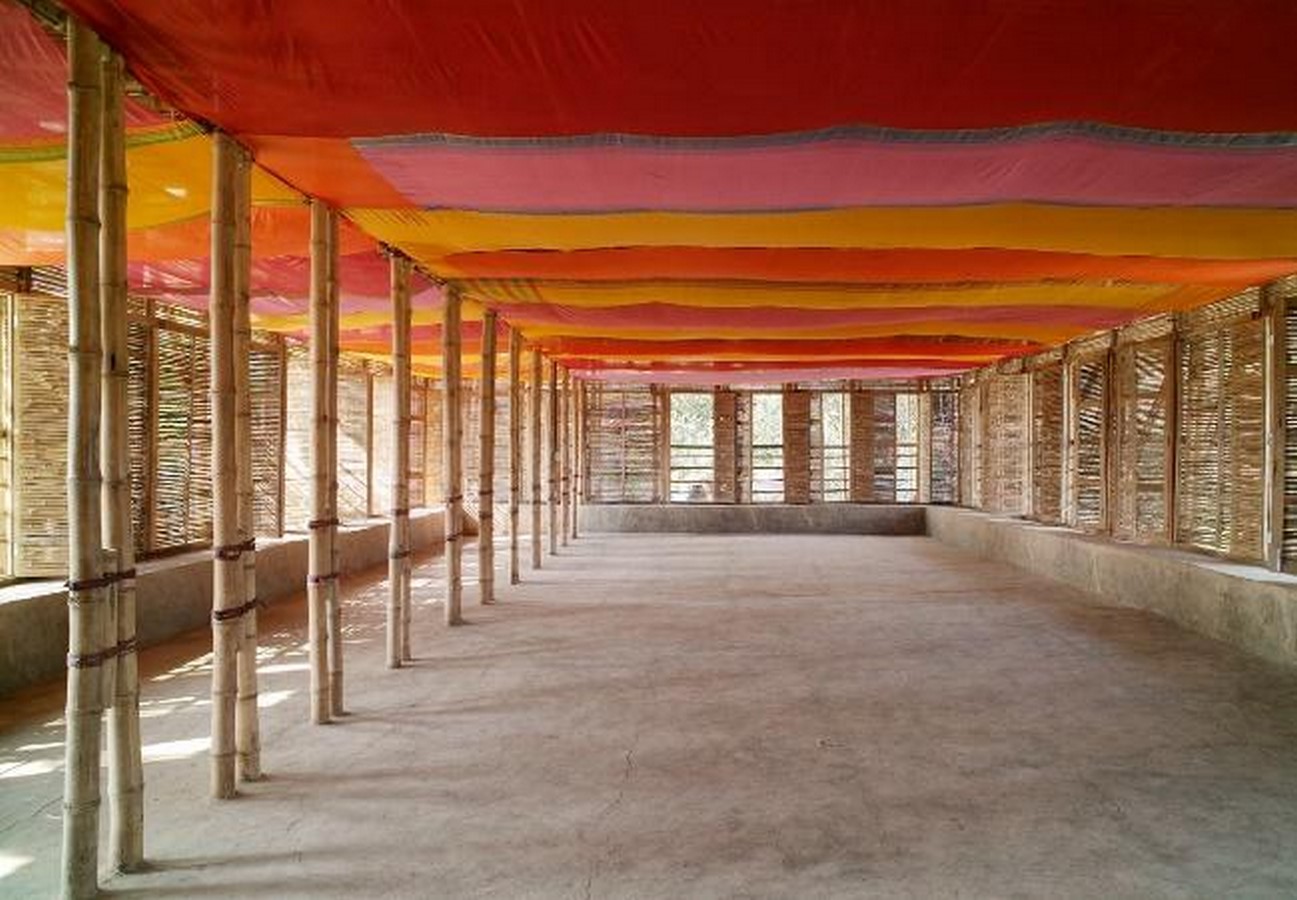
The upper floor is one large open room that is enclosed all around by split and flattened bamboo, interrupted by openings that frame the view of the greenery around, which also enhances ventilation and allows for the play of light and shadow within the space. Along with this, the interior of the ceiling is covered with vibrant saris stitched together, giving the volume a textured feel and providing insulation. The window jambs and the interiors were coated with lime plaster to protect them from rain and reduce maintenance.
Damp Proofing of the Foundation
Bangladesh, being deficient in stone resources, uses its clayey soil to its advantage and manufactures bricks with it, making it the most easily available construction material. These bricks were used in the foundation of the METI handmade school. They went as deep as 50cm and were swathed with cement plaster. Since earthen walls absorb water from the ground, causing them to weaken, a layer of DPC (damp proof course) was integrated in the construction.
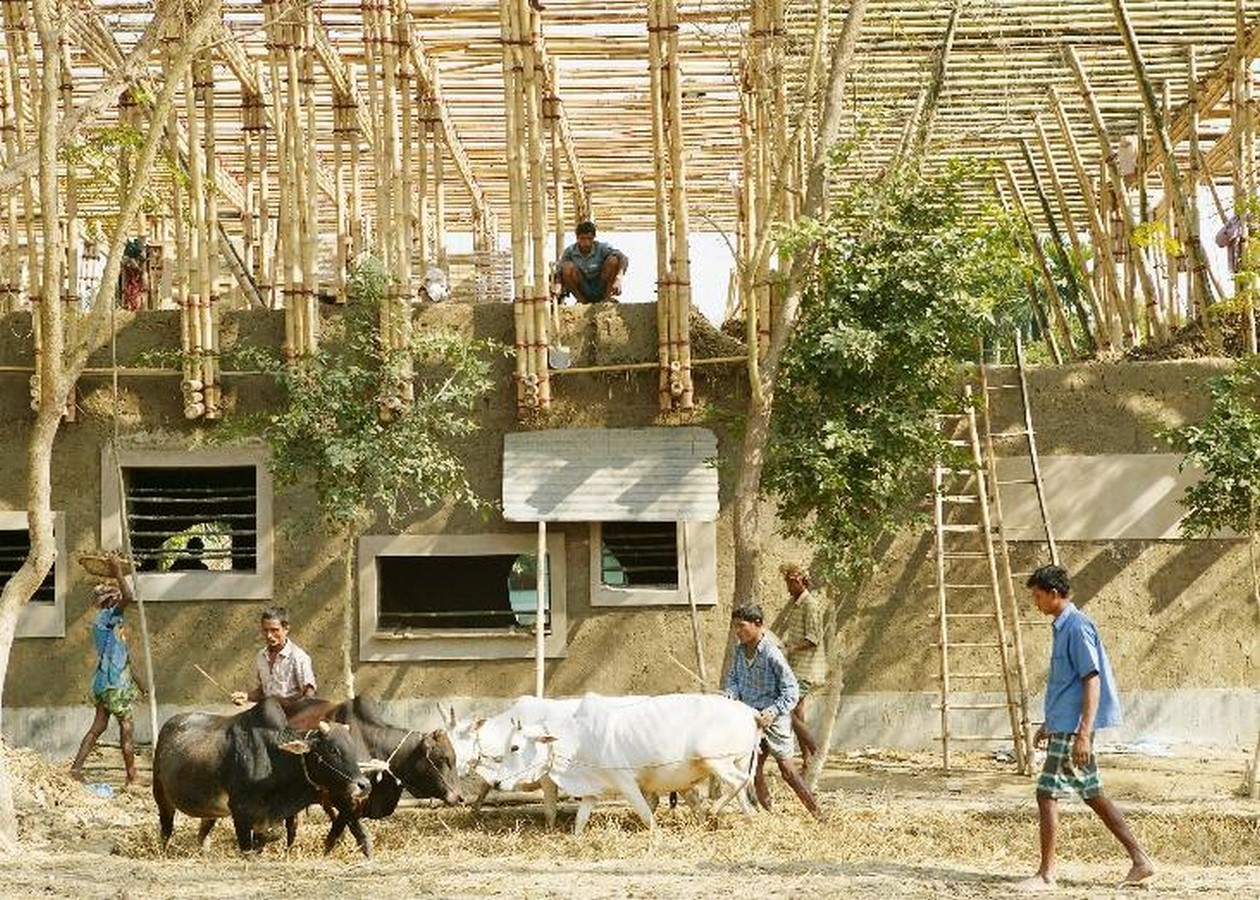
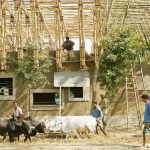
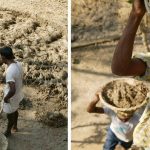
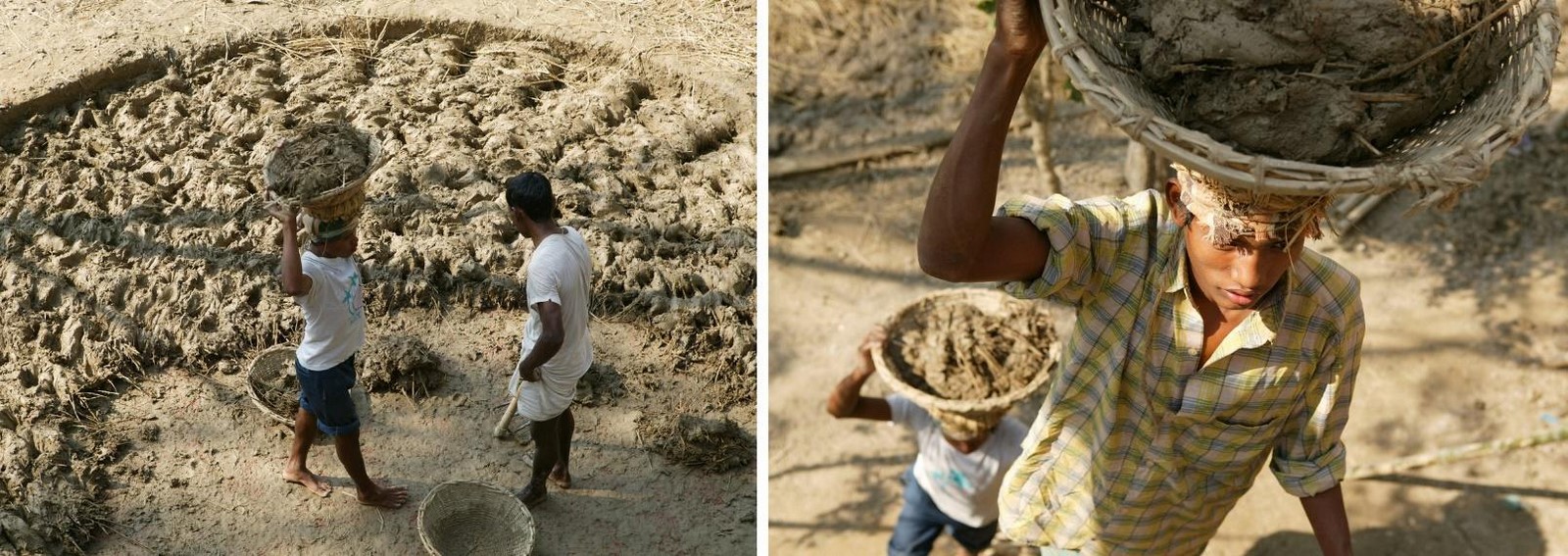
A locally sourced PE (polyethylene) film was used as the DPC. The load-bearing walls of the ground floor were built using a mixture of earth and straw, with the latter in a lower quantity. This mixture – cob, readied by the trampling of buffalo, was piled on the foundation with the layer of DPC in between to a height of 65cm. After a period of a week, the next layer of the cob was piled on. All the fenestration was fixed in the third and fourth layer of the cob, above which rested the bamboo beam. The fifth layer of cob constituted the parapet for the floor above, which could be used as a seating space.
The ceiling and the skeleton
Three layers of bamboo were used in the formation of the METI handmade school’s ground floor’s ceiling. Bamboo in the second layer was placed perpendicular to the ones above and below for a stronger connection, which would enable lateral stability. This was topped by a layer of earth forming the floor of the first floor. The first floor’s ceiling is supported by vertical bamboo members placed perpendicular and at certain angles above which four bamboo members are stacked together and tied to form a skeleton.
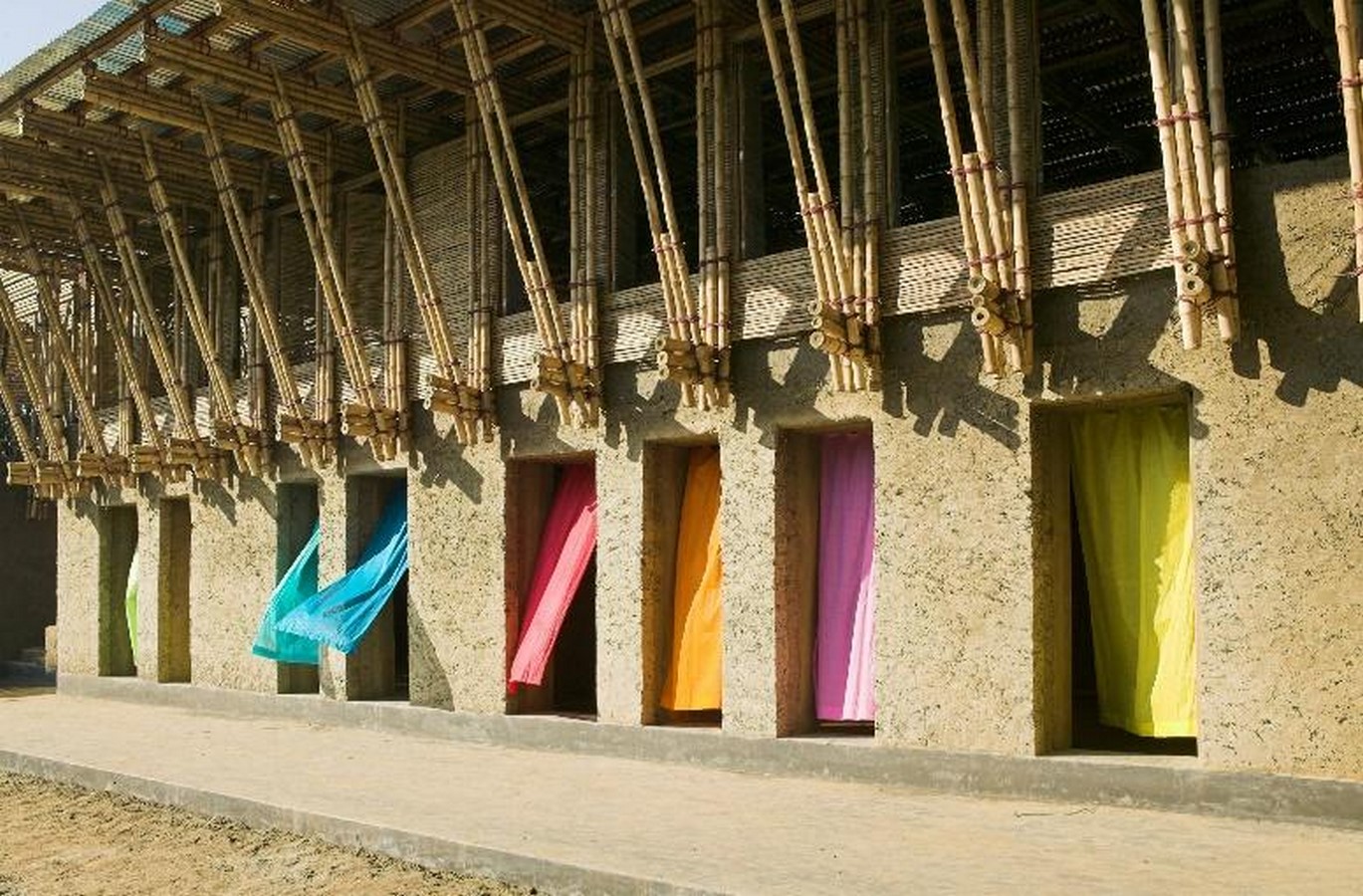
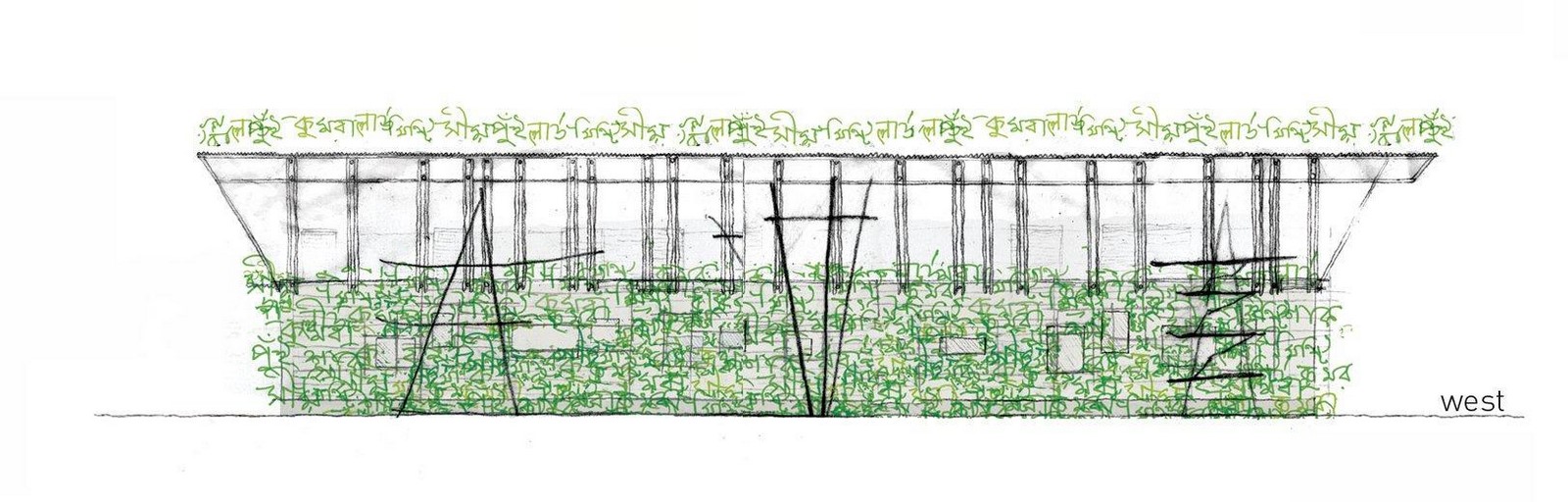
The vertical members have extra support structures on the top and bottom to prevent swaying due to the wind. Above this, rafters of bamboo are placed over which a corrugated sheet is laid as the final element of the ceiling structure. The bamboo staircase, along with the cavity surrounding it, helps with the rigidity of the framework and also allows for vertical ventilation. The rear end has a green façade created with bamboo that is balanced on used well pipes with a lattice of wooden planks.
An Inspiration
The construction technique used remains relevant and lends this project a unique identity. The use of these materials gives it the advantage of being safe for the environment by exhibiting the quality of decomposition; the structure is built from earth and returns to the earth without any outward harm to the environment. It is cost-effective, and the building method can be easily replicated and used in the construction of even small houses, helping the community stay self-sufficient and reduce its dependency on outside resources.
Adapting the use of earth, straw, and bamboo as the sole elements may not be entirely feasible in urban areas due to various reasons, but integrating them with other generic materials like concrete is a viable option. Furthermore, this approach could be introduced at an academic level and taught practically to inculcate sustainability as the foundation for any future design emerging from these brilliant minds.
References:
- Architecture Anna Heringer. METI School. [online]. Available at: https://www.anna-heringer.com/projects/meti-school-bangladesh/ [Accessed 03 April 2026].
- Archdaily (2010). Handmade School / Anna Heringer + Eike Roswag. [online]. Available at: https://www.archdaily.com/51664/handmade-school-anna-heringer-eike-roswag [Accessed 03 April 2026].
- C V Manikrishna. Meti handmade school. [online]. Available at: https://www.slideshare.net/slideshow/meti-handmade-school-248941779/248941779 [Accessed 03 April 2026].
- Currystonedesign. (2011). 2009 Curry Stone Design Prize Winner Handmade Building: Anna Heringer. [YouTube video]. Available at https://www.youtube.com/watch?v=rzntuUCliUE [Accessed 03 April 2026].